BIOTECHNOLOGY - V. H. Gerasymenko - 2006
Part II. Special Biotechnologies
Chapter 18. BIOTECHNOLOGIES FOR OBTAINING BIOLOGICALLY ACTIVE PRODUCTS BASED ON METAL COMPLEX COMPOUNDS
The Development of scientific foundations for the creation and application of biologically active metal complex compounds involves acquiring fundamental knowledge about the mechanisms regulating biochemical redox processes using transition metal complexes with bioligands. When designing biochelates, the principles of producing effectively functioning bioinorganic complexes operating in vivo are applied. It is possible to model The properties of complex biocomplexes by creating simplified analogues that characterize the most essential Features of the original compounds. This requires comparing the newly created biocomplex and the model using a structural and/or functional approach during design; that is, the model should either be structurally analogous to the biocomplex being modeled (or its main active component), or, lacking structural identity with the original biocomplex, be capable of performing equivalent biological Functions.
When creating analogues, it is possible to obtain structures that outperform the original biocomplexes in their characteristics, since the latter are synthesized in Cells under mild conditions of reactant concentrations, temperatures, pressures, and a narrow pH range. When designing model systems, there is an opportunity to widely vary these parameters.
The designed biocomplex models are capable of performing diverse biological functions and offer significant advantages over structures formed in vivo. In The process of designing biomodels, it is first of all necessary to utilize modern data on the pathways of formation and transport of the biosystems being modeled,
the proforms in which they are eliminated from the environment, transported across Cell membranes, and reach their final destination where they form the corresponding biocomplexes. Metal biocomplexes are coordination compounds that perform specific functions in the Organism.
Metalloproteins are complexes of metals with Proteins that play a vital role in the storage, transport, and activation of molecular oxygen, utilizing it in various oxidation processes. During METABOLISM, the energy demands of cells are met through The energy released during The oxidation of biosompounds involving oxygen.
One of the promising research directions is the modeling of enzyme systems involved in redox processes to study the mechanisms of biological activation of molecular oxygen. Redox processes in the body are catalyzed by oxidoreductase Enzymes.
Molecular oxygen is of paramount importance for higher life forms; the reaction of its reduction to Water forms The basis of cellular Bioenergetics. Ground-state molecular oxygen is a biradical possessing two unpaired electrons with parallel spins located in different antibonding π x and π molecular orbitals. Therefore, molecular oxygen is a relatively inert molecule because, According to the spin conservation law, the interaction of O2 with substances whose orbitals are filled should produce a biradical, yet such a reaction requires a high activation energy (spin forbiddenness). Consequently, organic molecules exist in an oxygen-rich environment thanks to spin forbiddenness. The spin restriction for triplet oxygen reactions can be overcome by the sequential addition of electrons:
Class="center">
In addition, O2 actively interacts with organic radicals containing unpaired electrons. These reactions are of crucial importance for cells in chain radical processes of Lipid Peroxidation (LPO). Oxygen does not enter into direct non-enzymatic reactions with organic substances, but cells possess highly specialized enzyme systems that participate in the reduction of oxygen by transferring one, two, or four electrons to it. The enzymes that reduce O2 are metalloproteins featuring an active center with one or more atoms of transition metals (iron, zinc, copper, manganese, cobalt, molybdenum). Enzymatic control of oxygen-involved oxidation reactions is brought about by weak internal magnetic perturbations and the mixing of spin states of the reacting species during oxidation under The Influence of exchange interactions with paramagnetic Metal Ions. The metals in the active center act as electron Donors for oxygen.
Energy supply processes for Introduction/5.html">Eukaryotic Cell vitality are sustained through redox reactions involving numerous enzyme systems under the control of spin effects. However, even under conditions of high Specificity in mitochondrial Oxidative Phosphorylation or microsomal oxidation involving Monooxygenases, all such reactions involving metalloproteins and oxygen result in The formation of active oxygen metabolites: superoxide anion radical, hydroxyl radical, hydrogen peroxide, singlet oxygen, and products of radical oxidation reactions such as peroxides, diene conjugates, malondialdehyde, and others.
Highly specialized antioxidant enzyme systems have evolved in cells to protect against toxic oxygen metabolites and their byproducts. Four lines of cellular enzymatic defense against active oxygen metabolites are distinguished: 1) superoxide dismutase (SOD); 2) Glutathione peroxidase (GPX) and catalase (CAT); 3) GPX and glutathione transferase; 4) glutathione transferase, formaldehyde dehydrogenase, glyoxalase, quinone reductase, and epoxide hydrolase.
Individual antioxidant defense enzymes are characterized by specificity of action, cellular and organ localization, and the utilization of Zn, Cu, Fe, Mn, and Se elements as catalysts. To mitigate the toxic impact of active oxygen metabolites, antioxidant enzymes such as SOD and catalase are used in experimental therapy. Administration of SOD leads to the accumulation of hydrogen peroxide, which results in Enzyme inactivation. When catalase is co-administered—enzymatically converting toxic H2O2 into harmless H2O and O2—SOD does not lose its activity even after the dismutation of more than 103 O2- radicals per mole of enzyme. Since the superoxide radical partially inhibits CAT, it becomes clear that the combined use of the antioxidant enzyme complex significantly enhances their effect and prevents the Formation of the highly toxic hydroxyl radical.
One promising avenue is the clinical application of SOD and CAT preparations, which proves effective in various pathologies associated with the excessive induction of highly toxic reactive oxygen species. To prevent rapid enzyme inactivation upon entering biofluids, attempts are made to use immobilized enzyme forms, which substantially prolongs the duration of the biocatalyst's action. The second practical approach is the modeling of low-molecular-weight complexes of antioxidant metalloenzymes, which function as highly efficient catalysts and, unlike natural analogues, may exhibit significantly higher activity.
Metal complexes with bioligands represent one of the model types most closely resembling original metalloenzymes. Furthermore, low-molecular-weight models do not present issues related to carriers and transport. One such example is the modeling of catalase activity by copper(II) chelates with Polyamines. For instance, to manifest catalytic activity, the complex must possess two free coordination sites, whereas metal chelates in which all coordination sites are occupied exhibit no specific activity.
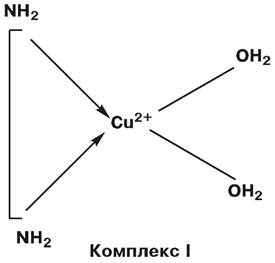
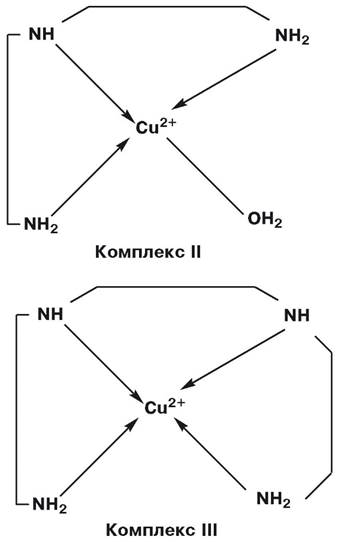
Modeling of catalase action by copper(II) chelate complexes:

Complex activity: І >> ІІ > ІІІ ~ 0.
When ligands coordinate with metals possessing oxidizing or reducing properties, the Redox Properties of the ligands themselves may change. For instance, if a metal acts as an oxidizing agent, its coordination with a Ligand promotes the oxidation of that ligand. The mere fact of coordination, which involves a shift of the ligand's electron density toward the Lewis acid (the metal), contributes to an increase in the oxidizing capacity of the complex species.
Systems in which a ligand is coordinated with an easily reducible metal ion are of practical interest. The reduction of the metal in such systems is accompanied by the transformation of the ligand into a highly reactive free radical. An example of this type of reaction is the Cu2+ ion-catalyzed autooxidation of ascorbate. The oxidation of ascorbate catalyzed by metal ions differs from that catalyzed by chelated metal ions. In the presence of chelating ligands, The Mechanism of copper(II) action changes. In this case, the reaction rate does not depend on oxygen concentration, and the reduction of oxygen yields water rather than hydrogen peroxide. In other words, introducing a ligand significantly alters the reaction pathway. In the presence of certain ligands, the catalytic activity of the metal ion increases, which is possibly associated with an elevation of its redox potential. However, one must take into account that the resulting complexes may act as prooxidants and disrupt redox Homeostasis in the body.
Taking into account the aforementioned data on the role, status, and delivery forms of biometals in living organisms, the Research Institute of Ecology and Biotechnology at BDAU has been conducting long-term research on the creation of metal-containing preparations for veterinary medicine and animal husbandry needs.
One of the Research Areas focuses on developing effective agents for the Prevention and Treatment of anemia in young farm animals. High mortality rates among early-aged piglets remain one of the pressing challenges in modern pig farming.
During the organism's transition from prenatal to Postnatal development—characterized by altered oxygen regimes and the onset of hyperoxia—a crucial role is played by the cellular antioxidant defense (AOD) system, which regulates the levels of reactive oxygen species: superoxide anion radical, hydroxyl radical, hydrogen peroxide, singlet oxygen, etc. Under physiological conditions, a dynamic equilibrium is continuously maintained between pro-oxidant and antioxidant systems in the body. Excessive enhancement of free-radical oxidation of substrates against the Background of suppressed antioxidant defense systems leads to the development of oxidative stress, which is one of the universal mechanisms underlying the onset and progression
of many pathological processes. In newborn piglets, heightened lipid peroxidation (LPO) intensity driven by reactive oxygen species is accompanied by an aggravation of the anemias state. To prevent anemia, 3–4-day-old piglets are administered intramuscular iron supplements (iron dextran, ferroglucukin-75, suiferon, suiferovit, etc.). However, these are predominantly single-component imported products containing solely iron, whereas preparations incorporating Cu, Co, etc., feature these Trace Elements in an inorganic form, which is less effective than complex, chelated trace element compounds.
Technologies and preparations developed at the Research Institute of Ecology and Biotechnology of BTSU include both single-component agents, such as "Ferocol" (an analogue of imported "Iron Dextran" and "Ursoferan"), and multi-component formulations: "Cufer" (containing Iron and copper), "Biomet" (with the same elements plus cobalt), "Polymet" (Fe, Cu, Co, Zn), "Polymet-Selenium" (Fe, Cu, Co, Zn + Se), and "Vitamet" (Fe, Cu, Co, Zn + a vitamin complex).
Adequate provision of newborn piglets with bioavailable, non-toxic iron is a primary factor in preventing iron-deficiency anemia. Normalizing Hemoglobin levels and restoring iron reserves in the body requires administering the necessary amount of this element in a non-toxic, easily assimilated form. Properly evaluating the efficacy, safety, and suitability of iron-containing preparations requires accounting for the specific Metabolic pathways of this bioelement within the animal body.
Iron is an essential and irreplaceable component of the body's proteins and enzyme systems, supporting the requisite levels of systemic and cellular metabolism as well as overall redox homeostasis. At the same time, free, unchelated iron catalyzes redox reactions and promotes the formation of highly toxic free radicals that cause peroxidative damage to lipoprotein cellular membranes, impairing their function and leading to cell death.
Iron ions play a critical role in the interconversion of active oxygen metabolites within the body, most notably the highly reactive hydroxyl radical OH. Upon the interaction of Fe with hydrogen peroxide, the product generated is OH (Fenton reaction):

Hydroxyl radicals are also generated through the interaction of hydrogen peroxide with the superoxide anion radical (0·2), catalyzed by Fe2+ ions (Haber-Weiss reaction):

Thus, while iron is an indispensable element for living cells, it simultaneously acts as a potent pro-oxidant. The diverse effects of iron are tightly coordinated, facilitating the formation of specialized molecules for iron binding, transport, and storage in soluble, non-toxic forms (transferrin, ferritin). Concurrently, regulatory mechanisms of iron homeostasis have evolved to maintain vital cellular functions while preventing potential damage.
Consequently, designing iron-containing preparations for the prevention and treatment of anemia requires accounting for both the aforementioned circumstances and modern requirements for injectable agents in this field. These preparations must meet the following criteria: the iron form must be effectively utilized by the animal body for hemoglobin Biosynthesis upon a single administration; it must be compatible with bodily fluids and Tissues; non-toxic at all stages of systemic transport; possess appropriate viscosity; exhibit no pro-oxidant activity under physiological conditions; and remain stable during prolonged storage.
Preparations developed at the Research Institute of Ecology and Biotechnology of BTSU satisfy all these requirements. Our design of a non-toxic iron form was based on the structural architecture of the ferritin protein, which participates in iron storage within the body. In recent studies, Japanese scientists have attempted to utilize ferritin for specific Applications. As is well known, certain Regions of the world suffer from dietary deficiencies of bioavailable iron. This issue is particularly acute in Southeast Asian countries, where rice serves as the staple food. To develop rice varieties capable of enhanced iron accumulation, transgenic techniques were employed.
A high-activity ferritin Gene was isolated from soybeans and integrated into the rice genome. It was established that the grains of transformed plants accumulate threefold more ferritin than those of parent-line plants. Another original biotechnological approach, likewise inspired by ferritin Structure, was employed in domestic studies. This iron-storing protein was isolated from the tissues of experimental animals, and its constituent iron forms and properties were investigated. Model experiments determined the conditions necessary to form iron cluster compounds characteristic of native ferritin architecture.
Based on these findings, a technology for manufacturing iron-containing preparations was developed. In the resulting products, iron exists as a carbohydrate-encapsulated core containing the active substance in the form of crystallites (large clusters) of iron hydroxide, similar to those found within the natural iron-storing protein ferritin, and exhibits no pro-oxidant activity under physiological conditions. In addition to iron, the formulations incorporate biometals (copper, cobalt, zinc, selenium) necessary for hemopoiesis and serving as prosthetic groups for antioxidant enzymes (ceruloplasmin, Cu-Zn-superoxide dismutase, glutathione peroxidase).
The metals exist as chelates with Amino Acids, which enhances metal bioavailability during systemic metabolism. One of the primary Factors Determining the affinity of organic molecules for metal ions is the chelate effect. This term refers to the pronounced ability of an organic molecule to bind metal ions when it possesses two or more chelating groups.
Chelation frequently alters the chemical and Physical Properties of the initial reactants and plays a significant role in biology. The chelation effect manifests in the creation of such vital metal-containing molecules as Porphyrins, chlorophyll, and calcium-binding proteins. The functional activity of biotic metals in the organism and their participation in metabolic processes are intimately linked to the ability of bioelements to form chelate complexes.
Metal-bioligand complexes exhibit high biological activity, ensuring high bioavailability, while the gradual Cleavage of chelate bonds provides sustained
release. Following complex dissociation, both the metals and the bioligands (amino acids, etc.) are efficiently utilized by the organism in metabolic processes. Conducted studies demonstrate the fundamental feasibility of using metal-complex catalysts to regulate critical cellular Electron transport processes (cellular redox processes). The application of metal-chelate preparations makes it significantly possible to reduce trace element dosages in diets while effectively resolving ecological and economic challenges in agricultural production. The widespread use of iron-dextran preparations in combination with metal-chelate compounds has been hindered by technological difficulties in manufacturing such complex formulations.
Over recent years, the Research Institute of Ecology and Biotechnology of BTSU has been developing technologies to produce multi-component preparations containing bioelements (iron, copper, cobalt) complexed with bioligands. The Selection of these trace elements in the formulated preparations is justified by their crucial role in hemopoiesis, metabolic, and redox processes within the organism.
Iron is a component of vital iron-containing proteins, including enzymes, wherein it occurs in heme and non-heme forms. The bulk of iron is incorporated into hemoglobin as heme. Iron is also part of cytochrome P-450, the mitochondrial Respiratory Chain Cytochromes, and key antioxidant enzymes (catalase). Iron is essential not only for supplying the body with oxygen but also for the functioning of the respiratory chain, the synthesis of ATP molecules, metabolic and detoxification processes involving various compounds, and DNA Synthesis. The most pronounced manifestation of iron deficiency is iron-deficiency anemia.
Copper plays a vital role in heme and hemoglobin biosynthesis. Consequently, copper deficiency, much like iron deficiency, leads to anemia. Copper is a structural element of the mitochondrial respiratory chain enzyme cytochrome c oxidase, which participates in cellular energy generation. Copper also plays a crucial role in the organism's antioxidant defense; alongside zinc, it is a component of the tissue antioxidant enzyme superoxide dismutase (SOD) and the primary Blood Plasma antioxidant protein, ceruloplasmin (CP). Zinc forms part of the active center structure of numerous metalloenzymes. It is essential for the functioning of DNA and RNA polymerases—enzymes involved in Genetic information transfer and Protein Biosynthesis—as well as the enzyme responsible for the key step in heme biosynthesis (which is incorporated into hemoglobin), mitochondrial respiratory chain cytochromes, cytochrome P-450, catalase, and other vital enzymes.
Zinc is an obligate component of one of the primary antioxidant enzymes (Zn, Cu-superoxide dismutase) and participates in inducing The biosynthesis of key cellular protective proteins known as metallothioneins, classifying this element as a reparative antioxidant. Zinc plays an exceptionally important role in executing hormonal functions within the organism, influencing Insulin production and activity. Zinc is necessary for Thymus function and maintaining a normal immune system status; it serves as a component of retinol-binding protein and, alongside Vitamins A and C, prevents immunosuppression and stimulates antibody synthesis. Furthermore, zinc plays a vital role in protein, carbohydrate, and Lipid Metabolism. A hallmark of zinc deficiency in young pigs is Skin keratinization, manifestations of parakeratosis, reduced productivity, and delayed testicular development in young boars.
Cobalt is an essential component of vitamin B12. The ability of vitamin B12 to regulate hematopoiesis is of paramount importance, linked to its involvement in synthesizing purine and pyrimidine bases of Nucleic Acids and accumulating sulfur-containing compounds in erythrocytes. The Role of vitamin B12 in metabolic processes is determined by its participation (as part of cobalamin enzymes) in protein, lipid, and Carbohydrate Metabolism. Selenium serves as a cofactor for the enzyme iodothyronine deiodinase and is a constituent of such a critical cellular antioxidant defense enzyme as glutathione peroxidase.
Selenium in the formulated preparations is present in complex with amino acids, as this form is less toxic than inorganic selenium forms.
Iron is an essential element for All living organisms, yet its excess leads to adverse consequences. A significant amount of iron in tissues is found in the form of heme proteins, whereas non-heme iron includes certain iron-sulfur proteins, iron-storing proteins (ferritin, hemosiderin), transferrin, and a minor fraction of low-molecular-weight iron complexes with specific ligands such as citrate, Certain amino acids, phosphate compounds, and others. These complexes provoke tissue Damage caused by free-radical oxidation of Lipids, proteins, and other molecules.
The findings of numerous studies indicate that one of the primary physiological responses to any stressor (including oxidative stress) is an acceleration of lipid peroxidation within Cellular Membrane Structures. The Regulation of cellular antioxidant defense systems—which neutralize the adverse impacts of both toxicants and the metabolites derived from them—is primarily driven by enzymatic systems involved in the metabolism and Detoxification of Various compound classes. The neutralization of these substances is a multi-step process engaging concerted enzymes such as superoxide dismutase (SOD), glutathione peroxidase (GPx), catalase, and the glutathione system. Therefore, incorporating trace elements capable of inducing the synthesis of antioxidant enzymes into pharmacological agents holds considerable practical interest.
There is evidence that administering iron-dextran preparations to animals induces oxidative stress, thereby triggering lipid peroxidation (LPO). It should be noted that rapidly replenishing the deficit of antiradical agents in the body is limited by their transport kinetics. Consequently, utilizing synthesized complexes may be more advantageous: on the one hand, they can induce the synthesis of antioxidant defense enzymes; on the other hand, these low-molecular-weight compounds lack specific transport mechanisms in the body and can independently act as inhibitors of lipid peroxidation (LPO).
Thus, considering the role of the aforementioned biogenic metals in redox processes and hemopoiesis, research institute laboratories have developed robust and stable complex preparations for the prevention and treatment of anemias, containing these biometals in optimal ratios. Appropriate regulatory and technical documentation, along with application guidelines approved by the State Department of Veterinary Medicine of the Ministry of Agricultural Policy of Ukraine, has been compiled for these products. Patents of Ukraine have been granted for the preparations, their manufacturing technology, and their component formulations.
The preparations have undergone successful approbation in Various Forms of agricultural enterprises across Ukraine and abroad (the Czech Republic). To evaluate the efficacy of the developed agents, industrial trials have been conducted in recent years under conditions of complete-feed rations and advanced animal housing technologies in the Czech Republic. In 2002, trials were performed at the educational and experimental farm of the Czech University of Life Sciences Prague, located in Červený Újezd (Prague-West District), using piglets ranging from birth to 45 days of age. Three analogous groups of 30 piglets each were formed. The preparations were administered to 4-day-old piglets. Weighing was conducted on the 4th, 15th, 30th, and 45th days of life. The results evaluating the effectiveness of these anti-anemic preparations are presented in Tables 18.1 and 18.2.
Table 18.1.
Comparative efficacy of preparations for anemia prevention in newborn piglets
1st experimental group «Ferribion», Czech Republic |
||||
Days of study Live weight, kg |
4th 1.91±0.043 |
15th 3.92±0.11 |
30th 8.29±0.15 2 |
45th 12.37±0.39 |
2nd experimental group «Polymet», Ukraine |
||||
Days of study Live weight, kg |
4th 1.98±0.063 |
15th 4.14±0.095 |
30th 8.68±0.14 |
45th 13.08±0.29 |
3rd experimental group «Polymet-V12», Ukraine |
||||
Days of study Live weight, kg |
4th 1.93±0.051 |
15th 4.16±0.107 |
30th 9.73±0.23 |
45th 14.03±0.42 |
Table 18.2.
Livestock viability
Group |
Number of heads in the group |
Livestock viability, % |
1st experimental |
30 |
86.7 |
2nd experimental |
30 |
90.0 |
3rd experimental |
30 |
93.3 |
The obtained research results demonstrate that agents such as the iron-containing preparation (Ferribion), the iron-copper-zinc-cobalt-containing preparation (Polymet), and the complex preparation (Polymet-V12) are highly effective for preventing nutritional anemia in suckling piglets. It was established that Polymet and Polymet-V12 are not inferior in efficacy to Ferribion (manufactured in the Czech Republic) while offering distinct technological and economic advantages in the prevention and treatment of piglet anemia.
Thus, years of dedicated research at the Research Institute of Ecology and Biotechnology have elucidated the fundamental regularities of complexation processes and the correlation between ligand structure and complexing capacity, thereby enabling the targeted design of sophisticated biocomplexes with predetermined properties.
Through model, laboratory, and scientific-industrial studies, the mechanisms governing the directed regulation of synthesized complexes toward desired outcomes have been established, facilitating the creation of efficacious, broad-spectrum prophylactic and therapeutic agents.
Last update: 11/08/2026
Editorial and Educational Adaptation: This material has been compiled based on the primary/original source text. The project team performed an editorial review, corrected technical inaccuracies, structured sections, and adapted the content for an educational format.
What was processed:
- elimination of formatting defects (OCR errors, structural breaks, corrupted characters);
- editorial organization of content;
- standardization of terminology in accordance with academic sources;
- verification of factual statements against the original source text.
All mentions of the author, publication year, and origin of the primary text have been preserved in accordance with the source.