Biochemistry and Molecular Biology - Belyasova N.A. 2002
Structure and Functions of Cellular Components
Proteins. Organizational Features and Functions of Enzymes
Proteins are one of the primary classes of cellular macromolecules, accounting for up to 50% of the dry weight of a microbial Cell, for example. These structurally diverse polymers perform some of the most vital and versatile Functions in The Cell.
The monomeric units of proteins are Amino Acids. Naturally Occurring Amino Acids are 2-aminocarboxylic acids, or a-amino acids. Their molecules contain 4 different substituents at the C-2 (Ca) atom (Fig. 6.1). Thus, all a-amino acids, except Glycine, have an asymmetric (chiral) a-carbon atom (Fig. 6.1) and exist as two enantiomers—L- and D-amino acids. Most naturally occurring Peptides contain L-amino acids.
Amino acids differ in The Structure of their side chains and their degree of polarity. Figure 6.2 illustrates the STRUCTURE OF THE side groups of the 20 Proteinogenic Amino Acids (whose positions in Polypeptides are encoded by METABOLISM/28.html">The Genetic Code). Among them, Alanine, valine, leucine, isoleucine, Methionine, Cysteine, and phenylalanine have distinctly nonpolar (hydrophobic) side groups. Charged side chains are found in acidic amino acids (aspartic acid, glutamic acid) and basic amino acids (Lysine, Arginine, Histidine).
Class="center">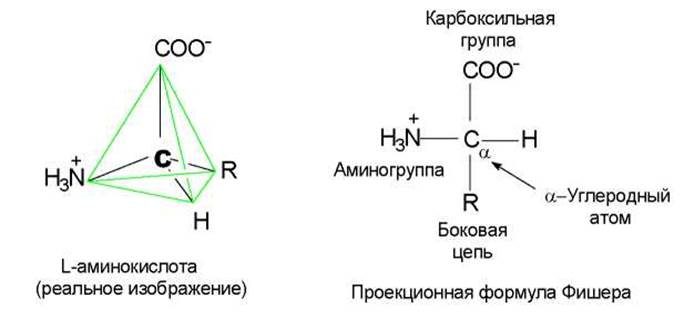
Fig. 6.1. Structural Features of L-amino acids
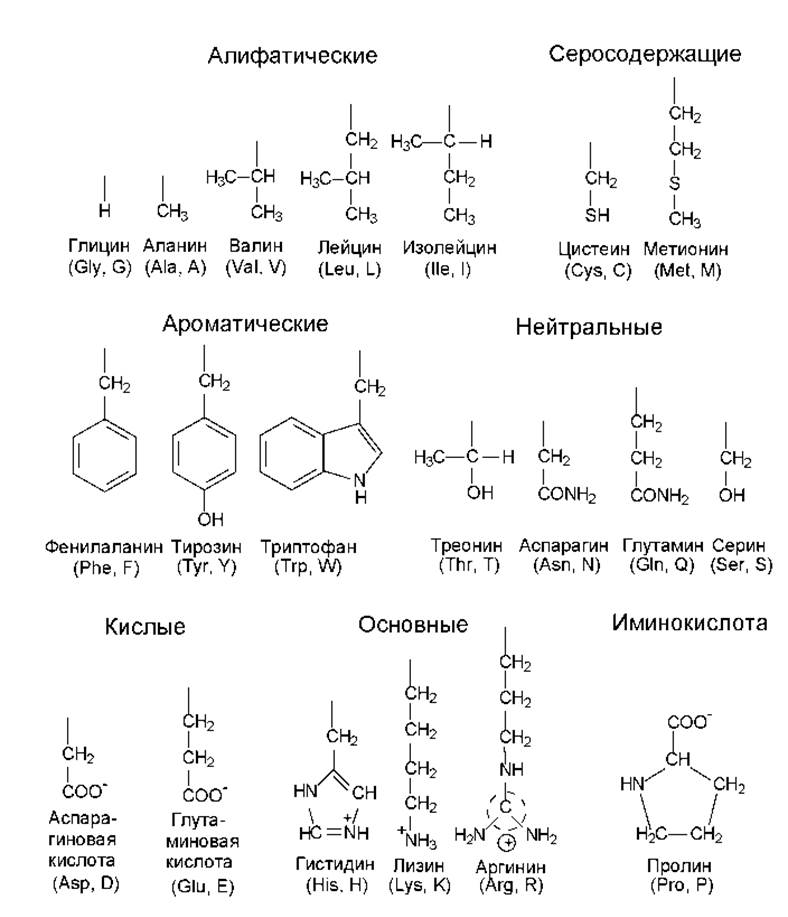
Fig. 6.2. Structure of the side chains of proteinogenic amino acids
In aqueous solutions at neutral pH, a-amino acids exist predominantly as dipolar ions (zwitterions), in which the Amino groups are protonated and the carboxyl groups are dissociated (Fig. 6.1).
Amino acid residues in peptides are linked together by a peptide (carboxamide) bond, formed through the participation of the a-carboxyl group of one Amino Acid and the a-amino group of another. This reaction releases Water (Fig. 6.3).
The Introduction/19.html">Primary Structure of Proteins refers to their Amino Acid Sequence, which determines the other Levels of Organization of these polymers—secondary, tertiary, and quaternary structure. Secondary structure generally refers to the conformation of localized regions within a polypeptide chain that adopt an ordered structure stabilized by Hydrogen Bonds between CO and NH groups. Such regions are called secondary structure elements, and several types are distinguished: the right-handed a-helix (the most common element), the left-handed a-helix, antiparallel and parallel ß-pleated sheets, and ß-turns. In Fibrous proteins, which typically perform structural functions, regular secondary structures extend over quite long segments of the molecule and are often represented by a single type. Furthermore, these proteins are characterized by The formation of assemblies of interacting secondary structures, which imparts exceptional strength to the resulting fibers. For instance, Collagen—a protein found in connective and Bone Tissues, tendons, and Cartilage—consists of a right-handed triple helix wound from three primary left-handed helices.
In Globular proteins (soluble proteins with a nearly spherical shape) that perform specific cellular functions, including catalytic activity, a-helices and ß-pleated sheets are usually present simultaneously. In addition, there are regions with an unstructured conformation. In the Insulin molecule (see section 21.3), for example, a-helices account for 57% of the structure, ß-pleated sheets for 6%, and ß-turns for 10%. The remaining part of the molecule (27%) lacks an ordered structure.
Tertiary structure refers to the spatial arrangement of atoms and the secondary structure elements they form within a polypeptide—in other words, the three-dimensional, functionally active conformation of a protein. Each protein is characterized by a unique Spatial Structure. The stabilization of protein Conformations is maintained by hydrogen bonds, disulfide bridges, Electrostatic Interactions, metal ion complexation, and hydrophobic effects.
Many protein molecules form symmetrically constructed complexes stabilized by non-covalent interactions. The mutual arrangement of the constituent units (subunits) of these complexes defines The quaternary structure of the protein.
Protein molecules typically contain several dozen amino acid residues, though polypeptides containing hundreds or even thousands of monomer units are also found. At the same time, the number of types of monomer units (differing in their amino acid side chain) in most natural proteins is 20. The truly immense Variability in the Cytology/cytology/26.html">Structure of Different proteins is determined by The amino acid sequence, the number of possible variants of which is described by 20n, where n is the number of amino acid residues in the protein. The amino acid sequence in a polypeptide is genetically determined. A protein molecule may consist of one or more polypeptide chains.
In addition to simple proteins, which consist solely of amino acids, there are Conjugated Proteins that may contain Metal Ions (Metalloproteins), pigment molecules (Chromoproteins), form complexes with other molecules (Lipoproteins, Nucleoproteins, Glycoproteins), or covalently bind inorganic phosphate (Phosphoproteins).
The chemical properties of proteins are determined by the composition and ratio of amino acids with hydrophilic and hydrophobic side groups. The biological Properties of Proteins primarily include catalytic (enzymatic), transport (transporting substances within the Organism and across Biomembranes), structural (as components of Chromosomes, the Cytoskeleton, and connective, muscular, and supporting tissues), regulatory (The ability to regulate The rate of Chemical Reactions in the cell and Metabolism in the Organism as a whole), and receptor functions. In addition, proteins exhibit protective, storage, toxic, contractile, and certain other functions. Most of these biological properties of proteins have already been characterized in previous chapters; here, the focus will be on the biocatalytic activity of protein molecules.
Last update: 06/08/2026
Editorial and Educational Adaptation: This material has been compiled based on the primary/original source text. The project team performed an editorial review, corrected technical inaccuracies, structured sections, and adapted the content for an educational format.
What was processed:
- elimination of formatting defects (OCR errors, structural breaks, corrupted characters);
- editorial organization of content;
- standardization of terminology in accordance with academic sources;
- verification of factual statements against the original source text.
All mentions of the author, publication year, and origin of the primary text have been preserved in accordance with the source.