Biochemistry and Molecular Biology - Belyasova N.A. 2002
Structure and Functions of Cellular Components
Cellular Polysaccharides
Structure of Fungal Cell Walls
The Cell wall Polysaccharides of Fungi, including Yeasts, are represented mainly by hemicelluloses: glucans, Chitin, and Mannans. Glucans are Condensation products of glucose with varying numbers of residues, belonging predominantly to the β-1,4 and β-1,6 types. These Homopolysaccharides form a microfibrillar Skeleton in the fungal cell wall, analogous to the Cellulose skeleton found in Plant Cell Walls.
Chitin is a homopolysaccharide formed by chains of N-acetylglucosamine, which is also a structural component of murein (Fig. 5.4). The N-acetylglucosamine residues in chitin are linked by β(1→4)-glycosidic bonds, forming a layered Structure similar to cellulose. However, the intermolecular Hydrogen Bonds in chitin are stronger due to the participation of N-acetyl groups in their formation. Chitin also serves as the primary structural polysaccharide in the exoskeleton of insects.
Mannans are polymers of mannose (Fig. 5.8). They consist of a main α-1,6-backbone with short side branches (consisting of 1–3 mannose units) attached via α(1→2) and α(1→3)-glycosidic bonds. Mannans and glucans are the principal polysaccharides of Yeast cell walls, accounting for 60–80% of their dry weight.
In addition to hemicelluloses, fungal Cell walls contain Proteins (6–13%), Lipids (2–9%), and inorganic polyphosphates. These proteins are rich in Sulfur-Containing Amino Acids and occur as complexes with polysaccharides, with mannoproteins being the most common type. Besides a structural role, mannoproteins function as receptors, perceiving environmental signals and mediating cell-to-cell contact. The structure of mannoproteins determines the immunological properties of yeasts.
An Analysis of the most common cellular polysaccharides described in this chapter leads to the Conclusion that their Structure and function are closely interrelated: polysaccharides with a loose, branched, and readily enzyme-accessible structure perform a reserve function within Cells. Conversely, polysaccharides serving as mechanical support and protection feature a complex, compact structure that is reinforced through interactions with substances from other classes, such as proteins, lipids, Teichoic Acids, etc. Intermolecular bonds are almost invariably present in these complexes, rendering The Cell walls rigid, robust, and highly resistant to enzymatic degradation.
Class="center">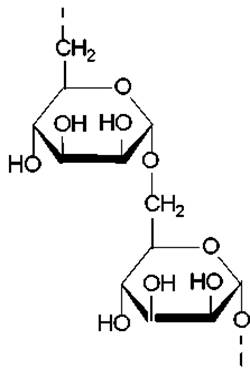
Fig. 5.8. Structure of a fragment of the main mannan chain
Last update: 06/08/2026
Editorial and Educational Adaptation: This material has been compiled based on the primary/original source text. The project team performed an editorial review, corrected technical inaccuracies, structured sections, and adapted the content for an educational format.
What was processed:
- elimination of formatting defects (OCR errors, structural breaks, corrupted characters);
- editorial organization of content;
- standardization of terminology in accordance with academic sources;
- verification of factual statements against the original source text.
All mentions of the author, publication year, and origin of the primary text have been preserved in accordance with the source.