MICROBIOLOGY - M.H. Serhiichuk - 2008
Chapter 6. PHYSIOLOGICAL CHARACTERISTICS OF ANAEROBIC MICROORGANISMS
Fermentation
Fermentation is an energy-yielding process in which ATP is synthesized via the anaerobic oxidation of organic substrates through substrate-level phosphorylation, operating independently of inorganic electron Donors and acceptors. In fermentation, both electron donors and acceptors are derived from organic substrates of intermediate oxidation states—such as sugars, organic acids, Amino Acids, and heterocyclic compounds—as they are fermented into CO2, molecular hydrogen, formate, acetate, and other short-chain Fatty acids. This represents the most ancient and primitive mechanism of energy generation. It is characteristic of certain groups of anaerobic and facultatively anaerobic microorganisms, including lactic acid Bacteria, propionic acid bacteria, clostridia, enterobacteria, and Yeasts. The primitiveness of fermentation lies in the fact that substrate Cleavage releases only a minor fraction of the chemical energy, while the majority remains trapped within the end products. Fermentative bacteria derive energy exclusively via substrate-level phosphorylation; the Krebs cycle does not participate in their Catabolism, and the Electron Transport Chain is either entirely non-functional or absent altogether. Consequently, The breakdown of a single glucose molecule—for instance, during Homofermentative lactic acid fermentation—yields only two ATP molecules (by comparison, aerobic Respiration generates 38 ATP per glucose molecule).
Although A wide variety of substrates can undergo fermentation, the number of reactions leading directly to ATP synthesis during fermentation is quite limited. The most common pathways are illustrated in Fig. 6.1.
Class="center">
In fermentation, the terminal hydrogen acceptors are typically organic metabolites generated through substrate cleavage. Reduced compounds are excreted from The Cell and accumulate in the medium in substantial quantities. Due to the low energy yield of fermentative pathways, the cell must process enormous amounts of substrate to sustain all vital Functions and biosynthetic processes.
Lactic acid fermentation. The carbohydrate fermentation yields lactic acid as a primary product, a process driven by lactic acid bacteria. A distinction is made between homo- and Heterofermentative lactic acid fermentation. In homofermentative lactic acid fermentation, lactate serves as the primary end product. This pathway is utilized by such bacteria as Lactococcus lactis, Pediococcus cerevisiae, Lactobacillus acidophilus, and Lactobacillus bulgaricus. In heterofermentative lactic acid fermentation, besides lactate, a range of other end products are formed: ethanol, acetate, CO2, and mannitol, with the specific spectrum and quantities of metabolites depending on the bacterial species and the fermented substrate. Heterofermentative lactic acid fermentation is characteristic of Lactobacillus plantarum, Lactobacillus brevis, and Leuconostoc mesenteroides. In Bifidobacterium bifidum, heterofermentative fermentation proceeds via a distinct, specialized pathway.
Homofermentative lactic acid fermentation. Its primary substrates are Monosaccharides (primarily glucose), Disaccharides (maltose, lactose), and Polysaccharides (Glycogen, starch).
Before entering the fermentation pathway, disaccharides are converted into phosphorylated monosaccharides According to the general scheme:
a) Lactose → D-Glucose + D-Galactose
D-Galactose + ATP → D-Galactose-1-phosphate + ADP
D-Galactose-1-phosphate → Glucose-1-phosphate
In this case, glucose-1-phosphate is synthesized at the expense of ATP.
б) Maltose + H3PO4 → Glucose-1-phosphate + Glucose
In this case, glucose-1-phosphate is formed without ATP consumption.
Polysaccharides undergo preliminary Hydrolysis, and the resulting glucose residues are phosphorylated to glucose-1-phosphate. The glucose-1-phosphate produced during these preparatory carbohydrate transformations is subsequently converted into glucose-6-phosphate. Further transformation of glucose-6-phosphate proceeds via a uniform pathway regardless of its origin (Fig. 6.2).

Fig. 6.2. General scheme of homofermentative lactic acid fermentation
Glucose-6-phosphate is oxidized to Pyruvate via The Glycolytic Pathway, yielding four molecules of ATP. Because Glycolysis consumes 2 ATP for the phosphorylation of glucose and fructose-6-phosphate, the net energy yield of the process is 2 ATP per glucose molecule. The terminal electron acceptor in this type of fermentation is pyruvate. Upon reduction by NADH2, pyruvate is converted into lactate, which is then excreted from the cell into the surrounding medium. In homofermentative lactic acid fermentation, lactate is virtually the sole end metabolite.
Heterofermentative (phosphoketolase) lactic acid fermentation. Bacteria that carry out this type of fermentation lack key glycolytic Enzymes such as fructose-bisphosphate aldolase and Triosephosphate isomerase (Fig. 6.3); consequently, initial glucose fermentation proceeds via the Pentose Phosphate Pathway (Fig. 6.4). The pentose phosphate pathway releases CO2, reduces two molecules of NAD+ (NADP+), and produces xylulose-5-phosphate. The next step involves the cleavage of xylulose-5-phosphate into glyceraldehyde 3-phosphate and acetyl phosphate, catalyzed by the key enzyme of this pathway: Thiamine diphosphate-dependent phosphoketolase.

Fig. 6.3. Enzymes absent in heterofermentative lactic acid bacteria

Fig. 6.4. Scheme of heterofermentative lactic acid fermentation carried out by bifidobacteria
Glyceraldehyde 3-phosphate is subsequently oxidized to pyruvate via the glycolytic pathway (yielding 2 ATP through substrate-level phosphorylation), while pyruvate serves as a hydrogen acceptor and is reduced to lactic acid. Thus, this phase of heterolactic fermentation represents a fragment of homolactic fermentation.
Acetyl phosphate is converted into acetate by acetate kinase, yielding ATP. Alternatively, acetyl phosphate can form acetyl-CoA in a reaction catalyzed by phosphotransacetylase, which is subsequently reduced to acetaldehyde and ethanol.
A unique pathway of heterolactic fermentation has been identified in Bifidobacterium bifidum (Fig. 6.5). In these bacteria, the cleavage and oxidation of glucose-6-phosphate lead to The formation of pyruvate and acetyl phosphate (2C6 → 2C3 + 3C2). Carbon dioxide is not produced in the reactions of this pathway. Initially, two molecules of glucose-6-phosphate are isomerized into two molecules of fructose-6-phosphate. Subsequently, one molecule of fructose-6-phosphate, in the presence of inorganic phosphate, is cleaved into acetyl phosphate and erythrose-4-phosphate, while the other reacts with erythrose-4-phosphate. The products of this reaction are glyceraldehyde 3-phosphate and sedoheptulose-7-phosphate (C3 + C4 → C3 + C7). In the next stages, both products exchange C2 fragments, transforming into xylulose-5-phosphate and ribose-5-phosphate (C3 + C7 → 2C5). Ribose-5-phosphate is converted into xylulose-5-phosphate. Finally, two molecules of xylulose-5-phosphate, in the presence of inorganic phosphate, are cleaved into two molecules of acetyl phosphate and two molecules of glyceraldehyde 3-phosphate. The latter are oxidized to two molecules of pyruvate. Pyruvate is reduced to lactate, whereas acetyl phosphate is converted to acetate with the release of ATP.
Overall equation of the process: 2 Glucose → 2 Lactate + 3 Acetate

Fig. 6.5. Scheme of heterolactic fermentation carried out by bifidobacteria
Consequently, heterolactic fermentation is an anaerobic process in which glucose is converted into products such as lactic acid, acetic acid, ethanol, and carbon dioxide.
Alcoholic (ethanol) fermentation is an anaerobic process with ethanol as its primary product. Alcoholic Fermentation is characteristic of yeasts and certain bacteria, notably Sarcina ventriculi, Erwinia amylovora, and Zymomonas mobilis. Yeasts oxidize glucose via the glycolytic pathway, whereas Zymomonas utilizes the Entner–Doudoroff pathway.
Yeasts carry out three forms of alcoholic fermentation according to C. Neuberg:
1. The first form is classical alcoholic fermentation, which takes place in an acidic environment (pH 3–6). It comprises two periods: the induction period and the stationary period. Because the primary products of the induction period are glycerol and pyruvate, it is also referred to as glyceropyruvic fermentation.
2. The second form is alcoholic fermentation occurring in the presence of sodium hydrogen sulfite. Since glycerol is the principal end product of this process, it is also known as glycerol fermentation.
3. The third form is alcoholic fermentation that proceeds in an alkaline environment.
The first form of Neuberg's alcoholic fermentation generally follows the pathway shown in Fig. 6.6.

Fig. 6.6. General scheme of alcoholic fermentation (Neuberg's first form of alcoholic fermentation)
Alcoholic and homolactic fermentations are generally similar in their initial stages. Glucose is first oxidized to pyruvate via glycolysis; however, subsequent steps of alcoholic fermentation differ in two key aspects. First, the hydrogen acceptor is not pyruvate directly, but its decarboxylation product, acetaldehyde. Pyruvate decarboxylation is catalyzed by the key enzyme of alcoholic fermentation, pyruvate decarboxylase. A distinctive feature of this reaction is its complete irreversibility. Acetaldehyde is reduced to ethanol by NAD+-dependent Alcohol dehydrogenase. The second difference is that alcoholic fermentation involves a distinct intermolecular Separation into reduced molecules (alcohol) and oxidized molecules (CO2), whereas in homolactic fermentation, the end product—lactic acid—does not differ from the hexose molecule in its overall oxidation-reduction state.
As noted previously, alcoholic fermentation has two phases: the induction period and the stationary period. The induction (initial) period is characterized by the accumulation of glycerol and pyruvate in the medium, and thus it can be considered a distinct type of fermentation—glyceropyruvic fermentation.
A high glucose concentration in the medium inhibits alcohol dehydrogenase, and The amount of acetaldehyde at the onset of alcoholic fermentation is still insufficient to induce the synthesis of this enzyme. Consequently, at this stage, NADH2 transfers hydrogen not to acetaldehyde, but to a second molecule of glyceraldehyde 3-phosphate. As a result, the first molecule of glyceraldehyde 3-phosphate is oxidized to pyruvate, while the second is reduced to glycerol (Fig. 6.7).

Fig. 6.7. Scheme of glyceropyruvic fermentation (induction period of alcoholic fermentation)
The stationary period of alcoholic fermentation begins once the glucose concentration in the medium decreases and sufficient acetaldehyde has accumulated. The activity of alcohol dehydrogenase increases, and acetaldehyde is reduced by hydrogen to ethanol. The energy yield of the process is 2 moles of ATP per mole of glucose.
The second form of Neuberg's alcoholic fermentation is fermentation in the presence of sodium hydrogen sulfite. Because glycerol is the main end product, it is also called glycerol fermentation. The energy yield of glycerol fermentation is half that of classical alcoholic fermentation because one triose is not oxidized, but rather reduced to glycerol. This occurs because sodium hydrogen sulfite forms a complex with acetaldehyde, preventing it from acting as a hydrogen acceptor (Fig. 6.8).

Fig. 6.8. Scheme of glycerol fermentation (Neuberg's second form of alcoholic fermentation)
The third form of Neuberg's alcoholic fermentation is fermentation in an alkaline environment. Under these conditions, acetaldehyde is not reduced by dehydrogenase; therefore, glyceraldehyde 3-phosphate serves as the hydrogen acceptor, just as in glyceropyruvic fermentation. The transfer of hydrogen to glyceraldehyde 3-phosphate leads to the accumulation of glycerol. Furthermore, under these conditions, two molecules of acetaldehyde undergo a dismutation reaction: one molecule is oxidized to acetic acid, while the other is reduced to ethanol (Fig. 6.9).
General Equation of the process: 2 Glucose → 2 Glycerol + Acetate + Ethanol + 2CO2
To carry out alcoholic fermentation, bacteria of the genus Zymomonas break down glucose via the Entner–Doudoroff pathway (Fig. 6.10). Glucose is oxidized to 2-keto-3-deoxy-6-phosphogluconate, which is subsequently cleaved into pyruvate and glyceraldehyde 3-phosphate. Glyceraldehyde 3-phosphate is further oxidized via the glycolytic pathway to pyruvate with the formation of 2 ATP. The two pyruvate molecules formed in both branches of metabolic transformation are decarboxylated to acetaldehyde, which is then reduced to ethanol in the same manner as in yeasts. General equation of the process: Glucose → 2 Ethanol + 2CO2. The energy yield of the process is one molecule of ATP per one molecule of glucose.
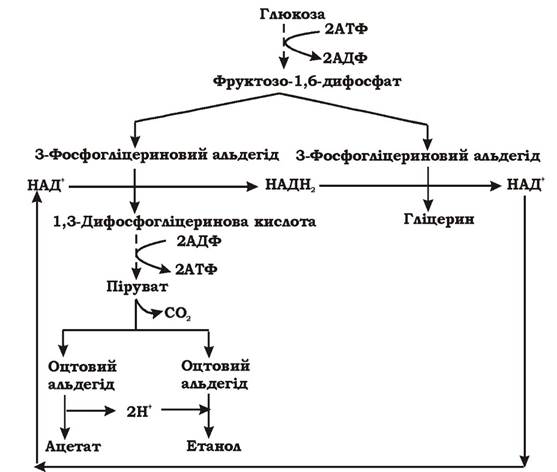
Fig. 6.9. Scheme of alcoholic fermentation in an alkaline environment (Neuberg's third form of alcoholic fermentation)
Propionic Acid Fermentation is an anaerobic process in which propionic acid is the primary product. In addition to propionate, most anaerobes also produce acetate and CO2. The substrates for propionic acid fermentation are glucose and lactate. Propionic acid fermentation is characteristic of bacteria such as Propionibacterium freudenreichii, P. acidipropionici, P. acnes, Clostridium propionicum, and Selenomonas.
There are two pathways for propionate formation in bacteria:
1. Succinate-propionate pathway, or the methylmalonyl-CoA pathway (characteristic of bacteria of the genus Propionibacterium).
2. Acrylate pathway (characteristic of Clostridium propionicum and Megasphaera elsdenii).
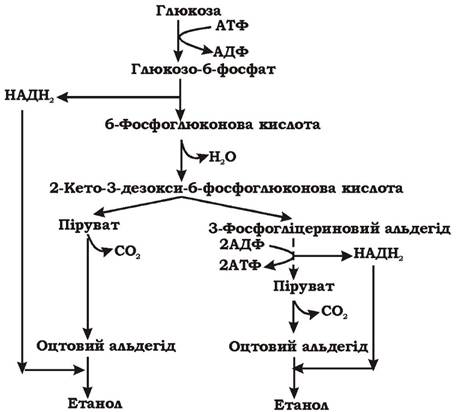
Fig. 6.10. Scheme of alcoholic fermentation carried out by bacteria of the genus Zymomonas
The scheme of the succinate-propionate metabolic pathway is shown in Fig. 6.11. Deciphering this pathway proved quite complex, and today not all details of this process are fully understood. Initially, glucose is oxidized to pyruvate via the glycolytic pathway, or lactate is oxidized to pyruvate with the participation of a flavoprotein hydrogen carrier. Pyruvate is then converted into oxaloacetate (OAA) via a transcarboxylation reaction. The carbon donor is the organic compound methylmalonyl-CoA, and the CO2 carrier is biotin. The transcarboxylation reaction is a more energetically favorable process than direct carboxylation using inorganic carbon, as it occurs without Energy Expenditure. OAA serves as a hydrogen acceptor and is reduced to fumarate. The subsequent reduction of fumarate to succinate by fumarate reductase is coupled with the synthesis of ATP involving Respiratory Chain carriers. This process of Oxidative Phosphorylation is known as fumarate respiration and is characteristic of many anaerobic microorganisms. Thus, during propionic acid fermentation, both strictly fermentative processes and fragments of Anaerobic respiration take place.
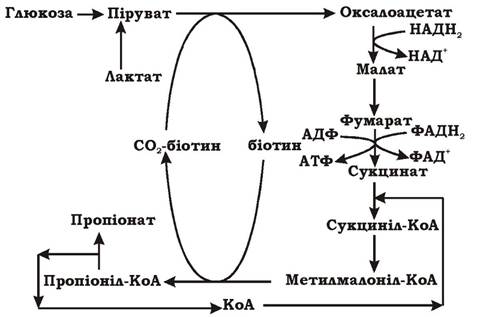
Fig. 6.11. Succinate-propionate pathway (methylmalonyl-CoA pathway) of propionate formation
This type of fermentation involves three CoA derivatives: succinyl-CoA, methylmalonyl-CoA, and propionyl-CoA, which are interconverted via isomerization reactions that are crucial in propionic acid fermentation. Isomerases contain vitamin B12 Coenzymes. Consequently, the methylmalonyl-CoA pathway is characterized by:
- The process of cyclic transfer of a C1 fragment from methylmalonyl-CoA to pyruvate to form OAA (transcarboxylation reaction) without releasing CO2 into the environment;
- the process of isomerization of CoA derivatives and cyclic transfer of CoA from product to product without release into the medium;
- fragments of the Krebs cycle whose reactions proceed in the reverse direction (reduction rather than oxidation);
- ATP generation via substrate-level phosphorylation during glucose oxidation by glycolysis and via oxidative phosphorylation resulting from fumarate respiration.
The acrylate pathway of propionate formation is shown in Fig. 6.12. The reduction of lactate to propionate via the acrylate pathway is coupled with The oxidation of lactate to acetate and CO2. The key reaction of this pathway is the dehydration of lactyl-CoA to acrylyl-CoA.
Propionic acid bacteria contain heme-containing enzymes such as Cytochromes and catalase. They can grow under aerobic conditions, but only at low oxygen concentrations, which classifies them as microaerotolerant bacteria.

Fig. 6.12. Acrylate pathway of propionate formation
Formic acid (formate) fermentation is an anaerobic process characteristic of enterobacteria, in which formic acid is an important (though not primary) product. In addition to formic acid, a mixture of organic acids (lactic, acetic, succinic) and alcohols (ethanol, 2,3-butanediol) is also produced. The ratio of end products depends on the bacterial genus. Bacteria of the genera Escherichia, Salmonella, and Shigella ferment sugars into lactic, acetic, succinic, and formic acids, CO2, ethanol, and H2. Bacteria of the genera Enterobacter, Serratia, and Erwinia produce fewer acids, but more CO2 and ethanol, along with large quantities of 2,3-butanediol.
There are Two Types of Formic acid fermentation: Mixed Acid Fermentation (Fig. 6.13) and butanediol fermentation (Fig. 6.14).

Fig. 6.13. Scheme of mixed fermentation
In mixed and butanediol fermentation types, hexose breakdown in enterobacteria proceeds via the glycolytic pathway. At the phosphoenolpyruvate (PEP) level in mixed fermentation, the pathway branches toward succinate formation, while all other products are derived from pyruvate. Pyruvate is metabolized via three enzyme systems, and the yield of end products depends on their respective activities:
1. Lactate is produced by the action of Lactate dehydrogenase. A particularly high amount of lactate accumulates during mixed fermentation.
2. Under anaerobic conditions in enterobacteria, The conversion of pyruvate to acetyl-CoA is catalyzed by pyruvate formate-lyase, without the reduction of NAD+.
During mixed and butanediol fermentation, acetyl-CoA is further reduced to ethanol, whereas in mixed fermentation it is additionally converted via acetyl phosphate into acetate with the generation of ATP.
3. The formation of 2,3-butanediol from pyruvate in butanediol fermentation is mediated by α-acetolactate synthase, whose activity increases as the pH drops. For instance, in Enterobacter aerogenes, acidification of the medium to 6.0 promotes enhanced production of 2,3-butanediol and a reduction in organic acid synthesis.
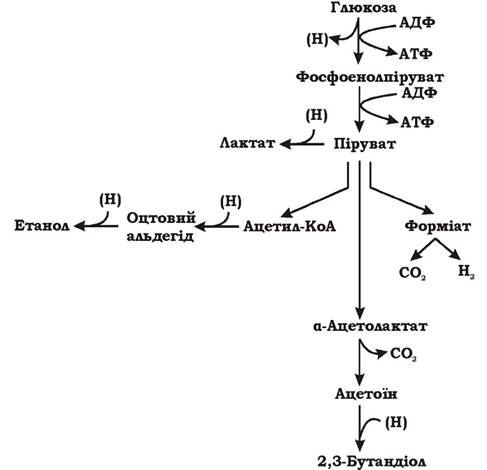
Fig. 6.14. Scheme of butanediol fermentation
Formate is a characteristic product of formic acid fermentation. Bacteria of the genera Shigella and Erwinia accumulate significant amounts of it in the medium. Other enterobacterial representatives, such as Escherichia coli and Enterobacter aerogenes, possess the enzyme formate hydrogenlyase, which degrades most of the formic acid into СО2 and Н2.
The energy yield of formic acid fermentation is 2–2.5 ATP molecules per glucose molecule. In addition to the 2 moles of ATP released during glycolysis, a certain amount of ATP is synthesized during the conversion of acetyl phosphate to acetate mediated by acetate kinase.
Butyric acid and acetone-butanol fermentations represent an anaerobic process of sugar conversion resulting in the potential accumulation of butyric acid (butyrate), acetate, ethanol, butanol, acetone, isopropanol, СО2, and Н2 in the medium. These processes are carried out by members of the genus Clostridium.
Fig. 6.15 illustrates the general outline of this process, though the PATHWAYS OF GLUCOSE catabolism and the resulting end products depend on the specific physiological Properties of the microorganisms. Butyric acid and acetone-butanol fermentations are typically regarded as distinct processes.

Fig. 6.15. General pathway of Glucose fermentation by Clostridia (butyric acid and acetone-butanol fermentation)
To take up sugars, clostridia employ a phosphotransferase system, whereas hexose phosphates are cleaved via the glycolytic pathway. A key reaction in this type of fermentation is the conversion of pyruvate to acetyl-CoA accompanied by the release of molecular hydrogen. This reaction, known as the phosphoroclastic cleavage, proceeds in several stages:
1. First, pyruvate is decarboxylated by the pyruvate:ferredoxin oxidoreductase enzyme system, while the remaining two-carbon fragment is bound by an enzyme containing thiamine pyrophosphate (TPP) and converted into hydroxyethylthiamine pyrophosphate (HETPP-E):

2. Next, acetyl-CoA is formed and ferredoxin is reduced:

3. Ferredoxin (a low-potential electron carrier belonging to the iron-sulfur Proteins) transfers electrons via Hydrogenase to protons derived from Water. These very protons act as electron acceptors in the reaction that releases molecular hydrogen (Fig. 6.16).

Fig. 6.16. Generation of molecular hydrogen during pyruvate oxidation
The acetyl-CoA produced during pyruvate decarboxylation serves as an intermediate in the formation of acetate and ethanol. Acetate is synthesized from acetyl-phosphate with the generation of ATP, whereas ethanol is formed through the reduction of acetyl-CoA and acetaldehyde.
Butyric acid, butanol, acetone, and isopropanol are derived from acetoacetyl-CoA, which is produced by the Condensation of two acetyl-CoA molecules via thiolase. Acetoacetyl-CoA is reduced by NADH2 to butyric acid and butanol. In addition, acetoacetyl-CoA acts as a precursor for the synthesis of acetone and isopropanol.
The Mechanism of amino acid fermentation by clostridia differs from sugar fermentation in that electron donors and acceptors are not generated from the original organic substrate. During amino acid fermentation, a molecule of one amino acid serves as an electron donor while another molecule acts as an acceptor (the Stickland reaction, Fig. 6.17), or two molecules of the same amino acid function as both the electron donor and acceptor. The End products of amino acid fermentation may include ammonia, СО2, molecular hydrogen, and short-chain fatty acids that typically retain the carbon Skeleton of the parent amino acid. Energy is conserved in this process via substrate-level phosphorylation.

Fig. 6.17. Paired amino acid fermentation via the Stickland reaction
The process of amino acid fermentation comprises several anaerobic redox reactions. The oxidative stage involves deamination and decarboxylation reactions and is consistently accompanied by substrate-level phosphorylation. Amino acid reduction is a relatively complex process involving several membrane-bound Proteins and Enzymes. Practically no ATP is synthesized at this stage of fermentation, with the sole exception of Glycine fermentation, where substrate-level phosphorylation is coupled to reduction reactions.
Syntrophic (secondary) fermentation. The classical (primary) fermentation processes discussed above break down sugars, organic acids, alcohols, amino acids, and heterocyclic compounds into short-chain Fatty Acids and alcohols. Fatty acids with more than two carbon atoms (propionate, butyrate), alcohols (ethanol, propanol, 2,3-butanediol), as well as Branched-Chain Fatty Acids and Aromatic Compounds, serve as substrates for secondary fermenting bacteria, also referred to as syntrophic bacteria. Syntrophic bacteria are obligate H+ reducers, meaning that protons act as their electron acceptors. Proton reduction yields molecular hydrogen, whereas substrate oxidation produces acetate, CO2, and potentially fumarate.
Butyrate- + 2H2O → 2 Acetate- + H+ + 2H2↑ (Fig. 6.18)
Propionate- + 2H2O → Acetate- + CO2 + 3H2↑ (Fig. 6.19)
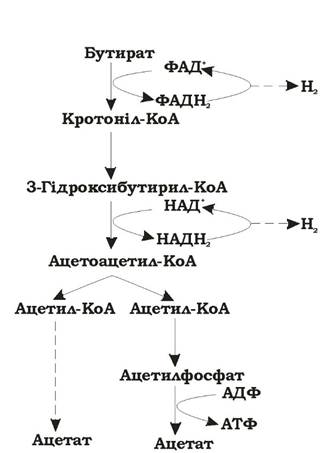
Fig. 6.18. Breakdown of butyrate by a culture of Syntrophomonas wolfei (molecular hydrogen is consumed by chemolithotrophs and does not accumulate in the medium)

Fig. 6.19. Oxidation of propionate by syntrophic bacteria (molecular hydrogen is consumed by chemolithotrophs and does not accumulate in the medium)
Since syntrophic bacteria utilize lower fatty acids ($E_0' > 320\text{ mV}$) as electron donors and protons ($E_0' = -420\text{ mV}$) as electron acceptors, these fermentation processes are endergonic. However, at low H2 pressures (below 1 Pa), secondary fermentation becomes energetically favorable and Supports ATP synthesis. Consequently, in nature, syntrophic bacteria exist exclusively in syntrophic associations with hydrogen-consuming lithotrophic microorganisms (methanogens, chemolithotrophic sulfate reducers, phototrophic green sulfur bacteria, and homoacetogens). The transfer of molecular hydrogen from syntrophic bacteria to hydrogen-scavenging bacteria requires direct cell-to-cell contact between different species, preventing the gas from being released into the medium. This phenomenon is known as interspecies hydrogen transfer.
Syntrophy (derived from Greek words meaning "eating together") is a specialized type of symbiotic interaction between two distinct groups of bacteria that, for energetic reasons, depend on one another to break down a specific substrate.
Examples of syntrophic bacteria include Thermoanaerobium brockii, Pelobacter venetianus, P. acetylenicus, P. carbinolicus (oxidizing ethanol, propanol, acetylene, and 2,3-butanediol); Syntrophomonas wolfei, S. sapovorans, Syntrophospora bryantii (oxidizing C4–C11 fatty acids); Syntrophobacter wolinii, S. pfennigii (oxidizing propionate and pyruvate); Clostridium ultunense (oxidizing acetate, ethanol, Ethylene glycol, and formate); Syntrophobotulus glycolicus (oxidizing glycolate and glyoxylate); and Syntrophus buswellii, S. gentianae (oxidizing benzoate and crotonate).
Last update: 13/08/2026
Editorial and Educational Adaptation: This material has been compiled based on the primary/original source text. The project team performed an editorial review, corrected technical inaccuracies, structured sections, and adapted the content for an educational format.
What was processed:
- elimination of formatting defects (OCR errors, structural breaks, corrupted characters);
- editorial organization of content;
- standardization of terminology in accordance with academic sources;
- verification of factual statements against the original source text.
All mentions of the author, publication year, and origin of the primary text have been preserved in accordance with the source.