MICROBIOLOGY Textbook - 2012
CHAPTER 9. PHYSIOLOGY OF MICROORGANISMS
9.5. FERMENTATIONS
9.5.6. Formic Acid Fermentation
Formic acid Fermentation is carried out by a specific physiological group of microorganisms that produce formic acid as one of the end products during carbohydrate fermentation. Because these microorganisms accumulate a wide range of other products alongside formic acid, this type of fermentation is also known as mixed-acid fermentation (Fig. 32).
Class="center">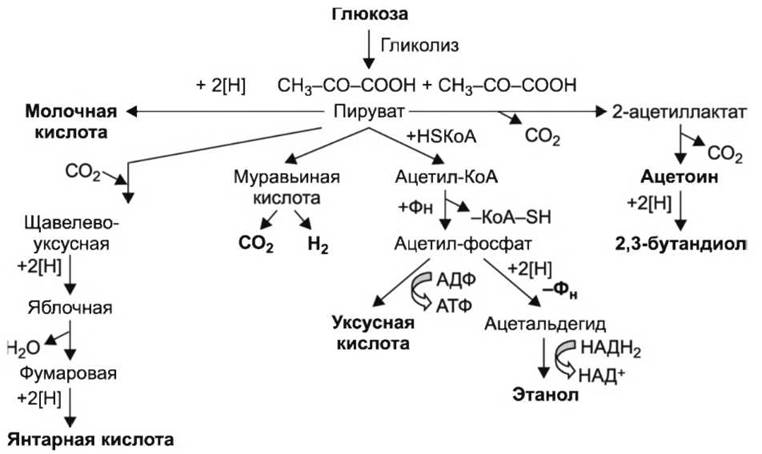
Fig. 32. Pathway of formic acid (mixed-acid) fermentation
The primary agents of formic acid fermentation are certain members of the family Enterobacteriaceae (from the Greek enteron meaning intestine). Bacteria of the family Enterobacteriaceae are Gram-negative, slender rods measuring (0.3–0.6) × (0.6–1.0) µm, motile or non-motile, with peritrichous flagella. They do not form endospores or microcysts, and they are non-acid-fast.
They are facultative anaerobes with both respiratory and fermentative METABOLISM/4.html">Types of Metabolism. They are not fastidious regarding Nutrition and grow readily on standard meat infusion and peptone media. They are catalase-positive (except for Shigella dysenteriae) and oxidase-negative.
During formic acid fermentation, glucose is cleaved to Pyruvate via The Glycolytic Pathway. Subsequent transformations of pyruvate depend on the species of the microorganism. Depending on the causative agent, two distinct types of metabolic processes are distinguished:
✵ bacteria of the species Escherichia coli produce A wide variety of compounds, dominated by organic acids such as acetic, formic, succinic, and lactic acids, which results in a positive methyl red test;
✵ bacteria of the species Enterobacter aerogenes also produce a range of acids, but these are quantitatively subordinate to neutral compounds—acetoin and 2,3-butanediol—resulting in a negative methyl red test.
The formic acid produced during pyruvate Cleavage is broken down by most gas-producing species of enterobacteria into CO2 and H2. Lactic acid is formed through the reduction of pyruvate, while succinic acid is produced via CO2 fixation. Part of the acetyl-CoA derived from pyruvate is released as acetic acid, whereas ethanol is a product of acetyl-CoA reduction.
Acetoin is formed by the Condensation of two pyruvate molecules, which involves a two-step decarboxylation process. Subsequent reduction of acetoin yields 2,3-butanediol.
The proliferation of enterobacteria in food products typically leads to blowing or gassing (early gas formation in cheese) and The Development of off-flavors.
Last update: 13/08/2026
Editorial and Educational Adaptation: This material has been compiled based on the primary/original source text. The project team performed an editorial review, corrected technical inaccuracies, structured sections, and adapted the content for an educational format.
What was processed:
- elimination of formatting defects (OCR errors, structural breaks, corrupted characters);
- editorial organization of content;
- standardization of terminology in accordance with academic sources;
- verification of factual statements against the original source text.
All mentions of the author, publication year, and origin of the primary text have been preserved in accordance with the source.