Pharmacognosy with the Basics of Plant Biochemistry - Kovalyov, V. M. 2004
Special Part
Essential Oils
Aromatic Compounds
Studies on monoterpene Biosynthesis have provided compelling evidence that γ-terpinene acts as a genetic precursor for aromatic compounds of the n-cymene type.
In addition to cymene derivatives, volatile aromatic compounds found in Essential Oils include benzene derivatives (benzaldehyde, vanillin) and phenylpropane derivatives (anethole, eugenol, etc.). Pleasant aromas are typically due to esters (anethole, piperonal), aldehydes (anisaldehyde, vanillin), and alcohols (thymol, carvacrol).
Class="center">
Distribution and Localization
Essential oils are widely distributed in nature. More than 2,500 higher plant species are capable of accumulating them. Lichens and ferns do not synthesize essential oil components. Plants rich in essential oils are particularly abundant in the tropics. Prominent families rich in essential oils include Lamiaceae, Apiaceae, and Asteraceae (with about 180 genera in each family), as well as Rosaceae (58 genera).
The essential oil content in various plant species ranges from 0.01 to 5%, and can reach up to 20% in certain species, such as clove flower buds and citrus fruits. During plant ontogeny, the percentage of oil and The ratio of its components change; in some cases, certain substances may completely disappear while new ones appear that were not previously detectable. In leaves, the highest concentration of essential oils is observed before and at the beginning of flowering; in flowers, during blooming; in roots, after the dieback of the aerial part; and in buds, during their Swelling.
In most cases, all plant parts contain oils of the same composition, but sometimes different Organs contain oils that differ sharply in composition. For example, in Ceylon cinnamon bark oil, cinnamaldehyde predominates, whereas eugenol prevails in the leaves and camphor in the roots.
Essential oils are localized in various plant parts and are synthesized and stored in specialized exogenic and endogenic structures. The former develop from the epidermal tissue and include glandular "spots", glandular trichomes, and essential oil glands. The simplest of these, glandular "spots", are found on the petals of roses, violets, and lilies of the valley. Endogenic structures developing in parenchymal Tissues include secretory Cells, reservoirs (schizogenous and lysigenous), secretory canals, and passages. A combined type of reservoir, known as schizolysigenous, is frequently observed; it forms when cells initially separate, after which the intercellular space enlarges due to Cell dissolution caused by the action of the essential oil. These are found in the fruit peel, ROOT and rhizome parenchyma, and leaf mesophyll (e.g., in citrus fruits, mullein roots and rhizomes, and eucalyptus leaves). Essential oil canals are typical of plants belonging to the Apiaceae family.
Physical Properties
Essential oils are transparent, colorless, or slightly yellowish liquids with a pleasant, characteristic aroma and a spicy, bitter taste. Some of them exhibit a blue color due to the presence of azulene (such as oils of chamomile, yarrow, and wormwood). Greenish (bergamot), red (caraway), and reddish-brown (cinnamon) oils are also encountered. The specific gravity of essential oils ranges from 0.700 to 1.060 g/cm3. Their reaction is typically neutral or acidic, and most of them are optically active.
Essential oils are steam-volatile. Being complex mixtures, they lack a defined boiling point. Fractional distillation at varying temperatures allows them to be separated into structurally similar fractions. Monoterpenoids constitute the low-boiling fraction of essential oils, whereas sesquiterpenoids make up the high-boiling fraction. Upon cooling, many essential oils solidify into a crystalline mass, such as those of peppermint, anise, and camphor.
Essential oils are readily soluble in alcohol and miscible in all proportions with petroleum ether, chloroform, carbon disulfide, and fats. They are insoluble in Water and, unlike fatty oils, do not leave greasy translucent spots on paper.
Extraction of Essential Oils
The most common Methods for obtaining essential oils are steam distillation, extraction, and pressing.
The choice of method depends primarily on the quantity and Chemical composition of the essential oil, the morphological and anatomical Properties of the raw material, and its intended Applications. Freshly harvested, wilted, dried, or pre-fermented raw Materials are used to extract essential oils.
Steam distillation. This is a traditional and most widely used method. It is based on Dalton's law of partial pressures. During steam distillation, a stream of steam is passed through the raw material placed in a distillation still. The steam carries away the essential oil and, passing through a condenser, flows into a receiver. The oil gradually accumulates above the water; it is then collected and dried. Each type of raw material requires specific conditions to be met, such as Temperature, pressure, and process duration.
Extraction. This method is used to isolate essential oils whose components decompose during hydrodistillation. The raw material is extracted using volatile Solvents (such as petroleum ether, benzene, ethanol, methylene chloride, etc.). The solvent is distilled off from the extract, and the residue is treated with ethanol. After removing the solvent from the ethanol fraction, the essential oil is obtained.
Relatively recently, a method for isolating essential oils using liquefied carbon dioxide or inert gases under reduced temperature conditions has been developed.
Sometimes, essential oils are obtained from fresh raw materials using the enfleurage method. A thin layer of beef or pork fat is applied to Glass, and the raw material is spread on top. The essential oil is absorbed by the fat and then extracted with ethanol.
A variation of enfleurage is the maceration method, where the raw material is immersed in fat heated to 50-70 °C. The resulting essential oil is of lower quality because it becomes contaminated with pigments, Waxes, and other lipophilic compounds.
Pressing. This method is used to obtain essential oils from the peel of citrus fruits. The crushed zest or whole peel is pressed, and the oil is subsequently separated by centrifugation or another method.
Analysis of Essential Oils
The stages of essential oil analysis include organoleptic evaluation (determining color, odor, taste, transparency, and consistency) and the determination of Physical and Chemical constants.
Physical constants include specific gravity, optical rotation, refractive index, and solubility in alcohol. The main chemical constants are the acid value (AV), ester value (EV), and ester value after Acetylation (EVA). The numerical ranges of these constants for oils are established According to the Pharmacopoeia and other standards.
Specific gravity. The specific gravity of the same essential oil can vary depending on the plant's stage of development, the extraction method, and the conditions and duration of storage. Consequently, deviations from established specific gravity limits can indicate the quality of the oil. For example, a decrease in specific gravity may indicate a reduction in the content of oxygenated compounds, which typically occurs when the essential oil is obtained from prematurely harvested raw material. Conversely, a higher specific gravity indicates the "resification" of the oil due to oxidation by atmospheric oxygen.
Angle of optical rotation. Since essential oils are complex mixtures of optically active substances, the angle of rotation is the algebraic sum of the rotation angles of individual components. However, in cases where a particular component significantly predominates in the oil, this physical constant can serve as a reliable indicator of its quality.
Refractive index. A high refractive index typically indicates a significant content of oxygenated compounds. Prolonged storage often leads to an increase in refraction due to polymerization, oxidation, and other chemical processes occurring within the essential oil.
Alcohol solubility. Solubility in ethyl alcohol (absolute or 70%) also provides valuable insight into the quality of an essential oil. Most Hydrocarbons exhibit poor solubility in alcohol, particularly aqueous solutions; therefore, solubility tests help estimate their relative concentration. Deviations from standard norms usually point to inferior quality or hydrocarbon adulteration.
Acid value represents the mass of potassium hydroxide, in milligrams, required to neutralize the free acids contained in 1 g of an essential oil. While this important constant is generally quite low (0.5–5.0), it tends to increase during storage due to the Hydrolysis of esters.
Ester value indicates the number of milligrams of potassium hydroxide consumed in the saponification of esters present in 1 g of an essential oil. This is a crucial parameter, as the characteristic aroma of essential oils is primarily determined by their ester content.
Ester value after acetylation is determined for essential oils whose quality depends on the concentration of free alcohols, such as linalool, geraniol, and citronellol. The essential oil is first acetylated and then saponified to measure the post-acetylation ester value. By comparing this result with the ester value of the original oil, the concentration of free alcohols in the sample can be accurately calculated.
Gas Chromatography and Gas-Liquid Chromatography are modern, highly effective methods for analyzing the Qualitative and quantitative composition of essential oil components.
Biological Activity and Applications
Medical practice utilizes raw essential-oil-bearing materials, whole essential oils, their specific fractions, and isolated components (such as menthol, camphor, and thymol).
Essential oils exhibit bacteriostatic, antiseptic, disinfectant, and fungistatic properties (Table 13). Furthermore, they possess varying degrees of Skin-irritating activity. Turpentine, camphor, and rosemary oils, among others, are key ingredients in numerous ointments prescribed for rheumatism, neuralgia, and colds. When dissolved in fats and applied topically, essential oils help suppress inflammatory processes. They can also penetrate the skin barrier, entering the bloodstream to circulate systemically. Additionally, they are widely used in inhalations to facilitate expectoration.
Certain essential oils eliminated through the Lungs act as effective expectorants. They directly influence bronchial secretion, modulating mucus production. In small doses, whether administered via inhalation or orally, they induce hyperemia of the mucous membrane, stimulate the secretory function of the Bronchi, increase fluid volume, lower mucus viscosity, and accelerate its clearance. Essential oils also act as respiratory stimulants. When administered for systemic (resorptive) effects, several essential oils exhibit mild analgesic and sedative properties.
Essential oil plants are also utilized for their diuretic effects, which stem from renal irritation. Certain essential oil components stimulate the mucous membranes of the Oral Cavity and the gastrointestinal tract. In low doses, they enhance salivations and gastric secretion, thereby improving Digestion. This principle underlies the culinary use of essential-oil-rich spices and herbs (such as cinnamon, clove, mint, and caraway).
A number of Essential oils and raw plant materials (including thyme, tansy, mullein, and wormwood) demonstrate significant anthelmintic activity.
An important chemical property of the terpenoids found in essential oils is their susceptibility to atmospheric oxygen at double bonds, leading to peroxide formation. Upon degradation, these peroxides convert into oxides, releasing atomic oxygen, which reacts with atmospheric oxygen to generate ozone:
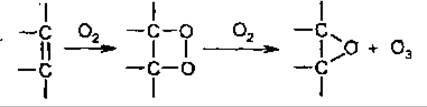
The pleasant aroma characteristic of pine forests is created not only by essential oils but also by the presence of ozone. Volatile plant phytoncides combined with ozone establish a therapeutic microclimate beneficial for patients with respiratory conditions.
Information regarding the pharmacological effects of crude plant drugs containing essential oils is provided in Appendix Table 13.
Chemical Composition and Biological Activity of Essential Oils
Table 13
Name of Plant Material |
Chemical Composition of Essential Oil |
Pharmacological Action of Essential Oil |
Essential Oils Predominantly Containing Terpenoids |
||
Rose oil — Oleum Rosae Rosa alba, R gаllica, R. damascene, R centifoha Fam. Rosaceae |
Geraniol (50-60 %), citronellol (25-30 %), nerol, citral, phenylethyl alcohol |
Anti-inflammatory, antiseptic, anesthetic, spasmolytic, litholytic |
Lemon oil — Oleum Citri Citrus limon Fam. Rutaceae |
Limonene (70 %), citral (2-6 %), geranyl acetate, citronellol, y-terpinene, myrcene, sabinene, etc. |
Sedative, hypotensive |
Lavender oil — Oleum Lavandulae Lavandula spica Fam. Lamiaceae |
Esters of linalool and acids (acetic, butyric, valeric, caproic), as well as geraniol, citral, 1,8-cineole, camphor, etc. |
Sedative, spasmolytic, antimicrobial |
Coriander oil - Oleum Coriandri Coriandrum sativum Fam. Apiaceae |
Linalool (50-80 %), terpinene, phellandrene, pinene, borneol, geraniol, geranyl acetate, camphor, carvone, etc. |
Bactericidal, mildly cytotoxic, choleretic, improves digestion, relieves flatulence |
Peppermint oil — Oleum Menthae piperitae Mentha piperita Fam. Lamiaceae |
Menthol (50-80 %), menthone (20-30 %), isomenthone, menthyl acetate, a-pinene, limonene, 1,8-cineole, pulegone |
Antiseptic, spasmolytic, choleretic, carminative, secretolytic |
Lemon balm oil — Oleum Melissae Melissa officinalis Fam. Lamiaceae |
Hexane, ß-pinene, limonene (30-50 %), citronellal (15-25 %), geranyl acetate, geraniol, ß-citronellol |
Sedative, antimicrobial |
Sage oil — Oleum Salviae Salvia officinalis Fam. Lamiaceae |
Hexane, a- and ß-pinene, camphene, sabinene, ß-myrcene, limonene, 1,8-cineole, p-cymene, camphor, sabinyl acetate, borneol |
Bactericidal, spasmolytic |
Rosemary oil — Oleum Rosmarini Rosmarinus officinalis Fam. Lamiaceae |
a- and ß-pinene, camphene, limonene, cineole, borneol, camphor, linalool, terpineol, verbenol, etc. |
Bactericidal, fungicidal, antioxidant |
Eucalyptus oil — Oleum Eucalypti Eucalyptus globulus, E. cinerea, E. viminalis Fam. Myrtaceae |
a- and ß-pinene, 1,8-cineole, p-cymene, isofenchone, a-terpineol |
Antiseptic |
Hop oil — Oleum Lupuli Humulus lupulus Fam. Cannabaceae |
a- and ß-caryophyllene (humulene), myrcene, a- and ß-selinene, a- and ß-pinene, limonene, cineole, geraniol, linalool, farnesene, etc. |
Antimicrobial, spasmolytic, hypotensive, sedative |
Fir oil — Oleum Abielis Abies sibirica Fam. Pinaceae |
Tricyclene, a- and ß-pinene, camphene, ∆3-carene, limonene, ß-phellandrene, bornyl acetate, borneol |
Antiseptic |
Pine oil — Oleum Ріnі Pinus sylvestris Fam. Pinaceae |
a- and ß-pinene (35-40 %), camphene, carene (45-50 %), ß-myrcene, sabinene, limonene, ß-phellandrene, a-terpinolene |
Antimicrobial, antiviral, anesthetic |
Purified turpentine oil (spirits of turpentine) — Oleum Terebinthinae Pinus sylvestris Fam. Pinaceae |
a-pinene (55-65 %), ß-pinene (30-40 %), camphene, ß-myrcene, limonene, ß-phellandrene, a-terpinolene, trans-caryophyllene |
Local irritant |
Juniper oil — Oleum Juniperi Juniperus communis Fam. Cupressaceae |
a- and ß-pinene, sabinene, ∆3-carene, ß-myrcene, a- and ß-phellandrene, y-terpinene, terpinen-4-ol, caryophyllene, a-terpineol |
Diuretic, irritant, expectorant |
Calamus oil — Oleum Calami Acorus calamus Fam. Araceae |
Asarone, camphor, a- and ß-pinene, camphene, ß-elemene, a-calacorene, acorone |
Spasmolytic, choleretic, diuretic, anti-inflammatory |
Essential Oils Containing Aromatic Compounds |
||
Cinnamon oil — Oleum Сіnnаmоmі Сіnnаmоmum verum, С. aromaticum, С. cassia Fam. Lauraceae |
3-Phenyl-2-propenal (80-88 %), eugenyl acetate, cinnamaldehyde, isocaryophyllene, a-pinene, terpinen-4-ol |
Antiseptic, digestive stimulant, reduces flatulence |
Clove oil — Oleum Caryaphylli Caryophyllus aromaticus (Eugenia caryophylla) Fam. Myrtaceae |
Eugenol (70-90 %), a-humulene, trans-caryophyllene |
Antiseptic, digestive stimulant |
Basil oil — Oleum Basilicі Оcimum basilicum Fam. Lamiaceae |
Eugenol (50-80 %), ocimene |
Bactericidal, immunomodulatory |
Thyme oil — Oleum Thymi Thymus vulgaris Fam. Lamiaceae |
Thymol, carvacrol, camphene, limonene, y-terpinene, p-cymene, linalool, borneol |
Antiseptic, expectorant |
Anise oil — Oleum Anisi Anisum vulgare Fam. Apiaceae |
Trans-anethole (80-95 %), limonene, hexane, ß-pinene |
Expectorant, reduces flatulence |
Fennel oil — Oleum Foeniculi Foeniculum vulgare Fam. Apiaceae |
Fenchone, trans-anethole (75-85 %), a- and ß-pinene, limonene |
Bactericidal, fungicidal, antioxidant, expectorant, reduces flatulence |
Dill oil — Oleum Aneihi Anethum graveolens Fam. Apiaceae |
a-Carvone (approx. 60 %), apiol (up to 40 %), phellandrene, a-limonene, ß-pinene, myristicin |
Spasmolytic, reduces flatulence, improves digestion |
Individual Compounds Isolated from Essential Oils |
||
Menthol — Menthоlum |
Sedative, analgesic, spasmolytic, antiseptic |
|
Camphor — Camphora |
Antiseptic, irritant, analgesic, cardiotonic, sedative |
|
Thymol — Тhуmоlum |
Antiseptic |
|
Eugenol — Eugenolum |
Antiseptic, local irritant, anesthetic, antioxidant |
|
Azulene — Asulenum |
Antiseptic, reparative, anti-inflammatory |
|
Last update: 06/08/2026
Editorial and Educational Adaptation: This material has been compiled based on the primary/original source text. The project team performed an editorial review, corrected technical inaccuracies, structured sections, and adapted the content for an educational format.
What was processed:
- elimination of formatting defects (OCR errors, structural breaks, corrupted characters);
- editorial organization of content;
- standardization of terminology in accordance with academic sources;
- verification of factual statements against the original source text.
All mentions of the author, publication year, and origin of the primary text have been preserved in accordance with the source.