ECOLOGICAL BIOCHEMISTRY - Study Guide - V. M. Isaenko 2005
Chapter 3. ALLELOPATHIC INTERACTIONS IN HIGHER PLANTS
3.1. Chemical Structure of Allelopathically Active Substances
Biochemical defense mechanisms of certain plants against others are primarily manifested when plants of one type compete with those of another. An example of such interaction is the competition between trees, shrubs, and herbaceous plants. At the same time, allelopathy can occur between plants of the same type, as well as between individual specimens of the same species. This phenomenon among plants of the same species is called autotoxicity or autoallelopathy.
Allelopathically active substances include compounds synthesized by plants or produced through their biotransformation and the METABOLISM of Saprophytes that decompose plant organic matter (Table 3.1).
Structurally, allelopathically active compounds are predominantly low-molecular-weight substances. These include hydrogen, hydrocyanic acid, Essential Oils, Hydrocarbons (isoprene, Ethylene, butylene, etc.), aldehydes (acetic, butyric, formic, propionic, etc.), Fatty acids, ketones, organic acids, cyanogenic and other Glycosides, terpenoids, phenols and phenolic acids, Coumarins, Quinones, Flavonoids, etc.
Class="center">Table 3.1.
Main Pathways of ALLELOPATHIC SUBSTANCE FORMATION
Source of allelopathics |
Pathways of formation |
Compounds produced by plants |
Volatile substances evaporating from aerial plant parts; compounds exuded by roots (ROOT exudates); wash-offs from aerial plant parts; wash-offs from leaf precipitation |
Products of plant substance biotransformation |
Biotransformation products of leaf litter and decomposing plant parts; breakdown products of root exudates |
Metabolites of saprophytes (Bacteria, Fungi), rhizoplane, rhizosphere, etc. |
Toxins; growth stimulants; other diverse BIOLOGICALLY ACTIVE SUBSTANCES |
The main classes of allelopathically active substances are listed in Table 3.2, and the structural formulas of some of them are shown in Fig. 3.1.
Table 3.2
CLASSES OF NATURAL SUBSTANCES,
CLASSES OF ALLELOPATHICALLY ACTIVE SUBSTANCES (after Telytchenko, Ostroumov, 1990, modified)
Class of substances |
Allelopathic substances |
Organic acids |
Acetic and butyric acids; salts of acetic, butyric, and propionic acids |
Simple lactones |
Protoanemonin |
Quinones |
Juglone, plumbagin |
Simple phenols, Phenolic Compounds |
n-Hydroxybenzoic, vanillic, n-coumaric, ferulic acids |
Coumarins |
Coumarin, esculin, psoralens, umbelliferone, scopoletin |
Flavonoids |
Phloridzin, quercetin |
Terpenoids |
Monoterpenes: limonene, α-pinene, etc.; sesquiterpenes: caryophyllene, etc. |
5-Hydroxy-L-Tryptophan |
|
Caffeine |
|
Cyanohydrins |
Dhurrin |
Glycosides |
Mustard oil glycosides |
Theophylline, paraxanthine, theobromine |
|
Other |
Fatty acids, polyacetylenes, Tannins |
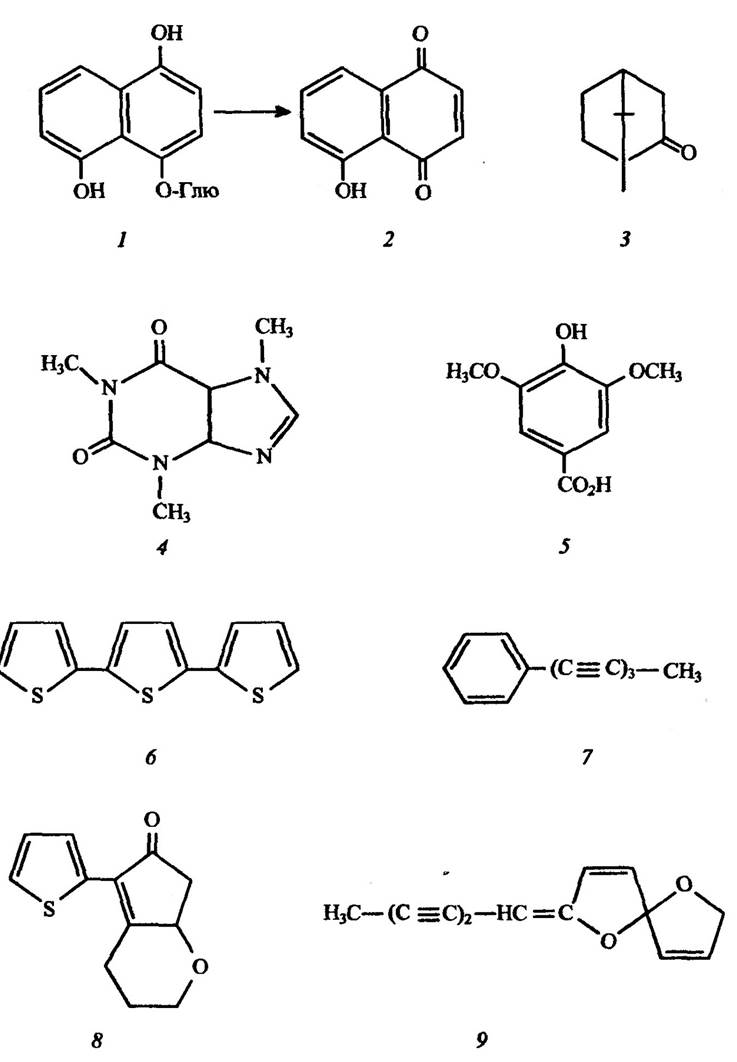
Fig. 3.1. Structure of some allelopathic substances:
1 — 4-glucoside-1,4,5-trihydroxy-naphthalene (bound form of the walnut toxin Juglans regia); 2 — juglone; 3 — camphor; 4 — caffeine; 5 — syringic acid; 6 — α-terthienyl;
7 — phenylheptatriyne; 8 — chrycorin; 9 — spirane; Glu — glucose
The main possible pathways for The formation of allelopathically active substances are shown in Fig. 3.2.
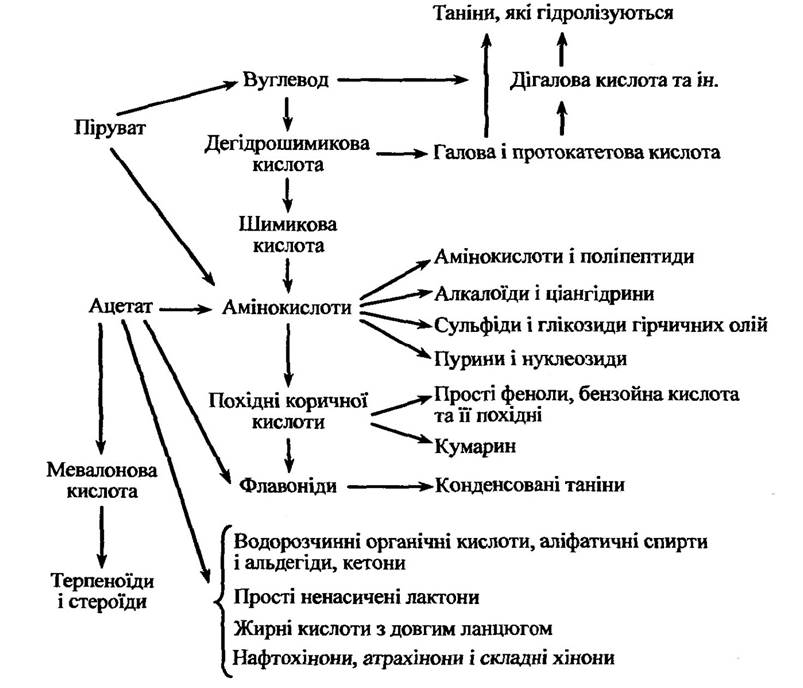
Fig. 3.2. Main pathways for the synthesis of various groups of allelopathically active substances (after Rice, 1978)
A typical example of allelopathy is the growth inhibition and death of A number of plants (tomatoes, alfalfa, potatoes, cereals, pine, apple, etc.) planted near the European black walnut Juglans regia. The zone of toxic effect is determined by the crown area of the tree and the ability of secretions from leaves, shoots, and branches to saturate the surrounding soil. In addition, this zone can extend to the length of the walnut roots due to their release of toxic substances.
It has been established that the walnut releases 4-glucoside-1,4,5-trihydroxynaphthalene, which upon Hydrolysis and oxidation converts into juglone (Fig. 3.1). This compound is a Water-soluble pigment responsible for the brown staining of hands when peeling walnuts. Since its distribution is limited to the green PARTS OF THE plant, it disappears in mature nuts.
Juglone is not only an inhibitor of the growth of various plants, but also of seed germination. A distinctive feature of juglone's action as a toxin is that it is contained in the plant in a safe, non-toxic form (as a precursor) and only after being released from leaves and shoots into the soil does it transform into the toxic form. To be active, this toxin must persist in the soil around the tree for a certain period of time.
The toxin juglone (its precursor) is produced not only by Juglans regia, but also by other walnuts, in particular the North American black walnut Juglans nigra.
As in other cases of allelopathy, juglone is toxic to most competing species, but not all. Thus, while most broadleaved grasses and ericaceous shrubs perish from juglone, species of the genus Rubus and Kentucky bluegrass Poa pratensis are capable of growing beneath walnut trees.
Besides juglone, there are various Other Compounds that play The Role of allelopathic substances formed As a result of the biotransformation of precursor substances. Examples of such substances are given in Table 3.3.
Table 3.3
SOME ALLELOPATHIC SUBSTANCES FORMED THROUGH THE TRANSFORMATION OF ACTIVE PRECURSORS (according to Telitchenko and Ostroumov, 1990, modified)
Plant |
Precursor |
Reaction in biotransformation |
Allelopathically more active product |
Sorghum |
Dhurrin |
HCN, n-oxybenzaldehyde |
|
Wheat |
Ferulic acid |
Decarboxylation |
2-Methyl-4-ethynyl-phenol |
Peach |
Amygdalin |
Enzymatic hydrolysis |
HCN, benzaldehyde |
Another typical example of allelopathy is the suppression of herbaceous plants by shrubs in arid and semi-arid landscapes. In this case, the suppression of herbaceous vegetation is driven by competition for water.
One such plant is Encelia farinosa, which grows in the Mojave Desert of Central California. The toxin responsible for the death of annual plants beneath and near the canopy of this shrub is released by its leaves—specifically, 3-acetyl-6-methoxybenzaldehyde (Fig. 3.3).

Fig. 3.3. Toxins of desert shrubs:
1 — 3-acetyl-6-methoxybenzaldehyde of Eucelsia farinosa; 2 — cinnamic acid of Parthenium argentatum
At the same time, it has been established that the shrubs Franseria dumosa and Thamnosma montana release water-soluble toxins that do not exhibit allelopathic effects on neighboring annual plants. This presumably occurs because these toxins are broken down by soil microorganisms, whereas the toxins of Encelia farinosa are more resistant to this degradation.
The most prominent shrubs of the Southern California chaparral—a vegetation zone characterized by low precipitation along a narrow coastal strip—are the white sage Salvia leucophylla and California sagebrush Artemisia californica. Around each individual shrub or cluster of shrubs, There is a bare soil zone ranging from 1 m to 2 m in width. Beyond this zone lies an area of stunted growth where only a few grasses manage to survive. Further out, typical grassland meadows extend.
It has been established that chaparral shrubs produce volatile terpene toxins (Fig. 3.4), which also include camphor (Fig. 3.1).
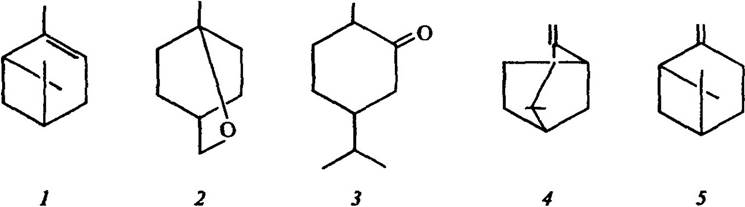
Fig. 3.4. Structure of volatile allelopathic Terpenes:
1 — α-pinene; 2 — 1,8-cineole; 3 — thujone; 4 — camphene; 5 — β-pinene
In these shrubs, terpenes are continuously synthesized in the leaves and released into the atmosphere. They settle onto the surrounding soil and remain there until rainfall activates soil microorganisms that break them down. These terpenes are capable of penetrating the Cells of competing plants through the waxy cuticles of roots and seeds.
In Salvia leucophylla, among various terpenes, 1,8-cineole and camphor are the most effective, with α- and β-pinenes and camphene also playing a role (Fig. 3.4). Similarly, in Artemisia californica, the most potent toxins are 1,8-cineole and camphor, alongside the presence of thujone, isothujone, and artemisia ketone.
Cineole, α-phellandrene, and α- and β-pinenes are also secreted by Eucalyptus camaldulensis. Sesquiterpene inhibitors such as β-caryophyllene, bisabolene, and chamazulene are produced by Artemisia absinthium. Alternariol acid, produced by Alternaria solani, causes brown spot disease in various solanaceous species.
Steroids with allelopathic and antimicrobial activity include digitoxigenin—the aglycone of digalanylides A, B, and C synthesized by Digitalis purpurea—and strophanthidin—the aglycone of convallatoxin synthesized by Convallaria majalis. The list of these terpenoids and steroids derived from mevalonic acid (Fig. 3.2) or its precursor by no means exhausts all the compounds that exhibit allelopathic activity.
Two other dominant shrubs in California are Adenostoma fasciculatum and Arctostaphylos glandulosa, which also display allelopathic effects on herbaceous vegetation. The leaves of these plants do not contain significant amounts of terpenes; instead, they produce large quantities of water-soluble phenolic compounds. Among these, the most effective inhibitors of herbaceous plant germination are hydroxybenzoic and hydroxycinnamic acids (Fig. 3.5):
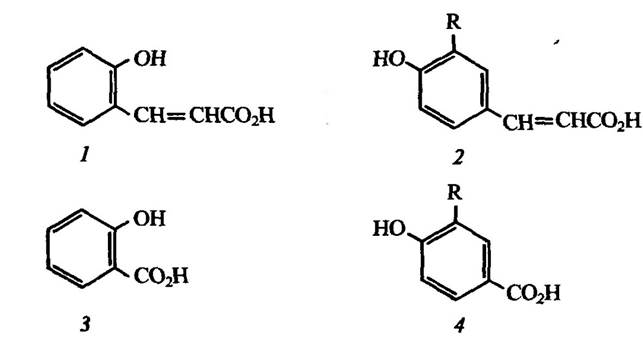
Fig. 3.5. Some water-soluble plant allelopathic substances:
1 — o-coumaric acid; 2 — n-coumaric (R = H) or ferulic (R = OCH3) acid;
3 — salicylic acid; 4 — hydroxybenzoic (R = H) or vanillic (R = OCH3) acid
The climate of California is characterized by frequent coastal fogs, which cause moisture to precipitate onto shrub leaves and the surrounding soil. This facilitates the regular transfer of water-soluble allelopathic compounds from the leaves into the soil.
Water-borne allelopathic substances have also been discovered in other plants across various Regions of the globe. In the trees *Quercus falcata* and *Liquidambar styraciflua* (native to Southern California), toxins such as salicylic acid have been identified, which suppress understory growth in areas reached by crown drip.
The bracken fern (*Pteridium aquilinum*) produces water-soluble phenols (specifically caffeic and ferulic acids) that inhibit herbaceous vegetation growth. This plant also exhibits autoallelopathic effects, meaning the suppression of growth in plants of the same species.
Growth inhibition and plant death caused by root rather than foliar toxins are observed in the guayule shrub, *Parthenium argentatum*. The roots of this plant secrete the toxin cinnamic acid (Fig. 3.3), which acts as an autoallelopathic agent.
Compounds exhibiting allelopathic activity that are toxic to plants and other organisms include non-protein amino acids, of which over 450 have been found in higher plants. Their toxicity stems from the fact that Aminoacyl-tRNA synthetases, sensitive to these toxins, activate non-protein Amino Acids and fail to distinguish them from protein amino acids. Consequently, this leads to reduced Protein Synthesis or the synthesis of defective Proteins.
A similar effect is produced by the Proline analogue azetidine-2-carboxylic acid, which, much like non-protein amino acids, is toxic not only to plants but also to other organisms, particularly phytophages.
Rhizobitoxin—2-amino-4-(2-amino-3-hydroxypropoxy)-trans-but-3-enoic acid—inactivates β-cystathionase, impedes The conversion of Methionine into ethylene, and causes chlorosis in young leaves. Among polypeptide allelopathic inhibitors are victorin, synthesized by the oat helminthosporiosis pathogen Helminthosporium victoriae; HC-toxin from Helminthosporium carbonum; and Fusarium oxysporum Lycomarasmin, which causes tomato leaf wilting, among others.
Malonic, citric, and fumaric acids have been isolated from Pinus resinosa seeds, where they suppress zoospore germination and the growth of Pythium afertile. The leaves of beets, tomatoes, radishes, and carrot roots release volatile growth inhibitors, including acetic and propionic aldehydes, acetone, methanol, and ethanol. Acetic and butyric acids have been identified in decomposing rye residues.
A vast array of plant inhibitors displaying diverse chemical natures has been identified (see also Chapter 4). Lactones represent one such group of substances. Simple lactones include p-sorbitonic acid, which inhibits seed germination, seedling growth, and the viability of certain microorganisms. Certain buttercup species (Ranunculus) produce ranunculin and protoanemonin, which similarly inhibit seed germination and the growth of numerous bacteria. Simple lactones also encompass a range of Antibiotics, notably patulin and penicillic acid produced by the fungus Penicillium cyclopium. Patulin is synthesized by several fungi and likewise inhibits the growth of higher plants.
Higher Plants and fungi synthesize a variety of anthraquinones. Examples of such compounds include helminthosporin from Helminthosporium gramineum, skyrin from Endothia parasitica, and others.
A large group of allelopathically active substances is represented by terpenoids and steroids synthesized from mevalonic acid (Fig. 3.2) or its precursor. Monoterpenoids are the Main Components of plant essential oils.
Dehydroshikimic acid gives rise to gallic and protocatechuic acids (Fig. 3.2), which are phenols. In general, simple phenols, benzoic and cinnamic acids, and their derivatives are among the most widespread allelopathically active substances. Phloroglucinol and n-hydroxybenzoic acid are formed during The breakdown of phloridzin upon the decomposition of apple tree root residues.
Hydroquinone, gallic, protocatechuic, vanillic, n-hydroxybenzoic, syringic acids, and arbutin have been detected in leaf washings of Arctostaphylos glandulosa.
Cinnamic acid and its derivatives—widespread plant allelopathically active substances—are synthesized from phenylalanine or Tyrosine. Coumarins are lactones of o-hydroxycinnamic acid with various side chains. Typical examples are coumarin and esculin. Certain cinnamic acid derivatives (such as chlorogenic and ferulic acids from Camellia alyssum fruits) inhibit growth and seed germination. n-Coumaroylquinic and chlorogenic acids have been found in apple leaves. Furanocoumarins have also been identified among plant inhibitors.
A large group of allelopathically active substances consists of hydrolyzable tannins, which include gallotannic, ditannic, ellagic, chebulic, hexahydroxydiphenic, and other acids, as well as condensed tannins. This group also includes A wide variety of alkaloids, cyanohydrins, purines and nucleosides, sulfides, mustard oil glycosides, and a number of plant inhibitors whose structures have not yet been elucidated.
Research into allelopathy makes it possible to uncover specific Structural Features of the plant world. For instance, when studying the interaction of aquatic
vegetation, it was established that the decomposition of the aerial parts of several species (broadleaf cattail Typha latifolia, common spikerush Eleocharis palustsis, reed sweet-grass Glyceriamaxima, sweet flag Acorus calamus, lakeshore bulrush Schoenoplectus lacustris, etc.) inhibits SHOOT growth of the common reed Phragmites australis.
Allelopathic effects have also been observed in studies of other aquatic plants. Specifically, it has been shown that salicylic and gallic acids inhibit the tuber growth of Hydrilla verticillata, while flavonoids, coumarin derivatives, and other compounds inhibit the growth of Lemna minor.
Extracts of Brasenia schreberi inhibit The Development of several bacteria as well as lettuce seedlings.
Certain allelopathic Interactions Between Plants can be mediated by animals. A classic example is The Effect of allelopathic substances from eucalyptus leaves Eucalyptus globosus (phenols, terpenes, etc.) on the growth of herbaceous vegetation (Trifolium repens, Sinapis, Festuca rubra, Themeda australis). These substances enter the soil via the excrement of the eucalyptus leaf beetle Paropsis atomaria.
Last update: 06/08/2026
Editorial and Educational Adaptation: This material has been compiled based on the primary/original source text. The project team performed an editorial review, corrected technical inaccuracies, structured sections, and adapted the content for an educational format.
What was processed:
- elimination of formatting defects (OCR errors, structural breaks, corrupted characters);
- editorial organization of content;
- standardization of terminology in accordance with academic sources;
- verification of factual statements against the original source text.
All mentions of the author, publication year, and origin of the primary text have been preserved in accordance with the source.