Vertebrate Zoology - V. M. Konstantinov 2011
Chordates
Gnathostomes
Class Bony Fishes - Subclass Sarcopterygii - Superorder Crossopterygii
Crossopterygii, or coelacanths, are an ancient and nearly extinct group of fish. They were relatively widespread during the Devonian and Carboniferous periods. Their fossil remains have been discovered in corresponding strata in fresh and marine waters across the globe, spanning from Svalbard and Novaya Zemlya to South Africa, Australia, and Antarctica. Their species diversity and geographical distribution declined significantly during the Mesozoic era. The first specimen of these remarkable fish was caught in 1938 in the Indian Ocean off the southern coast of Africa, near the Mouth of the Chalumna River, at a depth of about 70 m. It was a large fish, measuring 150 cm in length and weighing 57 kg. It was named Latimeria chalumnae in honor of Ms. Latimer, the curator of a local regional museum who spotted the unusual fish in a trawler's catch and preserved it for science. Subsequently, crossopterygians have been caught in this area on numerous occasions. The local population regularly catches them for food (Fig. 46).
Class="center">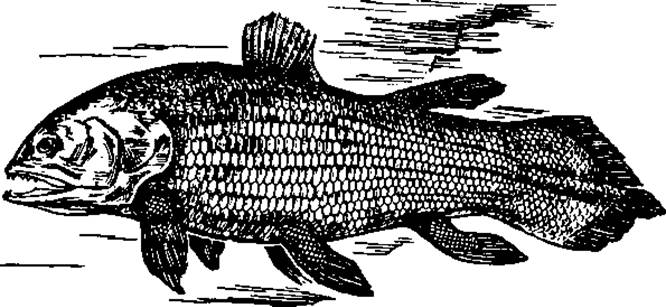
Fig. 46. Latimeria

Fig. 47. Skeleton of a crossopterygian fin (Sauripterus)
All modern crossopterygians—the latimerias, or coelacanths—have been found exclusively in the region of the Comoro Islands, where they inhabit depths of 400 to 1,000 m at a Water Temperature of 10... 14°C. The body length of sexually mature individuals ranges from 125 to 180 cm, with a mass of 25 to 80 kg. The vertebrae are rudimentary, and the notochord remains well-developed throughout life. The primary Skull is largely cartilaginous. Coelacanths are predatory, with mouths armed with numerous sharp Teeth.
A degenerated, fat-surrounded lung has been found in their body cavity. Coelacanths lack internal nostrils and, unlike their Mesozoic ancestors, are incapable of breathing atmospheric oxygen.
The body of crossopterygians is covered in scales consisting of thick, rounded or rhomboid bony plates, overlaid with a modified layer of dentine and a thin layer of enamel. Their paired fins have a distinctive Structure. At their base lies a broad, fleshy (muscular) lobe enclosing the skeletal support for the main part of the fin itself (Fig. 47). To date, approximately 100 specimens of Latimeria have been caught.
Crossopterygians are undoubtedly closely related to lungfish and presumably share a common evolutionary ROOT with them. Originally, they inhabited freshwater bodies, where they lay in wait for prey. Periodically, they likely experienced oxygen shortages, which led to The Development of dual breathing. The accumulation of decaying plant matter in these waters was probably a key prerequisite for the evolution of specialized paired appendages possessing intrinsic musculature, which could be used not only for swimming but also for bracing against a solid substrate such as the bottom, plant stems, or tree trunks.
The evolution of ancient crossopterygians followed at least two distinct paths. One of these—The Emergence of coelacanths (order Coelacanthiformes)—led these fish into the open ocean. Representatives of this evolutionary Lineage have survived to the present day in the form of Latimeria. Another group of crossopterygians, the Rhipidistiiformes (specifically the osteolepiform rhipidistians), combined features adapted for terrestrial Respiration (Lungs, internal nostrils or choanae) and locomotion on solid substrates (a uniserial paired fin structure structurally close to the pentadactyl limb) in one of their evolutionary branches. They are believed to be the ancestors of terrestrial vertebrates.
ECOLOGY OF FISH
Certain Environmental Conditions of Fish in the Aquatic Habitat
The living arena of Fishes is exceptionally vast. With the total surface area of the globe being approximately 510 million km2, 71%, or about 361 million km2 of the entire area, is occupied by The surface of oceans and seas. About 2.5 million km2, or 0.5% of the Earth's surface, is occupied by inland water bodies. Furthermore, the vastness of the fishes' habitat is determined by its great vertical extent. The maximum known depth of the ocean is approximately 11,000 m. Oceans with a depth of more than 3,000 m occupy roughly 51–58% of the total marine area. Fishes inhabit regions spanning from the equator to polar areas; they are found in high-altitude water bodies at elevations exceeding 6,000 m above sea level and in oceans at depths exceeding 10,000 m. All of this creates a vast diversity of living conditions.
Water as an aquatic environment possesses A number of specific features that create unique conditions for animal habitation and contribute to their exceptionally wide species and ecological diversity.
Let us examine certain Features of the aquatic environment in relation to the fishes inhabiting it.
Mobility of the aquatic environment. The mobility of the aquatic environment is associated with permanent currents in rivers and seas, local currents in small enclosed water bodies, and vertical movements of water layers caused by their differential heating.
Water mobility largely determines the passive movement of fishes. For example, Norwegian herring larvae, which hatch off the coast of Western Scandinavia, are carried away to the northeast by one of the Branches of the Gulf Stream and are transported 1,000 km along the coastline over the course of 3 months (Fig. 48). The fry of many salmonid species hatch in the upper reaches of major river tributaries, while spending the majority of their lives in the seas. The transition from rivers to seas is also largely passive, driven by river currents. Finally, water mobility causes the passive displacement of food organisms—plankton—which, in turn, entails the migration of fishes as well.

Fig. 48. Diagram of Norwegian herring migration
Temperature fluctuations. Temperature fluctuations in the aquatic environment are significantly smaller than those in terrestrial and atmospheric environments. In the vast majority of cases, the upper temperature limit at which fishes are found lies below 30–40°C. Particularly characteristic is the lower limit of water temperature, which, even in the highly saline PARTS OF THE oceans, does not drop below -2°C. Consequently, the actual temperature amplitude of the fishes' habitat is 35–45°C. However, even these relatively limited temperature fluctuations are of great importance in the life of fishes.
Fishes belong to poikilothermic animals. Their body temperature is directly dependent on the ambient temperature and changes in accordance with it. Temperature affects the Organism of fishes both directly and indirectly—through the ability of water to dissolve gases and by altering gas exchange.
Presence of oxygen in water. It is known that the ability of water to dissolve gases, in particular oxygen, is inversely proportional to its temperature and salinity. This is evident from the data in Table 4. At the same time, as the water temperature rises, the fishes' demand for oxygen increases.
A minimum oxygen concentration has been identified, below which a fish dies. For carp at a temperature of 1°C, this value is 0.8 mg/L, at 30°C—1.3 mg/L, and at 40°C—about 2.0 mg/L.
The oxygen demand of different fish species also varies. Based on this characteristic, they can be divided into four groups: 1) demanding very high oxygen levels—7–11 cm3/L: brown trout (Salmo trutta), Eurasian minnow (Phoxinus phoxinus), Arctic char (Salvelinus alpinus); 2) demanding high oxygen levels—5–7 cm3/L: European grayling (Thymallus thymallus), chub (Leuciscus cephalus), gudgeon (Gobio gobio); 3) consuming a relatively small amount of oxygen—about 4 cm3/L: roach (Rutilus rutilus), Eurasian perch (Perca fluviatilis), ruffe (Acerina cernuus); 4) tolerating very low oxygen saturation of water and living even at 0.5 cm3/L: common carp, tench, crucian carp. Hence, There is a constant need for water renewal in some species, whereas others possess The ability to live in relatively calm, slow-flowing, or stagnant water bodies.
Of immense importance in the life of fishes, both positive and negative, is the seasonal formation of ice in water bodies during winter.
The ice cover isolates the underlying layers of water from low air temperatures, thereby preventing the water body from freezing down to the bottom. (Only occasionally do shallow water bodies freeze completely to the bottom.) This makes the survival and distribution of fish possible in regions with extremely low winter air temperatures. Such is the positive Significance of the ice cover. However, the ice cover also plays a negative role in the lives of fish. It darkens the water bodies, which slows down and even halts the vital processes of many aquatic organisms that directly or indirectly serve as food for fish. Primarily, this concerns green Algae and higher plants, which feed both the fish themselves and the invertebrates that serve as their prey.
Table 4
Oxygen content in water (cm3/L) at various temperatures and salinities
Water temperature, °С |
Water salinity, mg/L |
||
0 % |
20 % |
35 % |
|
0 |
10,3 |
9,0 |
8,0 |
10 |
8,0 |
7,1 |
6,4 |
20 |
6,6 |
5,9 |
5,4 |
30 |
5,6 |
5,0 |
4,5 |
The ice cover drastically reduces the replenishment of water with oxygen from the atmosphere. In winter, decomposition processes deplete the dissolved oxygen in many water bodies completely. This leads to a phenomenon known as fish winterkill ("zamor"). It is widespread in Russia, particularly in basins whose catchment areas are largely associated with peat bogs. Severe winterkills occur, for example, in the Ob River basin. The bog waters feeding these rivers are rich in humic acids and iron oxides. As the latter oxidize, they consume the oxygen dissolved in the water. Meanwhile, replenishment from the air is blocked by the solid ice sheet, which disrupts the ecosystem of these water bodies for extended periods.
Winterkills also occur in the rivers of European Russia. They are successfully combated by cutting ice holes and increasing the flow-through of ponds and lakes. Highly technical fish farms employ compressors that pump in oxygen-enriched water.
Sound conductivity. Another property of water is its sound conductivity. This phenomenon is extensively used by fish to gather comprehensive information about food, predators, and anomalous environmental events. Acoustic signaling is well developed among fish. It facilitates information exchange both within the same species and between different species. The sounds produced by fish undoubtedly also serve an echolocating function (see the subsection on Sensory Organs).
The life cycle of Fish. Migrations
The Life Cycle of fish consists of a series of successive stages: maturation, reproduction, feeding, and wintering. During each of these stages, fish require specific environmental conditions which they find in various, often distant parts of a water body, or sometimes in entirely different water bodies.
For instance, the conditions required for spawning differ from those ensuring optimal feeding. Fish impose distinct requirements on their wintering grounds as well. As a result, in search of conditions suitable for each biological activity, fish undertake migrations of varying magnitude. In species inhabiting small, enclosed water bodies (ponds, lakes) or rivers, these movements are on a minor scale, although even then they are quite distinct. Spawning, feeding, and wintering migrations are typically distinguished.
The degree to which spawning migrations are developed varies among species. Some fish—the majority—spawn annually (or at certain intervals), repeating the exact same routes. Others undergo the sexual maturation stage only once in their lifetime, undertake a single spawning migration, and reproduce only once. Examples include certain salmon species (chum salmon, pink salmon) and freshwater eels.
Migrations are especially pronounced in marine fishes, and even more so in diadromous fishes. Many strictly marine species undertake long-distance movements related to spawning, moving from the open sea to the coast or, conversely, from coastal waters into the open sea. Examples include marine herrings, cod, haddock, and others. The length of the migration route depends on how far the suitable spawning grounds are located from the feeding areas.
Spawning migrations in diadromous fishes are extremely complex and diverse: they involve moving from the sea into rivers—anadromous migrations (more common)—or, conversely, from rivers into the sea—catadromous migrations (less common).
Spawning migrations from the sea to rivers are characteristic of many salmonids, sturgeons, and certain herrings and cyprinids. Considerably fewer species feed in rivers and migrate to the sea to spawn; eels are a prime example.
The length of spawning migrations varies significantly. For instance, semi-diadromous cyprinids of the northern Caspian region (such as roach and vobla) ascend rivers for only a few dozen kilometers. Many salmon species undertake massive migrations. For the Far Eastern chum salmon, the migration route reaches up to 2,000 km or more in some places, while for the Siberian sockeye salmon, it is about 4,000 km. The Atlantic salmon (sämga) ascends the Pechora River to its upper reaches. The European eel travels several thousand kilometers to its spawning grounds in the western Atlantic Ocean, within the Sargasso Sea.
The timing of spawning migrations is also variable. In fish, migration timing cannot be specified as precisely as, for example, the breeding migrations of birds. For instance, the Atlantic salmon of the White Sea enters rivers in two distinct runs. In autumn, individuals with relatively underdeveloped Gonads ascend the rivers, overwinter there, and spawn the following year. Alongside this autumn race, there is another biological race of White Sea salmon that enters rivers in summer. These summer fish have well-developed gonads and spawn in the same year. This behavior contributes to the ecological Differentiation of the species into two seasonal groups. The Far Eastern chum salmon also exhibits two spawning runs. In the Amur River, the "summer" chum enters in June–July, and the "autumn" chum in August–September. Unlike the Atlantic salmon, both biological races of chum spawn in the year they enter the river. Vobla enters the rivers of the Caspian basin for spawning in the spring, whereas certain whitefishes in Siberia, conversely, migrate to their spawning grounds only in autumn.
Below are generalized descriptions of the spawning migrations of certain fish species.
Prior to reproduction, the Norwegian spring-spawning herring feeds far to the northwest of Scandinavia, near the Faroe Islands, and even in the waters around Svalbard. In late winter, schools of herring begin moving toward the Norwegian coast, reaching it in February and March. Spawning occurs in coastal fjords in shallow waters. The hatched larvae remain only partially in the fjords; the vast majority are swept by the northeastern branch of the Gulf Stream—the Norwegian Current—northward along the Scandinavian coast. Such passive migration often begins at a very early stage, when the larvae still possess a yolk sac. Over the course of 3 to 4 months, by late July or early August, they travel 1,000–1,200 km and reach the shores of Northern Norway (see Fig. 48).
Young herring make the return journey actively, but slowly—taking 4 to 5 years. They progress southward in stages year by year, alternately approaching the coast and moving out into the open sea. At four or five years of age, the herring reach sexual maturity and arrive at the spawning area where they were born. This concludes the first, "juvenile" stage of their life—a period of long-distance travel to the north. The second period, the stage of maturity, involves annual migrations from the feeding grounds to the spawning grounds and back.
Let us examine the spawning migrations of diadromous fishes using Far Eastern salmon as an example. Their Life in the sea during sexual maturation has not been sufficiently studied. However, it is known that salmon do not disperse randomly across the vast expanse of the northern Pacific Ocean, but rather concentrate in specific areas.
The run of chum salmon in the Amur River was thoroughly studied in its time by V. K. Soldatov and his followers. As mentioned, two runs are observed there: the summer run—starting from late June—and the autumn run in August–September.
Chum salmon ascend the Amur River from the ocean at a considerable speed—30 to 35 km, and according to some data, even 47 km per day. Entering Amur tributaries and moving up small rivers, the fish must overcome rapids and fast-flowing torrents. Salmon successfully leap over waterfalls up to 1 m high. Before tackling an obstacle, they typically rest and gather strength in calm pools, then dart toward the waterfall and leap out of the water. If unsuccessful, they rest and try again.
Naturally, overcoming such obstacles expends a tremendous amount of energy. According to P. Yu. Schmidt, the daily Energy Expenditure for a migrating chum salmon is 103,240 kJ for males and 113,560 kJ per 1 kg of body weight for females. It should be noted that upon entering rivers, fish stop feeding entirely, so energy expenditure relies solely on the nutrients stored in their bodies. This leads to dramatic Changes in the appearance and physiological state of the migrants.
As the fish approach their spawning grounds, their gonads mature. For instance, in female chum salmon passing through the Amur estuary, the mass of the gonads accounts for 7% of the total body weight; 300 km upstream, gonad mass increases to 10% of body weight, at 570 km to 12%, at 1,000 km to 17%, and near the spawning grounds (at a distance of 1,190 km) to 19%.
Chum salmon arrive at the spawning grounds in the Amur tributaries—mostly in their upper reaches, in areas with a gentle current, pebble bottoms, and a water depth of 0.5–1.2 m—with fully developed gonads and soon begin spawning. The fish deposit their eggs into specially excavated pits and cover them with gravel.
Having traversed a long and arduous journey, having expended nearly all their energy on the voyage and reproduction, and having eaten nothing throughout this entire period, the fish die shortly after spawning: some right at the spawning grounds, others after being swept downriver by the currents into the sea. Riverbanks become strewn with the carcasses of chum salmon, drawing a multitude of scavengers and birds that feed on the weakened and dead fish. Thus, the chum salmon spawns only once in its lifetime. In the spring of the following year, the chum fry begin their downstream migration, reaching the sea by summer. Here they mature, put on weight, reach sexual maturity, and 3 to 5 years later embark on a journey back to their birthplace.
The reproductive migrations of the European eel (Anguilla anguilla) are remarkably complex and fascinating. This species inhabits the coastal waters of Europe and North Africa, where it lives in A wide variety of freshwaters, including rivers, streams, and ponds. Eels possess a high dispersal capacity, as they are capable of crawling over land from one body of water to another. Such overland migrations take place at night, with eels slithering through damp grass for distances of several kilometers.
Life for eels in rivers begins with the arrival at river mouths of small, eel-like fish measuring 6 — 8 cm in length with completely transparent bodies. As they ascend the rivers, the eels darken, and upon reaching a length of about 20 cm, their bodies become covered in scales. Their lifespan in rivers varies, but is at least six years, and frequently 10 years or more.
Upon reaching a certain age, eels acquire their nuptial coloration and begin migrating downstream toward the sea. This phenomenon is largely inconspicuous from the surface, as eels typically travel at night and through the deeper parts of rivers. Once they enter the sea, eels become nearly impossible to observe, which is why The Significance of these migrations remained unknown for a long time. The Nature of their reproduction was also a mystery, since individuals living in freshwater show no visible gonads. This gave rise to the most fanciful theories. It was only in the late 19th century, through histological studies, that the presence of Testes and Ovaries was confirmed. It became evident that eels reproduce through standard sexual propagation. Yet, for a long time, the exact Location of their spawning remained unclear; scientists knew neither the mature roe nor the young of eels.
Alongside this, since the beginning of the past century, fishermen and zoologists had been aware of a tiny, transparent fish of such peculiar Morphology that it was classified into a distinct genus—Leptocephalus. These fish varied in Size and Structure, and several species were described. It was not until 1897 that experimental studies established that leptocephali are, in fact, eel larvae. However, the question of their spawning grounds remained unresolved.
This puzzle was solved in the early 20th century by the renowned Danish ichthyologist Johannes Schmidt. The life cycle of eels can be outlined as follows. Adult eels leave the rivers of Europe and North Africa and, heading west or southwest, reach the western Regions of the Atlantic Ocean. They travel at an average speed of 15 km per day, occasionally reaching 40 — 50 km per day, covering a distance of 7,000 to 8,000 km. In the spring, upon reaching the region between the Bermuda and Bahamas islands, the eels descend to depths of about 1,000 m, spawn, and die. The hatched larvae ascend from the depths—where not a single ray of light penetrates—to the tropical sunlit surface of the ocean and begin their return journey eastward across the entire ocean. They drift largely passively, carried along by the currents of the Gulf Stream. This journey takes three years, until transparent eels finally appear off the coasts of Europe and Africa, entering the rivers where the second phase of their lives begins. After 6 — 9 years (and occasionally 10 — 20 years), now fully grown, they HEAD back out to the ocean to leave progeny and perish.
How do fish navigate to find spawning grounds located thousands of years away from their feeding grounds? How and why did spawning migrations evolve? Generally speaking, answering the first question is relatively straightforward.
Undoubtedly, the migratory movements of fish are rooted in their neurosensory reflex activity. During migration, fish perceive regular and gradual environmental changes that act as specific stimulus signals. For instance, anadromous salmon apparently navigate by sensing gradual shifts in water chemistry. Migrating eels likewise appear to be guided by regular changes in water temperature and salinity, given that their spawning area coincides with the warmest and most saline waters in the ocean.
Any eels starting from any point along the European or African coastlines, if they orient themselves toward steadily increasing water temperatures and salinity, will inevitably arrive via the shortest route at the warmest and most saline region—that is, their spawning grounds.
Guiding fish on their thousands-of-miles-long journeys is an astonishingly acute capacity to perceive the chemical and physical states of water, coupled with a phenomenal memory for these corresponding stimuli.
Experimental evidence Supports the dominant role of olfactory orientation in fish migrations: salmon with plugged nostrils lost their ability to find the correct path and migrated in erratic, atypical directions.
The causes of eel migration have yet to be fully explained. According to P. Yu. Schmidt, during the maximum glaciation, temperature distribution in the Atlantic was different: the warmest water zone was located far to the south of its present position. Rather than forming a localized oval in the western part of the ocean as it does today, it constituted a relatively broad band stretching all the way across the ocean to the east. Consequently, the migration routes of both European and American eels were much shorter at that time.

Fig. 49. Distribution and migration scheme of the European eel:
1 — newly hatched larva; 2 — one-year-old larva; 3 — two-year-old larva; 4 — larva prior to metamorphosis; 5 — Glass eel; 6 — adult eel; 7 — range of the glass eel stage; 8 — distribution areas of the European eel in continental freshwaters; 9 — average larval length in mm
With the end of the ice age, when the Gulf Stream assumed its modern northeastward course and cold waters from the Southern Hemisphere penetrated the eastern part of the ocean, the zone of maximum temperatures contracted and shifted westward. As the glaciers retreated and new rivers formed on the continents, eels colonized them. The northward dispersal of eels alongside the westward retraction and Displacement of the warmest water zone ultimately led to the elongation of their migration routes (Fig. 49).
There are two opposing views regarding the migration of anadromous salmon. The fact that nearly all anadromous fish are distributed in the Northern Hemisphere makes it highly probable that THE ORIGIN OF these migrations is linked to glacial phenomena.
According to one hypothesis, the freshening of marine waters during the melting of glaciers enabled adult river fish to venture into the seas, which were richer in food than rivers. Fish returned to rivers to reproduce because conditions there are more favorable: fewer predators and competitors, better oxygen levels, and so on.
Another hypothesis suggests that anadromous fish were originally marine species, and their ascent into rivers is a secondary phenomenon associated with the severe freshening of seas during the glacial melt, which in turn helped fish adapt more easily to freshwater life. Undoubtedly, anadromous salmonids alter their habitats depending on their biological state. Adult fish inhabit vast, food-rich expanses of the ocean, while their juveniles develop in confined freshwater bodies (river headwaters). While the limited space and food scarcity make it impossible for the entire grown population to survive there, conditions for rearing the young are superior. This is ensured by clean, oxygen-rich water and the ability to bury roe in the bottom substrate, ensuring its successful development within porous gravel.
The nature of feeding migrations becomes entirely clear when one considers that during spawning, fish select environmental conditions that are generally poor in food resources. Furthermore, most fish cease feeding during reproduction; consequently, after spawning, their nutritional demands increase sharply. This compels fish to seek areas with exceptional foraging opportunities. Examples of feeding migrations are numerous; let us examine a few.
Unlike its Pacific relative—the chum salmon—the European salmon (Atlantic salmon) does not die after spawning, and the downstream movement of spawned fish should be viewed as a feeding migration. Yet even after entering the sea, these fish undertake regular mass migrations in search of particularly food-rich grounds. The Caspian sturgeon, having left the Kura River after spawning, crosses the Caspian Sea to feed primarily along its eastern coast.
The Atlantic cod undertakes extensive migrations in search of food. One of its primary spawning grounds is located on the banks near the Lofoten Islands in the Atlantic Ocean. Following reproduction, cod become voracious, and in search of food, large schools migrate northeastward along the Scandinavian coast and further east across the Barents Sea toward Kolguev Island and Novaya Zemlya, while others head north toward Bear Island and onward to Svalbard (Fig. 50). This migration is of particular interest to us, as commercial cod fisheries in the Murmansk region and the Kanin-Kolguev shallows rely heavily on harvesting these migrating and feeding shoals. During their migration, cod follow the warm streams of the North Cape Current, through which they penetrate the Kara Gates and Yugorsky Shar into the Kara Sea. Cod numbers in the Barents Sea peak in August.

Fig. 50. Migration scheme of the adult cod
With the drop in water temperature during winter, many fish species become sluggish or even enter a state of torpor. Rather than remaining in their feeding grounds, they typically gather in confined areas where bottom topography, substrate, and temperature conditions favor overwintering. These are known as wintering migrations. For instance, common carp, bream, and pike migrate to the lower reaches of the Volga, Ural, Kura, and other large rivers, where they congregate in immense numbers and settle into deep river holes. The wintering of sturgeons in holes along the Ural River has been known since ancient times. In this dormant state, fish lie completely motionless. In many species, the body surface becomes covered with a thick layer of mucus, which serves to insulate the fish against the Adverse effects of low temperatures to a certain degree. Metabolic rates in fish overwintering in this manner drop sharply. Some fish, such as crucian carp, overwinter by burrowing into the silt. There are documented cases where they freeze into the mud and successfully survive the winter provided their internal Body Fluids do not freeze. Experiments have demonstrated that ice may encase the entire body of a fish while its internal fluids remain unfrozen, maintaining temperatures down to 0.2—0.3 °C.
Winter migrations do not always result in fish entering a state of torpor. For instance, after finishing their feeding season, Azov hake migrate from the Sea of Azov into the Black Sea. This movement is triggered by unfavorable winter conditions in the Sea of Azov, caused by ice formation and severe cooling of this shallow body of water.
Feeding. The diet of fish is exceptionally diverse. Fish feed on nearly All living organisms inhabiting aquatic environments, ranging from microscopic planktonic plants and animals to large vertebrates. However, relatively few species are strictly herbivorous, while the majority consume animal matter or a mixed diet of plants and animals. The traditional division of fish into predatory and peaceful (non-predatory) is largely conventional, as dietary preferences vary significantly depending on environmental conditions, season, and the age of the fish.
Highly specialized herbivores include planktivorous silver carp (Hypopthalmichthys) and macrophytophages such as grass carp (Ctenopharyngodon) from the order Cypriniformes.
Predominantly herbivorous species include rudd (Scardinius), marinka (Schizothorax), and nase (Varicorhins). Most fish feed on a mixed diet. However, during their early life stages, all fish go through a stage of feeding passively on plankton, transitioning to their specific adult diets (benthos, nekton, plankton) as they grow. Among predators, the shift to a fish-based diet occurs at various ages. For example, pike begin swallowing fish larvae when they reach a body length of only 25–33 mm, pikeperch at 33–35 mm, whereas perch transition to piscivory relatively late, at a body length of 50–150 mm. During its first 2 to 3 years of life, the primary diet of the perch consists of invertebrates.
Hunting techniques are remarkably diverse. Many predators pursue their prey by chasing it in open water, such as sharks, asp, and pikeperch. Others are ambush predators that strike prey over short distances, as seen in pikes and catfishes. Sawfish and sawsharks use their sword-like rostra during hunting; they charge at high speeds into schools of fish and deliver several powerful blows with their blade to kill or stun their prey. The insectivorous banded archerfish (Toxotes jaculator) employs a specialized mechanism to SHOOT a powerful jet of water, knocking insects off overhanging riparian vegetation.
Many benthic fish dig into the substrate to extract food items. Carp can forage by burrowing into the sediment to a depth of up to 15 cm, bream up to 5 cm, whereas perch feed strictly from the surface. American paddlefish (Polyodon) and Central Asian shovelnose sturgeons (Pseudoscaphirhynchus) efficiently dig into the substrate using their rostra (both species belong to the order Acipenseriformes).
A uniquely specialized feeding adaptation is found in the electric eel (Electrophorus electricus). Before seizing its prey, this fish subdues it with an electric discharge that can reach up to 300 V in large specimens.
The feeding intensity of fish varies throughout the year and across their life cycle. Generally, the vast majority of species stop feeding and experience significant weight loss during the spawning period. For example, in the Atlantic salmon, Muscle mass decreases by more than 30%. Consequently, their nutritional requirements during other Phases of the life cycle are exceptionally high. The post-spawning period is known as the recovery feeding phase or the "feeding frenzy."
Reproduction. The vast majority of fish are dioecious (separate sexes). The typical reproductive style of fish features external Fertilization, production of numerous Gametes, and typically a lack of parental care. As spawning approaches, the size of the gonads increases dramatically. It is common for gonad mass to reach 25% or even more of the total body weight during this time.
Compared to other vertebrates, fish are characterized by immense fecundity. It suffices to note that most species spawn hundreds of thousands of eggs per year, while cod can produce up to 10 million, and ocean sunfish even hundreds of millions of eggs. This tremendous fecundity is understandable considering that in the vast majority of species, eggs are fertilized outside the mother's body, drastically reducing the probability of fertilization. Furthermore, spermatozoa retain their fertilizing capacity in water for a very short duration, which varies depending on spawning conditions. For instance, in chum salmon and pink salmon, which spawn in rapid currents where contact between sperm and eggs is extremely brief, spermatozoa remain motile for only 10–15 seconds. In Russian sturgeon and stellate sturgeon, which spawn in slower currents, this duration is 230–290 seconds. In the Volga shad, only 10% of sperm retained motility one minute after release into water, and after 10 minutes, only isolated spermatozoa were still moving. In species spawning in relatively stagnant water, sperm retain motility longer; for instance, in oceanic herring, spermatozoa remain fertile for over a day.
Upon entering the water, fish eggs produce a vitreous membrane that soon prevents spermatozoa from penetrating inside. All of these factors reduce the likelihood of fertilization. Empirical calculations have shown that the percentage of fertilized eggs in Far Eastern salmon is around 80%. In some fish species, this percentage is even lower.
Embryonic development takes place in the water; embryos are completely unprotected and unattended. Consequently, the mortality rate of developing fish larvae and fry is extremely high. Studies on commercial fish of the North Caspian Sea have established that out of all larvae hatched from eggs, no more than 10% migrate to the sea as formed juvenile fish, while the remaining 90% perish.
The percentage of fish surviving to sexual maturity is very small. For example, it is estimated at 0.01% for the stellate sturgeon, 0.13–0.58% for the Amur autumn chum salmon, 0.125% for the Atlantic salmon, and 0.006–0.022% for the bream.
Thus, it is evident that the immense initial fecundity of fish serves as a vital biological adaptation for species survival. The validity of this proposition is further supported by a clear correlation between fecundity and spawning conditions.
The highest fecundity (millions of eggs) is characteristic of marine pelagic fish and species with floating eggs. The risk of mortality for such eggs is particularly high, as they can easily be consumed by other fish, washed ashore, etc. Fish that lay heavy, demersal eggs that typically adhere to vegetation or rocks are less fecund. Many salmonids deposit their eggs in specially excavated redds (nests), and some subsequently cover these nests with fine gravel. In such cases, the earliest signs of parental care emerge, accompanied by a corresponding decrease in fecundity. For example, Atlantic salmon yield 6 to 20 thousand eggs, chum salmon 2 to 5 thousand, and pink salmon 1 to 3 thousand. For comparison, the stellate sturgeon lays up to 400 thousand eggs, sturgeons 400 thousand to 2.5 million, beluga sturgeon 300 thousand to 8 million, pikeperch 300 to 900 thousand, common carp 400 thousand to 1.5 million, and cod 2.5 to 10 million. These species exhibit no such parental care.
Finally, most cartilaginous fish, which feature internal fertilization and eggs with tough capsules (which they attach to rocks or algae), lay them individually or in small batches of dozens.
With age, fecundity increases in most fish, declining slightly only in advanced old age. It should be noted that most commercial fish do not reach old age, as they are caught prior to that time.
As previously mentioned, the vast majority of fish are characterized by external fertilization. Exceptions include almost all modern cartilaginous fish and certain bony fish. In the former, the modified innermost rays of the pelvic fins function as intromittent organs; during mating, the males bring these rays together and insert them into the female's cloaca. Numerous species with internal fertilization belong to the order Cyprinodontiformes (toothcarps), where modified anal fin rays serve as the copulatory organ. Internal fertilization is also characteristic of the ocean perch (Sebastes marinus), although it lacks distinct copulatory organs.
Unlike most vertebrates, fish (speaking of the superclass as a whole) do not have a strictly defined breeding season. Based on spawning time, at least three groups of fish can be distinguished.
The first group comprises species that spawn in spring and early summer, including sturgeons, cyprinids, catfishes, herrings, pikes, and perches.
Those that spawn in autumn and winter are predominantly of northern origin. For instance, the Atlantic salmon begins spawning in early September; depending on the age of the fish and environmental conditions, the spawning period extends until late November. Brown trout spawn in late autumn. Whitefishes broadcast their eggs from September to November. Among marine species, cod spawn off the coast of Norway from December to June, and near the Kola Peninsula from January to late June.
As noted earlier (see the section on "Migrations"), anadromous fish such as chum salmon and Atlantic salmon feature biological races that differ in the timing of their upstream migration for spawning.
Finally, there is a third group of fish that lack any fixed breeding season. These are primarily tropical species whose environmental temperatures do not fluctuate significantly throughout the year. Examples include species of the family Cichlidae (cichlids).
Spawning sites are extremely diverse. In the marine environment, fish deposit eggs across a broad range, from the intertidal zone—such as lumpfish (Cyclopterus), sand smelts (Atherina), and several others—down to depths of 500–1,000 meters, where eels, certain flounders, and other species spawn. Cod and sea herrings spawn near the coast in relatively shallow waters (banks), but below the intertidal zone.
Spawning conditions in rivers are equally diverse. In the lower floodplain lakes (ilmens) of the Volga, bream deposit their eggs on aquatic vegetation. Asp, conversely, select areas with rocky bottoms and swift currents. Perch spawn in weed-grown backwaters, attaching their eggs to submerged plants. Pikes spawn in extremely shallow areas, migrating into small streams and ditches.
The conditions in which fish eggs find themselves after fertilization are remarkably diverse. The majority of fish leave their eggs to fate, but some place them in specialized structures and guard them for a more or less extended period. Finally, there are instances where fish carry the fertilized eggs on their bodies or even inside their bodies.
Parental care. Let us examine some examples of parental care in fish. The spawning grounds of the chum salmon are located in the shallow tributaries of the Amur River, in areas with pebbly substrates and a relatively gentle current at a depth of 0.5 — 1.2 m; the presence of underground springs providing clean water is also essential. Accompanied by one or more males, the female finds a suitable spot for spawning, lies on the bottom, and, with convulsive body undulations, clears it of grass and silt, kicking up a cloud of turbidity. Next, using tail beats and full-body flexures, the female digs a pit in the substrate. The spawning process then begins. The female releases her eggs while positioned in the pit, while the male, hovering nearby, releases milt. Several males typically gather around the pit, frequently fighting among themselves.
The eggs are deposited in the pit in nests, usually numbering three in total. Each nest is covered with pebbles, and once the final nest is completed, the female heaps an oval-shaped mound (2 — 3 m long and 1.5 m wide) over the pit, guarding it for several days to prevent other females from digging a spawning pit there. Following this, the female dies. The sockeye salmon builds its nest in a similar manner (Fig. 51).
An even more elaborate nest is constructed by the three-spined stickleback. The male digs a small pit in the bottom, lines it with fragments of algae, and then builds up side walls and a roof, cementing the plant debris together with an adhesive secretion from his Skin glands. When finished, the nest is spherical with two openings. The male then drives several females into the nest one after another, fertilizing each batch of eggs (20—100 eggs each) with milt, after which he guards the nest against predators for 10 — 15 days. During this time, the male positions himself relative to the nest so that the movements of his pectoral fins generate a water current flowing over the eggs. This ensures optimal aeration and, consequently, a more successful Development of the eggs.
Further elaborations of parental care can be observed in fish that carry fertilized eggs on their bodies.
In the female banjo catfish (Aspredo filamentosus), the skin on the belly significantly thickens and softens during the spawning season. After the eggs are spawned and fertilized by the male, the female presses the eggs into her abdominal skin using her own body weight. The skin takes on the appearance of a fine honeycomb, with the eggs lodged within the compartments. The eggs remain connected to the mother's body by developing stalks equipped with Blood Vessels (Fig. 52). In male pipefish (Syngnathus acus) and seahorses (Hippocampus), the lower side of the body features cutaneous folds that form a kind of brood pouch, into which the females deposit their eggs. In the pipefish (Fig. 53), these folds merely curve over the belly and shield the eggs. In the seahorse, the adaptation for brooding is even more advanced: the edges of the brood pouch fuse tightly together, and a dense network of blood vessels develops on the inner surface of the resulting chamber, presumably facilitating gas exchange for the embryos.

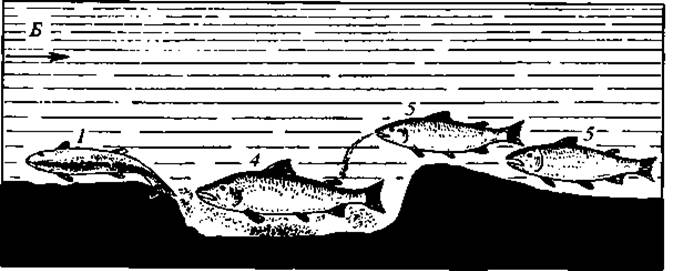
Fig. 51. Nest construction and spawning in the sockeye salmon:
A — top view; B — sectional view; 1—3 — positions of the female during substrate excavation; 4 — dominant male; 5 — subordinate males
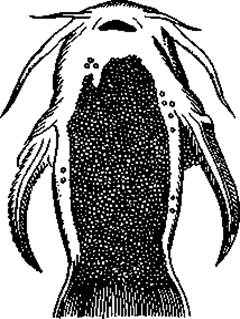
Fig. 52. Female banjo catfish with eggs
Some species brood their eggs in the mouth.
This occurs in the American sea catfish (Galeichthys felis), where the male incubates up to 50 eggs in his Oral Cavity, as well as in cardinalfish (Fig. 54). During this period, he apparently does not feed. In other species (for example, of the genus Tilapia), the eggs are carried in the mouth by the female. Sometimes there are more than 100 eggs in the mouth, which the female gently shifts around, presumably to ensure better aeration. The incubation period (judging by aquarium observations) lasts 10—15 days. Throughout this time, the females hardly feed. Curiously, even after hatching, the fry continue to seek shelter in the mother's mouth for some time when danger threatens.
Mention should be made of the peculiar reproduction of the bitterling (Rhodeus sericeus) from the family Cyprinidae, widely distributed in the south of Russia and in Ukraine. During the spawning season, the female develops a long ovipositor, which she uses to deposit eggs into the mantle cavity of freshwater mussels (Unio or Anodonta, Fig. 55). The male releases milt while hovering near the bivalve. The eggs are fertilized by spermatozoa drawn in by the mussel with the water current through its siphon. The embryos develop on the gills of the mussel and enter the water once they reach a length of about 10 mm. The ultimate degree of reproductive complexity in fish is manifested as viviparity. Eggs are not released into the external environment, and the larvae develop within the female's reproductive tracts. Development is sustained partly by the egg yolk and partly by the maternal organism. The latter is ensured by a close contact (though not fusion) between the dense capillary network of the embryonic yolk sac and the Blood vessels of the parent's uterine mucosa. Functionally (though not anatomically), this structure is analogous to the mammalian Placenta and is designated as the yolk-sac placenta.

Fig. 53. Male pipefish with brood pouch. In the lower drawing, the pouch is opened, revealing the eggs
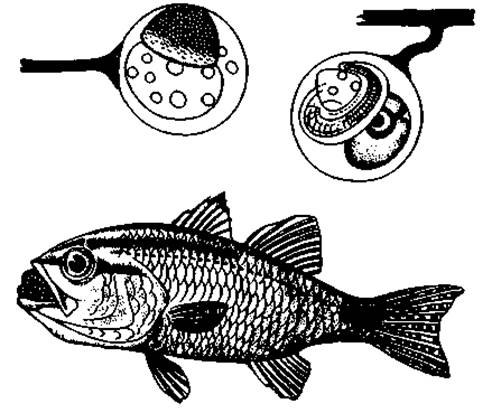
Fig. 54. Male cardinalfish (Apogon imberbis) with eggs in its oral cavity
The prominent role of the yolk-sac placenta in gas exchange processes and in the removal of nitrogenous metabolic waste from the embryonic organism provides grounds to speak of true viviparity.
Viviparity is most characteristic of cartilaginous fish, in which it is observed even more frequently than egg-laying. Conversely, among teleost fish, this phenomenon is extremely rare. Examples include Baikal sculpins (Comephoridae), blennies (Blenniidae), sea basses (Serranidae), and especially killifishes (Cyprinodontidae). All ovoviviparous and viviparous fish exhibit low fecundity. The majority give birth to only a few offspring, and more rarely to dozens.
We have cited a number of instances where fish do not leave fertilized eggs to fate but instead display some form of care for them and for the developing fry. Such care is characteristic of a tiny minority of species. The primary and most characteristic type of reproduction in fish is one in which eggs are fertilized outside the mother's body, after which the parents abandon them to fate. This very factor explains the enormous fecundity of fish, which ensures species survival despite the very high mortality rate of eggs and fry that is inevitable under such conditions.
The overwhelming majority of fish species are dioecious, exhibiting the typical "fish-style" of reproduction. Exceptions include a few teleost fish, such as the painted comber (Serranus scriba) and certain others, which display Hermaphroditism. As a rule, in cases of hermaphroditism, the gonads function alternately as testes and ovaries, making self-fertilization impossible as a result. Only in the painted comber do different parts of the gonad simultaneously produce eggs and spermatozoa. Hermaphroditic individuals are occasionally encountered in cod, mackerel, and herrings.
Some fish occasionally exhibit parthenogenetic development, which, however, does not lead to The formation of normal offspring. In the Baltic herring and Pacific herring, parthenogenetic development proceeds as far as the free-swimming larval stage. Other similar examples exist.
In salmonids, unfertilized eggs deposited in the nest do not perish and undergo a peculiar form of development (Cell Division takes place) until the fry hatch from the fertilized eggs. This is a unique adaptation for protecting the clutch.
Another type of deviation from normal reproduction, known as gynogenesis, is also found in fish. In this case, sperm penetrate the egg, but the nuclei of the egg and the sperm do not fuse. Development proceeds normally, but only females develop in the offspring. This occurs in the goldfish (silver crucian carp) and exhibits a clear geographical pattern. In East Asia, both females and males of this species are found, and reproduction proceeds normally. In Central Asia, Western Siberia, and Europe, males are extremely rare, and in some populations, they are absent altogether. In such cases, the insemination leading to gynogenesis is carried out by males of other fish species (G. V. Nikolsky, 1961).
Growth and Age. The lifespan of fish varies considerably. Some species live for little more than a year, such as certain gobies (Gobiidae) and lightfishes (Scopelidae). On the other hand, the beluga sturgeon can live to be 100 years old or more. Certain flounders live 50 to 60 years. In all these cases, we are referring to the maximum potential lifespan. Under conditions of regular commercial fishing, however, the actual lifespan is much shorter (Table 5).
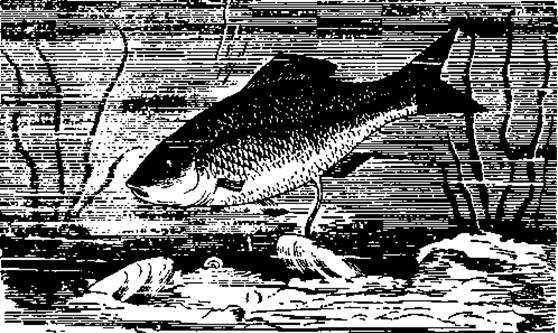
Fig. 55. Bitterling spawning
Table 5
Maximum sizes and ages of certain fish species
(after G. V. Nikolsky, 1961)
Fish species |
Water body |
Maximum size, cm |
Age, years |
European anchovy (khamsa) |
Sea of Azov |
13 |
3 |
Sprat |
Baltic Sea |
16 |
6 |
Vimba bream (vobla) |
Northern Caspian |
35 |
10 |
Common carp (sazan) |
Amur River |
90 |
16 |
Oceanic herring |
Norwegian and North Seas |
37 |
23 |
Cod |
Barents Sea |
169 |
25 |
Stellate sturgeon (sevryuga) |
Kura River |
214 |
31 |

Fig. 56. Scales with annual rings in different fish: A — roach (vobla); B — cod
Unlike most vertebrates, fish growth generally does not stop upon reaching sexual maturity, but continues into old age. It should be noted that fish are characterized by a distinct seasonal periodicity in growth. In summer, especially during the feeding period, they grow significantly faster than in the food-scarce winter period. This uneven growth affects The structure of a number of bones and scales. Periods of slowed growth correspond to narrow bands or rings. When viewed in reflected light, they appear light; in transmitted light, conversely, they appear dark. During periods of accelerated growth, wide rings or layers are deposited, which appear light in transmitted light. The combination of two rings — a narrow winter ring and a wide summer ring — constitutes an annual mark. Counting these marks makes it possible to determine the age of the fish (Fig. 56).
Determining the age of fish is of immense theoretical and practical importance. In a rationally managed fishery, the Analysis of the age COMPOSITION OF THE catch serves as a crucial criterion for identifying overfishing or underfishing. An increase in the proportion of younger age groups and a decrease in older ones in the catch indicates fishing pressure and the threat of overfishing. Conversely, a high percentage of older individuals indicates the incomplete utilization of fish stocks.
Practical Importance of Fish
The significance of fish in human life is exceptionally great. Fish accounts for 17% to 83% of the human protein diet in different countries around the world. In addition to food products, Vitamins, fish meal, fertilizers, and other products are obtained from fish.
Fish is the primary biological product extracted by humans from the aquatic environment. Its share in the total catch (by weight) is approximately 85%. The bulk of fish (about 90%) is harvested in the seas. Among trophic groups, planktivores are of the greatest importance at 65%, followed by carnivores (predators) at 25%, and benthivores at about 10%.
The problem of fisheries and fishery management in connection with this harvest can be characterized by a number of forms (marine fisheries, freshwater extraction, fish farming/aquaculture, and acclimatization).
Marine fisheries. The total area of the World Ocean is exceptionally vast, with the area of oceans exceeding depths of 3,000 m accounting for 50–60%. Fish have been found at depths of up to 10,000 m. All this would seem to depict the World Ocean as a platform for an unlimited increase in the extraction of marine products, particularly fish. However, although modern fishing technology makes it possible to catch fish living at great depths, commercial fishing experience shows that the greatest concentrations of fish and the easiest opportunities for harvesting them are found in a negligible fraction of the World Ocean. This is the coastal zone, which is characterized by shallow depths (up to 200 m) and is known as the shelf, or continental margin. The total area of the shelves of all oceans and their associated seas equals 8% of the total area of the World Ocean. Yet it is precisely in the shelf region that 90% of the entire world fish catch is harvested.
In the second half of the 20th century, the fish catch in the World Ocean by the Russian economy increased dramatically. Fish are now harvested not only in marginal seas such as the Barents, Bering, Okhotsk, and Japan seas, but also in the open expanses of the Atlantic, Indian, and Pacific Oceans.
The proportional share of the fish catch across individual oceans and their associated seas looks roughly as follows: the Pacific and Atlantic Oceans account for 40–45% each, the Indian Ocean for about 10%, and the Arctic Ocean for only about 5%. The distribution of total catches by latitudinal zones can be illustrated by the following figures: the northern zone (the Arctic Ocean and the northern parts of the Atlantic and Pacific Oceans with their associated seas) accounts for approximately 40–50%, the tropical zone (corresponding parts of the Atlantic, Pacific, and Indian Oceans) for about 30%, and the Southern Hemisphere for about 10%. The growth of the catch in these zones was also highly uneven: in the northern zone, it increased by approximately 50% in the second half of the 20th century, in the tropical zone by a factor of 4, and in the Southern Hemisphere by more than 10 times. Many previously unfamiliar fish species were introduced into the everyday diet of the Russian population: hake, Alaska pollack, grenadier (squama), hairtail, notothenia, icefish, and many others.
Fish harvesting on the shelves is complicated by the encroachment of other economic activities into these zones, notably oil and gas extraction. The shelf zone suffers from heavy tanker traffic and accidental spills of their contents. A serious problem is posed by the periodic overfishing of certain species (redfish, cod, notothenia, etc.).
The Conclusion of the World Agreement on the 200-mile exclusive economic zone in the 1970s made fish harvesting in the Atlantic and Pacific Oceans more difficult for Russia.
Fish extraction in fresh water bodies. In the first third of the 20th century, Russia's primary fish catch was produced in inland water bodies: primarily in the Northern Caspian regions and the lower reaches of the rivers flowing into it, the Black Sea, and the rivers of Siberia and the Far East. This concerned anadromous fish groups such as sturgeons and salmonids.
Hydraulic engineering on the Volga, Don, Dnieper, and other rivers created serious problems for the harvesting of these valuable fish: barriers along fish migration routes to spawning grounds and the creation of huge reservoirs. Dams obstruct the migration routes of valuable fish (salmonids and sturgeons), whose natural spawning grounds are located significantly upstream of the dams. In this regard, the problem of constructing fish-passing facilities arises. The latter can be of two types: fish ladders (Fig. 57) and fish lifts.
The fish ladder built in the area of the Tuloma Hydroelectric Power Station consists of 57 steps with 30 cm drops between them. Atlantic salmon (semyga), brown trout (kumzhа), and grayling ascend this water staircase from the tailwater to the headwater to a height of 16–19 m to spawn. The speed of the water current at the sills of the ladder steps reaches 2.5 m/s, which does not pose a significant obstacle for salmonids, since even under natural conditions they have to overcome major rapids and waterfalls during their spawning migration.
In Canada, when constructing fish ladders, resting pools are also provided for the fish ascending the steps. Resting pools are built at a distance of 300 m from each other.
Passing sturgeon through a dam cannot be ensured by building standard fish ladders, as these fish struggle to overcome waterfall-like obstacles. Alternative measures must therefore be developed. Observations show that many anadromous sturgeon specimens spawn before reaching the first dam on their migratory route. The significance of this natural pattern can be enhanced by artificially creating riverbed areas with optimal spawning conditions.
Artificial breeding of valuable anadromous fish is of great importance.
The artificial propagation of valuable anadromous fish is based on the fact that during natural reproduction, far from all eggs are fertilized, and a huge percentage of eggs and fry perish. For instance, during the spawning of the "autumn" chum salmon on the Amur River, egg loss averages 20 — 40%. A vast number of fry die during the Cytology/cytology/16.html">Early stages of life: by the time they leave the spawning grounds for the sea, only about 10% of the chum salmon fry remain alive. Many fry perish along the migration route to the sea, which often spans 1 — 1.5 thousand km. As a result, a negligible number of fry reach the sea, sometimes less than 1%. Naturally, such unproductive losses cannot be tolerated.

Fig. 57. Fish ladder on the Tuloma River
As early as the beginning of the current century, the renowned expert on Far Eastern salmonids, V. K. Soldatov, strongly advocated for the artificial breeding of these valuable fish.
The artificial propagation of anadromous fish is carried out using specialized apparatus. The so-called "dry" method of egg fertilization, proposed over 100 years ago by the Russian fish culturist V. P. Vrassky, has become widespread in Russia. It is based on the fact that sperm rapidly lose mobility in water, leaving a portion of the eggs unfertilized. When applying Vrassky's method, the eggs are released into a basin, into which the milt from males is subsequently milked. The Contents of the basin are stirred gently so that the milt is evenly distributed among the eggs, maximizing the probability of fertilization. Water is added to the basin only after this process.
The fertilized eggs are placed in running-water incubators, where they develop under constant supervision by specialists. Dead and diseased eggs are regularly removed. The incubation period for chum salmon eggs lasts 103 — 120 days. The hatched fry are kept in special, segregated water bodies isolated from the river, where they feed endogenously utilizing the energy reserves of the yolk sac. The yolk sac is resorbed only 60 — 90 days after the embryos hatch from the egg (Fig. 58). Subsequently, the fry, transitioning to exogenous feeding, are released into the river, down which they migrate to the sea.
The results of fish hatchery operations are highly indicative. For example, at a hatchery breeding chum salmon, egg fertilization reaches 98 —99 %. Egg mortality during incubation is only 4—8 %, and larval mortality typically does not exceed 0.5 %. The total number of migrating juveniles exceeds 90 % of the incubated eggs, whereas during natural salmon reproduction, this percentage is merely 10.

Fig. 58. Free embryo of a pink salmon with a yolk sac. A — absolute size of the embryo
In addition to artificial fish breeding using the described method, spawning conditions for semi-anadromous fish (such as common carp and bream) are improved in the lower reaches of rivers (e.g., the Volga). Such spawning-rearing farms utilize natural water bodies or create artificial ones by embanking a plot of land close to the river with an area of several hundred hectares. In spring, such an area is filled with water supplied from the river via a special canal. The water bodies are stocked with mature fish caught in the river at a rate of 8 common carp and 30—40 bream per 1 ha, maintaining a 1 : 1 sex ratio. Natural fish reproduction and the growth of their fry take place in these spawning grounds. At the end of summer, the lower sluice is opened, and the fry, along with the discharging water, enter the river. Approximately 50 thousand common carp fry (weighing 3 g) and 80 thousand bream fry (weighing 0.5 g) are released into the river per 1 ha.
With the reduction of natural spawning grounds, various types of artificial spawning sites are constructed. For fish that deposit eggs on vegetation (phytophilic fish), artificial spawning grounds can be stationary or floating. The latter are of particular importance under conditions of severe water level fluctuations, such as in reservoirs created by hydroelectric projects.
Measures are also taken to improve conditions in natural spawning grounds. For instance, in several regions of the Far East during harsh, snow-poor winters, mass freezing of spawning redds (nests) occurs, leading to the death of the salmon eggs within them. Combating this phenomenon is possible by maintaining a higher water level in the river during winter, constructing temporary weir dams after the completion of spawning, snow retention on the ice of the spawning water body, and a number of other measures.
The primary object of pond fish farming is the carp, a domesticated form of the wild carp (sazan). Carps are raised in a system of ponds with different purposes. Spawning ponds are small — about 1,000 m2 in area, 0.5— 1.2 m deep, featuring fresh green vegetation upon which the carps deposit their eggs. Once the juveniles have grown somewhat (10—15 days after hatching), they are transferred to larger and deeper nursery ponds at a rate of 12 thousand individuals per 1 ha of the pond. Overwintered yearlings are kept in fattening ponds (400 — 500 individuals per 1 ha). Winter ponds, or wintering quarters, serve for the winter maintenance of broodstock and fingerlings. These ponds are made the deepest (over 3 m) to prevent them from freezing through. The water in them must be flowing and completely renewed within 5 — 8 days. Carps do not feed in wintering ponds.
In addition to complex multi-stage farms, carp are widely cultivated in so-called single-season fattening farms. Here, young fish raised in specialized nurseries are released into fattening water bodies, where they grow until autumn, after which the ponds are drained or the fish are harvested with a seine. When managed correctly, a pond carp farm can yield up to 600 three-year-olds weighing 1 — 1.5 kg per 1 ha of the fattening pond's water surface.
In some places, the joint cultivation of carp and herbivorous fish (grass carp, silver carp) is practiced. There are successful Experiments on the joint cultivation of carp and pike, which feed on excess carp fry and thereby increase the overall fish productivity of the water body.
Acclimatization. Significant progress has been made in Russia in artificially enriching the commercial fish fauna through the acclimatization of many valuable species.
For instance, in the 1930s, about 3 million specimens of mullet were translocated from the Black Sea to the Caspian Sea. This fish successfully acclimatized.
Whitefish (coregonids) inhabiting the lakes of the northwestern regions have been successfully acclimatized in the lakes of the Urals, the Trans-Urals, and the Krasnoyarsk Krai. In some places, as a result of this measure, the fish productivity of the water bodies has increased severalfold.
In Lake Issyk-Kul, one of the largest lakes in Central Asia, trout brought from Lake Sevan have been successfully acclimatized. Characteristically, in the water bodies of the Issyk-Kul basin, trout grow faster and reach larger sizes. The bream has also acclimatized well there.
Extensive and successful work has been carried out on the artificial dispersal of common carp. It has been acclimatized in water bodies of the Leningrad and Novgorod regions, in the lakes of the Trans-Urals, and in other locations.
Pacific salmon have been successfully acclimatized along the Atlantic coasts of North America and Scandinavia. Successful attempts have also been made to acclimatize herbivorous fish from Southeast Asia — the grass carp and silver carp. These measures pursued a dual purpose: increasing the fish productivity of water bodies and combating their overgrowth with vegetation. The grass carp has also been acclimatized on the Volga, the Kuban, in the Tsimlyansk and other reservoirs.
The commercial impact of acclimatization is demonstrated by the proportional share of acclimatized fish in the catch: in the Kurgan Oblast it accounted for 4 %, in the Sverdlovsk Oblast — 10 %, and in the Chelyabinsk Oblast — 20 % of the total catch.
Fish are also acclimatized and bred for mosquito control. The small American fish, the mosquitofish (Gambusia), was introduced to Russia in 1924. It has spread widely across southern lakes and rivers, actively feeding on mosquito larvae.
In the 1970s, 3 species of buffalo fish (Ictiobus)—large fish belonging to the order Cypriniformes with a high commercial meat yield—were imported from North America into Siberia for acclimatization.
Phylogeny of Lower Craniates
The population sizes of many fish species have plummeted due to overfishing, hydraulic engineering construction, and water body pollution. For instance, the Red Book of the Russian Federation includes 21 fish species and subspecies. Special protection and targeted measures to restore natural populations are required for 11 sturgeon species, particularly the beluga (Huso huso) and kaluga (Huso dauricus). Due to overfishing, the populations of many salmonids (Salmoniformes) have been severely depleted, with 11 species and subspecies demanding special conservation measures.
Among modern craniates (or vertebrates), the most primitive are the Cyclostomes (Cyclostomata). However, it is well known that they are also highly specialized. Unfortunately, paleontology does not provide a direct answer regarding the Organization Features of vertebrate ancestors.
The preservation of early vertebrate remains as fossils in the paleontological record coincides with the historical period when their bony skeleton first evolved. The most ancient primitive vertebrates are grouped under the superclass Agnatha, known as Ostracoderms.

Fig. 59. Ostracoderm (Cephalaspis lyelli) from the Lower Devonian

Fig. 60. Ostracoderm (Psammolepis venyukovi) from the Devonian period

Fig. 61. Ostracoderm and anaspidan (Anaspida, Pterolepis nitida) from the Silurian period
They possessed a robust external skeleton consisting either of a solid carapace, individual large bone plates, small scales, or a combination of all these structures. Some heavily armored ostracoderms, dorsoventrally flattened and often featuring a hypocercal caudal fin, evidently led a benthic (bottom-dwelling) lifestyle. Others, characterized by a flexible spindle-shaped body covered in small scales, probably inhabited the water Column (Figs. 59, 60, 61). Overall, ostracoderms were a diverse group encompassing the osteostracans, heterostracans, anaspids, and others. The first described forms were discovered in Ordovician deposits. They reached their peak diversity during the Silurian and Devonian periods. By the end of the Devonian, most of them had become extinct, presumably due to competition from gnathostomes, whose diversity had increased by that time. Their remains are absent from subsequent paleontological records. At the same time, a number of features link this group to modern cyclostomes—lampreys and hagfishes. It is hypothesized that both groups of modern Jawless vertebrates may have originated in the Carboniferous. They share structural similarities with ostracoderms, such as the absence of jaws and paired appendages, a sucker-type mouth, two semicircular canals in the Inner ear, a primary skeletal rod (notochord), endodermal gills, and an unpaired Olfactory Organ. The jawless vertebrates formed a highly primitive yet specialized evolutionary lineage of vertebrates.
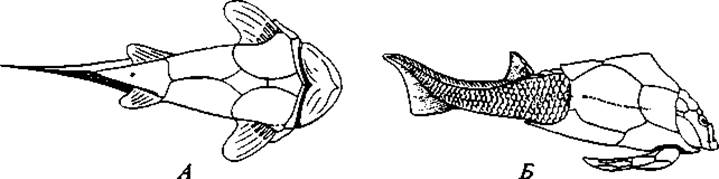
Fig. 62. Placoderms:
A — Coccosteus from the Middle Devonian (ventral view); B — Pterichthys
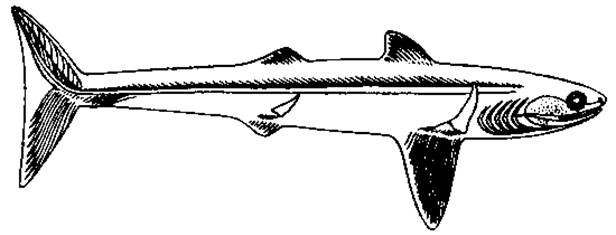
Fig. 63. Cladoselache — a Late Devonian shark-like fish
Another major branch is represented by Gnathostomes (Gnathostomata — Ectobranchiata). It gave rise to fish and all more highly organized vertebrates. The direct ancestors of fish are still unknown. Their earliest fossil remains, in the form of scales, have been discovered in Upper Silurian deposits. Representatives of highly diverse groups are already found in Devonian strata. One of the earliest groups, known from the Early Silurian, is the Placoderms (Placodermi), whose bodies were covered by a bony armor (Fig. 62). Alongside primitive traits, they exhibited certain progressive features: their internal skeleton consisted mainly of Cartilage, and they possessed bony jaws. Paired fins (usually only the pectoral ones) were segmented into distinct regions and covered with bony plates. Placoderms inhabited both fresh and brackish waters. They survived into the Carboniferous period and subsequently went extinct. Another group, equally ancient (Silurian) and primitive, was the small freshwater Acanthodians (Acanthodii), whose bodies were covered with ganoid scales. Their fins had broad bases, and rows of small additional fins—also with broad bases—were situated between the pectoral and pelvic fins. This can be viewed as remnants of once-continuous lateral body folds that gave rise to paired limbs. Furthermore, the primitive nature of these fish is indicated by the segmentation of their jaw arches, meaning a greater similarity between the jaw arches and other visceral arches compared to other fish.

Fig. 64. Palaeoniscus from Permian deposits (body length up to 25 cm)
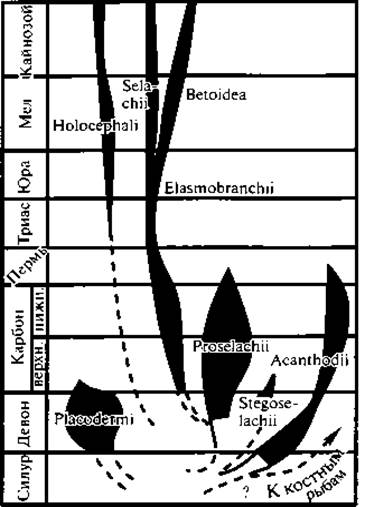
Fig. 65. Phylogenetic Tree of placoderms and cartilaginous fishes

Fig. 66. Phylogenetic tree of bony fishes
Let us mention the subclass Cladodonts (Proselachii), among which the Late Devonian Cladoselache is well known (Fig. 63).
True cartilaginous fishes (Chondrichthyes) are known from the Early Devonian. Elasmobranchs (Elasmobranchii) experienced two bursts of adaptive radiation—in the Silurian–Devonian and the Early Mesozoic. Modern families of this subclass took shape by the end of the Mesozoic. Holocephalians (Holocephalia), known since the Early Carboniferous, have never been numerous.
The Class Bony Fishes (Osteichthyes) split early into two distinct groups: the subclass Lobe-finned fishes (Sarcopterygii) and the subclass Ray-finned fishes (Actinopterygii).
The most ancient ray-finned fishes were the Palaeoniscids (Palaeoniscoidei) (Fig. 64). They are characterized primarily by external dermal ossifications, a heterocercal tail, the presence of a rostrum, ganoid scales, and V-shaped scales—fulcra on the dorsal and caudal fins. All this suggests they are closely related to modern chondrosteans, particularly sturgeons. Other ganoids (Ganoidomorpha), which emerged in the Triassic and occupy an intermediate position between palaeoniscids and teleosts, also trace their origins back to palaeoniscids. In the middle Mesozoic, they were the dominant group of fishes, but today only two surviving representatives remain—the bowfin and the gar.
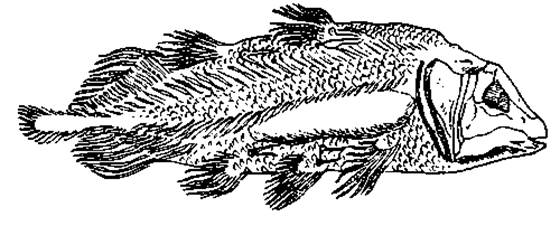
Fig. 67. Coelacanth (Undina pencillata) from the Upper Jurassic
True Teleost fishes (Teleostei) arose in the Mesozoic. Their evolution was rapid and diverse. Today, they are the dominant fish group (Figs. 65, 66).
The subclass Lobe-finned fishes (Sarcopterygii) includes the superorders Crossopterygian fishes (Crossopterygii) and Lungfishes (Dipnoi). The ancestors of crossopterygians and lungfishes were undoubtedly closely related. Both groups appear in the Early Devonian and reach their peak diversity in the Late Devonian and Carboniferous periods. The differentiation of these two groups of lung-breathing fishes was largely driven by their feeding habits. While crossopterygians (Fig. 67) remained predatory, retaining the ability to swim swiftly and seize prey, lungfishes shifted to feeding on benthic invertebrates, losing their well-developed fins and becoming sluggish—traits observed in their few surviving modern representatives.
Crossopterygian fishes are of particular interest because, of all fishes, they are the closest relatives to the ancestral group of terrestrial vertebrates—the Stegocephalians (Stegocephalia).
Fishes originated in freshwater habitats and only later, albeit quite rapidly, colonized the World Ocean.
Last update: 13/08/2026
Editorial and Educational Adaptation: This material has been compiled based on the primary/original source text. The project team performed an editorial review, corrected technical inaccuracies, structured sections, and adapted the content for an educational format.
What was processed:
- elimination of formatting defects (OCR errors, structural breaks, corrupted characters);
- editorial organization of content;
- standardization of terminology in accordance with academic sources;
- verification of factual statements against the original source text.
All mentions of the author, publication year, and origin of the primary text have been preserved in accordance with the source.