Biochemistry and Molecular Biology - Belyasova N.A. 2002
Structure and Functions of Cellular Components
Biomembranes
Organization Features of Membrane Lipids
Biomembranes contain several Major Classes of Lipids: phosphoglycerolipids, phosphosphingolipids, glycoglycerolipids, glycosphingolipids, and sterols. The Diversity of representatives within these classes is immense: any given membrane may contain up to a hundred Different types of lipid molecules, which is obviously related to the variety of their Functions. However, The primary function of lipids in biomembranes is structural—lipids form a bilayer matrix that houses protein molecules.
Phosphoglycerolipids. This Class of lipids quantitatively predominates in most Introduction/36.html">Biological Membranes. The most widespread phosphoglycerolipids include phosphatidylcholine, phosphatidylethanolamine, phosphatidylserine, and diphosphatidylglycerol (cardiolipin). The core of phosphoglycerolipids is formed by the trihydric alcohol glycerol. Two of its hydroxyl groups are esterified with two fatty acid residues, and the third with a phosphoric acid residue. The resulting molecule serves as the main precursor for all phosphoglycerolipids—phosphatidic acid (Fig. 4.1).
Cells contain a small amount of phosphatidate because it is a key intermediate for the synthesis of all phosphoacylglycerols. The latter are formed via the Esterification of the phosphate group by the hydroxyl group of one of the alcohols. Figure 4.1 shows the structural formulas of the polar alcohols most frequently found in membranes, as well as The Structure of one of the phosphoglycerolipids—phosphatidylcholine (lecithin).
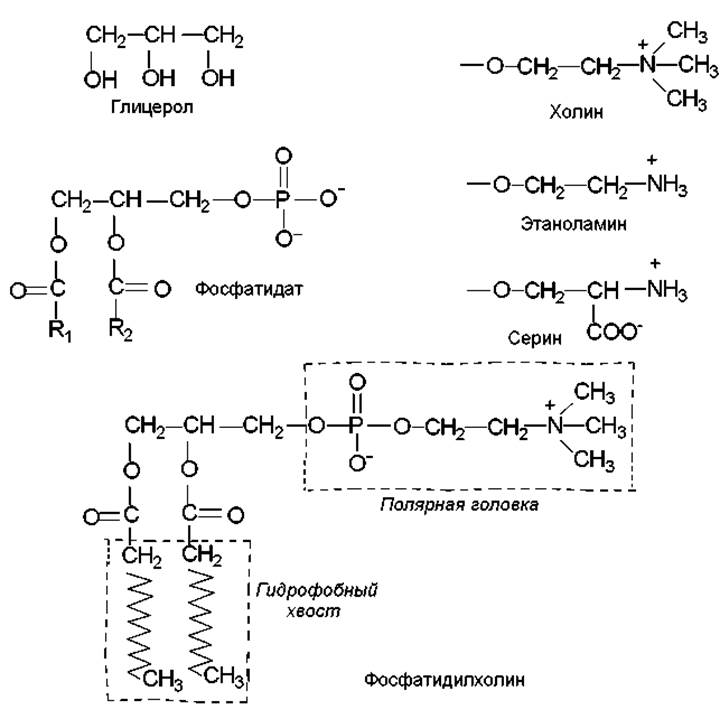
Fig. 4.1. Structure of phosphoglycerolipid molecules and their structural components. R1 and R2 are fatty acid hydrocarbon chain residues
Fatty acids in Phospholipids almost always contain an even number of carbon atoms (from 14 to 24). Among them, the most common are: palmitic (16:0), palmitoleic (16:1 ∆9), stearic (18:0), oleic (18:1 ∆9), linoleic (18:2 ∆9,12), γ-linolenic (18:3 ∆6,9,12), α-linolenic (18:3 ∆9,12,15), arachidic (20:0), and arachidonic (20:4 ∆5,8,11,14). The numbers in parentheses indicate: number of carbon atoms : number of double bonds, with THE POSITION OF carbon atoms (∆) counted from the carboxyl group to the double bond.
Phosphoglycerolipids perform a structural function in membranes. Phosphatidylcholine serves as the major component of animal Cell membranes, whereas phosphatidylethanolamine is more commonly found in bacterial membranes. These are strongly amphiphilic molecules because their structure contains two groups with distinct properties: a polar hydrophilic HEAD and a nonpolar hydrophobic tail (Fig. 4.1).
Phosphosphingolipids. These are also strongly amphiphilic molecules. They are built upon the amino alcohol sphingosine, which features a long, non-hydrolyzable, unsaturated hydrocarbon chain (Fig. 4.2). The primary sphingolipid from which all non-glycerol lipid classes are derived is ceramide (Fig. 4.2). It is formed by attaching a fatty (most commonly monoenoic) acid to the central amino group of sphingosine via an amide bond.
Phosphosphingolipids are ceramides in which the remaining alcohol group is esterified with a phosphate derivative (phosphorylcholine, phosphorylethanolamine, phosphorylinositol, or phosphorylglycerol). A ceramide esterified with phosphorylcholine is called sphingomyelin (Fig. 4.2). Sphingomyelin predominates in animal cell membranes, where it primarily performs a structural function.
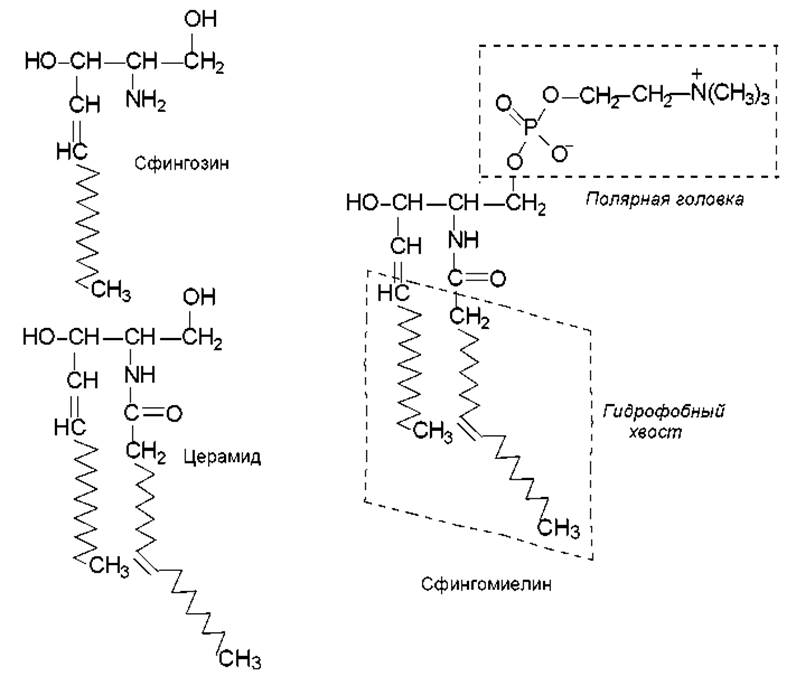
Fig. 4.2. Structural components and Molecular Organization of phosphosphingolipids, exemplified by sphingomyelin (ceramide-1-phosphorylcholine)
Glycoglycerolipids. These are polar lipids based on glycerol, in which the hydroxyl group at the third carbon atom forms a glycoside bond with a carbohydrate. Carbohydrate moieties are most frequently galactose residues or 6-sulfo-6-deoxy-α-D-glucopyranosyl, yielding monogalactosyldiacylglycerol and sulfolipid, respectively (Fig. 4.3). The hydroxyls of the other two carbon atoms in glycoglycerolipids, just as in phosphoglycerolipids, are esterified with fatty acids. Monogalactosyldiacylglycerol is considered the most abundant polar lipid in nature, accounting for up to half of all lipids in chloroplast thylakoid membranes. Glycoglycerolipids predominantly perform a receptor function.
Glycosphingolipids. The molecules of these lipids are built on a ceramide base, to the terminal hydroxyl group of which mono- or Oligosaccharides are attached via a glycosidic bond. Glycosphingolipids whose carbohydrate moiety is represented by Monosaccharides are called cerebrosides. Cerebrosides are present in high concentrations in the mammalian Brain and nervous Tissues. In particular, galactocerebroside (Fig. 4.4) is a major component of the nerve fiber myelin sheath.
Sphingolipids whose carbohydrate portion is a short, typically branched, acidic oligosaccharide are called gangliosides. The acidity of this class of Glycolipids is due to the presence of neuraminic acid or its N-acetyl derivative as a branching monosaccharide in the carbohydrate chain (Fig. 4.4).
Glycosphingolipids participate in the Regulation of cellular METABOLISM, specifically playing a role in cell growth regulation. Furthermore, glycolipids of this class can be considered mediator molecules: they perform signaling functions by receiving and transmitting signals. Erythrocyte membrane glycosphingolipids carry Blood Group Antigens.
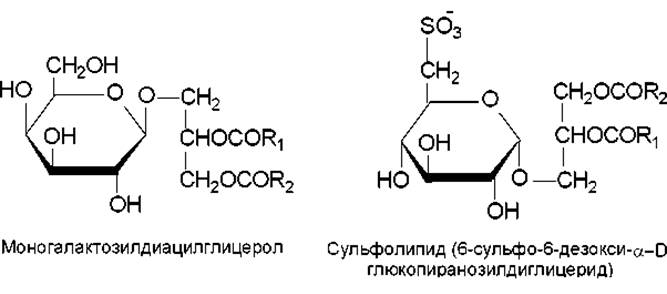
Fig. 4.3. Structure of certain glycoglycerolipids. R1 and R2 are fatty acid hydrocarbon chains
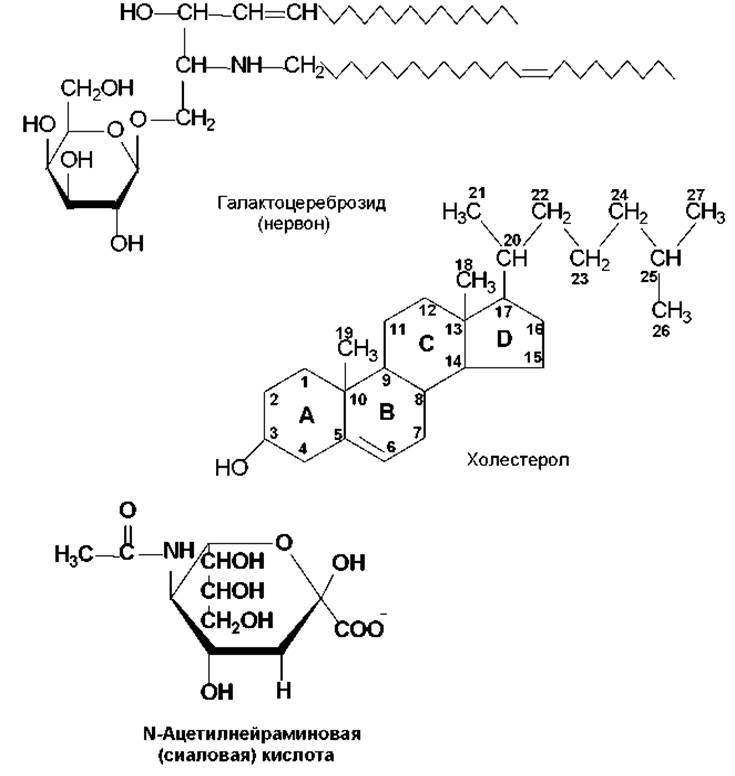
Fig. 4.4. Components and structural formulas of certain lipids
Sterols (steroid alcohols). These substances belong to simple ("nonsaponifiable") lipids that contain no fatty acids. All sterols contain a β-hydroxyl group at C-3, one or more double bonds in ring B, and lack carboxyl and carbonyl groups. These lipids are present in many plant, animal, and microbial membranes, fulfilling various functions: structural, acting as membrane fluidity regulators, serving as precursors for Vitamins and Hormones in plants and animals, and others. The most common sterol in animal and many bacterial membranes is Cholesterol (Fig. 4.4). It is a weakly amphiphilic molecule comprising a rigid hydrophobic polycyclic core and a polar head represented by a hydroxyl group.
The rigidity of cholesterol's polycyclic ring imparts specific properties to membranes by stabilizing their fluidity. In animals and humans, cholesterol acts as a precursor for all Steroid Hormones and vitamin D, and is a component of Bile acids that facilitate the intestinal absorption of fatty acids. In certain membranes, such as those of mammalian erythrocytes, it accounts for 40–60% of all lipids. Plant, algal, filamentous fungal, and Yeast cells produce a multitude of cholesterol-related compounds: ergosterol, β-sitosterol, stigmasterol, etc.
Last update: 06/08/2026
Editorial and Educational Adaptation: This material has been compiled based on the primary/original source text. The project team performed an editorial review, corrected technical inaccuracies, structured sections, and adapted the content for an educational format.
What was processed:
- elimination of formatting defects (OCR errors, structural breaks, corrupted characters);
- editorial organization of content;
- standardization of terminology in accordance with academic sources;
- verification of factual statements against the original source text.
All mentions of the author, publication year, and origin of the primary text have been preserved in accordance with the source.