Biochemistry and Molecular Biology - Belyasova N.A. 2002
Structure and Functions of Cellular Components
Biomembranes
Properties of Polar Lipids and Their Aggregates
The Lipids that make up Introduction/36.html">Biological Membranes are amphiphilic compounds (Fig. 4.1, 4.2). This structural feature is reflected in their properties: in an aqueous environment, polar lipid molecules spontaneously aggregate to form structures where the hydrophobic parts are packed inward, shielded by hydrophilic HEAD groups facing the Water. These aggregates can adopt various shapes and structures depending on the molecular architecture of the lipid and the relative size of its polar and non-polar moieties.
The simplest aggregates of amphiphilic molecules are micelles. Depending on The Nature of the solvent, lipids can form either conventional micelles or so-called "inverted" (reverse) micelles (Fig. 4.5). Regular micelles form in water, with their hydrophobic hydrocarbon chains isolated from the aqueous surroundings by hydrophilic polar heads.
Class="center">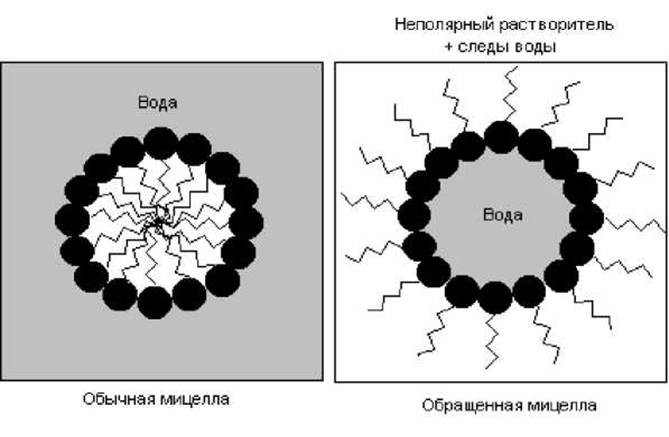
Fig. 4.5. Lipid micelles in water and non-polar Solvents
In non-polar solvents (such as benzene or hexane) containing trace amounts of water, inverted micelles are formed, in which the orientation of the lipid molecules is reversed (Fig. 4.5). Micelle-forming lipids include salts of Higher Fatty acids, lipid forms with only a single hydrocarbon chain per molecule, and many detergents. Lipid micelles can vary in shape, being spherical (Fig. 4.5), cylindrical, ellipsoidal, or disk-shaped. A special type of lipid aggregate is the bilayer (bimolecular layer). As a rule, these structures are formed by lipids that are incapable of micelle formation, such as Phospholipids. The ability to organize into bilayers is determined, as in the case of micelles, by the size ratio between the polar and non-polar PARTS OF THE molecule.
Due to their elasticity and flexibility, bilayers can close in on themselves to form lamellar vesicles known as Liposomes (Fig. 4.6).
Liposomes serve as convenient model systems for membrane research and are also utilized to deliver therapeutic drugs to various Organs and Tissues. In this approach, it becomes possible to shield the drug from degrading Enzymes and target it specifically to the disease site. Liposomes and micelles can be prepared by subjecting aqueous dispersions of polar lipids (such as phosphatidylcholine) to ultraviolet or ultrasonic Treatment.
The Forces Stabilizing the lipid bilayer Structure include hydrophobic interactions, Hydrogen Bonds, and Van der Waals forces. Hydrophobic interactions make the greatest contribution to bilayer stabilization: driven by these forces, the system adopts a structural Organization that minimizes contact between the non-polar regions of lipid molecules and water. The overall Free energy change associated with transferring a non-polar substance from a non-polar solvent into water is thermodynamically unfavorable due to entropic effects tied to the disruption of water structure as a solvent. In short, the unfavorable interactions between a non-polar solute and water are essentially the "hydrophobic forces." Hydrogen bonds form between the polar head groups of certain lipids, while van der Waals forces are short-range, weak attractive forces operating between adjacent hydrocarbon chains.

Fig. 4.6. Structural representation of liposomes and lipid bilayers
The thickness of lipid bilayers is determined by the length of their hydrocarbon chains, the presence of double bonds and substituents, and, consequently, the packing density of the hydrophobic tails. Typically, this parameter ranges between 4–5 nm.
Cell/29.html">The Lipid Bilayer is a fluid medium of low viscosity (having the consistency of vegetable oil). Depending on Temperature, a lipid bilayer can exist in two main states: crystalline (solid or gel) and liquid-crystalline (fluid). This phase transition generally occurs between 15–40° C, but for any specific lipid, this parameter is strictly defined and referred to as the phase transition temperature (tn). The phase transition temperature depends on The structure of the hydrocarbon tails and polar heads. Fig. 4.7 provides a schematic illustration of lipid phase transitions within bilayers. When membranes transition from the liquid-crystalline state to the gel phase, their fluidity drops by approximately two orders of magnitude. Maintaining the liquid-crystalline state is crucial for membrane function, and Cells possess regulatory mechanisms to modulate membrane fluidity by altering the Lipid Composition of their bilayers. This mechanism is particularly vital for poikilothermic organisms, which cannot maintain a constant BODY TEMPERATURE AND rely on ambient environmental temperatures.
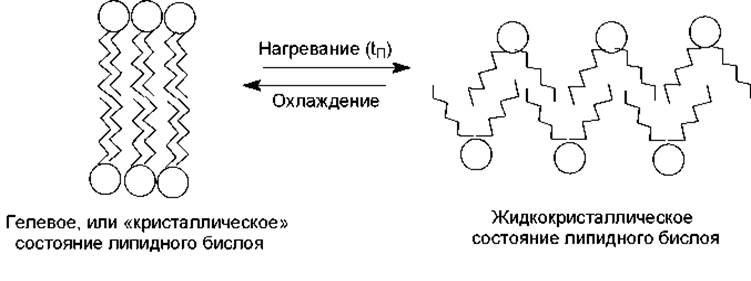
Fig. 4.7. Phase transitions in the lipid bilayer state
Last update: 06/08/2026
Editorial and Educational Adaptation: This material has been compiled based on the primary/original source text. The project team performed an editorial review, corrected technical inaccuracies, structured sections, and adapted the content for an educational format.
What was processed:
- elimination of formatting defects (OCR errors, structural breaks, corrupted characters);
- editorial organization of content;
- standardization of terminology in accordance with academic sources;
- verification of factual statements against the original source text.
All mentions of the author, publication year, and origin of the primary text have been preserved in accordance with the source.