LEHNINGER PRINCIPLES OF BIOCHEMISTRY - VOL 2: BIOENERGETICS AND METABOLISM - 2014
PART II. BIOENERGETICS AND METABOLISM
22. BIOSYNTHESIS OF AMINO ACIDS, NUCLEOTIDES, AND RELATED MOLECULES
Questions and Problems
1. ATP Consumption in Legume ROOT Nodules.
Bacteria residing in the root nodules of pea plants consume more than 20% of the ATP produced by the plant. Explain why these bacteria expend such large amounts of ATP.
2. Glutamate dehydrogenase and Protein Synthesis.
The bacterium Methylophilus methylotrophus can synthesize protein from methanol and ammonia. The amount of protein produced by the bacterium was increased by using Recombinant DNA technology to insert the glutamate dehydrogenase Gene from E. coli into The Genome of M. methylotrophus. Explain why this genetic manipulation increased protein yield.
3. Mechanism of Pyridoxal phosphate-Dependent Reactions.
Pyridoxal phosphate (PLP) assists in catalyzing chemical transformations that involve the removal of one or two carbon atoms from an amino acid molecule. For example, the enzyme Threonine synthase (see Fig. 22-15) catalyzes the PLP-dependent conversion of phosphohomoserine to threonine. Propose a mechanism for this reaction.
4. Formation of Asparagine from Aspartate.
There are two pathways for The formation of asparagine from aspartate in the presence of ATP. Many bacteria possess asparagine synthetase, which uses an ammonium ion as a nitrogen donor. In mammals, asparagine synthetase uses glutamine as the nitrogen donor. Considering the additional ATP cost involved in synthesizing glutamine, why do mammals utilize the second pathway?
5. Equation for the Synthesis of Aspartate from Glucose.
Write the overall balanced equation for the synthesis of aspartate (a nonessential amino acid) from glucose, carbon dioxide, and ammonia.
6. Treatment of Leukemia with Asparagine Synthetase Inhibitors.
Mammalian asparagine synthetase is a glutamine-dependent amidotransferase. Efforts to develop an effective inhibitor of human asparagine synthetase for leukemia treatment focus on inhibiting the C-terminal domain containing the synthetase Active Site, rather than the N-terminal glutaminase domain. Explain why the glutaminase domain cannot serve as a drug target.
7. Phenylalanine Hydroxylase Deficiency and Diet.
Normally, Tyrosine is a nonessential amino acid, but organisms with a genetic defect in the phenylalanine hydroxylase gene require dietary tyrosine for normal growth. Explain this phenomenon.
8. Cofactors for One-Carbon Transfer Reactions.
Most one-carbon group transfers are mediated by one of three cofactors: biotin, tetrahydrofolate, or S-adenosylmethionine (Chapter 18). S-Adenosylmethionine is typically used as the methyl group donor; The energy released in transferring a methyl group from N5-methyltetrahydrofolate is insufficient for most biosynthetic reactions. However, there is an instance where N5-methyltetrahydrofolate acts as a methyl carrier in the formation of Methionine via the methionine synthase reaction (step (9) in Fig. 22-15); methionine then serves as the immediate precursor to S-adenosylmethionine (see Fig. 18-18). Explain how the methyl group for S-adenosylmethionine can be derived from N5-methyltetrahydrofolate, given that the transfer potential of the methyl group in N5-methyltetrahydrofolate is a fraction of a percent of that in S-adenosylmethionine.
9. Concerted Regulation of Amino acid Biosynthesis.
Glutamine Synthetase from E. coli is modulated independently by various metabolic End products of glutamine (see Fig. 22-6). In this concerted inhibition, the degree of enzyme suppression is far greater than the sum of the effects of each individual inhibitor product. What is the selective advantage of concerted inhibition for E. coli growing in a Histidine-rich medium?
10. Link Between Folic acid deficiency and Anemia.
Folic acid deficiency is considered one of the most common vitamin deficiencies and leads to a type of anemia characterized by impaired Hemoglobin synthesis and arrested erythrocyte maturation. What is the metabolic link between hemoglobin synthesis and folic acid deficiency?
11. Nucleotide Biosynthesis in Amino Acid-Auxotrophic Bacteria.
Wild-type E. coli Cells are capable of synthesizing all 20 Proteinogenic Amino Acids, but certain mutants, known as auxotrophs for a specific amino acid, cannot synthesize that Amino Acid and therefore require its presence in the growth medium for normal development. In addition to their role in protein synthesis, Some amino acids also serve as precursors for other nitrogen-containing products within The Cell. Consider three auxotrophs that are unable to synthesize Glycine, glutamine, and aspartate, respectively. For each mutant, determine which nitrogen-containing products, aside from Proteins, these cells will be unable to synthesize.
12. Inhibition of Nucleotide Biosynthesis.
Propose Mechanisms for the inhibition of (a) Alanine racemase by L-fluoroalanine and (b) glutamine amidotransferase by azaserine.
13. Mode of Action of Sulfur-Containing Drugs.
Certain bacteria require para-aminobenzoate in their medium for normal growth, and their proliferation is strongly inhibited by The addition of sulfanilamide, one of the earliest sulfur-containing drugs. Moreover, in the presence of this compound, 5-aminoimidazole-4-carboxamide ribonucleotide (AICAR; see Fig. 22–33) accumulates in the medium. These inhibitory effects are reversed by the addition of excess para-aminobenzoate.
Class="center">
a) What function does para-aminobenzoate serve in these bacteria? (Hint: See Fig. 18–16.)
b) Why does AICAR accumulate in the presence of sulfanilamide?
c) Why do the inhibitory effects disappear upon the addition of excess para-aminobenzoate?
14. Carbon Flow in Pyrimidine Biosynthesis.
Predict the Location of 14C in orotate isolated from cells growing in a medium containing a small amount of uniformly labeled [14C]succinate. Provide evidence for your prediction.
15. NUCLEOTIDES as a Poor Energy Source.
Under starvation conditions, an Organism can utilize PROTEINS AND AMINO acids as an energy source. Upon AMINO ACID DEAMINATION, their carbon skeletons can be degraded via Glycolysis or The Tricarboxylic Acid Cycle, releasing energy in the form of ATP. At the same time, nucleotide degradation does not yield compounds that can serve as biological fuel. What facts from cellular physiology support this statement? What Structural Features of nucleotides make them a relatively poor energy source?
16. Treatment of Gout.
Allopurinol, a xanthine oxidase inhibitor (see Fig. 22–47), is used in the treatment of chronic gout. Explain the biological basis of this therapy. Occasionally, patients taking allopurinol develop xanthine Kidney stones, although the incidence of renal damage is significantly lower than in untreated patients. Explain this observation based on the solubilities of these substances: uric acid, 0.15 g/L; xanthine, 0.05 g/L; and hypoxanthine, 1.4 g/L.
17. Inhibition of Nucleotide Synthesis by Azaserine.
The diazo compound O-(2-diazoacetyl)-L-Serine, known as azaserine (see Fig. 22–48), acts as a potent inhibitor of glutamine amidotransferases. If azaserine is added to a culture of growing cells, which intermediates of nucleotide biosynthesis will accumulate? Explain your answer.
Analysis of Experimental Data
18. Application of Modern Technologies to Determine the Biosynthetic Pathway of a Novel Amino Acid.
Most of the biosynthetic pathways described in this chapter were elucidated prior to the advent of recombinant DNA technology and Genomics; consequently, the Analytical Methods of that era differed significantly from modern techniques. Here, we examine an example of applying novel molecular technologies to investigate the biosynthetic pathway of a new amino acid, (2S)-4-amino-2-hydroxybutyrate (AHBA). The methods used in this problem are described in various sections of the book, but here we illustrate how they can be applied in a single, cohesive study.
AHBA is a γ-amino acid that forms a constituent of certain aminoglycoside Antibiotics, most notably butirosin. Antibiotics modified by the incorporation of an AHBA residue are frequently more resistant to inactivation by bacterial Enzymes. Therefore, understanding the pathways of AHBA synthesis and its attachment to antibiotic molecules is essential for the design of novel therapeutic drugs.
In a 2005 paper, Lee and co-workers described their approach to investigating the synthesis of AHBA from glutamate.
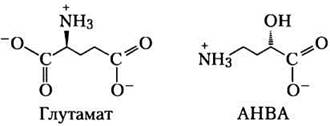
a) List the chemical conversions required to produce AHBA from glutamate; it is not necessary to specify the reactions in their exact chronological order.
Lee and colleagues set out to clone the gene cluster responsible for butirosin synthesis in Bacillus circulans cells, which produce high levels of butirosin. They identified five genes necessary for this metabolic pathway: btrI, btrJ, btrK, btrO, and btrV. The researchers inserted these genes into a plasmid designed to yield high protein expression in E. coli cells; the resulting proteins contained an N-terminal polyhistidine tag (see p. 447, Vol. 1), which facilitated their Isolation and Purification. The predicted Amino Acid Sequence of the BtrI protein showed a high degree of Homology with the sequences of known Acyl carrier proteins (see Fig. 21–5). Using mass spectrometry (see Box 3–2, Vol. 1), Lee and co-workers determined that the molecular mass of the purified BtrI protein (including the histidine tag) is 11,812. Following incubation of the purified BtrI protein with coenzyme A and an enzyme that attaches CoA to other acyl carrier proteins, products were obtained in which a significant fraction consisted of a protein with a molecular mass of Mr = 12,153.
b) How do these data support the fact that the Btrl protein can function as an acyl-carrier protein with CoA as a prosthetic group?
Following standard terminology, Lee and co-workers designated the protein not bound to CoA as apo-Btrl, and the protein with CoA (see Fig. 21-5) as holo-Btrl. Incubation of holo-Btrl with glutamine, ATP, and purified BtrJ protein converted holo-Btrl with an Mr of 12,153 into a protein with an Mr of 12,281, which corresponds to a glutamate thioester of holo-Btrl. Based on these findings, the authors proposed the following formula for the protein with an Mr of 12,281 (y-glutamyl-S-BtrI):

c) What other structural formulas could be consistent with the data presented above?
d) Lee et al. argued that the Structure shown here (y-glutamyl-S-BtrI) is correct because the α-carboxyl group must be removed at some point during biosynthesis. Explain the chemical rationale behind this statement. (Hint: See Fig. 18-6c.)
The BtrK protein showed significant homology to PLP-dependent amino acid Decarboxylases, and BtrK isolated from E. coli cells was tightly bound to PLP. Incubation of y-glutamyl-S-BtrI with purified BtrK yielded a substance with an Mr of 12,240.
e) What is the most likely structure of this substance?
f) Interestingly, incubation of glutamate and ATP with purified BtrI, BtrJ, and BtrK proteins yielded a substance with an Mr of 12,370. What is the most likely structure of this substance? Hint: Recall that BtrJ can use ATP to interact with the y-glutamyl nucleophilic group.
Lee and colleagues found that BtrO is a homolog of an alkane hydroxylase monooxygenase (see Box 21-1) that uses FMN as a cofactor, whereas BtrV is a homolog of NAD(P)H oxidoreductase. Two other genes in the cluster, btrG and btrH, likely encode enzymes that remove the y-glutamyl group and attach AHBA to the target antibiotic molecule.
g) Based on these data, propose a plausible mechanism for the synthesis of AHBA and its attachment to the target antibiotic. Indicate the enzymes catalyzing each step, along with all required substrates and cofactors (ATP, NAD, etc.).
Last update: 06/08/2026
Editorial and Educational Adaptation: This material has been compiled based on the primary/original source text. The project team performed an editorial review, corrected technical inaccuracies, structured sections, and adapted the content for an educational format.
What was processed:
- elimination of formatting defects (OCR errors, structural breaks, corrupted characters);
- editorial organization of content;
- standardization of terminology in accordance with academic sources;
- verification of factual statements against the original source text.
All mentions of the author, publication year, and origin of the primary text have been preserved in accordance with the source.