Biochemistry and Molecular Biology - Belyasova N.A. 2002
Metabolism. Processes Requiring Energy Input
Metabolism of Nitrogen-Containing Compounds
Amino Acid Breakdown
The first section of this chapter has already outlined the necessity and general strategy of amino acid degradation. This is driven by the fact that Amino Acids cannot be stored for future use, nor can they be eliminated from Cells in their entirety. Organisms utilize surplus Amino acids as metabolic fuel: through specific structural modifications, their carbon skeletons can enter the Biosynthesis of Fatty acids, glucose, Ketone Bodies, Isoprenoids, and other molecules, or be oxidized within the TCA cycle to supply The Cell with energy. It is worth noting that many microorganisms, particularly aerobic Bacteria, are capable of utilizing individual amino acids as their sole source of energy and carbon. Lacking a Tricarboxylic Acid Cycle, anaerobic microorganisms have evolved a different mechanism: the paired Catabolism of amino acids, wherein one serves as an electron donor and the other as an electron acceptor. Crucially, ATP is generated during this process.
In addition to carbon skeletons, amino acid degradation yields amino nitrogen. Unlike carbon, amino nitrogen cannot be oxidized to yield energy and, furthermore, is toxic to cells. Consequently, any amino groups that cannot be reassimilated into biosynthesis are converted into urea (or Other Compounds) and excreted from the Organism.
The primary types of reactions involving amino acids—namely, reactions at the α-amino group, the carboxyl group, and the side chain—will be discussed below.
Cleavage of amino acids via the amino group. These processes are predominantly represented by Transamination and deamination reactions at the α-amino group. Transamination reactions were already examined in the section on Amino acid biosynthesis. They are catalyzed by transaminases (aminotransferases), which are distinguished by their use of Pyridoxal phosphate (a vitamin B6 derivative) as a prosthetic group. Glutamate transaminase and Alanine transaminase play the most prominent roles in amino acid degradation. These Enzymes act as "funnels," collecting amino groups from various Amino Acids and incorporating them into glutamate and alanine. In animals, these Two amino acids function as carriers of accumulated amino nitrogen from Tissues to the Liver. In the liver, the amino group of alanine is transferred by alanine transaminase to α-ketoglutarate, yielding glutamate:
Class="center">Alanine + α-Ketoglutarate → Pyruvate + Glutamate
Thus, the majority of amino groups from various amino acids end up pooled in glutamate, which readily undergoes deamination.
Deamination reactions of amino acids result in the release of the NH2 group as ammonia and occur via three distinct pathways: oxidative, hydrolytic, and direct deamination (Fig. 16.12). The most prevalent type is Oxidative Deamination, which targets the α-amino group and is catalyzed primarily by Glutamate dehydrogenase, a classic liver enzyme. An unusual feature of this enzyme is its ability to utilize both NAD and NADP as Coenzymes. Glutamate dehydrogenase activity is regulated by allosteric activators (ADP, GDP) and inhibitors (ATP, GTP).
Oxidative deamination proceeds in two stages, yielding an imino acid as an intermediate product, which spontaneously hydrolyzes to form a keto acid and ammonia (Fig. 16.12). Both reactions are reversible, and their equilibrium constants are close to unity. As shown previously (Fig. 3), ammonia is incorporated back into glutamate during the reverse reaction. It can be considered that the formation and deamination of glutamate serve as the central reaction in Ammonia METABOLISM.
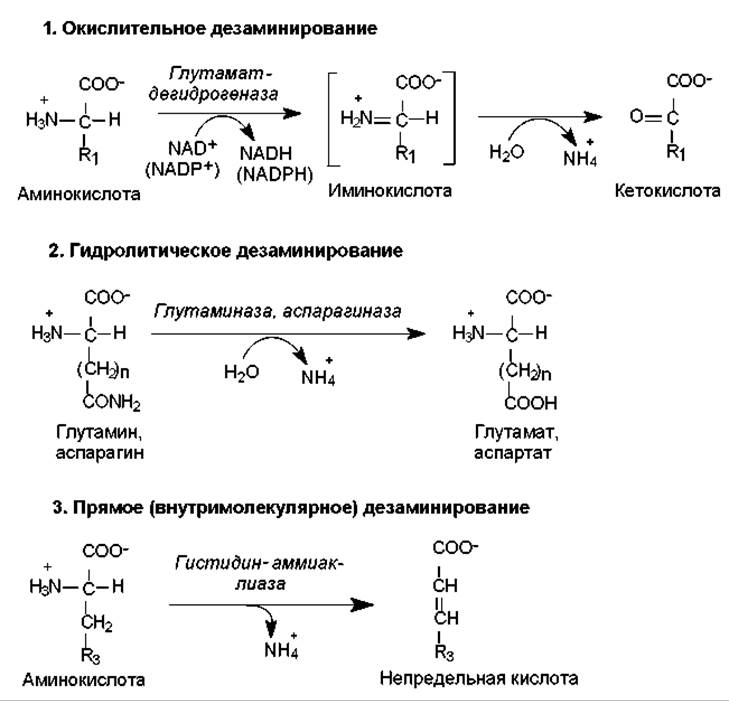
Fig. 16.12. Various types of amino acid Reactions Involving the amino group
In many organisms, oxidative deamination is carried out by dehydrogenases that utilize flavin Cofactors (FMN, FAD). These enzymes are termed amino acid oxidases. They exhibit broad substrate Specificity: some are specific to L-amino acids, while others target their D-counterparts. These enzymes are generally thought to play a minor role in Amino acid metabolism.
Only a few amino acids undergo hydrolytic deamination; among the proteinogenic ones, these are asparagine and glutamine. Their deamination yields aspartate and glutamate, respectively. This process is more accurately termed deamidation, as it involves the amide group (Fig. 16.12). In rare cases, the α-amino group of an amino acid is cleaved in this manner, producing ammonia and a hydroxy acid.
Direct (intramolecular) deamination results in the Formation of Unsaturated compounds. This pathway typically involves Histidine and Serine. However, the initial enzymatic attack on serine triggers the elimination of a Water molecule (catalyzed by serine dehydratase), a process in which the side-chain hydroxyl group of serine participates. In this instance, the unstable intermediate—aminoacrylate—undergoes spontaneous deamination. The overall reaction yields pyruvate, and this type of deamination is driven by a rearrangement within The amino acid side chain.
Reactions of amino acids at the carboxyl group. Modifications at the carboxyl group of Amino acids can be utilized by organisms for degrading these molecules as well as for synthesizing other compounds essential to the cell, primarily aminoacyl adenylates and biogenic amines. The formation of aminoacyl adenylates during the preliminary stage of Protein Synthesis was described in Chapter 3. Biogenic amines are produced in Reactions Catalyzed by amino acid Decarboxylases. These enzymes are widespread in animals, plants, and particularly microorganisms, where in pathogenic strains they can act as virulence factors that assist the pathogen in invading host tissues. Like transaminases, L-amino acid decarboxylases employ Pyridoxal phosphate as a prosthetic group.
Monoamines (biogenic amines) perform diverse Functions in living organisms. For instance, ethanolamine, produced by the decarboxylation of serine, is an essential component of polar Lipids. Decarboxylation of Cysteine and aspartate yields cysteamine and β-Alanine, respectively, which are key Building Blocks of coenzyme A, a vital cellular cofactor. Decarboxylation of histidine produces histamine, a mediator involved in regulating metabolic rates, endocrine gland activity, and Blood pressure in animals. Many other biogenic amines act as signaling molecules, notably serving as Neurotransmitters widely distributed in animals and humans.
Reactions of amino acids at the side chain. The structural diversity of amino acid side chains is matched by the variety of chemical transformations they undergo. Among these manifold reactions, certain pathways allow the cell to interconvert amino acids. For example, Tyrosine is synthesized via The oxidation of the aromatic ring of phenylalanine; the Hydrolysis of Arginine yields Ornithine (cf. The Urea Cycle); and The breakdown of Threonine produces Glycine, among other Examples.
In addition to these reactions, side-chain transformations leading to the synthesis of physiologically active substances are of paramount importance. Thus, tyrosine serves as the precursor for the hormone adrenaline; Tryptophan gives rise to nicotinic acid (Vitamin PP, a component of nicotinamide coenzymes) and indoleacetic acid (a plant Growth Hormone); and cysteine yields mercapturic acids (which participate in the detoxification of Aromatic Compounds). The aforementioned conversion of serine into pyruvate via side-chain dehydration and deamination is another notable example.
Consequently, the diverse Chemical transformations of amino acids can lead to The production of BIOLOGICALLY ACTIVE SUBSTANCES with a wide spectrum of physiological effects, as well as the cleavage of amino groups as ammonia, leaving behind carbon skeletons. The next section will explore the metabolic fate of ammonia and the carbon atoms derived from degraded amino acids.
Last update: 06/08/2026
Editorial and Educational Adaptation: This material has been compiled based on the primary/original source text. The project team performed an editorial review, corrected technical inaccuracies, structured sections, and adapted the content for an educational format.
What was processed:
- elimination of formatting defects (OCR errors, structural breaks, corrupted characters);
- editorial organization of content;
- standardization of terminology in accordance with academic sources;
- verification of factual statements against the original source text.
All mentions of the author, publication year, and origin of the primary text have been preserved in accordance with the source.