Principles of Biochemistry Volume 1 - A. Lehninger 1985
Biomolecules
Water
Amino acids can act as both acids and bases
In an aqueous solution, Amino Acids such as Alanine exist as zwitterions, which function either as acids (proton Donors):
Class="center">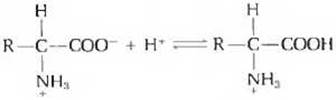
or as bases (proton acceptors):
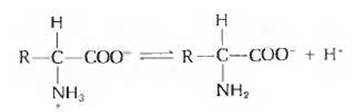
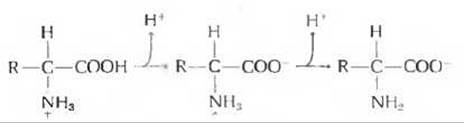
Substances with such dual properties are amphoteric (derived from the Greek "amphi" meaning "both") and are frequently referred to as ampholytes (a portmanteau of "amphoteric electrolytes"). A simple monoaminomonocarboxylic $\alpha$-amino acid, such as alanine, is essentially a dibasic acid when in its fully protonated form, meaning protons are attached to both the amino and carboxyl groups. In this state, it possesses two groups capable of releasing two protons upon dissociation, According to the following equation:
Last update: 06/08/2026
Editorial and Educational Adaptation: This material has been compiled based on the primary/original source text. The project team performed an editorial review, corrected technical inaccuracies, structured sections, and adapted the content for an educational format.
What was processed:
- elimination of formatting defects (OCR errors, structural breaks, corrupted characters);
- editorial organization of content;
- standardization of terminology in accordance with academic sources;
- verification of factual statements against the original source text.
All mentions of the author, publication year, and origin of the primary text have been preserved in accordance with the source.