Vertebrate Zoology - V. M. Konstantinov 2011
Chordates
Terrestrial, or Tetrapod, Vertebrates — Vertebrates with Embryonic Membranes
Class Reptilia, or Reptiles — Subclass Archosauria — Order Crocodilia
Among modern reptiles, crocodiles represent the most highly organized group, adapted to a semi-aquatic lifestyle.
Their elongated body and HEAD are flattened dorsoventrally. The laterally compressed tail serves as their primary propulsion organ for swimming. The forelimbs have five free digits, while the hindlimbs bear four digits connected by webbing. The body is covered in horny scutes, beneath which bony plates (osteoderms) develop, primarily along the back. Unlike most reptiles, crocodiles possess cutaneous glands (albeit very few in number) located along the ridge of the back, beneath the lower jaw, and in the cloacal region. The Significance of these glands remains not fully understood.
Teeth are located exclusively on the premaxillary, maxillary, and dentary bones, anchored in sockets (thecodont dentition) much like in mammals. Due to the expansion of the palatal processes of the premaxillary and maxillary bones, as well as the palatine bones, a bony partition known as the secondary hard palate develops. This Structure divides the Oral Cavity into an upper section—the nasopharyngeal passage—and a lower section, the oral cavity proper (Fig. 111).
With such a partition, the internal nostrils (choanae) open not directly into the oral cavity proper, but into the nasopharyngeal passage, which in turn communicates with the Pharynx; consequently, food held in the Mouth does not obstruct breathing. This is undoubtedly an advanced evolutionary feature, also characteristic of mammals.
The regions of THE Vertebral Column are well differentiated. The cervical region typically contains nine vertebrae, the thoracic 12–13, the lumbar 2–4, the sacral 2–3, and the caudal 30–40. The vertebrae are procoelous. The Pectoral Girdle lacks clavicles and consists solely of scapulae and coracoids.
In connection with their aquatic lifestyle, there are distinctive specializations in the digestive and respiratory systems. Specifically, a muscular fold known as the palatal valve hangs down from the posterior edge of the palate, its lower margin capable of abutting the Base of the Tongue. In this position, the oral cavity is isolated from the pharynx, allowing crocodiles to breathe while their mouth is open in the Water to capture prey, with only the very tip of the snout bearing the nostrils exposed above the surface. Valves located at the external opening of the nostrils can seal them shut when the entire head is submerged.
Class="center">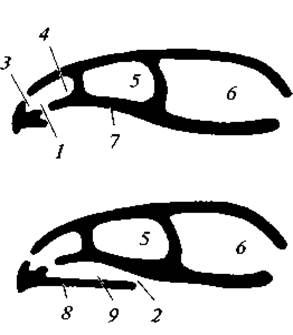
Fig. 111. Diagram of The formation of the secondary hard bony palate in reptiles: 1 — primary choanae; 2 — secondary choanae; 3 — respiratory and 4 — sensory Regions of the olfactory cavity; 5 — Orbit; 6 — cranial cavity; 7 — primary palate; 8 — secondary hard palate; 9 — nasopharyngeal passage
The Lungs are large and possess a complex chambered (multicameral) structure, which is related to the fact that crocodiles can remain submerged underwater for extended periods.
The Circulatory system is characterized by the division of the ventricle into two isolated halves. Consequently, the crocodile Heart is four-chambered (as in birds and mammals). However, the ventricles communicate with one another, and alongside the right aortic arch emerging from the left (arterial) ventricle, there is also a left aortic arch emerging from the right (venous) ventricle. These features facilitate the mixing of Blood within the dorsal aorta (Fig. 112).
Today, this relict group comprises 25 species belonging to three families distributed across the tropical and subtropical regions of both hemispheres.
The family Gavialidae includes a single species — the gharial (Gavialis gangeticus). It is characterized by an extremely elongated snout that is somewhat swollen at the tip (especially in males). Body length reaches up to 6 m. It inhabits southern India. The family Crocodylidae is the most numerous, with 14 species. They possess a moderately elongated snout and are distributed across Africa, South Asia, northern Australia, and tropical America. A typical representative is the Nile crocodile (Crocodylus niloticus), which reaches lengths up to 8 m, and according to some sources, even 10 m. The family Alligatoridae includes 8 species, notably the Chinese alligator (Alligator sinensis), a very small species reaching a length of only up to 2 m (Fig. 113), distributed in China.
Crocodiles inhabit aquatic environments, most frequently slow-flowing rivers, lakes, and extensive marshes. They are less commonly found in coastal lagoons. They rarely emerge onto land—only to reproduce, bask, or migrate from a drying water body to a deeper one. There are instances when crocodiles, failing to find a suitable water body during periods of drought, enter estivation by burrowing into the mud.
They reproduce by laying eggs. The eggs (several dozen in number) are about the size of goose eggs and are covered with a tough calcareous shell.
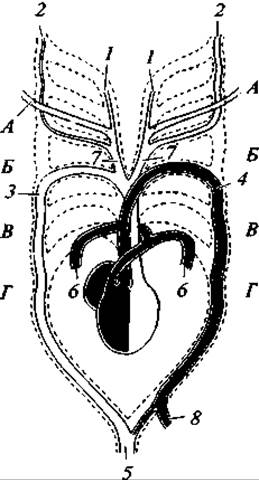
Fig. 112. Diagram of The structure of The Heart and arterial arches in a crocodile (ventral view):
A —G— branchial arches (of fish); 1 — Internal Carotid Artery; 2 — External Carotid Artery (the right one is nearly atrophied); 3 — right systemic aortic arch; 4 — left systemic arch; 5 — dorsal aorta; 6 — pulmonary artery; 7 — brachiocephalic artery; 8 — gastrointestinal artery

Fig. 113. Crocodiles:
1 — gharial; 2 — Nile crocodile; 3 — Chinese alligator
Crocodiles deposit their eggs in pits dug along the shoreline and cover them over. In some species, the female remains near the nest and guards it against predators. The incubation period lasts 1.5–2 months. Embryonic development occurs at high ambient temperatures.
Crocodiles feed on a diverse array of animals, ranging from Mollusks and crustaceans to birds and relatively large mammals. Cases of attacks on humans are also documented. Prey is usually captured in the water by slowly and stealthily stalking it, with the jaws held open and the body submerged. They also catch birds and mammals located on the shoreline. When hunting, they rely primarily on Hearing and Vision, while their SENSE OF SMELL and tactile perception are poorly developed. In the water, crocodiles are extremely agile, swimming with great dexterity and speed, whereas on land they are clumsy and sluggish.
Crocodiles have commercial value, and in some areas their populations have significantly declined. Humans utilize the Skin and meat of these animals. In many regions, hunting them is prohibited, and specialized farms are being established for captive breeding. Nearly all species of true crocodiles are included in the IUCN Red List.
ORIGIN AND EVOLUTION of Reptiles
Terrestrial vertebrates arose during the Devonian period. These were armored-headed amphibians, or stegocephalians. They inhabited the vicinity of water bodies and remained closely tied to them, as they could reproduce only in water. The colonization of environments remote from water required substantial reorganization of their biological Organization: adaptations to protect the body against desiccation, improvement of aerial Respiration, locomotion on firm substrates, the capacity to reproduce independently of water, and, undoubtedly, more complex behavioral patterns. These are the fundamental Prerequisites for the qualitative distinctions that emerged in the new group of animals. All these traits became fully established in reptiles.
To this it should be added that by the end of the Carboniferous period, major environmental changes took place, leading to a more diverse climate on the planet, the proliferation of varied vegetation, and its spread to areas far from water bodies. Consequently, this spurred the widespread dispersion of tracheate Arthropods—potential food sources for reptiles—which also expanded into the watershed areas of the land.
The evolution of reptiles progressed rapidly and dynamically. Long before the end of the Paleozoic Permian period, they had displaced the majority of stegocephalians. Having gained a foothold on land, reptiles encountered novel and exceptionally diverse environmental conditions in this new habitat. The multifaceted nature of this diversity, combined with a lack of significant competition from other animals on land, served as the primary drivers for the flourishing of reptiles in the epochs that followed. Mesozoic reptiles were primarily terrestrial animals; however, many secondarily adapted to aquatic life to varying degrees, while others conquered the aerial environment. The adaptability of reptiles was astonishing, making it entirely justifiable to regard the Mesozoic as the Age of Reptiles.
Early reptiles. The most ancient reptiles are known from the Upper Permian deposits of North America, Western Europe, Russia, and China. Referred to as cotylosaurs, they still bore a close resemblance to stegocephalians in A number of features. Their Skull formed a solid bony box with openings solely for the eyes, nostrils, and the parietal organ; the cervical region of the spine was poorly defined, and the sacrum consisted of a single vertebra. The pectoral girdle retained the cleithrum—a dermal bone characteristic of fish—while their limbs were short and widely splayed.
Numerous remains of primitive reptiles were discovered by V. P. Amalitsky in the Permian deposits of Eastern Europe along the Northern Dvina River. Among them were the three-meter-long herbivorous pareiasaurs (Pareiasaurus). It is possible that cotylosaurs descended from Carboniferous stegocephalians—embolomeres.
Cotylosaurs reached their peak during the middle Permian. However, only a few survived until the end of the Permian, and by the Triassic, this group had vanished, yielding the stage to more highly organized and specialized reptile groups that evolved from various cotylosaur orders (Fig. 114).
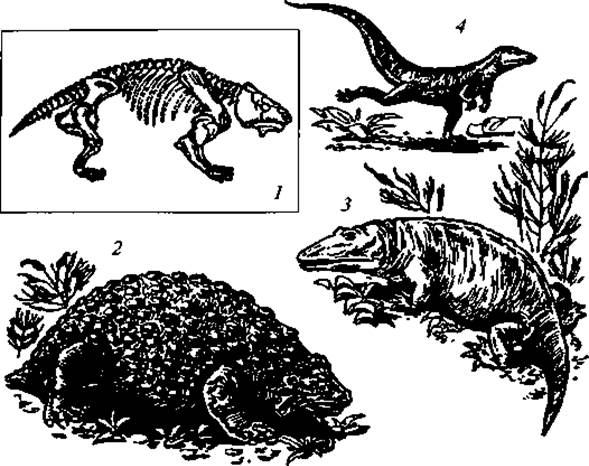
Fig. 114. Cotylosaurs (1, 2, 3) and pseudosuchian (4):
1 — pareiasaur (Upper Permian), Skeleton; 2 — pareiasaur, reconstruction of the animal's appearance; 3 — Seymouria; 4 — pseudosuchian
The further evolution of reptiles was accompanied by morphological Variability driven by the diverse living conditions they encountered as they dispersed. Most reptiles acquired greater mobility, and their skeletons became lighter yet sturdier. Utilizing a wider range of food sources than amphibians, reptiles also modified their foraging techniques. Consequently, significant changes occurred in the STRUCTURE OF THE limbs, Axial Skeleton, and skull. In the majority of species, the limbs lengthened, and the pelvis gained greater stability through attachment to two or more sacral vertebrae. The cleithrum bone disappeared from the pectoral girdle. The solid cranial armor underwent partial reduction; in response to the increased Differentiation of the jaw musculature, temporal openings and separating bony bridges—arches—developed in the temporal region of the skull to anchor a complex system of Muscles.
The following sections examine the principal groups of reptiles, providing an Overview that illustrates the exceptional diversity of these animals, their adaptive specialization, and their probable phylogenetic relationships with currently living groups.
In shaping the profile of ancient reptiles and assessing their subsequent evolutionary fate, the characteristics of their skull are crucial. The primitiveness of stegocephalians ("whole-skulled" amphibians) and early reptiles was manifested in their cranial structure by the absence of any depressions other than the orbital and olfactory openings. This feature is reflected in the name Anapsida. The temporal region in this group of reptiles was enclosed by bone. Turtles (now Testudines or Chelonia) became the likely descendants of this evolutionary Lineage, retaining a solid bony cover behind their orbits. The Permian Eunotosaurus is traditionally regarded as the ancestor of turtles—a small, lizard-like animal with short and extremely broad Ribs that formed a ventral shield-like structure (Fig. 115). It lacked a dorsal shell but possessed teeth. The earliest known turtles date back to the Early Triassic of the Mesozoic, with fossil remains discovered in Germany. The skull, teeth, and shell structure of these ancient turtles are remarkably similar to those of modern forms.
Mesozoic turtles were initially terrestrial and apparently burrowing animals. Some groups subsequently transitioned to an aquatic lifestyle, which led many to even partially lose their bony and horny shell.
From the Triassic to the present day, turtles have retained the fundamental traits of their organization. They survived all the cataclysms that wiped out the majority of reptiles and are currently just as flourishing as they were in the Mesozoic.
Modern cryptodires and pleurodires largely preserve the primitive appearance of Triassic land turtles, whereas marine and softshell turtles emerged in the Late Mesozoic.
All other reptiles, both ancient and modern, developed one or two temporal openings in their skull structure. Synapsids possessed a single lower temporal opening. A single upper temporal opening characterizes two groups: Parapsida and Euryapsida. Finally, Diapsids possessed two openings.
The evolutionary fates of these groups varied. The first to diverge from the ancestral trunk were the Synapsids (Synapsida)—reptiles featuring lower temporal openings bordered by the jugal, squamosal, and postorbital bones. Already by the late Carboniferous, this group evolved from the earliest amniotes into the most abundant clade. In the paleontological record, they are represented by two successive orders: Pelycosauria and Therapsida. They are also referred to as mammal-like reptiles (Theromorpha). The mammal-like reptiles reached their zenith long before the appearance of the first dinosaurs.
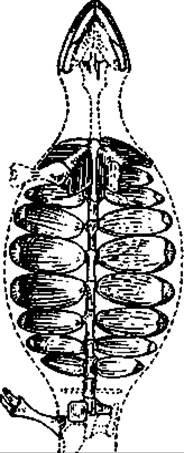
Fig. 115. Skeletal reconstruction of Eunotosaurus africanus—the probable ancestor of turtles (from Permian deposits)
Their direct relatives were the cotylosaurs; specifically, pelycosaurs (Pelicosauria) remained very close to cotylosaurs in structure. Their remains have been found in North America and Europe. Externally, they resembled lizards and were relatively small (1–2 m in length), featuring amphicoelous vertebrae and well-developed abdominal ribs. However, their teeth were set in alveoli, and some showed the beginnings of tooth differentiation, albeit to a minor degree.
In the middle Permian, pelycosaurs were superseded by the more highly organized Theriodonts (Theriodontia). Their teeth were distinctly differentiated, and a secondary bony palate had developed. The single occipital condyle divided into two. The lower jaw was predominantly composed of the dentary bone. Limb posture also shifted: the elbow rotated backward and the knee forward, causing the limbs to position themselves beneath the torso rather than sprawling out to the sides as in other reptiles. Numerous skeletal traits shared with mammals appeared.
Numerous Permian theriodont reptiles exhibited great diversity in appearance and lifestyle. Many were carnivorous, such as Inostrancevia alexandrovi (Fig. 116), discovered by V. P. Amalitsky’s expedition in Permian deposits along the Northern Dvina River. Others fed on plant or mixed diets. These unspecialized species stand closest to the mammals; among them, Cynognathus deserves mention for possessing numerous progressive organizational traits.
Theriodonts remained numerous in the Early Triassic, but vanished with The Emergence of predatory dinosaurs. Fascinating data presented in Table 7 illustrate the sharp decline in The Diversity of mammal-like reptiles throughout the Triassic. These forms are of profound interest as the group that gave rise to mammals.
The next group to branch off from anapsid cotylosaurs were the Diapsids (Diapsida). Their skulls feature two temporal openings located above and below the postorbital bone. By the end of the Paleozoic (Permian), Diapsids underwent an exceptionally broad adaptive radiation, producing systematic groups and species found among both extinct forms and living reptiles. Two main groups (infraclasses) emerged within the diapsids: Lepidosauromorpha and Archosauromorpha.

Fig. 116. Theriodonts:
1 — Inostrancevia, Late Permian (reconstruction of the animal); 2 — skull of Cynognathus
Table 7
Ratio of therapsid and sauropsid (reptile-like) genera in the late Paleozoic — early Mesozoic
(P. Robinson, 1977)
Period |
Therapsids |
Sauropsids |
Late Triassic |
17 |
8 |
Middle Triassic |
23 |
29 |
Early Triassic |
36 |
20 |
Late Permian |
170 |
15 |
Paleontologists lack precise data to determine which of these groups appeared earlier or later, but their evolutionary fates diverged.
What are lepidosauromorphs? This ancient infraclass encompasses modern tuataras, lizards, snakes, chameleons, and their extinct ancestors.
The tuatara, or sphenodon (Sphenodon punctatus), currently inhabiting small islands off the coast of New Zealand, is a descendant of primitive reptiles (or wedge-toothed reptiles) belonging to the superorder Prosauria (or Lepidontidae), which were quite widespread in the mid-Mesozoic. They are characterized by numerous wedge-shaped teeth attached to the jaw bones and palate, much like amphibians, as well as amphicoelous vertebrae.
Lizards, snakes, and chameleons now represent the vast Diversity of the Order Squamata. Lizards are among the oldest advanced groups of reptiles, with fossil remains known from the Late Permian.
Scientists find many similarities between lizards and sphenodontians. Their limbs are splayed widely, and their body moves with an undulating flexion of the vertebral column. Interestingly, among their morphological similarities is the presence of an intertarsal joint. Snakes appear only in the Cretaceous. Chameleons are a specialized group from a later epoch — the Cenozoic (Paleocene, Miocene). Archosaurs are considered the most remarkable of all reptiles ever to have lived on Earth, including crocodiles, pterosaurs, and dinosaurs. Crocodiles are the only archosaurs that have survived to the present day.
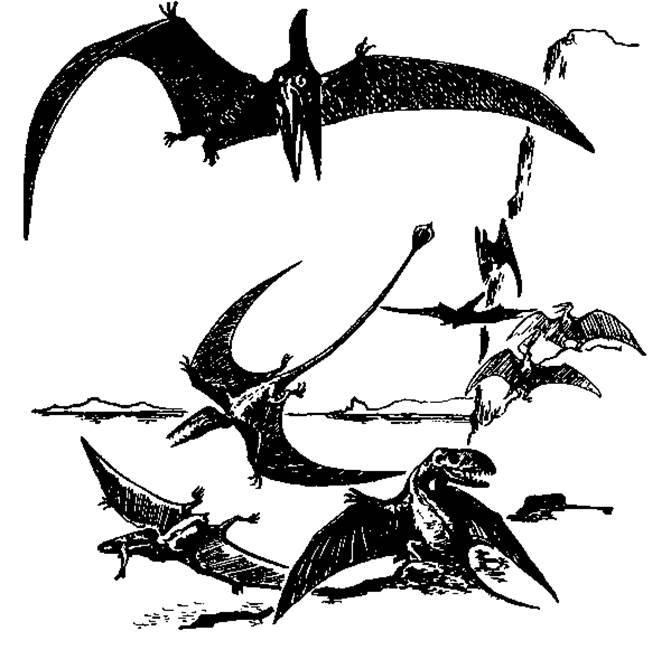
Fig. 117. Pterosaurs
Crocodiles (Crocodylia) emerge at the end of the Triassic. Jurassic crocodiles differ significantly from modern ones by lacking a true bony palate. Their internal nostrils opened between the palatine bones, and their vertebrae were still amphicoelous. Modern-type crocodiles, featuring a fully developed secondary bony palate and procoelous vertebrae, evolved from ancient archosaurs known as pseudosuchians. They are known from the Cretaceous (about 200 million years ago). Most inhabited freshwater bodies, though true marine species are also known among Jurassic forms.
Pterosaurs, or flying reptiles (Pterosauria), provide one of the most striking Examples of Mesozoic reptile specialization. These were flying animals with a highly peculiar anatomy. Their wings consisted of skin membranes stretched between the sides of the body and the highly elongated fourth finger of the forelimbs. The broad Sternum possessed a well-developed keel, similar to that of birds; the skull bones fused early, and many bones were pneumatic. Their jaws, elongated into a beak, bore teeth. Tail length and wing shape varied. Some (rhamphorhynchids) had long, narrow wings and long tails, and likely flew by gliding and soaring. Others (pterodactyloids) had very short tails and broad wings; their flight was more frequently powered by flapping (Fig. 117). Judging by the fact that pterosaur remains have been discovered in saline deposits, they were coastal inhabitants. They fed on fish and, in behavior, were likely similar to gulls and terns. Their sizes ranged from a few centimeters to a meter or more.
The largest of all flying vertebrates belong to the Late Cretaceous pterosaurs — the pteranodons. Their estimated wingspan is 7–12 m, and their body mass is about 65 kg. Their remains have been found on all continents except Antarctica.
Paleontologists suggest a gradual evolutionary decline of this group, which coincided in time with the appearance of birds.
Dinosaurs (Dinosauria) are recorded in the paleontological record from the middle Triassic. They represent the most numerous and diverse group of reptiles ever to inhabit land. Dinosaurs ranged from small animals with a body length of less than a meter to giants nearly 30 m long. Some walked exclusively on their hind legs, while others used all four. Their general appearance varied greatly, but in all of them, the head was relatively small compared to the body, and the Spinal Cord in the sacral region formed a local enlargement whose volume exceeded that of the Brain (Fig. 118).
At the very outset of their diversification, dinosaurs split into two parallel branches. A characteristic feature of their anatomy was the structure of the Pelvic Girdle, which is why these groups are termed Saurischia (lizard-hipped) and Ornithischia (bird-hipped).
Saurischians (Saurischia) were initially relatively small predatory animals that moved by leaping exclusively on their hind legs, while their forelimbs served for grasping food. The long tail acted as a counterbalance. Subsequently, large herbivorous forms emerged that walked on all four legs. These included the largest land vertebrates ever to live: Brontosaurus had a body length of about 20 m, and Diplodocus reached up to 26 m. Most giant saurischians were apparently semi-aquatic animals that fed on succulent aquatic vegetation.
Ornithischians (Ornithischia) got their name from their elongated pelvis, which resembles that of birds. Initially, they walked on elongated hind legs alone, but later species possessed proportionately developed pairs of limbs and walked on all fours. In terms of diet, ornithischians were exclusively herbivorous. Among them was Iguanodon, which walked on its hind legs and reached a height of 9 m. Triceratops bore a strong external resemblance to a rhinoceros, typically featuring a small horn on the snout and two long horns above the eyes, reaching lengths of up to 8 m. Stegosaurus was distinguished by a disproportionately small head and two rows of high bony plates running along its back, with a body length of about 5 m.
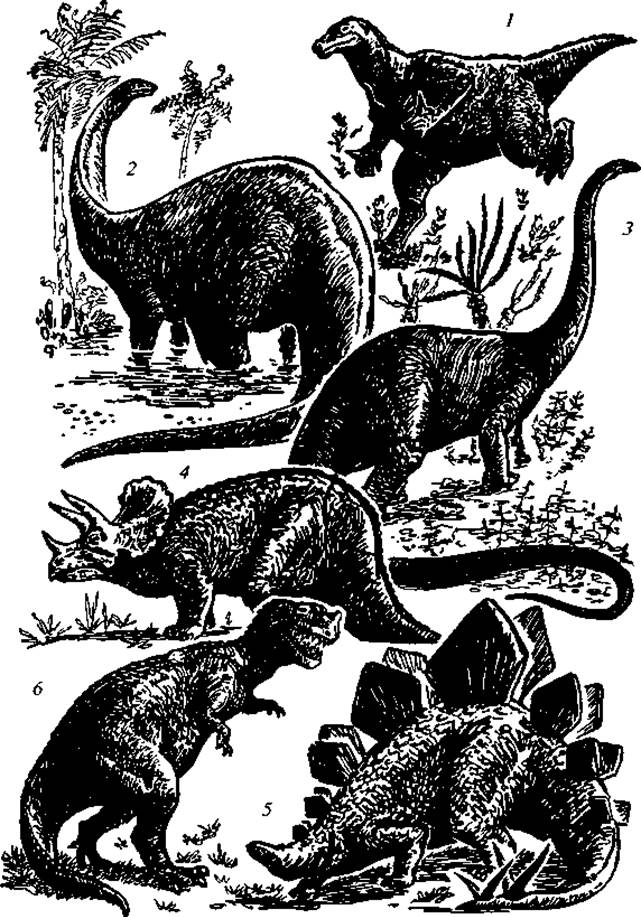
Fig. 118. Dinosaurs:
1 — Iguanodon; 2 — Brontosaurus; 3 — Diplodocus; 4 — Triceratops; 5 — Stegosaurus; 6 — Ceratosaurus
Dinosaurs were distributed across almost the entire globe and inhabited extremely diverse environments, including deserts, forests, and swamps. Some led a semi-aquatic lifestyle. Undoubtedly, this reptile group was dominant on land during the Mesozoic. Dinosaurs reached their peak diversity in the Cretaceous period and became extinct by its end.
Finally, mention must be made of yet another group of reptiles whose skulls possessed only a single upper temporal opening, a characteristic feature of parapsids and euryapsids. It has been suggested that they evolved from diapsids through the loss of the lower opening. In the fossil record, they are represented by two groups: Ichthyosaurs (Ichthyosauria) and Plesiosaurs (Plesiosauria). Throughout the Mesozoic, from the Early Triassic to the Cretaceous, they dominated marine biocenoses. As R. Carroll (1993) observed, reptiles returned to a secondary aquatic lifestyle whenever living in water proved more advantageous in terms of food availability and a low number of predators.
Ichthyosaurs (Ichthyosauria) occupied the same ecological niche in the Mesozoic as cetaceans do today. They swam by undulating their bodies, particularly the caudal region, while their flippers served as steering Organs. Their convergent evolution with dolphins is striking, featuring a streamlined body, an elongated snout, and a large two-lobed caudal fin (Fig. 119). Their paired limbs transformed into flippers, whereas the hind limbs and pelvis became vestigial. The Phalanges were elongated, and some species had as many as 8 digits. Their skin was smooth and naked. Body sizes ranged from 1 to 14 m. Ichthyosaurs were strictly aquatic and fed on fish and, to some extent, invertebrates. It has been established that they were viviparous. Emerging in the Triassic, ichthyosaurs went extinct at the end of the Cretaceous.
Plesiosaurs (Plesiosauria) developed adaptive features for marine life that differed from those of ichthyosaurs: a broad, flat body with a relatively underdeveloped tail.
Powerful flippers served as their organs of propulsion. Unlike ichthyosaurs, they possessed a well-developed neck supporting a small head, bearing a resemblance to pinnipeds. Their body length ranged from 50 cm to 15 m. Their lifestyle was also distinct; at the very least, certain species inhabited coastal waters. They fed on fish and mollusks. Having appeared in the Early Triassic, plesiosaurs, much like ichthyosaurs, died out at the end of the Cretaceous period.
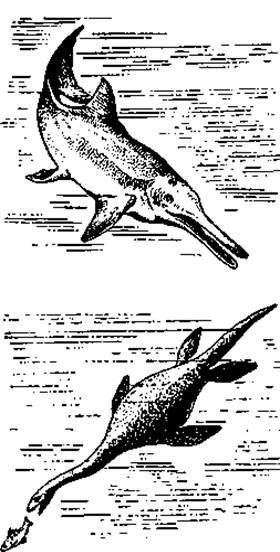
Fig. 119. Ichthyosaur and plesiosaur
The Brief Overview of reptile phylogeny given above shows that the overwhelming majority of major taxonomic groups (orders) became extinct before the beginning of the Cenozoic era, and modern reptiles represent merely the meager remnants of a once-rich Mesozoic reptilian fauna. The cause of this colossal phenomenon is understood only in the broadest terms. Most Mesozoic reptiles were exceptionally specialized animals. Their survival depended on the availability of highly specific environmental conditions. It is reasonable to assume that such a narrow and profound specialization was one of the underlying factors in their disappearance.
It has been established that although the extinction of individual reptile groups occurred throughout the entire Mesozoic, it was most pronounced at the end of the Cretaceous period. During this time, the majority of Mesozoic reptiles died out over a relatively short period. If it is fair to call the Mesozoic the Age of Reptiles, it is equally justified to refer to the end of this era as the Age of the Great Extinction. One must take into account that significant climatic and landscape changes took place during the Cretaceous. This coincided with substantial redistributions of land and sea, as well as crustal movements that led to massive mountain-building events known in geology as the Alpine orogeny. It is believed that a large cosmic body passed close to the Earth during this period. The resulting disruptions to established living conditions were considerable. However, these changes were not limited to alterations in the physical state of the Earth and other abiotic factors.
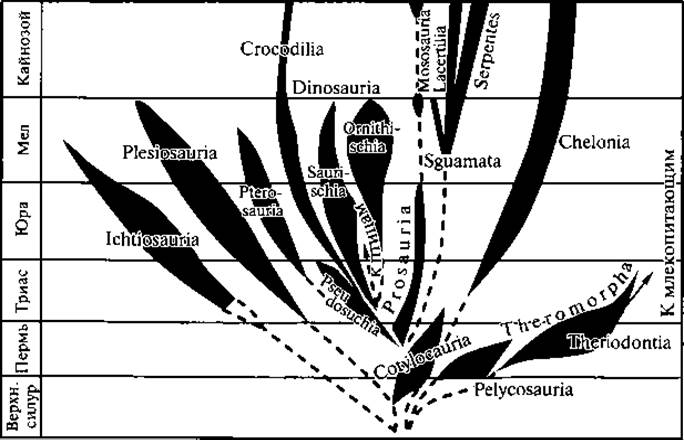
Fig. 120. Phylogenetic Tree of reptiles
In the middle of the Cretaceous period, the Mesozoic flora of conifers, cycads, and other plants was replaced by a new type of flora, namely angiosperms. Genetic changes within The Nature of the reptiles themselves cannot be ruled out either. Naturally, all of these factors could not fail to impact the survival of all animals, particularly those that were highly specialized.
Finally, one must consider that by the end of the Mesozoic, vastly more advanced birds and mammals were increasingly developing, playing a crucial role in the Struggle for Existence among terrestrial animal groups.
Fig. 120 provides a General scheme of reptile phylogeny.
Living conditions and general distribution. Compared to the living conditions of amphibians, those of modern reptiles are much more diverse. This is due to the higher level of organization in reptiles, which has enabled their widespread distribution across various habitats. One of the most important features in this regard is their ability to withstand the dryness of the terrestrial environment, both in the adult stage and during embryonic development. In adult animals, this is associated with changes in skin structure, particularly the keratinization of the epidermis. Embryonic adaptations will be described later in the section on reproduction.
Reptiles are adapted to inhabit both warm, humid climates and the conditions of dry, hot deserts. The general Geographical Distribution of reptiles has expanded significantly compared to amphibians. They inhabit all climatic Zones of the globe, with the exception of the Arctic and Antarctic. However, due to their poikilothermic nature, reptiles can only thrive at relatively high ambient temperatures. For example, snakes become sluggish at just 10 °C, cease movement at 6–8 °C, and enter a state of torpor at 2–3 °C. Cooling of the body down to -4 to -6 °C proves fatal.
As a result, reptiles are most abundant in the tropical belt, while the richness of species and individuals decreases toward the poles. Thus, the islands of Indonesia are home to 150–200 species, whereas Central China has only about 30. Central Asia harbors around 50 species, the Caucasus 68, the temperate zone of Western Europe 12, and finally, only two species (the adder and the viviparous lizard) reach the Arctic Circle in the western (warmest) part of Europe. In mountainous regions, the Abundance of reptiles also declines markedly with increasing altitude above sea level. The upper limit of reptile distribution in Central Asia lies at an elevation of about 5,000 m above sea level. In the Cordilleras of South America, at an altitude of 4,900 m above sea level, only a single lizard species is found (Liolaemus multiformis).
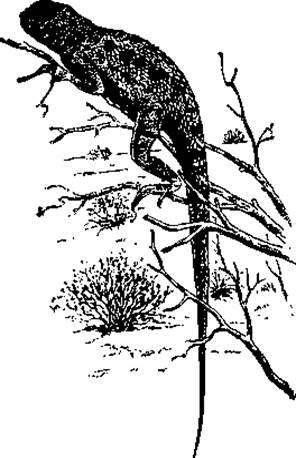
Fig. 121. Steppe agama
At the same time, excessively high ambient temperatures are lethal to reptiles. A toad-headed agama stranded on sand with a Temperature of 55 °C will perish within 1.5 to 4 minutes if unable to find shelter. To escape overheating during the hottest part of the day, lizards (agamas) hide in burrows or climb shrub branches (Fig. 121). Observations in the sandy deserts of Central Asia in summer showed that at midday, the air temperature on a branch 2 m above the ground in the shade was 10 °C lower than the soil temperature, and in direct sunlight, this difference reached 28 °C (Table 8).
There is reason to assume that reptiles possess certain mechanisms of physical thermoregulation, though at a very rudimentary level of manifestation. For instance, in the viviparous lizard, as the ambient temperature rose from 16 to 42 °C, the respiratory rate increased from 31 to 114 breaths per minute. This phenomenon can be interpreted as thermal panting, which helps eliminate excess body heat through respiration. Furthermore, it has been established that water loss through the skin plays a very significant role in the thermoregulation of American skinks and iguanas. Such water loss accounts for 66–76% of the body's total water loss (L. Prosser, 1977).
Table 8
Temperature on June 2 at various heights above the sand surface, °C, in a desert region of Turkmenistan
Height |
Temperature |
||
at 10:00 |
at 12:00 |
at 14:00 |
|
On the sand surface |
45 |
57 |
63 |
2 cm, i.e., at the body level of the toad-headed agama |
39 |
43 |
46 |
4 cm, i.e., at the body level of the earless toad-headed agama |
36 |
40 |
43 |
High temperatures also exert an indirect negative impact on the life activity of reptiles. For example, the scorching and drying up of vegetation causes summer estivation in steppe tortoises. In the tropics, high temperatures and the drying up of water bodies induce estivation in crocodiles, certain turtles, and snakes.
Unlike amphibians, the presence of salts in water or soil does not hinder the existence of reptiles. Many species of lizards and snakes live in heavily saline soils where amphibian life is impossible. Snakes and turtles (including even those lacking a keratinous shell) spend long periods unharmed in the saline waters of seas and lakes.
The overall ecological diversity of reptiles is exceptionally vast. They include terrestrial, subterranean, arboreal, semi-aquatic, and fully aquatic species. Modern reptiles are absent only in the air. Such a variety of life forms is easily understood when one considers that living reptiles are the remnants of many widely divergent branches whose representatives have long been adapted to inhabit diverse environments.
The greatest number of species leads a terrestrial lifestyle, utilizing the full spectrum of land habitats. They are found in sandy, clay, and stony deserts, dense grasslands, forests, swamps, etc. At the same time, the majority prefer open areas with abundant sunlight where vegetation does not hinder movement.
The mode of locomotion varies among reptiles (Fig. 122), and only some of them can be truly called "reptiles" in the full sense of the word, i.e., animals that drag their bodies along the ground. Crocodiles, monitor lizards, and many other lizards run with their bodies held high off the ground on their legs. Some tortoises also do not drag their bellies on the ground, but raise them up. There are species capable of covering great distances on their hind legs alone. Examples include certain agamas, iguanas, and especially the frilled lizard of Australia (Chlamydosaurus), which is particularly characteristic in this regard. Such reptiles were especially numerous among extinct Mesozoic groups.
The ability of desert reptiles to run while elevated high on their legs undoubtedly has an adaptive significance, as this posture protects the body from the scorching heat of the sun-baked soil. This is evident from the data in Table 8, compiled with respect to the conditions of Turkmenistan.
Reptiles inhabiting sandy deserts possess a number of adaptations for moving across loose substrates: agamas, geckos, lizards, and iguanas have fringes of horny teeth along the edges of their toes. One gecko species (Palmatogecko rangi), which lives in the sandy deserts of South Africa, features webbed feet between its toes.
An extensive and diverse group of reptiles is adapted for moving through tall grass, among bushes and plant litter. This has led to the acquisition of a "serpentine" body shape, accompanied by the partial or complete reduction of limbs. This organizational trait is most perfectly developed in snakes, the majority of which have completely lost not only their free limbs but also their girdles. Rudiments of the pelvic girdle and hind limbs are present in boas (Boidae), blindsnakes (Typhlopidae), and pipe snakes (Anilidae, formerly Ilisiidae). However, completely legless forms also exist among lizards, such as the slowworm common in Russian forests.
A vast number of reptiles spend at least part of their time underground, either digging their own burrows or taking shelter in soil crevices and the burrows of other animals. Burrowing adaptations vary. Tortoises dig burrows with both pairs of legs (using them to escape the daytime heat), as do certain lizards. However, the majority burrow by pushing soil aside with their heads. The intermaxillary shield of many burrowing snakes projects forward and acts much like a shovel.
For instance, the sand boa easily burrows into sand and crawls freely beneath its surface.
Phrynosomas (toad-headed agamas) have a unique way of burying themselves in the sand. Along the sides of their flattened bodies are scaly, leather-like fringes. When fleeing from enemies, the animal presses tightly against the ground and, rapidly moving its body from side to side, displaces the sand so that it covers the body from above. The toad-headed agama sinks into the sand vertically rather than at an angle (as snakes and other lizards do). Similar adaptations are found in certain snakes (such as the horned viper and saw-scaled viper).
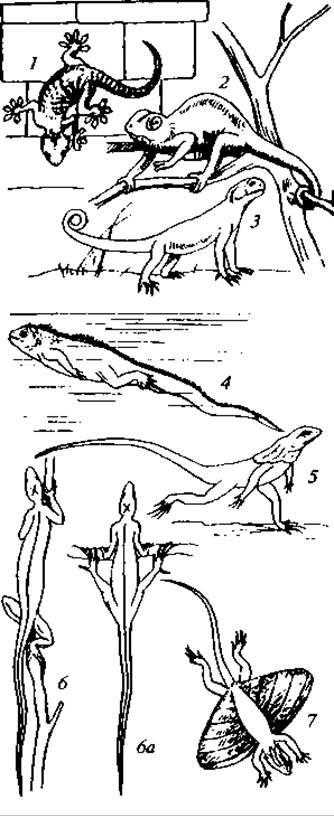
Fig. 122. Various Forms of locomotion in lizards:
1 — steppe gecko; 2 — flap-necked chameleon; 3 — toad-headed agama; 4 — marine iguana; 5 — frilled lizard; 6, 6a — iguana; 7 — flying dragon
Among reptiles, There are many species adept at climbing vertical rock faces, bushes, and trees. This feature is characteristic of various taxonomic groups and is associated with specific adaptations. Some lizards have strongly developed toes with long, curved claws and a long, prehensile tail that can wrap around branches to serve as an additional point of support. An interesting adaptation for gripping branches is found in chameleons: their toes are fused in such a way that the animals can grasp twigs like pincers. Agamas are also skilled at climbing bushes among lizards, and climbing species can be found among snakes as well.
Few reptiles possess the ability for gliding flight, which evolved in connection with an arboreal lifestyle. The flying gecko (Ptychozoon), which inhabits the forests of the Sunda Islands, has skin membranes along the sides of its head, body, tail, and between its toes that act as a parachute. An even more original adaptation is found in the flying dragon (Draco draco), an inhabitant of the Malay Archipelago forests. Its parachute is a wide fold of skin along the sides of the body that is extended during a jump by 5–6 pairs of ribs. The jump can reach a distance of up to 20 m, and this lizard frequently catches insects mid-air.
A significant number of reptiles lead a more or less aquatic lifestyle. Crocodiles swim using their laterally compressed tails, with their limbs playing only a minor auxiliary role in swimming. The marine iguana (Amblyrhynchus) of the Galapagos Islands swims exclusively with its tail, keeping its limbs pressed tightly against its torso. Sea snakes swim by undulating the posterior part of their bodies (which are also laterally compressed). Aquatic turtles have a different adaptation, utilizing paddle-like limbs as their primary means of propulsion.
Alongside their primary organs of locomotion (swimming), aquatic reptiles possess other adaptations for aquatic life. These include valves that close the nostrils. In true aquatic turtles, the bony and horny shell is reduced to varying degrees. Respiratory organs are also modified; the lungs have a complex structure that ensures optimal gas exchange during long intervals between breaths. For instance, iguanas are known to slow their Blood Circulation and even temporarily stop their hearts when diving. In addition, turtles and aquatic snakes develop swollen areas in the pharynx rich in Blood Vessels, which function as a sort of internal "gills".
Nutrition. Reptiles feed on A wide variety of animals—ranging from small terrestrial and aquatic invertebrates to large mammals. A number of species consume plant matter, but the vast majority feed on animal prey. Thus, lizards capture terrestrial insects, worms, and mollusks. Furthermore, some of them (such as agamas and iguanas) readily eat plant food as well. Sea turtles and sea snakes typically feed on fish, while grass snakes catch many amphibians. Certain sea snakes, such as the yellow-bellied sea snake, feed almost exclusively on cephalopods. Large lizards, such as monitor lizards, and many terrestrial snakes prey on small mammals, birds, and other reptiles. Crocodiles and large snakes consume not only small animals but also large mammals, such as young deer, and there are documented cases of them attacking humans.
True herbivorous reptiles include land tortoises (such as the Central Asian tortoise), which only occasionally feed on small animals. Most reptiles drink water, with the exception of desert-dwelling species, which obtain all necessary moisture from their food.
Methods of locating and capturing food vary. Lizards and some snakes roam extensively while searching for food, capturing prey both On the surface and underground. For example, the netted racerunner (Eremias grammica) in the deserts of Central Asia digs insects out of the sand from depths of up to 10 cm. Skinks, which burrow in sand a few centimeters deep, easily detect surface prey and essentially "emerge" from the sand to seize it. Some snakes (such as boas), crocodiles, and aquatic turtles stalk their prey and ambush it. Chameleons similarly wait for their prey while perched motionlessly on branches.
Almost all reptiles swallow their food whole, without dividing it into smaller pieces or chewing it in the mouth. Turtles and crocodiles, however, tear off pieces of food. Crocodiles possess a secondary bony palate, which allows them to hold food in the mouth without interfering with breathing. Most reptiles consume their prey alive without killing it first, whereas venomous snakes and boas swallow already subdued victims. Typically, snakes ingest their prey by creeping over and around its body.
Reproduction. Reptile reproduction differs significantly from that of amphibians and features numerous adaptations suited for a terrestrial existence. Fertilization is always internal, and males possess copulatory organs. Eggs develop outside of water. Development proceeds without metamorphosis; unlike amphibians, there is no larval stage, and the young hatching from the egg live in the same environment as the adults.
The primary adaptations for reproduction on land lie in the structure and Development of the egg. Reptile eggs are relatively large compared to those of amphibians. This enlargement is achieved by enriching the egg with yolk, and in some forms (turtles and crocodiles) by The addition of "albumen". A large supply of nutrients within the egg enables direct embryonic development without a larval stage. Laying eggs on land required the evolution of various adaptations to protect them from desiccation and mechanical damage, while providing the developing embryo with gas exchange, water supply, and the elimination (at least partial) of Metabolic waste products. These adaptations are manifested primarily through The Development of several protective membranes surrounding the egg.
The embryonic development of reptiles is accompanied by Two Types of membranes: egg membranes and extraembryonic membranes. Egg membranes form as the egg passes through the oviduct after fertilization has occurred. The eggs of all reptiles possess a tough fibrous membrane that protects them against desiccation, leakage, mechanical damage, and bacterial invasion; the shell membrane forms as a result of the fibrous layer becoming impregnated with calcium salts.
In addition, turtles and crocodiles possess an albumen layer (similar to the egg white of birds), which serves as the primary reservoir of water within the egg to sustain embryonic development (Fig. 123). In other reptiles, the water necessary for normal embryonic development is released through The oxidation of fats—which are very abundant in the yolk—known as metabolic water; some water also penetrates from the exterior through the outer egg membranes. By comparison, while fat accounts for 8–11% of an amphibian egg's composition, in reptiles it reaches 40% or more. The fibrous, shell, and albumen membranes are produced by the respective sections of the oviducts.
As the embryo develops within the reptile egg (as in other amniotes), a series of additional membranes forms through the transformation of the germ layers, possessing crucial adaptive significance: these are the amnion, chorion, and allantois (Fig. 124), collectively known as the extraembryonic membranes.
In the early Selection/3.html">Stages of development, the embryo sinks into the yolk. As the ectoderm expands, folds known as amniotic folds are formed. They grow toward each other and ultimately enclose the embryo. The resulting amnion is a continuous, closed fluid-filled sac with the embryo suspended inside. Thus, the embryo becomes immersed in a miniature 'reservoir' providing a relatively constant environment. Another vital function of the amnion is protecting the embryo from direct contact with the tough egg membranes.

Fig. 123. Diagram of egg membrane development in the Central Asian tortoise (Testudo horsfieldi) across various sections of the oviduct:
1 — fertilized ovum; 2 — albumen layer; 3 — fibrous layer; 4 — shell membrane

Fig. 124. Successive stages of extraembryonic membrane development in amniotes (A) and a developing lizard (B):
1 — ectoderm; 2 — entoderm; 3 — mesoderm; 4 — gut cavity; 5 — extraembryonic body cavity; 6 — amnion; 7 — amniotic cavity filled with Amniotic Fluid, in which the embryo is immersed; 8 — serosa; 9 — allantois; 10 — yolk sac; 11 — yolk
With membranes separating the embryo from the external environment, the question naturally arises as to how the embryo breathes and excretes metabolic wastes. The initial respiratory adaptation is a dense network of blood vessels enveloping the yolk, known as the vitelline circulation. Over time, this is gradually replaced by a new structure: a network of vessels developing within the allantois. The allantois originates as a sac-like outgrowth of the ventral wall of the hindgut. As it develops, it expands into a large bladder situated between the yolk sac and the serosa, the third embryonic membrane. By the end of development, the allantois completely surrounds the embryo's body and the yolk sac.
The allantois performs two simultaneous Functions: it serves as a respiratory organ and an embryonic Urinary Bladder. Moreover, the allantois is not merely a passive receptacle for urine; it also reabsorbs excess water from the urine, returning it to the embryo's body via the vascular network. In addition, some metabolic waste products are eliminated in gaseous form, notably carbon dioxide, since the primary energy reserve in reptilian eggs is fat, which oxidizes into water and CO2.
All the described features of egg structure and embryonic development in reptiles are clearly adaptive in nature: 1) they protect the eggs from leaking, mechanical damage, and desiccation (via the fibrous and calcareous shells); 2) they enable direct development (due to an abundance of nutritive material—the yolk); 3) they do not impede the intake of water from the external environment into the egg (due to the egg's hygroscopicity and shell porosity); 4) they secure a water reserve within the egg itself (yolk Lipids and, in some species, water-rich albumen); 5) they maintain relatively constant conditions for the embryo (the fluid within the amniotic cavity); 6) they facilitate respiration and the removal of gaseous metabolic wastes from an egg enveloped in multiple membranes (the allantois). These embryological adaptations were crucial for the successful colonization of terrestrial habitats by reptiles.
Most reptiles reproduce by laying fertilized eggs, typically in specially constructed burrows in the ground within relatively moist and sun-warmed locations. Some species deposit their eggs in piles of plant debris or rotting tree stumps. American crocodiles, for instance, dig a pit in marshy soil and cover the eggs with decaying vegetation. Sea turtles excavate pits in the sand and then bury their clutches.
As a rule, females abandon their eggs after laying them. However, certain crocodiles remain near the 'nest' to guard the eggs against other animals. Female pythons coil their bodies around the clutch, ensuring not only the safety of the eggs but also a relatively constant temperature. Within such a nest, the temperature can be 2 to 4 °C higher than the ambient environment. Monitor lizards also guard their eggs.
Alongside oviparity, some reptiles exhibit ovoviviparity. In its simplest form, fertilized eggs are retained within the reproductive tract, where they undergo all stages of development. The young hatch immediately after being deposited into the external environment. This occurs in vipers, the viviparous lizard, and the slowworm.
Curiously, in grass snakes, the duration of egg development outside the mother's body ranges from 30 to 60 days, depending on how long the fertilized eggs remained within the maternal body. In the laid eggs, the embryos are already about half-formed. A significant variation in the duration of intrauterine retention was also observed in the sand lizard (15 to 20 days), with embryos developing to 1/3 or more of their maturity. Thus, the prerequisite for the evolution of ovoviviparity is the capacity for a more or less prolonged retention of fertilized eggs within the maternal Organism. In addition to the aforementioned species, ovoviviparity is characteristic of certain boas, notably the sand boa, sea snakes, many colubrid snakes, and various lizards.

Fig. 125. Distribution of viviparous reptiles across the CIS territory
True viviparity is found in only a few species, wherein the Blood vessels of the yolk sac closely appose those of the uterine oviduct, and embryonic nourishment relies significantly on the maternal organism. Some skinks exhibit this mode of reproduction.
Finally, certain snakes and lizards develop a true chorioallantoic Placenta, in which the villi of the embryo's chorioallantois invade the mucous membrane of the female's reproductive tract.
Viviparity (including ovoviviparity) displays fairly distinct geographical patterns. It has been established that the highest proportion of live-bearing species occurs in northern latitudes and high-altitude regions (Fig. 125). Researchers have discovered species that alternate between oviparous and viviparous reproduction in different parts of their ranges. For instance, the Tibetan toadhead agama (Phrynocephalus theobaldi) lays eggs at altitudes of 2–3 thousand meters, whereas at altitudes of 4–5 thousand meters, it is viviparous. Similarly, the viviparous lizard (Lacerta vivipara) lays eggs at the southern edge of its range (in France).
Evidently, the primary driver of viviparity in reptiles is a cold climate. Retaining eggs within the maternal body provides a more stable and elevated temperature than the external environment, which is necessary for their successful development. Unlike mammals, which warm their embryos with the constant heat of their own bodies, reptiles achieve this behaviorally—by moving to the warmest available microhabitats to regulate the thermal conditions of embryonic development (e.g., heliothermy). An additional factor driving viviparity, seen in a minority of species, is an aquatic, semi-arboreal, or fossorial lifestyle that complicates egg-laying. Consequently, sea snakes and certain chameleons are viviparous.
In Conclusion, it must be emphasized that viviparity (in all its variants) is restricted to squamates, which possess relatively simply structured eggs. Crocodiles and turtles have more complex eggs wrapped in an albuminous layer and, in some cases, a calcareous shell. These animals show not even a trace of viviparity.
All of this suggests that modern reptiles pursue two distinct evolutionary pathways to refine reproduction. One path involves the perfection of oviparity (increasing egg structural complexity, building at least primitive nests, and implementing rudimentary parental care of future offspring); this is characteristic of crocodiles, turtles, and large snakes. The second pathway is viviparity in various modifications, culminating in the formation of an allantoic placenta functionally indistinguishable from that of mammals. This pathway is exemplified by squamates.
The clutch size in reptiles is relatively small. Some crocodiles, large turtles, and snakes lay 50–100 eggs, but typically no more than 30. Small lizard species lay merely 1–2 eggs. Interestingly, such species often produce multiple clutches per year. Fractional egg-laying is also typical of certain smaller turtles. Overall, reptilian fecundity is notably lower than that of amphibians and especially fish, reflecting a direct correlation with a more advanced and refined reproductive strategy.
Sexual maturity is reached at varying ages: in crocodiles and most turtles, at 8–10 years; in snakes, usually at 3–5 years; and in lizards, typically in their 2nd or 3rd year of life, though some small species attain sexual maturity by the following spring, i.e., at 9–10 months of age. It is extremely fascinating that in certain rock lizards inhabiting the Eastern Transcaucasia (e.g., Lacerta armeniaca), males are entirely unknown or extremely rare. Females reproduce parthenogenetically and produce exclusively female offspring.
Regarding Sexual Behavior in reptiles, in most species males and females part ways immediately after mating. However, long-term pair bonding occurs in some cases. This is observed in certain agamids, lizards, and a few turtles. According to some observations, female Mississippi alligators not only build and guard the nest but also assist the newly hatched young in escaping from it. The juveniles remain with the mother for at least one season.
Economic importance and conservation of reptiles
Among the reptile fauna of Russia, there are no species harmful to human economic activity; on the contrary, all of them deserve the utmost protection. Lizards and snakes destroy insects and small rodents that are agricultural and forestry pests. For instance, in the middle zone of the European part of Russia, the sand lizard eats pest insects more frequently than the yellowhammer or the willow warbler, and only slightly less often than the garden warbler. The danger posed by venomous snakes is unjustifiably exaggerated. Snakes only attempt to bite a human when disturbed or pursued. Years of observational experience with snakes, widely practiced in the southern regions of our country, clearly confirm this. At the same time, one must recognize the exceptional value of snake venom, which is utilized in the pharmaceutical industry. This fact led to the establishment of specialized serpentariums where captured snakes are kept and periodically milked for venom. Such facilities exist in tropical Asia, southern Africa, and South America. Several serpentariums have also been organized in Central Asia, housing cobras, Levantine vipers, steppe vipers, and several other snake species. Unfortunately, snakes do not breed in captivity within these facilities.
Conservation of reptiles. In natural biocenoses, reptiles nowhere reach high population densities. Humans frequently and unjustifiably persecute and harvest reptiles, utilizing their meat and eggs for food. The skin of large lizards, snakes, and crocodiles is used for various leather goods. The beautiful horny carapace of the hawksbill sea turtle goes into the crafting of delicate women's accessories. Unchecked harvesting of giant tortoises and large sea turtles has led to the extinction of some species and pushed others to the brink of survival. Giant land tortoises were nearly exterminated by sailors, whalers, and pirates in the 17th–19th centuries. Formerly, the Galapagos Islands were home to 15 species (along with numerous subspecies) of elephant tortoises (Geochelone); today, 11 survive, six of which are bred in captivity for reintroduction into their native habitats. Only on two of the 13 Galapagos Islands (tortoises once inhabited 11 islands) are elephant tortoise populations sufficiently high; on the others, special conservation measures are required.
The consumption of sea turtle delicacy meat and eggs by locals and gourmands in many countries, combined with ongoing poaching of females arriving on beaches during the breeding season, has pushed many sea turtle species to the verge of extinction. Unfortunately, prohibitive measures do not everywhere lead to effective protection and population recovery.
All species and subspecies of the elephant tortoise are listed in the IUCN Red List. A National Park has been established in the Galapagos Islands, and in 1964 the Charles Darwin Research Station was opened.
Crocodile harvesting is now restricted everywhere and banned in many locations, while specialized breeding centers and farms have been established.
The green, or soup, turtle (Chelonia mydas), the most valuable species gastronomically, is listed in the IUCN Red List. It could have served as a major food source along tropical sea coasts had it not been harvested so rapidly. Its population remains significant today, but very few of its breeding sites are left. It has avoided extinction solely thanks to the Tortuguero Reserve in Costa Rica, from which 20,000 hatchlings have been exported annually in recent decades to various regions of the Caribbean.
Among true crocodiles, 15 species are listed in the IUCN Red List, including the Cuban crocodile (Crocodylus rhombifer). Its hunting is prohibited, and a crocodile breeding facility has been established in the swamps of the Zapata Peninsula.
Several species of Galapagos land iguanas (Conolopus) and the giant Komodo dragon (Varanus komodoensis) are included in the IUCN Red List.
The Red Data Book of the Russian Federation (2001) lists 21 reptile species. Among them is Kaznakov's viper (Vipera kaznakovi), an endemic of the Western Caucasus. This species is also included in the IUCN Red List. Additionally, the Red Data Book of the Russian Federation includes the Chinese softshell turtle (Trionyx sinensis), found in the Primorye region, and the spur-thighed tortoise (Testudo graeca), found in Krasnodar Krai and Dagestan.
Most species listed in the Red Data Book in Russia are located near the northern limits of their ranges, where their populations continue to decline, despite the existence of federal legislation protecting species included in the Red Data Book of the Russian Federation.
Last update: 13/08/2026
Editorial and Educational Adaptation: This material has been compiled based on the primary/original source text. The project team performed an editorial review, corrected technical inaccuracies, structured sections, and adapted the content for an educational format.
What was processed:
- elimination of formatting defects (OCR errors, structural breaks, corrupted characters);
- editorial organization of content;
- standardization of terminology in accordance with academic sources;
- verification of factual statements against the original source text.
All mentions of the author, publication year, and origin of the primary text have been preserved in accordance with the source.