Plant Physiology - Musienko M. M. 2001
Photosynthesis: Physiological, Biochemical, and Ecological Aspects
Ecology of Photosynthesis
Photosynthetic productivity depends significantly on environmental factors—light intensity and spectral composition, CO2 concentration, Temperature, Plant Water Regime, mineral Nutrition, and atmospheric pollution by harmful gases and heavy metals, among others. From a didactic perspective, we examine each of these factors individually, whereas in nature they always act simultaneously and interactively. Therefore, any plant response should be viewed as an integrated output aimed at optimizing the system through the modification of individual Functions.
Light Intensity and Quality.
Among the many factors governing Photosynthesis, light takes precedence. An indicator of solar energy utilization efficiency is the Energy Conversion Efficiency, or coefficient of performance (COP). The COP is The ratio of the energy stored in photosynthetic products or crop phytomass to The amount of incident solar radiation utilized. For various plants and under different growing conditions, this coefficient averages 2.5–5.7 for corn, 1.1–6.3 for winter wheat, and 2.5–4.4 for rice.
On average, leaves absorb up to 85% of the energy of photosynthetically active radiation (400–700 nm) and up to 25% of infrared radiation energy, which accounts for about 55% of the total radiation energy. At the same time, only 1.5–2% of PAR is actually expended on photosynthesis.
Class="center">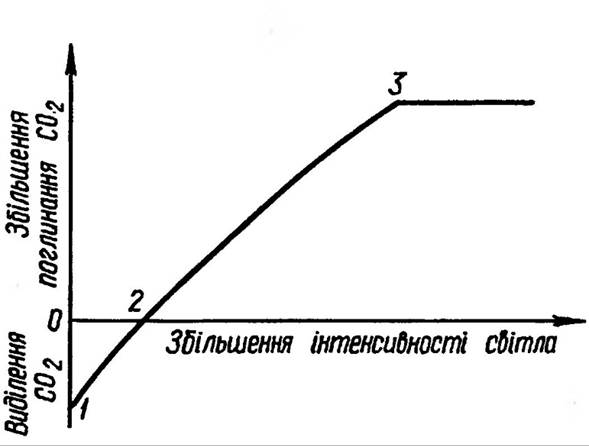
Fig. 76. Light response curve of photosynthesis
A generalized light response curve of photosynthesis is shown in Fig. 76, where The rate of the process is treated as a function of light intensity.
The initial and middle phases, represented by the linear portion of the curve, are independent of dark reactions. However, as light intensity increases, the rate of photosynthetic reactions slows down, leading to an inflection in the light response curve and eventually reaching a plateau. When other factors remain constant, the optimum for mesophytes of polar latitudes is observed at an illumination of 20,000 lx, whereas shade-tolerant plants often reach light saturation at just 2,000–4,000 lx (Fig. 77).
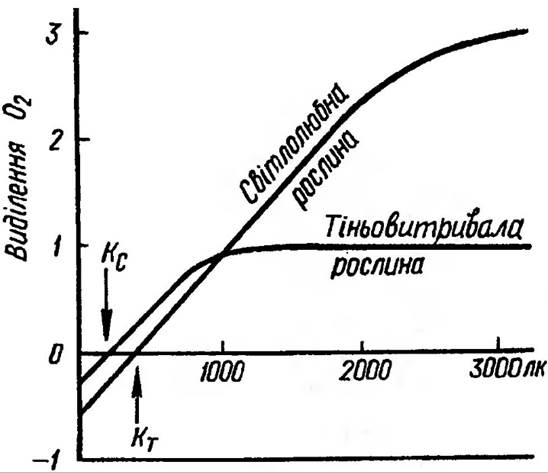
Fig. 77. Dependence of photosynthetic rate on illumination
The light intensity at which photosynthetic CO2 assimilation balances dark Respiration is called the light compensation point, THE POSITION OF which is of particular importance for
photosynthetic productivity. In shade-tolerant plants, the light compensation point is up to 1% of full saturation, whereas in sun-loving plants it ranges from 3 to 5%. Along with increasing temperature, it shifts toward higher illumination values and depends on the plant species, ontogenetic stage, and environmental conditions.
Different light intensities and spectral compositions also affect the synthesis of various photosynthetic products. For instance, in bean leaves, low illumination (up to 2000 lx) favors the synthesis primarily of Amino Acids and, to a lesser extent, CARBOHYDRATES. It has been found that blue spectral rays (458–480 nm), compared to red ones (670–680 nm), enhance the incorporation of labeled carbon into malate, Certain amino acids, and Proteins while simultaneously reducing its content in carbohydrates. An activation of PEP carboxylase by blue light was also observed, which correspondingly affects the incorporation of 14C into C4-dicarboxylic acids. Characteristically, blue light has no effect on The activity of ribulose-1,5-bisphosphate carboxylase. Red rays proved to be the most effective for photosynthesis. This is because the energy of a red light quantum (176 kJ/mol) is quite sufficient to photoexcite the chlorophyll molecule and raise it to the first singlet level, from which photochemical reactions begin. Overall, it should be noted that green plants exhibit high plasticity in response to changes in illumination.
Temperature
The Effect of temperature on photosynthesis is generally reversible, provided its values do not exceed the tolerance Structure/21.html">Limits of the leaf's vital systems. It also depends on light intensity. At low light levels, photosynthesis is practically independent of temperature, with its rate being the same at 15 °C and 25 °C. This is because, under minimal illumination, the rate of photosynthesis is limited by the speed of light reactions. Conversely, at high illumination, the photosynthetic rate depends on the temperature-sensitive dark reactions.
For almost all plants, the most favorable temperature range is 10–35 °C, although inhibition of photosynthesis is quite often observed at relatively low temperatures, already above 25–30 °C. Some desert plants carry out photosynthesis at 58 °C. The dependence of the photosynthetic rate on temperature for various plant species is shown in the figure (Fig. 78). The minimum temperature for photosynthesis in temperate-zone plants is around 0 °C.
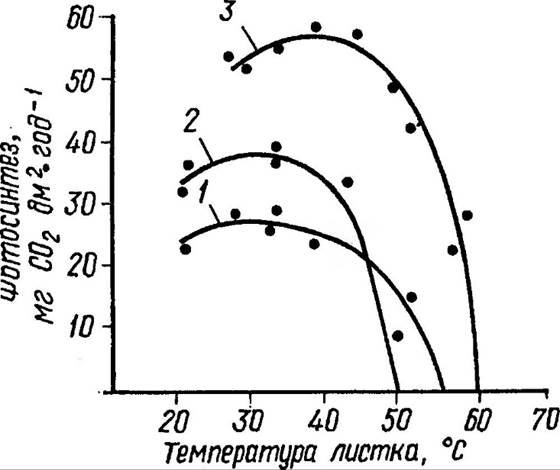
Fig. 78. Effect of temperature on photosynthetic rate
The lower temperature limit of photosynthesis for plants of northern latitudes is -15 °C, whereas for plants of tropical origin it is 4–8 °C. However, the upper and lower temperature limits, and even more so the temperature optima of photosynthesis, cannot be strictly fixed and depend on the species, developmental stage, and the entire complex of external conditions. Evidence suggests that photosynthesis is higher the smaller the temperature gradient between the plant and the environment and the greater it is between the upper and lower PARTS OF THE leaf blade. Among photosynthetic processes, the fixation and
reduction of CO2 are affected by temperature faster than Electron transport along the ETC. The reactions most sensitive to temperature are carboxylation, the Synthesis of the End products of CO2 reduction—starch and sucrose, and The transport of photoassimilates to other non-photosynthesizing Organs.
It should be remembered that, alongside its direct impact on photosynthetic intensity, temperature as an ecological factor indirectly influences other physiological Functions of the plant Organism that are closely tied to the photosynthetic process.
Effect of Atmospheric CO2 Content. Photosynthesis primarily utilizes carbon dioxide from the ambient air (0.03%), although evidence suggests that CO2 can also partially enter the plant through The ROOT System from the soil.
One of the limiting factors of photosynthesis is the concentration of CO2 in the air, the supply of which to plants in nature depends on many factors: leaf structure, canopy density, wind speed, etc. The utilization of CO2 is influenced by the resistance of specific sections of the photosynthetic apparatus along the diffusion pathway from the air to the sites of CO2 fixation (Fig. 79).
Plants with C4 photosynthesis (corn, millet, sorghum) possess a higher capacity for CO2 assimilation due to the high activity of the enzyme PEP carboxylase. Photosynthesis can proceed at a CO2 content of no less than 0.005% for C3 plants, whereas for C4 plants it is 0.0005%. Characteristically, even a tenfold increase in atmospheric CO2 concentration causes an acceleration in the rate of photosynthesis. Saturation occurs at a concentration of 0.2–0.3% (Fig. 80). When the carbon dioxide content is increased to 15–20%, the photosynthetic process reaches a plateau, followed by photosynthetic depression. High concentrations of
CO2 are particularly unfavorable under high illumination.
Elevated concentrations of СО2 stimulate the synthesis of carbohydrates and Alanine, whereas reduced levels predominantly lead to The formation of Serine, Glycine, and glyceric acid. It is important to note that during daytime hours, the СО2 content in the air surrounding plants decreases. For instance, over a cornfield, it can drop nearly threefold, down to 0.01%. This occurs despite the fact that СО2 reserves are replenished through the movement of atmospheric air layers and the release of СО2 by plants during respiration.
EFFECT OF WATER Regime. Water is an essential direct participant in the photosynthetic process. It acts as an oxidation substrate and a source of oxygen in photosynthesis. However, the amount of water required for these processes is negligible compared to the total water content necessary to maintain Cell turgor. At the same time, when leaf Cells are fully saturated with water, photosynthesis decreases, just as it does under a water deficit ranging from 15% to 20%.
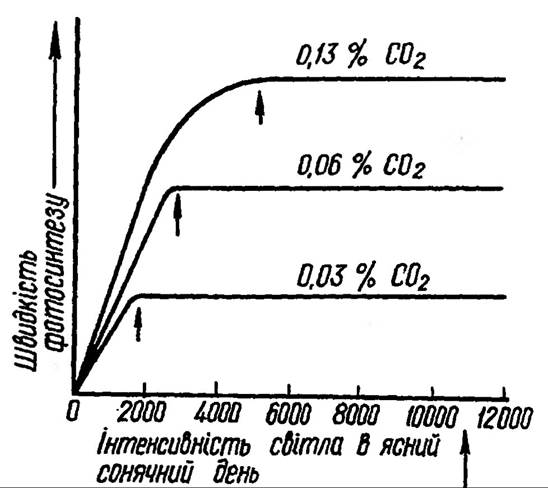
Fig. 79. Effect of СО2 concentration on the rate of photosynthesis
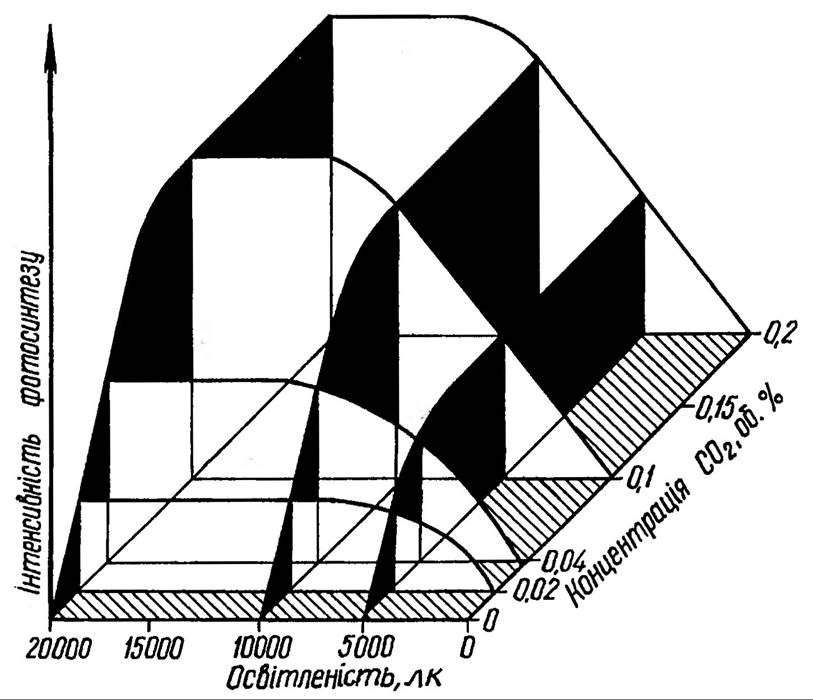
Fig. 80. Dependence of the rate of photosynthesis on СО2 concentration and light intensity
The trade-off existing in nature between the need to maintain a high rate of carbon uptake and the limitation of water loss through Stomata is most closely governed by the water regime and water availability to the organism. The water regime correlates with photosynthesis primarily through stomatal activity. Maximum photosynthesis is observed at a slight water deficit of 5–20% of full saturation when stomata are open. Moisture deficit primarily affects the dark stage, particularly the regeneration of the primary СО2 acceptor in The Calvin Cycle, whereas Electron transport is less sensitive to dehydration.
It is believed that drought acts nonspecifically—by inhibiting the activity of all soluble plastid and cytoplasmic Enzymes.
If a plant experiences drought conditions for a prolonged period, its overall photosynthetic productivity changes, notably due to a reduction in the photosynthetic leaf surface area. Severe water loss eventually causes ultrastructural changes in METABOLISM/14.html">Chloroplasts. Under prolonged and significant moisture deficit, The process of photosynthesis does not recover even after optimal watering is restored.
Effect of Mineral Nutrition. One of the main anthropogenic factors for optimizing plant living conditions—especially in agrophytocenoses—to achieve maximum productivity is The regulation of mineral nutrition levels. The impact of the latter is manifested not only through the intensification of the photosynthetic apparatus but also by influencing the growth rates upon which leaf surface area and productive stand density depend. Mineral nutrition elements are required for the Formation of the photosynthetic apparatus, pigment Biosynthesis, and as Components of the Electron Transport Chain and chloroplast catalytic systems.
At the same time, most crop plants are quite sensitive to elevated concentrations of various salts in the soil. Frequently, the primary response to salinity is an increase in stomatal resistance to СО2 diffusion. This is because guard cells lose their ability to regulate osmotic pressure as excess ions disrupt stomatal function. Concurrently, negative impacts extend to photochemical and biochemical processes. The Use of fluorescent probes has demonstrated that salt stress affects the functioning of photosystem Light-Harvesting Complexes.
Thus, the response of the photosynthetic process to the availability of specific mineral elements highlights the close interrelation between the two Main systems of plant nutrition—root and aerial.
Changes in the photosynthetic activity of a plant organism serve as one of the most sensitive indicators of atmospheric air pollution. Atmospheric pollution by sulfur and nitrogen dioxides, as well as exhaust gases containing lead, zinc, cadmium, nickel, and thallium, primarily affects stomatal function. Harmful concentrations of sulfur dioxide reduce the quantum yield of photosynthesis, sometimes cause thylakoid Swelling, and inhibit electron flow within Photosystem II.
Heavy metals at concentrations of 0.5–10 ppm (parts per million) are extremely toxic to plant organisms. Unfortunately, most studies on the impact of heavy metals on photosynthetic reactions have been conducted in vitro, which does not always adequately reflect The behavior of the plant organism in vivo. Therefore, to uncover the true picture of photosynthesis inhibition by air pollutants, their impact on plants must be studied under controlled conditions, particularly within a phytotron.
Effect of Internal Factors on the Rate of Photosynthesis. Although photosynthesis takes place within semi-autonomous Organelles—chloroplasts—it is closely linked to and regulated by other processes occurring not only within The Cell but throughout the entire organism. Photosynthesis supplies primary Organic compounds and thus influences plant biomass accumulation. In turn, GROWTH AND DEVELOPMENT rates dictate the utilization rate of photosynthetic products and thereby affect the speed of this process. The most crucial factor determining the rate of photosynthesis is source-sink relations, where the leaf acts as the source, and various non-photosynthetic cells and plant organs act as the sink.
The rate of photosynthesis increases with an increase in chlorophyll content. However, there is no direct proportional relationship between these two parameters. According to V.M. Lyubimenko, as the chlorophyll content increases, the assimilation number (the amount of СО2 in mg assimilated per unit of chlorophyll content per unit of time) decreases. For instance, when chlorophyll content increased 20-fold, the rate of photosynthesis increased only twofold, meaning the assimilation number dropped 10-fold. The optimal chlorophyll a content for photosynthesis is considered to be between 3.1 and 5.7 mg/dm2, regardless of plant species and age. During leaf senescence, the rate of photosynthesis declines.
The diurnal course of photosynthesis is also variable. Photosynthesis begins in the morning, peaks during midday hours, gradually decreases by evening, and ceases at sunset. Under elevated temperatures and reduced humidity, the photosynthesis peak shifts toward the morning hours. When meteorological factors are severe, the diurnal curve of photosynthesis assumes a double-peaked character. In such cases, photosynthesis drops sharply during midday hours (a phenomenon known as midday depression).
Last update: 07/08/2026
Editorial and Educational Adaptation: This material has been compiled based on the primary/original source text. The project team performed an editorial review, corrected technical inaccuracies, structured sections, and adapted the content for an educational format.
What was processed:
- elimination of formatting defects (OCR errors, structural breaks, corrupted characters);
- editorial organization of content;
- standardization of terminology in accordance with academic sources;
- verification of factual statements against the original source text.
All mentions of the author, publication year, and origin of the primary text have been preserved in accordance with the source.