LEHNINGER PRINCIPLES OF BIOCHEMISTRY - VOL 2. BIOENERGETICS AND METABOLISM - 2014
PART II. BIOENERGETICS AND METABOLISM
14. GLYCOLYSIS, GLUCONEOGENESIS, AND THE PENTOSE PHOSPHATE PATHWAY
Questions and Problems
1. Equations for the preparatory phase of Glycolysis.
Write the balanced chemical equations for all the reactions involved in The breakdown of glucose into two molecules of glyceraldehyde 3-phosphate (the preparatory phase of glycolysis) and indicate the standard free-energy change for each reaction. Then, write the overall equation for the entire preparatory phase of glycolysis and provide the overall standard free-energy change.
2. The second phase of glycolysis in Skeletal Muscle (the "payoff" phase).
In working muscle under anaerobic conditions, glyceraldehyde 3-phosphate is converted into Pyruvate (the second phase of glycolysis), and pyruvate is subsequently reduced to lactate. Write the equations for all the Chemical Reactions, indicating the standard free-energy change for each step. Then, write the overall equation for the second phase of glycolysis (with lactate as the end product) and provide the overall standard free-energy change.
3. Glucose transporters.
Compare the cellular localization of GLUT4 with that of GLUT2 and GLUT3, and explain its specific role in the response to Insulin signaling in muscle, adipose tissue, Brain, and Liver.
4. Ethanol production in Yeast.
When grown on glucose under anaerobic conditions, the yeast S. cerevisiae converts pyruvate to acetaldehyde and then reduces acetaldehyde to ethanol, accepting electrons from NADH. Write the equation for the second reaction and calculate its Equilibrium Constant at 25 °C, using the standard reduction potential value given in Table 13-7.
5. Energy change in the aldolase reaction.
Aldolase catalyzes the glycolytic reaction:
Fructose 1,6-bisphosphate —> glyceraldehyde 3-phosphate + dihydroxyacetone phosphate
The standard free-energy change for this reaction (in the direction indicated) is +23.8 kJ/mol. The intracellular concentrations of the three intermediates in mammalian hepatocytes are as follows:
fructose 1,6-bisphosphate 1.4 • 10-5 M;
glyceraldehyde 3-phosphate 3.0 • 10-6 M;
dihydroxyacetone phosphate 1.6 • 10-5 M.
What is the actual free-energy change under physiological conditions at body Temperature (37 °C)?
6. Fate of carbon atoms in Fermentation.
Radioactive tracer experiments (using carbon 14C) are performed on a yeast extract under strictly anaerobic conditions that support Alcoholic Fermentation. A small amount of radiolabeled substrate is incubated with the yeast extract for just long enough for every intermediate in the fermentation pathway to become labeled. The label is then "chased" through the pathway by adding an excess of unlabeled glucose. This Procedure prevents the labeled glucose from participating in other metabolic pathways.
a) Explain at which position in the ethanol molecule the radioactive label will appear if glucose labeled with 14C at the C-1 position is used as the substrate.
b) At which position in the glucose molecule must the label be located for all the radioactive carbon to be recovered as 14CO2 produced during alcoholic fermentation? Explain your answer.
7. Thermal effect of fermentation.
Large-scale industrial fermentation processes generally require continuous and active cooling of the fermenter. Explain this phenomenon.
8. Soy Sauce.
Soy sauce is produced by fermenting a salted mixture of soybeans and wheat using several microorganisms, including Yeasts, over a period of 8–12 months. After removing the solid residues, the remaining sauce contains significant amounts of lactate and ethanol. How are these products formed? Why must the fermentation be carried out in the complete absence of oxygen to prevent a strong vinegary off-flavor? (Vinegar is a dilute solution of acetic acid.)
9. Triose Phosphate Equivalence.
14C-labeled glyceraldehyde 3-phosphate was added to a yeast extract. After a brief incubation period, fructose 1,6-bisphosphate was isolated, with the label located at the C-3 and C-4 positions. Where was the label positioned in the initial glyceraldehyde 3-phosphate? Where did the second labeled carbon atom in fructose 1,6-bisphosphate come from? Explain your answer.
10. "Shortened" Glycolysis.
Imagine that a yeast mutant has been discovered with a shortened glycolytic pathway catalyzed by a novel enzyme:
Class="center">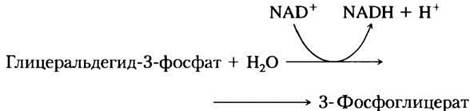
Would such a shortcut in The Glycolytic Pathway benefit The Cell? Explain why.
11. The Role of Lactate dehydrogenase.
During strenuous muscle activity, the demand of Muscle tissue for ATP increases dramatically. In the leg Muscles of a rabbit or the breast muscles of a turkey, ATP is generated almost exclusively via Lactic acid fermentation. ATP production occurs In the second stage of glycolysis through two Reactions Catalyzed by phosphoglycerate kinase and pyruvate kinase. Suppose that skeletal muscle lacked lactate dehydrogenase. Would the muscles still be able to perform strenuous physical work—that is, could they produce ATP rapidly via glycolysis? Explain your answer.
12. Efficiency of ATP Production in Muscle.
In myocytes, The conversion of glucose to lactate is accompanied by the release of only 7% of the Free energy compared to the Complete oxidation of glucose to CO2 and Water. Does this mean that glucose is utilized inefficiently during anaerobic glycolysis in muscles? Explain your answer.
13. Free-Energy Change in Triose Phosphate Oxidation.
The oxidation of glyceraldehyde 3-phosphate to 1,3-bisphosphoglycerate, catalyzed by glyceraldehyde 3-phosphate dehydrogenase, proceeds with an unfavorable equilibrium constant (K'eq = 0.08; ΔG′° = 6.3 kJ/mol). How does the cell overcome this unfavorable equilibrium?
14. Arsenate Poisoning.
In its Structure and Chemical properties, arsenate resembles inorganic phosphate (Pi), and many phosphate-utilizing Enzymes can also utilize arsenate. However, organic arsenates are less stable than their phosphorus analogs. For example, acyl arsenates undergo rapid Hydrolysis:

In contrast, Acyl phosphates, such as 1,3-bisphosphoglycerate, are more stable and undergo only enzymatic transformations within the cell.
a) How would replacing phosphate with arsenate affect the overall reaction catalyzed by glyceraldehyde 3-phosphate dehydrogenase?
b) What consequences might the replacement of phosphate by arsenate have for the Organism? Arsenate is highly toxic to most organisms. Explain the reason for this toxicity.
15. Phosphate Requirement in Alcoholic Fermentation.
In 1906, Harden and Young conducted a series of classic studies on the fermentation of glucose to ethanol and CO2 by brewer's yeast extract and drew the following Conclusions: 1) Inorganic phosphate is required for fermentation; when phosphate is depleted, fermentation stops even if glucose is still present. 2) Under these conditions, ethanol, CO2, and a hexose bisphosphate accumulate during fermentation. 3) When phosphate is replaced by arsenate, hexose bisphosphate does not accumulate, and the fermentation process proceeds to the complete conversion of glucose into ethanol and CO2.
a) Why did the process halt upon the exhaustion of phosphate?
b) Why did ethanol and CO2 accumulate? Identify which hexose bisphosphate accumulated in the mixture and explain why it accumulated.
c) Why was no accumulation of hexose bisphosphate observed when phosphate was replaced by arsenate, even when the fermentation process proceeded completely to ethanol and CO2? (See Problem 10.)
16. The Role of Niacin.
An adult engaged in heavy physical labor on a normal diet should consume about 160 g of CARBOHYDRATES per day, but only 20 mg of niacin. Explain this in view of the role of niacin in glycolysis.
17. Glycerol Phosphate Synthesis.
3-Phosphoglycerate, required for the synthesis of Glycerophospholipids, can be formed from intermediates of glycolysis. Propose a reaction sequence for this conversion.
18. Clinical Manifestations of Enzyme Deficiencies.
The clinical manifestations of the two forms of galactosemia (galactokinase or galactose-1-phosphate uridylyltransferase deficiency) differ drastically in severity. In both cases, intestinal disorders occur after milk ingestion; however, in transferase deficiency, the liver, Kidneys, and Spleen are additionally affected, brain function is impaired, and death may ensue. Which products accumulate in the Blood and Tissues in each of these enzymatic deficiencies? Compare the toxicity of these products based on the data given above.
19. Muscle Wasting During Starvation.
One of the consequences of starvation is a decrease in muscle mass. What happens to muscle tissue Proteins?
20. Fate of Carbon Atoms in Gluconeogenesis.
A liver extract capable of catalyzing all metabolic reactions normally occurring in the liver was incubated for a short time in two separate experiments with the following 14C-labeled precursors:

Trace The pathway of both precursors in gluconeogenesis. Indicate THE POSITION OF the label in all intermediates and in the final product, glucose.
21. Energetics of Glycolysis and Gluconeogenesis.
What is The Energetic Cost (in ATP equivalents) of converting glucose to pyruvate via glycolysis and back to glucose via gluconeogenesis?
22. Relationship Between Gluconeogenesis and Glycolysis.
Why is it so crucial that Gluconeogenesis is not simply the exact reverse of glycolysis?
23. Energetics of the Pyruvate Kinase Reaction.
Explain in bioenergetic terms how the conversion of pyruvate to phosphoenolpyruvate during gluconeogenesis overcomes the large negative standard free-energy change of the pyruvate kinase reaction in glycolysis.
24. Glucogenic Substrates.
To determine the effectiveness of various substances as glucose precursors, experimental animals are typically starved until their liver Glycogen stores are depleted, and then fed the test substance. A substrate that results in a net increase in liver glycogen is termed glucogenic because it is first converted to glucose-6-phosphate. Using the enzymatic reactions familiar to you, demonstrate which of the substances listed below are glucogenic.

25. Effect of Ethanol on Blood Glucose Levels.
Consumption of alcohol (ethanol), particularly after strenuous exercise or on an empty Stomach, leads to a drop in blood glucose levels (hypoglycemia). The First stage of Ethanol METABOLISM in the liver is its oxidation to acetaldehyde, catalyzed by liver Alcohol dehydrogenase:
СН3СН2ОН + NАD+ —> СН3СНО + NАDН + Н+
Explain how this reaction inhibits the conversion of lactate to pyruvate. Why does this lead to hypoglycemia?
26. Changes in blood lactate levels during exercise.
The graph shows Blood Plasma lactate concentrations before, during, and after a 400-meter run.

a) Why is there a sharp increase in lactate concentration?
b) What accounts for the decrease in lactate concentration after the run is completed? Why does the decrease occur more slowly than the increase?
c) Why is the lactate level not zero at rest?
27. Relationship between fructose-1,6-bisphosphate and blood lactate levels.
A congenital defect in the hepatic enzyme fructose-1,6-bisphosphatase leads to abnormally high plasma lactate levels. Explain the cause.
28. Effect of phlorhizin on Carbohydrate Metabolism.
Phlorhizin, a toxic glycoside found in pear tree bark, blocks glucose reabsorption in the renal tubules, causing glucose from the blood to be almost entirely excreted in the urine. In an experiment, rats fed with phlorhizin and sodium succinate excreted about 0.5 mol of glucose (produced via gluconeogenesis) per mole of sodium succinate consumed. How was succinate converted into glucose? Explain the Stoichiometry of the process.
29. Excess O2 consumption during gluconeogenesis.
Lactate taken up by the liver is converted into glucose, with The formation of each glucose molecule consuming 6 ATP molecules. The rate of this process in rat liver can be monitored by administering radiolabeled lactate and measuring The amount of 14C-glucose produced. Since the stoichiometry of O2 consumption to ATP production is known (about 5 ATP molecules per O2 molecule), one can predict how much additional oxygen is consumed upon administration of a given amount of lactate. However, the actually measured amount of extra oxygen expended on glucose synthesis from lactate is always higher than predicted based on stoichiometry. Propose a possible explanation for this phenomenon.

30. Role of the Pentose Phosphate Pathway.
If glucose-6-phosphate oxidation in The pentose phosphate pathway were used primarily to generate NADPH, it would result in the accumulation of another product, ribose-5-phosphate. What problems might this cause?
Analyzing Experimental Data
31. Engineering an enzymatic process.
Enzymatic Processing of plant biomass to produce ethanol as an alternative fuel is a way to reduce The Use of fossil resources; implementing such a process would help decrease atmospheric CO2 emissions and mitigate global warming. Numerous microorganisms are capable of breaking down Cellulose and subsequently converting glucose into ethanol. However, many potential cellulose sources, including agricultural waste and certain crops such as switchgrass, contain significant amounts of arabinose, which is poorly fermented.

The bacterium Escherichia coli can convert arabinose to ethanol, but wild-type strains tolerate high alcohol concentrations poorly, limiting their application in industrial ethanol production. Another bacterium, Zymomonas mobilis, thrives in high-ethanol environments but lacks The ability to ferment arabinose. Dinda, Zhang, Eddy, and Picataggio (1996) described their attempts to combine the beneficial properties of these two organisms by introducing the E. coli genes responsible for arabinose degradation into Z. mobilis Cells.
a) Why is this pathway easier to implement than engineering E. coli cells to tolerate higher ethanol concentrations?
Dinda and colleagues inserted five E. coli genes into the Z. mobilis genome: araA, encoding L-arabinose isomerase, which interconverts L-arabinose and L-ribulose; araB, encoding L-ribulokinase, which uses ATP to phosphorylate L-ribulose at the C-5 position; araD, encoding L-ribulose-5-phosphate epimerase, which interconverts L-ribulose-5-phosphate and L-xylulose-5-phosphate; talB, encoding transaldolase; and trtA, encoding transketolase.
b) Briefly describe the three reactions catalyzed by the ara Gene products and, if possible, name the enzymes mentioned in this chapter that catalyze analogous reactions.
The insertion of the five E. coli genes into the Z. mobilis genome successfully integrated arabinose into the nonoxidative phase of the pentose phosphate pathway (Fig. 14-22), where it was converted into glucose-6-phosphate and subsequently fermented to ethanol.
c) What sugar is arabinose ultimately converted into by the products of the three *ara* genes?
d) This sugar (see question (c)) enters the pathway shown in Fig. 14-22. Describe the overall process of fermenting six molecules of arabinose to ethanol, taking into account the contributions of the five *E. coli* enzymes listed above and the enzymes of this pathway.
e) What is the stoichiometry of the conversion of six molecules of arabinose to ethanol and CO2? How many ATP molecules could be synthesized in this process?
f) *Z. mobilis* utilizes a somewhat different fermentation pathway than the one described in this chapter. As a result, the conversion of each arabinose molecule is accompanied by the net yield of only one ATP molecule. While less advantageous for the bacterium, this is more beneficial for ethanol production. Why do you think this is?
Another sugar commonly found in plant biomass is xylose.
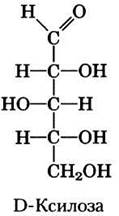
g) What additional enzymes must be introduced into the modified *Z. mobilis* cells described above to enable them to ferment not only arabinose, but also xylose? You do not need to provide the specific name of each enzyme (they may not even exist in nature); simply outline the necessary reactions.
Last update: 06/08/2026
Editorial and Educational Adaptation: This material has been compiled based on the primary/original source text. The project team performed an editorial review, corrected technical inaccuracies, structured sections, and adapted the content for an educational format.
What was processed:
- elimination of formatting defects (OCR errors, structural breaks, corrupted characters);
- editorial organization of content;
- standardization of terminology in accordance with academic sources;
- verification of factual statements against the original source text.
All mentions of the author, publication year, and origin of the primary text have been preserved in accordance with the source.