Human Anatomy (with the Fundamentals of Dynamic and Sports Morphology) - Ivanitsky M. F. 2008
Special Dynamic Morphology
Anatomical Characteristics of Translational Body Movements. Preliminary Remarks
There are two MAIN TYPES OF body movements or movements of its individual segments: translational and rotational. In the first type of movement, all points of the body describe parallel straight lines, while In the second, they describe arcs around a particular axis of rotation. Almost every human body movement can be viewed as a translational movement of one or several of its points combined with simultaneous rotation around axes passing through these points. Purely translational movements occur only in very rare cases.
In addition to these two main types of body movements, there are mixed-type movements (Translation-rotation), in which the body, while moving in a certain direction, simultaneously rotates around one of its axes.
Translational body movements serve as an example of locofmotions (locomotor movements)—displacements of the body in space brought about by the work of Muscles (the active part of The Musculoskeletal System) as well as Bones and Their Joints (its passive part).
According to D. A. Semyonov, locomotor movements are classified as follows.
Table 13.
|
Pushing off |
Pulling |
Combined movements |
|||
|
Varieties |
Varieties |
Examples |
Varieties |
Examples |
|
|
a) from solid surfaces (ground) |
Walking, running, jumping, cross-country skiing, speed skating |
Toward solid objects |
Pull-ups, climbing using the arms on a ladder, rope, or pole |
Using solid objects |
Climbing using arms and legs on ladders, ropes, poles, crawling |
|
b) from a liquid medium (Water) |
Swimming, rowing |
||||
Locomotions performed by pushing off from a dense medium, which include walking, running, and jumping, play a vital role in human life.
Walking
Walking is a complex cyclical movement associated with pushing the body away from the supporting surface and moving it through space. A characteristic feature of walking is the continuous maintenance of support on one or both limbs. Many segments of the musculoskeletal system participate in this locomotor act, along with regulatory systems (Nervous system, Sense Organs, Endocrine glands) and support systems (Cardiovascular system, etc.) that sustain muscular activity.
The basis of walking consists of stepping movements associated with Muscle contraction and alternating push-offs from the supporting surface. During this process, the body experiences upward and forward impulses due to the resistance of the supporting surface and friction forces (Fig. 176). However, the body movements remain smooth thanks to the dampening of these impulses under METABOLISM/18.html">The Influence of body inertia and the action of antagonist muscles.
If, from a standing position, one leg is brought forward and placed on the supporting surface, this constitutes a single step.
If the other leg is not brought alongside the supporting FOOT in the process, but is instead stepped forward, the person performs a single step. Thus, each single step can be subdivided into two simple steps: a rear step and a front step. The rear step refers to that half of the single step during which the leg moves behind the frontal plane passing through the body's center of gravity (CG).
The front step refers to that half of the step during which the leg is brought forward relative to this plane. The very short interval between them is called the vertical moment.
For a full cycle of movements to be completed during walking, after a single step with one leg, an identical step must be made with the other leg. These two steps form a double step. After each double step, the individual segments of the body return to their original position relative to one another.
Given that each double step essentially involves superimposing one simple step of one leg onto one simple step of the other leg, each double step corresponds in distance covered to the length of three simple steps, whereas in terms of movements performed, it consists of four simple steps: two executed by one leg and two by the other.
During walking, the body repeats the same movements, with the movements of one half of the body representing a mirror image of the Movements of the other half. Consequently, walking is classified as an asynchronously symmetrical movement, and in anatomical analysis, one can limit the examination to the movements of only one half of the body.
Walking involves periods of both double and single support. In the double-support position, one leg (positioned forward) rests on the heel, while the other (positioned rearward) rests on the toe. Simultaneous support on the entire plantar surface of both feet does not occur during normal walking. During single support, the body is in contact with the supporting surface via one leg, while the other moves forward independently of support.
Class="center">
Dynamics of the support reaction during walking:
A - in the front support phase (Phase I - front step of the supporting leg); B - during push-off (Phase III - rear step of the supporting leg)
The leg in contact with the supporting surface is called the supporting leg; in contrast, the other leg is free and is called the swing or recovery leg. Usually, the leg in the rear step position is referred to as the rear leg, and the leg in the front step position as the front leg. Similar designations can be adopted for the movements of the upper limbs. A complete swing of each upper limb backward and forward consists of a rear swing and a front swing, separated by a vertical moment. The upper limb during the rear swing period is called the rear arm, and during the front swing period, the front arm.
In each single step, 4 phases are sequentially distinguished: double support, rear step, vertical moment, and front step. According to D. D. Donskoy, unsupported periods can be distinguished in leg movement: lifting, acceleration (forward movement), deceleration of this movement, and lowering, as well as supported periods—Shock absorption (upon contact with the supporting surface) and push-off, which initiates a new movement cycle. Shock absorption occurs when the hip flexes at the knee joint, and push-off occurs during extension. Shock absorption produces a forward impulse, while push-off produces a rear impulse.
Each double step comprises 6 distinct phases (Fig. 177).
The first phase (front step of the supporting leg) consists of the foot of the "front" leg landing on the heel and, resting upon it, performing a forward and downward movement (Fig. 178). When body weight is transferred to the supporting leg, pressure on the supporting surface is directed downward and forward, whereas the body, in accordance with Newton's third law, experiences an impulse directed upward and backward from the reaction force of the support. This impulse exerts a braking effect on the translational speed of movement, which is instantly overcome by the body's inertia and a stronger rear push-off from the other leg. To mitigate this effect of the support reaction, the leg flexes slightly at the knee joint, which, in addition to shock absorption, serves as preparation for the subsequent push-off.
If a walking person fails to bring the free leg forward in time and establish a new base of support (i.e., trips), they will fall. Landing on the "front" leg provides the body with double support. As the landing occurs, contraction of the Muscles of the supporting leg takes place, which is predominantly static in nature and helps maintain the leg in an extended state.
When striking the ground with the heel, the anterior compartment of the leg muscles contracts, which helps stabilize the ankle joint. As the foot rolls forward, these muscles progressively relax, performing eccentric work to gently lower the foot onto the supporting surface. The extended position of the knee joint is maintained primarily by the contraction of the femoral heads of the quadriceps femoris. The Posterior muscle group of the thigh, as well as the muscles of the posterior hip joint, also contract upon heel strike. As the foot rolls forward, the contraction of these muscles increases, and slight flexion may occur at the knee joint.
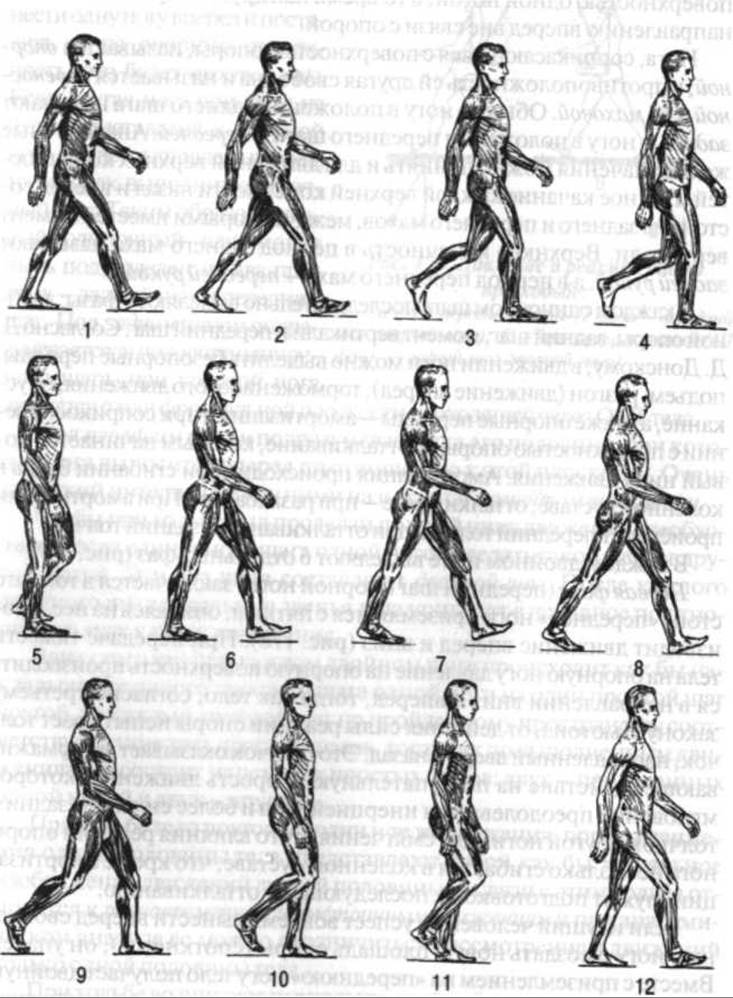
Fig. 177. Phases of walking
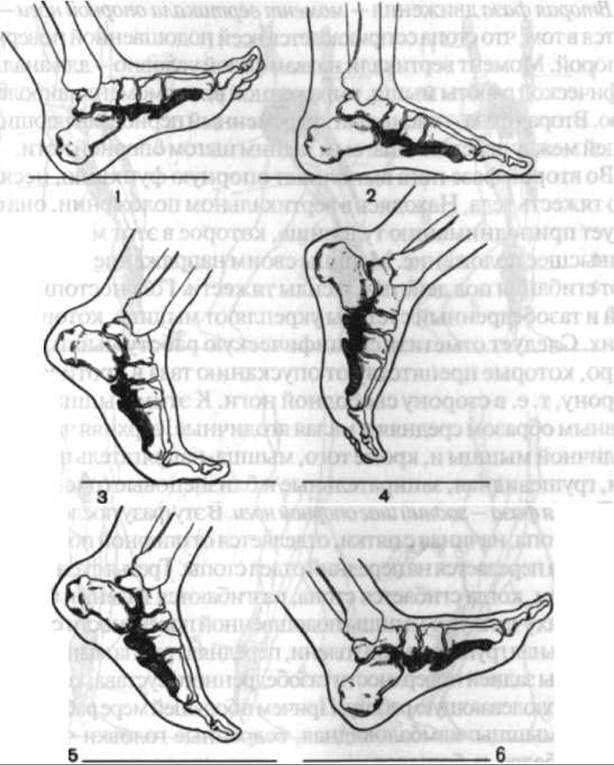
Fig. 178. Successive foot positions during walking:
1 — heel strike; 2 — vertical moment of the supporting leg; 3 — rear step of the supporting leg; 4 — rear step of the swing leg; 5 — vertical moment of the swing leg; 6 — forward step of the swing leg
The second phase of movement—the vertical moment of the supporting leg—occurs when the entire plantar surface of the foot is in contact with the support. The term "vertical moment" is used conditionally to facilitate the analysis of specific muscle activity, which is most pronounced at this exact instant. This second phase is a very brief period that serves as the boundary between the forward step and the rear step of the supporting leg.
During the second phase, the leg performs a supporting function, bearing the full weight of the body. In this vertical position, it AIDS in elevating the trunk, which reaches its highest point at this moment. Muscle tension prevents the leg from buckling under the force of gravity. The ankle, knee, and hip joints are stabilized by their surrounding muscles. It is worth noting the specific action of the hip abductor muscles, which prevent the pelvis from dropping to the opposite side (i.e., toward the swing leg). These muscles primarily include the gluteus medius and minimus, the upper portion of the gluteus maximus, as well as the tensor fasciae latae, piriformis, obturators, and gemelli (Fig. 179).
The third phase is the rear step of the supporting leg. In this phase, following the vertical moment, the foot lifts off the supporting surface starting from the heel, and body weight shifts to the forefoot. The third phase concludes with a push-off, during which the foot flexes while the lower leg and thigh extend. These movements involve the Muscles of the Plantar Surface of the Foot, the posterior and lateral muscle groups of the leg, the anterior thigh muscles, and the posterior hip joint muscles performing concentric work. Notably, single-joint muscles play a major role: the soleus, the femoral heads of the quadriceps femoris, and the gluteus
maximus. Toward the end of the third phase, antagonist muscles join in, helping to stabilize all segments of the lower extremity and ensuring the effective transmission of the push-off force.
A distinctive feature of supporting leg Muscle Function is that, by working against a fixed distal support, they act upon a large area of bone attachment, enabling them to exert considerable force.
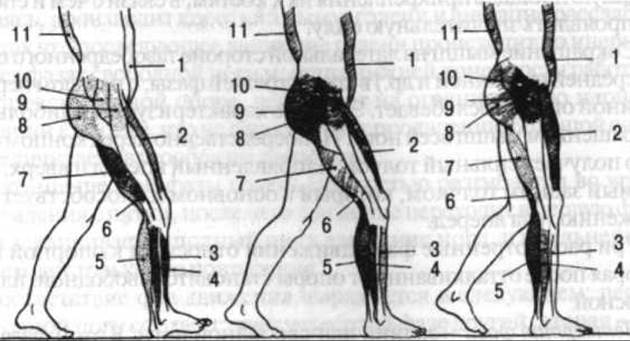
Fig. 179. Muscle tension levels in the trunk and lower extremity (data by V. S. Gurfinkel).
Muscle contraction on the lateral aspect of the hip joint (gluteus medius, etc.) diminishes at the end of the third phase with the onset of the double-support period. This phase is characterized by the maximum contraction of the muscles throughout the entire leg. Just before the end of the phase, the body receives a strong forward and upward impulse known as the push-off, which primarily drives the body forward.
The three movement phases discussed pertain to the supporting leg, which, after pushing off from the support, becomes the swing or recovery leg.
The fourth phase is the rear step of the swing leg. In this phase, the swing leg flexes at the knee and ankle joints. The muscles work with a proximal support. In the hip region, the anterior thigh muscle group contracts—specifically the rectus femoris, sartorius, tensor fasciae latae, and iliopsoas. The posterior muscles of the thigh and leg remain contracted, holding the lower leg in a slightly flexed position. Toward the end of this phase, the lateral and posterior leg muscles relax somewhat, while the anterior leg muscles (tibialis anterior, extensor hallucis longus, extensor digitorum longus) contract to dorsiflex the foot and raise the toes to prevent them from dragging along the ground.
The fifth phase marks the boundary between the rear step and the forward step of the swing leg—the vertical moment of the swing leg, during which it passes the supporting leg while slightly flexed at the knee and extended at the ankle. At this point, the vertical axes of the swing leg and the trunk lie in the same plane (coincide). Essentially, the same muscles contract as in the fourth phase. Beyond Muscle Action, the pendulum-like movements of the leg at the hip and subsequently the knee joint are crucial for moving the leg forward. Flexion in these joints and extension at the ankle joint at the vertical moment are necessary to avoid grazing the supporting surface with the toes.
Furthermore, these joint movements reduce the effective length of the leg and its moment of inertia, thereby accelerating and facilitating its forward swing.
The sixth phase is the forward step of the swing leg. During this phase, thigh movement decelerates, while the lower leg continues to move forward due to knee extension driven by the energetic (so-called ballistic) action of the quadriceps femoris. This muscle contracts—slowly at first, then rapidly—delivering a brief snap to the lower leg before suddenly relaxing, allowing the subsequent motion of the lower leg to occur by inertia. Throughout all swing leg phases, the lower limb muscles operate with a proximal support and act upon a restricted area of bone attachment, which does not favor the exertion of maximal force but enhances movement variety.
At the end of the sixth phase, the lower leg fully extends during heel strike, after which the movement transitions into the first phase. This completes a full cycle of leg movement, with subsequent cycles simply repeating the pattern.
The correspondence between the movement phases is as follows: the first phase of one leg corresponds to the fourth phase of the other, the second to the fifth, and the third to the sixth.
When pushing off the supporting surface during walking, the body encounters an equal and opposite reaction force, without which walking would be impossible. If this reaction force is resolved into components, one—depending on the rigidity of the support surface (soil, wooden flooring, etc.)—will be directed vertically, while the other—depending on the friction between the surface and the foot—will be horizontal. If the surface rigidity or friction is negligible, walking becomes extremely difficult (for example, traversing deep, loose snow due to its negligible rigidity, or ice due to minimal friction).
Body weight exerts both braking and propulsive effects. When transitioning from a standing position to walking, the initiation of movement involves shifting the vertical line of the center of gravity beyond the anterior boundary of the base of support, thereby disrupting balance. In the next moment, as the leg is brought forward, a new base of support is established, and equilibrium is restored. During continued locomotion, this disruption of balance occurs (except when "grope-walking") with every forward step of either leg.
The center of gravity of the body does not move in a straight line during walking; instead, it undergoes oscillations that are noticeable when viewing the body in profile, from the front, or from above. During double support, the center of gravity is at its lowest point, whereas during single support, it is at its highest, particularly at the vertical moment of the supporting leg. The amplitude of vertical trunk oscillations reaches 4–6 cm. It depends on THE POSITION OF the supporting leg at the vertical moment. If the leg flexes slightly at the knee when the trunk is directly above it, the oscillations are minimal, and the movements are smooth. If the supporting leg remains extended at the vertical moment, the up-and-down movements of the trunk will be much greater. Another factor increasing vertical oscillations is the action of the foot, which can produce a sharper or smoother upward push-off. In the former case, the gait takes on a bouncing quality.
Lateral oscillations of the trunk consist in the entire body shifting toward the supporting leg during the single-step phase, causing the trajectory of the body's center of gravity to pass directly over the base of support. The faster the walk, the smaller these oscillations become, owing to the stabilizing effect of body inertia.
Body movements forward and backward around the transverse axis of the hip joint are barely noticeable during a normal step. They consist in the trunk leaning slightly backward during each back step and forward during the front step. During the vertical and double-support phases, the longitudinal axis of the trunk passes through the frontal plane, meaning the body is positioned completely vertically. Trunk twisting occurs because its upper and lower sections—whose positions can be judged by the shoulder and pelvic diameters, which are parallel at the moment of the vertical phase—form an angle with each other during the front and back steps, moving in opposite directions. Thus, the twisting movements of the trunk are closely linked to the movements of the shoulder girdle and pelvis.
The work of the trunk muscles during walking is quite distinctive. In the front-step phase of the supporting leg, the trunk leans forward slightly under the influence of operating forces. To maintain this position, the muscles of the posterior surface of the trunk contract. In the back-step phase of the supporting leg, to prevent the body from falling backward, the muscles of the anterior surface of the trunk—predominantly the Abdominal muscles—contract. They are also tense During the first phase of the swing leg, fixing the pelvis and creating a support for carrying it forward.
At the moment of the supporting leg's vertical phase, the trunk muscles fix it to the supporting leg, while the contraction of the erector spinae muscle on the opposite side prevents the pelvis from dropping toward the swing leg. As the swing leg is brought forward, the trunk and pelvis rotate around the vertical axis toward the supporting leg. During this process, the internal oblique muscle of the abdomen on the side of the supporting leg, and the external oblique muscle of the abdomen, transversospinales, and iliopsoas on the opposite side, are engaged. Most distinctly visible is the contraction of the erector spinae muscle on the side of the swing leg, which occurs simultaneously with the landing of the supporting leg and The transfer of body weight onto it. Thanks to this contraction, lateral deviations of THE Vertebral Column, and consequently of the entire trunk, are reduced. The contraction of other trunk muscles during walking is difficult to observe; in some cases, contractions of the posterior Neck Muscles can be noted.
Pelvic movements during walking occur around three mutually perpendicular axes—anteroposterior, vertical, and transverse—against the Background of its progressive forward motion. Pelvic movements around the anteroposterior axis consist in the pelvis lowering on the side of the swing leg. The pelvic and shoulder diameters lie in parallel horizontal planes relative to each other only during the double-support period; during single support, however, they are angled, diverging on the side of the swing leg and converging on the side of the supporting leg.
Pelvic movements around the vertical axis occur during the front-step phase of the swing leg.
Rotational movements of the pelvis forward during the back-step phase of the supporting leg, and backward during the front-step phase of the supporting leg, occur around the transverse axis. These pelvic movements help increase the stride length.
Upper limb movements during walking occur in directions opposite to those of the lower limbs (Fig. 158). This reduces the Rotation of the trunk around the vertical axis caused by the push-off of the "rear" leg.
The work of the muscles of the shoulder girdle and free upper limb during normal walking is insignificant. During the forward swing of the arm, flexor muscles in the shoulder and partly in the elbow joints contract, while during the backward swing, extensor muscles in these joints are engaged. Muscle activity regulates the pendulum-like movements of the free upper limb, which is made possible by the alternating contraction of the anterior and posterior PARTS OF THE deltoid muscle.
During fast walking, the muscular effort of the upper limbs increases significantly. When the forward movement of the arm's upper part ends, the movements of the forearm and hand in that direction continue, leaving the arm slightly bent. Conversely, during the backswing, full extension of the forearm occurs at the elbow joint as the olecranon process of the ulna abuts the bottom of the olecranon fossa of the humerus. The difference between arm movements during the forward and backward swings is that in the former, the movement of the forearm at the elbow joint continues after the movement of the upper arm has already finished, whereas in the latter, the movement at the shoulder joint continues even after the movement at the elbow joint has concluded.
The shoulder girdle moves together with the free upper limb. Its movements become more noticeable if arm motion is restricted by placing the arms behind the back. If both the shoulder girdle and the free upper limbs are fixed, the rotational movements of the trunk around the vertical axis increase. The movements of each upper limb reduce trunk rotation and impart a more symmetrical position to the body. During walking, the upper limb muscles operate with a proximal base of support while retaining The ability to perform diverse movements.
The number of steps per minute during normal walking is approximately 100–120, meaning one step lasts about 0.6–0.7 seconds. During fast walking, the step frequency can increase to 170 steps per minute. At a cadence of 190–200 steps per minute, normal walking transitions into running.
The stride length in adults ranges from 76 to 79 cm (being greater in men than in women). In children under 9 years of age, the stride length is 2.5 times the foot length; from 9 to 14 years, it is 2.75 times; and at an older age, it exceeds three times the foot length. Increasing stride length during walking enhances transverse pelvic rotation, hip flexion of the "front" leg during heel strike, and knee extension of the "rear" leg.
The speed of normal walking averages 1.5 m/s for men and 1.47 m/s for women. The duration of individual movement phases depends on walking speed. Specifically, the slower the walk, the longer the double-support period.
The posture of the body and its parts during walking, the duration of its individual phases, and motor characteristics are individual for every person, which determines their gait pattern. Gait features are formed during childhood, mostly by the 4th year of life (although certain movement elements are still weakly expressed at that time). The gait character changes as the body ages.
There are several types of walking in which movements performed by individual body parts and muscle activity vary.
These varieties include stooped walking, racewalking, walking backward, walking against resistance (e.g., a headwind), walking up or down an incline or stairs, walking on toes, etc.
Stooped walking. This type of walking is characterized by a strongly forward-inclined trunk and semi-flexed legs in almost all phases, except for the back-step phase of the supporting leg, when the leg straightens at the moment of push-off. With a strong forward lean, gravity is maximally utilized for progressive motion, while longer strides must be taken to prevent the body from falling. In stooped walking, the height of the apex point above the support decreases by approximately 10–15 cm; the body's center of gravity (CG) is located lower; the feet are placed closer to the midline and more parallel (without turning the toes out), directly onto the entire plantar surface; stride length is greater, cadence is higher, and oscillations of the body's center of mass (CM) are smaller.
The lower position of the body's CG, associated with the redistribution of body mass, increases stability and facilitates the muscular work required to maintain balance. The inclination of the trunk and the low position of the pelvis allow the leg to reach further forward, lengthening the stride. The extension of the foot and flexion at the knee and hip joints cause stretching of the leading muscle groups, generating retraction forces that help enhance push-off. Push-off occurs at a sharper angle, which also increases stride length and the propulsive efficiency for forward motion, as the vertical component of the ground reaction force becomes relatively smaller while the horizontal component increases. Landing on the entire plantar surface of the foot rather than just the heel helps cushion the forward impact and reduces recoil without causing a drastic deceleration of the CM's movement. Parallel foot placement allows for greater utilization of the plantar muscles during push-off, while placing the feet closer to the midline minimizes lateral oscillations of the CM and makes its trajectory more rectilinear. Therefore, stooped walking is considered more than twice as economical as normal walking.
At the same time, stooped walking has its drawbacks. The muscles are loaded much more heavily during this type of walking than during normal walking. The quadriceps femoris muscle performs an especially large amount of work. It remains contracted throughout the entire support period (in the first, second, and third phases), performing holding and overcoming work, thereby preventing knee flexion that could easily occur under the influence of gravity. When the swing leg is brought forward (in the fourth, fifth, and sixth phases), not the entire quadriceps muscle participates in the movement, but only the rectus femoris, while the femoral heads (vasti muscles) are stretched As a result of simultaneous knee flexion. The contraction of the rectus femoris, along with the iliopsoas, sartorius, and tensor fasciae latae, facilitates a much more energetic forward swing of the thigh compared to normal walking. In the sixth phase of stooped walking, the quadriceps does not perform ballistic work, as shank extension in this phase is inhibited and does not fully complete at the moment of foot landing.
The gluteus maximus muscle performs more intensive work during stooped walking, as it—along with its synergists—prevents the pelvis and the entire trunk (which is in a forward-leaning position) from further flexion and falling. The posterior muscle group of the thigh produces greater knee flexion during the leg swing than in normal walking. The Muscles of the Trunk, upper limbs, and neck also work more intensively.
Prolonged stooped walking leads to fatigue in the primary muscle groups executing this movement. An especially heavy load falls on the trunk extensors and the quadriceps femoris, as well as the posterior calf muscle group, which—due to landing on the entire plantar surface of the foot—does not experience pre-stretching prior to push-off.
Based on The Study of fossil human bones, it can be hypothesized that our ancestors walked with a stoop. It is also known that during long treks, especially when carrying loads, the style of walking approaches a stooped gait. This type has advantages in terms of movement speed. A well-trained person can walk at a speed of 10 km/h. According to some observations, after three months of systematic training in stooped walking, one can cover 20 km in just 1 hour and 50 minutes. At such a high speed, the stooped stride transitions into running. Stooped walking is advantageous when carrying loads, moving through deep snow, or traversing rough terrain, and it is used in the training of runners and skiers.
Racewalking (Sport walking). A distinctive feature of this type of walking is that the lower limbs remain extended at the knee joints almost all the time, although slight flexion for the swing leg is inevitable. Landing occurs on the straightened leg from the heel. Consequently, the leg is used as a shock-absorbing apparatus to a lesser extent than in Other types of walking. The trunk is upright without a forward lean, the HEAD is tilted slightly backward, the shoulder girdle is elevated, and the shoulders are retracted. The double-support period is minimal.
The stride length in this type of walking can exceed a meter, sometimes reaching 130 cm. Step frequency depends on stride length, muscular strength, and technique specifics. Among top racewalkers, the walking cadence can reach 200–210 steps per minute. Over long distances, one can travel at a speed of approximately 15 km/h. Movement speed increases by increasing both stride length and frequency.
In racewalking, at the moment of the vertical phase, the pelvis lowers slightly on the side of the swing leg, which increases the load on the hip abductor muscles. Their tension during lower support prevents this inclination and excessive knee flexion, which, according to N. G. Ozolin, can create a resemblance to a rear push-off due to the straightening of this leg.
Smaller vertical oscillations of the body's COM during race walking distinguish it from normal walking and contribute to higher movement speed. As the free leg swings forward, the pelvis rotates and the hip joint area moves forward, which helps to lengthen the stride. However, an excessive increase in stride length is undesirable because it is associated with an increase in the braking effect of the support reaction force during the forward-stride phase of the supporting leg (Fig. 180).
During race walking, the arms are bent at the elbows, and their range of motion is greater than in other types of walking. At the vertical position, the arms are less bent than during the forward and backward strides.
Muscular effort in race walking involves greater intensity than in regular walking. Bringing the straightened leg forward requires greater elasticity of the posterior thigh muscle group. If this elasticity is insufficient, pain may occur in these muscles, especially in untrained individuals.
Walking backward. This type of walking has certain peculiarities in the functioning of the musculoskeletal apparatus. The torso is strongly leaned forward during walking, and anterior-posterior body oscillations occur to a much greater extent than in normal walking. Foot landing occurs not on the heel, but on the toes, usually the big toe. The foot is also lifted not from the heel, but from the toe, i.e., the "roll" of the foot occurs from the toe to the heel. The double-support period is prolonged, and walking speed is reduced. During the backward swing of the free leg, the posterior thigh muscle group contracts. At the vertical position, complete extension occurs at the knee joint. Unlike normal walking, backward walking lacks the ballistic work of the quadriceps femoris during the forward-stride phase, which reduces its recovery time.
Walking against resistance (taking headwinds as an example). This type of walking is frequently encountered in everyday human activities. The body is leaned forward in such a way that the vertical line of its COM passes outside the support area; therefore, if the resistance were suddenly removed, the body would fall. During the double-support period in this type of walking, There is a moment when both feet Touch the supporting surface with their entire plantar surface, which does not happen in normal walking. The entire double-support period is prolonged, while the single-support period is shortened, leading to a reduced stride length. In addition, vertical oscillations of the body's COM are reduced, which also lowers muscular Energy Expenditure. A strong forward lean of the body makes it possible to use body mass (weight) to overcome resistance.
The free leg lands with flexion at the Hip and knee joints. After this, its extension begins, which ends no earlier than the vertical position is passed. Throughout the entire backward stride, the leg remains in an extended position. The foot, particularly its toe, exerts strong pressure on the supporting surface, which is possible only with significant friction between the foot and this surface. When walking against resistance, the muscles perform more work than in normal walking. An especially heavy load falls on the anterior thigh muscle group, the posterior and lateral lower leg muscle groups, and the plantar foot muscles, as well as on the spinal extensors, which prevent the body from falling forward.
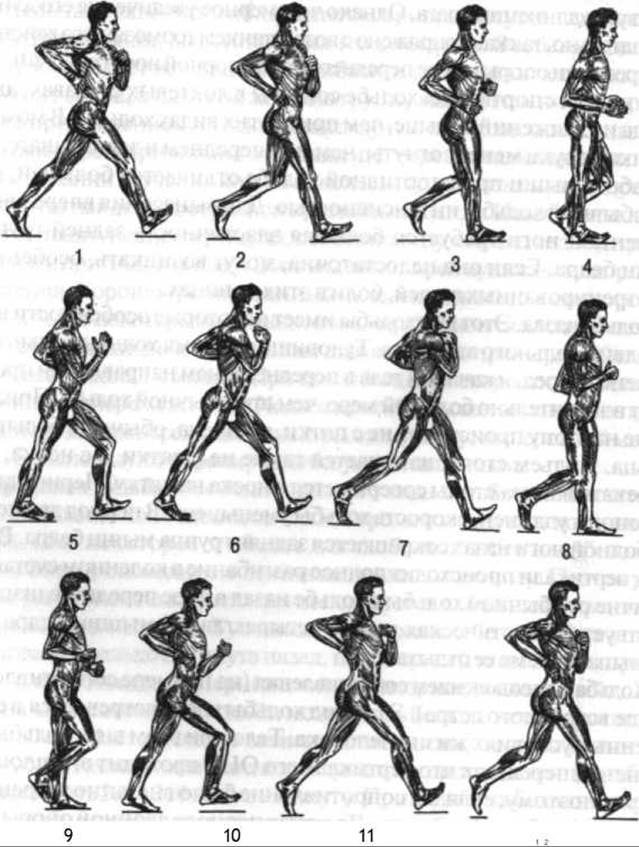
Fig. 180. Race walking:
1, 2, 3, 12 - forward stride of the supporting leg; 4 and 9 - vertical position of the supporting leg; 5, 7 - backward stride of the supporting leg; 8 - backward stride of the free leg; 10, 11 - forward stride of the free leg; 2, 7 - double-support periods
Walking upstairs or on an inclined surface has many similarities. The double-support period is increased. The free leg moves in a flexed position, and the supporting leg straightens only after the vertical position. In this type of walking, The Role of the quadriceps femoris is especially significant. It performs overcoming work during the single-support period; solely due to its contraction, the thigh extends at the knee joint and the entire body is lifted. The hip extensor muscles at the hip joint (gluteus maximus, adductor magnus, semitendinosus, semimembranosus, and biceps femoris) contribute not only to hip extension, but also to the extension of the pelvis and, consequently, the entire torso, whose anterior-posterior oscillations are more pronounced than in normal walking (Fig. 181).
When ascending an inclined plane to move the body's COM forward, the torso is also leaned forward, and the leg is placed on a higher support with the knee flexed. Stride length and the degree of knee flexion depend on the steepness of the inclined plane: the steeper the surface, the greater the knee flexion. The foot is placed not on the heel, but on the entire plantar surface or on the toes (on very steep ascents). The forward push is reduced, while the vertical position of the supporting leg and the backward push are more pronounced. Overcoming gravity (lifting the body) is carried out mainly through the work of the knee joint muscles, while propelling the body forward is achieved primarily through the muscles of the ankle joint.
When walking upstairs or on an inclined plane, pelvic oscillations around the anteroposterior axis of the hip joint of the supporting leg are significantly greater than in normal walking. Lateral oscillatory movements of the spinal column and, along with it, the torso are also considerably greater, which sharply increases the workload of the muscles producing these movements, leading to rapid fatigue.
Walking downstairs or on an inclined surface. When walking down stairs or an incline, gravity acts as a force that facilitates movement. Among the Phases of the supporting leg, the vertical position and the forward stride are the most prominent. To maintain body balance, the torso and arms are tilted backward. The leg is placed on the support in a straightened position, but when walking down an incline, it lands on the heel, while the calf muscles perform yielding work, stretching under the influence of gravity and inertia. The anterior trunk muscles perform static work, preventing the torso from falling backward.
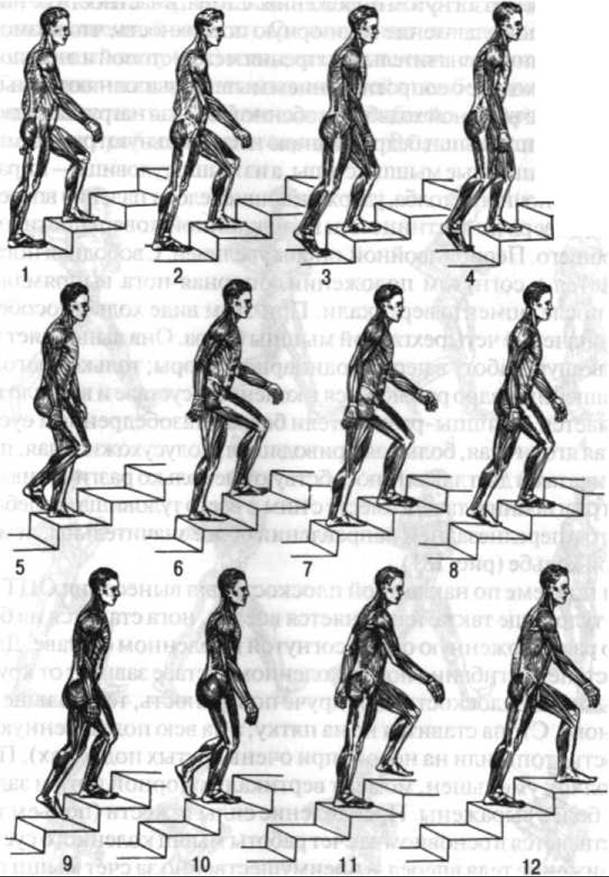
Fig. 181. Walking upstairs:
1, 2, 3, 4 — forward stride of the supporting (left) leg; 5 — vertical position of the supporting (left) and free (right) legs; 6, 7, 8, 9, 10 — backward stride of the free leg; 11, 12 — forward stride of the free leg

Fig. 182. Walking downstairs:
1, 2, 3 — forward stride of the supporting (left) leg; 4 — vertical position of the supporting (left) and free (right) legs; 5, 6, 7, 8, 9 — backward stride of the supporting leg; 10 — vertical position of the supporting (right) and free (left) legs; 11, 12 — forward stride of the free leg
When walking downstairs, the foot is fully utilized as a spring mechanism, since landing occurs on the toes. The flexor muscles of the toes and the entire foot perform yielding work in this process (Fig. 182).
With a slight inclination of the supporting surface, the foot moves in the anteroposterior direction as usual. When the inclination is large and mobility in the ankle joint does not allow the entire plantar surface to be used for support to increase the support area, the medial or lateral edge of the foot is used instead. Due to mobility in the subtalar, talocalcaneonavicular, and calcaneocuboid joints, the foot assumes a pronated position on one side and a supinated position on the other, which increases the load on the respective muscle groups (pronators and supinators of the foot).
The following table provides a clear Overview of the characteristics of walking up and down an inclined plane.
Walking on toes. In this type of walking, the entire body is in a tense, straightened position, the head is held high, thoracic Kyphosis is reduced, while lumbar lordosis and pelvic tilt are increased. The foot, in a state of extreme flexion at the ankle and intrinsic foot joints, is essentially compressed along its longitudinal axis between the supporting surface and the BONES OF THE lower leg, which helps to accentuate the longitudinal arch of the foot. However, its shock-absorbing properties during walking or running on toes cannot be fully utilized due to the high tension in the muscles stabilizing the JOINTS OF THE lower extremity.
Table 14.
|
Main parameters of walking |
Walking on an inclined plane |
|
|
upward |
downward |
|
|
Direction of body COM movement |
forward-upward |
forward-downward |
|
opposes movement |
facilitates movement |
|
|
Body position |
leaned forward |
leaned backward |
|
Location OF THE body COM vertical line relative to the support area |
near the anterior boundary |
near the posterior boundary |
|
Leg position at the beginning of the support phase |
flexed at the knee and hip joints |
straight |
|
Most important moments in the support leg phases |
vertical position and push-off |
forward stride and vertical position |
|
Nature of work of leading muscle groups (extensors of the thigh, lower leg, and flexors of the foot) in the support phase |
overcoming |
yielding |
The COM of the body is positioned higher than during normal walking, and the anteroposterior support area is minimal, which reduces body stability. The degree of stability depends on toe length: when the toes are relatively equal in length, the body weight is distributed over a larger support area; however, if the medial part of the longitudinal arch is significantly longer than the lateral part (i.e., a very long big toe), the load falls onto a restricted support area.
Muscle activity around the knee, ankle, and foot joints is predominantly static in nature. The leg muscles (the tibialis anterior and the long extensors of the toes) are stretched, while the load on the posterior leg muscle group increases. The hip joint muscles perform a major share of the work, as all leg movements primarily occur in this joint.
The stride length during toe walking is short, as restricted or even absent mobility in the knee and ankle joints, combined with an extremely small support area, impedes movement. This short stride length, and consequently the speed of locomotion, is also due to the lack of a foot roll and a reduced flexion arc in the hip joint during this type of walking. Nevertheless, toe walking helps develop the muscles of the lower extremities, back, and abdomen, improves the ability to maintain balance on a limited support area, and promotes good posture.
Running
Running, much like walking, is a complex, locomotive, translational, and alternately symmetrical movement. Running and walking share both Similarities and differences. Running is characterized by the same movement cycle, the same acting forces, and the same functional muscle groups.
The primary difference between running and walking is the absence of a double-support phase and the presence of a flight phase (where the body moves without contacting the supporting surface). Push-off in running is performed more energetically, rapidly, and at a sharper angle; the arm movements are more vigorous, maintaining a flexed position at the elbows to reduce their moment of inertia. Cross-coordination is more pronounced in running than in walking. The forward trunk lean is greater in running than in walking and depends on running speed. The body lean angle is approximately 55–60° in sprinting, 70–75° in middle-distance running, and 75–80° in long-distance running; in other words, the shorter the distance and the higher the speed, the greater the forward trunk lean. The vertical line of the body's COM is energetically projected beyond the front edge of the support area, especially against a headwind. As resistance increases, this external force, combined with gravity, acts at an angle to form a resultant force passing within the support area. To prevent a fall, the legs in running push off with greater force, and are brought forward more rapidly and over a greater distance than in walking.
Body movements in running begin by shifting the vertical line of the body's COM beyond the anterior edge of the support area, causing the body to assume a position of incipient falling. A fall will occur unless the leg is brought forward. Because the push-off with the 'trailing' leg is executed very sharply, the body leaves the ground. This is followed by the flight phase, which corresponds to the double-support phase in walking. Next, landing occurs on the 'leading' leg, after which the entire movement cycle repeats (Fig. 183).
Upon landing, the forward-reaching leg is slightly bent at the knee, which significantly cushions the impact received by the body. Body jolting is also minimized by foot action: if landing occurs on the heel, the anterior leg muscle group performs yielding work to absorb the shock. In long-distance running, heel landings are more common (though forefoot landings also occur), whereas in sprinting and middle-distance running, landings are typically on the forefoot (occasionally on the lateral edge of the forefoot).
Different landing techniques each have their own pros and cons. The advantages of forefoot landing include greater movement elasticity, a longer stride, and reduced shock feedback to the body; the entire foot with its arches, ligaments, and muscular apparatus is utilized to absorb the impact. However, this type of landing demands extreme tension from the plantar flexors and toe flexors.
The posterior and lateral muscle groups of the leg, which work especially vigorously not only during landing but also at the moment of push-off, end up in a heavily contracted state. Thus, during sprinting, these muscles experience extremely strong tension for the greater part of the time. They relax only during the leg recovery phase (swing phase). The anterior leg muscle group is stretched at the moment of landing.
Heel landing does not require such energetic tension from the muscles of the posterior and lateral leg surfaces, but it does cause a strong forward shock.
Landing on the lateral edge of the foot is only possible if the athlete manages to relax the leg muscles during the flight phase, allowing the foot to assume a somewhat supinated position. However, achieving this within the extremely short duration of the flight phase is exceedingly difficult.

Fig. 183. Middle-distance running:
1, 2 — forward stride of the supporting (left) leg; 3 — vertical moment of the supporting leg; 4 — backward stride of the supporting leg, ending in push-off; 5, 6, 11, 12 — flight phases; 7 — backward stride of the free leg; 8 — vertical moment of the free leg; 9, 10 — forward stride of the free leg
While standing feet are usually slightly turned out, and walking feet are positioned more parallel, in running the feet are either parallel to each other or even slightly toeing inward. This foot placement allows for a greater utilization of the posterior and lateral muscle groups of the leg and the plantar surface of the foot for the push-off.
For the same purpose, a technique of placing the feet strictly one in front of the other (i.e., on a single straight line) is employed. The advantage of this method is that the body's COM moves primarily directly above the support area, minimizing lateral oscillatory movements.
Running is typically characterized by a rapid movement tempo. Slow-paced running consists of a series of consecutive jumps from one leg to the other, resulting in a highly uneven translational body motion associated with significant, predominantly vertical, oscillations.
In running, as in walking, one distinguishes backward and forward simple steps, which make up a complete single stride; two single strides of the right and left leg form a double stride.
A slight extension of the knee-flexed leg occurs near the vertical position upon ground contact, with full extension reached at the moment of push-off. Following push-off, as the leg transitions into the fourth phase, strong flexion of the lower leg is observed, which may form an acute angle relative to the thigh. Such flexion helps significantly reduce the leg's moment of inertia, facilitating and speeding up its recovery from the backward to the forward stride.
The faster the running speed, the shorter the duration of ground contact for the supporting leg, and the longer the flight phase.
During running, the trunk performs movements similar to those in walking. In addition to translational motion, lateral movements also occur. The higher the running speed, the smaller the lateral and vertical oscillations. Rotational movements, trunk tilts, and straightenings are much more pronounced in running than in walking (the body leans forward during the support phase and straightens during flight).
The amplitude of arm swing in running is significantly greater than in walking. A characteristic feature of arm movement is that they do not extend fully during the backward swing, unlike in walking.
Overall muscular effort in running is much more intense. Strong contraction of the quadriceps femoris heads prevents knee flexion during landing. At the beginning of the flight phase, the hip flexors contract: the rectus femoris, sartorius, and tensor fasciae latae. The iliopsoas muscle plays a major role in swinging the leg forward. The lower leg of the free leg moves past the supporting leg in a flexed state, while the foot of the free leg is slightly extended.
Hip extensors, primarily the gluteus maximus, play a major role in running. At the moment of push-off, as well as during the backward stride of the free leg (fourth phase), this muscle is in a contracted state, whereas on the opposite leg (sixth phase) it is stretched. Thus, running utilizes the same muscle groups as walking, but their workload is considerably more intense.
If in walking the lowest position of the body's COM and the maximum support pressure occur during the double-support phase, in running they occur during the swing phase when one leg passes the other, whereas with the legs widely parted forward and backward, the body's COM reaches its highest position and the support pressure drops to zero.
Stride length in running is usually directly related to speed. It also depends on the force and direction of the push-off, leg length, etc. The stride length in sprinting averages 159 cm for untrained men, 129 cm for women, and 168 cm for distance runners.
In short-distance running, the movement rate exceeds 20 double strides. For untrained individuals, the average running speed is 5.9 m/s for men and 4.6 m/s for women.
Long-distance running primarily requires endurance, whereas short-distance running relies more on strength. In the 400-m run, success depends on an optimal balance of speed, rate, and stride length at high—though not maximal—values combined with sufficient stability. An athlete's qualification level does not affect running rate, but it is clearly reflected in stride length, which for first-class athletes, candidates for master of sports, and masters of sports measures 209.2, 216.7, and 228.6 cm, respectively. With fatigue, stride length decreases much more than running rate.
The movement Structure in running, as a specific type of locomotion, changes with age. In 5-year-old children, the flight phase during slow running is often absent, and during fast running, it is short-lived. The most suitable age for mastering athletic locomotion is 7–8 years. The Anatomical Characteristics of running in adults change little with age during regular health-improving physical training. For beginner runners, the limiting factor is frequently the condition of the cardiovascular and musculoskeletal systems.
Standing long jump
The standing long jump is a complex acyclic, translatory, and simultaneously symmetrical movement involving the body's push-off from a supporting surface, a flight phase, and subsequent landing.
During a standing long jump, the body's COM traces a parabola similar to that of any projectile launched at an acute angle to the horizontal plane. The jump is essentially a self-propelled throw, where the driving force is generated by the body's own muscle power. Two main forces act during the jump: the push-off force and gravity. Thus, the flight trajectory can be defined as the resultant vector of these two forces acting upon each other at a certain angle (Fig. 184).
To execute the jump successfully, the individual body parts must become immobilized relative to one another at the moment of takeoff. Otherwise, muscle contraction will act primarily on individual parts of the lower extremities rather than the entire body.
Four main phases are distinguished in the body's movement during a standing long jump: preparatory, push-off, flight, and landing. Gravity acts throughout all phases of the jump, whereas the support reaction force acts only in phases 1, 2, and 4.
The support area changes during the jump: it is largest in phase 1, smaller in phase 2 and at the beginning of phase 4. Specifically, in phase 2 it is represented by the supporting surface of the forefoot, and at the beginning of phase 4, by the rearfoot transitioning to the entire plantar surface.
The preparatory phase primarily involves squatting. During this phase, the leg extends at the ankle joint and flexes at the knee and hip joints. The body shifts forward, causing the vertical line of its COM to move beyond the front boundary of the support area, which initiates the forward fall of the body.
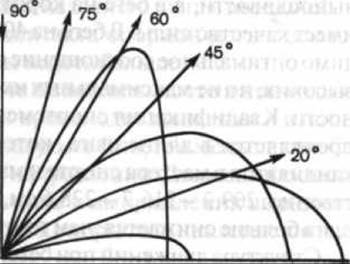
Fig. 184. Relationship between the direction of the push-off force and the trajectory of the center of mass
In the smoothing phase, at the onset of the body's fall, flexion occurs at the ankle joint, extension at the knee and hip joints, along with a simultaneous upward arm swing, which helps raise the body's COM. According to the laws of ballistics, flight will be longest when the line indicating the push-off direction forms a 45° angle with the horizontal plane. Theoretically, when the push-off angle exceeds 45°, the flight path will be higher and shorter. With a 90° push-off, the body flies straight up and lands in its starting spot. At an angle of less than 45°, the flight will be lower and longer. However, to achieve a 45° takeoff angle in a running long jump, the vertical lift speed of the center of mass must equal the approach speed at the moment of takeoff. Because the jumper lacks sufficient "push-off power," the takeoff angle does not exceed 30° while maintaining a high final approach speed, and attempts to increase it result in a loss of takeoff velocity.
To make the fullest use of all toe flexor muscles during push-off, the feet are usually positioned with the toes turned slightly inward. Muscle action during the push-off phase is characterized by abruptness and power. Over a short period, the muscles contract to their maximum, propelling the body through the air over a certain distance. The primary muscles operating during push-off include: in the foot region—all muscles of the plantar surface; in the ankle region—the posterior and lateral muscle groups of the lower leg; in the knee region—the femoral heads of the quadriceps femoris; in the hip region—the muscles located on its posterior surface; in the trunk—the extensor muscles of the spinal column as well as the shoulder girdle elevators; in the upper extremity—the shoulder flexors and forearm extensors. Most of these muscles, particularly those of the lower limbs and trunk, are already in a contracted state during the preparatory period. However, during that period they perform yielding work, whereas at the moment of push-off they perform overcoming work (Fig. 185).
Once near-complete extension has occurred in the joints, the movements within them are braked, as noted earlier, through the brief contraction of antagonist muscles. This temporarily turns the entire body into a single monolithic unit, facilitating the transfer of push-off forces to the body's COM and maintaining balance during flight. The role of the antagonist muscles also lies in preventing hyperextension of the lower limb segments in the joints, thus protecting them from injury.
The flight phase is characterized by a pre-determined trajectory of the body's COM. This trajectory can only be altered by external forces (for example, a strong headwind will shorten it, while a tailwind will lengthen it). To prevent external factors from altering the flight path, the takeoff angle must be adjusted (for example, it should be larger with a tailwind and smaller with a headwind compared to the norm in calm conditions).
Although it is impossible to change the flight trajectory through any additional movements once airborne, the body can be positioned so that its individual segments offer minimal resistance to motion. Tucking the legs during flight results in landing farther from the takeoff point than keeping the legs straightened and lowered throughout the flight.
During flight, the muscles relax significantly. The upward arm movement assists the leg action to some extent. Even a very rapid arm swing alone, performed from an upright body position with straight legs, can produce a slight takeoff from the support surface. At the moment before the body leaves the ground, an upward arm swing helps elevate the body's COM, which is crucial for the flight phase.
By the moment of push-off, the feet are positioned behind the trunk (behind the vertical line of the body's COM), but by the end of the flight, the limbs are brought forward. Since the push-off force is transmitted to the pelvis, the flight phase may involve not only translatory motion of the trunk but also slight rotation around its transverse axis; consequently, by the end of flight, the lower part of the trunk may have traveled farther forward than its upper part.
The landing phase is characterized by the body making contact with the ground and acquiring a support area located ahead of the vertical line of the body's COM. During landing, the spring-like Properties of the lower extremity are utilized to the maximum, especially the flexed position of its main joints. Shock absorption of the impact received by the body upon landing is also achieved through the yielding work of the lower limb muscles during flexion at the knee, hip, and (to some extent) ankle joints. The foot cannot fully demonstrate its spring properties upon landing because touchdown typically occurs on the rearfoot rather than the forefoot. Landing on the forefoot is difficult to execute as it requires extreme toe-pointing, which is resisted by the tension of the anterior lower leg muscle group.

Fig. 185. Standing long jump:
1 - preparatory phase; 2, 3, 4, 5, 6 - push-off phase; 7, 8, 9, 10 - flight phase; 11, 12 - landing phase
Regarding the Specifics of the breathing mechanism during a standing long jump, it should be noted that as the arms are swung upward, more favorable conditions for inhalation are created due to the elevation of the Ribs. During the flight phase itself, which lasts for a very brief period, breathing is briefly held, and exhalation occurs after landing.
Last update: 08/08/2026
Editorial and Educational Adaptation: This material has been compiled based on the primary/original source text. The project team performed an editorial review, corrected technical inaccuracies, structured sections, and adapted the content for an educational format.
What was processed:
- elimination of formatting defects (OCR errors, structural breaks, corrupted characters);
- editorial organization of content;
- standardization of terminology in accordance with academic sources;
- verification of factual statements against the original source text.
All mentions of the author, publication year, and origin of the primary text have been preserved in accordance with the source.