MICROBIOLOGY Study Guide - 2012
CHAPTER 2. THE POSITION OF MICROORGANISMS IN THE SYSTEM OF THE LIVING WORLD
Until the mid-19th century, all organisms inhabiting the planet were divided into two kingdoms based on Structural and functional features: plants (Plantae) and animals (Animalia).
With the invention of the Light Microscope, information gradually accumulated regarding the existence of microscopic, single-celled organisms invisible to the human eye, whose characteristics did not fit the criteria of the two aforementioned kingdoms. Consequently, in 1866, E. Haeckel proposed placing these organisms into a third kingdom, Protista (from the Greek protos — the first, most primitive). He assigned to this kingdom all organisms of small size and relatively simple biological Organization: microscopic Fungi (Yeasts and Molds), unicellular Algae, Protozoa, and Bacteria.
However, since the late 19th century, evidence began to accumulate regarding structural differences among various microorganisms within the protist group, which led to their division into higher and lower forms. Based on the molecular and biological organization of Cells, R. Murray proposed in 1968 to divide all cellular organisms into two groups:
✵ higher — eukaryotes (the prefix eu- means "true, genuine", kаryоn — Nucleus), whose cells are similar to animal and plant cells;
✵ lower — prokaryotes (the prefix pro- means "before, simple"), whose Cell Structure differs significantly from all other organisms.
Among microorganisms, eukaryotes include microscopic algae, fungi, and protozoa. Prokaryotes include bacteria, such as rickettsiae, actinomycetes, and cyanobacteria (blue-green algae).
Subsequently, R. Whittaker proposed a scheme dividing All living organisms with a cellular structure into five kingdoms (Fig. 1).
Class="center">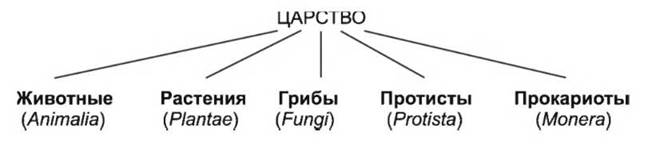
Fig. 1. The five-kingdom System of the living world (after Whittaker, 1969)
Multicellular eukaryotes are represented by Three kingdoms: animals, plants, and fungi. Representatives of these kingdoms differ in their mode of Nutrition. Animals feed by engulfing and digesting food—the holozoic type of nutrition; plants are characterized by Photosynthesis and, accordingly, a phototrophic type of nutrition; fungi feed primarily on dissolved organic matter—an osmotrophic type of nutrition.
The Kingdom of Protists largely unites microscopic unicellular organisms with a Introduction/5.html">Eukaryotic Cell structure—protozoa and unicellular algae.
The kingdom Monera encompasses prokaryotic organisms and is represented by the vast and diverse world of bacteria. The oldest bacteria date back at least 3–3.5 billion years. Other bacteria, scientists believe, emerged relatively recently. Currently, various Representatives of the microbial world are found in virtually all ecological niches of our planet. They have been isolated from the ice of the Arctic and Antarctica, oil wells, hot springs, and soil samples from various geological strata. Many microorganisms parasitize humans and animals, causing various diseases.
A special place among microorganisms is occupied by Viruses (from the Latin virus — poison). Viruses lack a cellular structure, are incapable of independent reproduction, and are classified into a separate group of organisms whose Replication can occur only inside living cells. All viruses are united in the kingdom Vira.
The fundamental Structural elements of every living cell are DNA, RNA, Cytoplasm, the cytoplasmic membrane, and nutrient reserves. The Development of Electron Microscopy made it possible to study the Fine Structure of various cell types, revealing A number of significant differences in the Cellular Organization of PROKARYOTES AND EUKARYOTES. Structural differences between prokaryotic and Eukaryotic cells reflect crucial distinctions in the mechanisms of their life Functions: the transmission and expression of Genetic information, METABOLISM/26.html">Energy Metabolism, and metabolic processes. A comparison of certain Organizational features of pro- and eukaryotic cells is given in Table 1.
Table 1. Some differences in the cellular organization of prokaryotes and eukaryotes
Feature |
Eukaryotic cell |
|
Organization of genetic material |
Nucleoid. DNA is a closed circle and is not separated from the cytoplasm by a membrane |
Nucleus with a nucleolus, separated from the cytoplasm by a membrane |
Mitosis (nuclear division) |
Absent |
Present |
Localization of extranuclear DNA |
In the cytoplasm — Plasmids |
In Mitochondria |
Localization of Respiratory Chain Enzymes |
In the cytoplasmic membrane |
In mitochondria |
Cytoplasmic Organelles separated from the cytoplasm by a membrane |
Absent |
Mitochondria, Lysosomes, Chloroplasts, Golgi apparatus, etc. |
Ribosome type |
70S |
80S |
Cell wall composition |
Peptidoglycan murein |
|
Cytoplasmic streaming |
Absent |
Frequently observed |
Flagella |
Built of protein subunits forming a helix |
Contain a set of microtubules arranged in groups of (2 × 9) + 2 |
Dry cell mass, g |
10-15...10-11 |
10-11...10-7 |
The Eukaryotic Cell is characterized by a complex structure. It possesses a true nucleus with a nucleolus, separated from the cytoplasm by a nuclear membrane. The Nucleus contains a set of Chromosomes that is constant for each species of Organism. During mitosis, chromosomes double and are distributed between daughter cells. Within chromosomes, DNA is bound to basic Proteins known as Histones. The Cell also contains other organelles harboring small circular DNA molecules (Mitochondria and chloroplasts). The Cell Cytoplasm houses organelles bounded by elementary membranes: vacuoles, mitochondria, chloroplasts, lysosomes, and the Golgi apparatus.
Eukaryotic Ribosomes have a sedimentation coefficient of 80S. A network of membranes (The Endoplasmic reticulum) divides the cell into distinct compartments.
The prokaryotic cell lacks a true nucleus. The nuclear apparatus, termed the nucleoid, is a giant circular DNA molecule located directly in the cytoplasm. This so-called "bacterial chromosome" contains all the genetic information of the cell. Additionally, the cell cytoplasm may harbor very small circular DNA molecules known as plasmids. Prokaryotes lack mitochondria, chloroplasts, and other organelles typical of eukaryotes. Their ribosomes are smaller than those of eukaryotes, and the cell's energy centers are located in The Plasma Membrane, mesosomes, chromatophores, or thylakoids.
There is also a fundamental difference in The chemical composition of the cell walls of prokaryotes and eukaryotes. The primary substance of the prokaryotic cell wall is the peptidoglycan murein, whereas the eukaryotic cell wall consists mainly of polysaccharides.
Prokaryotes are viewed as relict forms that emerged at the earliest stages of biological evolution and adapted to existence under anaerobic conditions, back when Earth's atmosphere still lacked oxygen. Despite their cellular simplicity, prokaryotes acquired versatile PHYSIOLOGICAL AND BIOCHEMICAL functions during their evolution, ensuring a diversity of metabolic pathways and, consequently, their widespread distribution in nature. The development of eukaryotes occurred much later—with the appearance of atmospheric oxygen, which is considered a giant leap in organismal evolution, manifested in cellular complexity and morphological differentiation.
Last update: 13/08/2026
Editorial and Educational Adaptation: This material has been compiled based on the primary/original source text. The project team performed an editorial review, corrected technical inaccuracies, structured sections, and adapted the content for an educational format.
What was processed:
- elimination of formatting defects (OCR errors, structural breaks, corrupted characters);
- editorial organization of content;
- standardization of terminology in accordance with academic sources;
- verification of factual statements against the original source text.
All mentions of the author, publication year, and origin of the primary text have been preserved in accordance with the source.