FUNDAMENTALS OF BIOCHEMISTRY AND MOLECULAR BIOLOGY - N. N. Skvortsova - 2016
Part I. Chemical Components of the Cell
5. CARBOHYDRATES
5.1. BIOLOGICAL Functions OF CARBOHYDRATES
The term "carbohydrates" was coined in the 19th century for natural compounds whose elemental composition can be expressed by the general formula Cm(Н2О)m. Although this rule is not absolute, the definition provides a straightforward way to characterize the Class of carbohydrates.
Carbohydrates perform essential functions in the living Organism.
Energy storage and supply. Free glucose or carbohydrate reserves in the form of Glycogen serve as the primary energy source in the body. The oxidation of 1 g of carbohydrates releases 17 kJ (4.1 kcal) of energy.
Structural function. Carbohydrates (such as ribose and deoxyribose) are involved in the synthesis of Nucleic Acids, form part of certain Enzymes, and are constituents of Glycoproteins and Glycolipids. Specific carbohydrates serve as components of Cell membranes. Glucose derivatives (such as glucuronic acid and glucosamine) constitute an integral part of Polysaccharides and complex Proteins in Cartilage and Connective Tissues.
Protective function. Carbohydrate moieties are present in IMMUNOGLOBULINS and play a role in maintaining immune defense. Heteropolysaccharides are found in the mucous secretions lining Blood Vessels, Bronchi, and the digestive tract, where they protect against bacterial and viral invasion as well as mechanical damage.
Reserve function. In animal organisms, carbohydrates act as an energy reserve stored in skeletal Muscles, the Liver, and other tissues in the form of glycogen. Starch serves as the reserve polysaccharide in plants.
Regulatory function. Dietary fiber is not digested in the intestine, yet it stimulates intestinal peristalsis, activates digestive enzymes, and promotes nutrient absorption.
Because carbohydrate Structure is covered in detail in organic chemistry courses, this textbook provides only a Brief Overview of those natural compounds in this important class that are essential for understanding biochemistry and are relevant to food science and technology.
5.2. Classification and Structure of Carbohydrates
The Classification of Carbohydrates is based on their molecular structure: depending on molecular complexity, they are divided into Monosaccharides AND THEIR derivatives, Oligosaccharides, and polysaccharides (Fig. 40).
Fig. 40. Classification of carbohydrates

5.2.1. Monosaccharides: Structure
Monosaccharides contain either an aldehyde or a ketone group alongside multiple alcoholic hydroxyl groups. Based on the number of carbon atoms, they are classified as lower monosaccharides (trioses and tetroses, containing 3 and 4 carbon atoms in the chain, respectively), common monosaccharides (pentoses and hexoses), and higher monosaccharides (heptoses, octoses).
The stereochemistry of monosaccharides is effectively illustrated by Fischer projection formulas, in which the OH group at the farthest asymmetric carbon atom is positioned to the right of the vertical line representing the carbon chain for D-configuration, and to the left for L-configuration. The total number of isomeric aldoses is given by 2n, where n is the number of asymmetric carbon atoms in the molecule. In aqueous solution, cyclic pyranose forms predominate in most cases. The structure of the most important hexose monosaccharides is shown in Fig. 41.
Fig. 41. STRUCTURE OF THE most common hexose monosaccharides: A - in linear acyclic oxo form; B - in cyclic pyranose form

Human dietary sources (such as fruits, honey, and juices) contain small amounts of monosaccharides, primarily glucose and fructose.
Glucose is an aldohexose. Its cyclic form is thermodynamically favored. Like all hexoses, glucose possesses 4 asymmetric carbon atoms, which give rise to 16 stereoisomers, The most significant being D- and L-glucose. In mammalian organisms, monosaccharides occur in the D-configuration.
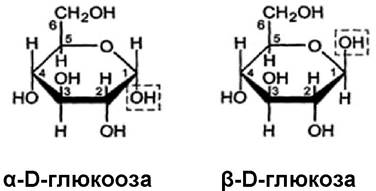
During the cyclization of a monosaccharide, two additional isomers (α- and β-isomers), known as anomers, are formed. The OH group of α-D-glucose lies below the plane of the ring, whereas the OH group of β-D-glucose is positioned above the plane of the ring:
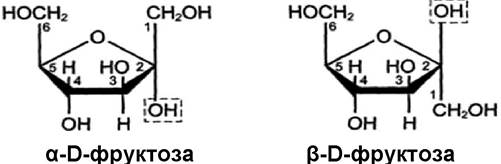
Fructose is a ketohexose, with the keto group located at the second carbon atom (see Fig. 41). Similar to glucose, fructose exists in a cyclic form, yielding α- and β-anomers:
5.2.2. Main Chemical Reactions of Monosaccharides
Monosaccharides are polyfunctional compounds due to the presence of hydroxyl, aldehyde, and keto groups in their molecules. Each of these groups undergoes characteristic reactions, but all of them participate in oxidation-reduction reactions. The reactions exemplified by D-glucose hold the greatest biological significance (Fig. 42).
Fig. 42. Chemical reactions of monosaccharides using glucose as an example

For instance, during the mild oxidation of aldoses with bromine Water, only the carbonyl group is affected, yielding glyconic acids, which readily form five- and six-membered lactones.
Glucuronic acids are widespread in nature. Under laboratory conditions, they can only be obtained through multistage synthesis, as the oxidation of the alcohol group requires prior Protection of the aldehyde group. Glucuronic acids are components of polysaccharides (pectic substances, heparin). An important Biological Role of D-glucuronic acid is that many toxic substances are eliminated from the body in the urine as soluble glucuronides.
The reduction of the carbonyl group of monosaccharides yields polyhydric alcohols, or polyols (glucose to sorbitol, mannose to mannitol, xylose to xylitol, ribose to ribitol). The alcohol ribitol is a component of vitamin B2.
Mutarotation, or anomerization, is the interconversion of anomeric forms of monosaccharides. The α- and β-forms of anomers exist in solution in a state of equilibrium. When this equilibrium is reached, the pyranose ring opens and closes, resulting in A change in the spatial arrangement of the H and OH groups at the first carbon atom of the monosaccharide.
5.2.3. Functional Derivatives of Monosaccharides
Monosaccharide Derivatives contain other functional groups, or an H atom replacing one or more hydroxyl groups. Several groups of monosaccharides are known, differing in their set of functional groups or carbon chain structure.
Deoxy sugars (one or more OH groups are replaced by H atoms). 2-Deoxyribose is a component of DNA:

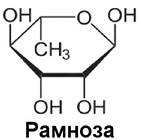
Rhamnose (6-deoxy-β-D-mannose) is a component of heteropolysaccharides, such as Gums:
Amino sugars (one or more OH groups are replaced by amino groups). α-D-Glucosamine, a substance produced by joint cartilage tissue, serves as a component of chondroitin and is present in synovial fluid:

N-Acetylglucosamine is the monomer of the primary structural component of the fungal Cell wall, Chitin. It is also a building block of murein, the structural polysaccharide found in bacterial cell walls.
Uronic acids. Monosaccharides (aldoses) whose molecules contain a carboxyl group instead of the primary alcohol group.
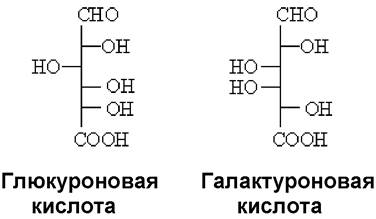
The names of uronic acids are derived from the names of the corresponding aldoses by adding the suffix "uronic acid" to the ROOT, for example, glucose becomes glucuronic acid, and galactose becomes galacturonic acid. They are constituents of Biopolymers of PLANT AND ANIMAL origin.
O- and N-Glycosides. The hemiacetal hydroxyl group exhibits higher reactivity than the others and can be replaced by other groups in reactions with alcohols, phenols, carboxylic acids, and amines.
The reaction product is called an O-glycoside if the linkage is formed through oxygen. Natural O-glycosides, most of which are produced by plant METABOLISM, exist predominantly in the β-form.

The glycosidic bond is of great biological importance because it is precisely through this bond that monosaccharides are covalently linked to form oligo- and polysaccharides.
During The formation of an O-glycosidic bond, the anomeric OH group of one monosaccharide reacts with the OH group of another monosaccharide.
The anomeric OH group of a monosaccharide can react with the NH2 group of Other Compounds, leading to the formation of an N-glycosidic bond:

A similar bond is present in NUCLEOTIDES and glycoproteins.
5.2.4. Oligosaccharides
The molecules of these substances consist of a few simple constituents, typically two or three. Disaccharides are the most common. This group includes sucrose, maltose, lactose, isomaltulose, and lactulose.
Sucrose (α-D-glucopyranosyl-β-D-fructofuranoside) is a non-reducing disaccharide composed of glucose and fructose residues linked by a 1,2-glycosidic bond.
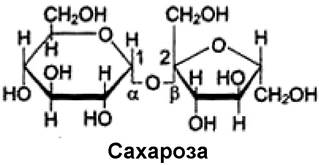
In sucrose, both anomeric OH groups of the glucose and fructose residues are involved in the Formation of the glycosidic bond; consequently, sucrose is not a reducing sugar.
Sucrose is extracted from sugarcane and sugar beets on an industrial scale in very large quantities.
Lactose (4-β-D-galactopyranosyl-D-glucopyranose) is the second most common disaccharide, consisting of glucose and galactose. It is the primary disaccharide found in milk (milk sugar):
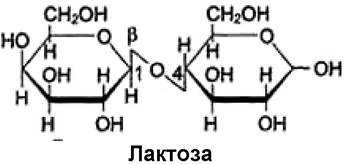
The anomeric carbon atom of the glucose residue is not involved in the formation of the glycosidic bond, which is why lactose is classified as a reducing sugar.
Maltose (4-α-D-glucopyranosyl-D-glucopyranose) is malt sugar, a product of the partial Hydrolysis of Starch:
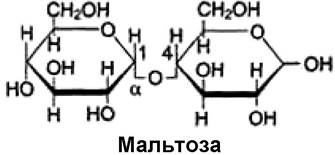
Maltose consists of two D-glucose residues joined by an α-1,4-glycosidic bond and is a reducing sugar.
Isomaltulose (6-α-D-glucopyranosyl-D-fructofuranose) is a disaccharide composed of glucose and fructose residues connected by an α-1,6-glycosidic bond. Chemically, isomaltulose consists of the same basic structural units as sucrose. In nature, isomaltose is found in sources such as honey (up to 0.7-1%), sugarcane, and others.
Lactulose (4-β-D-galactopyranosyl-D-fructofuranose) is a non-natural disaccharide consisting of galactose and fructose molecular residues; it is a synthetic stereoisomer of milk sugar, lactose.
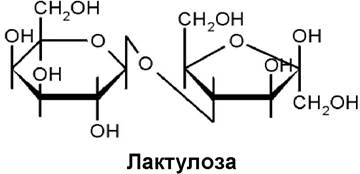
Lactulose and isomaltulose are widely used as food additives in the formulation of functional foods. They rank among the best-known prebiotics—indigestible food components that beneficially affect human health by selectively stimulating the growth and activity of one or more beneficial bacterial genera.
5.2.5. Polysaccharides
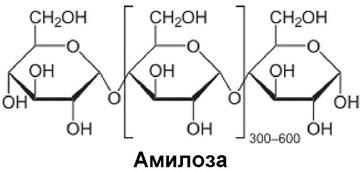
Starch serves as the storage polysaccharide in plant Cells. It consists of two polysaccharides, amylose and amylopectin, whose elementary building block is the α-D-glucopyranose residue.
Amylose is a linear polysaccharide in which glucose residues are linked to each other by α-1,4-glycosidic bonds. Depending on the plant species, the Molecular Weight of amylose ranges from 1.5-5 • 105 amu.
Amylopectin is a branched polysaccharide featuring fairly long and likewise branched side chains attached to the main chain via α-1,4- and α-1,6-glycosidic bonds.
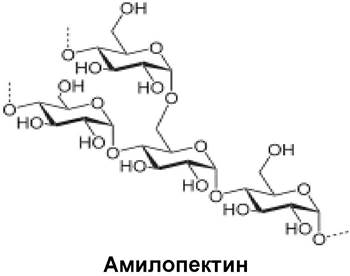
The molecular weight of amylopectin ranges from 106 to 109 a. m. u.
Starch and its derivatives are widely used in the food industry as carbohydrate products, gelling agents, thickeners, and emulsifiers. As a primary raw material, starch is utilized in The production of ethanol and other products of microbiological synthesis. Starch and its modifications have also found extensive industrial Applications.
Raw Materials used for starch production include root crops (potatoes, sweet potatoes, cassava) and cereal grains (corn, rice, wheat, sorghum).
Cellulose is the most abundant organic polymer in nature and serves as a structural component of all Plant Cell Walls. Cellulose is a linear polysaccharide whose chain is built of β-D-glucopyranose units linked by β-1,4-glycosidic bonds:
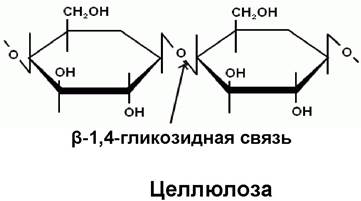
The repeating monomer unit in the macromolecule is the cellobiose disaccharide residue.
It is widely used in various manufacturing sectors, with its primary application being the production of paper and textile products.
Hemicelluloses. Non-cellulosic polysaccharides that act as Structural components of plant cell walls.
Hemicellulose macromolecules are branched and composed of pentoses (xylose, arabinose) or hexoses (mannose, fructose); the degree of polymerization ranges from 50 to 300, and their molecular weight is significantly lower than that of cellulose. These polysaccharides exhibit diverse properties due to the varying arrangement of units within the polymer chain, the type of glycosidic linkages between monosaccharide residues, the degree and pattern of branching, the molecular weight, and the presence of various functional groups.
As a rule, individual plants contain several structurally distinct hemicelluloses. Xylans are the most prevalent in plants.

Pectic substances. They perform structural and ion-exchange functions in plants, regulate water balance, and participate in plant cell growth and elongation.
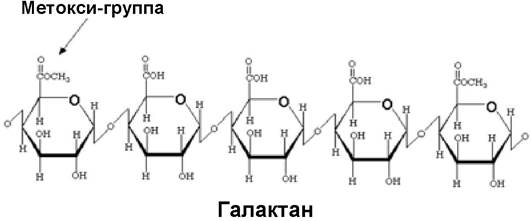
Chemically, pectic substances are acidic polysaccharides. The backbone of pectic substances consists of a molecular chain of D-galacturonic acid residues linked by 1,4-α-glycosidic bonds (galactan). Pectins from different plant sources exhibit varying degrees of carboxyl group Esterification.
Pectic substances function as natural ion-exchange materials. This determines their key dietary property: The ability to bind and eliminate xenobiotics—such as heavy metals and radionuclides—from the body.
In a humid atmosphere, pectins can sorb up to 20% water. They dissolve in excess water. Depending on their properties, all pectins can be broadly divided into two groups: gelling pectins (citrus, apple) and complex-forming pectins (beet, sunflower), which determines their applications in the food and pharmaceutical industries.
Carrageenans. Linear polysaccharides consisting of galactose sulfate esters, extracted from red seaweeds.
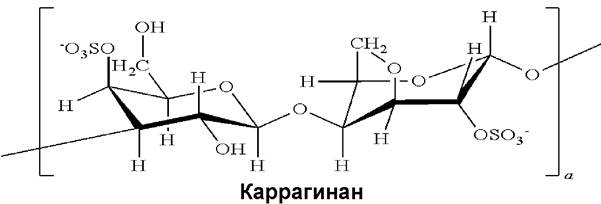
The name originates from a species of Algae growing along the coast of Ireland. Mucilaginous extracts from the "Irish moss" alga have been used as food additives for centuries. These are natural thickeners, gelling agents, and consistency stabilizers widely used in the food industry.
Gums. Plant polymers composed of monosaccharides such as glucose, galactose, arabinose, rhamnose, and glucuronic acids. For instance, xanthan gum is chemically a polysaccharide produced via Fermentation using the bacterium Xanthomonas campestris. The main polymer chain is identical to that of cellulose. The side chains consist of glucose, mannose, and glucuronic acid residues, as well as Pyruvate and acetyl groups.
Xanthan gum is used in food systems as a thickener, gelling agent, and stabilizer. Gums are the primary component of the sap secreted by plants upon mechanical bark damage.
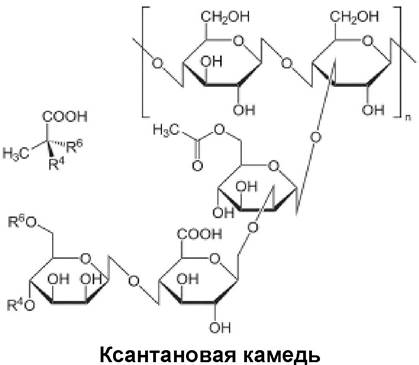
The best-known types of gums include gum arabic, Agar-agar, alginic acids, xanthan, and tragacanth.
Hyaluronic acid. Hyaluronic acid is a poly-(2-acetamido-2-deoxy-D-gluco)-D-glucuronoglycan, i.e., a polymer consisting of D-glucuronic acid and N-acetyl-D-glucosamine residues linked alternately by β-1,4- and β-1,3-glycosidic bonds. A single hyaluronic acid molecule can contain up to 25,000 such disaccharide units.
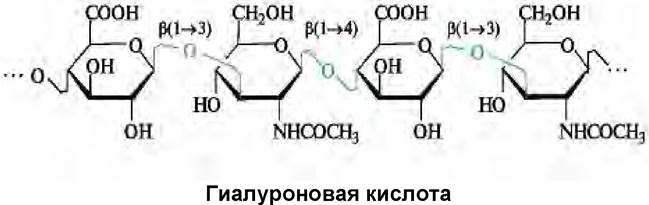
It is a major component of the Extracellular matrix and is found in many biological fluids, including saliva and synovial fluid. It is an essential component of articular cartilage and is also present in connective, epithelial, and nervous tissues.
Agarose. A natural linear polysaccharide derived from agar-agar. It consists of alternating residues of β-D-galactopyranose and 3,6-anhydro-α-L-galactopyranose linked by β-1 —> 4 bonds.
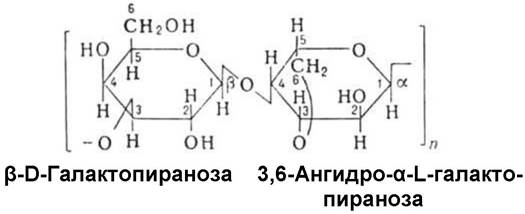
It exhibits a strong gelling property. Its melting point is 95 °C, and its gelation point is 45 °C. It is widely used in Electrophoresis for the Separation of nucleic acids.
5.3. Carbohydrate Nomenclature
In scientific publications, the structure of oligo- and polysaccharides is typically denoted using three-letter standard Abbreviations for monosaccharide residues. The symbols adopted for the most important monosaccharides and their derivatives are listed in Table 11.
Table 11. Abbreviated notation for the most common monosaccharides and their derivatives
Monosaccharide Name |
Three-letter Symbol |
Monosaccharide Derivative Name |
Three-letter Symbol |
Arabinose |
Arа |
Glucuronic acid |
GlсА |
Fructose |
Fru |
Galactosamine |
GаlN |
Fucose |
Fuc |
Glucosamine |
GlcN |
Galactose |
Gаl |
N-acetylgalactosamine |
GalNAc |
Glucose |
Glс |
N-acetylglucosamine |
GlcNAс |
Mannose |
Маn |
Iduronic acid |
ldoA |
Rhamnose |
Rha |
Muramic acid |
Мur |
Ribose |
Rib |
N-acetylmuramic acid |
Мur2Ас |
Xylose |
ХуI |
N-acetylneuraminic acid |
Neu5Ас |
Thus, the cellulose polysaccharide molecule can be written as [-Glс(1 —> 4) -]n, and the chitin molecule as [-βGlcNAc(1 —> 4) -]n.
Selection/41.html">Review Questions and Exercises
1. Provide a classification of carbohydrates.
2. List and characterize the functions of carbohydrates in nature.
3. To which optical series do naturally occurring sugars belong?
4. Describe The chemical properties of natural monosaccharides.
5. Write the chemical formulas and name the products of glucose oxidation.
6. Write the chemical formula and name the product of glucose reduction.
7. Write the formula for galactose O-methylglycoside.
8. Write the formula for the ribose N-glycoside with thymine.
9. Write the formula for fructose-6-phosphate.
10. Write the formula for the glucosamine derivative that serves as the monomer of chitin.
11. What is the difference between α- and β-anomers? Demonstrate this using glucose as an example.
12. Write the formulas of aldopentoses and indicate their biological role.
13. Write the formulas of aldohexoses. Describe their biological role and natural sources.
14. Write the formula of ketohexose. Describe its biological role and natural sources.
15. Describe milk sugar: its structure, properties, and natural sources.
16. Describe malt sugar: its structure, properties, and natural sources.
17. Describe beet sugar: its structure, properties, and natural sources.
18. Provide the structural formulas of cellobiose, maltose, and trehalose; indicate their differences.
19. List the reducing disaccharides, write their formulas, and explain The Nature of their properties.
20. Give an example of non-reducing disaccharides, write their formulas, and explain the nature of their properties.
21. List the most important Homopolysaccharides.
22. Describe the Composition and Structure of plant structural polysaccharides.
23. Name and describe the plant storage polysaccharide.
24. Name and describe the animal storage polysaccharide.
25. What are the Similarities and differences in the structure of amylose and cellulose?
26. What is the nutritional role of dietary fiber and pectins?
27. Name the natural heteropolysaccharides used in food technology and indicate their composition.
28. Name and describe the COMPOSITION OF THE polysaccharide used in gel electrophoresis.
29. Characterize the heteropolysaccharides known as gums.
30. Which glycosidic bonds are not hydrolyzed by the digestive enzymes of humans and animals?
Independent Work Assignments
Assignments 1–4. Write the formulas, name, and denote using three-letter symbols:
1. A reducing disaccharide that serves as a monomer of starch. Describe the nature of its reducing properties.
2. A reducing disaccharide that serves as a monomer of glycogen. Describe the nature of its reducing properties.
3. A reducing disaccharide that serves as a monomer of pectin. Describe the nature of its reducing properties.
4. Four major hexoses. Describe their similarities, differences, and occurrence in nature.
5. What phenomenon is referred to as mutarotation? Explain this phenomenon using glucose as an example.
6. Name and indicate the composition of the storage polysaccharide found in animal organisms. Write the formula of its monomer unit, name it, and denote it using three-letter symbols.
7. Write the formulas, name, and denote using three-letter symbols the four major pentoses, and characterize their similarities, differences, and occurrence in nature.
8. Write the formulas and names of the most important aldohexoses, and describe their similarities and differences.
9. Match the corresponding concepts and their Definitions by drawing a line:
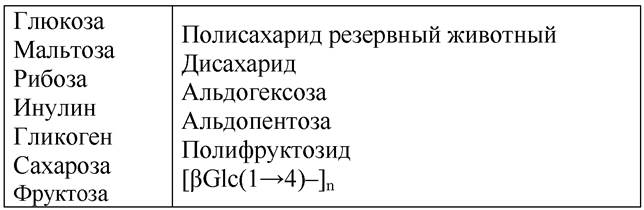
10. Match the corresponding concepts and their definitions by drawing a line:
Sucrose |
Plant storage polysaccharide |
Starch |
Disaccharide |
Amylopectin |
[-βGlс(1 —> 4) -]n. |
Amylose |
Ketohexose |
Cellulose |
[αGlс(1 —> 4)-]n |
Fructose |
Plant polyglucose |
Chitin |
Branched plant polyglucose |
Last update: 06/08/2026
Editorial and Educational Adaptation: This material has been compiled based on the primary/original source text. The project team performed an editorial review, corrected technical inaccuracies, structured sections, and adapted the content for an educational format.
What was processed:
- elimination of formatting defects (OCR errors, structural breaks, corrupted characters);
- editorial organization of content;
- standardization of terminology in accordance with academic sources;
- verification of factual statements against the original source text.
All mentions of the author, publication year, and origin of the primary text have been preserved in accordance with the source.