Vertebrate Zoology - V. M. Konstantinov 2011
Chordates
Terrestrial, or Tetrapod, Vertebrates — Amniotes
Class Birds — Subclass Neornithes — Superorder Neognathae — Order Passerines
Passeriformes is the largest order of birds, comprising over 5,000 species—more than half of all extant bird species—with over 300 species found in Russia. They exhibit a remarkable diversity in appearance and size. The smallest species, the goldcrest, weighs only 5–6 g, while larger representatives, such as the raven, can weigh 1,100–1,500 g. The vast majority of passerines inhabit forests and shrublands; terrestrial species are relatively few, and there are no truly aquatic passerines, although dippers are capable of running underwater. All species are altricial. Meticulous nest-building is a characteristic trait, and many species raise broods twice a year. Clutches typically contain 4–6 eggs, though some tit species lay up to 15–16, and certain Australian passerines lay just a single egg. Incubation lasts about two weeks (20 days for the raven, and 45 days for the lyrebird). The order includes insectivorous, herbivorous, and omnivorous birds.
The order Passeriformes is divided into several suborders.
Suboscines (Clamatores) are primitive forms with asymmetrically positioned vocal Muscles, numbering no more than two pairs. More than a thousand species inhabit primarily South America, parts of North America, and the tropics of the Eastern Hemisphere. Some arboreal species climb tree trunks much like our nuthatches.
Menurae (lyrebirds and scrub-birds) form a small group of species native to Australia. Their vocal cords are less developed than those of true songbirds. The principal family, the lyrebirds (Menuridae), bear a superficial resemblance to pheasants. They inhabit forests with dense undergrowth, live primarily on the ground, run swiftly, and fly only reluctantly.
Songbirds (Oscines, or Passares) constitute the main group of the order, uniting over two-thirds of all passerine species. Their vocal apparatus is well developed, featuring 5 to 7 pairs of vocal muscles. The lower tracheal rings fuse to form a bony syrinx. This suborder comprises approximately 4,000 species, grouped by various taxonomies into 52 to 70 families (representing about 1,000 genera).
The most common families among them include larks, swallows, wagtails, thrushes, warblers, Old World flycatchers, shrikes, starlings, corvids, birds of paradise, tits, nuthatches, sunbirds, finches, and weavers. The Red Data Book of Russia lists 10 species and subspecies of passerine birds.
THE ORIGIN OF Birds
The question of avian ORIGIN AND EVOLUTION is understood only in its broadest outlines. It is beyond doubt that their ancestors were ancient archosaurs, a group of archosaurian reptiles. Their divergence from the Lineage that ultimately led to birds dates back to the early Mesozoic (Triassic). Birds are most closely related to the order Thecodontia. At least 10 families of this order had a cosmopolitan distribution and gave rise to dinosaurs, crocodiles, and certain other reptile groups. Among them, the progressive group Pseudosuchia is of particular note. In recent decades, it has become clear that pseudosuchians are themselves heterogeneous: some were closely related to crocodiles, while others shared affinities with dinosaurs.
The Evolution of the lineage leading to birds apparently proceeded through an initial adaptation to tree-climbing, whereby the hind limbs served to support the body against a solid substrate, while the forelimbs adapted for climbing by grasping branches with the digits. Subsequently, The ability to leap from branch to branch developed. The scales covering the outer part of the forelimb elongated, forming feather precursors of the wing plane (Fig. 149).
It is worth recalling the remarkable ability of modern hoatzin chicks to climb trees using their wing claws. Tree-climbing drove an adaptation whereby the first digit of the hind limb became opposable to the remaining digits. A crucial milestone in avian evolution was the expansion of scale margins and their transformation into feathers, which first developed on the wings and tail before spreading across the entire body. The advent of feathers not only facilitated flight (initially, no doubt, merely gliding or fluttering), but also served a vital thermal insulation role, thereby largely underpinning avian homeothermy.
Class="center">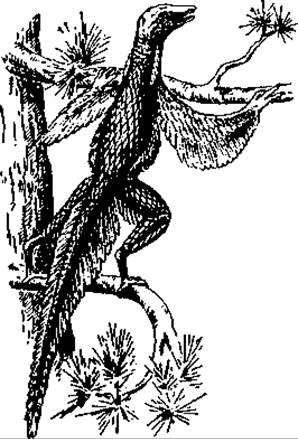
Fig. 149. Hypothetical avian ancestor

Fig. 150. Fossil Skeleton imprint of Archaeopteryx
The direct ancestors of birds have not yet been identified. In the last century, first a feather imprint and subsequently two relatively complete skeletons were discovered in Jurassic deposits. One of these served as the basis for the description of *Archaeopteryx lithographica* (Fig. 150). Currently, seven paleontological specimens of Archaeopteryx are known. Indisputably avian features in these animals include a plumage covering, forelimbs modified into wings, saber-shaped scapulae, clavicles fused into a furcula (wishbone), pelvic Structure, and the presence in the hind limbs of a fused tarsometatarsus (tarsus) along with a first digit opposable to the other three toes. Alongside these, Archaeopteryx retained many reptilian characteristics: the absence of a horny beak, the presence of Teeth, a long tail consisting of about 20 vertebrae, a narrow Sternum lacking a keel, and abdominal Ribs. The three digits of the forelimbs were well developed and bore claws; the pelvis articulated with the vertebrae rather than being fused as in modern birds (Fig. 151).
An analysis of Archaeopteryx anatomy provides a basis for inferring its lifestyle. These were arboreal, climbing animals capable of fluttering and gliding, but not true flight. This is evidenced by the delicate Skeleton of the forelimbs, free digits, a weak, keelless sternum, and the smooth surface of the wing bones, indicating the absence of powerful flight musculature. Judging by the pelvic structure, they laid small eggs—about one-quarter the size of chicken eggs. Weak teeth suggest a diet of insects or fruit. Their limb structure and pectoral/pelvic girdles indicate that they were adept tree-climbers.
No transitional links connecting Archaeopteryx to true flying birds have been found. In 1984, an international conference on Archaeopteryx was held in Eichstätt, Germany, and the conference proceedings were published in a standalone volume titled *The Beginnings of Birds* (1985). The consensus of many participants, as recorded in the resolution, was that Archaeopteryx should probably not be considered a direct ancestor of modern birds, but rather represents an evolutionary side branch.
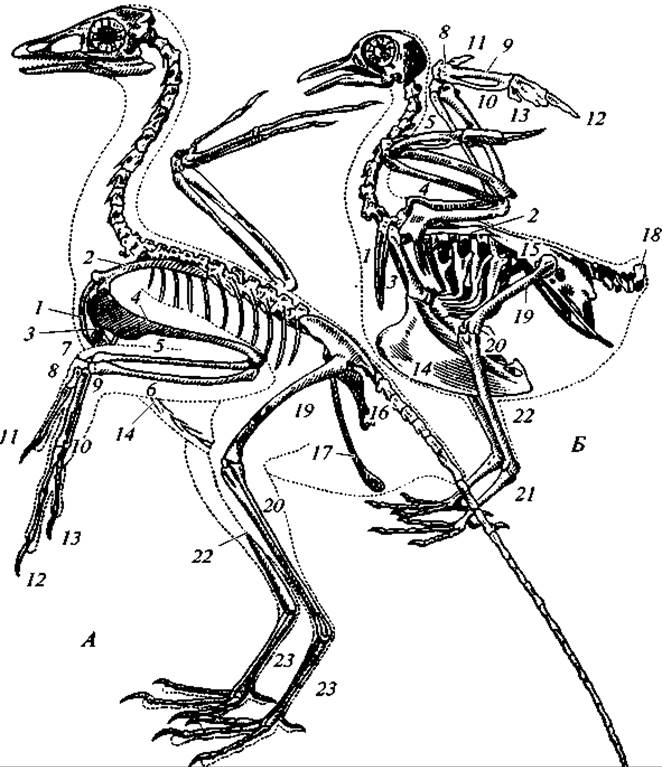
Fig. 151. Reconstructed skeleton of Archaeopteryx (A) and pigeon (B):
1 — furcula; 2 — scapula; 3 — coracoid; 4 — humerus; 5 — radius; 6 — ulna; 7 — carpals; 8, 9, 10 — metacarpals; 11, 12, 13 — Phalanges; 14 — sternum; 15 — ilium; 16 — ischium; 17 — pubis; 18 — pygostyle; 19 — Femur; 20 — Fibula; 21 — tarsometatarsus; 22 — tibiotarsus (Tibia + proximal Tarsal Bones); 23 — metatarsals
Recently, remains of numerous primitive birds have been discovered in Cretaceous, Jurassic, and Triassic deposits across the USA, Argentina, Spain, and Mongolia. Some specialists believe it is now possible to reconstruct the ancestor of modern birds. *Protoavis*, from the Triassic deposits of the USA, is widely regarded as the most plausible candidate. Resolving this question definitively, however, will require further research.
Two highly distinctive groups of birds are known from Cretaceous deposits: the Ichthyornithes (*Ichthyornis*, Fig. 152) and the Hesperornithes (*Hesperornis*, Fig. 153). Hesperornithids were flightless aquatic birds devoid of wings, their forelimbs reduced to mere humeral remnants. Their sternum lacked a keel. Leading an aquatic lifestyle, they propelled themselves by swimming with well-developed hind limbs, bearing a superficial resemblance to loons. Ichthyornithids, by contrast, were strong fliers, as indicated by their well-developed wing skeleton and large sternum with a high keel. Both groups possessed teeth in their jaws.
During the Tertiary period, fully typical birds closely resembling modern forms made their appearance. Toothed forms (*Odontopteryx*), systematically close to modern pelecaniforms, still occurred in the Eocene, alongside the earliest passerines, swifts, woodpeckers, rollers, shorebirds, and other modern groups. In the Oligocene, and particularly the Miocene, the COMPOSITION OF THE avifauna grew even closer to the present day, marked by a great Abundance of extant genera: eagle-owls, owls, flamingos, herons, lapwings, sandgrouse, loons, gulls, coots, geese, and others.
Summing up the above, we conclude that the ancestors of birds were likely early Mesozoic reptiles systematically allied to pseudosuchians. Initially, they were terrestrial animals moving exclusively on their hind limbs, while their forelimbs served a grasping function. Over time, their lifestyle shifted to become arboreal and climbing. The capacity for leaping, and subsequently gliding flight, began to evolve in correlation with the enlargement and elongation of epidermal scales. This gave rise to the ability to flutter from branch to branch and tree to tree, ultimately driving the evolution of true powered flight.
The ancestral environment for birds—at least for the vast majority of them—was the forest. This is further corroborated by the fact that the highest species richness and ecological diversity of birds are still found in forest habitats today.
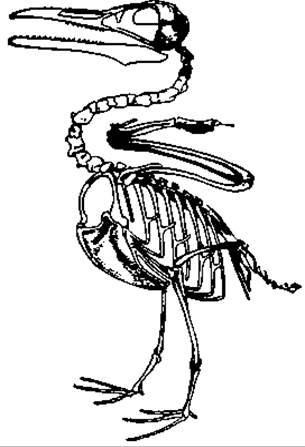
Fig. 152. Skeleton reconstruction of the ichthyornith (*Ichthyornis victor*)
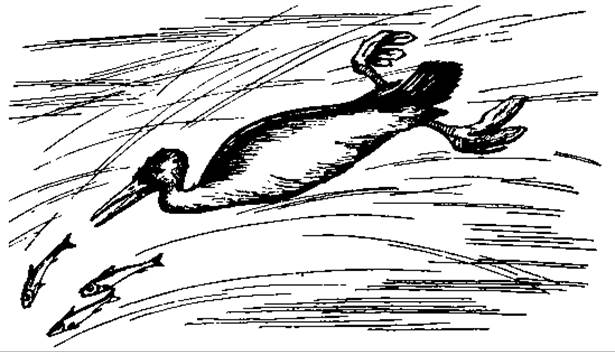
Fig. 153. Great grebe (*Hesperornis regalis*)
Simultaneously with adaptation to flight, many structural features underwent refinement. The Emergence of plumage served as a crucial prerequisite for homeothermy.
In Conclusion, let us present the general Classification of Birds:
Class Birds (Aves)
Subclass I. |
Ancient birds (Archaeornithes). This group includes *Archaeopteryx*. |
Subclass II. |
Fan-tailed, or True birds (Neornithes). |
Superorder 1. |
Toothed birds (Odontognathae). This includes Cretaceous birds such as *Ichthyornis* and *Hesperornis*. |
Superorder 2. |
Penguins (Impennes). |
Superorder 3. |
Ratites, or Ostriches (Ratitae). |
Superorder 4. |
Typical birds (Neognathae). |
Ecology and Behavior of Birds
Habitat conditions and general distribution. The Geographical Distribution of birds is exceptionally wide. They inhabit virtually the entire surface of the earth, extending northward to the pole. On Rudolf Island (Franz Josef Land, 81°5' N), the number of breeding bird species alone is 8. During the drift of the icebreaking steamer "Sedov" at 82° N, the little auk, Atlantic puffin, three species of gulls, and common guillemot were encountered. On Grant Land (between 82° and 83° N), the snowy owl, rock ptarmigan, snow bunting, several species of waders, Arctic tern, parasitic jaeger, common eider, long-tailed duck, and brent goose breed. Crews of drifting polar stations have repeatedly observed birds such as the snow bunting and gull in the North Pole region.
In the extreme south, as observations by Antarctic expeditions have shown, birds penetrate even into the interior regions of Antarctica.
The vertical distribution of birds is also quite significant. Cassowaries in New Guinea have been encountered at altitudes up to 2 thousand meters above sea level. Gulls and terns in highland Asia have been observed at altitudes up to 4.7 thousand meters above sea level, and vultures at 7 thousand meters. Even hummingbirds are distributed in places up to an altitude of 4–5 thousand meters. On the other hand, some seabirds (eider ducks, cormorants, penguins) dive to depths of up to 20 meters while foraging.
The wide distribution of birds and their presence in highly diverse, often unfavorable environmental conditions is understandable when considering A number of progressive adaptations in these animals. For instance, birds, the majority of which maintain a constant and high body Temperature, relatively easily tolerate various ambient temperature conditions. Account must also be taken of their advanced reproduction, in which eggs develop in nests under relatively constant temperature and humidity conditions.
Possessing the power of flight, birds easily overcome barriers impassable to most other vertebrates. Their ability to move rapidly allows them to colonize regions where survival is possible only during a few months of the year, and to fly from these areas—sometimes over vast distances—to places where conditions for life at that time of year are more favorable. The colonization of Arctic and boreal expanses is in the vast majority of cases associated with this biological trait of birds.
From what has been said, it certainly does not follow that the dispersal capabilities of birds are boundless. Although birds are able to endure diverse temperature conditions, the temperature factor plays a tremendous role in their lives. The northern limit of the distribution of insectivorous birds is ultimately determined by temperature conditions, because at low temperatures, insects—that is, their food—become scarce; furthermore, the short period of insect activity during the year does not provide the opportunity to feed nestlings. Temperature conditions determine the distribution of many plant species upon which birds depend as sources of food or cover. The indirect Effect of temperature on the lives of aquatic and wetland birds is also of great importance, since cold spells cause the freezing of soil and Water bodies where these species forage. Here it should be taken into account that low temperatures sharply increase the heat loss of a bird's body. For example, a sparrow-sized bird at 22°C emits 1339 kJ/h, whereas at 14°C it emits as much as 4166 kJ/h. Increased heat loss naturally results in an elevated demand for food, while the possibility of obtaining it during this time decreases.
Light conditions are of substantial importance in the lives of birds. This is evident from the fact that the vast majority of birds are strictly diurnal. A reduction in the duration of daylight makes the survival of many birds difficult because the opportunity to forage for the necessary amount of food is diminished. It must be taken into account that day length decreases in the autumn-winter period, when The Need for food increases due to lower temperatures. Consequently, the gap between the need for food and the ability to obtain it becomes so wide that many species are forced to migrate southward to conditions with longer daylight. Characteristically, birds migrating somewhat southward often do not leave their characteristic landscape zone, and although temperature conditions do not improve in the process, the longer daylight hours ensure the possibility of gathering the necessary amount of food there. This is largely associated with the winter Migrations of titmice, redpolls, and a number of other birds. On the other hand, There is a view that the spring migration of certain species northward for nesting is related to the relatively short day in tropical latitudes during summer.
The sensitivity of birds to light deficiency varies considerably among different species. Here are some data characterizing the critical minimum illuminance expressed in lux: chaffinch — 12, pied flycatcher — 4, cuckoo — 1, fieldfare — 0.1.
Excessive illumination has no negative significance. In the Far North, where the sun does not set for several months in summer, nocturnal bird species do not suffer hardships and easily switch to a diurnal lifestyle. These include the snowy owl, hawk owl, and boreal owl. Moreover, it is precisely the continuous day that enables a number of birds to raise their chicks in the Arctic during a very short summer. It has been noted that some species feed their chicks around the clock (guillemots), while others do so with a very short break in the middle of the night (passerines). As a result, the nestling development period in the Arctic is shorter than in the same species at more southern latitudes. The Development of young after fledging also apparently proceeds more rapidly.
Specialized nocturnal birds are relatively few. These include eagle owls, owls, scops owls, and kiwis. However, some nocturnal species hunt during the day when food is scarce, such as the short-eared owl and certain pygmy owls. There are also species with a crepuscular lifestyle, such as nightjars and certain herons.
Reproduction. The reproductive biology of birds is characterized by many progressive features: 1) most birds lay fertilized eggs in specially constructed protective structures—nests—rather than directly into the external environment, as is the case in almost all species of preceding classes; 2) eggs develop under METABOLISM/18.html">The Influence of heat provided by the parents' body, and consequently, the temperature conditions for embryonic development are created by the parent birds rather than depending on the vagaries of the weather, as is typical for the development of fish, amphibians, and reptiles; 3) parents protect their nests from predators in various ways; 4) hatched young are not left to the mercy of fate, unlike all preceding vertebrate groups; instead, the parents feed and guard them for an extended period. The survival of the young and the uninterrupted provision of food for them are immeasurably greater in birds than in lower classes.
The oviparous reproduction of birds has been brought to such a degree of perfection that in its ultimate outcome it is comparable to the viviparity of mammals. This can be judged by the negligible initial fecundity of birds (in terms of the number of eggs laid), which is several times lower than that of reptiles as a whole, and tens to hundreds of times lower compared to amphibians.
The reasons determining the absence of viviparity among birds apparently lie in The Nature of their ovulation. In viviparous (and ovoviviparous) fish, amphibians, reptiles, and mammals, eggs mature in significant numbers over a short period of time. In birds, however, eggs leave the Ovary at intervals of approximately 24–72 hours. This complicates the Fertilization of eggs (provided that the first matured and fertilized eggs remain in the reproductive tract). Furthermore, a large time interval between the fertilization of the first and last eggs would lead to a substantial difference in embryonic development, which in turn makes their simultaneous birth impossible.
Let us consider individual aspects of reproductive biology in more detail.
Birds reach sexual maturity at various times: small passerines at the age of 8–12 months; corvids, small gulls, ducks, and small diurnal raptors begin to breed in their second year of life; large gulls, loons, and eagles become sexually mature by the end of their third year of life.
By the time maturity is reached, many birds develop Sexual Dimorphism, which is expressed in body size, other morphological traits, and coloration. Males are generally larger than females. Exceptions are few species, such as cassowaries, kiwis, tinamous, and diurnal raptors. The coloration of males is brighter, especially in polygamous species (gallinaceous birds). However, there are exceptions. In our northern red-necked phalarope, the female has brighter coloration. In these birds, only the male incubates the eggs. Males are often characterized by horny growths—spurs—and longer tail feathers (pheasants, domestic fowl, grouse). There are significant differences in The structure of the vocal apparatus: in males, the syrinx is usually more differentiated and possesses more powerful vocal musculature.
Sexual dimorphism is absent in many (though a minority of) bird species, such as penguins, tubenoses, pelicans, loons, swifts, and several others. It is very weakly expressed in gulls, auks, rails, waders, and many passerines.
The relations between the sexes in the vast majority of species take the form of monogamy, i.e., The formation of pairs during the breeding season. However, pairs are formed for varying durations. For example, swans, large raptors, and storks form pairs for several years, and in some cases, possibly for life. Geese, certain ducks (such as the shelduck and ruddy shelduck), and many passerines live in pairs for a single breeding season; the pairs break up after the young are hatched and fledged. Many ducks form pairs only during the mating season prior to the onset of egg-laying; once the nest is built, the pairs separate. Some birds form pairs only for the duration of copulation, i.e., for a few minutes or hours. During the breeding season, the males of these species sometimes fertilize a very large number of females, as new pairs are formed daily. Essentially, this already represents a phenomenon of polygamy, more specifically polygyny (i.e., multiple females per male). Examples include black grouse, capercaillies, ruffs, and hummingbirds. True polygyny in natural conditions is characteristic of peacocks, and among domestic birds, chickens.
Finally, among the few birds where polygamy occurs, it takes the form of polyandry, i.e., multiple males per female. This has been proven for buttonquails (Turnices), phalaropes, and tinamous.
Pair formation, even if very brief, is accompanied in birds by distinctive behavior—courtship displays or lekking—which stimulates sexual arousal and prepares the birds for copulation. Lekking is manifested in the adoption of peculiar body postures, specific movements, the fluffing of plumage, the emission of characteristic sounds, and, in some (polygamous) birds, in fights. Our black grouse often gather in groups of several dozen on forest clearings for their leks while it is still night; the peak of the lek occurs in the early morning. The males walk on the ground with wings spread and tails fanned out. They sing in a peculiar way, producing a melodious bubbling sound, and during moments of greatest excitement emit a short, hissing "chu-fyh." Fierce fights break out among the males. The females sit on the edge of the clearing or in the bushes.
Snipes display in the air, alternately soaring upward and plunging steeply downward. During the descent, the snipe spreads its tail feathers, which vibrate as they encounter air currents. This produces a rather loud sound somewhat resembling the bleating of a sheep (Fig. 154). Loon males display on the water, swimming rapidly and churning it into foam. A displaying willow ptarmigan flies up from the ground into the air from time to "time, emitting a loud cackling sound. Vocalization is highly characteristic of birds during the mating season. Most sing using their vocal cords, but some utilize other Organs for this purpose as well. As already noted, the characteristic sound of a displaying snipe is produced by the vibration of its tail feathers. Woodpeckers "sing" with their beak: perching on a dry branch, the bird strikes the wood repeatedly, producing what is known as a drum roll.
The lekking of male birds (as well as Other forms of their behavior during the breeding period), in the words of the famous Russian physiologist I. P. Pavlov, is one of the most crucial external environmental stimuli—its "signals"—without which the physiological preparation and normal progression of the sexual cycle in females, and the realization of their innate reproductive instinct, are impossible. Bird courtship behavior is one of the striking manifestations of their Higher Nervous Activity.
Having formed pairs, birds build nests. Based on the pattern of nest distribution and their distance from one another, all birds are divided into two groups: 1) colonial and 2) solitary (or territorial). Colonial-nesting birds are in the minority, although they are found across various orders. Examples include guillemots, many gulls, cormorants, pelicans, spoonbills, glossy ibises, rooks, bank swallows, and a number of others. Colonial nesting is characteristic of species for which suitable nesting sites are scarce and distributed unevenly. As a rule, food resources near the nesting sites are very abundant. For instance, guillemots, which form large nesting colonies, have a relatively limited Selection of coastal cliff ledges suitable for nesting that are located adjacent to food-rich areas of the sea.
The colonial type of nesting has certain advantages over solitary nesting, primarily in terms of defense against predators. In this case, intense competition for nest-building sites usually does not arise.
Solitary-nesting birds have clearly defined individual territories where they place their nests and from which they gather food for themselves and their chicks. The nesting territories of different pairs are separated from one another to a greater or lesser extent, and in a number of species, they are defended by the owners against intrusion by other individuals of their own species, and sometimes even against individuals of other, biologically closely related species. The defense of nesting territory is characteristic of birds with a relatively weak flight capability, which cannot bring large portions of food to the nest at one time, and of species whose food sources are scattered. Defense of the territory is particularly evident in insectivorous passerines. Examples include the tree pipit, spotted flycatcher, European pied flycatcher, and others. The willow ptarmigan defends its nesting territory very energetically. The sizes of nesting territories vary significantly among different species. In the spotted flycatcher around Moscow, it is 6–10 thousand m2; in the pied flycatcher, 10–20 thousand m2; in the Lapland longspur, 20 thousand m2; and in the willow ptarmigan in the tundras of the European North, 30–70 thousand m2. The lookout posts of males defending their nesting territory in this species are located approximately 150–250 m apart from one another.
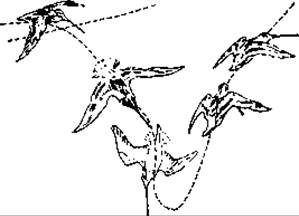
Fig. 154. Flight of a displaying snipe
There are a number of solitary-nesting bird species that do not defend their nesting territory or feeding grounds. Examples include river ducks, pigeons, and waders. Most of these are precocial birds that have no need to forage and bring food back to the nest.
Bird nests are extremely diverse. The Nature of the nest is determined by the biological CHARACTERISTICS OF THE bird species and depends on the ecological conditions of the nesting grounds. In the simplest case, the bird performs no construction work at all. Thus, guillemots lay a single egg on a small rock ledge. The nightjar lays 1–2 eggs in a depression in the soil without constructing any lining (Fig. 155). The little ringed plover and little terns lay their eggs in natural depressions in the sand. There is no lining in the nest, but the edges of the depression are lined with small pebbles to prevent the sand from sliding.
A negligible amount of building material is used by many waders and gallinaceous birds, which lay their eggs in soil depressions and construct a barely noticeable lining.
Primitively constructed nests are also found in birds that nest in trees. For instance, some pigeons build nests from just a few twigs that form a small platform. The nests of diurnal raptors likewise consist of a platform of branches of considerable thickness.
The majority of passerines build sophisticated nests with a deep cup. As building Materials, they use dry grass, Lichens, moss, animal Hair, and feathers. Thrushes line the inside of the nest with clay. In arboreal birds, the nest is usually placed in a fork of branches and skillfully camouflaged. The need for nest protection has led some birds to build closed, dome-shaped nests. Examples include the nests of leaf warblers, the long-tailed tit (Fig. 156), the penduline tit, and some tropical sunbirds. In the latter two cases, the nests are suspended from thin twigs, making them inaccessible to climbing predators. Peculiar nests are built by African weaverbirds.
The nesting colony of these birds takes the form of a huge umbrella hanging from a branch.
The nesting chambers of individual birds are located within this shared structure.
Many birds nest in tree cavities.
Woodpeckers hollow them out themselves in trees with decayed heartwood. Tits, starlings, wrynecks, some owls, parrots, and pigeons settle in cavities made by woodpeckers or in natural hollows in trees. South Asian hornbills seal the entrance to the cavity with clay, leaving only a small opening through which the male feeds the female sitting on the eggs (Fig. 157). Finally, a number of species dig burrows in the ground, at the end of which they arrange their nests. Birds dig burrows using their beaks and paws. Bank swallows, bee-eaters, kingfishers, and auklets nest in burrows.
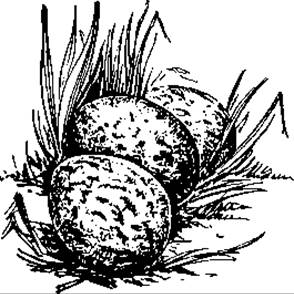
Fig. 155. Nightjar nest (eggs laid directly on the ground)
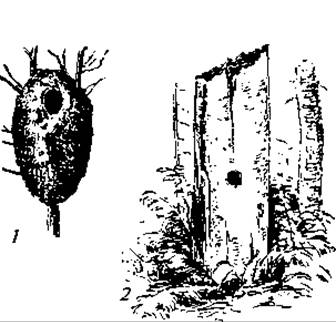
Fig. 156. Nests:
1 — long-tailed tit; 2 — willow tit
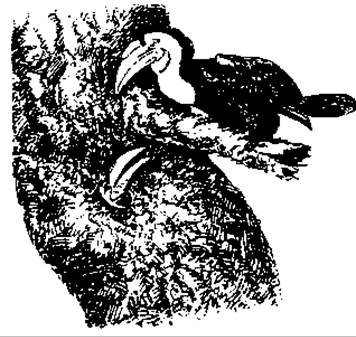
Fig. 157. Hornbill nest
A relatively stable temperature is usually maintained inside the nest (Table 9). Temperature is even more stable in underground burrows used as nests. While ambient temperatures may fluctuate by 10 °C, the temperature inside a sand martin's nest varies by only 1 °C.
The nesting habits of the megapodes (Megapodiidae) of New Guinea are quite unique. They select sandy, typically south-facing plots of ground, dig a large pit, and fill it with specially gathered vegetation that soon begins to rot. The birds remain near the nest for several months, repeatedly turning the material over to regulate its temperature. Once the internal temperature reaches about 29 °C, they dig a small chamber within the mound and lay their eggs. After the clutch is complete, the chamber is covered with a mixture of sand and decaying organic debris. The eggs develop without incubation, powered by solar heat absorbed by the soil and thermal energy generated by the decaying plant matter (Fig. 158).
Birds employ various strategies to protect their nests from predators. A primary defense is the camouflage coloration of the eggs, which is particularly common in solitary ground-nesting species. The eggs of nightjars, sandgrouse, and certain shorebirds are remarkably difficult to spot even from a distance of 1 — 2 m. Small passerines expertly disguise the nest itself by weaving moss, lichens, and other plants into its outer walls, making it look like a natural outgrowth on a tree or a thickened twig. For the sake of completeness, we should also note that nest protection is achieved by hanging nests from slender twigs (as penduline tits do) or by placing them inside tree cavities and burrows.
Table 9
Amplitude of temperature fluctuations in the nest and external environment, °C
Bird species |
External environment |
Nest |
||
Absolute temperature fluctuation range |
Amplitude |
Absolute temperature fluctuation range |
Amplitude |
|
Garden warbler |
13-25 |
12 |
21-31 |
10 |
Red-backed shrike |
11-25 |
14 |
23-30 |
7 |
Tree pipit |
9-29 |
20 |
28-32 |
4 |
Nightingale |
9-29 |
20 |
27-32 |
5 |
Certain anseriforms and passerines exhibit characteristic defensive associations. For instance, brent geese often nest in the immediate vicinity of peregrine falcon nests; the falcons aggressively defend their own territory, thereby inadvertently protecting the nearby geese as well. In desert regions, sparrows commonly build their nests within the bulky stick nests of steppe eagles or white-tailed eagles.
Compared to amphibians and reptiles, the number of eggs laid by birds is quite small. Clutch size varies from one to 25 eggs (occasionally slightly more). A single-egg clutch is characteristic of guillemots, some auklets, large gulls, and large diurnal raptors. Clutches of two are typical for most pigeons, hummingbirds, cranes, loons, certain nightjars, and auklets. Sandgrouse and most gulls usually lay three eggs. The standard clutch for shorebirds is four. Small raptors and many passerines lay 5 — 6 eggs. Anseriforms, gallinaceous birds, and some passerines lay the largest number of eggs. For example, the mallard's clutch ranges from 6 to 14 eggs, the gadwall's from 7 to 13, the grey partridge's from 12 to 26, and tits may lay 10 to 16 eggs.
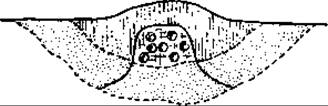
Fig. 158. Megapode "nest"
As a rule, precocial birds have larger clutches than altricial ones, which is linked to the greater independence of precocial chicks and the relative ease of raising them. However, there are exceptions: precocial gulls and shorebirds lay 3 — 4 eggs, whereas altricial passerines lay more than 10. Furthermore, within the same species, larger clutches are generally observed in individuals nesting at higher northern latitudes. This is presumably due to better feeding opportunities for nestlings during the long northern days. In addition, larger brood sizes in the north may serve an adaptive function for species preservation, offsetting the heavy mortality suffered during harsh autumn conditions and long migrations to the south.
Incubation is performed either by one of the parents or alternately by the female and male. Only females incubate in gallinaceous birds, most passerines, anseriforms, owls, and certain diurnal raptors and shorebirds. Only males incubate in ostriches and rheas, buttonquails, tinamous, and some shorebirds, such as our northern phalaropes. In other birds, both parents share incubation duties. For instance, in woodpeckers and African ostriches, the males incubate at night and the females by day, while in the feral rock dove, the male incubates During the first half of the day, and the female takes over for the second half and through the night.
The incubation period varies among species and is somewhat correlated with egg size. Precocial birds generally have slightly longer incubation periods than altricial ones. For small passerines, the incubation period is 9 — 12 days (up to 14 days); for the black woodpecker, 14; hooded crow, 17 — 19; common raven, 18 — 20; common kestrel, 28; Eurasian sparrowhawk, 31 — 35; and golden eagle, 44 days. Among precocial birds, it is 17 — 18 days for the common snipe; 20 — 21 for the quail; 21 for the grey partridge; 21 — 25 for the pheasant; 23 for the black grouse; 24 — 28 for dabbling ducks; 25 — 28 for geese; 30 — 40 for swans; and 42 days for the African ostrich. In domestic birds: chicken, 21 days; duck, 28; goose, 29 — 30; and turkey, 28 — 29 days. The degree of development of chicks at hatching varies significantly across species (Fig. 159). Accordingly, birds are divided into precocial and altricial (nidicolous) groups. In precocial birds, chicks hatch alert, downy, able to walk, and capable of finding and pecking at food on their own. This group comprises species that live primarily on the ground or in water: paleognaths, gallinaceous birds, bustards, rails, and waterfowl. In altricial birds, chicks are entirely or nearly naked, frequently blind, and utterly helpless. They remain in the nest for a long time and are fed by their parents. Typical altricial birds include passerines, woodpeckers, swifts, pigeons, hummingbirds, rollers, kingfishers, and pelecaniforms. Owls and diurnal raptors are also classified as altricial, but their chicks hatch more developed and downy, with diurnal raptor chicks even hatching with their eyes open.
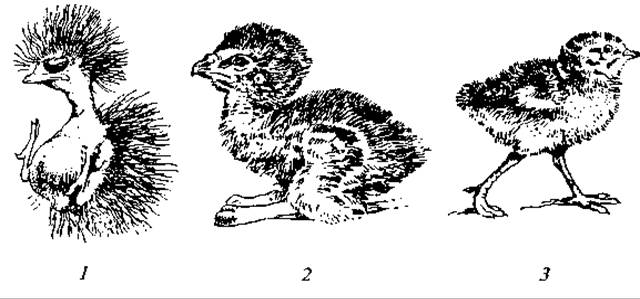
Fig. 159. Nestlings of various bird species at the same age:
1 — tree pipit; 2 — eastern imperial eagle; 3 — grey partridge
Gulls, auks, loons, grebes, and to some extent shorebirds occupy an intermediate position, though they are generally closer to precocial birds and are sometimes referred to as semi-precocial. For instance, gull chicks remain in the nest for some time and are fed by their parents, even though they are downy and capable of walking.
Certain structural differences have been noted between the eggs of altricial and precocial birds, specifically concerning The ratio of yolk to the rest of the egg. The minimum value of this ratio for altricial birds is 15 — 20%, whereas in precocial birds it is about 30%, and in some species reaches as high as 50%.
Lifespan. Reliable data on the lifespan of birds in the wild are still scarce. In most cases, researchers rely on indirect evidence, such as analyses of recovery data from banded birds (Table 10). These figures, of course, should not be confused with longevity records obtained from captive individuals.
Annual life cycle and bird migration. The life of birds, like that of other animals, is not a chaotic sequence of events, but is governed by a distinct biological rhythm. This rhythm is driven by seasonal changes in environmental conditions and the nature of the species' inherited adaptations. Consequently, the annual Life Cycle of birds consists of a series of biological periods during which a specific biological phenomenon takes precedence: mating, incubation, molt, and so forth. The Main phases of the annual biological cycle of birds are as follows:
1. Preparation for reproduction (like other major life processes) is governed by innate (hereditary) instincts that manifest fully under the regular influence of a complex set of environmental conditions. These conditions largely serve a signaling or predictive function (in the sense of I. P. Pavlov). Key stimuli for the sex drive include the regularly changing duration of daylight and other local and seasonal climatic features, the presence and behavior of a mate, the specific nesting landscape, the nest itself, and several other factors.
Table 10
Lifespan of certain bird species in the wild
Bird species |
Adult lifespan, years |
|
maximum |
average |
|
Guillemots |
14 |
4.7 |
Rook |
8 |
2.5 |
Grey heron |
15 |
2.5 |
Common starling |
12 |
1.9 |
Pintail |
17 |
1.8 |
Pied flycatcher |
7 |
1.5 |
Redstart |
— |
1.3 |
European robin |
— |
1.1 |
In the complex phenomena under examination in birds, higher nervous activity is of decisive importance. As I. P. Pavlov wrote, it represents "a vast branch of the physiology of The Nervous system, which primarily establishes the relationship not between individual PARTS OF THE Organism... but between the organism and its surrounding environment." Preparation for reproduction is outwardly manifested by birds dividing into pairs and occupying a specific territory for nesting. The duration of this period and the behavior vary among different bird species. Many passerine species remain in flocks during the non-breeding period; their breakup and pair formation occur in spring, shortly before reproduction begins. In such cases, nesting territories are usually initially claimed by males alone, which are subsequently joined by females. The occupation of a nesting territory and pair formation are accompanied by the males' singing. In waterfowl and birds of prey, pairs generally form during the wintering period, and these birds arrive at the nesting sites already paired. Among birds of prey, the male and female jointly occupy the nesting territory and remain together near the nest until the young fledge. The same applies to certain waterfowl (swans and, partly, geese), whereas among ducks, the nesting site is chosen solely by the female, who defends it from the male's intrusion.
The formation of pairs is accompanied by courtship displays, or lekking, as discussed in more detail earlier.
2. The brooding period is characterized by the following sequential phenomena: nest building, egg-laying, incubation, and feeding of the nestlings. The details of these events have been described previously. Here, we should note that during this period, birds lead a sedentary lifestyle. Their attachment to the nesting territory is particularly strong; longer flights by birds occur toward the end of this period, when feeding the nestlings requires gathering large amounts of food, leading the parents to utilize a wider area. A stationary mode of habitation is characteristic of birds during this time.
The choice of a specific habitat is determined primarily by its suitability for nest building and the availability of food for the nestlings.
3. The molting period proceeds quite differently among various bird species. In most cases, molting begins after reproduction. Furthermore, in species where brooding is carried out solely or predominantly by the female, the males molt earlier. Some species molt slowly, experiencing only a slight decrease in behavioral activity and without changing their home range, merely choosing more sheltered locations. Passerines, for instance, behave this way. In gallinaceous birds, molting occurs more synchronously; during this time, birds retreat into secluded spots and lead a secretive lifestyle. Finally, in waterfowl, molting is rapid and intense, causing the birds to lose the ability to fly and consequently frequenting very remote and secluded areas. In the first two cases, birds remain solitary; in the latter case, they gather in flocks, sometimes very large ones.
During the molting period, the majority of birds select habitats based on shelter rather than food availability. Consequently, nesting sites and molting sites are usually separate. Birds experience significant weight loss during the molt.
4. The period of preparation for winter is characterized by intensive feeding. Birds lose their attachment to a specific Location and begin to roam widely in search of food. Very many species gather into flocks and fly during the day (or night, depending on their daily activity patterns) to areas most abundant in food. Often, the areas where birds spend the day (or night) during this period differ significantly from their nesting sites. For example, many ducks and geese fly to feed in grain fields, while wood pigeons, starlings, rooks, and crows feed in open fields.
The choice of habitat and The behavior of birds during this period are subordinated to the need to obtain the maximum amount of food. Birds accumulate substantial fat reserves, which is an important adaptation for surviving the winter, and, in migratory birds, for the journey itself.
In autumn, some birds store food provisions. The spotted nutcracker extracts Siberian pine nuts and, packing them into its sublingual pouch, carries them some distance (sometimes several kilometers), burying them in portions of a few nuts in the soil or forest litter. A nutcracker can deposit up to 20,000–50,000 nuts over a 1-hectare area, totaling up to 60 kg. It utilizes only a fraction of these stores in winter (about 20–30%). Similarly, Eurasian jays cache oak acorns. In this case, too, the hidden food is not fully consumed in the winter. Up to 500 oak seedlings originating from acorns cached primarily by jays have been recorded per hectare.
Eurasian nuthatches hide maple and linden seeds as well as beechnuts in the crevices of tree bark. Tits (such as the willow tit, coal tit, and crested tit) also store food. They place spruce and pine seeds, juniper berries, and insects and their larvae in tree bark crevices and under lichen growths on trunks and branches. Plant-based foods form the foundation of these stores (about 80%). The entire local tit population utilizes this stored food. In some regions, tits meet approximately 50–60% of their winter food requirements from these provisions.
Boreal and sparrow owls store small rodents for the winter, usually placing them in tree cavities. The maximum known food cache consists of 86 vole carcasses.
There are several other examples of birds hoarding food for the winter, but overall, this type of adaptation is less common among them than in mammals, and there are no bird species that fully meet their winter nutritional needs through food caches.
5. Overwintering. The sharp deterioration of living conditions in winter essentially boils down to the greater or lesser difficulty in obtaining the necessary and increased amount of food compared to summer. This is due both to the decrease in food abundance (the disappearance of many insects, shedding of seeds, berries, etc.) and the reduced opportunity to access it due to shorter daylight hours, the establishment of snow cover, the freezing of most water bodies, and so on.
Torpor—the primary adaptation for surviving the winter among amphibians, reptiles, and partially mammals—is practically undeveloped in birds. Irregularly, during sharp cold snaps, swifts and swallows fall into a short-term torpor. A more regular, seasonal type of winter torpor occurs in some American nighthawks. Finally, certain hummingbird species inhabiting environments with wide daily temperature fluctuations enter nocturnal torpor. In this state, their body temperature drops to 17 — 21°C, and oxygen consumption decreases manifold, dropping to 0.1 ml/(g∙h) in some individuals.
The adaptation to surviving these unfavorable conditions is fundamentally based on bird movements in search of food. In this regard, one can observe a chain of sequential transitions ranging from simple wandering within the breeding range to complex migrations where birds travel thousands of kilometers away from their summer habitats.
6. Seasonal Migrations. Granivorous forest birds distributed across Russia, such as waxwings and bullfinches, intensify their wandering in winter, which is largely erratic in nature—meaning it is not tied to a distinct change in habitats and lacks a specific geographical direction. Resident species—such as willow ptarmigans in the forest zone, black grouse, and capercaillies—move within the same area in winter where they lived in summer, yet they exhibit fairly clear movements across different biotopes. In summer, willow ptarmigans inhabit forested sphagnum bogs, feeding on insects, berries, and seeds. In winter, as snow depth increases, this food becomes inaccessible, and the birds migrate to willow thickets and river valleys, where they feed mainly on willow buds and young twigs. In summer, capercaillies live in coniferous berry-rich forests and forage on the ground. In winter, they stay in pine forests, feeding on young shoots and pine needles. There is no geographical direction in the winter movements of these birds: they relocate over short distances, but unlike the first case, their nomadic behavior involves a distinct shift in biotopes.
Frequently, the same species reacts differently to the onset of winter in different parts of its range. For instance, the aforementioned willow ptarmigan wanders in the manner described above within the forest belt. In the tundra, it acts almost as a migratory bird, since the majority of individuals fly off to the southern parts of the tundra and forest-tundra at the beginning of winter. On the islands of the Arctic Ocean (such as the New Siberian Islands), however, it is a true migrant, with all individuals flying south for the winter.
The peregrine falcon is a migratory bird in the tundra and many regions of Central Asia, whereas Central Russian, Caucasian, and Crimean peregrines lead a sedentary or nomadic lifestyle. Finally, the hooded crow is sedentary only in the southern parts of its range; in the north, it is a true migrant. The same applies to many other bird species. In the British Isles, where winters are warm and mild thanks to the Gulf Stream, many birds are sedentary that would be migratory at the same latitude on the Eurasian continent. Examples include the northern lapwing, Eurasian woodcock, common starling, common wood pigeon, and several others.
The parts of the range from which birds depart for the winter are not strictly constant. In years with warm, low-snow winters, some birds remain to winter far to the north. For example, some ducks overwinter in the forest belt during years when parts of water bodies remain ice-free. Depending on the severity of the winter, the northern boundary of the wintering grounds for rooks, thrushes, and a number of other birds shifts. All this indicates that the primary cause of migrations is seasonal changes in living conditions, and that there is no sharp division of birds into strictly resident and migratory.
Table 11
Ratio of resident and migratory birds at different latitudes
(after A. V. Mikheev, 1981)
Regions |
Total number of species |
Of them, % |
|
resident and nomadic |
migratory |
||
Timan Tundra (68 — 69° N) |
58 |
7 |
93 |
Moscow Oblast (55 — 57° N) |
195 |
27 |
73 |
Turkmenistan (35 — 42° N) |
231 |
51 |
49 |
Anthropogenic transformation of natural landscapes significantly impacts bird migrations. This is especially evident in areas where anthropogenic landscapes occupy vast territories. Thus, in the north of Moscow Oblast, in open natural habitats (water bodies, bogs) and fields, all breeding birds are migratory; in coniferous and mixed forests, where food availability and shelter are better in winter, 57% of birds are migratory; while in human settlements, 38% of birds remain to overwinter (Table 11). Autumn departure of birds from towns and villages occurs later than from natural landscapes, and they return earlier than to the surrounding natural environments. The degree of sedentariness among synanthropic birds increases, alongside a rise in the population of crows, jackdaws, and rooks wintering in cities.
The degree of migratory behavior in birds is directly related to the severity of seasonal environmental changes. True migratory birds are virtually absent in the equatorial zone, whereas in the high latitudes of the Arctic, all species depart for the winter.
It has already been noted that dividing birds into resident and migratory is somewhat conventional, as certain species behave differently across various parts of their ranges. True migratory birds are generally defined as those that leave all or most of their breeding grounds for the winter, with wintering quarters often located far from the nesting area. For instance, the greater white-fronted goose breeds in the tundra and winters on the Mediterranean and Caspian Seas, as well as in China and India. Northern bean geese fly from the Russian tundra and taiga to India, China, and Southern Europe. The red-footed falcon leaves the southern half of Eastern Siberia for South Africa in winter. Some Arctic waders winter in Australia and New Zealand. A great many of our mid-latitude breeding species winter in the Mediterranean region and North Africa (Fig. 160). Major wintering grounds for waterfowl and marsh birds are situated in the southern part of the Caspian Sea. The wintering locations of individual species are quite specific and correspond to regions with favorable habitat conditions.

Fig. 160. Breeding and wintering ranges of waders

Fig. 161. Morphology/3.html">MAIN DIRECTIONS OF bird migration routes
The direction and nature of migration routes depend on the LOCATION OF THE breeding and wintering grounds, the Topography of the terrain lying between them, and the ecology of each specific bird species. During migration, birds follow conditions suitable for their survival. Consequently, the migration routes of waterfowl and semi-aquatic birds typically follow major river valleys, forming relatively narrow pathways. Seabirds fly along coastlines (Fig. 161). Land birds usually fly on a broad front, but when encountering geographical barriers where successful passage is restricted to specific locations, they funnel into these areas, causing the migration route to narrow. This often occurs, for example, at mountain passes. The narrowing of the migratory stream also happens when the wintering area is narrower in latitudinal extent than the breeding area. White storks from Central Europe winter in tropical Africa and India. Their main migration routes bypass the Mediterranean Sea and pass through Gibraltar, the Bosporus, and the Suez Isthmus. In spring, storks travel at a speed of 200 km per day.
The timing of departure and arrival depends on environmental conditions in the breeding area. All migratory birds leave for their wintering grounds when living conditions, primarily food availability, begin to deteriorate noticeably. Externally, this may be associated with falling temperatures, shorter daylight hours, and the like. Ducks often linger until water bodies freeze over. Certain waders, such as the jack snipe, depart around the time the bogs freeze. Some birds leave very early, when there would seemingly be no immediate need to depart. Our swifts are a prime example, yet even here the connection to external conditions is evident. Even a slight drop in temperature reduces The activity of flying insects. Swallows, which depart later, are able to catch not only insects flying in the air but also those they flush from tree crowns, bushes, grass, etc.
Arrival times are likewise tied to environmental conditions. Birds return to their native regions just in time for the development of conditions necessary for their survival—familiar food sources, shelter, and so on. For instance, canopy-dwelling orioles appear when the leaves unfold, warblers when littoral vegetation grows up, and swallows when aerial insects emerge, and so forth.
Naturally, arrival dates vary somewhat from year to year. The greatest variation is characteristic of early-arriving species that appear in the breeding area during periods of highly variable weather. Late-arriving birds have more fixed arrival schedules, appearing in the nesting grounds during periods of more stable weather. For example, the arrival date of starlings near Saint Petersburg varies within a 25-day range across years, whereas for the late-arriving cuckoo, it is only 11 days. This is also reflected in the duration of the arrival period: it is extended in early-arriving species and brief in late-arriving ones. In the Timan Tundra, the duration of the arrival period in days is as follows: bean goose — 36, swan — 30, horned lark — 23, red-throated pipit — 13, dunlin — 9.
The Nature and speed of migration differ between autumn and spring. In the former, birds fly slowly, often lingering for long periods in suitable locations. In spring, by contrast, migration proceeds very rapidly; birds make fewer stops along the way and stay for much shorter periods than in autumn. For example, the bar-tailed godwit covers a 12,000 km migration route in 2–3 months during autumn, but in only 1–1.5 months in spring. During spring migration, the stork covers 400 km per day, compared to just 150–200 km in autumn. The spring migration speed of the cuckoo averages 80 km per day, and for the rook, 50–60 km. They fly considerably slower in autumn. At the same time, it should be noted that the "cruising" flight speed of birds during migration is quite high. Thus, the hooded crow flies at 50 km/h, the starling averages 74, small passerines 50–60, ducks 72–97, geese 90–100, and swifts 170 km/h. Consequently, birds spend a negligible fraction of the day in straight-line flight; for small passerines this is 1–2 hours, for starlings (during autumn migration) 30–40 minutes, for rooks 20–30 minutes, and so on.
The most common flight altitude over the ocean for the vast majority of birds lies within 450–750 m, only occasionally exceeding 1,500 m, though in rare instances it reaches 3,000 m. Many birds fly at approximately this same altitude over land as well. Small passerines typically migrate during the day at altitudes below 100 m. Finally, geese migrating over the Himalayas have been observed at an altitude of 8,850 m above sea level.
The mechanism underlying the ability of birds to orient and navigate during migration has not yet been precisely determined. Older theories suggesting that migration routes are "memorized" are refuted by the fact that in several species, juveniles depart for wintering grounds long before adults. Direct field observations and experiments show that visual cues serve as the most crucial landmark during migration: for some species, these are primarily terrestrial landmarks in the form of landscape features; for others, orientation is based on the sun and the general illumination state of the sky; and for still others, it relies on the starry sky. Characteristically, many nocturnal migrants lose their orientation ability when the vault of heaven is densely obscured by a continuous layer of clouds, and even more so in thick fog. It is believed that orientation by ecological cues (optimal habitats) is an innate trait, whereas sun-star orientation is acquired during post-breeding wandering, when birds inadvertently observe THE POSITION OF The Sun as well. The difficulty in resolving the question of orientation and navigation stems from the fact that the positions of the sun and stars in the sky are constantly changing, which implies that birds must possess the ability to perceive these changes. Overall, the question of avian navigational abilities remains fully unresolved to this day.
The historically developed instinctive nature of higher nervous activity is vividly manifested in avian migratory behavior. Like other innate Reflexes (hereditary instincts), it is triggered by the combined impact of complex environmental stimuli: changes in food abundance and availability, shifts in the intensity and duration of daylight, the appearance or disappearance of green foliage, ice on water bodies, snow cover, etc. The migratory instinct is not fatal and is realized only when a specific combination of environmental pressures is present. Under altered natural conditions, it may fail to manifest entirely. The Eurasian blackbird—a typical migratory species—has become a resident bird in Western Europe due to synanthropization and urbanization.
The following experiment is highly illustrative in this regard. Mallards are resident in England and migratory in Finland. Eggs collected from English resident ducks were transported to Finland, where ducklings were hatched from them. In autumn, just like the local ducks, they flew off to wintering grounds, and the following spring a significant portion of them returned to Finland and nested there. Not a single duck returned to England. Consequently, the residency instinct was broken within a single generation, and the birds behaved in accordance with the conditions of their new habitat. An experiment in the opposite direction was conducted with brent geese. Having been translocated to England, they transformed from migratory to resident birds. Urbanized populations of mallards wintering in cities are also on the rise.
The historical causes of migration can only be elucidated in general terms. Thanks to the work of our scientists M. A. Menzbier, A. Y. Tugarinov, G. P. Dementiev, A. V. Miheev, and V. R. Dolnik, the fundamental principles can be formulated as follows. Bird migration as a biological adaptation to periodically recurring deteriorations in living conditions evolved very long ago, at any rate in pre-glacial times. Quaternary glaciation had a decisive influence on shaping the modern pattern of migration in the Northern Hemisphere. Glacial phenomena rendered vast expanses of the Northern Hemisphere uninhabitable for birds. At the same time, the unevenness of glaciation and the shifting of its centers created conditions in many places that were suitable for breeding, but not for year-round residency. The retreat of the glaciers triggered a powerful wave of bird dispersal into new areas that had become suitable for habitation. However, the birds colonizing these regions encountered environmental conditions where successful survival was possible only during the summer, i.e., the breeding period. Only a few species adapted to year-round resident existence as environmental conditions changed. The majority of birds were forced to abandon the territories they had occupied in autumn and retreat in the direction opposite to their dispersal.
At present, a number of cases are known demonstrating a certain degree of coincidence between migration routes and the historical dispersal paths of birds. Thus, the chestnut-eared bunting, which winters in Indochina, does not fly there directly from Western Europe, but rather via Eastern Europe and Siberia—the very route along which its westward dispersal took place. A similar pattern is characteristic of the green warbler, which winters in India. The departure of many seabirds (eider ducks, guillemots) along the coasts of the Eurasian mainland—initially westward or eastward, and only then southward—indicates the probable dispersal routes of these birds along the northern shores of Eurasia after the end of the glacial period. Of course, in a number of cases, migration routes may change and cease to correspond to dispersal paths, but these facts have a different Background and cannot disrupt the general framework of The history of how migration originated. In the tropics, migrations are linked to the wet and dry seasons of the year.
When studying bird migration, the banding method is of paramount importance. Captured birds (often nestlings) are fitted with an aluminum ring on the tarsus bearing a serial number and the conventional designation of the banding institution. In Russia, bird banding is overseen by the Central Ringing Bureau of the Russian Academy of Sciences. The rings bear the inscription: Moscow, series (letter) and number. Banding is carried out by nature reserves and other scientific organizations, individual nature enthusiasts, and hunters. All data on banded birds are sent to the Central Ringing Bureau. Approximately 1 million birds are banded worldwide each year (Fig. 162).
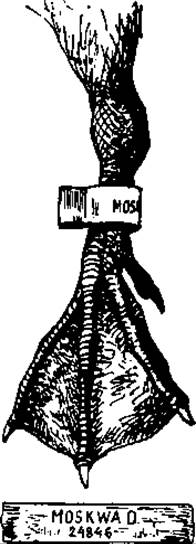
Fig. 162. Bird's leg with a fitted ring
Banding has made it possible to ascertain the routes and speeds of migration for certain species, wintering quarters, and The fidelity of birds returning from wintering grounds to their former nesting sites.
Practical significance, rational use, and conservation of birds
The Significance of Birds in human economic activity is immense and highly diverse. This is quite understandable considering the multiplicity of their species and ecological groups, general abundance, and ubiquitous distribution. Many species have been domesticated since ancient times, and The process of domestication continues today. Ever-new breeds of domestic birds are emerging, utilized for meat, eggs, down, or as homing or decorative birds. Wild species are of paramount importance for agriculture, forestry, fisheries, and hunting management, and partly for public health. The question of the economic importance of birds is complex and cannot be resolved mechanically. The same species may prove beneficial or harmful under different conditions. Beneficial to certain sectors of our economy, birds may cause damage to other economic fields.
The Significance of birds for agriculture and forestry. Birds are of particularly vital importance in field cultivation, truck farming, horticulture, and silviculture, where their role primarily boils down to the mass destruction of invertebrates harmful to agriculture and forestry. Here is a list of the main species that act as destroyers of harmful forest insects: tits (great, willow, crested, etc.), Eurasian treecreeper, Eurasian nuthatch, various warblers, flycatchers, leaf warblers, goldcrest, wren, various thrushes, redstart, European robin, cuckoo, golden oriole, European nightjar, wryneck, a number of woodpeckers, Eurasian siskin, Eurasian magpie, Eurasian jay, and others. In fields and meadows, harmful insects are destroyed by the common starling, rosy starling, various wagtails, buntings, larks, pipits, European roller, hoopoe, common and lesser kestrels, red-footed falcon, rook, and in some places gulls and other birds.
The rosy starling, distributed in Central Asia, Kazakhstan, Ciscaptia, the Lower Volga region, and in some years in Ukraine, preys mainly on various species of locusts. An adult bird destroys several hundred insects per day. According to R. N. Meklenburtsev, in Central Asia each large colony of rosy starlings destroys about 100,000 locusts during the nesting season (1 month). However, alongside this, it must be taken into account that after feeding their nestlings, starlings descend upon grapes and sweet cherries, thereby causing substantial damage to agriculture. A. N. Formozov observed locust destruction in Kazakhstan by the lesser kestrel. According to his data, the little bustard consumes up to 250 individual locusts during a single morning feeding. In Western Siberia and Kazakhstan, thousands of gulls, ducks, northern lapwings, and rooks fly out to the fields and feed on locusts. According to M. D. Zverev, common starlings bring great benefits in the vicinity of Novosibirsk. Over five days, the nestlings of just a single nest received 796 cockchafers, 160 of their larvae, 26 click beetles, and 12 of their larvae. In total, over the nesting period, a single brood of starlings destroyed at least 7,800 cockchafers and their larvae. According to N. I. Korotnev, the cuckoo sometimes destroys up to a hundred caterpillars per hour; the common redstart eats up to a million insects over the summer, and the goldcrest consumes up to four million insects annually. Woodpeckers destroy a multitude of forest pests. Hundreds of specimens of gypsy moth caterpillars, weevil larvae and adults, bark beetles, leaf beetles, and others have been found in their stomachs.
A single brood of pied flycatchers destroys tens of thousands of insects over the course of a summer, a significant portion of which are forest pests. A great tit catches several thousand insects within a single 24-hour period. In the coastal steppes of southern Ukraine, gulls provide substantial ecological benefits. Research has shown that the 60,000 gulls and terns nesting within the Black Sea Nature Reserve destroy up to 12 tons of insects annually. They gather this staggering quantity of insects from a coastal steppe area of roughly 4,000 km2.
Under certain conditions, rooks are undeniably beneficial as they destroy wireworms, weevils, darkling beetles, cutworm caterpillars, and other agricultural pests. In some regions, rooks eradicate large numbers of locusts. According to some observations, a flock of rooks cleared a 6-hectare field of pests in just one day. On the other hand, rooks can damage corn sprouts and consume sown grain. Many species also feed on weed seeds; unfortunately, this aspect of avian behavior remains relatively understudied.
Evaluating the economic Significance of the spotted nutcracker (Nucifraga caryocatactes) is complex. It consumes immense quantities of pine nuts, which are harvested commercially in many parts of Siberia. At the same time, by caching nuts in the soil or under moss, the nutcracker acts as one of the most effective agents of pine tree dispersal. The regeneration of pine forests on burned areas is almost always linked to this specific ecological activity of the nutcracker.
According to observations by N. F. Reimers in Eastern Siberia, simultaneous counts in the forest litter and On the surface revealed between 75,000 and 250,000 pine nuts per hectare buried or dropped by nutcrackers. It has been established that each year this bird "sows" an average of about 38,000 pine nuts per hectare.
Plant dispersal is also carried out by other bird species. Jays predominantly transport oak acorns and hazelnuts, burying them in the ground as food reserves. For instance, in the Voronezh Region, 522 oak seedlings were discovered in a pine plantation located several kilometers away from the nearest fruiting oaks. Thrushes, waxwings, magpies, warblers, black grouse, hazel grouse, and many other birds play a crucial role in the propagation of plants such as rowan, spindle tree, blackthorn, raspberries, blackberries, blueberries, and lingonberries. Passing through the avian digestive tract, the seeds of these plants not only retain their germination capacity but often have it enhanced. Birds seed clear-cuts, burned forests, and other barren areas, and without their involvement, the development of many landscapes would proceed in a different, far less advantageous direction for humanity.
Birds render significant service to agriculture by exterminating small rodents. Many species of diurnal birds of prey and owls feed predominantly on these small mammals, destroying them in vast numbers. These include the common buzzard, long-legged buzzard, rough-legged buzzard, various harriers (except the marsh harrier), steppe eagle, upland buzzard, common and steppe kestrels, red-footed falcon, and partially the saker falcon, while nocturnal raptors include the short-eared owl, long-eared owl, tawny owl, and barn owl. In years when rodent populations are low, many of these birds switch to alternative food sources (insects, reptiles, birds), but during rodent outbreaks—when these mammals pose a severe threat to agriculture—they subsist almost entirely on them.
During years of high rodent abundance, common kestrel diets consist of up to 90% rodents. Parents bring 10–15 voles to their nestlings daily (V. M. Galushin, 1980). M. D. Zverev calculated that over the nestling-rearing period—roughly a month—a pair of adult birds destroys 180 susliks, 90 mouse-like rodents, and only a few small birds. According to I. G. Pidoplichka, a single barn owl in Ukraine catches between 85 and 128 small mammals per month. The Role of raptors in rodent control in the Northern Caucasus was investigated by N. I. Kalabukhov and V. V. Raevsky, who conducted large-scale banding of house mice (Mus musculus hortulanus), and subsequently collected bird pellets to tally the bands of the captured and eaten mice. They found that raptors destroyed between 1.4% and 1.6% of the total banded rodent population daily. In approximately one month, all the banded mice had been eliminated by the birds.
During peak rodent years, small rodents are hunted not only by birds of prey but also by crows, magpies, rooks, jays, gulls, herons, and storks. I. D. Ivanenko found the remains of 349 susliks, 1,288 voles, and 28 mice in 1120 Pallas's gull pellets in southern Ukraine.
In years with low mouse-like rodent populations, D. I. Aspisov found their remains in only 3.4% of the stomachs of hooded crows collected in August and September in Tatarstan. Conversely, near Moscow during rodent peak years, they comprise 100% of the hooded crow's diet.
The intensity of pest control by insectivorous and predatory birds is greatly amplified by their ability to rapidly concentrate in areas of mass pest outbreaks. For instance, it has been observed that the distribution of rosy starlings is largely determined by the location of mass locust swarms. S. A. Shilova established that in pine stands infested with the pine-tree lappet moth, the population density of the great spotted woodpecker is four times higher than in uninfested pine forests.
Even the few examples of avian utility cited above demonstrate the urgent need for their conservation and attraction into anthropogenic landscapes. It is especially important to attract birds during their nesting season. At this time, they destroy the greatest number of insect pests, as the adult birds are joined by a multitude of voracious nestlings; furthermore, even seed-eating birds feed their young on insects.
Birds primarily target the most mobile—and therefore the most dangerous—individuals among rodents and insect pests. Research conducted in recent decades has demonstrated that, due to dietary specialization, the greatest success in using insectivorous birds for pest management comes from establishing a species-rich complex specifically attracted by human efforts (A. A. Inozemtsev, 1978; K. N. Blagosklonov, 1991).
It has been established that the population density of many bird species during the breeding season is limited by the availability of suitable nesting sites. This is particularly true for cavity-nesting birds, whose natural "housing stock" is often restricted, preventing them from fully utilizing available food resources. Thus, creating additional nesting habitats for birds is a pressing task. It is advisable to hang artificial nest boxes made from clean, non-resinous boards. The entrance hole should ideally be positioned in the upper third of the box to prevent cats from reaching the nest with their paws. The removable roof design is recommended to facilitate inspection and cleaning. Nest boxes for small birds should be placed at a height of 3–5 m above the ground, while those for starlings, rollers, and kestrels should be at 5–8 m. The box must be securely attached to the tree to prevent excessive swaying in the wind (Fig. 163). Installation should take place in spring, before the birds arrive. The dimensions of the nest boxes can vary depending on the size of the target species (Table 12).
Often, birds prefer to settle not in artificial wooden boxes, but in log nests—sections of hollowed-out tree trunks. Studies have shown high efficacy in attracting insectivorous birds through the installation of such artificial nesting sites.
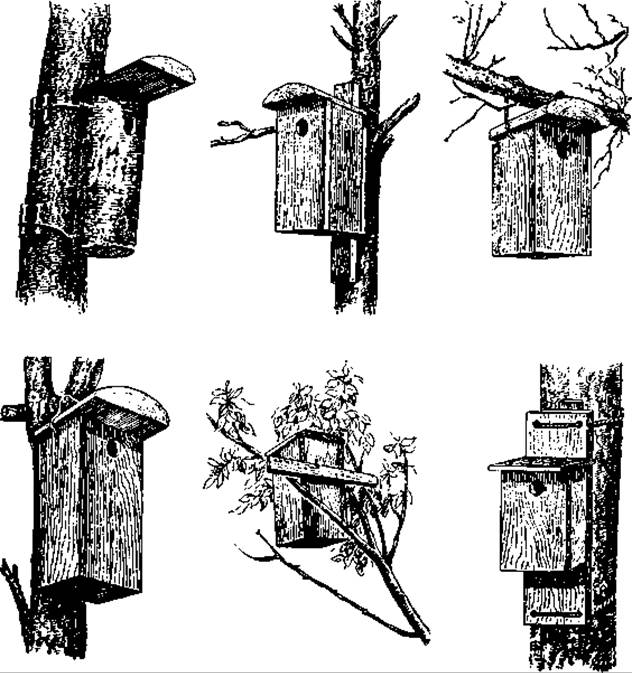
Fig. 163. Artificial nesting sites for birds
A. V. Mikheev found that in one district near Moscow, the average natural nesting density of the spotted flycatcher was 1–2 pairs per hectare; with the deployment of artificial nest boxes, this increased to 4–6 pairs per hectare. In the Tula Zaseki forest tract, G. L. Likhachev successfully raised the nesting density of the pied flycatcher from 1 to 2.7 pairs per hectare, and in the Oka-Terrace Nature Reserve, from 0.6 to 16.2 pairs per hectare.
Unique challenges arise when attracting birds to shelterbelts and newly created reservoirs. The spontaneous formation of avifauna in shelterbelts proceeds extremely slowly due to the remarkable conservatism of migratory birds, which typically return to breed in the exact locations where they previously nested or were born.
Artificial colonization of newly formed habitats by birds is therefore necessary. Recent experiments have demonstrated the practical viability of such measures. These have been carried out by transferring broods of chicks with their parents, or eggs with brooding birds (K. N. Благосклонов / Blagosklonov, 1991). It is possible to significantly enlarge such artificial broods in pied flycatchers, for instance, up to 20–25 nestlings per foster parent.
Observations have shown that birds raised in a new location and migrating south from there will partially return the following spring to their new homeland. Such experiments have been conducted in several of our nature reserves involving insectivorous passerines, geese, and ducks.
Table 12
Dimensions of artificial nesting sites
(after K. N. Blagosklonov, 1991)
Nest box dimensions, cm |
Types of nest boxes |
|||
small titmouse box |
starling box |
jackdaw box |
standard titmouse box |
|
Internal distance between walls |
9-10 |
14-15 |
16-18 |
12-14 |
Depth from the entrance hole |
15 |
22 |
22 |
17 |
Distance from the roof to the upper edge of the entrance |
4 |
4 |
5 |
3 |
Diameter of the entrance hole |
3,0 |
4,8-5,0 |
7-9 |
3,0-3,5 |
Wall thickness |
2,0-2,5 |
2-2,5 |
2-2,5 |
2-2,5 |
Occupying species |
Crested tit, pied flycatcher |
Starling, hoopoe, house sparrow, swift, owls, great tit |
Jackdaw, European roller, hoopoe, kestrel, red-footed falcon |
Pied flycatcher, great tit, redstart, Eurasian wryneck, tree sparrow |
When discussing the practical importance of birds, one must not forget that certain species, under specific geographical and economic conditions, can cause damage. For example, in parts of southern Kazakhstan, the house sparrow and Spanish sparrow damage grain and oilseed crops, with their colonies often comprising many thousands of nests.
Birds and aviation. A specific problem has emerged for specialists with the development of aviation, particularly around airfields located on islands. Birds nesting or foraging near airfields frequently collide with landing or taking off aircraft. Bird strikes on windshields and ingestion by jet engines are especially dangerous. Research shows that accidents most commonly occur at altitudes up to 600 m, i.e., during aircraft takeoff and landing, although collisions have been recorded at an altitude of 6,300 m. Seagulls, pigeons, migratory waterfowl, diurnal raptors, and large flocks of rooks, starlings, and waders pose the greatest threat to aircraft. According to V. D. Ilyichev et al. (2007), approximately 4,000 aircraft collide with birds annually, resulting in millions of dollars in damages. To prevent aircraft collisions at airfields, attempts are made to use tape recordings of frightened bird calls, attract a limited number of birds of prey to airfields, and implement other measures.
The significance of birds of prey. The vast majority of diurnal and nocturnal birds of prey are highly beneficial due to their destruction of mouse-like rodents (buzzards, small falcons, harriers with the exception of the marsh harrier, most owls, etc.).
The significance of birds of prey for game management has been demonstrated by special studies conducted by V. M. Galushin (1970, 1980). He established that a relatively small percentage of game birds—almost exclusively chicks and juveniles—are destroyed by raptors in a game management area in Vladimir Oblast over the summer (Table 13).
When determining one's attitude toward birds of prey, one must remember that they are magnificent creations of nature. A number of species—the golden eagle, peregrine falcon, gyrfalcon, saker falcon, and hawks—are used as falconry birds for commercial and exciting sports hunting. For example, in Central Asia, experienced hunters using trained golden eagles harvest up to 50–60 foxes per season, and occasionally even use them to catch wolves. Falconry is currently being revived in Russia. Specially trained saker falcons and northern goshawks are most commonly used for this purpose.
In many countries worldwide, the majority of birds of prey are under strict protection alongside the most valuable beneficial species. The Red Data Book of Russia includes rare noble falcons: the gyrfalcon, saker falcon, and peregrine falcon; as well as large eagles: the steppe eagle, imperial eagle, white-tailed eagle, bearded vulture, and others.
Table 13
Percentage of birds taken by various species of predators
Species of prey |
Buzzard (17 — 23 pairs) |
Northern goshawk (2 pairs) |
Total |
Hazel grouse |
0,4-4,8 |
4,2-5,2 |
5,4-9,0 |
Black grouse |
0-2,1 |
1,6-2,1 |
1,7-3,7 |
Capercaillie |
0 |
1,4-2,0 |
Г4-2,0 |
Game birds. Russia holds one of the leading positions in the world in terms of game bird reserves. The country's fauna includes approximately 150 species of game birds. The most important are birds of the order Anseriformes (48 species) and Galliformes (20 species). In addition, hunted species include rails (primarily the Eurasian coot), waders, alcids, and several others. Pheasants, partridges, and black grouse are also hunted. Forest game, including the capercaillie, black grouse, and hazel grouse, holds significant hunting importance.
Although absolute reserves of feathered game in Russia remain large, tracking hunting results and harvest yields clearly indicates a noticeable decline in local resources. An important reason for this is the alteration of natural environments due to economic activities: logging, the drainage of swamps and small water bodies, land cultivation, the emergence of new settlements, and others. Unabated excessive hunting and violations of hunting regulations undoubtedly play a negative role as well.
All of the above urgently calls for a comprehensive set of measures aimed at preserving and increasing game resources. Among these, bird conservation occupies an important place, especially in breeding grounds, migratory routes, and wintering areas. A large network of nature reserves (zapovedniks) located across various geographical zones serves this purpose in our country. Examples include the Kandalaksha Nature Reserve (on the White and Barents Seas), the Darwin Nature Reserve (Rybinsk Reservoir), the Astrakhan Nature Reserve (Volga delta), and several others. Wildlife refuges (zakazniks) also play a significant role in bird protection.
Game breeding is of exceptionally high importance for modern game management. It is carried out by introducing and releasing birds into hunting grounds or through artificial breeding on-site using incubators. The following example illustrates the scale of reintroduction efforts: in 1971, 16,470 pheasants and 5,415 ducks were released in Russia (A. M. Kolosov et al., 1975).
For incubator breeding and subsequent release into habitats, the pheasant and grey partridge have proven to be the most promising, alongside the mallard among waterfowl. Experimental work on breeding capercaillies and black grouse is currently underway.
The population sizes of certain formerly harvested species are now so small that hunting them is prohibited, and they are listed in the Red Data Book of Russia. Examples include the red-breasted goose, bar-headed goose, flamingo, lesser white-fronted goose (Note: or lesser swan / Bewick's swan based on context, but keeping exact Translation style: lesser swan), mandarin duck, Dalmatian and great white pelicans, snowcocks, and the Siberian crane (sterkh), among others.
The dire situation of many bird populations, caused by human activity, is a source of well-founded concern. For instance, out of 748 bird species in Russia, 118 are included in the RF Red Data Book (2001). Under the Law on Environmental Protection, their commercial use is prohibited. The protection of 92 bird species is mandated by international agreements between the Russian Federation and the USA, Japan, North Korea, and India. In Russia, birds are traditionally protected in specially protected natural areas (SPNAs): nature reserves, wildlife refuges, and natural monuments. Effective measures to restore the numbers of declining bird populations are being undertaken in breeding centers for birds of prey, bustards, and cranes. Thus far, the measures taken to protect valuable, rare, and declining bird species are clearly insufficient. Protecting and restoring declining wild bird populations requires substantial economic expenditure, long-term and consistent efforts by specialists, and effective conservation measures.
Domestic birds. The taming and domestication of birds in most cases date back to antiquity and were carried out by various peoples, sometimes for different purposes. The ancestor of all domestic chicken breeds is a single species—the red junglefowl (Gallus gallus), native to the forests of India, Burma, and the Malay Archipelago. Its domestication occurred several millennia BC, originally in India. Chickens were brought to Europe several centuries BC. Turkeys were also domesticated long before our era by Mexican Indians. The ancestral species was the wild turkey (Meleagris gallopavo), which inhabited the forests of southern North America.
Several centuries ago in Japan, a local subspecies of the quail (Coturnix cotumix japonica) was domesticated. Today, it is bred in a number of European and American countries. These quail are also bred in Russia, laying up to 300 eggs per year.
Domestic ducks descend from a single wild species—the mallard (Anas platyrhynchos), which is widely distributed across all countries of the Northern Hemisphere. Its domestication was independently carried out by various ethnic groups. In Europe, domestic ducks have been known since the early 1st century AD. Domestic geese originate from two wild species: the greylag goose (Anser anser) and the swan goose (A. cygnoides). The former is widespread in Europe and Siberia, while the latter is found in southern Siberia and inner Asia; the so-called Chinese domestic geese descend from the swan goose.
Numerous breeds of domestic pigeons originate from the wild rock dove (Columba livia). There are three main directions in pigeon breeding and, accordingly, three groups of pigeon breeds: fancy (decorative), homing (carrier), and utility (meat). Fancy pigeons are distinguished by variegated coloration, unique body shapes, and the development of ornamental feathers. Examples include pouters, trumpeters, tumblers, crested pigeons, and others.
Utility (meat) pigeon breeds, such as the King and giant breeds, are characterized by large sizes and high body weights (600–900 g). A good breeding female produces 14–16 young per year.
Homing pigeons have been used for communication since ancient times and retain their significance today. Pigeons are trained to operate in specific areas because they return to a particular location guided by visual orientation and memory. For one-way flights, their range is 150–200 km, and occasionally up to 1,000 km. For two-way communication, the usual flight range was 50–100 km, with a flight speed of 60–70 km/h at an altitude of 100–150 m above the ground.
Last update: 13/08/2026
Editorial and Educational Adaptation: This material has been compiled based on the primary/original source text. The project team performed an editorial review, corrected technical inaccuracies, structured sections, and adapted the content for an educational format.
What was processed:
- elimination of formatting defects (OCR errors, structural breaks, corrupted characters);
- editorial organization of content;
- standardization of terminology in accordance with academic sources;
- verification of factual statements against the original source text.
All mentions of the author, publication year, and origin of the primary text have been preserved in accordance with the source.