MODERN BOTANY - P. RAVEN - 1990
SECTION V. STRUCTURE AND DEVELOPMENT OF THE ANGIOSPERM BODY
CHAPTER 23. SECONDARY GROWTH
In many plants (for example, most monocotyledons and some herbaceous dicotyledons, such as buttercups), growth of a given body part ceases upon the completion of primary tissue differentiation. The other extreme is represented by gymnosperms and woody dicotyledons, whose roots and stems continue to increase in diameter even in regions that have completed elongation (Fig. 23-1). This increase in thickness, or girth, known as Secondary Growth, is the result of The activity of two lateral Meristems: the vascular cambium and the cork cambium.
Class="center">Fig. 23-1. A solitary shagbark hickory tree (Carya ovata) in winter. Plants can attain such large sizes due to the ability of their roots and stems to expand in cross-section, i.e., their secondary growth. Most of the resulting tissue is secondary xylem, or wood, which not only conducts Water and minerals but also provides great structural strength to roots and stems

In herbs, i.e., herbaceous plants, secondary growth of shoots is slight or entirely absent. In temperate zones, such a SHOOT or the entire plant lives for only a single season, depending on the species. Woody plants, i.e., trees and shrubs, are perennials. At the beginning of each growing season, their primary growth resumes, and the lateral meristems resume their activity, adding new Tissues to the older PARTS OF THE body. Although most monocotyledons lack secondary growth, some of them (such as palms) form thick stems through primary growth alone (see p. 45).
Plants are often classified according to their seasonal growth cycles into annuals, biennials, and perennials. In annuals, which include many weeds, wild and garden "flowers," and vegetables, the entire development from seed through the vegetative phase to flowering and new seed production is completed within a single growing season lasting sometimes only a few weeks. Between these periods, the plant exists as a dormant seed.
Biennials develop from seed germination to The formation of new seeds over the course of two growing seasons. The first season culminates in the formation of a ROOT, a short stem, and a rosette of leaves near the soil surface. During the second season, the plant flowers, fruits, produces seeds, and, having completed its life cycle, dies. In temperate zones, annuals and biennials rarely become woody, although limited secondary growth may occur in their stems and roots.
Perennials are plants with vegetative parts that live and grow for many years. Herbaceous perennials survive unfavorable periods in the form of dormant underground Organs—roots, rhizomes, bulbs, and tubers. Woody perennials, which include lianas, shrubs, and trees, retain their above-ground parts under such conditions, though growth usually ceases. They flower only upon reaching maturity, which may take many years. For example, the horse chestnut (Aesculus hippocastanum) does not flower until it is 25 years old, whereas Puya raimondii, a very large pineapple relative (bromeliad family) from the Andes reaching up to 10 m in height, does not flower until it is 150 years old. Many woody species are deciduous, meaning they shed all their leaves simultaneously and develop new ones from buds when favorable conditions return. In evergreen trees and shrubs, leaves also fall and are replaced, but not all at once.
The Cambium
Unlike the multi-faceted initials of apical meristems, which contain dense Cytoplasm and large nuclei, the meristematic Cells of the cambium are strongly vacuolated. Two morphological forms are recognized: vertically elongated fusiform initials and horizontally elongated or partly square ray initials. The length of the former greatly exceeds their width, and in transverse section, they appear flattened like bricks. In the eastern white pine (Pinus strobus), their length averages 3.2 mm; in the apple tree (Malus sylvestris), 0.53 mm (Fig. 23-2); and in the black locust (Robinia pseudo-acacia), 0.17 mm (Fig. 23-3).
Fig. 23-2. Tangential section of the apple cambium (Malus sylvestris). Such sections are cut at right angles to the rays, which appear in cross-section. A cambium like the one shown here, with fusiform initials not arranged in horizontal rows in tangential sections, is termed non-storied (non-layered)
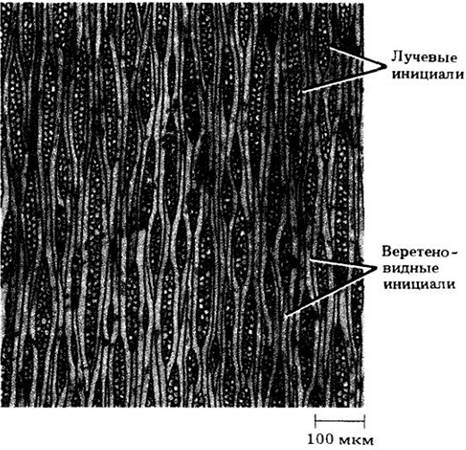
Fig. 23-3. Tangential section of the black locust cambium (Robinia pseudo-acacia). In this cambium, the fusiform initials are arranged in horizontal rows on tangential sections. It is termed storied (layered)

Secondary xylem and phloem are formed As a result of periclinal divisions of cambial initials and their derivatives. In other words, The Cell plates forming between them run parallel to The surface of the root or stem (Fig. 23-4, A). When a cambial initial divides, the cell cut off toward the surface eventually becomes phloem, while the one closer to the pith becomes xylem. This produces a long, continuous file of cells extending radially from the cambium—outward toward the phloem and inward toward the xylem (Fig. 23-5).
Fig. 23-4. Periclinal and anticlinal divisions of fusiform initials. A. Periclinal divisions produce cells of the secondary xylem and phloem arranged in radial rows (see Fig. 23-5). In such divisions, one daughter cell arises behind (or in front of) the other. B. Anticlinal divisions increase the number of fusiform initials, resulting in two daughter cells lying side by side in place of a single cell
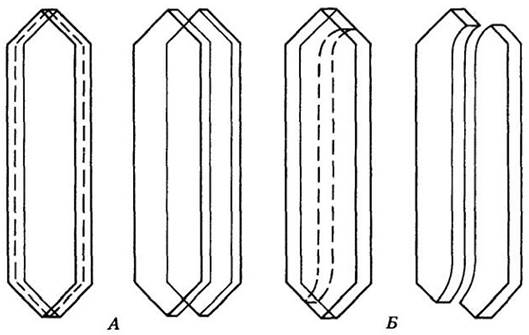
Fig. 23-5. Diagram showing the relationship between the cambium and its derivatives, the secondary xylem and phloem. The cambium consists of two cell types, fusiform and ray initials, which give rise to the axial and radial systems of conducting tissues, respectively. Dividing periclinally, cambial initials produce secondary xylem and phloem. Following such a division, one daughter cell (the initial) remains meristematic, while the other (the derivative) eventually develops into one or more cells of the conducting tissue: xylem elements on the inner surface of the cambium, and phloem elements on the outer. Ray initials divide to form rays oriented perpendicularly to the derivatives of the fusiform initials. The accumulation of secondary xylem pushes the cambium and secondary phloem outward. The diagrams (from left to right) show successive stages of maturation

The xylem and phloem cells formed by the fusiform initials, with their vertically oriented longitudinal axes, constitute the axial system of the secondary conducting tissues. Ray initials give rise to horizontally oriented ray cells of the vascular rays, or radial system (Fig. 23-5). These rays consist primarily of parenchyma cells and vary in length. Nutrients are transported from protoplast to protoplast via plasmodesmata (symplastic transport), passing from the secondary phloem through the cambium and further along the radial rays to the living cells of the secondary xylem. At the same time, water moves from the secondary xylem to the cambium and secondary phloem primarily through the cell walls (apoplastic transport) of the ray and axial system cells. The rays also serve as storage sites for starch and Lipids.
In the strict sense, the term "cambium" refers only to the cambial initials, of which there is typically only one per radial file. However, it is often difficult or even impossible to distinguish these cells from their immediate derivatives, which may remain meristematic for some time (Fig. 23-5). Even in winter, when the cambium is inactive, several layers of similar-looking undifferentiated cells can be seen between the xylem and phloem. Therefore, some botanists use the term "cambium" in a broad sense to denote both the initials and their closest derivatives. Others refer to this corresponding region as the cambial zone.
As the cambium deposits secondary xylem cells and increases in thickness, it moves outward, concurrently compensating for this increase in circumference through anticlinal Divisions of the initials (Fig. 23-4, B). Consequently, the number of fusiform and ray initials (and new rays) increases so that the ratio between them in the secondary conducting tissues remains approximately constant. Evidently, the developmental changes occurring within the cambium are extremely complex.
In temperate zones, the cambium is dormant in winter and resumes activity in the spring. New layers of secondary phloem and xylem are laid down during the growing season. The signal for cambial reactivation is the bud break and the resumption of growth. This process appears to be stimulated by the hormone auxin, which is produced in developing shoots and transported downward through the stem. Other factors also contribute to the reactivation and maintenance of cambial activity (Chap. 24).
The impact of Secondary Growth on the Primary Plant Body
Root
In roots, the cambium originates from meristematic procambial cells that remain between the primary xylem and phloem. Depending on the number of phloem strands, two or more zones of cambial activity are established more or less simultaneously (Fig. 23-6). Shortly thereafter, pericycle cells opposite the protoxylem poles divide periclinally, and the resulting inner sister cells are added to the cambium, which then completely surrounds the xylem.
Opposite the phloem strands, the cambium immediately begins to produce secondary xylem, causing these strands to be pushed outward from their positions between the xylem ridges. By the time active division of the cambium occurs opposite the protoxylem poles, the entire cambium forms a continuous circle, and the primary phloem becomes separated from the primary xylem (Fig. 23-6).
Fig. 23-6. Comparison of Primary and secondary structures in the root and stem of woody dicots. A. Root and stem at the end of primary growth. In the triarch root shown here, the cambium originates in three independent procambial zones between the three strands of primary phloem and primary xylem. B. Origin of the cambium. Pericycle cells opposite the three protoxylem poles also participate in its formation. A small amount of secondary xylem has already been produced by the procambial-derived cambium. C. Secondary xylem and phloem are present in both root and stem, with periderm also present in the root. D. Result of modifications to the primary plant body due to secondary growth (including periderm formation) by the end of the first growing season. The radial lines in figs. B and C correspond to rays

Through repeated divisions inward and outward, the cambium deposits secondary xylem and phloem of the root (Figs. 23-6 and 23-7). In some instances, the cambium initiated in the pericycle forms wide rays, whereas in other Regions of the secondary Vascular Tissues, the resulting rays are narrower.
Fig. 23-7. Cross sections of a woody root of willow (Salix). A. Stage nearing the completion of primary growth. B. Fragment of the primary vascular cylinder. C. End of the first growing season, illustrating The Effect of secondary growth on the primary plant body

As the secondary xylem and phloem expand laterally, much of the primary phloem is crushed, or obliterated. Occasionally, only the fibers remain recognizable.
Stem
As mentioned previously, the stem cambium arises from undifferentiated procambium between the primary xylem and phloem, as well as from the parenchyma of the interfascicular zones. The portion that develops within the vascular bundles is termed fascicular cambium, whereas that formed in the interfascicular zones, or pith rays, is called interfascicular cambium. Unlike in the root, the stem cambium forms a complete ring right from its inception (see Fig. 23-6).
In woody stems, the secondary xylem and phloem form a cylinder of vascular tissues intersected radially by rays (Fig. 23-6). Typically, considerably more secondary xylem is deposited annually than secondary phloem (this is also true for the root). As in the root, accompanying secondary growth, the primary phloem is displaced outward and its thin-walled cells become obliterated, leaving only the thick-walled fibers preserved from this tissue (Fig. 23-9).
Figures 23-8 and 23-9 illustrate two stages of secondary growth in the stem of elderberry (Sambucus canadensis) (refer to its Primary Structure description on pp. 46 and 49). In the earlier stage (Fig. 23-8), only a small amount of secondary xylem and phloem has formed. The stem at the end of the first growing season is depicted in Fig. 23-9, which shows that significantly more secondary xylem has been laid down than secondary phloem. The thick-walled cells just outside the latter represent the primary phloem fibers.
Fig. 23-8. Cytology/practical/72.html">Cross section of an elderberry stem (Sambucus canadensis) initiating secondary growth. The cork cambium has not yet formed

Fig. 23-9. Cross section of an elderberry stem (Sambucus canadensis) at the end of the first growing season

Figure 23-10 shows The structure of one-, two-, and three-year-old stems of basswood (Tilia americana). As noted in Chapter 22, the primary tissues in this plant form an almost continuous hollow cylinder. Consequently, most of the cambium here is fascicular in origin. Some rays in the secondary phloem of basswood become very wide as the stem increases in thickness. This serves as a mechanism to accommodate the tissues located outside the cambium as the diameter of the xylem expands.
Fig. 23-10. Cross sections of a basswood stem (Tilia americana). A. One-year-old stem. B. Two-year-old stem. C. Three-year-old stem. Numbers indicate the annual rings of secondary xylem

The cambium and secondary Tissues of the root and stem merge seamlessly into one another. Unlike the primary plant body, there is no transition zone in the secondary structures (see p. 63).
Periderm
In most woody roots and stems, the onset of secondary xylem and phloem formation is typically followed by The Development of cork, which replaces the epidermis as a protective covering on these plant parts. Cork, or phellem, is produced by the cork cambium, or phellogen, which may also give rise to phelloderm. Cork is formed to the outside of the phellogen, whereas phelloderm is produced to the inside (Figs. 23-11 and 23-12). Together, these three tissues—cork, phellogen, and phelloderm—constitute the periderm.
Fig. 23-11. Cross sections illustrating several stages in the Development of the periderm and lenticel in elderberry (Sambucus canadensis). A. Newly formed periderm beneath the epidermis; collenchyma and cortex parenchyma. B. Periderm at a more advanced stage of development. C. Initiation of lenticel formation, with cortex collenchyma beneath it. D. A well-developed lenticel. The elderberry phelloderm typically consists of a single cell layer
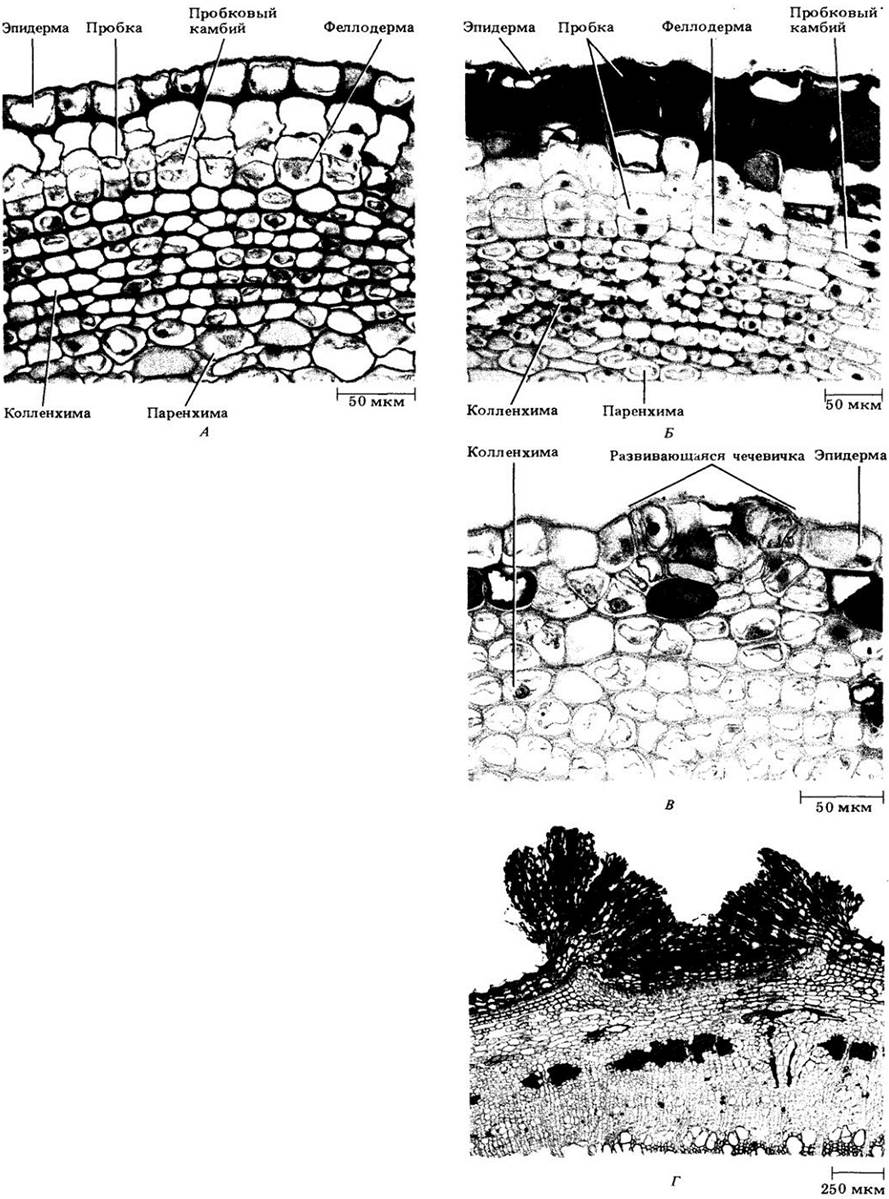
In most dicotyledons and gymnosperms, the first periderm typically develops During the first growing season in those parts of the root or stem that have ceased elongation. In stems, the initial cork cambium most commonly arises in the cortical layer located directly beneath the epidermis (Figs. 23-6 and 23-11), although in many species it forms immediately below the epidermis. In roots, the first phellogen is formed through periclinal divisions of pericycle cells, with the outer sister cells fusing to form a continuous cylinder of cork cambium. Subsequently, the remaining pericycle cells may divide beneath the periderm, giving rise to tissue resembling the primary cortex (see Figs. 23-6 and 23-7).
Repeated divisions of the cork cambium lead to the formation of radial rows of tightly packed cork cells in most cases (Figs. 23-11 and 23-12). During the differentiation of these cells, their inner walls become lined with a thick layer of a fat-like substance, suberin, which significantly reduces the permeability of the tissue to water and gases. Their walls may also become lignified. When mature, cork cells are dead.
Phelloderm cells remain alive, do not become suberized, and resemble the parenchyma cells of the primary cortex. They can be distinguished from them by their inner position within the radial rows shared by all periderm cells (Fig. 23-12).
Fig. 23-12. Transverse section of a stem lenticel in pipevine (Aristolochia). Unlike in elderberry, the phelloderm here consists of several cell layers

With the Formation of the first root periderm, the primary cortex (including the endodermis) and epidermis become isolated from the rest of the root. Underlain by the cork layer, which is impermeable to water and mineral nutrients, they eventually die and are sloughed off. Because the first stem periderm is usually initiated directly beneath the epidermis, the primary cortex is not shed during the first year (see Figs. 23-6 and 23-9), although the epidermis nevertheless dries out and flakes off.
By the end of the first growing season, a woody root contains the following tissues (from outside to inside): remnants of the epidermis and primary cortex, periderm, pericycle, primary phloem (fibers and crushed thin-walled cells), secondary phloem, cambium, and secondary and primary xylem. In a stem, the order is as follows: remnants of the epidermis, periderm, primary cortex, primary phloem (fibers and crushed thin-walled cells), secondary phloem, cambium, secondary and primary xylem, and pith (see Fig. 23-6).
Lenticels
As noted above, suberin-containing cork cells form a dense tissue that serves as an impermeable barrier to water and gases. However, the inner parts of the stem and root, like all metabolically active tissues, require gas exchange with the surrounding air (in the case of roots, with the air spaces between soil particles). When a periderm is present, this gas exchange occurs through lenticels (see Figs. 23-11 and 23-12)—that is, regions of the periderm where a more active phellogen produces tissue with numerous intercellular spaces and itself contains them.
Lenticels begin to form during the development of the first periderm (see Fig. 21-11) and in stems appear primarily beneath a stomate or a group of Stomata. On the surface of a stem or root, they look like round, oval, or elongated bumps (see Fig. 23-18). Lenticels also form on certain fruits; for example, they are visible as tiny specks on apples and pears. As roots and stems grow older, lenticels continue to develop in the new periderm at the base of cracks arising in the bark.
Bark
The terms "periderm," "cork," and "bark" are often confused. As noted above, cork is one of the three parts of the periderm, a secondary tissue that replaces the epidermis in most woody roots and stems. The term bark refers to all tissues external to the cambium, including the periderm if present (Figs. 23-13 and 23-14). When the cambium first appears and secondary phloem has not yet formed, the bark consists entirely of primary tissues. At the end of the first growing season, it comprises the still-existing primary tissues, secondary phloem, periderm, and all dead tissues exterior to the latter.
Every growing season, the activity of the cambium adds new increments of secondary phloem to the bark and secondary xylem to the central part of the stem or root. Generally, less secondary phloem is produced than secondary xylem. Furthermore, in the older regions of the phloem, the thin-walled cells (sieve elements and various parenchymatous elements) are typically crushed (see Figs. 23-15 to 23-17). Over time, the older secondary phloem becomes isolated from the younger phloem by new layers of periderm. As a result, significantly less secondary phloem accumulates in the stem and root compared to secondary xylem, the volume of which increases year after year.
As the diameter of the stem or root increases, the pressure on the older bark tissues rises. In some plants, splits appear in these tissues, forming large air cavities. In many species, the parenchyma cells of the axial system and rays divide and stretch, allowing the older secondary phloem to remain intact for some time as the circumference of the plant organ increases. As noted earlier, certain rays in the trunk of linden widen significantly as it thickens; these are termed dilated rays.
During secondary thickening of the stem or root, the first periderm may persist for several years, with periodic activity of the cork cambium alternating with inactive periods (synchronously or asynchronously with cambial activity). In the trunks of apple (Malus sylvestris) and pear (Pyrus communis), the initial cork cambium may remain active for up to 20 years. In most woody roots and stems, as the diameter of the axial systems increases, additional periderms arise deeper and deeper within the bark (see Figs. 23-13 and 23-14) from phloem parenchyma cells that have been cut off from active nutrient transport. These cells become meristematic and give rise to new cork cambia.
Fig. 23-13. Diagram of a portion of a red oak trunk (Quercus rubra) showing transverse, tangential, and radial surfaces. The dark zone in the center is the heartwood; the lighter part of the wood is the sapwood

Fig. 23-14. Transverse section of the bark and part of the secondary xylem from an old American basswood trunk (Tilia americana). Several periderm layers intersect the predominantly brownish outer bark in the upper third of the section. Below it lies the inner bark, which is clearly distinct in appearance from the lighter xylem in the lower third of the section
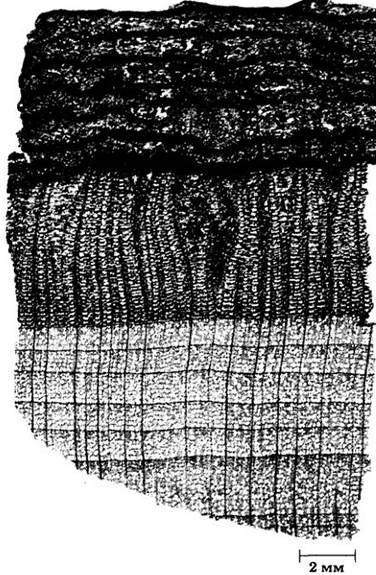
All tissues exterior to the innermost cork cambium—that is, all periderms along with remnants of the cortex and phloem between them—constitute the outer bark (see Figs. 23-13 and 23-14). Upon maturation of the suberin-containing cork cells, these tissues cease to receive water and mineral nutrients. The living portion of the bark between the cambium and the innermost phellogen layer is called the inner bark (see Figs. 23-13 and 23-14).
The mode of formation of new periderms and The Nature of the tissues they isolate significantly influence the appearance of the bark (see Fig. 23-19). In some plants, new periderms develop as discontinuous, overlapping layers, resulting in what is known as scaly bark (see Figs. 23-13 and 23-14), such as on relatively young trunks of pine (Pinus) and pear (Pyrus communis). In other cases, they form more or less continuously and concentrically around the stem axis, leading to the formation of ring bark, as seen in grapevine (Vitis) and honeysuckle (Lonicera). This type is less common than scaly bark. In many plants, the bark is of an intermediate type.
Commercial cork is obtained from the bark of the cork oak (Quercus suber), which is native to the Mediterranean region. The first phellogen in this tree originates in the epidermis, and the cork it produces is of little value. When the oak reaches approximately 20 years of age, the early periderm is removed, and a new cork cambium is initiated in the primary cortex a few millimeters beneath the first. The cork produced by this cambium grows very rapidly and, in about 10 years, becomes thick enough to be harvested for commercial use. A new phellogen is then formed slightly deeper than the previous one, and this Procedure is repeated at roughly decade-long intervals until the tree reaches 150 years of age or more. The specks and elongated dark streaks visible on the surface of commercial cork are lenticels.
In most woody roots and stems, only a small fraction of the secondary phloem actually participates in nutrient transport. As a rule, long-distance transport is sustained solely by the current year's phloem increment. The reason for this is the short lifespan of sieve elements (Chapter 20), most of which die by the end of the very year they are produced by the cambium. In some plants, such as black locust (Robinia pseudoacacia), these elements collapse and degenerate shortly after their contents die (see Figs. 23-15 to 23-17).
Fig. 23-15. Transverse section of the stem bark of black locust (Robinia pseudo-acacia), consisting primarily of non-functional phloem

Fig. 23-16. Transverse section of the secondary phloem of black locust; its functional part is primarily visible. The sieve elements (indicated by arrows) of the nonfunctional phloem are crushed

Fig. 23-17. Radial section of black locust bark. The image primarily shows the nonfunctional phloem with crushed sieve elements (arrows). In this tree, only the phloem formed during the current growing season is functional. It becomes nonfunctional in late autumn when the sieve elements die and are crushed

Fig. 23-18. External structure of woody stems. Examining the branches of deciduous trees reveals many important features of stem structure and development. The most prominent structures are buds, which form at the apices (terminal buds) and in the leaf axils (lateral, or axillary, buds). In addition, some species have accessory buds—one on each side of the axillary bud. Sometimes, even when the associated axillary buds develop normally, these accessory buds remain undeveloped. In other species, accessory buds give rise to flowers, while axillary buds produce a leafy shoot. After leaf fall, leaf scars with their bundle scars remain beneath the axillary buds. A leaf scar is formed by the protective layer of the abscission zone. Bundle scars represent the broken ends of conducting strands that extended from the leaf traces into the leaf petiole before it fell. Groups of terminal scale scars correspond to the locations of former terminal buds; until secondary growth renders them indistinguishable, these scars can be used to determine the age of stem segments. The portion of the stem between two groups of scars corresponds to one year's growth. Lenticels appear on The Stem as small bumps. A. Green ash (Fraxinus pennsylvanica var. subintegerrima). B. White oak (Quercus alba). C. American basswood (Tilia americana). D. Box elder (Acer negundo). E. American elm (Ulmus americana). F. Horse chestnut (Aesculus hippocastanum). G. Butternut (Juglans cinerea). H. Black locust (Robinia pseudoacacia)

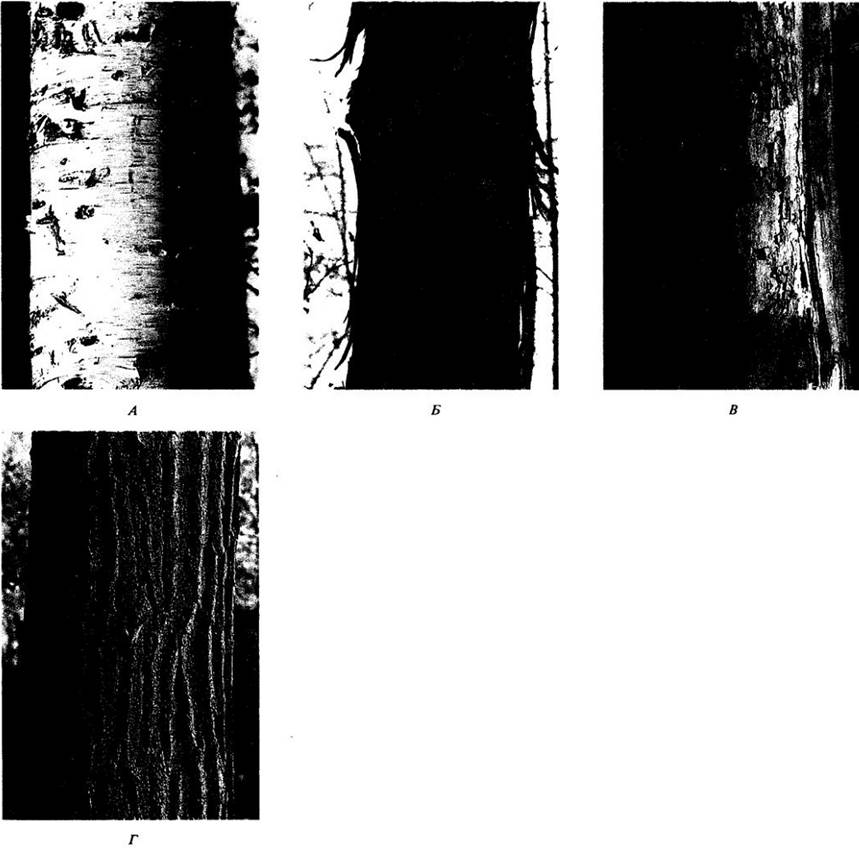
Fig. 23-19. Bark of four tree species. A. Thin, peeling bark of paper birch (Betula papyrifera). The streaks on its surface are lenticels. B. Shaggy bark of shagbark hickory (Carya ovata). C. Scaly bark of American sycamore (Platanus occidentalis). D. Deeply furrowed bark of black oak (Quercus velutina)
The portion of the inner bark that actively conducts nutrients is called the functional phloem. Although the sieve elements on its outer side are dead, the phloem parenchyma cells and ray cells (axial and ray parenchyma, respectively) may remain alive and continue to function for many years as storage tissue. This part of the inner bark is termed the nonfunctional phloem. Only the outer bark consists entirely of dead tissue (see Figs. 23-15 and 23-17).
Wood: Secondary Xylem
Apart from The Use of various plant tissues for food, none has played a more essential role in human life throughout history than wood, or secondary xylem (see Table 23-1). Wood is commonly divided into hardwood and softwood. Hardwoods are produced by dicotyledons, and softwoods by conifers. These Two Types of wood exhibit significant structural differences, and the terms "hardwood" and "softwood" do not necessarily reflect their actual density or hardness. For instance, one of the lightest and softest woods is found in balsa (Ochroma lagopus), a tropical dicot. Conversely, in some conifers, such as slash pine (Pinus elliottii), the wood is harder than that of many hardwoods.
Conifer Wood (Softwood)
The structure of conifer wood is relatively simple compared to that of most dicots. Its main characteristic is the absence of vessels (Chapter 20) and a relatively small amount of axial, or wood, parenchyma. Long, tapered tracheids predominate. In some genera, particularly pines, the parenchyma cells of the axial system are associated exclusively with resin canals—relatively large intercellular spaces lined with thin-walled parenchyma cells that secrete resin into them. In pines, resin canals occur in both the axial system and the rays (Figs. 23-20 and 23-21). Wounding, compression, frost, or wind damage can stimulate the formation of resin canals in conifer wood, leading some researchers to consider them traumatic in origin in all cases. Resin apparently protects plants against fungal pathogens and bark beetles.
Fig. 23-20. Three-dimensional diagram of the secondary xylem of eastern white pine (Pinus strobus). With the exception of the parenchyma cells surrounding the resin canals, the axial system consists entirely of tracheids. The rays, except for those containing resin canals, are uniseriate. Earlywood and latewood are described on p. 87

Conifer tracheids are characterized by large, rounded bordered pits, which are particularly abundant at the cell ends where they abut other tracheids (Figs. 23-20 through 23-22). All pit pairs (see Chapter 2, Fig. 2-32) between them feature a torus, i.e., a thickening in the central part of the pit membrane (see Fig. 7.3-25) that is somewhat wider than the opening, or aperture, of the bordered pit (Fig. 23-22). The pit membrane is flexible, so the torus can occasionally block one of the apertures, thereby restricting the passage of water or gases through the pit pair (Fig. 23-22).
Fig. 23-20 shows a three-dimensional diagram of the wood structure of eastern white pine (Pinus strobus), constructed from the three sections illustrated in Fig. 23-21. In a section perpendicular to the long axis of the root or stem (transverse section), the tracheids appear polygonal or rectangular; elongated rays intersecting the wood can also be seen (Fig. 23-21, A). Longitudinal sections can be either radial or tangential. Radial sections run parallel to the rays, which appear as plates of cells oriented at right angles to the vertically elongated tracheids of the axial system (Figs. 23-21, B and 23-22, D). Tangential sections are perpendicular to the rays, revealing their width and height. In pines, the rays—except those containing resin canals—are uniseriate, meaning they are one cell wide (Fig. 23-21, C). Details of the wood structure of eastern white pine are shown in Fig. 23-22.
Fig. 23-21. Wood of eastern white pine in transverse (A), radial (B), and tangential (C) sections

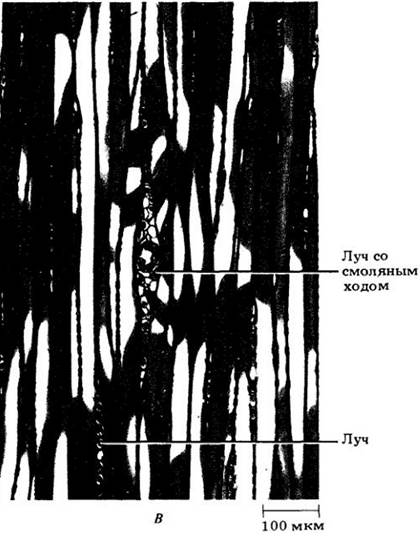
Fig. 23-22. Structural details of eastern white pine wood. A. Transverse section showing bordered pit pairs of tracheids. B. Radial section; frontal view of bordered pit pairs in tracheid walls. C. Tangential section with bordered pit pairs of tracheids. D. Radial section with a ray. Rays of pine and other conifers consist of ray tracheids and ray parenchyma cells. Bordered pits of these tracheids are clearly visible

Dicot Wood (Hardwood)
The structure of dicot wood is much more diverse than that of conifers, partly due to the large number of cell types in the axial system, which contains vessel elements (a characteristic feature), tracheids, several types of fibers, and parenchyma cells (Figs. 23-23 and 23-24; see also Figs. 20-10 and 23-26).
Rays here are often significantly larger. While conifer rays are predominantly one cell wide and mostly 1 to 20 cells high, dicot rays can be many cells wide and several hundred cells high. In some species, such as oak, large rays can be seen with the unaided eye (see Fig. 23-13). In red oak (Fig. 23-24, C), they are 12 to 30 cells wide and hundreds of cells high. Along with these large rays, numerous uniseriate rays are also present. In the wood of this species, rays account for an average of about 21% of the volume. On average, rays make up about 17% of the volume in hardwoods and about 8% in conifers.
As in conifers, transverse sections of dicot wood reveal radial rows of cells of the axial and radial systems originating from cambial initials (Figs. 23-23 and 23-24). However, in the latter case, these rows are not always as regular as in conifers, because vessel expansion and fiber elongation displace many cells from their original positions. The shifting of rays by vessel elements is clearly visible in the transverse section of red oak (Quercus rubra) shown in Fig. 23-23, A.
Growth Rings
As a result of the periodic activity of the cambium, which is a seasonal phenomenon in temperate zones, concentric layers of growth form in the secondary xylem and phloem (though less distinctly in the latter). When these layers correspond to a single season, they are called annual rings. Sharp fluctuations in water availability and other environmental factors sometimes cause the formation of several such rings in a single year, known as "false" annual rings. Thus, the age of any part of an old tree trunk can be determined by counting its annual rings, but false rings can sometimes distort the results.
The width of individual growth layers can vary significantly from year to year depending on light, Temperature, precipitation, available soil moisture, the length of the growing season, and other ecological factors. It correlates quite well with The amount of precipitation in a given year. Under favorable conditions—that is, during periods of adequate or abundant rainfall—the rings are wide; under unfavorable conditions, they are narrow.
In semi-arid regions where rainfall is scarce, trees act as highly sensitive "rain gauges." A prime example is the bristlecone pine (Pinus longaeva) in the western Great Basin (Fig. 23-27). Its annual rings are all distinct, and studying them provides a glimpse thousands of years into the past. The oldest known living specimen of this pine is 4,900 years old. Dendrochronologists (scientists who study the past using tree rings), by cross-dating the wood of living and dead trees, have reconstructed continuous ring chronologies spanning more than 8,200 years. It has been established that ring width in high-altitude bristlecone pines (near the timberline) is closely correlated with temperature fluctuations, meaning it can be used to reconstruct past climatic conditions. For example, in the White Mountains of California, summers were relatively warm from 3500 to 1300 BCE, and the timberline was approximately 150 m higher than its modern level. The period from 1300 to 200 BCE, by contrast, was characterized by cold summers.
The structural basis for distinguishing annual rings is the difference in density between wood formed at the beginning and the end of the growing season (see Figs. 23-21, 23-23, and 23-24). Earlywood is less dense (consisting of wider cells with relatively thin walls) than latewood (which has narrower, thick-walled cells). In a cross-section, the transition from earlywood to latewood within the same year can be very gradual and almost imperceptible. However, the boundary between the latewood of one ring and the earlywood of the next is always sharp and clearly defined.
Fig. 23-23. Transverse wood sections showing annual rings. A. Red oak (Quercus rubra). Large vessels of ring-porous wood are concentrated in the earlywood. Dark vertical lines represent rays. B. Diffuse-porous wood of tulip tree (Liriodendron tulipifera)

Fig. 23-24. Wood of red oak (Quercus rubra) in transverse (A), radial (R), and tangential (T) sections

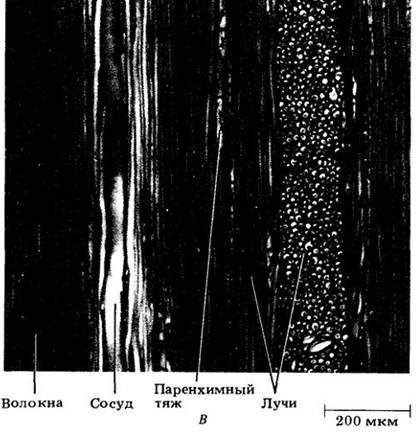
Fig. 23-25. Scanning electron micrograph of the pit membrane in a pair of bordered pits of a white pine tracheid. The thickened central portion is the torus, and the surrounding porous part of the membrane is called the margo

Fig. 23-26. Scanning electron micrograph of three sectional planes of American elm (Ulmus americana) wood. Comparing this image with Figs. 23-20, 23-23, and 23-24 allows each plane to be identified. Such semi-ring-porous wood with wavy bands of latewood vessels is a characteristic feature of elms. Locate the earlywood and latewood vessels and the rays on all three planes. The dense part of the wood consists primarily of fibers. Axial parenchyma cells are also present, but at this magnification, they are indistinguishable

Fig. 23-27. A. Bristlecone pine (Pinus longaeva) in the White Mountains (eastern California). Growing near the timberline, these trees are among the oldest living organisms; one of them is 4,900 years old. B. Transverse wood section of a bristlecone pine showing varying annual ring widths. The center of this section corresponds to approximately 6,260 years ago; the group of rings formed between 4240 and 4210 BCE is highlighted in dark. Matching patterns of wide and narrow rings in cross-sections of dead trees make it possible to determine relative precipitation levels over approximately the past 8,200 years. Despite reaching ages of up to 4,900 years, bristlecone pines may not be the oldest living things on the planet. In fact, a creosote bush clone (Larrea divaricata) that evidently originated from a single seed is estimated to be about 12,000 years old. This ring-shaped "King Clone" (see Fig. 32-13) grows in the Mojave Desert about 250 km northeast of Los Angeles, California

In some dicots, the difference in vessel diameter (or "pore" size) between earlywood and latewood is pronounced, with the former being much wider than the latter (the term "pore" is used by wood anatomists to denote a vessel cross-section). Such wood is termed ring-porous (see Figs. 23-23, A and 23-24, A). In other dicots, vessels are distributed evenly throughout the annual layer and vary little in size; this is known as diffuse-porous wood (Fig. 23-23, B). In ring-porous wood, nearly all water transport occurs in the outermost annual ring, proceeding about 10 times faster than in diffuse-porous wood.
Sapwood and Heartwood
As wood ages and ceases to function in water conduction, its parenchyma cells die. Prior to this, however, marked changes often take place, including the depletion of nutrient reserves and impregnation with various substances (oils, Gums, resins, Tannins, etc.) that color and sometimes scent the tissues. This typically darker, non-conducting wood is called heartwood, whereas the generally lighter, conducting wood is termed sapwood (see Fig. 23-13). When vessel function ceases in many tree species, tyloses form within them (Fig. 23-28)—balloon-like outgrowths of ray or axial parenchyma cells that push through pits in the vessel walls and can completely block their lumens. They often form prematurely in response to pathogens, serving a protective role by preventing the spread of disease-causing agents through the xylem.
The ratio of sapwood to heartwood and the degree of visible contrast between them vary considerably among species. Some trees, such as maple (Acer), birch (Betula), and ash (Fraxinus), have thick sapwood, whereas others, notably black locust (Robinia), catalpa (Catalpa), and yew (Taxus), have thin sapwood. In a third group of species, such as poplar (Populus), willow (Salix), and fir (Abies), sapwood and heartwood are not distinctly demarcated.
Fig. 23-28. Tyloses—balloon-like outgrowths of parenchyma cells that partially or completely block the vessel lumen. Tyloses in the vessels of white oak (Quercus alba) in transverse (A) and longitudinal (B) sections under a Light Microscope

Reaction Wood
Reaction wood refers to secondary xylem abnormalities typical of leaning trunks and branches. Its formation is associated with the straightening of these plant parts. In conifers, reaction wood develops on the lower side of a bent stem (compression wood), whereas in dicots, it forms on the upper side (tension wood).
Compression wood results from increased cambial activity on the lower side of the trunk, producing eccentric annual rings with much wider lower sections than upper ones (Fig. 23-29). The straightening of the trunk or branch occurs through the expansion of tissues that push the stem back toward the vertical. This wood contains more Lignin and less Cellulose than normal wood, and its longitudinal shrinkage upon drying is often 10 times or more greater (whereas normal wood typically shrinks no more than 0.1 – 0.3%). Differences in the relative shrinkage between normal and compression wood in drying lumber frequently cause warping or cupping. Such timber is suitable only for firewood.
Fig. 23-29. Transverse section of a tsuga trunk with compression wood (wider annual rings on the lower side). Cracks form upon drying.

Tension wood is formed due to the increased cambial activity on the upper side of the trunk. Like compression wood, it can be detected by the presence of eccentric growth rings (Fig. 23-30). To straighten the trunk, it must "pull" it along (hence its name). Precise identification of tension wood requires microscopic examination of trunk sections. Its primary anatomical feature is the presence of gelatinous fibers characterized by weak lignification or its complete absence and a jelly-like appearance of part of the secondary wall. Longitudinal shrinkage during the drying of tension wood rarely exceeds 1%, but boards containing it tend to warp. When sawn while green, it frays into fiber bundles, making the board surface rough.
Fig. 23-30. Transverse section of a northern red oak (Quercus rubra) trunk with tension wood (wider annual rings on the upper side)

Macroscopic Characteristics of Wood
The appearance of wood is determined by its color, grain, texture, and figure. Some of these characteristics not only help determine THE ORIGIN OF the wood but also dictate its decorative value.
Color varies depending on the type of wood and plant species. In heartwood, color can be crucial for identification and also partly determines its preferred uses. For example, the dark chocolate or purplish-brown heartwood of black walnut (Juglans nigra) and the reddish-brown heartwood of black cherry (Prunus serótina) are traditional favorites for crafting high-end furniture.
Grain is a term referring to the relative arrangement of all wood elements—fibers, tracheids, parenchyma cells, and vessel members. When all of these are oriented parallel to the longitudinal axis, the wood is described as straight-grained. If their orientation deviates from the longitudinal axis of the stem section, the wood is called cross-grained, and if it follows a spiral pattern, spiral-grained. In the latter case, stripping the bark off a log reveals a twisted appearance (Fig. 23-31). If the direction of the spirals reverses radially across the log at more or less regular intervals, the wood is termed interlocked-grained.
Fig. 23-31. Dead trunk of a white oak (Quercus alba) with shed bark, showing spiral-grained wood

Texture characterizes the relative sizes and Variability of elements within an annual ring. A coarse texture implies the presence of extensive zones of large vessels and wide rays, which is typical of certain ring-porous species. A fine texture is characteristic of woods with small vessels and narrow rays. A uniform texture results from subtle differences in cell size—and consequently between earlywood and latewood—whereas a non-uniform texture occurs when There is a distinct difference between them within the annual ring.
Figure refers to the pattern visible on longitudinal cuts of wood. In a narrow sense, it is used to describe decorative wood highly prized in furniture making and interior finishing. The figure depends on the grain, texture, and cutting direction.
A board can be sawn from a log in two ways (Fig. 23-32). In one method, its wide surfaces run roughly parallel to the tangential-longitudinal plane of the log (tangential sawing). Annual rings on such a board appear as wavy bands. In the second method, the cut runs lengthwise through the center of the log (radial sawing). Here, the annual rings appear as parallel lines running the entire length of the board, intersected at right angles by wood rays. Such boards are often preferable because radial surfaces are more uniform in terms of wear resistance and machinability. However, radial sawing is more time-consuming and often less economical than tangential sawing.
Fig. 23-32. Diagram illustrating tangential (a) and radial (b) sawing of a log into boards. In the former case, annual rings run more or less parallel to the wide faces of the board; in the latter, they are nearly perpendicular to them

Secondary growth (an increase in thickness in regions that have completed elongation) occurs in all gymnosperms and most dicotyledons. It is driven by the activity of two lateral meristems: the vascular cambium and the cork cambium, or phellogen. In herbaceous plants, secondary growth is minimal or entirely absent, whereas trees and shrubs can continue to grow in girth for many years. Fig. 23-33 illustrates the Developmental Stages of a woody plant root and stem from the apical meristem to the secondary tissues formed during the first growing season.
Fig. 23-33. Diagrams of stem and root development in woody dicots during the first year of growth. Asterisks indicate tissues that collectively form the periderm

The cambium contains two types of initials: fusiform and ray initials. Through periclinal divisions, the former give rise to the Components of the axial system, while the latter produce ray cells that form the conducting rays, or the radial system. Circumferential expansion of the cambium is driven by anticlinal divisions of the initials.
The first cork cambium in most stems originates in a cell layer directly beneath the epidermis, whereas in the root, it arises in the pericycle. This cambium produces cork (phellem) outwardly and phelloderm inwardly, which together comprise the periderm. Although most of the periderm consists of tightly packed cells, certain regions called lenticels contain numerous intercellular spaces.
Bark encompasses all tissues outside the vascular cambium. In older roots and stems, most of the phloem within the bark is non-functional. Sieve elements are short-lived and typically remain conductive, or functional, only during the current year's growth ring. Following the initial periderm, successive periderms form repeatedly and progressively deeper within the secondary cortex from the parenchyma cells of the non-functional phloem.
Wood is commonly classified into softwood and hardwood; the former is produced by conifers and the latter by dicotyledons. Compared to dicot wood, softwood has a simpler structure, consisting mainly of tracheids and parenchyma cells. Resin canals are present in certain species. Dicot wood may simultaneously contain vessel elements, tracheids, several types of fibers, and parenchyma cells.
Annual growth layers are known as growth rings. The density difference between the latewood of one ring and the earlywood of the next makes it possible to establish a boundary between them. Wood density is a reliable indicator of its strength.
In many plants, non-conducting heartwood can be visually distinguished from actively conducting sapwood.
Reaction wood typically develops on the lower side of leaning trunks and branches in conifers, and on their upper side in dicotyledons. Its formation helps straighten plant parts. In conifers, it is called compression wood, and in dicotyledons, tension wood.
Table 23-1. Uses of wood from some widespread North American species
Red alder (Alnus rubra) — the primary hardwood of the Pacific Northwest. Used in The production of furniture, especially chairs, window sashes, doors, and other millwork, plywood, charcoal; an important raw material for paper manufacturing.
White ash (Fraxinus americana). Handles and grips, especially long ones (for shovels, rakes, spades), due to its straight-grained structure, strength, moderate density, and other merits; nearly all baseball bats, oars, tennis rackets, hockey sticks; kitchen cabinets, toys, and woodenware.
American basswood (Tilia americana). Plywood veneer for decorative panels and furniture trim; soft packing excelsior; window sashes, doors, and other millwork; piano keys; boxes and crates; chests and caskets.
American beech (Fagus americana) — one of the three most important northern species (the other two are yellow birch and sugar maple). Lumber, especially flooring; plywood veneer; fuel; distillation into acetic acid, methanol, and other chemicals; toys and woodenware.
Yellow birch. Betula alleghaniensis. Plywood veneer; distillation; railroad ties; furniture; toys and woodenware; musical instruments; toothpicks.
Black cherry (Prunus serotina). Excellent cabinet wood; carved furniture; printing blocks; piano action parts; interior trim; paneling; handles; toys and woodenware.
Eastern cottonwood (Populus deltoides). Pulp for high-grade book and magazine paper; furniture veneer; soft packing excelsior; food tubs and buckets; boxes and crates.
Elm (Ulmus spp.). Features interlocked grain, making it resistant to splitting. Cooperage staves and hoops; boxes and crates; plywood veneer for fruit and vegetable containers and round cheese boxes; bentwood furniture parts; interior trim.
Bitternut hickory (Carya cordiformis). Tool handles, especially axe handles, shovel shafts; sled runners; ladders, furniture, woodenware; excellent firewood for smoking meat; premium fuel.
Black locust (Robinia pseudoacacia). Mine props; railroad ties; fence posts; structures requiring strength and durability.
Sugar maple (Acer saccharum). Plywood veneer; distillation; railroad ties, fuel; furniture; flooring, especially for bowling alleys and dance floors; toys and woodenware; musical instruments.
Red and white oaks (Quercus rubra, Q. alba). Railroad ties; plywood veneer; flooring; window sashes, doors, and other millwork; fuel; shipbuilding timber; chests and caskets.
<Persimmon (Diospyros virginiana). Shuttles, spools, and bobbins; golf club heads; boxes and crates; handles.
American sycamore (Platanus occidentalis). Features interlocked grain. Plywood veneer; boxes and crates; interior trim, paneling; flour and sugar barrels; furniture veneer.
Black walnut (Juglans nigra). A premier native cabinet wood of the continental United States; furniture veneer; high-grade tables and chairs; the primary wood for gunstocks; chests and caskets.
Tulip tree (Liriodendron tulipifera). Plywood veneer for interior trim, furniture, and other fine woodwork; papermaking raw material; boxes and crates; window sashes, doors, and other millwork.
Douglas fir (Pseudotsuga menziesii). A species forming roughly 50% of western U.S. forests and yielding more lumber than any other U.S. species. Timber; plywood, primarily for structural panels; railroad ties; mine props; boxes and crates; paper pulp; shipbuilding timber.
Eastern hemlock (Tsuga canadensis). Papermaking; lumber; boxes and crates; window sashes and doors, kitchen cabinetry.
Western white pine (Pinus monticola). Matches; boxes and crates; window sashes, doors, and other millwork; lumber; core stock for plywood, especially for tabletops.
Ponderosa pine (Pinus ponderosa). Boxes and crates, window sashes, doors, and other millwork; lumber; masts; pilings, balusters, columns; posts; toys; chests and caskets.
Slash pine (Pinus elliottii). Paper pulp; heavy construction timber; railroad ties; plywood veneer; turpentine and rosin; boxes; crates and vehicle bodies.
Sugar pine (Pinus lambertiana). Boxes and crates; window sashes, doors, and other millwork; signs; piano keys and organ pipes.
Coast redwood (Sequoia sempervirens). Lumber and shipbuilding timber; cigar and confectionery boxes; lawn furniture; roofing shingles; chests and coffins.
Red spruce (Picea rubens). Primarily wood pulp; highly resonant wood for musical instruments; oars; stair railings; shipbuilding timber; boxes and crates.
Appendix. Wood Density
Density is the single most important indicator of wood strength, which can be used to characterize its hardness, resistance to indentation, and ease of machining. Dense wood generally shrinks and swells more than lightweight wood. In addition, denser wood provides a superior fuel.
The density of dry wood substance (i.e., air-dry Cell wall material) across all plant species is approximately 1.5 g/cm3. Therefore, variations in overall wood density depend primarily on the ratio of cell walls to void spaces. Wood fibers are of particular importance in this regard. If the fibers are thick-walled with narrow lumens, the density is high. Conversely, if they are thin-walled with wide lumens, the density is low. The presence of numerous thin-walled vessels also decreases density.
Density of wood of some North American hardwood species, g/cm3
White ash (Fraxinus americana) 0,55
Quaking aspen (Populus tremuloides) 0,35
Balsa (Ochroma lagopus) 0,12
American basswood (Tilia americana) 0,32
American beech (Fagus americana) 0,56
Yellow birch (Betula lútea) 0,55
Ohio buckeye (Aesculus glabra) 0,33
Butternut (Juglans cinérea) 0,36
Black cherry (Prunus serótina) 0,47
Eastern cottonwood (Populus deltoides) 0,37
American elm (Ulmus americana) 0,46
Shagbark hickory (Caria ovala) 0,64
Honeylocust (Gleditsia triacanthos) 0,60
Black ironwood (Krugiodendron ferreum) 1,30
Common lignum-vitae (Guaiacum officinale) 1,25
Black locust (Robinia pseudoacacia) 0,66
Southern magnolia (Magnolia grandiflora) 0,46
Red maple (Acer rubrum) 0,49
Sugar maple (Acer saccharum) 0,56
Southern live oak (Quercus virginiana) 0.81
Northern red oak (Quercus rubra) 0.57
White oak (Quercus alba) 0.59
Osage orange (Maclura pomifera) 0.76
American persimmon (Diospyros virginiana) 0.64
American sweetgum (Liquidambar styraciflua) 0.46
American sycamore (Platanus occidentalis) 0.46
Black walnut (Juglans nigra) 0.51
Black willow (Salix nigra) 0.34
Wood density of some North American softwood species, g/cm3
Bald cypress (Taxodium distichum) 0.42
Douglas fir (Pseudotsuga menziesii) 0.45
Balsam fir (Abies balsamea) 0.34
Eastern hemlock (Tsuga canadensis) 0.38
Western hemlock (Tsuga heterophylla) 0.42
Incense cedar (Calocedrus decurrens) 0.35
Western larch (Larix occidentalis) 0.48
Eastern white pine (Pinus strobus) 0.34
Loblolly pine (Pinus taeda) 0.47
Lodgepole pine (Pinus contorta) 0.38
Ponderosa pine (Pinus ponderosa) 0.38
Slash pine (Pinus elliottii) 0.64
Sugar pine (Pinus lambertiana) 0.35
Coast redwood (Sequoia sempervirens) 0.38
Black spruce (Picea mariana) 0.36
Engelmann spruce (Picea engelmannii) 0.38
Tamarack larch (Larix laricina) 0.49
Pacific yew (Taxus brevifolia) 0.60
Density is expressed as mass per unit volume, typically in grams per cubic centimeter. For water, it is 1 g/cm3. If wood has a density of 0.5 g/cm3, it means this material is twice as light as water. According to the Guinness Book of World Records, the African olive (Olea capensis) from South Africa has the heaviest wood, while the *Aeschynomene hispida* species from Cuba has the lightest. Their respective densities are 1.49 and 0.044 g/cm3. For the majority of commercially utilized wood species, density ranges from 0.35 to 0.65 g/cm3.
Last update: 07/08/2026
Editorial and Educational Adaptation: This material has been compiled based on the primary/original source text. The project team performed an editorial review, corrected technical inaccuracies, structured sections, and adapted the content for an educational format.
What was processed:
- elimination of formatting defects (OCR errors, structural breaks, corrupted characters);
- editorial organization of content;
- standardization of terminology in accordance with academic sources;
- verification of factual statements against the original source text.
All mentions of the author, publication year, and origin of the primary text have been preserved in accordance with the source.