MODERN BOTANY - P. RAVEN - 1990
SECTION IV. DIVERSITY
CHAPTER 13. FUNGI
Conclusions
Fungi, together with heterotrophic Bacteria acting as the primary decomposers in global ecosystems, break down organic matter and participate in the biogeochemical cycling of carbon, nitrogen, and other components in soil and air. Fungi are fast-growing, non-photosynthetic organisms characterized by The formation of filamentous hyphae, either septate or aseptate. In most fungi, these hyphae are extensively branched, forming a mycelium.
Almost all fungi are terrestrial organisms that reproduce via spores, which are typically dispersed by wind. Motile Cells are not produced at any stage of their life cycle. Genetic features characteristic of fungi include heterokaryosis and parasexuality. In a heterokaryotic fungus, genetically distinct nuclei reside within a shared Cytoplasm. Parasexuality involves the fusion of haploid nuclei to form a diploid Nucleus, chromosomal Crossing-over, and subsequent reassortment into haploid nuclei. This mechanism ensures genetic recombination, which is particularly vital for fungi that lack a sexual reproduction phase.
Glycogen serves as the primary storage polysaccharide in fungi, while Chitin is a major component of their Cell walls. Most fungi are saprotrophs, meaning they obtain nutrients from the organic matter of dead plants and animals. Rhizoids are specialized hyphae required by certain saprotrophic fungi for substrate attachment. Parasitic fungi often develop specialized hyphae called haustoria to extract organic carbon from the living cells of other organisms.
In addition to their role as decomposers, fungi have a major economic impact as agents of spoilage for food and other organic Materials. This group also includes Yeasts, *Penicillium* and other sources of Antibiotics, cheese Molds, and edible mushrooms.
The mycelium of zygomycetes (phylum Zygomycota) is coenocytic. Asexual reproduction typically involves the formation of sporangia—sac-like structures in which the entire protoplasm is converted into spores. Zygomycetes derive their name from zygosporangia, which are formed during sexual reproduction.
The phylum Ascomycota (ascomycetes) comprises approximately 30,000 described species, outnumbering any other fungal group. Their hallmark feature is the ascus, a sac-like Structure in which ascospore formation occurs via Meiosis. During a specialized phase of their life cycle, the protoplasts of male and female gametangia fuse, after which the latter give rise to dikaryotic hyphae—meaning each cell contains a pair of haploid nuclei. The ascus develops at the apex of these hyphae. Asexual reproduction also occurs via spores, with conidia being characteristic of ascomycetes. Yeasts are unicellular ascomycetes that reproduce asexually by fission or budding, and sexually via asci that are not enclosed within a specialized ascocarp.
Fungi imperfecti (deuteromycetes) represent an artificial assemblage encompassing many thousands of species for which no sexual cycle has been observed. Most of these species presumably belong to the Ascomycota, while others show affinities with the Basidiomycota.
Class="center">
Lichens are the product of a symbiotic association between ascomycetes (occasionally Basidiomycetes) and green Algae or cyanobacteria. The fungi obtain nutrients from their photosynthetic partners by enveloping them with hyphae that penetrate the autotrophic cells. Morphologically and physiologically, a lichen is much more than the sum of its constituent organisms. The capacity of lichens to survive extreme environmental conditions is linked to their ability to withstand desiccation by entering a state of dormancy.
The phylum Basidiomycota (basidiomycetes) includes many of the largest and most conspicuous fungi, such as familiar mushrooms, puffballs, and several major plant pathogens. Their defining feature is the basidium which, much like the ascus, develops at the tips of dikaryotic hyphae; meiosis occurs here to produce four basidiospores. These spores constitute the primary mode of reproduction in basidiomycetes. They differ from ascospores in that they are borne on the external surface of the basidium.
In the classes Hymenomycetes and Gasteromycetes, basidia are incorporated into complex spore-bearing structures known as basidiocarps—externally in Hymenomycetes, where they typically line gill or pore surfaces, and internally (at least during developmental stages) in Gasteromycetes. Members of the class Teliomycetes, which include rust and smut fungi, do not produce basidiocarps. They possess septate basidia, similar to jelly fungi within the Hymenomycetes. In all other Hymenomycetes and Gasteromycetes, the basidia are aseptate.
Mycorrhiza—a symbiotic association between plant roots and fungi—occurs in nearly all vascular plant families. Of its two primary types, endomycorrhiza is found in 80% of all vascular plants. In this association, the fungal partner typically belongs to the Zygomycota and penetrates the cortical Cells of the ROOT. In ectomycorrhiza, the fungus does not penetrate plant cells, instead forming a mantle-like sheath around the roots; this Symbiosis involves basidiomycetes and ascomycetes. Mycorrhizae are essential for plants to acquire phosphorus and potentially other nutrients from the soil, while the fungus receives organic carbon in return.
Appendix 1. Phototaxis in Fungi
In the dung-dwelling zygomycete *Pilobolus*, which reaches a height of 5–10 mm, sporangia are forcefully discharged toward a light source. The sporangiophore of this species orients itself so that light rays passing through the sub-sporangial Swelling are focused onto its basal photoreceptive zone. High turgor pressure within the vacuole of this swelling ultimately causes it to rupture, propelling the sporangium ballistically up to 2 meters or more, with initial velocities reaching 50 km/h! Given that the sporangium is only about 80 µm in diameter, this dispersal distance is remarkable. Following discharge, the sporangiophore dies, whereas the sporangium—having landed on a blade of grass—may be ingested by a grazing herbivore, pass unharmed through its digestive tract, and be deposited in the feces to restart the cycle (see p. 209).
Appendix 2. Ergotism
A considerable number of ascomycetes are parasites of higher plants. For instance, ergot disease of rye (*Secale cereale*) and other cereals is caused by *Claviceps purpurea*. Although this pathology rarely causes massive crop failures, it poses a serious hazard: even a minor contamination of rye grain with sclerotia (see below) is sufficient to cause severe poisoning in livestock and humans who consume bread made from contaminated flour. Ergotism—the toxic condition resulting from the ingestion of ergot-infected grain—is frequently accompanied by gangrene, neurological spasms, hallucinations, and convulsions. This affliction was widespread during the Middle Ages, when it was known as St. Anthony's fire. During a single epidemic in 994 AD, it claimed 40,000 lives. In 1722, an outbreak of ergotism incapacitated Peter the Great's cavalry on the eve of his campaign against the Turks, thereby altering the course of history.
It has been suggested that widespread accusations of witchcraft and the subsequent executions of adolescent girls in 1692 in Salem village (now Danvers) and surrounding communities in Massachusetts and Connecticut may have been triggered by outbreaks of convulsive ergotism. Ergot contains lysergic acid amide, a precursor to lysergic acid diethylamide (LSD), which was the first physiologically active substance discovered in vertebrates through The Study of Alkaloids (a class of nitrogen-containing Organic compounds) and their derivatives from *Claviceps purpurea*. However, the convulsions and gangrene associated with ergotism are attributed to other naturally occurring alkaloids.
In 1951, an ergotism outbreak in a French village induced temporary psychosis in 30 residents, who imagined they were being pursued by demons and serpents; five victims died. Because ergot alkaloids induce Muscle contraction and consequent vasoconstriction, they have valuable medical Applications. Both the toxic and therapeutic properties of ergot stem from its alkaloids. As early as 1552, ergot was employed in obstetrics to stimulate labor contractions. Generally, its pharmaceutical utility is rooted in its ability to enhance smooth muscle contraction.
Ergot alkaloids act as antagonists to the Hormones adrenaline, noradrenaline, and serotonin, causing vasodilation and lowering Blood pressure; consequently, they are used in the Treatment of angina and Hypertension-related glaucoma. Efforts are currently underway to develop improved strains of *Claviceps purpurea* for commercial cultivation.
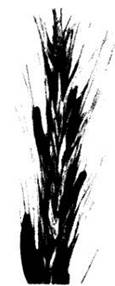
The tough, darkly pigmented resting structures of ergot—sclerotia—can be seen nestled among the rye spikelets in the accompanying photograph. After dropping from the grain heads, they overwinter in the soil and, upon cold activation, produce multiple multicellular spore-bearing bodies bearing numerous perithecia. Each perithecium contains up to 100 asci, from which ascospores are released during the flowering period of rye and other grasses. The ascospores germinate among the flowers, giving rise to a mycelium that produces abundant conidiospores suspended in a sticky, sugary exudate. This nectar attracts insects, which help disseminate the spores to other grass flowers. As the fungus proliferates within individual immature grains, it transforms them into the dark, dormant structures visible in the photograph. These mature synchronously with the grain and are harvested and dispersed alongside it. Specific ergot alkaloids are synthesized exclusively during the Formation of the sclerotia.
Appendix 3. Predatory Fungi
Predatory fungi are among the most specialized representatives of this kingdom. Over the course of evolution, they have developed an array of adaptations for capturing small animals as a food source. Microscopic species leading this lifestyle have long been known, and it has recently been discovered that certain agaric fungi also attack and consume nematodes (small Roundworms). For instance, the oyster mushroom (Pleurotus ostreatus) grows on decaying wood, releasing a substance that immobilizes nematodes. Following this, the fungal hyphae entangle these tiny worms and penetrate their bodies. Apparently, the prey serves primarily as a nitrogen source, supplementing the limited amounts of this element obtained from wood.
Certain microscopic imperfect fungi secrete a sticky substance On the surface of their hyphae, to which Protozoa, rotifers, small insects, and other animals adhere. Over 50 species from this class capture nematodes using specialized "snares." Upon the appearance of prey, the hyphae form loops that rapidly swell, tightening like a lasso when a worm crawls along their inner surface. Presumably, stimulation of the fungal Cell wall triggers an increase in the concentration of osmotically active substances within The Cell, leading to Water uptake and a rapid rise in turgor pressure.
A. The oyster mushroom Pleurotus ostreatus. B. Hyphae of the oyster mushroom converging near the oral opening of an immobilized nematode. C. The predatory imperfect fungus Arthrobotrys dactyloides capturing a nematode. The "snares" consist of three-celled rings that rapidly swell, increasing the hyphal diameter approximately threefold and thereby "lassoing" the worm. Once the prey is caught, the hyphae grow into its body and digest it. Following the activation of the trigger mechanism, the ring cells can fully expand in less than 0.1 s

Last update: 07/08/2026
Editorial and Educational Adaptation: This material has been compiled based on the primary/original source text. The project team performed an editorial review, corrected technical inaccuracies, structured sections, and adapted the content for an educational format.
What was processed:
- elimination of formatting defects (OCR errors, structural breaks, corrupted characters);
- editorial organization of content;
- standardization of terminology in accordance with academic sources;
- verification of factual statements against the original source text.
All mentions of the author, publication year, and origin of the primary text have been preserved in accordance with the source.