Pharmacognosy with the Fundamentals of Plant Biochemistry - Kovalyov, V. M. 2004
Special Part
Carbohydrates
Medicinal plants and raw materials containing heteropolysaccharides
APRICOT GUM — GUMMI ARMENIAE
Common apricot — Armeniaca vulgaris Lam., fam. rose family — Rosaceae. The name comes from the Latin armeniacus, -a, -um (Armenian) and vulgaris, -e (common).
Plant. A deciduous tree, less commonly a shrub. Leaves alternate, broad, ovate-orbicular, nearly cordate at the base, entire, irregularly serrate. Flowers bisexual, nearly sessile, 5-petaled, white or pink, solitary or occasionally paired in the leaf axils. Fruit—a juicy, fleshy drupe, orange or yellow, with a velvety-pubescent surface. Flowers early, before the appearance of leaves.
Distribution. Found wild in the Caucasus and Central Asia. Cultivated in many countries. In Ukraine, it is grown as an industrial crop in the southern regions.
Harvesting. Gum formation in fruit trees results from the mucous degeneration of Cells, primarily the parenchyma. Gum exudations form with varying intensity on both trunks and branches. The highest yield of gum is observed in trees aged 10–15 years, especially after fruit ripening. Tapping increases gum flow. In Central Asia, from 0.5 to 1.5 kg of gum is harvested per tree per season. These are pieces of various Sizes and Shapes: small (5–10 g) teardrop- or icicle-shaped, and large (10–50 g) spherical or irregularly lumped. The mass of exudations can reach 80–100 g. Freshly harvested gum is light yellow and transparent; older pieces lose their transparency and acquire a yellowish-brown color.
Chemical composition. Upon Hydrolysis, apricot gum yields 43% galactose, 41% arabinose, and 16% glucuronic acid; it also contains protein and Mineral Substances.
Application. Apricot gum has replaced imported gum arabic. It forms viscous solutions with emulsifying and enveloping properties, and is used for the preparation of oil emulsions and demulcent solutions.
Class="center">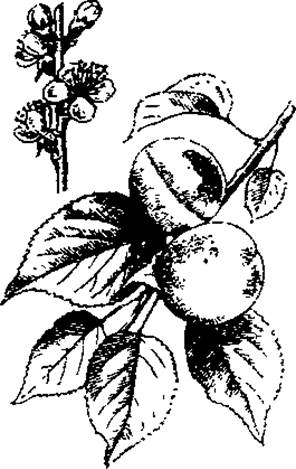
TRAGACANTH — GUMMI TRAGACANTHAE
Various species of tragacanth milkvetches (Astragalus), belonging to the subgenus Tragacanthae of the bean family — Fabaceae. The subgenus Tragacanthae includes over 240 species, of which 12–15 are of industrial importance. These include the felt-branched milkvetch (Astragalus piletocladus Freyn et Sint.), gum milkvetch (A. gummifer L.), small-headed milkvetch (A. microcephalus Willd.), Andrey's milkvetch (A. andreji Rzazade), nude milkvetch (A. denudatus Stev.), densely leaved milkvetch (A. pycnophyllus Stev.), densest milkvetch (A. densissimus Boriss.), multi-leaflet milkvetch (A. multifoliatus Boriss.), etc.
Tragacanth is an air-dried gum exuding from cracks or incisions in the trunks and branches of milkvetch plants. Tragacanth was known to the ancient Greeks and Romans, and in the Middle Ages to the Arabs, who introduced it into European pharmacy. Initially, tragacanth was imported from Iran. In the 1930s, reserves of tragacanth milkvetches were discovered in Turkmenistan, and their exploitation was established.
Harvesting. Tapping begins in May during calm weather. The Base of the shrub is cleared of soil, excavated to a depth of 5 cm, and an incision is made with a sharp knife. The gum solidifies in 3–4 days; it is then collected and sorted by color. Natural exudations are sometimes also collected.
Chemical composition. Tragacanth is a mixture of acidic Polysaccharides whose acidity is due to uronic acids. Bassorin, the neutral polysaccharide fraction, constitutes 60–70% of the gum. The acidic fraction (arabinogalacturonan) consists of two polysaccharides. One of them is arabinogalactan, and the other is tragacanthic acid, which is composed of galacturonic acid, xylose, fucose, and galactose. The Structure of individual Gums has been studied and described. In addition to L-arabinose and D-galactose, arabinogalactan contains minor amounts of L-rhamnose and D-galacturonic acid. The main chain of this polysaccharide is composed of galactopyranose residues mostly linked by 1 → 6 bonds, with a small number of 1 → 3 bonds. Highly branched PARTS OF THE macromolecule include arabinofuranose residues with 1 → 2, 1 → 3, and 1 → 5 bonds. The proportion of the acidic fraction (arabin) is 8–10%. In addition, it contains starch, Cellulose, Water, and mineral substances.
Application. Tragacanth gum is used as an emulsifier in The production of emulsions, tablets, and pills, but the main consumers of tragacanth are the textile, food, perfumery, cosmetic, and paper-printing industries.
FLAXSEED — SEMINA LINI
Common flax — Linum usitatissimum L., fam. flax family — Linaceae. The name comes from the Latinized Greek linon (thread) and the Latin usitatissimus, -um (superlative of usitatus — used, common).
An annual herbaceous plant with a glabrous, cylindrical stem, branched from the base or in the upper part, 0.6–1.5 m tall. Leaves narrow-lanceolate or linear, alternate. Flowers sky-blue or violet, gathered at the top of the stem in spreading corymbose inflorescences. Calyx 5-parted, corolla 5-petaled, stamens five or ten. Fruit—an ovate or globose capsule containing numerous small, shiny seeds. The seeds are flattened, ovate, pointed at one end and rounded at the other, asymmetric, up to 6 mm long and up to 3 mm thick. The surface is smooth, light yellow to brown in color, with a light yellow seed scar.
Distribution. Unknown in the wild. Cultivated in CIS countries and Western Europe (France, Belgium).
Harvesting. Flaxseed harvesting is mechanized. The plants are dried in windrows or on a drying floor in the sun. After threshing, the seeds are dried on a drying floor or in a dryer at a Temperature of 45 °C. They must be protected from moisture, which makes the seeds slippery.
Chemical composition of the raw material. The seeds contain mucilage (6%), drying fatty oil (30–48%), as well as the enzyme linamarase, the cyanogenic glycoside linamarin (1.5%), protein (2.5%), sugars, etc.
Biological activity and application. The seeds exhibit laxative, secretolytic, demulcent, and anti-inflammatory effects. Seeds swollen in water increase fecal mass volume, enhance its transit, and exert a cleansing effect in colon atony and obesity. Aqueous mucilage infusions exhibit protective, soothing, and anti-inflammatory effects in esophagitis, gastric and duodenal ulcers, enteritis, and colitis (administered via enemas). Topically, mucilage in the form of compresses is used for trophic ulcers, Burns, and radiation Skin injuries.

MARSHMALLOW ROOT — RADICES ALTHAEAE; MARSHMALLOW HERB — HERBA ALTHAEAE OFFICINALIS
Marshmallow — Althaea officinalis L.
Armenian marshmallow — Althaea armeniaca Ten., fam. mallow family — Malvaceae
Marsh mallow (common mallow), Armenian mallow; the name comes from the Greek althaia, a plant name used by Theophrastus and Dioscorides; Latin officinalis, -e means medicinal or of the apothecary, and armeniacus, -um, -um means Armenian.
Plant description. Both species of marsh mallow are perennial herbaceous plants featuring a short, thick rhizome from which thick, cylindrical adventitious roots emerge, measuring 10-25 cm in length and up to 2 cm in thickness, along with finer rootlets. The root surface is longitudinally grooved; the fracture surface is granular and rough in the center, fibrous on the outside, and reveals separated, long, soft bast fibers. The external color of the roots is light brown, while the fracture is white, yellowish-white (in *Althaea officinalis*), or grayish (in *Althaea armeniaca*). When broken, dry roots produce a fine dust due to starch release. The stem is erect, 0.6-1.5 m tall, sparsely branched, rounded, grayish-green, velvety, up to 8 mm thick, with longitudinal grooves and covered in hairs. The leaves are alternate, petiolate, velvety-pubescent on both sides, grayish-green, with irregularly toothed margins; the lower leaves are ovate and five-lobed, while the upper ones are oblong-ovate, three-lobed, or sometimes nearly triangular, 2-10 cm long and 1-9 cm wide. The entire plant is grayish and pubescent. The flowers are axillary, borne on short pedicels, forming a spike-like cluster at the top of the stem. The corollas are pink, sometimes reddish (pale pink in Armenian mallow), consisting of five obovate petals; the persistent calyx features an epicalyx of 8-12 lanceolate sepals 10-20 mm in length. The fruit is a schizocarp; the mericarps resemble small discs that separate into individual flat, Kidney-shaped seeds upon ripening.
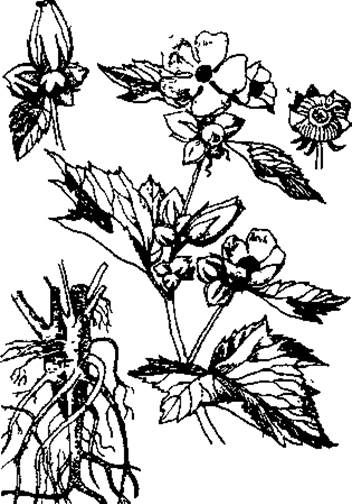
Distribution. Marsh mallow (*Althaea officinalis*) grows wild in the forest-steppe and steppe zones, occurring almost everywhere in Ukraine. Its natural range encompasses the middle and southern belts of the European part of Russia, Crimea, and the Caucasus; it is also cultivated in specialized farms. Armenian mallow is distributed in the Caucasus and the foothills of Central Asia. Both species inhabit damp meadows, roadside ditches, riverbanks, and occasionally thicket borders and forest edges.
Harvesting and Processing. The roots are harvested in autumn during fruit ripening (September–October) or in spring before vegetation resumes (March–May). Two- to three-year-old roots are dug up, cleaned of soil, trimmed of stems and woody parts, and quickly washed in cold water to prevent them from becoming slimy. The dried roots are peeled, cut into pieces, and split lengthwise. They are then spread in a thin layer and dried at 45-60 °C. Properly dried roots snap with a crisp crack.
Wild marsh mallow populations are easily depleted; therefore, during harvesting, seeds should be resown, well-developed specimens left for pollination, and young growth protected.
The raw material should be stored in a dry place in bales or fabric bags marked with a hygroscopic warning. The roots must be protected from moisture, as it causes darkening and mold growth.
The herb is harvested during the second year of vegetation at the flowering stage. It is mown at a height of 20-30 cm from the ground, wilted in windrows, and finish-dried under sheds.
Chemical composition. The roots contain polysaccharides (up to 35%)—mucilage (glucan and arabinogalactan), pectic substances (acidic galacturonorhamnan), and starch (about 37%).
The herb contains CARBOHYDRATES (up to 10%), including mucilages (neutral polysaccharides composed of glucan and arabinogalactan) and pectic substances. It also contains Flavonoids (Glycosides of kaempferol, quercetin, and diosmetin), the coumarin scopoletin, phenolcarboxylic acids, traces of essential oil, carotene, and ascorbic acid.
Biological activity and Applications. Marsh mallow preparations exhibit enveloping, expectorant, mucolytic, anti-inflammatory, and analgesic effects. Dry root powder, chest herbal teas, infusions, syrup, liquid and dry extracts, and cough mixtures are widely used. They are prescribed for respiratory tract disorders (Bronchitis, tracheitis) and gastrointestinal diseases (PEPTIC ULCER DISEASE, gastritis, colitis). Pharmaceutical manufacturers use the herb to produce Mukaltin, an expectorant medication used for colds and other acute or chronic conditions of the throat and Upper Respiratory Tract.
GREATER PLANTAIN LEAVES — FOLIA PLANTAGINIS MAJORIS; FRESH GREATER PLANTAIN HERB — HERBA PLANTAGINIS MAJORIS RECENS
Greater plantain — *Plantago major* L., family Plantaginaceae
Greater plantain; the name derives from the Latin planta (SOLE OF THE FOOT) and ago (to drive or lead), and major (greater).
A perennial herbaceous plant featuring a shortened rhizome and numerous adventitious thread-like roots.
The leaves are broadly ovate or elliptic, glabrous, with 3-7 arcuate Veins, winged petioles, and small sheaths, gathered in a basal rosette. Scapes grow up to 40 cm long, are furrowed, and terminate in a dense, elongated spike-like inflorescence.
The flowers are small, inconspicuous, and brownish. The fruit is a two-celled elliptic capsule containing small, dark brown seeds (up to 16 seeds per capsule).
Distribution. This cosmopolitan plant grows almost everywhere: near human settlements, in meadows, fields, forest edges, and along roadsides. It is cultivated in Ukraine.
Harvesting and processing. Harvested in summer during the flowering phase; leaves are cut with a knife or sickle or mown, leaving one well-developed plant per 1 m2. Impurities and yellowed leaves are then discarded, and the leaves are spread out in a 5 cm thick layer to dry outdoors in the shade with good ventilation, or in dryers at 50-60 °C. The end of the drying process is determined by the brittleness of the petiole. The raw material is hygroscopic and must be stored in a dry, well-ventilated room.
Chemical composition. Contains polysaccharides (20%), represented by pectic substances and neutral glycans. Mannitol, sorbitol, allantoin, Iridoids (aucubin and catalpol), Steroids, flavonoids (derivatives of luteolin, quercetin, apigenin, etc.), and Tannins are also present. The leaves and herb contain carotenoids as well as Vitamins C and K.

Biological activity and applications. Plantain preparations exhibit anti-inflammatory, expectorant, and wound-healing properties, and stimulate regenerative processes. Plantain tincture is used internally for bronchitis, pertussis, and asthma, and applied externally to treat boils and fistulas. Plantain juice is used for anacidity-related gastritis, ulcers, and chronic colitis. Plantaglucid, a complex of polysaccharides extracted from the leaves, is used to treat gastritis and peptic ulcer disease with normal or reduced acidity.
In homeopathy, the entire fresh flowering plant is used for earaches, toothaches, hemorrhoids, and diarrhea, and externally for trigeminal neuralgia and lichen.
PSYLLIUM SEEDS — SEMINA PSYLLII
FRESH PSYLLIUM HERB — HERBA PLANTAGINIS PSYLLII RECENS
Flea plantain — Plantago psyllium L., fam. Plantaginaceae. The common name comes from the Latin planta (sole) and ago (to lead, walk), while psyllium derives from the Greek psylla (flea).
An annual herbaceous plant up to 40 cm tall, featuring a small taproot and an erect, branched stem. The leaves are opposite, linear, pubescent, entire or distantly toothed in the upper part, up to 3 cm long and 0.4 cm wide. The flowers are small, pink, tetramerous, grouped into small, dense, ovoid heads on elongated peduncles in the leaf axils. The fruit is a bilocular, elliptic capsule. The seeds are elongated-scaphoid with inrolled margins, convex on one side and slightly concave on the other, bearing a scar in the form of a white spot; they are glossy, smooth, mucilaginous, and nearly black in color.
Distribution. This species is native to the Mediterranean region. It is cultivated in Ukraine.
Harvesting. The seeds are harvested during the ripening of the fruits in the lower inflorescences. The mown grass is dried under shelter, protecting it from moisture (as the seeds readily become mucilaginous), threshed, and then the seeds are cleaned of impurities and dried down to the required moisture content.

The herb is mown at the onset of flowering and immediately transported for juice extraction. The shelf life of the fresh herb is 24 hours.
Chemical COMPOSITION OF THE raw material. The seeds contain mucilage (10-15%), Proteins, and fatty oil. The mucilage consists of neutral and acidic fractions. Hydrolysis products yield D-xylose, L-arabinose, L-rhamnose, D-galactose, and galacturonic acid. The herb also contains polysaccharides, triterpenoid saponins, monoterpene Alkaloids, as well as carotenoids, flavonoids, tannins, and the iridoid glycoside aucubin.
Biological activity and application. The seeds act as an anti-inflammatory, emollient, and mild laxative agent. For chronic constipation, they are consumed whole, washed down with plenty of warm water. Their action is triggered by a threefold to fivefold volume expansion in the gut, which stimulates the Large Intestine receptors. In the form of mucilage, they are used internally as an enveloping agent for colitis and externally as emollient and analgesic poultices.
COLTSFOOT LEAVES — FOLIA FARFARAE
Coltsfoot — Tussilago farfara L., fam. Asteraceae
The common name derives from the Latin tussis (cough) and agere (to drive away, expel), and far from farina (flour) combined with ferre (to bear).
A perennial herbaceous plant with a long, branching rhizome that produces shoots early in spring, 10-24 cm tall, bearing scaly, ovate-lanceolate, acute, underdeveloped leaves, predominantly purple-violet in color. The flower heads are solitary, terminal, with yellow flowers; the marginal flowers are female, narrow-pseudoligulate, while the central ones are tubular and male. It blooms in April-May. The cypselae are cylindrical and bear a pappus. After flowering, the shoots wither away, and the rhizome produces large, long-petiolate, cordate, leathery leaves with sinuate-toothed or occasionally finely dentate margins, dark green and glossy on the upper surface, and white-tomentose underneath.

Distribution. It grows throughout Ukraine on sandy and clayey deposits, in quarries, along ditch slopes, and near rivers. In some areas, it forms dense thickets.
Harvesting. The leaves are harvested during the phase of full development, free from rust fungus damage; they are cut or mown, leaving a petiole no longer than 5 cm. Drying is carried out in the shade with good ventilation or artificially at 50-60 °C. The dryness of the raw material is determined by the brittleness of the petiole. Store in a dry room.
Chemical composition of the raw material. The leaves contain about 8% mucilage (hydrolysate contains glucose, galactose, pentoses, and uronic acids), carotenoids, ascorbic acid and organic acids (gallic, malic, tartaric), essential oil, sitosterol, saponins, the bitter glycoside tussilagin, flavonoids ( rutin, hyperoside), tannins, and pyrrolizidine alkaloids.
Biological activity and application. The emollient, expectorant, and anti-inflammatory Properties of the raw material are utilized in treating upper respiratory tract diseases. The leaves are a component of pectoral and diaphoretic teas.
KELP THALLI — THALLI LAMINARIAE
Japanese kelp — Laminaria japonica Aresch
Sugar kelp — Laminaria saccharina (L.) Lam., fam. Laminariaceae
Common names: Japanese kelp, sugar kelp (sea kale); the generic name originates from the Latin lamina (plate, blade).
Plant. A perennial alga 2-12 m long and 10-35 cm wide. The thalli are biennial, consisting of strap-shaped, succulent, pointed blades; the margins are entire and wavy, with colors ranging from greenish-gray to greenish-black. A perennial cylindrical stipe develops at the base, terminating in rhizoids that anchor the alga to the substrate. The plant is sporiferous, with sporangia maturing in September-October.
Distribution. It is found along the coasts of the Sea of Japan, the Sea of Okhotsk, the White Sea, the Barents Sea, and around Pacific islands, forming dense thickets up to 10 km wide at depths of 4-10 m.
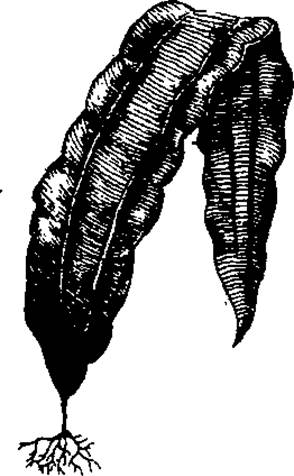
Harvesting. Thalli are harvested from June to October, either after storms or using a 4-6 m long device equipped with branching wires at the end. Special scythes are sometimes used. To allow the beds to regenerate, at least 10% of the second-year thalli must be left behind. Trawling for kelp is strictly prohibited; first-year plants are not harvested, nor are second-year plants during their sporulation period. They are dried on concrete pads or racks in clear weather or in tunnel dryers at 50-80 °C. The dried Algae are stacked under sheds and covered with tarpaulin or polymer material for 8-15 days, which makes the thalli elastic. Afterward, the algae are sorted, cleaned, shredded, and packaged. The raw material is hygroscopic and spoils easily from moisture.
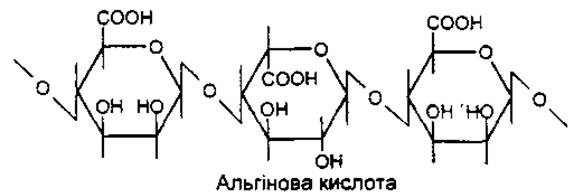
Chemical composition of the raw material. It contains organic bromine and iodine (at least 0.1%), and polysaccharides, primarily alginic acid (ranging from 13 to 35%). This linear glycan consists of D-mannuronic and L-guluronic acid residues linked by 1–4 glycosidic bonds. The ratio of these acids in various algae varies from 1:0.5 to 1:3.
The STRUCTURE OF THE neutral polysaccharides, laminarin and sulfated fucoidan, has been established. Laminarin is a lightly branched glucan composed of D-glucopyranose molecules linked by 1 → 3 and 1 → 6 bonds. Fucoidan is formed by linear molecules of fucose linked by 1 – 2 bonds, with sulfate groups attached at the 4th position.
The raw material also contains magnesium, nitrogenous compounds, vitamins B1, B2, B12, carotenoids, ascorbic, pantothenic, and folic acids, as well as 23 Amino Acids (glutamic acid, aspartic acid, Alanine, etc.).
Biological activity and application. Kelp (Laminaria) serves as a prophylactic agent against endemic goiter and atherosclerosis, acting as a mild laxative due to its Swelling capacity. It is used for the Prevention and Treatment of hyperthyroidism and mild forms of Graves' disease, and as a dietary Supplement, especially for the elderly.
Preparations such as Laminarid, Algigel, and Algisorb exhibit laxative and anti-sclerotic effects. Topically, the ointment Algofin is used for its anti-inflammatory and antimicrobial properties.
Last update: 06/08/2026
Editorial and Educational Adaptation: This material has been compiled based on the primary/original source text. The project team performed an editorial review, corrected technical inaccuracies, structured sections, and adapted the content for an educational format.
What was processed:
- elimination of formatting defects (OCR errors, structural breaks, corrupted characters);
- editorial organization of content;
- standardization of terminology in accordance with academic sources;
- verification of factual statements against the original source text.
All mentions of the author, publication year, and origin of the primary text have been preserved in accordance with the source.