Fundamentals of Biochemistry - Filippovich, Y. B. 1999
Lipids and Their Metabolism
General Characteristics and Classification of Lipids
Lipids are defined as naturally occurring Organic compounds that are insoluble in Water but soluble in fat Solvents (such as gasoline, petroleum ether, diethyl ether, acetone, chloroform, carbon disulfide, as well as methyl and ethyl alcohols, etc.). They are derivatives of Higher Fatty acids and can be utilized by living organisms.
The name of one lipid group—fats (derived from the Greek lipos, meaning fat)—has come to designate the Class as a whole. Because lipids are a diverse group of organic compounds, they lack a unified chemical definition. Nevertheless, they can broadly be considered a class of organic compounds, most of which are esters formed by polyhydric or specifically structured alcohols and higher fatty acids. Depending on their composition, Structure, and biological role, lipids are classified as follows.
1. Simple Lipids are two-component substances consisting of esters of higher fatty acids with glycerol, higher alcohols, or polycyclic alcohols. These include: fats (triglycerides), which are esters of higher Fatty Acids and the trihydric alcohol glycerol; Waxes, which are esters of higher fatty acids and higher alcohols; and sterides, which are esters of higher fatty acids and polycyclic alcohols known as sterols.
2. Complex Lipids feature multi-component molecules whose constituents are linked by various types of chemical bonds. They include: Phospholipids, composed of residues of higher fatty acids, glycerol or other polyhydric alcohols, phosphoric acid, and various nitrogenous bases; and Glycolipids, which contain CARBOHYDRATES In addition to a polyhydric alcohol and a higher fatty acid.
Recently, two new groups of lipids have been discovered that incorporate both simple and complex lipid features. These include: diol lipids—simple and complex esters of dihydric alcohols with higher alcohols and higher fatty acids, occasionally containing phosphoric acid, nitrogenous bases, and carbohydrates; and Ornithine lipids, built from higher fatty acid residues and The amino acid ornithine (or Lysine), sometimes incorporating dihydric alcohols.
Simple and complex lipids are readily saponified. However, the total lipid fraction extracted from natural material using fat solvents always contains substances that share the solubility of lipids but cannot be saponified. These are referred to as the unsaponifiable lipid fraction. This fraction includes free higher fatty acids, higher alcohols, polycyclic alcohols (sterols), sterol derivatives (Steroids), Fat-soluble Vitamins, higher homologs of saturated Hydrocarbons, and Other Compounds. This has led some authors to consider the unsaponifiable fraction as a distinct lipid group. However, there is insufficient justification for thus expanding the BOUNDARIES OF THE lipid class.
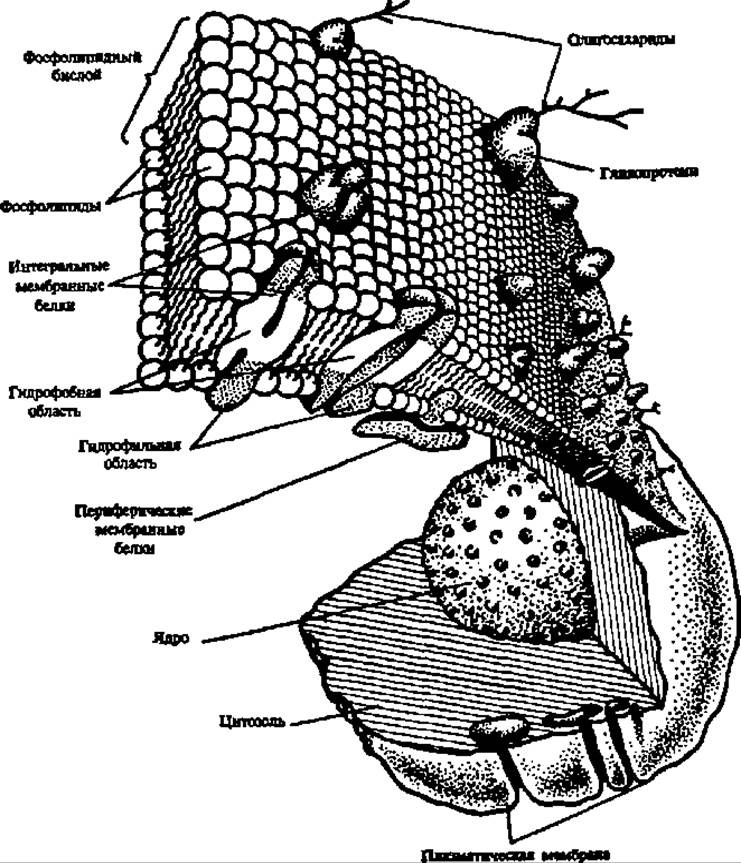
Fig. 120. Model of the Structural Organization of the intracellular membrane
Among these substances, fats, sterides, phospholipids, and diol lipids are ubiquitous, playing a major role in The formation of Cellular Structures and biochemical processes. Waxes are considerably less significant in this regard. It was long believed that glycolipids occurred exclusively in Nervous Tissue, but they were subsequently discovered in plant METABOLISM/14.html">Chloroplasts. Ornithine lipids are characteristic of microorganisms.
Lipids can form complexes with many other organic compounds (especially macromolecular ones such as Proteins and carbohydrates), which currently play a crucial role in carrying out vital biochemical Functions. Through such complexes, particularly with proteins, lipids make up Cytoplasmic membranes, subcellular particles, and bacterial membranes. For instance, lipids account for about 15% of the dry weight of Cell nuclei, ~20% in Mitochondria, ~30% in The Endoplasmic reticulum, and ~10% in the hyaloplasm. Triglycerides predominate in the hyaloplasm (~70% of lipids), whereas phospholipids, sterides, and glycolipids account for over 90% in other subcellular elements.
The Importance of lipids, particularly fats, as substrates for oxidation and energy supply is well known: The breakdown of 1 g of fat to CO2 and H2O releases 38.9 kJ, whereas the breakdown of 1 g of carbohydrates or proteins yields only 16.1 kJ. Naturally, lipid oxidation yields metabolites that are actively involved in The Biosynthesis of other compounds (see Chapter XIII). Another vital function of lipids is structural. By forming the membrane matrix as lipid bilayers, lipids serve as the foundation of any biological membrane. As seen in Fig. 120, The Lipid Bilayer constitutes the most essential part of the membrane, comprising 15 to 50% of its dry weight. These functions of lipids (energetic, storage, provision of metabolites, and structural) are termed canonical.
Participation in the cellular membrane apparatus enables such crucial BIOLOGICAL FUNCTIONS OF lipids as The regulation of certain Hormones and enzyme activities (several hundred lipid-dependent Enzymes are currently known), influence on The transport of metabolites and macromolecules, control of Biological Oxidation and Energy Metabolism, connection with DNA Replication and its template activity, compartmentalization of metabolic processes within The Cell leading to the formation of membrane-bound Organelles (chloroplasts, mitochondria), involvement in intercellular interactions (especially during embryonic and post-embryonic development), and the provision of molecular memory and pictographic information storage mechanisms. These functions are characterized as non-canonical. For elucidating several of these mechanisms, a large group of Soviet scientists (E. M. Kreps, L. D. Bergelson, R. P. Evstigneeva, et al.) was awarded the State Prize in 1985.
The properties of membranes as supersystems regulating cellular metabolism, their conformational rearrangements, and changes in their viscosity depend on The ratio of various lipid types within the membrane, their degree of oxidation, the state of inter- and intramembrane lipid transport, and other factors. All these phenomena are so critical for understanding life processes that membrane biochemistry is gradually evolving into membrane biology, which explains A number of fundamental principles in organismal development.
Last update: 06/08/2026
Editorial and Educational Adaptation: This material has been compiled based on the primary/original source text. The project team performed an editorial review, corrected technical inaccuracies, structured sections, and adapted the content for an educational format.
What was processed:
- elimination of formatting defects (OCR errors, structural breaks, corrupted characters);
- editorial organization of content;
- standardization of terminology in accordance with academic sources;
- verification of factual statements against the original source text.
All mentions of the author, publication year, and origin of the primary text have been preserved in accordance with the source.