General Biotechnology: Lecture Course Part II - Blinov V.A. 2004
Environmental Biotechnology
♦ Biological challenges in environmental protection and restoration.
♦ Aerobic wastewater Treatment processes.
♦ Anaerobic wastewater treatment systems. Methane Fermentation and economic aspects of such Processing.
Biological challenges in environmental protection and restoration. Inconsiderate human activity in certain cases, industrial and transport technological progress, alongside the intensification of agriculture and food production for a rapidly growing global population, have caused environmental imbalances, disrupted established ecosystem equilibria, and degraded the ecological situation.
Broadly speaking, the current global ecological situation can be outlined as follows. Soil erosion has significantly increased recently, accompanied by compaction, chemical and weed contamination, and a sharp decline in humus content. Water bodies are heavily polluted with various chemicals, leading to depleted fish stocks and altered aquatic flora and fauna. The Earth's atmosphere is saturated with harmful gases—SО2, N2О, СО2, and СО—and heavily laden with particulate matter. Acid rain (pH 4.5–5.7) has become commonplace. The ozone layer is being depleted by the action of freons and N2О, leading to intensified ultraviolet radiation. By the dawn of the third millennium, 15–20% of animal and plant species had vanished, primarily due to tropical deforestation and chemical runoff into water bodies. As environmental conditions deteriorate, human diseases are becoming more frequent, genetic shifts are registered more often, and serious disruptions in economic activity have emerged.
Biotechnological manufacturing is far from risk-free, although The Role of biotechnology in processing and utilizing human economic waste and by-products is substantial and continues to grow annually. Consider several Examples. In 1979, France generated 395 million tons of organic waste. Japan annually produces 76.6 million tons of rice straw and husk, wood residues, and other agricultural and food waste. Various cereal crops cultivated globally yield approximately 1,700 million tons of straw annually, much of which remains unused. Large-scale biotechnological production consumes vast amounts of natural water, generating significant wastewater volumes. For instance, industrial processing requires 10 liters of water per 1 ton of crude oil; canning 1 jar takes 40 liters; producing 1 kg of paper takes 100 liters; 1 kg of woolen fabric takes 600 liters; 1 ton of dry cement takes 3,500 liters; 1 ton of steel takes 20,000 liters; while producing 1 ton of dry Yeast consumes over 100,000 liters of water and more than 10 tons of steam. Another example: a single brewery can generate about 107 liters of effluent daily, with an oxidation potential equivalent to the sewage of a city with a population of 200,000.
Like any industrial human activity, biotechnology can also cause environmental pollution. This is primarily associated with The Use of massive volumes of process water and gaseous emissions. The ecological hazard of such emissions stems from the presence of living or dead microorganism Cells, as well as spent culture medium residues containing various BIOLOGICALLY ACTIVE SUBSTANCES (BAS). This can alter The Structure of ecological niches in the soil, water, and surrounding areas of manufacturing plants, disrupting the composition of microbial communities and their natural roles in biogeochemical nutrient cycling. Furthermore, a highly undesirable consequence of such emissions is
Waste treatment can conventionally be divided into four stages:
♦ breakdown of complex protein aggregates into simple soluble substances and their Separation from insoluble matter;
♦ liquefaction and anaerobic Treatment of the insoluble residue using microorganisms;
♦ transformation of organic nitrogen into NH4+ (ammonification) followed by The oxidation of ammonium to nitrates;
♦ conversion of organic carbon into СО2.
Gaseous wastes. Their range is relatively narrow, dictated by the specifics of enzyme-catalyzed biochemical reactions. The gaseous waste of biotechnological processes utilizing aerobic microorganisms is "exhaust air." It must not be released into the atmosphere without prior purification and neutralization. Exhaust air is typically a highly dispersed aerosol where the dispersed phase consists of liquid droplets and/or microorganisms. Depending on their size and air current dynamics, they can settle, travel long distances, and exert harmful effects on humans. Another gaseous byproduct of biotechnological industries is carbon dioxide, which is produced in significant quantities during fermentation, oxidation, and Methane synthesis.
Waste utilization. This depends on the quality of waste generated in biotechnological processes. For instance, pathogenic toxin-producing microbes must be completely neutralized (incinerated). Streptomycete biomass is inactivated by thermal treatment and subsequently added to livestock feed or applied to soil as organic fertilizer. Alternatively, it can be sent to municipal wastewater treatment plants or subjected to methane fermentation. When neutralizing solid waste from microbiological industries, one must account for the potential antigenicity of such microbial mass, thereby eliminating any sensitizing effects on the macroorganism. Finally, nearly all organic substances, with the exception of Lignin, serve as substrates for generating methane and carbon dioxide.
There are specific considerations for utilizing waste from certain manufacturing processes. For example, brewery waste is widely used for fattening farm animals due to its high nutritional value. While the protein content in wet yeast is approximately 7%, it is 4–5% in malt and hop spent grain, and 44% in protein residue. The digestibility of wet yeast by pigs and ruminants is 85%, whereas that of spent malt grain is only 52%, despite being enriched with B-group Vitamins and Trace Elements. In this case, the challenge lies in the fact that the bitterness of female hop Morphology/15.html">INFLORESCENCES AND THEIR transformation products resulting from boiling with malt wort hinders the utilization of spent grain by animals. These bitter compounds include humulon (alpha-bitter acid), lupulon (beta-bitter acid), dihydrohumulinic acid, resins, etc.
From 1 kg of hops used in brewing, approximately 7 kg of hop spent grain is obtained. Due to its bitterness, it is most commonly used as livestock bedding, added to compost, burned alongside coal, or used for fish feeding. Overall, the brewing industry is classified as a low-waste, economically profitable, and environmentally sound sector.
Wine production utilizes grain, potatoes, molasses, and other raw Materials. Solid winemaking residues are used as feed additives; carbon dioxide, as in similar industries, is captured, purified, deodorized, liquefied, and marketed as "dry ice." Additionally, Carbon dioxide is used in soft drink manufacturing, for preserving feed and food products, and in industrial engineering.
Winemaking also generates other by-products: grape pomace (up to 20% of the grape weight), yeast cells, and sediment sludges. These wastes yield ethanol, salt-based products encompassing a wide spectrum of Organic compounds, generally determined as BODn. When measuring biochemical oxygen demand (BOD), the quantity and quality of microflora are of paramount importance. The optimal approach is to use microflora from operating biological systems that have already adapted to the specific spectrum of pollutants. Furthermore, the quantity of introduced microflora must correspond to its concentration in functioning treatment facilities.
The biodegradability of certain organic compounds (mg O2/1 mg of substance) is as follows:
Organic compounds |
COD |
BOD5 |
BODn |
Methyl alcohol |
1.50 |
1.19 |
1.20 |
Ethyl alcohol |
2.08 |
1.25 |
1.85 |
Butyl alcohol |
2.95 |
1.20 |
1.25 |
Formic acid |
0.35 |
0.12 |
0.28 |
Acetic acid |
1.07 |
0.77 |
0.86 |
Butyric acid |
1.82 |
1.40 |
1.40 |
p-Aminophenol |
1.00 |
0.00 |
0.00 |
Hydroxymethylfurfural |
0.00 |
0.71 |
1.00 |
Benzene |
2.38 |
1.10 |
1.10 |
Depending on The Nature and concentration of pollutants, various wastewater treatment Methods can be applied. The most common are mechanical (sedimentation, filtration), mechano-physical (coagulation, neutralization followed by sedimentation), physico-chemical (Ion Exchange, sorption), thermal, and Biochemical Methods. Biochemical treatment methods belong to biotechnological processes and are utilized when wastewater contains significant quantities of diverse contaminants, each present in small amounts. Microorganisms serve as the active agents in such purification. Pollutants affecting water bodies and soil include:
♦ various poisons and hazardous substances—heavy metal salts, arsenic, cyanides, phenols, aniline, pesticides, etc.
They inhibit enzyme system activity, bind oxygen, or disrupt metabolic processes;
♦ acids and alkalis, which alter the reaction medium in natural water bodies and lead to ecological imbalances in living systems;
♦ various polycyclic aromatic Hydrocarbons (PAHs), which are often resistant to microbial attack and remain undegraded;
♦ soluble organic compounds containing carbon and nitrogen, petroleum products, CARBOHYDRATES, etc.;
♦ insoluble organic substances—such as starch, Cellulose, lignin, and other high-molecular-weight compounds—that enter water bodies and cause severe environmental damage;
♦ radioactive and other hazardous pollutants.
Under natural conditions, water bodies and soil undergo biological self-purification. However, once the concentration of pollutants exceeds a critical threshold, The Development of living organisms and the self-purification process are disrupted.
There are two major categories of aerobic biological treatment processes: extensive and intensive. Extensive methods are not directly linked to controlled microbial cultivation and include land treatment (irrigation and filtration fields) and stabilization ponds. Intensive methods rely on The activity of activated sludge or biofilm—naturally occurring biocenoses that develop in each specific industrial Setting depending on wastewater composition and the chosen treatment regime.
Activated sludge consists of dark brown flocs of varying shapes, up to several hundred micrometers in size (≈ 150 µm). It is composed of 70% living organisms and 30% inorganic solid particles. These living organisms, together with the solid carrier to which they attach, form zoogloea—a symbiotic community of organisms encased in a common mucilaginous matrix. The ratio of encapsulated to non-encapsulated cells in the sludge is referred to as the zoogloeal index Kz.
Microorganisms isolated from activated sludge belong to various genera, including Actinomyces, Arthrobacter, Bacillus, Bacterium, Corynebacterium, Micrococcus, Pseudomonas, and Sarcina. Pseudomonads are the most abundant. These microorganisms oxidize alcohols, Fatty acids, paraffins, aromatic hydrocarbons, carbohydrates, and Other Compounds. Microorganisms of the genus Bacterium degrade petroleum, paraffins, naphthenes, phenols, aldehydes, and fatty acids, while aliphatic hydrocarbons are oxidized by Representatives of the genus Bacillus. Protozoa—such as sarcodines, flagellates, Ciliates, and suctorians—play a vital role in establishing and maintaining the cellular consortium.
High-quality activated sludge should contain 10–15 protozoan organisms per 1 million bacterial cells. This ratio is known as the protozoan index Kp. The rate of biochemical oxidation increases as the zoogloeal and protozoan indices rise.
The key parameters influencing biological treatment include Temperature, pH, dissolved oxygen concentration, mixing intensity, the concentration and age of the activated sludge circulating within the treatment systems, and the presence of toxic impurities in the water.
Contaminated wastewater is typically treated using the following sequence: coarse impurities are removed via screens, settling pits, or specialized filters, which also separate fats and oils. The resulting sludge is pulverized, degraded aerobically or anaerobically, and then disposed of by incineration or use as fertilizer. The liquid fraction of the wastewater serves as a substrate; it undergoes chemical precipitation, its organic pollutants are broken down biologically, and the purified effluent is either reused or discharged into the sewer system.
Various engineering techniques are used for WASTEWATER treatment. For instance, wastewater stripped of mechanical impurities and grease is passed through a dense bed of crushed stone, coke, or polymer media (such as polystyrene or polypropylene, 0.5–5 cm in size) with a thickness of 0.9–3 m. Within a few weeks, a slimy film composed of microbial biomass forms On the surface. Air is blown from the bottom up (or vice versa), typically at a rate of 0.6 m3/min per 1 m2 of filter area. Microorganisms then efficiently oxidize the organic compounds present in the wastewater.
Sugar refineries utilize stabilization ponds with a depth of 0.6–1.2 m. During warm, sunny weather, unicellular photosynthetic Algae develop in these ponds, exerting a beneficial effect on water purification. At the end of the season, the water is drained, and the sludge is utilized as fertilizer.
Intensive wastewater treatment is also carried out using aerated lagoon systems (where air is typically supplied by mechanical aerators) and aeration tanks (activated sludge tanks). An aeration tank is a reinforced concrete or metal basin where wastewater, microbial sludge, and air are continuously mixed. In treatment plants, aeration tanks generally operate in conjunction with secondary clarifiers, where the sludge settles out.
Class="center">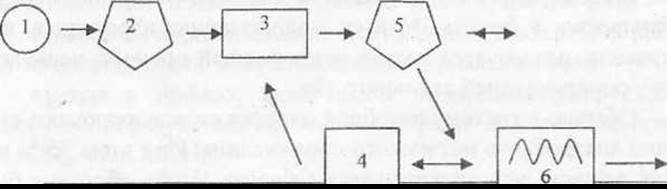
Layout of treatment plant units:
1 - flow equalizer for balancing pollutant concentrations and stabilizing the wastewater flow;
2 - primary/secondary clarifier;
3 - aeration tank or biofilter, where biodegradation of organic compounds takes place;
4 - reaeration basin (regenerator), where activated sludge is revitalized through aeration;
5 - sludge clarifier; 6 - sludge thickener
The known designs of aeration tanks include: channel (plug-flow) type—operates on the displacement principle, has low intensity, open;
Kessener system—surface aerator with limited depth, open;
Simplex system—turbine aerator, open; pneumatic system with ceramic diffusers—intensive aeration using a compressor, open;
Column, tower, or airlift type—low medium turbidity (requires a compressor), closed;
injection type with sludge recirculation and incineration of organic compounds contained in the exhaust gas—intensive aeration (requires a compressor), closed.
The choice of aeration tank design depends on the specific COMPOSITION OF THE wastewater.
The rate of organic matter biodegradation in aeration tanks depends on the concentration of activated sludge (typically 4–10 g/L) and the mass transfer and hydrodynamic CHARACTERISTICS OF THE apparatuses. In turn, mass transfer depends on the aeration system, while hydrodynamics are determined by fluid flow patterns and micromixing conditions within various Zones of the aeration tank. Activated sludge has a moisture content of 95–99%; therefore, it is filtered, pressed, used as fertilizer for forests (less commonly for fields), or processed into biogas. As a rule, all aeration tank modifications implement only a continuous process, most frequently involving sludge recirculation.
Typically, aerobic wastewater treatment systems incorporate an anaerobic methane Digestion stage. During this process, 95% of the sludge dry matter is converted into biogas. For an aeration tank to operate efficiently, it is necessary to accurately determine the oxygen consumption rate, which is directly related to the organic matter utilization rate μs and the activated sludge accumulation rate pt According to the following equation:

where μs is the specific growth rate; Ys is the biomass yield per substrate, g/L (economic coefficient).
The rate of oxygen mass transfer is characterized by the equation:

where Ku is the volumetric mass transfer coefficient for O2, s-1; C*, Cl are the equilibrium and operating concentrations of dissolved oxygen, respectively, g/L.
The amount of oxygen required for substrate oxidation is calculated as

where h is the COD of the substrate, g/L; YO2 is the oxygen consumption, g/g.
Anaerobic wastewater treatment systems. Methane fermentation and the economic aspects of such processing. This type of fermentation is widespread in nature, driving the decomposition of organic matter in swamps, water bodies, soil, and the rumen of animals. Methane fermentation is a strictly anaerobic process that, under artificial conditions, takes place in methane tanks (digesters). Methane fermentation is characterized by three phases:
♦ first, hydrolytic acetogenic Bacteria convert organic waste into Higher Fatty Acids;
♦ next, hydrogen-producing bacteria join the process, resulting in The formation of H2, CO2, and CH3COOH from the higher fatty acids;
♦ in the Third Stage, methanogenic bacteria convert hydrogen, carbon dioxide, and acetic acid into CH4 and CO2.
Thus, methane fermentation involves: 1) polymer biohydrolysis and acidogenesis; 2) acetogenesis and dehydrogenation; 3) methanogenesis.
The Reactions of the first phase are carried out by Bacteroides ruminicola, Butyrivibrio fibrisolvens, as well as bacteria of the genera Clostridium and Peptococcus anaerobius, among others. The total population of proteolytic bacteria in methane tanks reaches 10 cells/mL.
These and many other microorganisms exhibit cellulolytic, proteolytic, lipolytic, sulfate-reducing, and denitrifying activities.
An important role in methane fermentation is played by acetogenic and hydrogen-producing bacteria (the second phase). These bacteria, such as Syntrophobacter wolinii, convert propionate into acetate, CO2, and H2, provided that hydrogen-consuming bacteria are simultaneously present in the medium. The methanogenic system will operate efficiently only when the partial pressure of hydrogen is kept low.
The third phase involves methanogenic bacteria, which belong to the ancient domain of Archaea. They possess a small genome (1/3 that of E. coli) and unique nucleotide sequences; methanogens derive energy from the reduction of CO2. More than 30 species of methanogens belonging to 14 genera and 6 families have been isolated. Methanogens catalyze the following reactions:
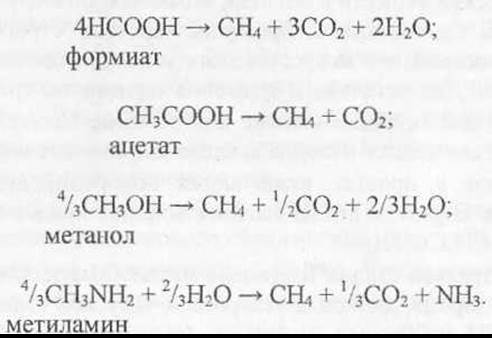
As the carbon chain length of the acid increases, the volume of gas produced also increases. For instance, 1 g of formic acid yields 540 mL of gas; 1 g of acetic acid yields 823 mL; 1 g of butyric acid yields 1055 mL; and 1 g of caproic acid yields 1224 mL.
Methanogenesis depends significantly on The chemical composition of the medium and physical factors. All methanogens are strict anaerobes—a single oxygen molecule in 10 L of water inhibits methanogenesis. The optimum redox potential for them is -400 mV (Note: minus sign omitted in source text, keeping numeric value as is or natural context), and the optimal pH ranges from 6 to 8. Most methanogens operate under mesophilic conditions, although both psychrophilic and thermophilic methanogens are found in nature. To build biomass, the medium must contain essential nutrients. The COD : N : P ratio should be maintained at 700 : 5 : 1. Excess nitrogen, cyanides, potassium, sodium, calcium, and sulfates must be avoided. Methanogenesis slows down in the presence of detergents, Antibiotics, etc. It is estimated that, on average, 1 kg of COD yields 0.35 m3 of methane.
To restore the intensity of methane fermentation, the substrate feed rate is reduced, the medium is alkalinized, wastewater is diluted with water, and toxic compounds are removed. In addition, methanogenesis is frequently split into two stages. In the first, preliminary stage, substrate Hydrolysis and acetogenesis are carried out in a separate apparatus; the Second Stage involves actual methanogenesis. A high concentration of bacteria in the bioreactor is a crucial condition for the intensive progression of the process, which is achieved by immobilizing bacterial cells on various Supports.
Several types of bioreactors for methane fermentation are known: anaerobic lagoons, methane digesters, contact bioreactors, fluidized-bed bioreactors, fixed-film bioreactors, two-stage bioreactors, and others. In China, India, and several other Asian countries, very simple household waste treatment bioreactors with volumes of up to 10 m3 are successfully utilized. The number of such bioreactors exceeds 70 million.
Methane fermentation is applied in municipal wastewater treatment and for the utilization of activated sludge following aerobic fermentation. Anaerobic bacteria degrade not only carbohydrates, Lipids, Proteins, Nucleic Acids, but also benzoic acid, acetaldehyde, acetone, butanol, ethyl acetate, glycerol, nitrobenzene, phenol, organic acids, paraffins, synthetic polymers, etc. Methane fermentation serves not only as a means of environmental protection, but also as a method for producing gaseous fuel, valuable organic fertilizers, vitamin B12, and feed additives.
Methane fermentation is utilized for processing livestock farm waste, sugar production wastewater, municipal landfills, and so on. For instance, during the anaerobic digestion of liquid waste from pig farms, biogas is collected in the upper section of the bioreactor and in a gas holder, from where it is piped into a boiler for combustion in low-pressure injection burners. Water heated in the boiler enters a heat exchanger: part of it is used to maintain the temperature within the Reactor, while another part is directed to heating animal housing facilities. The digested substrate is displaced from the bioreactor and transported to fertilize fields. The average composition of the liquid fertilizer (in %): dry matter - 1.0—5.0; organic matter - 0.25-4.2; phosphorus - 0.05-0.7; nitrogen 0.31 -1.14; pH - 6.5- 8.3. Liquid organic fertilizer is particularly effective for irrigating fields sown with perennial grasses.
Municipal landfills, where the thickness of the waste layer reaches 10-20 m, act as a peculiar type of compost. Microbiological processes occurring in landfills are conventionally divided into 4 stages, which differ in their gas composition. Initially, air containing about 20% oxygen is present between the waste particles. It is then consumed by aerobic microflora, and the activity of anaerobic microflora begins—first non-methane-producing, and subsequently methanogens. After several months, stable methane fermentation is established, and the released gas contains 50-55% CH4, about 40% CO2, and 5% N2.
To extract the gas, perforated pipes are installed at various depths, through which biogas is pumped out.
Biogas production at municipal landfills belongs to the type of solid-state fermentation. Agricultural production waste can be fermented in a similar manner, such as straw with a moisture content of about 60%. At a temperature of 35 °С, 90% degradation of organic matter is achieved within 120-200 days, whereas at 55 °С it takes 60-90 days.
Small biogas plants with a volume of 1-2 m3 and a productivity of 2-3 m3 per day feature a simple design and are economically viable. They are frequently manufactured by artisanal methods. In industrial manufacturing of such plants, the specific cost per 1 m3 of useful bioreactor volume decreases as the apparatus capacity increases and stabilizes at a volume of 100 m3. Furthermore, the profitability of the plants increases when biogas energy is transformed into electrical energy. Plants that provide a productivity of at least 1 m3/(m3 per day) are economically viable. The production of biogas and waste treatment is advantageous because wet substrates undergo processing.
It is preferable to use the mesophilic fermentation regime. In this case, less energy is expended on maintaining the process, and meticulous insulation of equipment and piping is not required. Sometimes a psychrophilic fermentation regime (15-20 °С) is even employed, but this requires a large-capacity bioreactor. It has been demonstrated that the larger the livestock farm, the lower the required specific capital investments. The profitability of operating biogas plants largely depends on specific conditions and skilled plant design. When assessing The Economics of agricultural waste anaerobic digestion, consideration is given to utilizing the liquid waste post-fermentation as fertilizer or as feed for fish and other animals.
It should be noted that biological treatment of municipal and industrial wastewater must become a mandatory prerequisite for economic activity. The primary criterion in this regard should be obtaining effluents that are harmless to the environment. Given the same ecological outcome, anaerobic installations are invariably more economically viable than aerobic ones.
Russia possesses significant potential for producing biogas from livestock manure. The volumes of various types of manure and manure effluents on Russian farms that can be utilized for biogas production amount to 408.5 million tons per year, with a total dry matter content of 34.6 million tons. The energy potential of this manure is equivalent to 6025 million m3 of biogas per year, and its utilization for the technological needs of farms is capable of saving 4340 million tons of coal equivalent in liquid fuel.
However, experience in introducing the methanogenesis process into agricultural practice demonstrates that its ecological aspect currently occupies first place, followed by the benefits derived from obtaining high-quality fertilizers, with the energy component of the process ranking only third.
Last update: 06/08/2026
Editorial and Educational Adaptation: This material has been compiled based on the primary/original source text. The project team performed an editorial review, corrected technical inaccuracies, structured sections, and adapted the content for an educational format.
What was processed:
- elimination of formatting defects (OCR errors, structural breaks, corrupted characters);
- editorial organization of content;
- standardization of terminology in accordance with academic sources;
- verification of factual statements against the original source text.
All mentions of the author, publication year, and origin of the primary text have been preserved in accordance with the source.