Fundamentals of Molecular Biology - V.I. Rezyapkin 2009
Genome Organization
Prokaryotic Genome Organization
The prokaryotic genome may consist of one or more large DNA molecules, called Chromosomes, and smaller DNA molecules known as Plasmids. The chromosomes contain practically all the genes essential for bacterial viability. Plasmids, on the other hand, carry non-essential genes that a Cell can survive without, although under certain conditions they enhance its chances of survival.
Both chromosomes and plasmids can exist as either circular or linear double-stranded DNA molecules. A bacterial genome may comprise one or multiple chromosomes and plasmids (Table 11.2). The chromosome(s) in a bacterial cell are typically present in a single copy, meaning that Bacteria are haploid. Plasmids, however, may occur in The Cell either as a single copy or in multiple copies. Plasmids are discussed in greater detail in the section «Mobile Genetic Elements». This same section covers such vital Components of the prokaryotic genome as IS-sequences and Transposons.
Table 11.2.
Class="center">Composition of Bacterial Genomes
|
Bacteria |
Genome |
|
Streptomyces ambofaciens |
1 linear chromosome |
|
Agrobacterium tumefaciens C58 |
1 linear chromosome, 1 circular chromosome, 2 plasmids |
|
Bacillus cereus |
1 circular chromosome, 1 megaplasmid |
|
Brucelia melitensis |
2 circular chromosomes |
|
Rodobacter sphaeroides |
2 circular chromosomes |
|
Rodococcus facians |
1 linear chromosome, 1 linear plasmid |
The chromosome is packaged into a compact Structure known as the nucleoid, which has an oval or similar shape. Its structure is maintained by DNA-binding histone-like Proteins and RNA molecules. RNA polymerase and DNA topoisomerase I molecules are also associated with the nucleoid. Loops of chromosomal DNA located at the periphery of the nucleoid are in a transcriptionally active state. When METABOLISM/31.html">Transcription is repressed, these loops are drawn inward. The nucleoid is not a static entity and changes its shape during various phases of bacterial cell growth. Alterations in its spatial Organization are closely linked to Changes in the transcriptional activity of specific bacterial genes.
In 1995, the complete nucleotide sequence of the chromosome of the parasitic bacterium Haemophilus influenzae was determined for the first time. Subsequently, in 1997, the Introduction/19.html">Primary Structure of the chromosomes of Escherichia coli and Bacillus subtilis was established. To date, the genomes of over 100 bacterial species have been sequenced.
The chromosome may incorporate the genomes of temperate phages. The integration of these genomes into the cellular genome occurs following bacterial infection by phages. Some phage genomes integrate into strictly specific sites on the chromosome, whereas others integrate into loci with varying locations. Under certain conditions, the phage genome can excise from the chromosome to form fully functional phage particles. In some cases, the phage genome remains permanently embedded in the chromosome, and its DNA can then serve as raw material for The Emergence of new bacterial genes. As it turns out, some bacterial genes are actually of phage origin.
The size of Prokaryotic Genomes ranges from several hundred thousand to tens of millions of Base Pairs (Table 11.3). For example, the chromosome size of E. coli is 4,6*106 bp. Its relative molecular mass is 3*109, and its length is 1.5 mm. The chromosome is packaged into a nucleoid with dimensions of 1*1*2 µm. The Replication time of the Escherichia coli chromosome is approximately 20 min. DNA Replication in other bacteria may proceed at a slower rate. For instance, Mycobacterium tuberculosis divides only once a day. The mechanisms of prokaryotic replication are discussed in greater detail in the section «Replication».
Prokaryotic genomes differ in their GC-content, with the proportion of GC pairs varying from 23 to 72 %. Interestingly, the DNA of bacteria inhabiting high-Temperature environments exhibits an elevated content of these NUCLEOTIDES. Their predominance over AT pairs results in a higher melting temperature of the DNA, which is a vital survival factor for such organisms. It should be noted that the proteins of thermophilic bacteria also have an increased content of polar Amino Acids, rendering them more resistant to Denaturation at elevated temperatures. The proteins of helicobacters (which inhabit acidic environments) contain a higher proportion of Arginine and Lysine amino acid residues. These residues are capable of binding hydrogen ions, thereby modulating the environmental acidity and facilitating bacterial survival under harsh ecological conditions.
Coding sequences account for approximately 90 % of the prokaryotic genome, while the remaining 10 % consists of regulatory sequences. Meanwhile, the total number of genes in prokaryotic genomes ranges from several hundred to several thousand (Table 11.3).
Table 11.3
Characteristics of Selected Bacterial Genomes
|
Bacteria |
Genome Size, kbp |
Coding sequences, % |
Estimated Gene number |
|
Mycoplasma genitalium |
580 |
90 |
479 |
|
Mycoplasma pneumoniae |
817 |
89 |
677 |
|
Borrelia burgdoferii |
1300 |
93 |
863 |
|
Helicobacter pylory |
1700 |
91 |
1590 |
|
Bacillus subtilis |
4200 |
87 |
4000 |
|
Mycobacterium tuberculosis |
4400 |
91 |
3924 |
|
Escherichia coli |
4600 |
89 |
4288 |
The number of genes in a genome is estimated based on the presence of open reading frames (ORFs). An ORF is a polynucleotide sequence potentially capable of encoding a polypeptide. The existence of ORFs in specific DNA regions is inferred from deciphered primary DNA structures. The primary criterion for classifying a polynucleotide segment as an ORF is the absence of stop codons over a sufficiently long stretch following the start codon. However, the mere presence of an ORF is insufficient evidence to confirm the existence of a functional gene in that region. This is because efficient transcription and subsequent Translation require regulatory sequences such as a promoter, operator, attenuator, Shine-Dalgarno sequence, etc. To determine whether ORFs correspond to actual genes, the Amino acid sequences putatively encoded by these ORFs are compared with The amino acid sequences of already known proteins. Thus, the correspondence of each ORF to a specific gene must still be experimentally established. For instance, the Functions of approximately 60 % of ORFs have been identified in E. coli.
Prokaryotic genes typically exhibit an Operon organization. A single operon generally contains genes responsible for carrying out the same metabolic pathway. The Organization of Prokaryotic genes and The regulation of their expression are discussed in greater detail in the sections «Molecular organization of Genes», «Regulation of Gene Expression», «Transcription», and «RNA and RNA Processing». It is worth noting that parasitic bacteria may lack genes responsible for synthesizing compounds readily available in their host environment.
The bacterial genome contains genes with similar polynucleotide sequences, which are referred to as homologous genes. Homologous genes often arise As a result of Gene Duplication. Homologous genes found within the same genome are called paralogous genes, or paralogs. They constitute a significant portion of The Genome, accounting for up to 50 %, and their copy numbers can reach dozens. Consequently, paralogs can evolve in different directions and acquire novel functions. Homologous genes are also found across the genomes of different bacterial species; such genes are termed orthologous genes, or orthologs, and they perform similar functions in different bacteria.
Genes encoding self-splicing Polypeptides have been discovered in prokaryotes. These polypeptides consist of a single intein flanked by two exteins. Inteins contain blocks of canonical sequences essential for protein splicing, which results in the excision of the intein and the ligation of the exteins (Fig. 11.24).
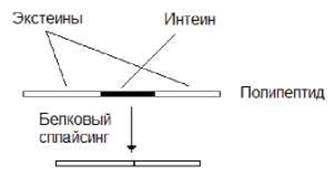
Fig. 11.24. Genes encoding self-splicing polypeptides have been discovered in prokaryotes
Although an intron-exon gene structure is characteristic of eukaryotes, introns have nevertheless been discovered in certain bacterial tRNA genes, which are excised during RNA maturation via self-splicing.
The direction of transcription for many bacterial genes coincides with the Direction of replication. Consequently, during DNA duplication, transcription is not interrupted for long periods. mRNA synthesis occurs almost continuously, and its subsequent translation drives Protein Synthesis.
Scientists have long been intrigued by the question of what the minimum number of genes is that a cell requires to function. By comparing the gene sets of Haemophilus influenzae and Mycoplasma genitalium, a minimal gene set was proposed consisting of 256 protein-coding genes essential for a living cell to carry out its basic functions (Table 11.4). It is quite difficult to conceive how such a set of genes could have arisen spontaneously through prebiotic Evolutionary Processes when life first began. Furthermore, one must assume that not only the genes themselves arose by chance, but the proteins encoded by them must also have emerged serendipitously—only under this condition would cellular function and Gene Expression be possible.
Table 11.4
Functions of Proteins Encoded in the Minimal Gene Set
|
Function |
Number of proteins |
|
Energy conversion |
28 |
|
Amino acid Transport and Metabolism |
11 |
|
Nucleotide transport and metabolism |
20 |
|
Carbohydrate transport and metabolism |
5 |
|
6 |
|
|
Coenzyme metabolism |
8 |
|
Ribosome biogenesis and translation |
94 |
|
Replication, recombination, repair, transcription |
35 |
|
Structural function |
7 |
|
Secretion and adhesion |
5 |
|
Chaperones |
13 |
|
Inorganic ion transport |
4 |
|
Predicted hypothetical function |
15 |
|
Function unknown |
4 |
Bacteria can exchange genetic material through conjugation (from Latin *conjugatio* — connection). During conjugation, direct cell-to-cell contact is established via sex pili. For this process to occur successfully, the donor cell must harbor a conjugative plasmid carrying the genes responsible for producing sex pili, which ensure the attachment of the donor cell to the recipient. Conjugative plasmids also encode proteins that block the pili of other bacteria from attaching to The Cell wall of their own host bacterium. During conjugation, one of the plasmid strands is cleaved by a plasmid-encoded endonuclease and transferred into the recipient cell. Inside the recipient, the transferred strand circularizes and subsequently serves as a template for the Synthesis of the complementary strand. In the donor cell, the remaining DNA strand is also replicated, restoring the original plasmid structure. Upon completion of conjugation, both bacterial Cells will contain conjugative plasmids.
Through Homologous Recombination, a conjugative plasmid can integrate into the bacterial chromosome. In this case, conjugation transfers not only the plasmid but also a portion of the chromosome to the recipient cell (Fig. 11.25). The transferred and host DNA molecules exchange homologous segments, resulting in a novel gene combination within the recipient cell. Any DNA that remains outside the chromosome following recombination is degraded. In this way, the recipient cell can acquire Genetic information located not only on the plasmid but also on the chromosome.

Fig. 11.25. Bacterial conjugation
Conjugation can take place between bacterial cells belonging to the same species as well as to different species. Furthermore, plasmids can mediate The transfer of genetic material from bacteria to eukaryotes.
Last update: 12/08/2026
Editorial and Educational Adaptation: This material has been compiled based on the primary/original source text. The project team performed an editorial review, corrected technical inaccuracies, structured sections, and adapted the content for an educational format.
What was processed:
- elimination of formatting defects (OCR errors, structural breaks, corrupted characters);
- editorial organization of content;
- standardization of terminology in accordance with academic sources;
- verification of factual statements against the original source text.
All mentions of the author, publication year, and origin of the primary text have been preserved in accordance with the source.