BIOTECHNOLOGY - V. H. Herasymenko - 2006
Part II. Specialized Biotechnologies
Chapter 22. BIOTECHNOLOGIES FOR THE UTILIZATION AND BIORECYCLING OF AGRICULTURAL WASTE
22.3. NON-TRADITIONAL METHODS. BIOTECHNOLOGY OF BIOGAS PRODUCTION VIA ANAEROBIC DIGESTION OF WASTE
22.3.2. Factors affecting biomethanogenesis and their optimization
The amount of biogas that can be obtained from various agricultural wastes depends on multiple factors: the COMPOSITION OF THE substrate, the operational conditions of anaerobic Digestion, and, most importantly, the hydraulic retention time of the substrate in the bioreactor along with its microbial composition.
Under natural conditions, The rate of methanogenesis driven by the association of anaerobic microorganisms present in manure
or other biomass is relatively low. The key factors influencing biomethanogenesis include Temperature, medium composition and pH, sufficient concentration of nutrients, and the absence or low concentration of toxic substances.
To intensify The process of methane Fermentation, these factors must be optimized.
1. Medium composition
An optimal environment for The activity of methanogenic microorganisms is a medium with a dry matter concentration of 8–12%. This solids concentration provides a substrate viscosity that allows free movement of solid substrate particles and microbial Cells. Higher solid concentrations increase substrate viscosity, which impairs mixing efficiency and reduces biogas yield.
Conversely, low organic matter concentration and high moisture content (exceeding 97%) lead to a lower biogas yield and increased energy consumption for biomass heating.
This factor can be optimized by maintaining the dry matter content at 8–12% and ensuring a particle size of the biomass of no more than 30 mm.
2. Nutrient content (C and N)
The biomass of methanogenic microorganisms consists of up to 54% carbon, 20% oxygen, 10% hydrogen, 12% nitrogen, 2% phosphorus, 1% sulfur, as well as certain macro- and micronutrients (K, Na, Ca, Mg, Co, Mo, Ni).
Therefore, to ensure Microbial growth AND a high rate of anaerobic biomass digestion, it is essential to provide sufficient quantities of growth-promoting elements. Carbon and nitrogen are the most critical among them. The optimal C:N ratio is 10–30:1. If this ratio is too high (i.e., carbon is in excess), the resulting nitrogen deficiency becomes a limiting factor for fermentation. Conversely, if the ratio is too low (i.e., nitrogen is in excess), a large amount of Ammonia is produced, which is toxic to Bacteria. To maintain the C:N ratio within optimal limits under industrial conditions, manure biomass is mixed with wastes that are either rich in nitrogen (such as poultry manure) or rich in carbon (such as chopped straw).
Organic substrates used for methane fermentation feature varying C:N ratios, which are not always optimal for the process (Table 22.1).
Class="center">Table 22.1.
C:N ratio in agricultural wastes
(by Baader W., 1982)
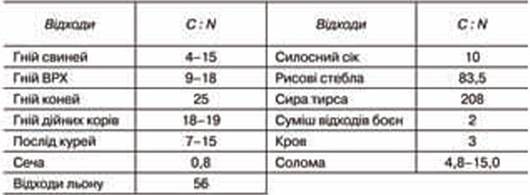
To optimize the C:N ratio, various substrates are co-digested, resulting in an increased biogas yield (Table 22.2).
Table 22.2.
Increase in biogas yield through the co-digestion of various wastes
(by Baader M. W. et al., 1982; Biestrom U. et al., 1987)

3. Culture Medium Reaction
The reaction of the culture medium has a significant impact on the rate of methanogenesis. The process of methane fermentation involves both acidic and alkaline phases. The acidic, or hydrogen, phase corresponds to the First and Second stages of biomethanogenesis, whereas the alkaline phase represents the third, methanogenic stage. During the initial phase, the pH drops due to The production of low-molecular-weight volatile Fatty acids. Subsequently, these volatile acids are broken down by methanogenic bacteria (Stage 3), and the acidic products are neutralized, shifting the environment to a slightly alkaline reaction (7.2–7.6).
It has been established that the most intensive methane production occurs at pH values close to neutral or slightly alkaline. Methanogenic bacteria thrive and metabolize substrates into methane at a pH of 6–8, whereas acid-forming bacteria require a pH of 4.0–6.5. Creating favorable conditions for acid-forming bacteria involves maintaining a pH of 6.8–7.4, which is considered optimal. To maintain the required pH range, systems with adequate buffering capacity are desirable to ensure the Stability of the digestion process. The culture medium within the Reactor possesses buffering properties owing to the following reactions:
1) The formation of ammonium hydroxide from ammonia and Water, NH3 + H2O → NH4OH, which, following the neutralization of the acidic products from The first phase, establishes the slightly alkaline environment (pH 7.2–7.6) characteristic of methane fermentation. This natural buffer system arises when the substrate contains a high concentration of nitrogenous nutrients and can be utilized provided that the free ammonia concentration does not reach toxic levels;
2) the reaction yielding carbon dioxide and ammonium bicarbonate from ammonia and carbonic acid.
When the activity of acid-producing microorganisms increases, the accumulation of acids can overwhelm the buffering capacity, neutralizing the acidic byproducts and causing the pH to drop below acceptable thresholds, thereby inhibiting methane formation.
In the absence of an ammonium buffer, alkalization can be achieved using hydroxides, carbonates, or bicarbonates. In this case, a carbonate/bicarbonate buffer system is formed.
High rates of biogas production are achieved when the concentration of volatile fatty acids in the medium ranges from 50 to 500 mg/L. If their concentration exceeds this level and is accompanied by a drop in pH, the medium can be alkalized using chemical agents (such as lime). The amount of alkali can reach up to 6000 mg/L. It is recommended that The ratio of volatile fatty acids to alkali (expressed as CaCO3) be maintained at 1:6.
It must be taken into account that within the microbial consortium involved in methane production, acid-forming bacteria adapt more readily to changing conditions and exhibit higher productivity compared to methanogenic bacteria.
Methanogenic bacteria are the most fastidious group to cultivate among the symbionts participating in anaerobic fermentation. For growth, they require a broad spectrum of nutrients, including carbon, phosphorus, nitrogen, calcium, sulfur, magnesium, potassium, Amino Acids, Vitamins, and Trace Elements.
4. Concentration of Toxic Substances in the Medium
The growth rate of methanogenic microorganisms depends on the concentration of heavy Metal Ions, ammonium, sodium, potassium, calcium, magnesium, nitrates, sulfides, and various xenobiotics in the medium, which can become toxic to microorganisms at high concentrations.
Potential sources of toxic substances include animal waste from livestock that received high doses of Antibiotics or metal compounds (such as Cu, Zn, Mn, Fe) used in animal husbandry to balance dietary nutritional requirements.
To mitigate toxicity, several approaches can be employed: removing the toxic liquid phase; diluting the biomass (with water or clean biomass) to lower the concentration of toxic substances; adding an antagonist to the identified toxin; precipitating toxic substances; adsorbing toxins using activated charcoal or similar Materials; and binding toxins into chelate complexes. These measures help reduce the concentration of toxic agents to a level that does not hinder fermentation. Otherwise, the biomass cannot be utilized for biogas production.
During the anaerobic digestion of poultry manure, potential toxicity arising from elevated ammonia content is mitigated by adding carbon-rich biomass (most commonly chopped straw) or by diluting with water. Otherwise, a high concentration of free ammonia during the Cytology/cytology/16.html">Early stages of anaerobic digestion can lead to the death of methanogenic microorganisms. The toxicity thresholds are approximately 1500–2000 mg/L for ammonium ions; 3000–6000 mg/L for K, Na, and Ca; and 0.5–1.0 mg/L for cyanide.
5. Temperature Regime
The temperature regime is one of the most critical parameters influencing the metabolic activity and growth rate of methanogenic microorganisms, as well as biogas yield.
Various methanogenic microorganisms exist in nature, differing in their temperature optima: psychrophiles (0–20 оС), mesophiles (20–40 оС), and thermophiles (40–60 оС), some of which can survive even at 97 оС. Consequently, methane is generated in nature across a wide temperature range—from 0 to 97 оС. According to V. Dubrovin et al. (2004), methane fermentation initiates at a temperature of 6 оС. At lower temperatures, methane evolution ceases.
However, the optimal temperatures supporting the most active microbial METABOLISM are 6–20 оС for psychrophiles, 32–33 оС for mesophiles, and 52–54 оС for thermophiles.
Three temperature regimes for biogas production are distinguished:
1) psychrophilic – from 0 to 20 оС;
2) mesophilic – from 20 to 40 оС;
3) thermophilic – from 40 to 60 оС.
Each temperature regime promotes the growth and enhanced METABOLIC ACTIVITY OF a specific group of methanogens. Optimal anaerobic digestion of biomass occurs at 30–40 оС and 50–60 оС (corresponding to The Development of mesophilic and thermophilic microflora, respectively). Thermophilic bacteria are more productive than mesophilic ones.
During biomass utilization under thermophilic conditions, the biogas production rate is 2.5-3 times higher than under the mesophilic regime.
In plants operating in the mesophilic mode, the daily biogas yield is 1.0 m3, whereas in the thermophilic mode it reaches 2.0 m3 of biogas per 1 m3 of the methane tank working volume.
Thermophilic bacteria mineralize the same amount of organic matter in a digestion time of 12-14 days as mesophilic bacteria do in 21-36 days (Dubrovin et al., 2004). Due to this, given the same amount of biomass for digestion, the reactor capacity will be smaller under the thermophilic operating mode of a biogas plant compared to the mesophilic one. However, the mesophilic mode achieves energy savings required for heating the digested biomass, and the microbial population cultivated under this mode is less sensitive to the nutrient medium composition. Nevertheless, data indicate that the methane fraction decreases in biogas obtained under thermophilic conditions.
The duration of the biomass fermentation process in biogas production, depending on the temperature regime and Design Features of the biogas plant, ranges from 5 to 30-40 days or more. Under mesophilic temperature conditions, the digestion process most frequently lasts 24-28 days, whereas at a bioreactor temperature of 10 oC, digestion takes up to 4 months or more.
Digestion time also depends on The chemical composition of the biomass. It is the longest when Cellulose and hemicellulose content is elevated, shorter in the presence of Proteins and fats, and the shortest for sugars.
6. Chemical composition of biomass
The maximum biogas yield at the stage of most intensive methanogenesis depends on the chemical composition of the digested biomass, which, in turn, is determined by the species composition of plant residues and animal species, and accordingly, their diet (Tables 22.3 and 22.4).
Thus, theoretically, an average of 0.4-0.6 m3 of biogas can be obtained from 1 kg of dry matter of cattle manure introduced into a biogas plant reactor. Considering that only 40-60% of the manure dry matter is transformed into biogas during methanogenesis, the actual biogas yield from 1 kg of cattle manure dry matter averages 0.2-0.5 m3; from an equivalent mass of pig manure it is 0.3-0.7 m3, and from poultry manure biomass it is even higher (Table 22.5).
Fermentation of excrement from a single animal can yield the following average daily amount of biogas: cattle (live weight 500-600 kg) – 1.5 m3; pig (live weight 80-100 kg) – 0.2 m3; chicken or rabbit – 0.015 m3.
Table 22.3.
Chemical composition of crop residues, % of dry matter
(according to Baader W., 1982)
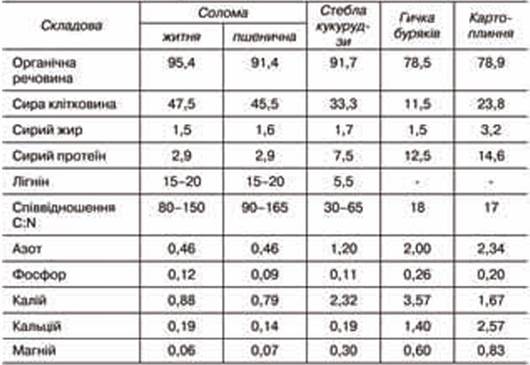
Table 22.4.
Chemical composition of farm animal and poultry manure,
% of dry matter (according to Baader W., 1982)

Table 22.5.
Yield of biogas (methane) during anaerobic digestion of agricultural wastes
(according to Lubravsky V.S., Viestur U.E., 1988)

The average amount of biogas that can be obtained from 1 m3 of animal manure is estimated at 20-25 m3, although from a techno-economic perspective, 35-40 m3 is considered a profitable amount. Such a quantity of biogas can be obtained by combining various livestock wastes with other raw materials characterized by a high content of dry organic matter, namely food industry waste, etc.
Apart from the amount of dry matter, a significant parameter affecting biogas yield is the content and composition of organic matter, especially the amount of fats, proteins, and CARBOHYDRATES.
Carbohydrates generally occur in the form of Polysaccharides and therefore require longer fermentation. Biogas production is noticeably reduced in the presence of Lignin, as it remains practically undecomposed during methane fermentation.
Proteins yield the highest amount of biogas per 1 kg of degraded organic matter (1.4-1.6 m3), followed by fats (1.1-1.4 m3), and carbohydrates yield the least at 0.8-0.9 m3 (Table 22.6). However, considering that the degree of protein decomposition is lower than that of fats, the actual biogas yield from 1 kg of proteins is 0.6-0.7 m3.
Table 22.6.
Biogas Yield and CH4 Content during Methane Fermentation of Fats, Proteins, and Carbohydrates
(according to W. E. Biester et al., 1987)

The ratio of the volume of biogas that can be extracted from the organic matter of manure biomass from dairy cows (D), fattening steers (B), pigs (P), and chickens (C) during methane fermentation at a temperature of 33 °C can roughly be expressed as: D : B : P : C ≈ 5 : 7 : 8 : 10.
Practically, calculated per 1 kg of dry organic matter, the maximum biogas yield averages: 0.35 m3 from cattle manure; 0.45 m3 from dairy cattle manure; 0.5 m3 from pig manure; and 0.7 m3 from poultry manure.
The quality of biogas also depends on the chemical composition of the biomass. When digesting biomass with a high fiber content, the resulting biogas contains roughly equal amounts of methane and carbon dioxide. An increase in nitrogen-containing compounds and fats within the biomass leads to a higher methane concentration in the biogas and a decrease in the carbon dioxide content (Table 22.6).
According to V. A. Bykov et al. (1987), the digestion of 1 g of fat-like substances yields an average of 1200 mL of biogas, comprising 68% methane and 32% carbon dioxide, whereas 1 g of carbohydrate substances yields approximately 800 mL of biogas containing 50% CH4 and 50% CO2.
When utilizing high-carbon crop residues (such as straw, beet and potato tops, flax Processing waste, etc.) to ensure a high rate of biomethanogenesis and biogas yield, it is necessary to optimize the carbon-to-nitrogen (C : N) ratio. Under industrial conditions, nitrogen-rich waste (chicken or pig manure) is added to the biomass being processed for this purpose.
In some countries, indirect manure utilization technology is employed. The manure undergoes mechanical processing and is then fed not into a biogas plant, but used as a substrate for cultivating hydrobionts specifically selected for these conditions. They are characterized by a high rate of Photosynthesis and efficient utilization of nutrients from the manure biomass. In India, positive results were achieved by mixing water hyacinth biomass with manure in a 2 : 3 ratio. In this case, the biogas yield increased by nearly 50%, and the sludge showed an increased content of nitrogen, phosphorus, and potassium, which enhanced the quality of the sludge as an organic fertilizer.
Indirect manure utilization technology has significant advantages over the direct anaerobic fermentation of manure biomass to produce biogas. This indirect technology is more efficient due to the accumulation of solar energy stored in the chemical bonds of Organic compounds.
The biotechnology of hydrobiont biomass production holds great promise for biogas generation. In 1980, an experimental biosolar facility for producing microalgae biomass with its subsequent conversion to methane was developed at Moscow University. The system design ensures the recirculation of all biogenic elements (Fig. 22.2). The 30 m2 photosynthetic unit of the biosolar plant produces Chlorella biomass, which, after concentration and homogenization to disrupt Cell structures, is fed into a digester where anaerobic fermentation takes place, producing biogas consisting of methane (80%), carbon dioxide (16%), and hydrogen (2%). Other impurities account for about 2%. The design of the biosolar installation also provides for the injection of additional atmospheric CO2 into the photosynthetic unit.
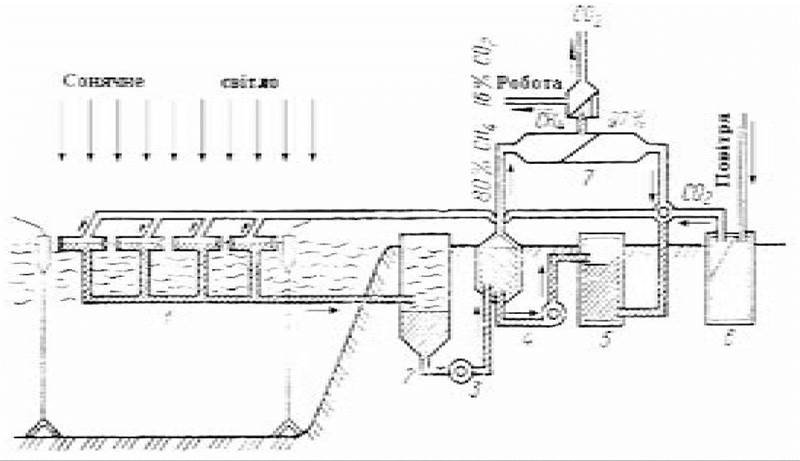
Fig. 22.2. Biosolar installation (after V. V. Alekseev and M. Ya. Lyamin, 1985):
1 — photosynthetic unit; 2 — settling tank; 3 — decompressor; 4 — digester (methane tank); 5 — regenerator;
6 — CO2 concentrator; 7 — separator.
Last update: 11/08/2026
Editorial and Educational Adaptation: This material has been compiled based on the primary/original source text. The project team performed an editorial review, corrected technical inaccuracies, structured sections, and adapted the content for an educational format.
What was processed:
- elimination of formatting defects (OCR errors, structural breaks, corrupted characters);
- editorial organization of content;
- standardization of terminology in accordance with academic sources;
- verification of factual statements against the original source text.
All mentions of the author, publication year, and origin of the primary text have been preserved in accordance with the source.