Biochemistry - Chemical Reactions in Living Cells, Volume 3 - D. Metzler 1980
Cell Growth, Differentiation, and Chemical Communication
Tissue Differentiation and Developmental Biology
Physiological Modulation and Various Developmental Programs
The Development of an animal from a fertilized egg is one of the most remarkable phenomena in biology. Through just a few Cell divisions, initial embryonic Cells—which are virtually identical to one another—give rise to differentiated Organs and Tissues such as the Liver, Brain, Kidneys, Skin, and erythrocytes. Differentiated cells are typically characterized by highly specialized biochemical properties. For example, erythrocytes contain Hemoglobin, whereas Muscle cells synthesize large amounts of Myosin and Actin. Endocrine cells in the Pancreas produce Insulin and Glucagon, while exocrine cells secrete digestive Enzymes into the digestive tract. It is generally accepted that no more than 10% of the total Gene Complement is actively transcribed at any given time in specialized tissue cells (with the exception of brain tissue; see Section B, 8). Chemical analyses have conclusively demonstrated that specialized cells contain a normal amount of DNA—that is, a complete set of genes—yet 90% of this genetic material remains inactive.
Although the Chemical foundations of Cell Differentiation remain largely elusive, it is well established that chemical signals originating from the external environment and adjacent cells play a pivotal role in this process. These signals trigger an internal, genetically programmed pathway that dictates the developmental fate of individual cells. The precision with which this developmental program is executed is vividly illustrated by rotifers and Annelids (Fig. 1-10), certain species of which exhibit an almost infallible constancy in cell number. For instance, the nematode Oxyuris equi possesses precisely 251 Nerve Cells, a single excretory cell, 18 midgut cells, and 64 muscle cells [140].
Before delving into the differentiation of complex Multicellular Organisms, it is helpful to examine more primitive forms, such as unicellular and colonial organisms. Under favorable conditions, both bacterial and Eukaryotic cells similarly enter a "growth and division" phase (Fig. 15-25), which underlies exponential growth [Equation (6-60)]. However, changes in environmental conditions rapidly alter cellular activity. For example, nutrient limitation not only reduces growth rate but also affects gene METABOLISM/31.html">Transcription. In E. coli, this occurs As a result of an increased intracellular concentration of cAMP. The availability of an additional energy source, such as lactose, can likewise induce specific changes in gene transcription (Chap. 15, Sec. B, 1). Numerous other Examples illustrate the profound influence of physiological factors on the genetic apparatus—a phenomenon known as "physiological modulation."
Even more remarkably, environmental factors can trigger an entirely different developmental program within a cell, involving the activation of supplementary genes and a profound restructuring of the entire cell. A classic example is spore formation in certain Bacteria (Chap. 1, Sec. A, 8), which takes place under environmental conditions unfavorable for vegetative growth.
A series of chemical shifts accompanies sporulation [141–143]. Initially, rRNA synthesis ceases entirely, followed by the transcription of new classes of mRNA and the synthesis of several novel Proteins. Notably, large quantities of dipicolinic acid are produced (Fig. 14-7), a process requiring The activity of at least one new enzyme. Furthermore, during sporulation, bacteria consume large amounts of Ca2+, significant quantities of Mn2+, and other Metal Ions. Many bacteria also synthesize 3-L-sulfolactic acid.
Class="center">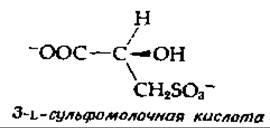
In spores of Bacillus subtilis, these substances are present in the following proportions (relative to dry weight): dipicolinic acid, 10%; sulfolactic acid, 3–6%; Ca2+, 3%; Mn2+, 0.3%. Bacterial spores exhibit remarkable heat resistance and retain viability even after prolonged immersion in boiling Water. It is widely believed that dipicolinic acid and specific ions confer protein resistance against Denaturation. This heat tolerance may also be linked to the profound dehydration of spores [144]. Under favorable growth conditions, spores germinate, and the bacterial cells resume the program of growth and division.
Switches to more complex developmental programs are observed in colonial bacteria, such as myxobacteria, though the chemical signals responsible for these transitions remain unknown [145]. However, studies on eukaryotic cellular slime Molds like Dictyostelium (Chap. 6, Sec. E, 5)—which follow a similar developmental program—have shown that the signal for substrate starvation is the release of cAMP1). This surge in cAMP concentration is perceived by neighboring cells, prompting alterations in their biosynthetic processes that lead to cellular differentiation and fruiting body formation [135, 136, 146]. Individual cells begin to synthesize Cellulose and mucopolysaccharides, and trehalose is produced and accumulated within the spores. The synthesis of these products is preceded by The formation of novel enzymes.
1) It cannot be ruled out that sensitivity to cAMP arises as a secondary response to the secretion of some macromolecular factor that stimulates differentiation [144a].
In the aquatic fungus Blastocladiella (a phycomycete), the formation of thin-walled or thick-walled, heat-resistant sporangia is governed by the HCO-3 anion—a much simpler chemical cue than cAMP. Conversely, in primitive eukaryotes, macromolecular compounds—most likely proteins—can function as chemical signals. For instance, certain strains of Dictyostelium switch to an alternative genetic program, specifically forming macrocysts through the conjugation of two distinct cell types, driven by a diffusible inducing factor with a Molecular Weight of approximately 12,000, apparently secreted by cells of one of the lineages [147].
Owing to their relatively simple architecture, certain plant tissues serve as convenient models for studying cellular differentiation. The cambial layer in stems (Fig. 1-12) continuously differentiates to produce phloem toward the outside and xylem toward the pith. At the same time, a population of cambial cells remains undifferentiated. In fact, with each Cell Division, one daughter cell undergoes differentiation, while the other persists as a minimally differentiated cambial stem cell. This mode of continuous stem cell differentiation, preserving constant properties, is widespread in both plants and animals. The direction of cambial cell differentiation apparently depends on the Chemical Nature of signals emanating from cells adjacent to the cambium on either its outer or inner face. Recognized differentiation-inducing factors include sucrose, auxin, and Cytokinins.
Vegetative propagation in plants is generally driven by the capacity of meristematic embryonic tissue (Chap. 1, Sec. D.4) to differentiate into roots and shoots. On the other hand, the cultivation of isolated phloem cells or other differentiated tissues typically yields a callus—an unorganized mass of dedifferentiated cells resembling embryonic tissue. Under favorable conditions, particularly when cultured in a medium supplemented with coconut milk and an appropriate balance of auxin and cytokinin, researchers have successfully induced reversion, transforming ROOT phloem cells of carrots back into embryonic cells capable of developing into whole plants [136]. This experiment is of fundamental significance because it definitively proves that differentiated carrot phloem cells harbor the complete set of genes required for whole-plant development. At the same time, It is important to note that reproducing this type of experiment with most other plants is quite challenging, and dedifferentiation does not always occur spontaneously. Nevertheless, it succeeds in a sufficient number of cases to establish the totipotency of The Nucleus in differentiated cells.
Extensive experimental data indicate that differentiation partly arises as a cellular response to chemical signals originating from neighboring cells or the surrounding environment.
Last update: 06/08/2026
Editorial and Educational Adaptation: This material has been compiled based on the primary/original source text. The project team performed an editorial review, corrected technical inaccuracies, structured sections, and adapted the content for an educational format.
What was processed:
- elimination of formatting defects (OCR errors, structural breaks, corrupted characters);
- editorial organization of content;
- standardization of terminology in accordance with academic sources;
- verification of factual statements against the original source text.
All mentions of the author, publication year, and origin of the primary text have been preserved in accordance with the source.