Biochemistry and Molecular Biology - Belyasova N.A. 2002
Fundamentals of Genetic Engineering
Practical Applications of Genetic Engineering Methods
Genetic Engineering in the Service of Medicine and Agriculture
The Development of Cell/27.html">DNA Cloning and sequencing Methods has made it possible to determine The Genome structures of various organisms, including many Viruses and Bacteria, Yeasts, nematodes, and Drosophila, with The Human Genome sequencing project completed by 2003. This has created a situation where the accumulation of human knowledge in molecular biology outpaces our ability to apply it wisely. Moral, ethical, and legal issues arise regarding human cloning, the production and use of Transgenic Animals, and the disclosure and comparison of data from individual genetic passports. At the same time, applied fields of Introduction/32.html">Genetic Engineering are developing at a rapid pace, especially in medicine and agriculture. It is worth examining several particularly valuable genetic engineering techniques that have opened a new era in the Treatment of human, animal, and plant diseases, as well as in breeding new agricultural varieties and strains.
Polymerase Chain Reaction (PCR). This is a method for the enzymatic Amplification of DNA or RNA segments that allows multiple copies of a target DNA (or RNA) fragment to be produced without the aid of restriction Enzymes, vectors, or host Cells. The process is carried out in vitro and is fully automated. A PCR reaction requires: two oligonucleotide primers about 20 NUCLEOTIDES in length, complementary to two regions at the 3' ends of the amplified DNA fragment (Fig. 21.4), a set of deoxynucleoside triphosphates, and a thermostable DNA polymerase. The primers are synthesized chemically after first determining The Structure of the complementary regions they are meant to anneal to. The thermostable enzyme is isolated from the thermophilic bacterium Thermus aquaticus.
In The First stage, double-stranded DNA isolated from cells is heated to 90° C for Denaturation (strand Separation), after which the mixture is cooled to allow primer Hybridization with complementary regions (annealing). Next, the Temperature is set for chain polymerization (70–75° C, the range where the enzyme is most active). The cycle events are then repeated, starting with DNA denaturation. The process is carried out in a thermal cycler (amplifier) controlled by a computer.
Class="center">
Fig. 21.4. Schematic diagram of polymerase chain reaction steps (explanatory text included)
This cyclical process is repeated 20–60 times using the same reaction mixture. After the third amplification cycle, double-stranded DNA fragments equal in length to the distance between the two primers begin to accumulate (Fig. 21.4). In each subsequent cycle, the number of synthesized fragments doubles; that is, $n$ cycles produce $2^n$ copies of duplex segments with a length limited by the primers.
The Practical Application of PCR has several aspects. First, by amplifying specific DNA sequences unique to certain genomes or even whole genes, these segments can be detected even if they are initially present in cells in very small quantities (copy numbers). For example, the Cytology/cytology/16.html">Early stages of viral infections are characterized by low viral nucleic acid content, but they can be detected using PCR followed by identification with probes complementary to the target sequences. Such methods are now widely used to detect measles and rubella viruses, as well as Vibrio cholerae.
Another application of the method is the Diagnosis of Hereditary diseases. Genes and loci whose Mutations lead to severe disorders have now been identified for many hereditary conditions. Because these mutations are passed down through generations, determining whether an unborn child will carry a particular mutation requires testing the fetus (prenatal diagnosis). To do this, at approximately the 16th week of Pregnancy, Amniotic Fluid is collected, from which fetal cells can be isolated by centrifugation. DNA is then extracted from these cells. Preparative amounts of DNA fragments potentially containing mutations can be obtained in two ways: by cloning the relevant fragments or by amplifying them using PCR. The second method is much simpler and cheaper. Once the target DNA fragment has been obtained in sufficient quantity, it can be sequenced and The nucleotide sequences of the normal and analyzed genes compared. A simpler method for detecting mutations in DNA fragments is blot hybridization.
Blot hybridization (Southern blotting). This method was developed by Southern in Edinburgh. It is based on the ability of homologous DNA strands to hybridize under suitable conditions. The Essence of the method is as follows. The test DNA is digested with restriction enzymes into fragments, which are then separated by size using agarose gel Electrophoresis. The gel is next placed onto a nitrocellulose filter, and an appropriate buffer solution is passed through it in a direction perpendicular to the electrophoresis. During this process, the DNA fragments elute from the gel and bind to the nitrocellulose filter, creating a replica of the gel. To search for desired DNA fragments on the replica, hybridization is performed using a labeled probe specific to the target Gene (fragment). A similar technique is used to analyze RNA.
The detection of Gene Mutations relies on The phenomenon of restriction fragment length polymorphism (RFLP). This occurs because a DNA sequence containing a mutation may gain or lose restriction sites for specific restriction enzymes. This can be detected by separating the resulting fragments via electrophoresis and hybridizing them with a radioactive probe. Comparing the autoradiographs of the normal and mutant genes reveals differences in the number and position of the "bands" (Fig. 21.5).
An example of using PCR and blot hybridization for the early diagnosis of hereditary diseases is the prenatal identification of Sickle cell anemia. The cause of this condition is a mutation in the gene determining the STRUCTURE OF THE Hemoglobin $\beta$-globin chain, resulting in the substitution of a glutamate residue at position 6 (encoded by the GAG triplet) with a valine residue (encoded by the GTG triplet). The altered hemoglobin tends to crystallize within erythrocytes, making them less flexible; they become trapped in the Spleen, leading to a deficiency in the Blood. This mutation is easily identified using the restriction enzymes Dde I and Mst II. The nucleotide substitution of adenylate for thymidylate in the sense DNA strand, which causes sickle cell anemia, disrupts the restriction sites for these enzymes, whereas these sites remain intact in the normal $\beta$-globin gene. This difference is what the analysis detects.
DNA of the $\beta$-globin gene or a fragment potentially containing the mutation is obtained using cloning or, more simply, PCR. The fragments are then digested, for example, with Dde I, and subjected to blot hybridization with 32P-labeled $\beta$-globin DNA. The autoradiograph of the gel reveals two fragments of 201 and 175 bp for normal DNA, but only a single 376 bp fragment for mutant DNA (Fig. 21.5).
PCR combined with blot hybridization is also used in forensic practice, specifically for paternity testing and for identifying whether a biological sample belongs to a specific individual. In the latter case, biological material found at a crime scene (blood, saliva, Hair) is used to extract DNA, from which specific regions (those most structurally variable) are amplified. The same procedure is performed on DNA isolated from the blood of suspects. After digesting the amplified fragments with restriction enzymes and performing blot hybridization with labeled probes, gel autoradiographs are obtained. Comparing the band patterns on the autoradiographs Answers the question of biological sample ownership.
The Principle of the method is based on the fact that identical DNA fragments obtained from genetically non-identical individuals often yield restriction fragments of different lengths. The method is quite sensitive because PCR makes it possible to obtain micrograms of DNA copies of a segment even when it is initially present in the sample as a single molecule.
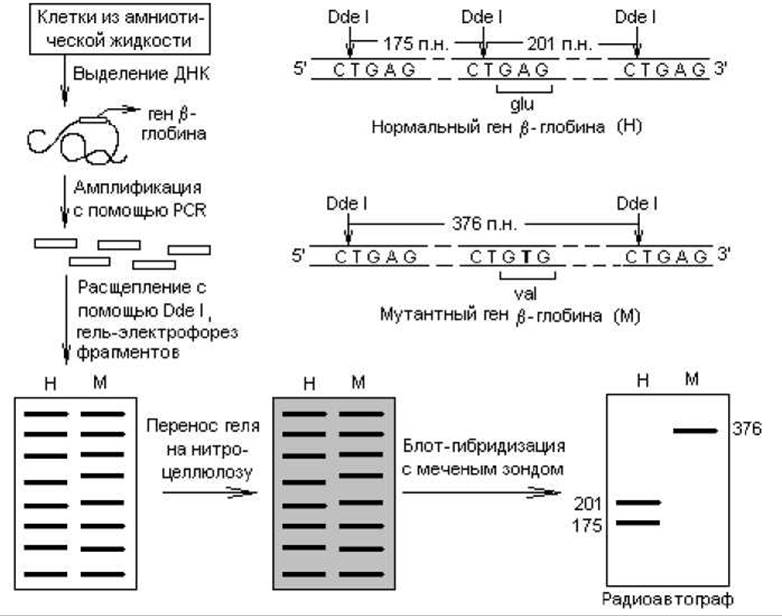
Fig. 21.5. Identification of the sickle-cell mutant $\beta$-globin gene
The ability to identify gene mutations and obtain virtually any mutation-free gene has brought us closer to treating hereditary disorders. This gave rise to a new field at the intersection of medicine and genetic engineering: Gene Therapy, defined as the introduction of Nucleic Acids into cells to purposefully correct genetic defects or impart new Functions. The primary gene therapy approach currently implemented involves isolating DNA from a patient's body, correcting mutations (e.g., via Site-Directed Mutagenesis), and reintroducing the corrected DNA into the patient (ex vivo method). The first successful result in Human Gene Therapy was achieved in the USA in 1990, when ex vivo methodology was used to cure a four-year-old girl with severe combined immunodeficiency (caused by a mutation in the adenosine deaminase gene). The patient was intravenously administered her own lymphocytes transformed with a normal adenosine deaminase gene cloned into a retroviral vector.
Another application of genetic engineering in medicine is The production of highly reliable Vaccines that eliminate the risk of disease (unlike traditional vaccines produced by inactivating pathogens). Genetically engineered vaccines against hepatitis B and A—very dangerous diseases that tend to reach epidemic proportions—have been developed and are widely used. Vaccines against AIDS are currently in development.
The main Achievements of Genetic engineering in agriculture include the creation of TRANSGENIC ANIMALS AND plants. Transgenic individuals (animals, plants, or microorganisms) are those whose genetic makeup has been altered using genetic engineering techniques.
Transgenic animals—such as cows, pigs, sheep, and goats—are used to secrete highly active biological substances for medicine and pharmacology under the control of milk gene promoters. Antitrypsin (for treating lung diseases), antithrombin III (for preventing Heart attacks and strokes), blood clotting factors, and lactoferrin (which binds and transports iron, exhibits biocidal properties against pathogenic microflora, regulates natural Immunity, and slows tumor development) produced via transgenic animals have already been approved and marketed. The first transgenic bull carrying the human lactoferrin gene was produced in the Netherlands in 1990. Herds of transgenic cows carrying this gene now exist in several countries.
Molecular diagnostic methods applied to animals make it possible to identify not only genes with "harmful" mutations responsible for hereditary diseases, but also "beneficial" genes, such as those determining Resistance to Infectious diseases (leukemia, colibacillosis, etc.). This makes it possible to implant these genes into breeding stock.
A similar situation exists with Transgenic Plants. Genes encoding Enzymes for the degradation of certain herbicides have been isolated. Introducing these genes into plants has yielded herbicide-resistant varieties. Another example is the introduction of modified Bacillus thuringiensis prototoxin genes into plant genomes, resulting in the creation of Colorado potato beetle-resistant potatoes, as well as pest-resistant cotton and corn.
It has been demonstrated that plants can produce animal Proteins. For example, transgenic tobacco plants have been produced that accumulate fully functional monoclonal IMMUNOGLOBULINS, specifically those targeting bacteria that cause dental caries (opening the prospect of anti-cavity toothpaste). Approaches have also been developed to produce bacterial Antigens in plants for use as vaccines. Transgenic forms currently exist for 120 plant species. The Use of transgenic soybean, corn, cotton, rapeseed, potato, tomato, beet, squash, tobacco, and flax has been authorized. These plants are grown in 11 countries worldwide. Beyond the Applications listed above, genetic modification has solved problems such as resistance to viral, fungal, and bacterial diseases, regulation of ripening times, increased overall productivity, and the production of edible vaccines.
These achievements in applying genetic engineering to medicine and agriculture have been accomplished in a very short time, largely over the past decade. However, neither the scientific community nor the general public has had time to fully comprehend the consequences of the large-scale practical Implementation of such developments. At present, no one can reliably predict either the complete safety or the absolute harm of consuming foods derived from genetically modified organisms, cultivating transgenic plants in uncontrolled environments (in open fields), or the long-term effects of gene therapy. Therefore, countries conducting such research maintain a system of state oversight over genetic engineering activities and the transfer and use of genetically modified plants and animals. Most nations have enacted and enforce relevant laws and governmental regulations that strictly stipulate research requirements, as well as the Procedures and accountability of scientific organizations and government bodies regarding safety in the creation, release into the environment, and use of transgenic animals and plants. This becomes especially critical given expert forecasts suggesting that in the coming years, more than 20% of all import-export goods on the global market will consist of commodities and products derived using modern biotechnology and bioengineering methods.
Last update: 06/08/2026
Editorial and Educational Adaptation: This material has been compiled based on the primary/original source text. The project team performed an editorial review, corrected technical inaccuracies, structured sections, and adapted the content for an educational format.
What was processed:
- elimination of formatting defects (OCR errors, structural breaks, corrupted characters);
- editorial organization of content;
- standardization of terminology in accordance with academic sources;
- verification of factual statements against the original source text.
All mentions of the author, publication year, and origin of the primary text have been preserved in accordance with the source.