BIOLOGY Volume 2 - A Guide to General Biology - 2004
16. PLANT COORDINATION AND REGULATION
16.2. Plant Growth Substances
16.2.5. Practical Applications of Auxins
The discovery of IAA led to the Chemical synthesis of a wide range of BIOLOGICALLY ACTIVE SUBSTANCES with similar structures. Synthetic Auxins have proven extremely useful in various agricultural and horticultural Applications. From an industrial standpoint, they are cheaper to produce than IAA, and their activity is often higher because plants generally lack the Enzymes capable of breaking them down. Table 16.3 provides several Examples of such substances, detailing their structures and applications. The biological activity of synthetic auxins is frequently enhanced by introducing a chlorine atom into their molecule.
Class="center">Table 16.3. Structure/179.html">Practical Applications OF auxins
Auxin Type |
Examples and Structural Formulas |
Application |
Indole and naphthalene derivatives |
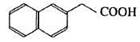
NAA (1-naphthylacetic acid)
IBA (indole-3-butyric acid)
|
Fruiting — promotes natural fruit set; sometimes fruit develops without Fertilization (parthenocarpy) Rooting hormone — stimulates the rooting of cuttings |
Phenoxyacetic acid derivatives |
2,4-D (2,4-dichlorophenoxyacetic acid)
2,4,5-T (2,4,5-trichlorophenoxyacetic acid) — has a similar structure, but with an additional chlorine atom at position 5 of the benzene ring MCPA (2-methyl-4-chlorophenoxyacetic acid) — has a structure similar to 2,4-D, but with a methyl group (—СН3) instead of chlorine at position 2 of the benzene ring |
Selective herbicides — kill broadleaf weeds (dicots). Used in cereal crops and lawns, as well as in conifer plantations to clear brush (conifers are unaffected). A mixture of 2,4-D and 2,4,5-T was used by the U.S. Army in Vietnam as a defoliant ("Agent Orange") Potato storage — suppresses tuber sprouting Fruiting — prevents premature fruit drop (delays The formation of the abscission layer) |
Benzoic acid derivatives |
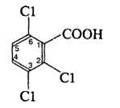
2,3,6-trichlorobenzoic acid
2,4,6-trichlorobenzoic acid — identical to the previous compound, except the chlorine atom is at position 4 instead of position 3 of the benzene ring |
Potent herbicides. Useful against deep-rooted weeds such as dandelion (Taraxacum officinale) and field bindweed (Convolvulus arvensis) |
 (cf. IAA, Fig. 16.8)

FRUIT SET. Fig. 16.17 shows the result of treating a tomato plant with an auxin. Fruit set is a series of developmental changes triggered after egg fertilization that lead to the formation of an immature fruit. Auxins stimulate these processes in several agricultural crops, such as tomatoes, peppers, tobacco, and figs.
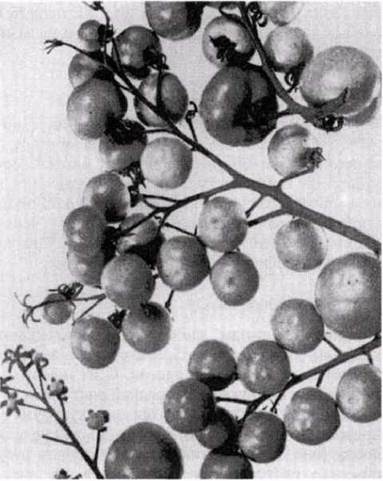
Fig. 16.17. Spraying with β-naphthoxyacetic acid resulted in three heavily fruiting tomato clusters. In the bottom left corner is an untreated SHOOT that produced only a single normal-sized fruit.
STIMULATION OF ROOTING. The synthetic auxins NAA (1-naphthylacetic acid) and IBA (indole-3-butyric acid) are highly effective at inducing ROOT development in stem cuttings. These substances are widely used in horticulture. Special rooting powders containing Plant HORMONES are commercially available: the Base of the cutting is dipped into the powder (or a solution thereof) prior to planting. Many fruit and ornamental species are propagated via stem cuttings. Because this process is a form of asexual reproduction, it yields a clone of genetically identical individuals, which is essential for preserving varietal traits.
HERBICIDES. Synthetic auxins derived from phenoxyacetic acid (see Table 16.3) are highly effective herbicides while remaining relatively inexpensive to manufacture. However, their primary advantage is selectivity, meaning their targeted action. They affect broadleaf (dicotyledonous) species much more severely than grass-like (monocotyledonous) plants, which include cereal crops and certain forage grasses. Consequently, 2,4-D will eradicate weeds in cereal fields and lawns. 2,4,5-T is particularly destructive to woody perennials and was therefore used to clear brush-overgrown pastures. However, this preparation is now banned due to traces of dioxin—an extremely toxic compound that causes Cancer, severe Skin conditions (such as chloracne), and multiple embryonic developmental abnormalities.
These herbicides cause shoot twisting in sensitive species, overall growth retardation, and ultimately growth cessation. They are believed to disrupt normal Gene Expression, preventing the proper balance of enzymes required for the formation of new plant Tissues. It remains unclear why dicots are more sensitive than monocots, but the reason presumably does not lie simply in broader leaves absorbing more agrochemicals.
Another group of synthetic auxins commonly used as herbicides is the benzoic acid derivatives (Table 16.3).
Growth Regulators
It is important to distinguish between natural plant growth substances and synthetic growth regulators. The latter are often structurally similar to natural hormones but are more effective and break down more slowly in treated tissues, which is highly advantageous for practical applications. Examples include:
growth substance (phytohormone) — heteroauxin (indole-3-acetic acid)
growth regulators — 2,4-dichlorophenoxyacetic acid (2,4-D); indole-3-butyric acid (IBA); indole-3-propionic acid (IPA)
Last update: 06/08/2026
Editorial and Educational Adaptation: This material has been compiled based on the primary/original source text. The project team performed an editorial review, corrected technical inaccuracies, structured sections, and adapted the content for an educational format.
What was processed:
- elimination of formatting defects (OCR errors, structural breaks, corrupted characters);
- editorial organization of content;
- standardization of terminology in accordance with academic sources;
- verification of factual statements against the original source text.
All mentions of the author, publication year, and origin of the primary text have been preserved in accordance with the source.