BIOTECHNOLOGY - Inshyna N.M. - 2009
CHAPTER 1. GENETIC ENGINEERING
Plant Growth-Promoting Bacteria
Most soil microorganisms promote plant growth through the following mechanisms:
- Fixation of Atmospheric nitrogen;
- formation of readily available chelated forms of Iron and Phosphorus, their uptake from the soil, and transport into plants;
- synthesis of substances that inhibit the growth of phytopathogens;
- synthesis of phytohormones;
- synthesis of Microbial Insecticides;
Plant Growth-Promoting Bacteria may utilize one or more of these mechanisms.
MOLECULAR MECHANISMS OF Nitrogen Fixation
A valuable property of bacteria is diazotrophy, The ability to fix atmospheric nitrogen. With the help of nitrogen-fixing bacteria, 17,5·107 tons of molecular nitrogen from the atmosphere are converted into Organic compounds annually. All microorganisms that carry out nitrogen fixation are prokaryotes. No eukaryote is capable of fixing atmospheric nitrogen. Nitrogen-fixing bacteria include Rhizobium, Bradyrhizobium, Frankia, Azospirillum, Azotobacter, and cyanobacteria. Introduction/32.html">Genetic Engineering Methods have been used to create ROOT nodule bacteria with an enhanced capacity for atmospheric nitrogen fixation.
Atmospheric nitrogen fixation in bacteria is carried out by the enzyme Nitrogenase. The molecular foundations of nitrogen fixation were investigated using Klebsiella pneumoniae, a bacterium that inhabits soil, Water, and the human intestine. Klebsiella pneumoniae can serve as a model system for studying the nitrogenase of Rhizobium and Bradyrhizobium bacteria.
The nitrogenase nitrogen-fixing system is a complex multienzyme machinery. All known nitrogenases contain two components. Component I is a complex of two α-subunits (50 kDa) and two β-subunits (60 kDa), 24 Iron atoms, 2 Molybdenum atoms, and an iron-molybdenum cofactor (FeMoCo). Component II consists of two α-subunits (32 kDa) and an unknown number of Iron atoms. Nitrogen fixation requires both components of nitrogenase, a complex of Mg2+ ions and ATP, and a source of reducing equivalents. The nitrogen fixation process can be schematically described by the following equation:
Class="center">N2 + 8Н+ + 8 е + 16 MgATФ = 2 NH3 + Н2 + 16 MgAТФ + 16 Н3РО4.
Nitrogen fixation genes are designated as nif genes; they encode approximately 20 different Proteins (Table 1.5). Therefore, using genetic engineering methods to create plants capable of independently fixing nitrogen is practically impossible.
Root nodule bacteria in Symbiosis with legumes reduce nitrogen to ammonia, which can be utilized for the Synthesis of Glutamine, glutamic acid, and protein.
Nitrogenase catalyzes The production of hydrogen gas. Some Rhizobium strains synthesize the enzyme Hydrogenase, which catalyzes the in vivo conversion of Н2 into Н+, thereby increasing the efficiency of nitrogen fixation. Genetic engineering can be employed to enhance the nitrogen-fixing capacity of Rhizobium bacteria by introducing hydrogenase enzyme genes. The hydrogenase system can be applied in the following processes:
- increasing the efficiency of nitrogen fixation;
- conversion and storage of solar energy;
- regeneration of Cofactors in industrial enzymatic processes;
- Synthesis of specific chemical compounds;
nuclear power plant reactors.
Table 1.5
Genes of Klebsiella pneumoniae involved in nitrogen fixation
nif Gene |
Protein (Function) |
D |
α-Subunit of nitrogenase component I |
К |
β-Subunit of nitrogenase component I |
Η |
Nitrogenase component II |
F |
Flavodoxin |
J |
Pyruvate:flavodoxin oxidoreductase |
O, B, N, E, V |
FeMoCo Biosynthesis |
M |
Nitrogenase reductase Processing |
A |
Activator |
L |
Repressor |
S |
Component I processing |
W, Z, T, Y, U, X |
Undetermined Functions |
Bacterial fertilizers based on nodule bacteria
Bacterial fertilizers enrich the plant rhizosphere with beneficial microorganisms, which improves soil Structure, enhances nutrient accumulation, promotes the Mineralization of organic compounds, and ultimately increases soil fertility and crop yields. Microorganisms in bacterial fertilizers provide plants not only with minerals but also with physiologically active compounds such as phytohormones and Vitamins.
In agriculture, bacteria of two genera are most commonly used: Rhizobium and Bradyrhizobium. Through symbiosis with legumes, these bacteria receive organic compounds, while the plants obtain NH4+. Each species of nodule bacteria is specific to a relatively small number of plant species.
The first culture of nodule bacteria was isolated in 1911 at the Bacteriological and Agronomic Station in Moscow. Several bacterial fertilizers have been developed based on nodule bacteria, including nitragin, rhizotorphin, azotobacterin, phosphobacterin, and extrasol. One gram of nitragin contains approximately 9 billion bacteria. Treating plant seeds with nitragin increases yields by 15–25%. Azotobacterin production utilizes Azotobacter chroococcum bacteria. Azotobacter fixes atmospheric nitrogen, produces vitamins (B5, B3, B6, biotin), plant growth stimulants (heteroauxin, gibberellin), and antifungal substances that inhibit unwanted microscopic Fungi. Phosphobacterin is based on Bacillus megaterium var. phosphaticum bacteria, which convert complex organophosphorus compounds (Nucleic Acids, Nucleoproteins) and insoluble mineral phosphates into a form accessible to plants. One gram of phosphobacterin preparation contains about 8 billion bacteria. These microorganisms are used to treat seeds and plants prior to planting in the soil.
Microbiological synthesis of siderophores
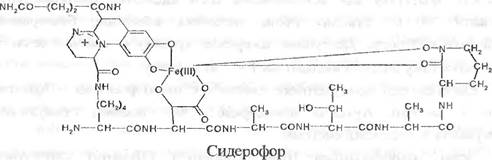
Siderophores are iron-chelating compounds. As is well known, iron is present in the soil predominantly in the form of water-insoluble Fe3+ compounds. Soil microorganisms synthesize and secrete iron-binding compounds with a Molecular Weight of 400–1000 Da.
Siderophores effectively bind Fe3+ and facilitate the uptake of iron into microbial Cells, which, in turn, supply it to plants.
Free-living Azospirillum bacteria are capable of stimulating plant growth through the Synthesis and Secretion of organic acids that dissolve and mobilize Mineral Substances.
Synthesis of compounds that inhibit phytopathogens
Phytopathogens can reduce crop yields by 25–100%. Certain microorganisms synthesize compounds that inhibit the growth of phytopathogens. For example, bacteria of the genus Pseudomonas synthesize Antibiotics such as agrocin 84, agrocin 434, herbicolin, phenazines, pyrrolnitrin, and pyoluteorin.
Some bacteria exhibit antifungal activity by synthesizing Enzymes (chitinase, β-1,3-glucanase) that degrade fungal Cell walls. In one experiment, the incidence of plant diseases caused by the phytopathogenic fungi Rhizoctonia solani, Sclerotium rolfsii, and Pythium ultimum was successfully reduced using a strain of Pseudomonas cepacia that synthesizes the enzyme β-1,3-glucanase.
The chitinase gene isolated from the bacterium Serratia marcescens was transferred into a strain of Pseudomonas fluorescens. The resulting microbial strain secreted chitinase and effectively inhibited the proliferation of the phytopathogenic fungus Rhizoctonia solani.
Synthesis of phytohormones
Bacteria can stimulate plant growth by altering their hormonal balance. They synthesize phytohormones that promote plant growth, accelerate Cell Division, and induce differentiation. The primary phytohormones are Auxins and Cytokinins.
The term "auxins" encompasses a group of growth-regulating substances. The most important representatives of auxins are indoleacetic acid, indolepropionic acid, and 2,4-dichlorophenoxyacetic acid.
Auxins were discovered at the beginning of World War II. Initially, auxins were extracted from the coleoptile tip—the protective sheath covering the first young leaf. Over 10 days, 8 female laboratory assistants of the German biochemist Kögl processed 100,000 corn seedlings to obtain an amount of auxin sufficient to establish its acidic nature. Obtaining 250 mg of auxin in this manner would require 400 years of continuous work. A readily available source of auxin is human urine, from which 1–2 mg of auxin is excreted daily.
Effective producers of auxins include microorganisms such as Yeasts, fungi, and bacteria. Auxins accelerate Plant Growth and stimulate The Development of their root systems.
Certain microorganisms (such as the fungus Gibberella fujikuroi) synthesize terpenoids known as Gibberellins. Gibberellins stimulate not only growth but also flowering in plants. They are used to accelerate barley germination during malting and to increase grape yields. Compounds that stimulate cell division, termed cytokinins, were discovered later. Cytokinins are derivatives of 6-aminopurine. In the presence of auxins, they induce cell division and stimulate RNA and Protein Synthesis.
Phytohormones are characterized by exceptionally high efficacy and exert their effects at very low concentrations. For example, 1 g of heteroauxin is sufficient to stimulate the growth of 1013 plants. If such a quantity of plants were planted in the soil (at a density of 1 plant per 1 cm2), the field area would equal 900 km2. Preparing a solution containing 1 g of heteroauxin would require 200 billion liters of water.
Synthesis of microbial insecticides
The best-known chemical insecticide, DDT (dichlorodiphenyltrichloroethane), was synthesized in the 1870s. Since the 1930s, DDT has been used to combat insect pests. Like most organochlorine compounds, DDT exerts a paralytic effect on the nervous and muscular systems of insects. Other organochlorine compounds—such as dieldrin, aldrin, chlordane, lindane, and toxaphene—have also been synthesized and widely used. Another class of chemical insecticides consists of organophosphorus compounds (malathion, parathion, diazinon), which inhibit the enzyme acetylcholinesterase, responsible for hydrolyzing the neurotransmitter acetylcholine, thereby disrupting neuronal function in insects.
Chemical insecticides have harmful effects on humans and animals. Organochlorine compounds, particularly DDT, persist in ecosystems for extended periods—from 15 to 20 years. Over time, insect pests develop resistance to many chemical insecticides, necessitating higher application rates. Because chemical insecticides lack selectivity, they destroy beneficial insects alongside pests. Furthermore, chemical insecticides accumulate in the adipose tissue of numerous organisms. For instance, bird species such as peregrine falcons, brown pelicans, and bald eagles were decimated in North America As a result of chemical insecticide poisoning. In light of these issues, intensive efforts are underway to find alternative methods for controlling pest populations.
Unlike chemical insecticides, microbial insecticides do not exert harmful effects on the environment. Insecticides synthesized by microorganisms are highly specific, targeting only certain species of pest insects. Microbial insecticides undergo rapid biodegradation, and insects do not develop resistance to bioinsecticides. However, the widespread use of these compounds is limited by their high production costs. This problem can be overcome through genetic engineering. Viruses, fungi, Protozoa, and bacteria are utilized for the PRODUCTION OF MICROBIAL insecticides.
In domestic biotechnological production, 3 groups of insecticidal preparations are distinguished:
1) bacterial preparations based on Bacillus thuringiensis (entobacterin-3, exotoxin, insectin, toxobacterin);
2) fungal preparations (beauverin);
3) preparations based on nuclear polyhedrosis viruses (virin).
Bacterial entomopathogenic preparations are used most frequently. They are characterized by the following features of action:
- high virulence against pest insects;
- environmental safety;
- high speed of action on pests.
The most studied entomopathogenic bacteria are Bacillus thuringiensis. Upon entering the insect Organism, they produce toxins:
- α-exotoxin (or phospholipase C) induces The breakdown of Phospholipids in insect Tissues;
- β-exotoxin inhibits METABOLISM/31.html">Transcription (RNA Synthesis);
- γ-exotoxin is a poorly studied enzyme;
- δ-endotoxin is an 8-sided crystal that, upon entering the insect gut, breaks down into protoxin molecules, which damage the midgut.
The protoxin of Bacillus thuringiensis causes insect death within just 15 minutes of exposure. Bacillus thuringiensis toxins are rapidly degraded. Bacillus thuringiensis bacteria are antagonistic to 130 insect species.
Bacterial entomopathogenic preparations are applied by spraying an aqueous emulsion (1 - 3 kg of the preparation is used per 1 ha of vegetable crops, and 3 - 5 kg for garden crops). 1 t of the microbial preparation is enough to destroy pests on 300 ha of forest, beet, or cotton fields.
Cloned genes of various Bacillus thuringiensis toxins are localized in Plasmids. One such gene was introduced into the photosynthetic cyanobacteria Synechocystis and Synechococcus. This approach proved effective for delivering Bacillus thuringiensis toxins into the target insect organism. However, Bacillus thuringiensis insecticides applied to leaves and stems do not affect insects that damage plant roots. The B. thuringiensis toxin gene was introduced into a strain of bacteria living in the rhizosphere—the soil layer near the roots. Such recombinant bacteria secrete the insecticide directly into the rhizosphere and protect plant roots from pest insects. Also, the B. thuringiensis toxin gene was integrated into the chromosomal DNA of a Pseudomonas fluorescens strain that forms colonies on corn roots.
Fungal entomopathogenic preparations cause mycoses in insects. Features of the action of microscopic fungi:
- infection of insects occurs through the cuticle;
- insects are infected during the pupal and adult developmental stages;
- high growth rate and reproductive capacity of fungi (they can persist for a long time as spores without losing their entomopathogenic activity);
- high Specificity — virulence depends on the fungal strain.
The action of a fungal preparation on an insect begins after spores enter its body cavity through the integument. Inside the insect organism, the spore germinates into a hypha, followed by the growth of mycelium, which fills the entire insect body, and toxins are produced. The growth of the fungus continues until all insect tissues, primarily Muscle tissue, are destroyed.
In the industrial production of fungal insecticides, strains of three genera are most commonly used: Beauveria, Metarhizium, Entomophthora. Based on the fungus Beauveria bassiana, the preparation beauverin was created (1 g of the preparation contains 1.5–6 billion conidiospores).
Viral entomopathogenic preparations possess the highest specificity towards insects, making them safe for humans, flora, and fauna. These preparations act on only a single insect species. Viruses are resistant to unfavorable environmental conditions and can remain viable for many years. Infection with viruses occurs during insect feeding. Virions penetrate cells through the gut wall, where their Replication takes place.
To combat pest insects, Baculoviruses are used—rod-shaped viruses with a double-stranded DNA genome. Resistance to baculoviruses develops very rarely, as baculoviruses have evolved alongside their insect hosts over millennia. As a result of baculovirus toxin action, insects may die within a period ranging from a few days to weeks. To accelerate this process, attempts have been made to increase the virulence of baculoviruses by introducing foreign genes whose expression leads to insect death. The scorpion neurotoxin gene from Androctonus australis Hector was introduced into one of the baculovirus strains. This toxin blocks Na+ ion transport in insect Neurons, leading to paralysis and death. The introduction of the gene doubled the virulence of the baculoviruses. The recombinant baculovirus not only accelerated insect mortality but also reduced their ability to damage plants. The main obstacle to the large-scale application of baculoviruses is the high cost of their preparations.
Given the harmful impact of chemical insecticides on the environment, microbial insecticides are the most promising for application in agriculture.
Last update: 11/08/2026
Editorial and Educational Adaptation: This material has been compiled based on the primary/original source text. The project team performed an editorial review, corrected technical inaccuracies, structured sections, and adapted the content for an educational format.
What was processed:
- elimination of formatting defects (OCR errors, structural breaks, corrupted characters);
- editorial organization of content;
- standardization of terminology in accordance with academic sources;
- verification of factual statements against the original source text.
All mentions of the author, publication year, and origin of the primary text have been preserved in accordance with the source.