BIOTECHNOLOGY - V. H. Gerasymenko - 2006
Part II. Special Biotechnologies
Chapter 22. BIOTECHNOLOGIES FOR WASTE UTILIZATION AND BIOCONVERSION IN THE AGRO-INDUSTRIAL COMPLEX
22.2. METHODS OF MANURE UTILIZATION
22.2.2. Mineralization of Organic Matter in Soil and Water Bodies
The utilization process is driven by the METABOLIC ACTIVITY OF various groups of organisms (Bacteria, Fungi, Algae, Protozoa, worms, and Arthropods) that use organic and Inorganic Compounds in wastewater as nutrients and Energy Sources. Aerobic microorganisms, utilizing atmospheric oxygen, convert Organic compounds into Mineral Substances such as ammonia, carbon dioxide, and Water.
Among known wastewater Treatment Methods, biological sanitation remains the most accessible and sanitary reliable option.
There are two major categories of aerobic biological wastewater treatment processes: extensive and intensive.
Extensive methods include those not directly involving controlled CULTIVATION OF MICROORGANISMS, such as irrigation fields, filtration fields, and stabilization ponds. Microorganisms residing in the upper soil layers of irrigation and filtration fields, or in the water of stabilization ponds, form biocenoses that drive the water purification process.
Intensive methods rely on The activity of activated sludge or biological film—naturally occurring biocenoses that form in specific industrial settings depending on wastewater composition and the chosen treatment regime. The formation of a biocenosis is a relatively long process that occurs continuously during wastewater treatment in specialized facilities such as aeration tanks or biological filters.
Aeration tanks (aeroanks) are concrete or reinforced concrete basins through which a slow-flowing mixture of activated sludge and pre-settled wastewater circulates. Here, wastewater treatment is carried out by means of activated sludge. Activated sludge is a substrate consisting of dark brown flocs, comprised of 70% natural associations of aerobic microorganisms (various bacteria and protozoa) and 30% inorganic solid particles. Microorganisms, together with the solid particles to which they attach, form zoogloea—a Symbiosis of Organism populations enveloped in a common mucous matrix. Organic pollutants from the wastewater are adsorbed onto the activated sludge and oxidized in the presence of atmospheric oxygen. The mixture of wastewater and activated sludge is continuously aerated to keep the sludge in suspension and supply oxygen.
Aeration tanks operate in conjunction with secondary settlers where the sludge, which accumulates in large quantities, is sedimented. A portion of the activated sludge is returned to the treatment system, while excess activated sludge generated by Microbial growth is directed to sludge drying beds and subsequently hauled to agricultural fields after dewatering.
In Ukraine, wastewater from distilleries is treated using biotanks (aeration tanks) featuring immobilized microorganisms on stationary carriers. This fibrous carrier possesses a large specific surface area (1 kg of carrier provides 8–10 thousand m2 of area) and high adhesive capacity. Consequently, a substantial amount of biomass is immobilized on it, which intensifies the purification process and eliminates the need to dispose of excess activated sludge, as its net growth is practically zero. As a result, several treatment stages can be omitted from the technological scheme, including the secondary settler for excess biomass Separation, the mineralizer, and sludge beds. This makes the treatment facilities compact, space-saving, and easier to operate. Furthermore, the carrier is biologically inert—meaning it is virtually indestructible by microorganisms and can function without replacement for many years (Koshel M. et al., 2002).
Biological filters are metal or reinforced concrete tanks filled with filter media (slag, expanded clay, gravel, plastic, crushed stone, etc.). In these systems, microorganisms remain stationary, attached to the filtering medium (carrier) in the form of a biological film.
A biological film is a complex structured entity composed of living and dead Cells, Cell fragments, and extracellular polymers anchored to a surface (Ippolitov K. G. et al., 2003). Inside biofilms, There is a dynamically changing mixture of populations. Cell proliferation is most active on the biofilm surface due to the highest concentration of substrates there. Closer to the carrier surface, Substrate Concentration becomes limiting, causing the degradation of the internal biofilm Structure. A significant portion of the biofilm is lost due to surface erosion caused by fluid shear forces or detachment from delamination. Biofilm regeneration during the process occurs through the sloughing off of PARTS OF THE film and the subsequent growth of a new, more active biofilm in the vacated space. Wastewater enters from the top and slowly trickles down through the biofilters, where organic matter is mineralized, while air enters from bottom to top through gaps between granules either naturally or by forced aeration. The capacity of biological filters depends On the surface area of the packing material. A schematic diagram of a biofilter is shown in Fig. 22.1.
Class="center">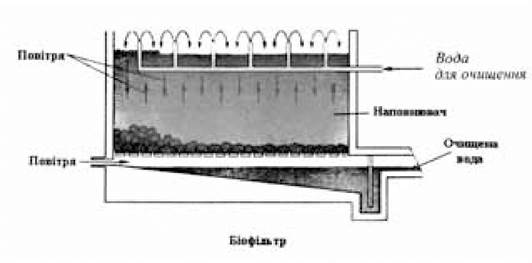
Fig. 22.1. Biofilter (after V. A. Vykov, 1987)
Biological wastewater treatment in specialized facilities widely employs three main cultivation modes for microbial biomass: continuous, batch, and sequencing batch (draw-fill).
The sequencing batch method offers advantages over others. First and foremost is the compactness of the treatment facilities, as a single Reactor combines both water purification and activated sludge separation via sedimentation. Even when using multiple reactors, such a system occupies less space than the traditional "aeration tank – secondary settler" setup. Today, this regime is utilized for wastewater treatment worldwide. For instance, in Bavaria (Germany), the number of reactors operating under this scheme increased 25-fold between 1990 and 2000 (Shaginurov G. I. et al., 2003).
Increasing the oxidative capacity of biological treatment facilities in the sequencing batch process—unlike other regimes—is achieved not by immobilization (via adhesion and/or adsorption) onto carrier surfaces, but by generating dense microbial granules. Microbial aggregates, known in literature as "microbial granules," represent spherical biofilms formed under specific conditions through the self-immobilization of activated sludge microorganisms (Shaginurov G. I. et al., 2003). The main advantages of granules over activated sludge flocs are their high settling velocity due to large size—resulting in rapid solid-liquid separation—and high metabolic activity.
Biological ponds include algal, crustacean, and fish-rearing ponds. A drawback is the complete lack of process control and the fact that they function only during the warm season. In an algal pond, wastewater treatment is carried out through aeration by microalgae, which utilize nutrient elements from the wastewater, enrich the medium with oxygen, and raise the pH to 9–10, thereby inhibiting saprophytic and pathogenic microflora. In addition to algae, biomasses of non-pathogenic bacteria and protozoa actively develop here.
From the algal pond, wastewater enriched with metabolic products of bacteria, protozoa, algae, and their biomass flows into a crustacean pond. Here, purification is facilitated by insect larvae, copepods, and filter-feeding crustaceans. From the crustacean pond, the treated wastewater flows into a fish-rearing pond, where the biocenosis is enriched with new hydrobiont species—carp fry—which feed on the biocenosis of the crustacean pond. This is where The final stage of wastewater purification takes place.
Biological ponds are used both directly for wastewater treatment without preliminary stages and for polishing wastewater after primary treatment facilities when remaining impurities hinder subsequent utilization processes.
Irrigation and filtration fields are specially designated land plots intended for wastewater treatment. They differ from one another in that filtration fields are not used for growing agricultural crops.
The process of water self-purification is driven by the activity of various groups of soil organisms, including bacteria, fungi, algae, protozoa, worms, and arthropods. A biological film forms on The surface of soil aggregates.
Disadvantages of the method of organic matter mineralization in soil and water bodies:
1) economic — it requires significant capital investments and energy consumption for mechanical wastewater treatment. The cost of treatment facilities averages 20–25% of the total investment required for the Construction of a large pig-breeding complex;
2) mineralization of organic compounds occurs exclusively in the surface layer of the soil, as oxygen penetrates the soil to a depth of only 20–30 cm.
Last update: 11/08/2026
Editorial and Educational Adaptation: This material has been compiled based on the primary/original source text. The project team performed an editorial review, corrected technical inaccuracies, structured sections, and adapted the content for an educational format.
What was processed:
- elimination of formatting defects (OCR errors, structural breaks, corrupted characters);
- editorial organization of content;
- standardization of terminology in accordance with academic sources;
- verification of factual statements against the original source text.
All mentions of the author, publication year, and origin of the primary text have been preserved in accordance with the source.