BIOTECHNOLOGY - V. G. Gerasymenko - 2006
Part II. Special Biotechnologies
Chapter 7. BIOTECHNOLOGY FOR THE PRODUCTION AND APPLICATION OF IMMOBILIZED PREPARATIONS
7.4. SUPPORTS FOR ENZYME IMMOBILIZATION
7.4.1. Organic Polymeric Supports
Existing organic polymeric Supports can be divided into two classes: natural and synthetic. In turn, the Class of natural polymers can be divided into groups according to their biochemical Classification: polysaccharide, protein, and lipid supports. Synthetic polymers are likewise subdivided into groups based on the Chemical Structure of the main macromolecular chain: polymethylene, polyamide, and polyester supports.
Among this group of supports, natural polysaccharide supports and synthetic polymethylene-type supports have found widespread application for Enzyme Immobilization.
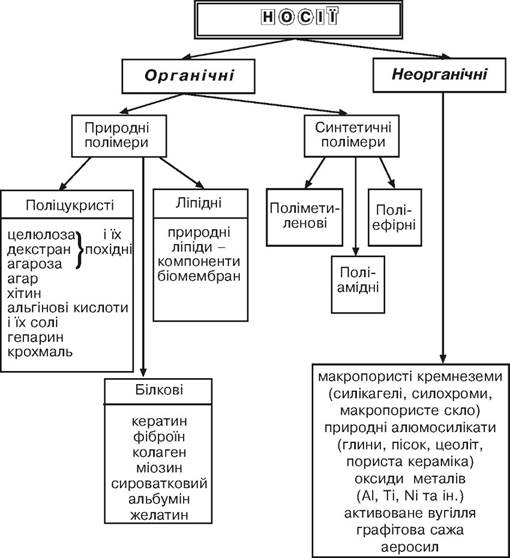
Fig. 7.1. Classification of supports used for the immobilization of BIOLOGICALLY ACTIVE SUBSTANCES
(O.V. Skorodumova, N.G. Rybalsky, 1990)
Natural supports. The great significance of natural polymers as supports for immobilization is due to their availability and the presence of reactive functional groups on their surface (in the initial or modified preparation) that readily participate in various Chemical Reactions, as well as their high hydrophilicity. Disadvantages of natural supports include susceptibility to microbial degradation and the high cost of some types.
Polysaccharide supports include Cellulose, dextran, agarose and their derivatives, Agar, Chitin, alginic acids and their salts, heparin, and starch.
Among these, derivatives of cellulose, dextran, and agarose modified with various chemical cross-linking agents are widely used. Various types of such preparations are produced by foreign companies for immobilization or Affinity Chromatography.
Cellulose is a poly-1,4-β-D-glucopyranosyl-D-glucopyranose:
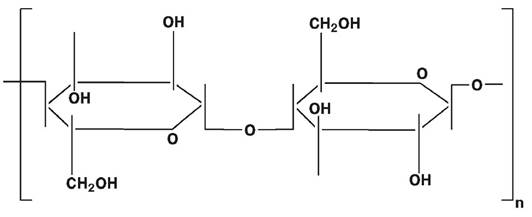
Cellulose is characterized by high hydrophilicity, and the presence of A large number of hydroxyl groups on its surface makes it easy to modify by introducing various substituents. To impart chemical stability, cellulose preparations are cross-linked with epichlorohydrin. To increase mechanical strength, cellulose is granulated via partial Hydrolysis, which destroys its amorphous regions. Chemical cross-links are introduced in their place to preserve porosity. Granulated cellulose, owing to its ease of preparation and relatively low cost, is a convenient support for enzyme immobilization and affinity chromatography. Domestic and foreign companies produce various commercial grades of cellulose (Table 7.2) for enzyme immobilization and affinity chromatography. A disadvantage of cellulose as a support is its instability to strong acids, alkalis, and oxidizing agents.
Dextran (poly-1,6-α-D-glucopyranosyl-D-glucopyranose) is a branched polysaccharide of bacterial origin containing glucose residues linked primarily by 1,6-glucosidic bonds (as well as 1,2-, 1,3-, and 1,4-bonds):
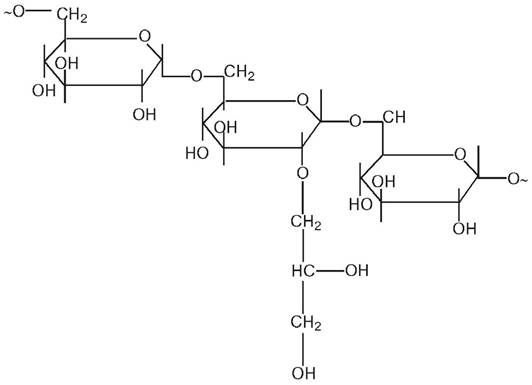
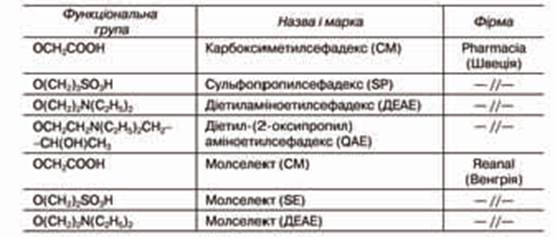
Dextran-based gels cross-linked with epichlorohydrin are manufactured by Pharmacia (Sweden) under the trade name "Sephadex" and by Reanal (Hungary) under the name "Molselect". Upon drying, Sephadex gels shrink, whereas In aqueous solutions they swell strongly. The average pore size within the gel network is controlled by varying the degree of cross-linking. Dextran-based gels possess high chemical stability and hydrophilicity. Foreign companies also manufacture dextran derivatives containing various functional groups (Table 7.3).
Table 7.2.
Cellulose and some of its derivatives (I.V. Berezin et al., 1987)
о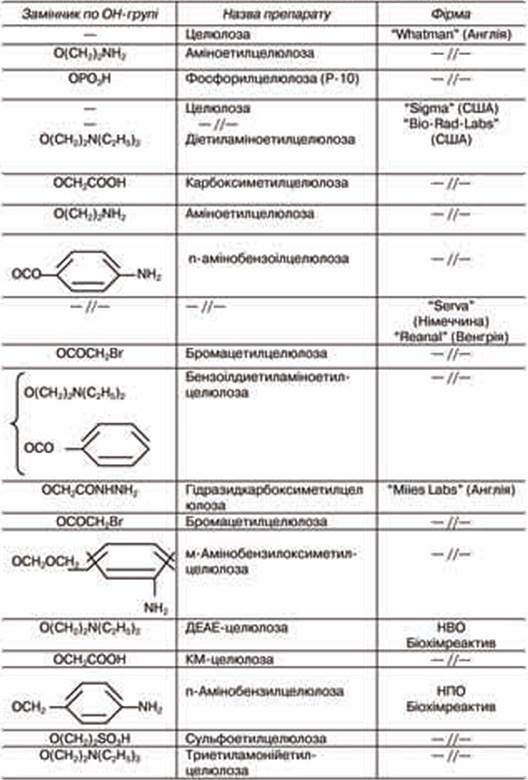
Table 7.3.
Commercial preparations of dextrin derivatives
(I.V. Berezin et al., 1987)
Dextrans also include starch, a polysaccharide mixture whose main component is amylose. By chemically modifying starch with cross-linking agents such as formaldehyde, glyoxal, and glutaraldehyde, a new carrier—spongy starch—has been obtained, featuring increased resistance to polysaccharide-hydrolyzing Enzymes.
Water-soluble preparations with various functional groups are derived from dextrans and used in medicine as drug delivery carriers. The choice of dextran-based carriers for medical purposes is due to their susceptibility to easy biodegradation.
Agarose: poly-β-galactopyranosyl-3,6-anhydro-α-L-galactopyranose:
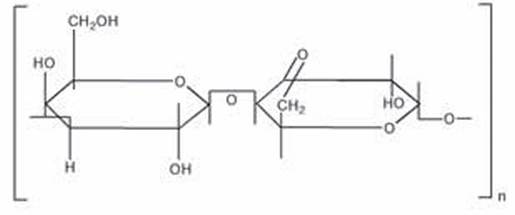
Agarose is widely used for immobilization, but its cost is quite high, which has driven The Development of modification Methods to obtain easily regenerable forms. When a hot 2–6% aqueous solution of agarose is cooled below 45 оС, strong, large-pore gels are formed, representing a complex mixture of charged and neutral Polysaccharides. During gelation, individual polysaccharide chains form Double helices that subsequently aggregate to form "junction zones". Because agarose gel melts at around 100 оС, unlike Sephadexes, it cannot be autoclaved. Drying leads to irreversible destruction of the agarose gel; therefore, it must be stored as an aqueous suspension.
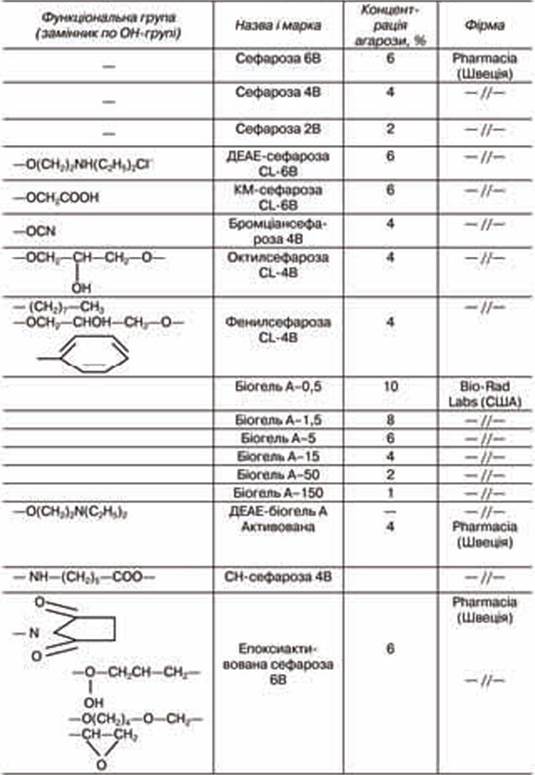
Agarose-based gels are manufactured by various foreign companies under commercial names such as Sepharose, Bio-Gel A, Ultrogel A, and Sepharose CL (Table 7.4).
Agar is extracted from The Cell walls of certain red marine Algae. Its exact composition is unknown; however, it has been established that it contains two polysaccharides: agarose and agaropectin. Agar gels are formed similarly to agarose gels upon cooling an aqueous solution to 38 оС. Upon drying, agar gel turns into a transparent film, making it possible to use optical methods to study enzymes immobilized within the gel.
The advantages of agar include low cost and non-toxicity. A distinctive feature of this carrier is its ability to form mechanically strong gels even at low concentrations in solution.
A significant improvement in agar properties can be achieved by cross-linking with epichlorohydrin, diepoxide compounds, etc. Cross-linked agar is resistant to heating even in alkaline environments and exhibits high mechanical strength. Furthermore, the presence of a large number of hydroxyl groups on its surface facilitates further modification, making it nearly an ideal carrier.
Alginic acids and their salts are polysaccharides of brown marine algae consisting of D-mannuronic acid residues linked by β-1,4-bonds:
Table 7.4.
Agarose and some of its derivatives (I. V. Berezin et al., 1987)
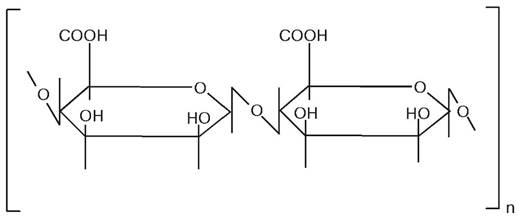
A characteristic property of these carriers is the sharp dependence of their solubility on Temperature and solution pH. For example, alginic acids are readily soluble in hot water and sparingly soluble in cold water. Calcium alginates can form gels that are used for the entrapment-based immobilization of enzymes, Cells, and Organelles.
Heparin is an acidic polysaccharide containing units of sulfated D-glucuronic acid (or L-iduronic acid) and sulfated glucosamine (or N-acetylglucosamine):
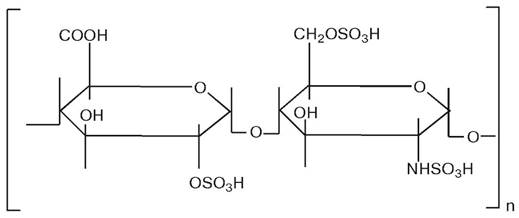
It is successfully used to obtain water-soluble preparations of immobilized enzymes utilized in medical practice for in vivo administration.
Common drawbacks of polysaccharide carriers include their susceptibility to microbial degradation and non-specific protein sorption.
Chitin is a natural aminopolysaccharide. It can be viewed as cellulose in which the СН2ОН group is replaced by an acetamide residue:
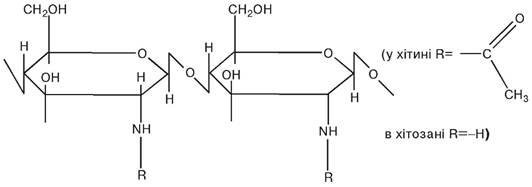
It is the primary component of the exoskeleton of crustaceans and insects, as well as the cell walls of certain Fungi. Since this compound is a byproduct of industrial shrimp and crab Processing, it is available in large quantities at a relatively low cost.
Chitin has a porous structure and is insoluble in water, dilute acids and alkalis, as well as organic Solvents. To convert it into a reactive form, it can be modified with glutaraldehyde and heavy metal salts (e.g., Ti).
Treatment of chitin with concentrated alkali solutions (deacetylation) leads to The formation of chitosan. Chitosan, which possesses free amino groups, can be used for the covalent immobilization of enzymes using bifunctional Reagents such as dialdehydes and diisocyanates. Unlike chitin, chitosan is soluble in mineral and organic acids; therefore, it is often used for immobilization in the form of solutions (pH 3–7).
When chitosan is used as a carrier, the resulting immobilized enzyme preparations exhibit high catalytic activity and resistance to microbial action, along with a significant enhancement in their thermostability.
In recent years, microbial chitosanases have attracted considerable interest, though they remain insufficiently studied. For the isolation of chitosanases from the producer strain Bacillus sp. 739 and their affinity purification, a colloidal solution of chitosan proved to be an effective sorbent (G.E. Aktuganov et al., 2003). A chitosan concentration of 0.12–0.15% is optimal for adsorption, ensuring substantial carrier economy while preserving the possibility of its subsequent regeneration.
In nature, chitosan is not as widely distributed as chitin and has so far been found only in certain species of lower fungi (K.G. Skryabin et al., 2000). Therefore, on an industrial scale, it is mainly obtained from the chitin of crab or shrimp shells via alkaline deacetylation.
Protein carriers. These include keratin, Fibroin, fibrin, Collagen, Myosin, serum albumin, casein, and others.
The Use of Proteins as CARRIERS FOR ENZYME immobilization is of great practical importance, particularly in medicine. Such carriers make it possible to closely mimic in vivo functional conditions for enzymes, solve The problem of biodegradation, and utilize most of them in the form of membranes and films. Immobilization on protein matrices can be carried out both in the presence and absence of cross-linking agents.
A common drawback of protein carriers used in medicine is their immunogenicity upon Introduction into the body (with collagen and fibrin being exceptions).
Keratin, fibroin, collagen, myosin, and serum albumin are most frequently employed as carriers.
Collagen is a fibrillar protein belonging to the scleroprotein group. It serves as a major structural component of Cartilage and tendons and possesses high tensile strength. Collagen features a large number of reactive groups on its surface, allowing it to be easily modified to impart a broad spectrum of desired properties to the matrix. For instance, blocking amino or carboxyl groups can alter the surface charge of the carrier and, consequently, its hydrophilic-hydrophobic balance, while cross-linking agents can be used to obtain a compacted microstructure.
Collagen possesses high hydrophilicity. It is capable of sorbing 1 to 5 g of water per 1 g of protein while remaining insoluble and retaining its fibrous structure.
Gelatin—a soluble mixture of Polypeptides—is a product of collagen processing. It is obtained by prolonged treatment of collagen with boiling water, during which certain covalent bonds of the collagen are hydrolyzed. As a result, the fibrous, insoluble collagen is transformed into a soluble polypeptide mixture known as gelatin, which exhibits a gel-like structure.
The value of this carrier lies in its non-toxicity and easy biodegradability, enabling the use of gelatin in the pharmaceutical and food industries.
Keratin is a fibrillar protein of the scleroprotein group that constitutes almost entirely wool, Hair, cornified integuments, feathers, etc. It is typically derived from the processing of feathers (a byproduct of poultry processing plants). Keratin is available in large quantities and is inexpensive.
Synthetic polymer carriers. The enormous variety of available synthetic polymers has ensured their widespread application as carriers for enzyme immobilization. By introducing various functional groups into the polymer molecules, the physical and Chemical properties of the carrier can be tailored within wide limits.
Synthetic polymers are versatile and can be utilized for covalent and sorption enzyme immobilization, as well as for entrapment within the carrier structure (in gels, microcapsules, tubes).
Polymers based on styrene, acrylic acid derivatives, polyvinyl alcohol, polyamides, polyurethanes, and others are the most widely used. The structure and PHYSICOCHEMICAL PROPERTIES OF synthetic polymer carriers vary significantly and span a broad range. Among them are carriers in the form of spherical particles, granules, powders, membranes, and tubes, as well as porous carriers with macroreticulate, isoporous, and heteroporous structures—used for sorption immobilization or gel and microcapsule preparation—and those with highly reactive functional groups for covalent immobilization.
Styrene-based polymers. They serve as the foundation for many commercial ion-exchange Materials, such as Dowex and Amberlite. Both microporous and macroporous carriers, as well as those featuring macroreticulate, isoporous, and heteroporous structures, are employed for sorption immobilization. Macroreticulate polystyrenes are Glass-like, possess a stable pore structure, do not swell in water, and exhibit high mechanical strength. Unmodified polystyrene carriers are hydrophobic.
The introduction of reactive groups into the composition of synthetic styrene-based polymers makes it possible to obtain novel types of carriers suitable for chemical immobilization.
Polymers based on acrylic acid derivatives. Acrylamide is one of the numerous acrylic acid derivatives widely used to prepare hydrophilic polymer carriers. It is utilized to produce polyacrylamide gel (PAAG). PAAG is manufactured by A number of companies; for instance, Bio-Rad Labs (USA) produces PAAG and its derivatives under the trade name "Bio-Gel" (P series), Koch-Light (UK) produces "Enzacryl", and Reanal (Hungary) produces "Acrylex".
LKB (Sweden) and IBF (France) also manufacture mixed-type carriers based on PAAG and agarose under the trade name "Ultrogel" (AcA series). This is a rigid matrix formed by agarose with a controlled porosity ensured by PAAG. The carriers are supplied as an aqueous suspension of spherical beads and are utilized for the synthesis of affinity sorbents and non-covalent enzyme immobilization.
For the covalent immobilization of enzymes, the polyacrylamide carrier is activated using one of the following methods: either functional groups are introduced into the preformed polymer via chemical modification, or a corresponding functional monomer derivative is polymerized.
Methacryloyl chloride is among the other acrylic acid derivatives used to prepare polymer carriers.
Most acrylic acid-based polymers are resistant to many chemical reagents, yet they swell in water and organic solvents. Therefore, whenever a rigid carrier structure is required, mixed-type carriers such as Ultrogel AcA—based on synthetic and natural polymers—are employed. Synthetic polymers with a rigid structure include copolymers of acrylic acid derivatives marketed under the trade name "Spheron" by Lachema (Czech Republic) and Realco Chem. Co (USA). These are macroporous polymer gels that are
mechanically strong, chemically and biologically stable. The presence of hydroxyl groups on their surface imparts matrix properties similar to those of Sepharose, allowing the application of activation methods developed for Sepharose.
Polyamide carriers. This group comprises various heterochain polymers containing a repeating amide group, -C(O)-NH-. One method for their preparation is based on the homopolycondensation of aminocarboxylic acids (nylon-6, capron). In addition to nylon-6, polyisonitrile-nylon, polyaminoarylnylon, and others are utilized for immobilization. Amide groups confer hydrophilicity to the polymers.
For use as carriers, polyamides are activated by partial hydrolysis followed by treatment with agents such as glutaraldehyde.
The main advantage of this type of support is that they can be fabricated in various physical forms: as granules, powders, fibers, membranes, tubes, etc.
The group of polyamide supports also includes polymers based on N-vinylpyrrolidone.
The widespread use of these supports, primarily for biomedical Applications, is due to their biological inertness and environmental stability. Utilizing polyvinylpyrrolidone and its copolymers yields immobilized enzyme preparations capable of slow biodegradation within the Organism, where The rate of degradation depends on The Nature of the second monomer and the concentration of the cross-linking agent in the mixture.
Polyvinyl alcohol-based supports. Proposed by H. Manecke and G. Vogt (1980), these supports exhibit high reactivity. Appropriate modification allows the introduction of various functional groups, such as disulfide and aldehyde groups, among others. To obtain hydrophilic gels, the supports can be cross-linked with glutaraldehyde in an acidic medium, or with epichlorohydrin or n-xylylene dichloride in an alkaline medium:
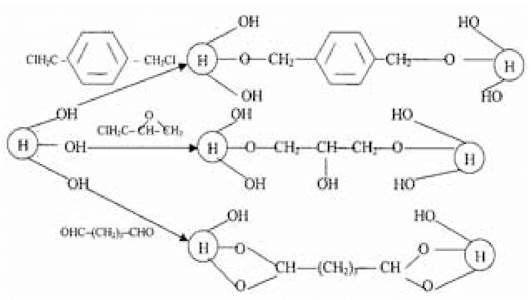
In Addition to a high content of reactive groups, the advantages of polyvinyl alcohol-based supports include a high binding capacity.
Polyurethanes. Hydrophilic polyurethane polymers contain the group  They serve as convenient materials for the entrapment of enzymes into gels.
The immobilization process in this case involves simple mixing of the components. Polyurethanes demonstrate greater water resistance compared to polyamides.
Organic low-molecular-weight supports. Natural supports include Lipids. The use of natural lipids as supports for immobilization requires specialized techniques and is very labor-intensive. This type of immobilization closely mimics the physiological conditions of enzymatic systems within living cells, as it typically employs membrane lipid components such as glycerolipids, Sphingolipids, Cholesterol, and cardiolipin.
Due to the high cost of these supports and the requirement for expensive, sophisticated equipment for immobilization, they are used primarily for The production of pharmaceutical preparations.
Typically, lipid supports are utilized in the form of monolayers on various surfaces or as spherical bilayer structures known as Liposomes.
Lipid monolayers at the water surface. Lipids are capable of forming monomolecular films at phase boundaries (water–air or water–nonpolar solvent). The lipid molecules in a monolayer are oriented such that their polar HEAD groups are submerged in the aqueous phase, while their hydrocarbon tails extend into the air or are immersed in the organic solvent. Such films are capable of sorbing protein molecules.
Obtaining monolayers at the water surface requires specialized techniques and is a rather labor-intensive Procedure, which limits their application.
Lipid monolayers on a solid surface. These systems as supports were proposed by O. M. Poltorak and E. S. Chukhrai (1966). The Essence of the method lies in depositing a lipid monolayer onto a solid substrate (silica gel, carbon black, aerosil) followed by the adsorption of protein from an aqueous solution. Lecithin, phosphatidylethanolamine, and cholesterol are commonly used as the lipid matrix. A method for preparing artificial mixed lecithin-cholesterol layers has also been developed.
The ability to alter the structure and orientation of molecules within lipid layers is achieved by selecting the polarity of the support and the Nature of the lipid solvent used.
Liposomes. Liposomes were first described by A. Bangham in 1964. Phosphatidylcholines (lecithins), phosphatidylethanolamine, phosphatidylserine, cardiolipin, and sphingomyelin are frequently used for their preparation, and they can be formed from both pure lipids and mixtures thereof.
There are three distinct types of liposomes: multilamellar, unilamellar, and macrovesicular. Multilamellar liposomes are closed structures consisting of several concentric lipid bilayers separated from one another by aqueous compartments. The overall diameter of multilamellar liposomes ranges from 1–2 to 50 µm.
Ultrasonic treatment of multilamellar liposomes leads to their transformation into simpler or unilamellar vesicles with smaller particle sizes. The diameter of unilamellar liposomes ranges from 20.0 to 50 nm.
The third type of liposomes comprises macrovesicular structures formed, for example, via the fusion of small liposomes induced by Ca2+ ions as well as the presence of Phospholipids with negatively charged head groups. Such liposomes consist of a single bilayer and can range in diameter from 60.0 nm to 100 µm.
The size and shape of liposomes depend on the method of their preparation, as well as factors such as the pH of the medium, the presence of inorganic salts, and the nature of the lipid used.
The widespread use of liposomes as carriers for the immobilization of enzymes and drugs is due to the simplicity of their preparation and the ease of regeneration of the immobilized product, as well as the potential for in vivo applications.
Synthetic lipid analogues (Surfactants). Surfactants consist of amphiphilic molecules containing both a polar head group and a nonpolar hydrocarbon tail. Natural lipids, in principle, also belong to surfactants. Synthetic surfactants are compounds, many of which are products of large-scale chemical manufacturing.
Depending on the functional groups present in the head portion of the molecule, all surfactants can be divided into four main types: anionic, cationic, nonionic, and zwitterionic. For example, sodium bis(2-ethylhexyl) sulfosuccinate is an anionic surfactant; cetyltrimethylammonium bromide is a cationic surfactant; poly(9-10) oxyethylene octylphenyl ether (Triton X-100) is a nonionic surfactant; alkyldimethylcarboxybetaine is a zwitterionic surfactant. The Servera company produces over 30 types of nonionic surfactants of varying structures alone.
The following forms of surfactants are used as supports for enzyme immobilization: reversed (water-in-oil) surfactant micelles in organic solvents; synthetic detergents containing bio-additives (enzymes); and supports based on polymerized surfactants.
Last update: 11/08/2026
Editorial and Educational Adaptation: This material has been compiled based on the primary/original source text. The project team performed an editorial review, corrected technical inaccuracies, structured sections, and adapted the content for an educational format.
What was processed:
- elimination of formatting defects (OCR errors, structural breaks, corrupted characters);
- editorial organization of content;
- standardization of terminology in accordance with academic sources;
- verification of factual statements against the original source text.
All mentions of the author, publication year, and origin of the primary text have been preserved in accordance with the source.