BIOTECHNOLOGY - V. H. Gerasymenko - 2006
Part II. Special Biotechnologies
Chapter 7. BIOTECHNOLOGY OF THE PRODUCTION AND APPLICATION OF IMMOBILIZED PREPARATIONS
7.4. SUPPORTS FOR ENZYME IMMOBILIZATION
7.4.2. Inorganic Supports
Various inorganic supports are used for enzyme immobilization: macroporous silicas (silica gel, silochrom, macroporous glass); metals and their oxides (titanium, iron, aluminum); natural aluminosilicates (various clays, zeolites); porous ceramics, activated carbon, and carbon black.
The range of mineral Supports produced in various countries is constantly expanding, and the standardization of their structural characteristics (specific surface area, pore size and volume, particle size) makes them particularly convenient for practical use.
The primary properties that drive the widespread application of inorganic Materials as supports are their rapid regenerability and The ability to be molded into virtually any configuration. This is a significant advantage of mineral supports. They can be utilized in the form of powders, granules, membranes, tubes, beads, or monoliths, and may be either porous or non-porous.
Inorganic supports can be employed for both adsorption and covalent immobilization following the chemical modification of their surface. This involves introducing reactive groups capable of interacting with the Functional groups of the enzyme. Organosilicon compounds—specifically γ-aminopropyltriethoxysilane, halosilanes, and esters of silylcarboxylic acids—are most commonly used as modifying agents.
Macroporous silicas. This category of supports includes silica gels, silochroms, and macroporous Glass. The positive attributes of silica-based supports include mechanical strength, chemical inertness to numerous Solvents, a rigid framework with predefined pore sizes, and resistance to microbial action.
Silica gel is an amorphous substance with the general chemical formula xSіO2·уН2О. It is obtained through the "Aging" (polycondensation) process of orthosilicic acid (SiO2 · 2Η2О):
Class="center">
The surface of silica gel particles and other silicas is covered with hydrophilic hydroxyl groups exhibiting weakly acidic properties.
A drawback of silica supports is their restricted pH operating range, increased solubility, and a degree of non-specific sorption on their surface. Except for the first limitation, these shortcomings can be overcome by modifying the silica surface.
Modification is carried out using one of two Methods. To reduce solubility and enhance stability, the supports are coated with various materials—such as a metal oxide film (aluminum, zirconium, titanium) or polymers (polyethyleneimine)—or treated with transition metal salts.
Alternatively, chemical modification of silicas can be achieved by introducing various reactive groups (-CN; -NO2; -NH2, etc.) or by rendering the surface hydrophobic using, for example, substituted benzoyl chlorides or stearoyl chloride.
Among chemical modification methods for silicas, the most widespread are Treatment with organosilicon compounds, haloalkylsilanes, and silylcarboxylic acid esters.
Thus, The Use of various modifying agents makes it possible to tailor the Structure/108.html">Surface Properties of silica supports. However, the initial cost of these supports is quite high, and modification further increases their expense, which remains a significant barrier to industrial Implementation.
In addition to coarse-dispersed silicas, fumed silicas are also employed as supports. They are entirely insoluble and possess high chemical, biological, and thermal stability, as well as structural rigidity across a wide pH range. Their surface is covered with hydroxyl groups, which facilitate adsorption via hydrogen bonding.
Unlike coarse-dispersed silicas (silica gels, silochroms, macroporous glass), which are used for the immobilization of high-molecular-weight BIOLOGICALLY ACTIVE SUBSTANCES (such as Enzymes), fumed silicas are utilized primarily as supports for low-molecular-weight compounds like Pharmaceuticals and herbicides.
Aerosil is a trademarked grade of fumed silica composed essentially of SiO2. It is produced by high-Temperature vapor-phase Hydrolysis of SiCl4 in an oxygen stream followed by Condensation in Water vapor (I. V. Zharnikova, 2004). Physically, this sorbent is a non-porous silica consisting of nearly spherical particles. The surface of Aerosil is covered with hydroxyl groups that mediate adsorption through hydrogen bonding. Owing to its physicochemical properties (high purity, large specific surface area, small particle size), as well as its Ecological and Physiological safety and Skin compatibility, it is widely used in pharmacology and cosmetology. It is also incorporated into pesticide and fertilizer formulations and serves as an excipient for tableted medications.
Natural aluminosilicates—such as clays and zeolites—along with porous ceramics (which, in addition to aluminosilicates, contain titanium or zirconium oxides and other impurities) may be more suitable for industrial Applications. Similar to silicas, the surface of these supports can be modified with various organic substances, such as silanes (γ-aminopropyltriethoxysilane).
An important characteristic of silicate and aluminosilicate supports is the high density of surface groups, which allows the binding of enzyme protein molecules through both Electrostatic Interactions and Hydrogen Bonds. This is crucial for efficient Enzyme Immobilization.
Activated carbon and graphitized carbon black have also gained widespread use as supports. Activated carbon can be employed for both adsorption and covalent immobilization (following preliminary activation of oxide groups).
The advantages of carbon black include high uniformity and surface electrical conductivity. The latter property is essential for developing bioelectrocatalytic systems based on immobilized enzymes. A major drawback of this support is its low mechanical strength, which limits its application. By depositing carbon onto granular carbon black, a novel support called carbochrom was developed, combining high mechanical strength with the advantages of graphitized carbon black.
Promising supports are those based on metals and their oxides. These supports possess high mechanical strength, are relatively inexpensive, stable, and exhibit favorable hydrodynamic properties. In practice, supports based on aluminum and titanium oxides are most commonly used. On an industrial scale, they are typically produced as macroporous powders uniform in shape and size. The use of this type of matrix enables both adsorption and covalent immobilization following preliminary modification with γ-aminopropyltriethoxysilane.
Metal surfaces used as supports (Al, Ni, Ti) are usually modified by forming an oxide film on the matrix surface or by coating them with a polymer layer (polystyrene and Cellulose derivatives, etc.). This significantly increases the carrier capacity.
In recent years, immobilization Methods based on ferromagnetic material supports have been actively developing. The resulting biocatalysts and immobilized biologically active substances exhibit magnetic properties, allowing them to be manipulated using a magnetic field. Drug substances immobilized on magnetic supports are employed in targeted drug delivery systems directed to target Organs, i.e., diseased Tissues. Magnetic supports conjugated with bioreagents represent novel tools for the Isolation and Purification of Proteins and Cells.
By nature, magnetic supports can consist entirely of a ferromagnetic material or take the form of a gel substance with magnetic particles embedded within their pores.
The technology for producing immobilized biologically active substances with magnetic properties is well-developed in many countries worldwide. According to numerous researchers, preparations of biologically active substances possessing magnetic properties will eventually replace conventional immobilized biocatalysts and pharmaceuticals.
Based on highly dispersed silica (fumed silica) by adding magnetic powder (Fe2O3), a biocatalyst was obtained, which was subsequently modified with dextran (polyglyukin) and activated by introducing active groups onto the surface for covalent immobilization According to the scheme (I.V. Zharnikova, 2004):

Next, Antibodies were immobilized on the biocatalyst to form an immunomagnosorbent (IMS), followed by the application of this complex in enzyme-linked immunosorbent assay (ELISA):
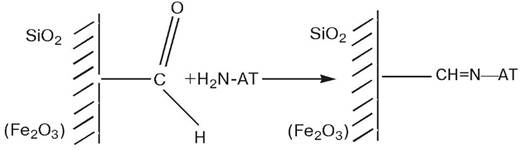
The Immobilized Antibodies retain stable activity even after 9 years of storage at 4-5 oC, whereas conventionally they remain active for only 2-3 weeks.
The incorporation of a magnetic component into the sorbent used as a support in solid-phase micro-Organism immunoassay significantly simplifies the handling of finely dispersed material and increases the speed of the diagnostic Procedure.
Last update: 11/08/2026
Editorial and Educational Adaptation: This material has been compiled based on the primary/original source text. The project team performed an editorial review, corrected technical inaccuracies, structured sections, and adapted the content for an educational format.
What was processed:
- elimination of formatting defects (OCR errors, structural breaks, corrupted characters);
- editorial organization of content;
- standardization of terminology in accordance with academic sources;
- verification of factual statements against the original source text.
All mentions of the author, publication year, and origin of the primary text have been preserved in accordance with the source.