FUNDAMENTALS OF MICROBIOLOGY - V. M. Samygin - 2015
CHAPTER 1. STAGES OF THE DEVELOPMENT OF MICROBIOLOGY
Microbiology is the science that studies microorganisms—that is, minute living creatures visible only under a microscope. Hypotheses regarding the existence of invisible living beings in nature were put forward by many researchers as early as the period of empirical knowledge (empiricism based on experience), a prominent exponent of which was Hippocrates (460–370 BC). He believed that during epidemics, the air contained specific disease-causing exhalations known as "miasmas." However, microbes were first observed by the Dutch naturalist Antonie van Leeuwenhoek (1632–1723), who constructed a primitive microscope that enabled him to discover microscopic "animalcules" (tiny living animals) in rainwater, dental plaque, and other Materials (the morphological or descriptive period).
Class="center">Hippocrates (460–370 BC)

Antonie van Leeuwenhoek (1632–1723)

The beginning of The Study of microorganisms in Russia is associated with the reformist activities of Peter the Great. During his travels abroad in 1698, Peter I familiarized himself with Leeuwenhoek's microscopes, and they were subsequently purchased for Russia. Soon, The production of microscopes was established in the palace workshops. The first microscopes in Russia were used both for "the amusement of the eyes and soul" and for scientific research.
Following the DISCOVERY OF MICROORGANISMS, the question of their Taxonomy arose, The Development of which is closely linked to the Swedish naturalist Carl Linnaeus (1707–1778).
A turning point in the development of microbiology was the mid-19th century—the era of Louis Pasteur and Robert Koch (the physiological period).
Through his brilliant work, L. Pasteur established that microorganisms are capable of altering the environment in which they live and inducing a variety of chemical transformations. He discovered that various Types of Fermentation (butyric, alcoholic, etc.) are caused by strictly specific microorganisms that differ from one another in their morphological and physiological properties. Research by this scientist clarified The Role of microbes in the global cycling of matter, particularly in fermentation and decay processes. While studying fermentation, L. Pasteur discovered The phenomenon of anaerobiosis, i.e., the ability of microorganisms to develop in the absence of oxygen. He convincingly refuted claims regarding the spontaneous generation of life. To sterilize various perishable fermentation products, Pasteur proposed a mild method later named pasteurization. By means of experimental infection in animals, he proved that Bacteria isolated from cases of anthrax are indeed the causative agents of this disease. Furthermore, the detection of staphylococci in patients with furunculosis and Osteomyelitis led to the Conclusion that the same microbe causes both conditions. Based on his experiments aimed at finding ways to combat infectious diseases, Pasteur concluded that some older bacterial cultures lose their ability to induce disease while still conferring Immunity against subsequent infection with fresh cultures of these bacteria. The pinnacle of Pasteur's work was his research on combating rabies. Despite numerous unsuccessful attempts to isolate the rabies agent on artificial media or even to visualize it under a microscope (it belongs to Viruses, which were unknown at the time), Pasteur vaccinated a child using the Brain tissue of an infected animal, thereby saving him from certain death. To this day, anti-rabies vaccination centers are called Pasteur stations in his honor.
Louis Pasteur (1822–1895)

The prominent German scientist Robert Koch holds the priority of introducing the method of isolating pure cultures on solid nutrient media into microbiological practice, which played a crucial role in the development of microbiology and remains widely used today.
R. Koch was the first to use aniline Dyes to stain microbes, and he applied immersion systems and photomicrography in Cell/15.html">Microscopy.
Another methodological problem solved by R. Koch and his students was the development of culture media suitable for isolating the pathogens of infectious diseases. To this end, R. Koch began using meat extracts and infusions. This led to the creation of nutrient broth and solid nutrient Agar, which are still used in routine bacteriological work. A student of R. Koch, R. Petri, introduced Glass dishes with covers into microbiological practice, which are now known as Petri dishes.
The CAUSATIVE AGENT OF tuberculosis—a widespread and severe human disease at the time—discovered by R. Koch, became known as "Koch's bacillus." He also discovered the cholera pathogen, known as "Koch's comma," during an outbreak of the disease in 1883 in Egypt. The developed Methods for isolating and cultivating
microbes soon enabled Koch's students to discover A number of new pathogens of infectious diseases: diphtheria (Klebs and Loeffler), typhoid fever (Eberth and Gaffky), tetanus (Nicolaier and Kitasato), and meningitis (Weichselbaum).
An institute was established in Berlin for Koch, which, alongside the Pasteur Institute in Paris, became a global center of bacteriological science. The German school, led by R. Koch, focused its efforts on the isolation, cultivation, and description of infectious disease pathogens. The French school, headed by L. Pasteur, studied the Pathogenesis of infectious diseases, The Mechanism of recovery, and the development of immunity. Over the course of 25 years, the majority of major bacteria causing human diseases were discovered and described. This was the most monumental revolution in The history of medicine.
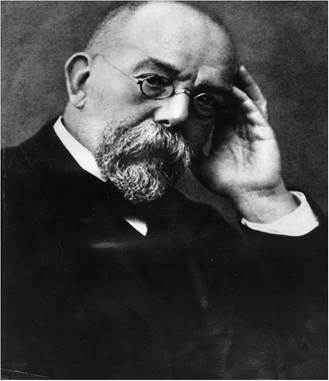
Robert Koch (1843–1910)
The development of microbiology in the first half of the 20th century can be regarded as the immunological period. Numerous diagnostic reactions were developed (Wassermann, Widal, Weil-Felix). During this period, I. I. Mechnikov established The Doctrine of non-susceptibility (immunity), formulated The Theory of phagocytosis, and substantiated the cellular theory of immunity. Simultaneously, P. Ehrlich proposed the humoral theory of immunity. He believed that immunity arises As a result of The formation of Antibodies in the Blood that neutralize toxins. In 1908, the Nobel Prize was awarded to I. I. Mechnikov and P. Ehrlich.
I. I. Mechnikov (1845–1916)

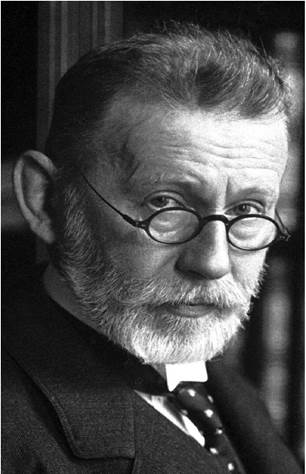
Paul Ehrlich (1854–1915)
A major milestone in the history of microbiology was the discovery of a distinct class of pathogens affecting humans, animals, and plants: viruses. On February 12, 1892, D. I. Ivanovsky reported that tobacco mosaic disease is caused by a causative agent capable of passing through bacterial filters—a virus. This date is considered the birth of virology as a science, and D. I. Ivanovsky as its founder.
D. I. Ivanovsky's discovery was soon corroborated by other researchers, and within a few years, it became clear that many widespread human, plant, and animal diseases are caused by similar submicroscopic agents that pass through bacterial filters.
Another crucial milestone of this period was the emergence and early success of Chemotherapy for infectious diseases, the foundational principles of which were established by P. L. Romanovsky and Paul Ehrlich. In 1929, Alexander Fleming discovered penicillin, marking the dawn of the antibiotic era.
The modern molecular-genetic era in the development of microbiology began In the second half of the 20th century, driven by breakthroughs in genetics and molecular biology. The invention of the Electron microscope made the world of viruses and macromolecular complexes visible. Working with bacteria, Avery, MacLeod, and McCarty famously proved the role of DNA in transmitting hereditary traits. Deciphering the fundamental principles of Genetic information coding in DNA, along with the Discovery of the universality of METABOLISM/28.html">The Genetic Code, established the general molecular-genetic patterns common to All living organisms. The sequencing of the Escherichia coli genome (Taylor and Thoman) paved the way for the artificial construction of genes and their transfer between Cells.
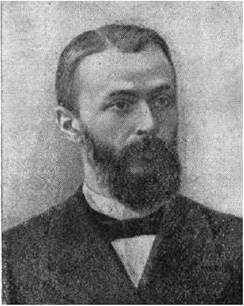
D. I. Ivanovsky (1864–1920)
Alexander Fleming (1881–1955)

Research in molecular virology has enabled the identification of various viruses and demonstrated the ability of viral DNA to integrate into The Genome of a susceptible host cell.
THE SPECTRUM OF novel pathogens discovered during this period is quite broad, encompassing viruses (e.g., HIV), bacteria (e.g., Legionella, Helicobacter), and parasitic microorganisms (e.g., Cryptosporidium).
Last update: 11/08/2026
Editorial and Educational Adaptation: This material has been compiled based on the primary/original source text. The project team performed an editorial review, corrected technical inaccuracies, structured sections, and adapted the content for an educational format.
What was processed:
- elimination of formatting defects (OCR errors, structural breaks, corrupted characters);
- editorial organization of content;
- standardization of terminology in accordance with academic sources;
- verification of factual statements against the original source text.
All mentions of the author, publication year, and origin of the primary text have been preserved in accordance with the source.