PLANT SYSTEMATICS - Yu. I. Korniievskyi - 2017
Lecture Notes
Lecture No. 4. Families Solanaceae, Scrophulariaceae, Lamiaceae, Asteraceae
Lecture Objective: to characterize the families, genera, and species used in pharmacy and medicine.
Lecture Outline:
1. General characteristics of the main diagnostic Features of the Solanaceae family. Family representatives: black henbane, jimsonweed, deadly nightshade, potato.
2. General CHARACTERISTICS OF THE main diagnostic features of the Scrophulariaceae family: mullein, common toadflax, purple foxglove, large-flowered foxglove, woolly foxglove.
3. General characteristics of the main diagnostic features of the Lamiaceae family: true lavender, white dead-nettle, oregano, lemon balm, peppermint, cat's whiskers (Kidney tea), rosemary, five-lobed motherwort, common thyme, creeping thyme, common sage, clary sage.
4. General characteristics of the main diagnostic features of the Asteraceae family: mountain arnica, cornflower, yarrow, common dandelion, purple coneflower, greater burdock, pot marigold, elecampane, coltsfoot, tansy, wormwood, milk thistle, German chamomile (wild chamomile, blue chamomile), immortelle, beggarticks.
Family Solanaceae - Solanaceae
· Family members are herbs, shrubs, or small trees with alternate (sometimes opposite in the inflorescence region) simple leaves.
· Flowers are usually arranged in axillary cymose inflorescences, bisexual, actinomorphic, or more rarely slightly zygomorphic. The calyx is usually 5-lobed or 5-cleft, persistent in fruit. The corolla ranges from rotate to tubular, 5-lobed, rarely bilabiate. There are usually 5 stamens, or fewer (4-2) in zygomorphic flowers. A nectar disk is developed. The gynoecium consists of 2 carpels, rarely 5 carpels, with an apical simple style and a bilobed stigma; the Ovary is bilocular (sometimes 3- or 5-locular) or rarely 5-locular, with numerous ovules.
· A common feature of the family members is the persistence of a structural part—the calyx—in the fruit.
· The fruit is a berry or a capsule.
❖ Black henbane — Hyoscyanus niger
Class="center">
· An ill-scented, highly poisonous plant!
· All above-ground parts are covered with soft, sticky pubescence and glandular trichomes.
· Flowers form a dense, compact scorpioid cyme.
· The corolla is funnel-shaped, deciduous, dirty yellow, rarely white, with a network of purple-violet Veins.
· The fruit is an urn-shaped, multi-seeded capsule enclosed in an enlarged calyx, opening by a lid.
· Effects: sedative, antispasmodic, analgesic, counterirritant, antiasthmatic, anti-inflammatory.
❖ Jimsonweed - Datura stramonium

· A poisonous plant with a narcotic odor.
· Flowers are large, solitary in the fork of the shoots.
· Calyx is elongate-tubular; after flowering, its upper part separates with a ring-shaped fissure from the base, which remains attached to the fruit.
· Corolla is large, white, tubular-funnel-shaped, and folded in the bud.
· Fruit is a spiny capsule, dehiscing by 4 Valves (breaking off).
· Effects: bronchodilator, anticholinergic, sedative, narcotic, hypnotic, antiallergic, detoxifying, spasmolytic, analgesic, anti-inflammatory.
❖ Deadly nightshade - Atropa belladonna
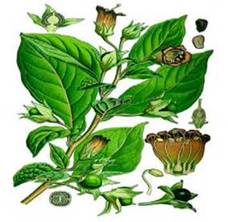
· The plant is poisonous!
· Leaves are paired in close proximity, broadly lanceolate or ovate-elliptic, acute, entire-margined, with sessile glands and sparse hairs along the veins.
· Corolla is tubular-bell-shaped, ranging from dirty violet to dark purple externally, and yellowish-brown at the base.
· Fruit is a violet-black, glossy, juicy, many-seeded berry about the size of a cherry, containing dark violet juice.
· Effects: spasmolytic, bronchodilator, anticholinergic, analgesic, antiallergic, detoxifying, anti-inflammatory.
❖ Potato - Solanum tuberosum

· Leaves are alternate, odd-pinnately dissected into unevenly sized segments.
· Flowers are gathered into double cymes or pleiochasia; corolla is white-lilac, rotate.
· Fruits are green berries.
· Underground SHOOT modifications are tubers.
· Fresh tuber juice is used for Burns, and internally for gastritis, PEPTIC ULCER DISEASE of The Stomach and duodenum, constipation, and flatulence. Flower infusion lowers Blood pressure and stimulates Respiration.
❖ Bell pepper - Capsicum annuum

· Food and medicinal plants include certain species of the genus Solanum, as well as Capsicum annuum.
· An annual vegetable and medicinal plant with white, solitary, rotate flowers and peculiarly shaped yellow, green, or red berry-like fruits.
· Effects: irritating, counterirritant, analgesic.
Figwort family - Scrophulariaceae
· Annual or perennial herbs. Leaves opposite or alternate. Calyx gamosepalous, 4—5-toothed. Corolla bilabiate, rarely regular. Stamens four, occasionally five or two. Ovary superior, bilocular, unlobed or bilobed.
· Inflorescence a raceme or panicle.
· Fruit a capsule.
· This family includes A number of weeds, such as common toadflax, speedwell, etc.
· Representatives of the genus Digitalis contain cardiac Glycosides, which are toxic substances that can rapidly accumulate in the body upon ingestion and cause severe complications (cumulation).
❖ Purple foxglove - Digitalis purpurea

· Poisonous plant!
· Leaves covered with soft hairs, brittle, rugose above, downy-pubescent beneath, grayish-green with a dense network of prominent veins.
· Inflorescence a one-sided, many-flowered raceme.
· Corolla bilabiate, campanulate-digitaliform, large, purple on the outside, white on the inside with purple spots in the throat.
· Fruit an ovoid capsule, glabrous, with a beak.
· Effects: cardiotonic, diuretic, antiarrhythmic, cytostatic, tonotropic.
❖ Large-flowered foxglove - Digitalis grandiflora

· Leaves oblong-lanceolate, with an acute apex, margins unevenly and weakly sharply serrate.
· Inflorescence a one-sided, drooping, dense raceme with a pubescent axis. Flowers horizontally deflected or drooping.
· Corolla digitaliform-campanulate, pale yellow, pubescent on the outside, with reddish spots and brownish veins on the inside.
· Fruit a densely pubescent capsule.
· Effects: cardiotonic, diuretic, antiarrhythmic, cytostatic, tonotropic.
❖ Woolly foxglove - Digitalis lanata

· Basal and lower leaves pubescent with simple and glandular hairs, withering at the beginning of flowering, oblong, ovate-lanceolate, entire-margined, less commonly slightly wavy or finely dentate, reddish-purple at the base, dark green and shiny above, glabrous, light green with brownish veins beneath; upper stem leaves lanceolate, sessile, acute, gradually decreasing in size and passing into bracts.
· Inflorescence a pyramidal, erect, dense raceme with a pubescent axis.
· Corolla short-bilabiate, tube globose, brownish-yellow with purple veins, upper lip shallowly divided into two triangular lobes reflexed upward, lower lip prominent, with a large white or reddish middle lobe.
· Capsule ovoid, glabrous, with a long beak.
· Action: cardiotonic, diuretic, antiarrhythmic, cytostatic, tonotropic.
Genus Mullein - Verbascum
❖ Great mullein - Verbascum thapsus
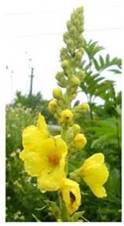
· Biennial plant; forms a rosette of leaves in the first year, and leafy, erect flowering stems In the second.
· Leaves simple, entire, alternate; rosette leaves petiolate or sessile.
· Inflorescence a spikelike thyrse; flowers actinomorphic with a double perianth, golden-yellow, stamens 5.
· Included in pectoral teas (herbal chest teas).
· Corollas are used as an expectorant, demulcent, emollient, antispasmodic, analgesic, and wound-healing agent.
Genus Toadflax - Linaria
❖ Common toadflax - Linaria vulgaris

· Annual plant.
· Stem erect, branched.
· Leaves alternate, sessile, linear-lanceolate, narrowed at the base, with revolute margins.
· Inflorescence a dense terminal raceme.
· Corolla zygomorphic, bilabiate with a spur.
· Fruit a capsule.
· Action: cholagogue, diuretic, laxative, hypotensive; for inflammation of the Bile ducts and Urinary Bladder, chronic colitis, and hemorrhoids.
Mint family (Labiatae) - Lamiaceae (Labiatae)
· Plants have a pleasant aroma due to the presence of glandular hairs containing Essential Oils.
· Stem quadrangular.
· Leaves decussate-opposite, petiolate or sessile, simple, exstipulate. Leaves, stems, and reproductive Organs are covered with hairs and characteristic essential-oil glands (with 8-12 secretory Cells).
· Stomata of the diacytic type.
· Inflorescences are spicate, racemose, or capitate, formed by axillary verticils or false whorls of flowers.
· Calyx is mostly bilabiate, persistent, and enlarges in fruit.
· Corolla is bilabiate, tubular-infundibuliform, occasionally unilabiate (due to reduction of the upper lip).
· Androecium consists of four didynamous stamens often fused to the corolla tube; sometimes stamens are equal (mint) or only 2 are fertile while the other 2 are modified into staminodes (sage).
· Superior ovary features two mutually perpendicular partitions dividing the cavity into 4 chambers, each developing a single ovule. A nectar disc is located at the Base of the ovary.
· Fruit is a coenocarpous mericarp (coenobium) consisting of 4 single-seeded nutlets enclosed within the calyx.
❖ White dead-nettle - Lamium album

· Perennial, softly pubescent plant.
· Leaves are greyish-green, petiolate, ovate, with coarsely serrate margins.
· Flowers are arranged in dense axillary false whorls.
· Corolla is white or yellowish-white, bilabiate, with a short hairy tube.
· Used for treating Spleen disorders and upper respiratory catarrh.
· Effects: hemostatic, astringent, diuretic, expectorant, anti-inflammatory, hypotensive, metabolic, sedative.
❖ English lavender - Lavandula angustifolia

· Evergreen subshrub with woody lower stems, while the upper portion remains herbaceous and dies back annually.
· Leaves are sessile, linear-lanceolate, with revolute margins.
· Shoots and leaves are greyish-pubescent with simple branched hairs and essential oil glands.
· Flowers are clustered in groups of 6–10 in whorls forming an interrupted spicate inflorescence.
· Corolla is blue-violet, bilabiate, with a tube significantly longer than the calyx.
· Nutlets are black and glossy.
· Effects: antiseptic, bactericidal, anti-inflammatory, analgesic, sedative, antispasmodic, diuretic, counterirritant.
❖ Oregano - Origanum vulgare

· Perennial herbaceous plant.
· Stem erect, round-quadrangular.
· Leaves petiolate, opposite, oblong-ovate, entire.
· Inflorescence a loose corymbose panicle.
· Flowers small, bisexual.
· Corolla light purple, indistinctly bilabiate.
· Used for toothache.
· Effects: sedative, spasmolytic, anti-inflammatory, analgesic, antimicrobial, expectorant, appetite-stimulating, choleretic, diuretic, anthelmintic, diaphoretic, stimulates glandular secretion, tones uterine musculature.
❖ Lemon balm - Melissa officinalis

· Perennial, softly glandular-pubescent plant.
· Leaves ovate, acute, broadly cuneate or cordate at the base, darker above than below, with a lemony scent.
· Calyx bilabiate, campanulate.
· Corolla white, twice as long as the calyx.
· Fruit, upon maturation, splits into four nutlet-like lobes - eremapped (cenobium).
· Effects: sedative, anti-inflammatory, analgesic, bacteriostatic, antiviral, diaphoretic.
❖ Peppermint - Mentha piperita

· Cultivated perennial rhizomatous plant.
· Creeping rooting shoots and erect red-violet or green stems.
· Leaves short-petiolate, oblong-ovate, unevenly sharply serrate, pubescent beneath with simple hairs and essential oil glands.
· Spike-like inflorescence cylindrical.
· Corolla tubular-funnel-shaped, whitish, limb pink.
· Effects: spasmolytic, antiseptic, hypotensive, choleretic, analgesic, appetite-stimulating.
❖ Cat's whiskers (Java tea) — Orthosiphon stamineus
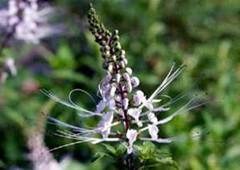
· Evergreen subshrub, cultivated.
· Stem erect, branched, quadrangular, with dark purple coloration at the base.
· Leaves rhombic-elliptic, irregularly coarsely dentate.
· Inflorescences interrupted, racemose.
· Calyx and corolla tubular-bilabiate.
· Used as a diuretic and saluretic in urolithiasis.
· Effects: diuretic, choleretic, spasmolytic, hypotensive.
❖ Rosemary - Rosmarinus officinalis

· Evergreen, densely branched shrub, lower part of shoots woody, upper part remaining herbaceous and dying back annually.
· Stems cylindrical at the base; young stems quadrangular, straight, pubescent.
· Leaves with a strong specific odor, sessile, coriaceous, narrow-lanceolate.
· Inflorescence - terminal racemes of 5-10-flowered false whorls.
· Effects: sedative, spasmolytic, tonic, anti-inflammatory, antiseptic, hypotensive.
❖ Motherwort - Leonurus quinquelobatus
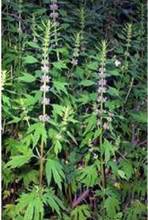
· Perennial herbaceous plant.
· Stem quadrangular, branched, covered along the Ribs with short downward-directed hairs.
· Leaves decussate-opposite, petiolate; basal leaves ovate, three- to five-parted into broad, elongate, dentate lobes.
· Inflorescences spiciform, terminal.
· A distinctive feature of the genus is the presence of spiny Teeth on the calyx.
· Nutlets of the coenobium obovate.
· Terminal shoots are used as a sedative agent.
· Effects: sedative, spasmolytic, hypotensive, diuretic, anti-inflammatory, antibacterial, wound-healing.
❖ Common thyme - Thymus vulgaris

· A subshrub 10-30 cm in height.
· Stem prostrate, woody; lateral shoots grayish-pubescent, erect to ascending.
· Leaves small, oblong-lanceolate, with revolute margins (rolling into tubes upon drying), grayish due to dense pubescence, with slightly sunken glands.
· Inflorescence - a loose, capitate raceme.
· Corolla pink, bilabiate.
· Action: antiseptic, expectorant, spasmolytic, antimycotic.
❖ Wild thyme - Thymus serpyllum

· A fragrant subshrub.
· Stem creeping, partially woody.
· Leaves small, short-petiolate; lower leaves oblong-lanceolate.
· Flowers small, gathered in terminal, dense capitate racemes.
· Corolla purplish-red or pinkish-lilac.
· Action: expectorant, spasmolytic, antimicrobial, anti-inflammatory, sedative, analgesic.
❖ Garden sage - Salvia officinalis
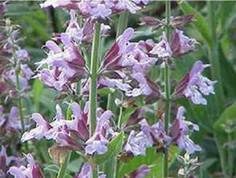
· A cultivated subshrub.
· Stem branched, gray-green due to dense pubescence.
· Leaves oblong-oval or narrow ovate-oblong, alveolate-wrinkled, finely crenate along the margin; upper leaves sessile, the rest long-petiolate, often with free lobes (auricles) at the base of the blade.
· Fertile stamens two, sterile stamens absent or present as staminodes.
· Flowers blue, violet, forming a terminal spicate inflorescence.
· Action: bactericidal, spasmolytic, astringent, anti-inflammatory, estrogenic, hypoglycemic, hemostatic, capillary-strengthening.
❖ Clary sage - Salvia sclarea

· Perennial.
· Leaves modified into bright bracts.
· Effects: disinfecting, anti-inflammatory, analgesic, soothing, antipyretic, deodorizing.
Family Asteraceae - Asteraceae
· The plant family richest in species, comprising over 30,000 species grouped into nearly 2,000 genera. The flora of Ukraine features 695 species belonging to 121 genera. Life forms among the Asteraceae include herbs, subshrubs, shrubs, and more rarely trees (e.g., Scalesia, Brachylaena); representatives of this family can also be epiphytes or succulents.
· Representatives of the subfamily Cichorioideae (Lactucoideae) possess articulated laticifers in their vegetative organs, whereas representatives of the subfamily Asteroideae (Tubuliflorae) contain secretory ducts and specific essential-oil glands.
· Reserve product: the soluble polysaccharide inulin.
· Leaves are simple, occasionally compound, exstipulate, rosetted, alternate, and sometimes opposite.
· Leaves are characterized by heterophylly and a wide diversity of blade shapes, degree of dissection, consistency, and pubescence.
· Simple botryose inflorescences—capitula (heads)—are more rarely arranged in complex panicles, racemes, or corymbs.
· Depending on Symmetry, corolla shape, and sexuality, four types of flowers are distinguished in Asteraceae: actinomorphic bisexual tubular; zygomorphic bisexual ligulate; zygomorphic female ray; and zygomorphic sterile funnel-shaped.
· The capitulum has a common receptacle and an involucre of bracts; marginal and central flowers are arranged in concentric circles on the receptacle.
· Flowers in the capitula can be: all ligulate (chicory, dandelion, sow thistle); all tubular (everlasting, beggarticks, tansy, wormwood, burdock, milk thistle); marginal flowers ray-like, pistillate or sterile, with central flowers tubular (yarrow, echinacea, chamomile, marigolds, elecampane, coltsfoot); marginal funnel-shaped sterile, with central flowers tubular (cornflower).
· Calyx is reduced or modified into teeth, a hairy pappus, bristles, or a flight apparatus (down).
· Syngenesious androecium: 5 stamens attached by filaments to the corolla tube, with anthers closely connate or glued together.
· Inferior ovary; fruit is an achene with a modified or reduced calyx, or lacking one.
· Characterized by seed formation without double Fertilization (apomixis), as well as early maturation of anthers (protandry).
❖ Cornflower — Centaurea cyanus
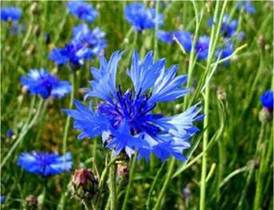
· The concepts of flower and inflorescence are characteristic of the cornflower (capitulum).
· Stem erect, branched from the middle with arachnoid pubescence.
· Basal leaves oblong, oblanceolate, more or less incised; upper leaves sessile, linear, entire.
· Inflorescence consists of solitary capitula with funnel-shaped marginal flowers.
· Fruit is an achene with a multiseriate dirty-red pappus.
· Effects: diuretic and choleretic, anti-inflammatory, disinfecting, antipyretic.
❖ Yarrow - Achillea millefolium

· Leaves are bipinnately or tripinnately divided into small toothed segments; basal leaves are petiolate; stem leaves are sessile, oblong.
· Inflorescence: small capitula gathered in dense terminal compound corymbs.
· Central flowers are tubular; marginal flowers are pseudo-ligulate.
· Fruit: achene without a pappus.
· Hemostatic agent.
· Effects: appetitive, diuretic and choleretic, anti-inflammatory, analgesic, metabolic, spasmolytic.
❖ Purple coneflower - Echinaceae purpurea

· Stem erect, branched.
· Leaves alternate; lower ones oblong-petiolate, upper ones nearly sessile, oval or linear-lanceolate, coarsely toothed.
· Inflorescence: large terminal capitula.
· Marginal flowers pseudo-ligulate, purple or dark red, sterile; central flowers tubular, bisexual.
· Achenes tetrahedral with a short pappus.
· Immunostimulatory agent.
· Effects: membrane-stabilizing, antioxidant, antiseptic, Central Nervous system stimulant.
❖ Dandelion - Taraxacum officinale

· Underground organ: caudex—rhizome and fleshy taproot.
· Basal rosette leaves divided into irregular segments (runcinate).
· Scapes terminate in capitula.
· Involucre 2–3-seriate, outer bracts reflexed downwards, membranous at the margin.
· Flowers yellow, ligulate, bisexual.
· Light brown cypselae on a stalk with a pappus (pseudomonocarps).
· Articulated laticifers with anastomoses extend through all organs.
· Action: vitamin, diuretic, choleretic, antispasmodic, laxative, sedative.
❖ Greater burdock - Arctium lappa

· Weed. ROOT thick, fleshy.
· Stem ribbed.
· Leaves of the basal rosette large, petiolate, broadly cordate and felt-pubescent. Stem leaves smaller in size, short-petioled.
· Inflorescence - capitula gathered into corymbose panicles. Involucral bracts green, glabrous, acute, hook-like and curved at the apex.
· Flowers tubular.
· Fruit - a cypsela with an easily deciduous pappus.
· Source of inulin.
· Action: diuretic, choleretic, diaphoretic, disinfecting, metabolic, anti-inflammatory.
❖ Pot marigold - Calendula officinalis
· Stem erect, ribbed and pubescent with simple and glandular hairs.
· Leaves alternate, lower ones oblong-obovate with a decurrent base.
· Flowers - marginal, pseudo-ligulate female with a curved ovary, central ones tubular, functioning as male (The phenomenon of heterocarpy), yellow or orange, due to the presence of carotenoids and Flavonoids in the cells.
· Fruits - ring-shaped or arcuate cypselae with a narrow beak, spiny on the convex side, sickle-shaped and hook-shaped in form.
· Action: anti-inflammatory, bactericidal, wound-healing, antispasmodic, hypotensive, cardiotonic, sedative, hemostatic, choleretic.
❖ Elecampane - Inula helenium

· Rhizome multi-headed, fleshy, with long roots, dark brown on the outside, whitish-yellow on the inside with lysigenous cavities (lacking clear boundaries) and shiny inclusions of inulin.
· Reaction for inulin: 96% alcohol (spherocrystals) and Molisch's reagent yields a blue-violet coloration.
· Stems strong, erect, branching, ribbed, pubescent.
· Basal rosette leaves are large, softly pubescent, and petiolate.
· Capitula are large, forming a terminal corymbose inflorescence. Flowers are golden-yellow.
· Fruit is an achene with a pappus.
· Action: expectorant, antimicrobial, anti-inflammatory, diuretic, choleretic, diaphoretic, appetite-stimulating, anthelmintic, and metabolic.
❖ Coltsfoot - Tussilago farfara

· Rhizome is oblong, producing ascending, arachnoid-pubescent flowering shoots with terminal buds in spring.
· Leaves are scaly, alternate, ovate-lanceolate, acute, and purplish-violet.
· Inflorescence is a capitulum; marginal flowers are false-ligulate, golden-yellow (pistillate), and central ones are tubular (staminate).
· After flowering, large long-petioled basal leaves appear.
· Leaf blade is broadly ovate, with a cordate base and an unevenly dentate margin.
· Leaves are white and tomentose-pubescent underneath, and dark green above.
· Achenes are cylindrical with a pappus.
· Action: emollient, expectorant, diaphoretic, choleretic, anti-inflammatory, wound-healing, and appetite-stimulating.
❖ Blessed milk thistle - Silybum marianum

· Biennial herbaceous plant.
· Leaves are alternate, elliptic, pinnately lobed or pinnatipartite, spiny-toothed along the margin, featuring white patches.
· Inflorescences are spherical capitula with tubular flowers.
· Fruit is an achene with a pappus, ovate in shape and laterally compressed.
· Hepatoprotective agent (preparations include silibor, legalon, karsil, and hepabene).
❖ Three-lobe beggarticks - Bidens tripartita
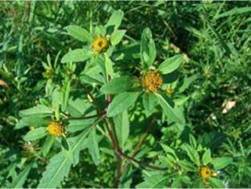
· Root system is taproot, branched.
· Stems are erect, branched, glabrous or slightly pubescent, green or violet.
· Leaves opposite, tapered at the base into a short winged petiole; lower leaves entire, the rest tripartite or dissected into three to five lanceolate lobes with serrate margins.
· Flower heads 1–3 at the shoot tips.
· Flowers small, brownish-yellow, tubular.
· Achenes hairy, compressed, crowned with 2–3 awns at the apex, covered with sharp downward-pointing emergences.
· Effects: antimicrobial, anti-inflammatory, diuretic, choleretic, diaphoretic, wound-healing, sedative, hypotensive, metabolic.
❖ Dwarf everlasting - Helichrysum arenarium

· Perennial with gray-tomentose pubescence.
· Stems ascending or erect.
· Leaves alternate, entire: basal leaves oblong-obovate; middle and upper leaves lanceolate.
· Inflorescences are compound corymbose heads; flowers tubular.
· Receptacle flat; involucral bracts dry, imbricate, lemon-yellow.
· Achene with a pappus.
· Choleretic, diuretic, anti-inflammatory, hemostatic, hypotensive.
❖ Wild chamomile (Scented mayweed) — Chamomillarecutita

· Annual aromatic plant.
· Stem erect, branched, glabrous.
· Leaves alternate, sessile, tripinnatisect into narrow, linear-filiform segments.
· Flower heads terminal.
· Receptacle conical, hollow, glabrous.
· Flowers with essential oil glands, arranged in pairs in two rows and four tiers.
· Achene without a pappus.
· Effects: antimicrobial, antispasmodic, anti-inflammatory, choleretic, analgesic, appetite-stimulating, epithelializing, antiallergic.
❖ Common tansy - Tanacetum vulgare

· Perennial poisonous plant with a specific scent.
· Stem erect, glabrous, ribbed.
· Leaves alternate, firm, with numerous inconspicuous glands, pinnately dissected into oblong, incised segments with small teeth; lower leaves petiolate, middle and upper sessile, the uppermost oriented edge-on to the sun.
· Capitula gathered into dense compound corymbs, all flowers tubular.
· Achenes pentagonal, with short membranous teeth.
· Effects: anthelmintic and choleretic, astringent, antiarrhythmic.
❖ Wormwood - Artemisia absinthium
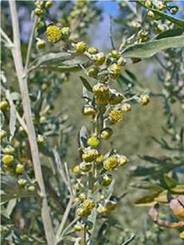
· Perennial plant with a very bitter taste and characteristic odor, silvery-gray and silky due to pubescence with T-shaped hairs and glands.
· Basal leaves long-petiolate, bi- to tripinnately dissected; apical leaves sessile, entire, lanceolate.
· Inflorescence a paniculate capitulum, flowers tubular.
· Achene without a pappus.
· Effects: appetite-stimulating, soothing, antiseptic, anti-inflammatory, analgesic.
❖ Mountain arnica - Arnica montana

· Perennial plant, glandular-pubescent.
· Stem erect.
· Basal rosette consisting of four oval leaves.
· Capitula terminal, solitary.
· Achene without a pappus.
· Plant listed in the Red Data Book of Ukraine.
· Effects: hemostatic, choleretic, anti-sclerotic, CNS tonic, bacteriostatic, healing.
❖ Chicory - Cichorium intybus
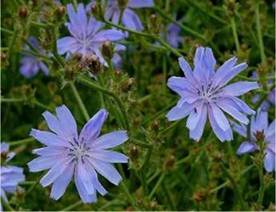
· A perennial, roughly pubescent plant with all organs permeated by articulated laticifers.
· Stem ribbed, featuring straight, spreading, whip-like shoots.
· Leaves of the basal rosette runcinate-lyrate, deeply incised, with a large terminal lobe, sinuate or entire, decurrent; lower stem leaves acute, with a broad semi-amplexicaul base; upper leaves small, entire, lanceolate.
· Capitula situated singly or in groups of 2–3 at the tips of shoots and in the axils of the upper and middle leaves.
· Flower with 5 petals fused into a short narrow tube that transitions into a long five-toothed limb (ligulate).
· Achenes elongated, glabrous, three- to five-angled, with a coroniform membranous pappus.
· Action: metabolic, vitamin, antibacterial, astringent, cholagogue and diuretic, antidiabetic, sedative, antiarrhythmic.
Last update: 07/08/2026
Editorial and Educational Adaptation: This material has been compiled based on the primary/original source text. The project team performed an editorial review, corrected technical inaccuracies, structured sections, and adapted the content for an educational format.
What was processed:
- elimination of formatting defects (OCR errors, structural breaks, corrupted characters);
- editorial organization of content;
- standardization of terminology in accordance with academic sources;
- verification of factual statements against the original source text.
All mentions of the author, publication year, and origin of the primary text have been preserved in accordance with the source.