PLANT SYSTEMATICS - Yu. I. Kornievsky - 2017
Lecture Notes
Lecture No. 5. Flora of Ukraine. Fundamentals of Ecology, Coenology, and Plant Geography. Protection of the Plant World, Rational Use, and Conservation of Medicinal Plant Resources
Lecture Objective: to characterize the main diagnostic features of families, genera, and species used in pharmacy and medicine.
Lecture Outline:
1. Plants of Ukraine: littleleaf linden, common hop, stinging nettle, common oak, grey alder, silver birch, lesser periwinkle, sweet flag, peltate Mayapple, European barberry, common St. John's wort, common valerian, guelder rose, European elder, horse chestnut, lily of the valley, Persian walnut, common sea buckthorn, cultivated flax, buckthorn purging, glossy buckthorn, marsh mallow, greater plantain, Chinese magnolia vine.
2. Class Monocotyledones (Liliopsida): common onion, garlic.
3. Family Poaceae: maize, cultivated oat, couch grass. Protection of the plant world, rational use, and conservation of medicinal plant resources.
Family - Tiliaceae
❖ Littleleaf linden - Tilia cordata

· Deciduous tree.
· Leaves alternate, simple, petiolate.
· Leaf blade cordate, acute, pale green to glaucous beneath, with tufts of reddish hairs in the vein axils.
· Inflorescence - 3–5 flowered corymbose dichasium with a light-yellow, oblong, wing-like membranous bract fused up to the middle with the inflorescence axis, fragrant.
· Fruit - spherical, two- or one-seeded nutlet.
· Component of diaphoretic herbal tea, antipyretic agent.
Family - Cannabaceae
❖ Common hop — Humulus lupulus

· Perennial herbaceous dioecious liana. Poisonous plant.
· Stem twining, angled.
· Leaves on male specimens opposite, on female specimens alternate, long-petiolate, ovate-cordate, entire or with 3–5 coarsely serrate lobes, dark green and scabrous above with yellow glands, lighter beneath with scattered hairs along the Veins containing cystoliths.
· Male dichasia form drooping axillary panicles.
· Female ones form capitate catkins.
· The plant is characterized by glandular emergences.
· The Medicinal plant raw material consists of greenish-yellow, cone-like infructescences with small nutlets and golden glands On the surface of all components (derived from inflorescences).
· It belongs to plants that require a high nitrogen content in the soil (nitrophiles).
· Effects: sedative, hypnotic, spasmolytic, analgesic, choleretic, diuretic, saluretic, and estrogenic.
Nettle family - Urticaceae
❖ Stinging nettle — Urticadioica

· A perennial dioecious plant, with its dioecious nature indicated in the specific epithet (Urticadioica).
· A cosmopolitan weed.
· It belongs to plants that require a high nitrogen content in the soil (nitrophiles).
· Stems are erect and quadrangular. The epidermis features stinging emergences.
· Leaves are decussate-opposite, long-petiolate with stipules; the epidermis contains idioblasts with cystoliths.
· Flowers form axillary, unisexual, catkin-like thyrsoids.
· Perianth is calyx-like; flowers are unisexual.
· Based on floral sex and distribution on individual plants, the nettle is a strictly dioecious species.
· The plant affects the Blood and coagulation systems.
Beech family - Fagaceae
❖ English oak - Quercusrobur
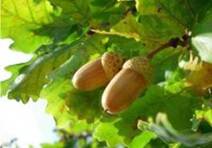
· A monoecious tree.
· Leaves are short-petiolate, alternate, and pinnately lobed.
· Small male flowers are gathered in long, axillary, catkin-like thyrsoids.
· Female flowers are arranged in clusters of 2–5 in the axils of upper leaves, surrounded by a broad cup-like involucre of leaf-like outgrowths that develop into a saucer-shaped cupule in the fruit.
· The fruit is a pseudomonocarpous, oblong-barrel-shaped acorn.
· Oak bark, used as medicinal raw material, consists of phloem and secondary protective tissue, the periderm.
· Oak is characterized by the presence of mycorrhiza, which is a Symbiosis between a fungus and a higher plant.
· Effects: astringent, anti-inflammatory.
Family Betulaceae - Birch family
❖ Grey alder - Alnus incana

· Monoecious tree.
· Leaves alternate, rounded or obovate, with a rounded or emarginate apex, a broadly cuneate base, a serrate-crenate margin, and clusters of reddish hairs on the underside in the axils of branched veins.
· Staminate catkins of dichasial cymes are elongated-cylindrical.
· Pistillate catkins on long drooping peduncles, shortened, ovoid, green, later turning black.
· As the fruits mature, they enlarge and become woody (infructescence).
· Included as an astringent component in herbal gastrointestinal mixtures.
Family Betulaceae - Birch family
❖ Silver birch - Betula verrucosa

· Monoecious tree.
· Leaves petiolate, alternate, simple, with an acuminate apex and an irregularly serrate margin; blade shape is rhombic or triangular.
· Venation is camptodromous.
· Male catkin-like thyrses.
· Female flowers without perianth, with two bracts, forming pendulous, green female catkin-like thyrses.
· Fruit: a small, flat, oblong-elliptic nut with two membranous wings.
· Effects: diuretic, choleretic, anthelmintic, anti-inflammatory, antimicrobial, vitamin source.
Family Apocynaceae - Dogbane family
❖ Lesser periwinkle - Vinca minor
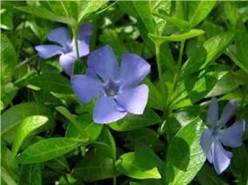
· Evergreen subshrub with a slender rhizome up to 70 cm long.
· Creeping shoots (rooting).
· Leaves opposite, short-petioled, coriaceous, glossy, elliptic, with revolute margins.
· Flowers axillary, solitary, bisexual, pentamerous.
· Corolla tubular-funnel-shaped, violet-blue.
· Fruit – a setofollicle.
· Contains Alkaloids.
· Effects: hypotensive, antispasmodic, antimicrobial, anti-inflammatory.
Arum family - Araceae
❖ Sweet flag - Acorus calamus

· Perennial. Hygrophyte. Rhizome large, creeping, pink or yellow-green.
· Stems canaliculate, unilaterally flattened, ribbed.
· Leaves long, entire, ensiform, succulent, aromatic, up to 120 cm long.
· Inflorescence – a spadix with a long linear spathe.
· Fruit – a dry red berry.
· Rhizome decoction is used to improve Hair and scalp condition.
· Effects: diuretic, choleretic, anti-inflammatory, antimicrobial, antiseptic.
Barberry family - Berberidaceae
❖ Mayapple - Podophyllum peltatum

· Perennial herbaceous plant.
· Stem smooth, erect, bearing at the apex two opposite, palmate five- to seven-lobed leaves, between which a large drooping white flower with six to nine petals develops on a short pedicel.
· Fruit – a succulent yellow berry.
· Effect: podophyllin is used for Urinary Bladder papillomatosis.
Barberry family - Berberidaceae
❖ European barberry - Berberis vulgaris

· A branching, deciduous, thorny shrub.
· Leaves thin, obovate, finely dentate, with small stipules.
· Barberry develops thorns resulting from the modification of leaves.
· Inflorescence is a drooping, many-flowered raceme.
· Fruit is a bright red, elongated-elliptical, sour berry.
· Action: berberine bisulfate alkaloid (obtained from the roots) used as a cholagogue for chronic hepatitis.
Family Clusiaceae - Clusiaceae
❖ Common St. John's wort - Hypericum perforatum

· Perennial herbaceous plant.
· Stem erect, glabrous, branched at the top.
· Leaves opposite, sessile, oblong-oval, entire, with translucent punctate glands.
· Flowers regular, bisexual, five-petaled, collected in a corymbose thyrsus.
· Fruit is a brownish-red, three-locular capsule.
· Action: antimicrobial, hemostatic, anti-inflammatory.
Family Valerianaceae - Valerianaceae
❖ Garden heliotrope - Valeriana officinalis

· Perennial hygrophytic plant.
· Collective species.
· Rhizome short, conical with numerous cord-like roots, possessing a distinct odor and sweetish taste.
· Stem erect, cylindrical, furrowed, hollow.
· Leaves opposite, odd-pinnately dissected, with lanceolate segments; lower leaves petiolate, stem leaves sessile. Margin of segments serrate, occasionally entire.
· Flowers bisexual, zygomorphic, small, white or pale pink, arranged in a corymbiform panicle of dichasia.
· Fruit: an oblong, flattened, light brown achene with a feathery pappus that falls off quickly.
· Action: phytotransquilizer.
Family Viburnaceae - Viburnaceae
❖ Guelder rose - Viburnum opulus

· Tree or shrub, 2–4 m tall.
· Leaves simple, opposite, with elongated petioles bearing glands, dark green and glabrous above, slightly pubescent beneath.
· Inflorescence: umbel-like panicle.
· Flowers white, heteromorphic: marginal flowers large, rotate, sterile; central flowers small, campanulate, fertile, with a semi-inferior Ovary.
· Fruit: a pyrene (pseudomonocarpic drupe), single-stoned, single-seeded, juicy, bright red, globose. Stone flat, rounded, cordate.
· Action: hypotensive, hemostatic, astringent, sedative.
Family Sambucaceae - Sambucaceae
❖ Elderberry - Sambucus nigra

· Tree or shrub, 3–6 m tall.
· Leaves ill-scented, opposite, odd-pinnately compound, petiolate, stipule-free.
· Inflorescence: corymbiform panicle.
· Berry-like syncarpous drupes (pyrenes), 3–4-seeded, glossy black-purple, globose, edible.
· Action: diuretic, diaphoretic, laxative, anti-inflammatory, analgesic.
Family Hippocastanaceae - Hippocastanaceae
❖ Horse chestnut - Aesculus hippocastanum

· Tree up to 30 m tall. Branching pseudodichotomous.
· Leaves opposite, palmate-compound, exhibiting anisophylly (inequality of leaves).
· Inflorescence: an upright pyramidal thyrse composed of cymes (monopodial growth of the main axis and sympodial growth of the lateral axes, with the degree of branching decreasing from the Base of the inflorescence to its apex).
· Capsule: globose, echinate, dehiscing by three Valves.
· Venotonic agent
Family Convallariaceae - Convallariaceae
❖ Lily of the valley - Convallaria majalis
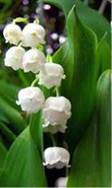
· Poisonous plant. Protected as an endangered species in Ukraine.
· Perennial. Rhizome creeping, long, branched, with numerous adventitious roots.
· Lower SHOOT leaves modified into scarious scales; basal leaves large, entire, elliptic, tapering into a petiole that passes into a sheath, bright green, leathery, with a glaucous bloom, venation camptodromous-archidromous (arcuate).
· Scape ribbed, bearing a long, lax, unilateral raceme.
· Flowers white, globose-campanulate, 6-toothed (perianth simple, corolla-like).
· Fruit: a red globose berry, poisonous, on nodding pedicels.
· Contains cardiac Glycosides.
· Action: sedative, cardiotonic.
Family Juglandaceae - Juglandaceae
❖ Persian walnut - Juglans regia

· Monoecious tree.
· Leaves alternate, large, imparipinnate, with 3–5 pairs of oblong-ovate, acuminate leaflets that are glabrous above and hairy in the vein axils beneath.
· Flowers unisexual.
· Inflorescence: a catkin (ament).
· Fruit: a false dry drupe ("nut"); fatty oil is obtained commercially.
· Action: astringent, hypoglycemic, general tonic.
Family Elaeagnaceae - Elaeagnaceae
❖ Sea buckthorn - Hippophae rhamnoides

· A dioecious, branched shrub or small tree.
· Leaves alternate, linear-lanceolate, grayish-green above, silvery-white below.
· Young shoots and perianth are silvery due to pubescence with stellate peltate hairs.
· Staminate (male) flowers are gathered in spikelike racemes.
· Pistillate (female) flowers are borne on short pedicels, in clusters of 2–5 in the axils of branchlets and thorns.
· Fruits are juicy drupaceous nutlets (false drupes). Upon full ripening, the bright green sea buckthorn fruits turn soft, orange, or yellowish-red.
· The fruits yield a fatty oil exhibiting anti-inflammatory, bactericidal, and wound-healing properties.
· Effects: vitamin-rich, radioprotective, antiulcer.
Family Linaceae - Linaceae
❖ Cultivated flax - Linum usitatissimum

· An annual herbaceous plant.
· Stems are slender and resilient due to the presence of primary bast fiber bundles.
· Leaves alternate, opposite, sessile, narrow-lanceolate or linear, entire-margined.
· Inflorescences are few-flowered, terminal, spreading, corymbose monochasia.
· Petals are blue.
· Fruits are ovoid-globose, yellowish-brown dehiscent capsules.
· Seeds are light brown, flattened, smooth, and mucilaginous. They become mucilaginous upon moistening.
· Effects: seeds exhibit laxative, enveloping, and emollient properties.
Family Rhamnaceae - Rhamnaceae
❖ Buckthorn - Rhamnus cathartica

· A dioecious, branched shrub or tree bearing thorns.
· Branches shortened, opposite or crowded, terminating in a thorn.
· Leaves petiolate, elliptic or ovate, glabrous, finely crenate-serrate (doubly serrate). Venation pinnate, with 3-4 pairs of lateral arcuate veins converging at the apex.
· Fruits are coenocarpic drupes (pyrenaria), globose, black, glossy, with 3-4 beakless stones. Poisonous.
· Laxative.
❖ Glossy buckthorn - Frangula alnus

· Much-branched shrub or small tree without thorns.
· Bark of young shoots reddish-brown, glossy, with white lenticels.
· Bark of older branches grayish-brown.
· Leaves alternate, petiolate, with deciduous stipules, broadly elliptic or obovate, acuminate, entire, rust-pubescent along the veins; venation pinnate, with 6-8 pairs of straight lateral veins.
· Fruit is a pyrenarium, initially red, turning violet-black upon ripening, containing 2-3 stones with a beak and a convex back.
· Effects: laxative, anti-inflammatory (bark).
Mallow family - Malvaceae
❖ Marsh-mallow - Althaea officinalis

· Perennial plant, grayish-silvery due to pubescence.
· Stems erect, velvety-pubescent.
· Leaves alternate, petiolate; upper leaves entire, oblong-ovate; middle and lower leaves 3- to 5-lobed, with unevenly crenate-dentate margins, grayish-green, covered with dense stellate and branched hairs. Leaves and other Organs are rich in mucilage Cells.
· Flowers form interrupted raceme-like inflorescences.
· Fruit is a schizocarp (malvaceous capsule).
· Contains mucilage, which is detected using an India ink solution—mucilaginous cells remain light against a dark Background; methylene blue solution stains the mucilage light blue or dark blue.
· Effects: demulcent, expectorant.
Plantain family — Plantaginaceae
❖ Greater plantain - Plantago major

· Biennial. Fibrous ROOT system.
· Rosette leaves are broadly ovate or elliptic, glabrous, with 3-7 arcuate veins prominent on the lower side; petioles are winged.
· Inflorescence is a dense spike.
· Fruit is a capsule.
· Action: wound-healing, expectorant, hemostatic.
❖ Schisandra - Schizandra chinensis

· In terms of life form, Schisandra is a perennial, deciduous woody vine with a lemony scent.
· Lateral shortened shoots bear clusters of leaves and flowers.
· The aggregate apocarpous fruit consists of fleshy, red, berry-like fruitlets featuring a prominent ventral suture—forming a juicy polyfollicle with a sweet-and-sour and slightly salty taste.
· Action: stimulates METABOLISM, immune and central nervous systems, as well as mental and physical performance.
· Raw material: juicy red racemose polyfollicles.
Class Monocotyledons - Monocotyledones
Liliopsida - Liliopsida
Family Onion family - Alliaceae
❖ Garden onion - Allium cepa

· Biennial or triennial plant.
· In the first year, it forms a rosette of sheath-like, fistular, fleshy leaves containing sap.
· In the third year, a hollow scape (flowering stalk) develops.
· The underground modified shoot is a bulb, its hardened basal part is the basal plate (stem disc), and nutrients are stored in the leaves.
· Inflorescence is a many-flowered umbel.
· Fruit is a globose-triquetrous capsule.
· Action: bactericidal, phytoncidal, anti-atherosclerotic, wound-healing.
Family Onion family - Alliaceae
❖ Garlic - Allium sativum
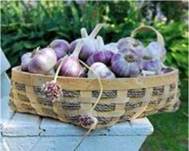
· Biennial or perennial herb.
· Leaves sheathing, linear, flat.
· Inflorescence an umbel with a membranous spathe and aerial bulblets ("offsets").
· Bulb compound.
· Actions: bactericidal, anti-atherosclerotic, antimicrobial, antifungal, hypotensive, anthelmintic, diuretic, choleretic.
Family Poaceae (Gramineae) - Grass family
· Wind-pollinated plants.
· Annuals have a fibrous root system, whereas perennials possess a rhizome.
· Under conditions of high moisture (hygrophytes), Asian rice is cultivated.
· Above-ground shoots branch at the base within the tillering node.
· Stem cylindrical, with swollen nodes. Stems grow and elongate through apical and intercalary meristem division; they are solid (maize, sorghum) or hollow (culm).
· Leaves alternate, linear, parallel-veined, with a long sheath—either closed or open; a membranous ligule, hairs, or paired auricles are present at the junction of the blade and sheath. A diagnostic feature of the leaves is the presence of a leaf sheath.
· Inflorescence: spikelets. They are assembled into a compound spike, panicle, false spike (ear), or raceme.
· Perianth reduced to scales (lodicules); three stamens with long filaments; pistil with a bilobed feathery stigma.
· Fruit a pseudomonocarpic caryopsis. The coriaceous pericarp fuses with the seed coat. Rich in starch and Proteins.
· Rye grains may be infected by the poisonous fungus ergot.
❖ Corn (Maize) - Zea mays

· Annual plant.
· Stem solid, woody at the base, with aerial prop roots that perform supportive and nutritive Functions.
· Leaves broad-linear, with a wavy margin, short, wide, open, split sheath, and a transparent, short ligule.
· Flowers unisexual; plants monoecious.
· Male two-flowered spikelets assembled into a terminal panicle.
· Female single-flowered spikelets form dense axillary cobs. Together with the enlarged axis, they form a multiple fruit (cob or ear).
· Fruit: a caryopsis.
· Corn silk is used as a diuretic, cholagogue, and anti-sclerotic agent (oil).
❖ Oat - Avena sativa

· Annual plant.
· Stem: branched.
· Leaves feature a long, tubular, rolled sheath and a short, somewhat stiff ligula.
· Inflorescence: a spreading panicle of spikelets.
· Caryopses covered with a tight husk and featuring a groove.
· Effects: tonic, vitamin-rich, emollient, soothing, hypnotic, appetite-stimulating.
❖ Couch grass - Elytrigia repens (Agropyron repens)

· Weed. Perennial.
· Rhizome: creeping, cord-like, with reduced leaves; hollow at the internodes.
· Leaves: rough, sheathed, with a ligula and auricles.
· Inflorescence: a spike.
· Effects: normalizes metabolism and diuresis.
Conservation of the Plant Kingdom
The plant kingdom plays a vital role in the existence and functioning of the biosphere and human life. The accumulation of oxygen on Earth began only with the appearance of green plants. Through Photosynthesis, plants release oxygen into the atmosphere and absorb carbon dioxide. The Role of green plants in creating favorable conditions for human life cannot be overstated.
The plant kingdom comprises about 500,000 species, including approximately 300,000 species of higher plants. Botanists have established that roughly 30,000 higher plant species are currently threatened with extinction. Naturally, as the green surface of the vegetation cover diminishes, The amount of atmospheric oxygen decreases while carbon dioxide increases. Therefore, every tenth species on Earth requires protection.
It is not without reason that the Russian plant physiologist S.P. Kostychev, describing The activity of green leaves, wrote: "Should the green leaf cease its work for just a few years, All living organisms on the globe, including all of humanity, would perish."
Plants cleanse the Water and air basins of harmful impurities accumulated As a result of industrial activities, vehicle emissions, and the excessive or careless use of chemical products. They absorb and neutralize sulfur, carbon, and nitrogen oxides, as well as mutagenic and carcinogenic substances, trap dust particles, and thus stand as reliable guardians of human health.
Plants participate in regulating the global water cycle, thereby exerting a beneficial influence on the climate.
Humanity has long been aware of its dependence on the plant world. Even in the times of the pharaohs in Ancient Egypt, trees were held in special reverence. Among many peoples, particularly large and beautiful trees were proclaimed sacred; damaging them was considered a grave sin and severely punished. THE CONCEPT OF tree preservation lies at the root of many ancient myths and legends. In the past, numerous food, medicinal, ornamental, and poisonous plants were considered divine and dedicated to various deities. To some extent, this contributed to their preservation in nature.
However, it must be acknowledged that today certain endangered plant species have become extremely rare. One of the primary reasons for plant extinction is human economic activity: land plowing, livestock grazing, wetland drainage, the construction of cities, industrial plants, airfields, highways, railways, power transmission lines, and oil and gas pipelines. All of this leads to the alienation of lands previously occupied by natural vegetation. Consequently, certain plant species are gradually disappearing.
For instance, feather grass (Stipa) is native to the steppes. Due to the plowing of the steppe zone, the populations of these plants are declining sharply. Today, pristine steppe areas survive only in nature reserves, meaning that feather grass—the primary architect of Ukraine's fertile chernozem soils—is disappearing.
Currently, feather grass species are endangered across Ukraine and represent relics of steppe vegetation. Because they are highly decorative plants whose inflorescences are popular for dry flower arrangements, they are harvested indiscriminately in large quantities each spring.
Atmospheric and hydrospheric pollution, soil degradation, and the disruption of biological stability also drive various plant species toward extinction. Certain species with low adaptive capacities perish, unable to adjust to changing environmental conditions or to withstand competition from other species. This is particularly true of endemics—plants restricted to narrow geographic ranges.
Due to their extreme ecological specialization, they are highly vulnerable and therefore require special protection.
Conservation efforts for our botanical wealth brook no delay. Stanford researcher P. Ehrlich argued in 1984 that the biodiversity loss the biosphere will suffer over the next two centuries will rival the catastrophe of 65 million years ago. At that time, during the late Cretaceous period, 52% of all marine genera and a significant portion of land-dwellers—most notably the dinosaurs—went extinct. Such a forecast appears entirely plausible.
From the Stone Age to the atomic era, human adaptive capacity has changed very little. Scientists therefore conclude that our biological and emotional needs demand not the destruction of the environment, but the preservation of harmony and balance within it. Consequently, all environmental changes can be properly evaluated and predicted solely through an ecological lens.
According to experts, many ailments—such as malignant neoplasms, nervous and cardiovascular disorders, and digestive diseases—are linked to the degradation of the natural environment in which humans live.
Prolonged human impact on plant cover has led to its transformation, alteration, and, in some cases, total destruction. The history of forestry offers a clear example of how human activity can alter or shatter Earth's green canopy.
Around major cities and industrial centers, floral diversity is dwindling, and early-spring decorative plants are subject to especially intense and indiscriminate harvesting. Among the factors significantly altering flora composition, overgrazing and wildfires rank near the top. A natural plant community is a complex assemblage of numerous plant species whose quantitative and qualitative composition is far from random. It is the product of long-term natural and historical evolution shaped by climate, soil, and animal life. This specific combination of species exists in the most rational harmony with its environment and is therefore the most productive for that particular area. Unregulated logging, wildfires, and trampling, compounded by climatic factors, undermine the resilience of plant communities, compromise their integrity, and diminish their productivity. Burning dead plant residue on pastures and hay meadows inflicts severe damage on the plant cover by altering the composition and quality of plant communities. Thus, millennia of human influence on vegetation have replaced natural plant communities with artificial, less productive ones, altered entire landscapes, and driven plant communities and individual species to extinction—lost forever to future generations.
Among all living organisms inhabiting our planet, plants are the most defenseless against the onslaught of technological progress. They are largely sessile and, most importantly, have a limited ability to relocate to new habitats to successfully reproduce. Nor can they adapt to the harmful effects of industrialization, causing certain species to gradually vanish from the flora.
Science has established that no human effort can currently restore extinct species, because every plant species possesses a unique molecular Structure shaped by millions of years of evolution. Recognizing this fact imposes a profound moral obligation on humanity to safeguard all extant plant species on Earth. This forms the cornerstone of the rare and endangered species conservation movement, which has engaged the scientific community in most countries. Plant organisms serve as subjects for scientific research and discovery—natural models of phenomena that future science must decipher and apply practically. No one today can guarantee that a given species will not yield immense, unforeseen practical benefits in the future. Indeed, many wild plant species have yet to reveal their full scientific and practical potential to humanity, and the extinction of any species forecloses those possibilities forever.
For science, rare and endangered plant species are vital primarily as Objects of Study to understand the plant world as a whole, its origins, formation, and evolution. The general Biological Significance of individual plant species manifests in numerous ways.
Rare and endangered plants are of immense importance to biological science in general and botany in particular. Many questions regarding plant phylogeny, Taxonomy, and geography would remain unresolved if botanists lacked access to the full spectrum of species across their natural ranges.
Individual plant species also hold great value for various sectors of the national economy. Despite rapid advancements in chemistry, plants remain the primary source of medicinal raw Materials (such as pheasant's eye, valerian species, belladonna, mountain arnica, yellow gentian, and many others).
Food crops—such as legumes, fruits, berries, and cereals—have occupied a central place in human life since the Stone Age. Fodder plants from our meadows and pastures are of paramount importance to livestock farming. Regardless of the future heights achieved by science and technology, it is unlikely we will ever be able to replace natural forage lands and pastures with cultivated or synthetic feeds. Furthermore, it is still difficult to gauge the immense wealth harbored within lower plants such as Algae, Fungi, Lichens, and mosses, which remain vastly underutilized as plant-derived raw materials. Of the roughly 300,000 known species of higher vascular plants on Earth, humans currently utilize barely over one percent.
Ukraine's rare plants possess profound cognitive and aesthetic value. They are the pearls of the plant kingdom, the ornament of our unique landscapes, reservoirs of mysteries yet unsolved by science, and part of our national heritage. They demand and deserve rigorous protection, just like our most precious historical and architectural landmarks. They are living monuments of nature. In fact, plants are even more precious creations than architecture, because human beings can rebuild historical monuments, but they can never resurrect extinct plant species.
Driven by the profound moral imperative to protect all life—from the tiniest microorganisms and algae to towering trees, regardless of their perceived "usefulness" or "harmfulness"—botanists worldwide have long advocated for the defense of endangered plant species. Thanks to their efforts, certain plant species were placed under legal protection as early as the last century.
The loss of any plant species is not merely a reduction in botanical diversity; it is a severe blow to a plant community network that has balanced itself over millennia. The more thoroughly we manage to preserve The Diversity of the plant kingdom, the more secure our environment will be.
By Resolution of the Verkhovna Rada of Ukraine dated October 29, 1992, the Regulation on the Red Data Book of Ukraine was approved, serving as the state's principal official document regarding the protection of its flora and fauna.
The Red Data Book is a registry of plants facing the threat of total extinction. It is frequently compared to a traffic light's red signal, warning of danger and demanding utmost caution and attention.
The impoverishment of Earth's flora poses a direct threat to humanity, given that human life is inextricably linked to the plant kingdom. The 13th edition of the Red Data Book of Ukraine (volume "Plant Kingdom", 1996) lists 541 plant and fungal species (including 439 vascular plants, 28 bryophytes, 17 algae, 27 lichens, and 30 fungi). This document includes a significant number of medicinal plants (such as pyramidal orchid, woolly foxglove, Carlina, marsh orchids [15 species], lesser butterfly-orchid, green-flowered orchid, fir clubmoss, stiff clubmoss, Carniolan scopolia, yellow and spotted gentians, wild garlic, etc.). Furthermore, the Institute of Ecology of the Carpathians of the National Academy of Sciences of Ukraine compiled the "List of Rare, Relict, Endemic, and Peripheral Plant Species of the Ukrainian Carpathians Requiring Protection," which enumerates 408 species of higher spore-bearing and vascular plants. This list served as the foundation for the proposed "Red Data Book of the Ukrainian Carpathians" (1991).
To safeguard natural plant communities, the Ministry of Environmental Protection of Ukraine issued an order on January 19, 1997, approving the "Green Data Book of Ukraine." It catalogs 127 rare, endangered, and typical communities of various ranks, outlining the rationale and categories for their protection, distribution, and species composition. The National Commission for the Green Data Book of Ukraine continuously develops measures for the conservation and sustainable use of natural plant resources.
The necessity of protecting individual species has driven the need to catalog and study them, establishing specialized registers for those most in urgent need of conservation. At the same time, atmospheric and hydrospheric pollution, soil degradation, and the collapse of biological stability continue to push numerous plant species toward extinction.
Unfortunately, some plant species exist in nature in such minuscule numbers that neither nature reserves nor botanical gardens can guarantee their survival; consequently, alternative ex-situ Methods for preserving the plant Gene pool are actively being developed.
Last update: 07/08/2026
Editorial and Educational Adaptation: This material has been compiled based on the primary/original source text. The project team performed an editorial review, corrected technical inaccuracies, structured sections, and adapted the content for an educational format.
What was processed:
- elimination of formatting defects (OCR errors, structural breaks, corrupted characters);
- editorial organization of content;
- standardization of terminology in accordance with academic sources;
- verification of factual statements against the original source text.
All mentions of the author, publication year, and origin of the primary text have been preserved in accordance with the source.