PLANT PHYSIOLOGY AND BIOCHEMISTRY
Lecture Notes
12. PLANT REPRODUCTIVE PHYSIOLOGY
Vegetative Reproduction
Vegetative Reproduction is a characteristic feature of plants that distinguishes them from animals. Vegetative reproduction refers to the propagation of plants from their vegetative parts, such as fragments of the thallus, SHOOT, or ROOT.
This is a form of asexual reproduction that is widespread among plants. It reaches its most complex and diverse forms in higher plants, particularly in angiosperms. Many plants reproduce exclusively through vegetative means. This occurs using both specialized and non-specialized plant body parts. During vegetative reproduction, many plants undergo a Separation of PARTS OF THE Organism, which then develop into new individuals. For instance, a fragment of an Elodea plant can be detached and will continue to grow independently. Similarly, duckweed reproduces by rapidly forming a vast number of plants that cover The surface of various Water bodies.
Methods of vegetative plant reproduction
There are three primary methods of vegetative reproduction under natural conditions:
1) reproduction via layers or shoots of various origins that detach from the parent plant after rooting;
2) reproduction via tubers and bulbs;
3) separation of parts of the parent organism.
Vegetative reproduction of plants is of immense biological significance.
The ability of angiosperms to reproduce vegetatively with high intensity has played a significant role in their successful competition with gymnosperms, which rely solely on seed reproduction. In many cases, vegetative reproduction has become the only viable form of propagation, ensuring species dispersal and the preservation of the Gene pool. Frequently, plants develop structures specifically designed for vegetative reproduction: bulbs, rhizomes, stolons, and tubers. Some of these serve to store nutrients, allowing the plant to survive adverse conditions. Consequently, most plants with specialized vegetative Organs practically lose The ability to reproduce by seed, delegating both reproductive Functions and nutrient storage to these organs.
Several analogies exist between The Development of specialized vegetative and sexual reproductive organs. Both are formed As a result of induction, which is perceived by the leaves and transmitted to the relevant plant parts via chemical signals. All major Stages of the photoperiodic response during The formation of vegetative reproductive organs are also similar to the photoperiodic responses of flowering plants. After differentiation and growth, both processes reach a maturation stage. During the formation of tubers and bulbs, as in flowering, vegetative growth is inhibited. Morphologically, flowers, as well as tubers and bulbs, are modified shoots.
A tuber is a thickened, swollen portion of a stem consisting of several internodes.
A bulb is formed as a result of shortened internodes and the immobilization of CARBOHYDRATES at the base of very young leaves.
Reproduction via tubers. The ability to form tubers develops gradually during ontogeny and manifests after the Juvenile Stage is completed. Tubers are annual structures. The process of tuberization begins with the development of stolons—stems with an altered geotropic response (First stage)—followed by the formation of tubers on them (Second Stage).
This process is significantly influenced by Temperature and day length. Some plants form tubers only under short-day conditions, while others do so under both short- and long-day conditions. Experiments involving grafting non-tuber-forming plants onto tuber-bearing ones (e.g., tomatoes onto potatoes, sunflowers onto Jerusalem artichokes) have demonstrated that the stimulus for tuberization in photoperiodically sensitive species is not species-specific, is produced in the leaves, and is hormonal in nature.
It has been established that Auxins inhibit tuberization, while Gibberellins enhance stolon growth and, consequently, facilitate tuber development. Cytokinins have The most significant positive effect on tuber formation. In short-day plants (SDP), The first stage is controlled by the ABA/GA ratio, and the second by the IAA/CK ratio. Under long-day conditions, more gibberellins are produced in the leaves, and more auxin in the stem buds. Under these conditions, the first stage proceeds, and stolons are formed. Under short-day conditions, roots and stolons contain high levels of cytokinins, while leaves contain higher levels of Abscisic acid. The second stage then begins, characterized by the inhibition of stolon formation and the initiation of tuberization processes.
According to M. Chailakhyan (1984), The Mechanism of hormonal induction of tuberization (the transition to and realization of the second stage) in species that form tubers under short-day conditions consists of two phases. Initially, abscisins and gibberellins are transported from the leaves to the lower buds. Since the ABA/GA ratio under short-day conditions is shifted toward a predominance of abscisins, the rapid growth of stolons induced by gibberellin is inhibited (first phase).
During the second phase, tubers are formed, the growth of which is regulated by a higher concentration of cytokinin in the roots and stolons relative to auxins (the IAA/CK ratio decreases).
Thus, under long-day conditions, with a hormone ratio unfavorable for tuberization (GA predominating in leaves, IAA in roots), the formation and growth of roots and stolons occur. The stimulus for tuberization is a ratio of ABA to GA that influences the completion of the first stage and the transition to The first phase of the second stage.
The Diversity of tuberization methods in the plant kingdom is not limited to this. Tubers can be of stem or root origin, and can be subterranean or aerial. In dahlias, tubers are of root origin; they form on the roots, and no stem shoots are produced. Potatoes, Jerusalem artichokes, sweet potatoes, and other plants reproduce via tubers.
The development and growth of tubers are supported by the influx of photosynthetic products from the leaves. The intensity of assimilate transport to the tubers correlates with their content of cytokinins, auxin, and gibberellins, which create the tuber's attracting force. This is precisely why, during intense tuber formation, the growth of the plant's aerial parts is delayed.
Reproduction via bulbs. Reproduction via bulbs is characteristic of monocotyledonous plants from the Liliaceae and Amaryllidaceae families: tulips, daffodils, hyacinths, lilies, etc. Wild garlic produces A large number of bulbils; on one hectare of arable land, their yield can reach up to 600 kg.
A bulb consists of a very short stem and fleshy leaves containing nutrient reserves. It is covered on the outside by the remnants of the previous year's leaves, which have already lost their stored nutrients. A bulb may contain one or more daughter bulbs (offsets or cloves), each capable of developing into a shoot. By the end of the growing season, each shoot produces a new bulb. Roots in bulbous plants emerge directly from the stem; there is no primary taproot.
While most tuberous plants form tubers under short-day conditions, bulb formation, by contrast, requires long-day conditions. In experiments, keeping even a portion of the leaves under short-day conditions inhibited bulb development. The regulation of this process is not yet fully understood. The leaves are the organs that perceive the photoperiodic stimulus.
The photoperiodic stimulus can be transmitted from one shoot to another only if the leaves of the second shoot are removed. When shoots with leaves are exposed to different photoperiods, only the shoot kept under long-day conditions will form a bulb. The stimulus for bulb formation is a specific ratio or complex of phytohormones. For instance, bulb formation is accompanied by a decrease in auxin activity, while an increase in their concentration accelerates the growth of leaves and bulb scales.
Vegetative propagation in bulbous plants is less related to the Formation of the bulb itself and more to the development of axillary shoots on it—the future daughter bulbs. These are initiated during the winter dormancy period. During this time, new organs form, albeit very slowly. Unlike buds and seeds, growth processes in bulbous plants do not stop completely during dormancy. Kinetin, gibberellic acid, and indoleacetic acid enhance the formation of axillary buds, which develop into daughter bulbs. Similar effects are achieved by increasing winter storage temperatures and removing the flower-bearing shoot.
Bulb sprouting, like tuber sprouting, occurs after the dormancy period has passed. Breaking dormancy is accelerated by exposure to low temperatures, a process known as vernalization. The dormant state of bulbs is maintained by a high content of ABA, whereas during sprouting, the level of inhibitors decreases, while that of cytokinins, auxins, and gibberellins increases.
Knowledge of the principles governing the regulation of dormancy in tubers and bulbs allows for the Prevention of sprouting during storage through The Use of synthetic growth inhibitors, such as maleic hydrazide.
Propagation by other methods
In wild plants, propagation by root suckers—the regrowth of dormant buds in the lower part of the trunk (stump shoots) following plant injury—is widespread. This type of propagation is characteristic of cherries, plums, apples, quinces, lilacs, hawthorns, alders, birches, horseradish, alfalfa, sow thistle, and other plants. Often, root shoots arise on damaged roots near the soil surface, developing from adventitious buds.
Some species propagate by rhizomes (e.g., couch grass, peppermint, etc.). Rhizomes are underground stems that grow horizontally and possess small, membranous, brownish-colored leaves, buds, and adventitious roots.
Rhizomes serve as both an overwintering organ and a means of propagation.
Propagation by above-ground shoots also occurs, for example, via stolons (e.g., yellow archangel, dewberry, cinquefoil) or runners (e.g., wild strawberries, garden strawberries, buttercups). Stolons are creeping horizontal stems that spread along the soil surface. They are not overwintering organs. Adventitious roots emerge from their nodes, and these, along with a portion of the stem, detach from the parent plant to form new individuals.
Above-ground creeping shoots (runners, stolons, stems) represent a transition from typical vertical stems to rhizomes.
Some plants propagate by layering, where branches take root at the point of contact with the soil.
There is a group of viviparous plants. In the axils of their leaves and in their inflorescences, small leaf-covered shoots form instead of flowers; these fall off the parent plant and take root. Viviparous plants are predominantly found in polar, high-mountain, and steppe regions.
Some methods of vegetative propagation are closely linked to regeneration processes (cuttings, vivipary, etc.). Thus, the formation of brood buds (vivipary) can be viewed as a case of somatic Embryogenesis (e.g., Kalanchoe) and is the result of physiological tissue differentiation. Tissue heterogeneity is linked to the response to long-day conditions and involves an increase in chlorophyll, DNA, RNA, and protein content at the leaf margins. Thus, the formation of brood buds, as a specialized organ of vegetative propagation, is controlled by the photoperiod.
Use of vegetative propagation in plant cultivation
In plant cultivation, propagation by cuttings, grafting, and layering is most commonly employed.
Layering is achieved by bending down lower branches and covering them with soil. The rooted shoot is morphologically indistinguishable from others.
Cuttings. Both winter leafless cuttings and summer leafy cuttings, as well as green leaves (e.g., begonia), are used. Winter cuttings are taken from one-, two-, or three-year-old branches. The most suitable are younger, one-year-old cuttings, about 30 cm long, taken after leaf fall. Green cuttings are harvested when the stem is actively growing and has not yet fully lignified. A film forms on the cut surface, beneath which Cells divide vigorously, later forming a callus. Roots develop on the callus, while shoots arise from the buds on the cutting.
Cuttings taken from different parts of a plant exhibit different properties. Cuttings from the fruit-bearing zone produce plants that flower earlier compared to those from juvenile cuttings. Cuttings from the lateral zone often produce plants that retain a bilateral Structure for a long time. Cuttings from old trees root poorly. The physiological state of the cutting itself is also significant. Shoots possess the maximum rooting capacity during the period when their vegetative growth slows down, which is when their auxin content is highest.
Treating cuttings with various auxins (IAA, indolebutyric acid, indolepropionic acid, triiodobenzoic acid, α-naphthaleneacetic acid) stimulates root formation in species that do not root easily on their own.
The development of a cutting is significantly accelerated by grafting and the use of The Root System of a rootstock. In this process, the scion retains its own properties. The plant onto which the graft is made is called the rootstock. The rootstock is selected for specific economically valuable traits—cold hardiness, vigorous or dwarfing growth, longevity, Disease resistance, etc.
There are various types of grafting (Protsenko, 1978): cleft grafting, bark grafting, budding (grafting with a single bud), and whip-and-Tongue grafting, where the scion and rootstock are of equal thickness.
Bark grafting in woody species is performed in the spring when cambial activity is high. At this time, the bark separates easily from the stem wood. A horizontal cut is made on the rootstock at an internode below a stem node. Then, the bark is slit vertically downward from the cut, and the edge of the bark is carefully peeled back. The scion is taken as a cutting with three or four internodes. A semi-conical tongue is cut at the lower end of the scion's internode, which is then inserted under the rootstock's bark so that the convex side of the tongue faces outward. The peeled-back bark flaps are then pressed firmly against it, and the graft union is wrapped with tape.
Cleft grafting is used when the rootstock is significantly thicker than the scion. The rootstock is split, and scion cuttings, with their ends sharpened into a wedge, are inserted into the cleft. The graft site is sealed with grafting wax and also wrapped. This method is used for both woody and herbaceous plants.
A very common technique is budding, which involves grafting a single bud (or eye). In this process, the bud is excised along with a small piece of bark and wood and grafted onto the rootstock. A T-shaped incision is made in the rootstock, and the bud—attached to its 'shield' (a small piece of wood and bark)—is inserted. Once the shield is placed under the bark, it is pressed firmly and bound. If the scion and rootstock are of similar thickness, cleft grafting (or copulation) is used. This involves making diagonal cuts on both the scion and the rootstock so that they fit together tightly. These diagonal cuts are designed to maximize the contact surface between the scion and the rootstock. The graft union is then bound and sealed with grafting wax. While grafting is typically performed in spring and autumn, it can be done at other times depending on the specific method. For instance, summer budding with a 'dormant' bud is common; the bud fuses with the rootstock before winter and begins to grow the following spring.
The fusion of the scion and rootstock occurs as follows: living cells near the cut surface, particularly those of the cambium, cortex, and vascular bundles, begin to divide rapidly, filling the gap with intermediate tissue. After a period, the Cells of the scion and rootstock become connected by plasmodesmata; subsequently, differentiated cells form, establishing a connection between the vascular systems of the rootstock and the scion.
Overall, methods of vegetative propagation have become widely adopted in plant cultivation. Recently, agricultural practice and breeding programs have increasingly utilized techniques for producing plants with desired traits through tissue culture (as well as the culture of Meristems, cotyledons, and embryos).
In sterile conditions, whole plants are grown from a single Cell or a group of cells for the clonal propagation of valuable cultivars. This allows for The production of virus-free agricultural plants (such as potatoes, sugar beets, and grapes). Furthermore, interspecific hybrids are created through protoplast fusion, while microspore cultivation yields dihaploid plants, which are highly valuable for breeding. METHODS FOR CULTIVATING parts of the gametophyte and reproductive organs are also advancing. This approach is widely applied to establish banks of virus-free varieties for many crops.
The Development of the foundations of this method has a relatively recent history. The German botanist Haberlandt (1902) was the first to apply this technique to palisade parenchyma cells, aiming to grow the tissue from a single cell. The failure he encountered somewhat delayed work with plant organisms, but research was subsequently continued using animal subjects.
In Ukraine, the culture of isolated roots was widely employed by M.G. Kholodny as early as 1915. Using this method, he discovered The Biosynthesis of phytohormones in root tips, which became the foundation for his theory of Tropisms. He continued to utilize this method in his later research.
In the 1930s, the work of the American scientist White and the French scientist Gautheret led to the development of the modern method of plant Tissue and organ culture. White demonstrated that root meristem could grow for an extended period if transplanted onto fresh medium. In his experiments, a clone culture of tomato root tips was maintained for over 30 years (White, 1949).
A critical condition for growing isolated plant Tissues is the use of nutrient media with the required composition. Gautheret is credited with refining the composition of nutrient media for growing undifferentiated tissues from various organs of monocotyledonous, dicotyledonous, and gymnosperm plants (1959). Gautheret introduced various callus tissues into culture as pure clones. In Ukraine, these efforts were organized in the laboratory of F.L. Kalinin (Kalinin, Sarnatska, Polishchuk, 1980).
It is known that cells of various tissues, organs, and organisms function in vivo under specific metabolic conditions. This serves as the scientific basis for developing nutrient media with varying compositions. As is well known, over a hundred such media have been created to date. Essential components of nutrient media include specific macro- and micronutrients, carbohydrates, and BIOLOGICALLY ACTIVE SUBSTANCES that regulate Cell Division and differentiation. The composition of media most commonly used in micropropagation technology is detailed in monographs, articles, and scientific developments. The mineral component, determined by the basic physiological requirements of most plant tissues, is the most stable. Modifications to nutrient content are achieved by adding various growth regulators. The regulatory role of auxins and cytokinins, and their specific ratio, is particularly important.
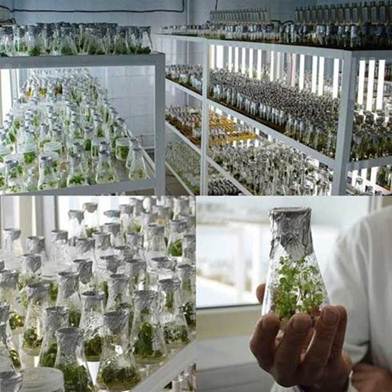
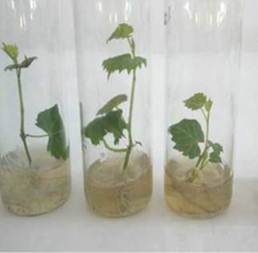
The method of isolated tissue culture works as follows: pieces of tissue are placed in test tubes, flasks, or Petri dishes containing liquid or semi-solid Agar media. Individual tissues are grown under sterile conditions. In this way, isolated tissue can be kept in a state of active growth for decades. During the culture of isolated tissues, callus is typically formed first; buds then develop within it, from which shoots and adventitious roots eventually emerge.
Callus is a mass of undifferentiated cells that forms in response to plant injury. It arises from the proliferation of a group of undifferentiated cells produced by the cambium or other tissues at sites of incisions, cracks, or wounds. It also develops during cultivation on artificial media from a single cell, appearing as an amorphous mass, a thin layer, or an outgrowth.
Class="center">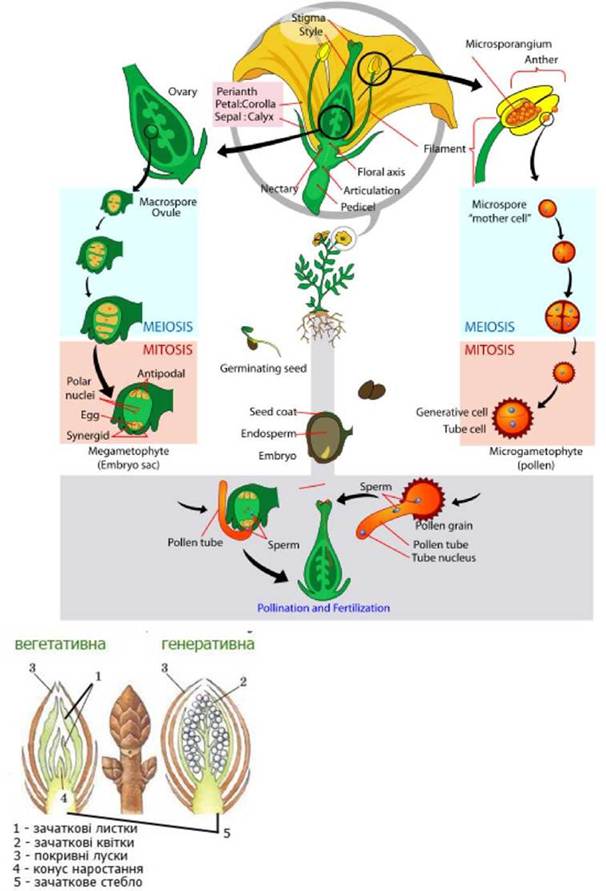
Fig. 36. Structure of a bud.
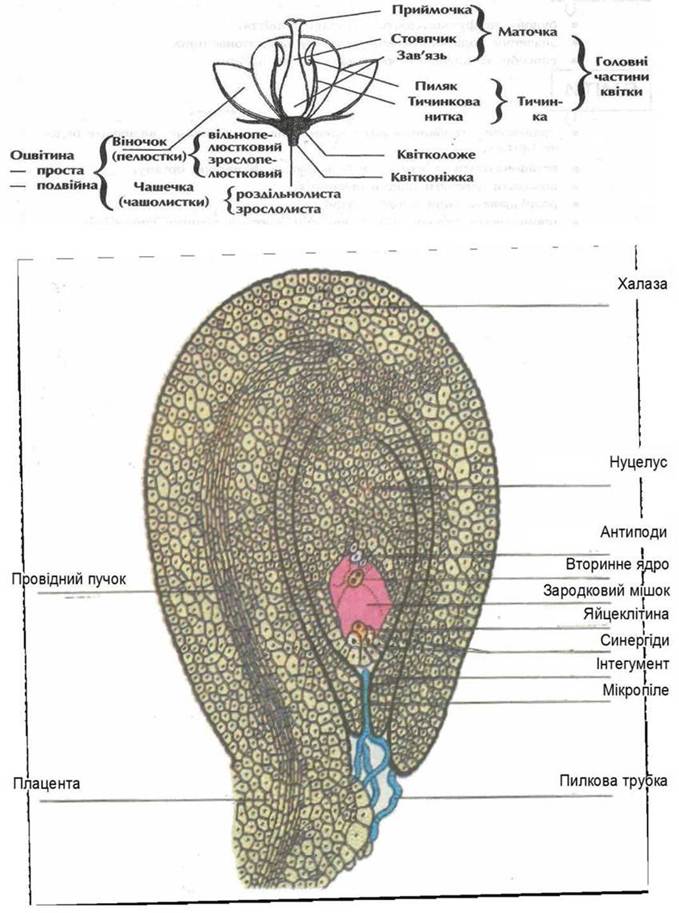
Fig. 37. Structure of a flower.

Fig. 38. Structure of an iris ovule.
Sporogenesis and gametogenesis in flowering plants
Sporogenesis begins with the Meiosis of diploid sporogenous cells in the pollen sac and the archesporial cell of the nucellus, concluding with the formation of microspores and megaspores.
Gametogenesis occurs through mitosis. From each microspore, two mitotic divisions result in the formation of a haploid male gametophyte with two sperm cells and one vegetative nucleus. The haploid Nucleus of the single megaspore undergoes four mitotic divisions, and from the resulting eight nuclei, a seven-celled embryo sac (female gametophyte) is formed.
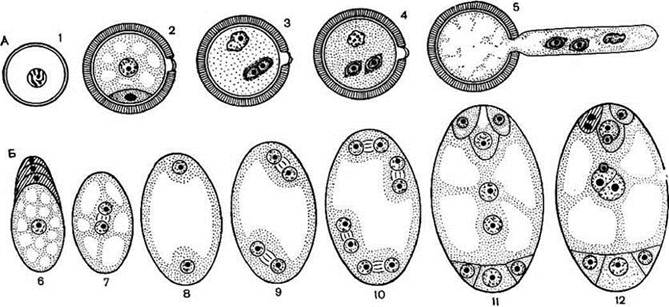
Fig. 39. Gametogenesis: development of the pollen grain (A) and the embryo sac (B).

Fig. 40. Double Fertilization.
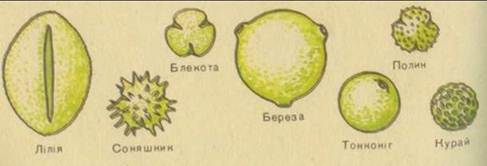
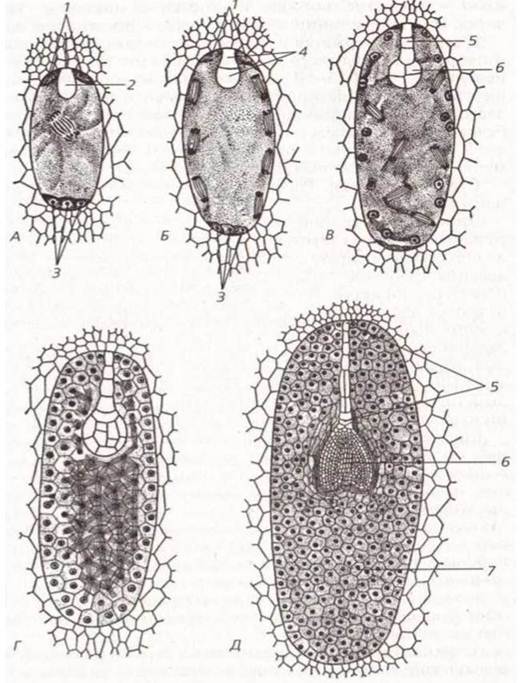
Fig. 41. Shapes of pollen grains.
Embryo and endosperm development in dicots: A - zygote at rest, initiation of secondary nucleus division and endosperm formation; B, C - embryo in the proembryo phase, rapid mitotic division of future endosperm cell nuclei; D - globular phase of embryo development, formation of endosperm cells that continue to divide; E - Heart-shaped phase of embryo development, fully formed endosperm; 1 - synergids, 2 - zygote, 3 - antipodals, 4 - two-celled embryo, 5 - suspensor, 6 - embryo, 7 - endosperm.

Fig. 42. Structure of wheat (A) and bean (B) seeds: 1 - cotyledon (bean seeds have two cotyledons); 2 - plumule; 3 - hypocotyl; 4 - radicle; 5 - endosperm; 6 - seed coat (in wheat seeds, it is fused with the pericarp).
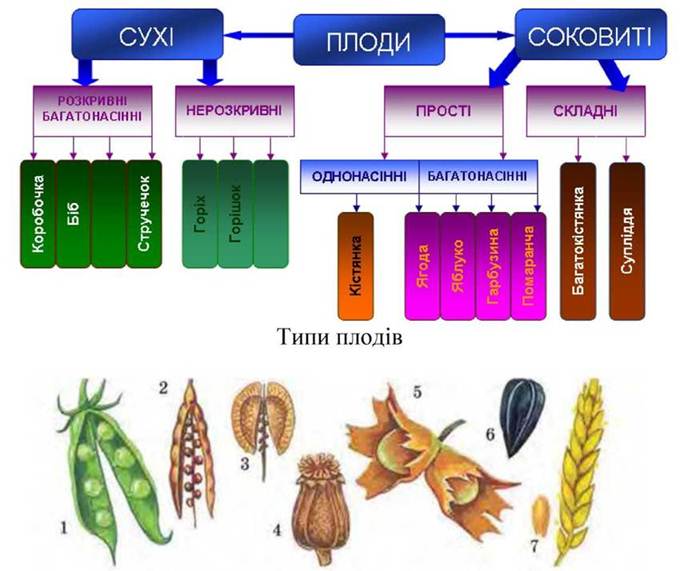
Fig. 43. Dry fruits: 1 - legume; 2 - silique; 3 - silicle; 4 - capsule; 5 - nut; 6 - achene; 7 - caryopsis.

Fig. 44. Vegetative propagation:
1 - by runners; 2 - by rhizomes; 3 - by tubers; 4 - by layering; 5 - by stem cuttings; 6 - by grafting; 7 - by bulbils; 8 - by root cuttings.
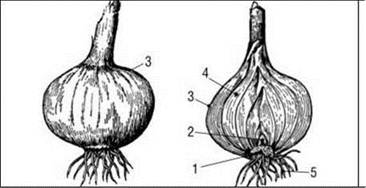
Fig. 45. Structure of a bulb:
a — simple tunicate bulb, exterior and cross-section: 1 — shortened stem (basal plate); 2 — bud; 3 — dry papery scales; 4 — fleshy scales; 5 — adventitious roots.

Fig. 46. Methods of vegetative propagation:
1 — leaf propagation (Saintpaulia); 2 — cutting; 3 — grafting (a — approach grafting, b — scion grafting, c — budding).
Last update: 07/08/2026
Editorial and Educational Adaptation: This material has been compiled based on the primary/original source text. The project team performed an editorial review, corrected technical inaccuracies, structured sections, and adapted the content for an educational format.
What was processed:
- elimination of formatting defects (OCR errors, structural breaks, corrupted characters);
- editorial organization of content;
- standardization of terminology in accordance with academic sources;
- verification of factual statements against the original source text.
All mentions of the author, publication year, and origin of the primary text have been preserved in accordance with the source.