Plant Physiology - Musiyenko, M. M. 2001
Adaptation and plant resistance mechanisms
Disease resistance
In addition to the Adverse effects of various abiotic factors, plant organisms are also exposed to biotic factors throughout their ontogenesis. These include a variety of microorganisms that act as potential pathogens. A pathogen is a living Organism, or a virus, capable of causing disease in a host plant. Most pathogens are parasites that obtain the necessary nutrients from the plant organism.
Disease resistance is the ability of a plant to prevent or inhibit The Development of diseases. Resistance and susceptibility characterize plant resilience or the degree of infection by a pathogen. When two physiological variants of a pathogen elicit different reactions in the same host—causing disease in one case and not in the other—they are classified as different pathogen races. The one that causes the disease is virulent, while the other is avirulent. This is the Water/144.html">Origin of the term race-specific resistance. The concepts of "vertical" and "horizontal resistance" are also frequently used. Vertical resistance is highly effective against certain pathogen races and ineffective against others, whereas horizontal resistance acts against all races of the pathogen; however, it is less effective and easily overcome by the pathogen under conditions favorable for infection development.
Race-specific resistance manifests primarily after the pathogen has penetrated the plant. It is driven by plant hypersensitivity, which prevents the subsequent spread of the pathogen through plant Tissues, effectively rendering the plant immune. One of the main defense mechanisms underlying hypersensitivity is the synthesis of antimicrobial substances by the plant organism, known as phytoalexins. They are absent in healthy tissues and are synthesized only in Cells bordering the infected areas. Through hypersensitivity, phytoalexins inhibit the growth of phytopathogens and deactivate their exoenzymes. A significant number of phytoalexins have now been isolated and identified, with the structural formulas of some shown in Fig. 211.
Class="center">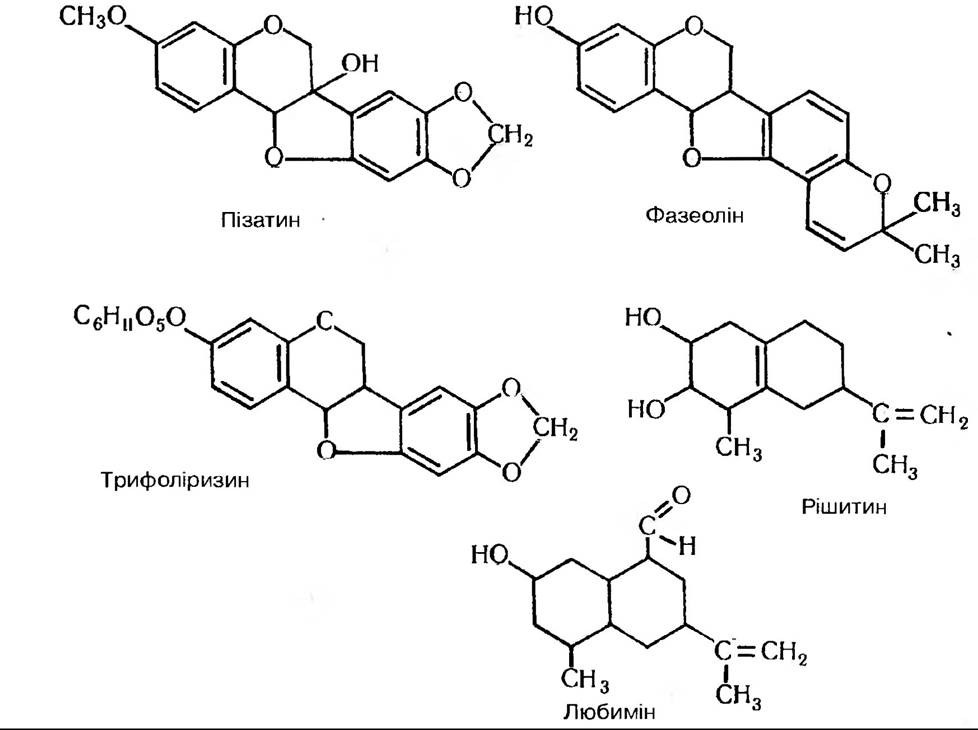
Fig. 211. Structural formulas of certain phytoalexins
During the interaction between a parasite and a plant, not just one, but several phytoalexins may be produced. For instance, when potato tubers are infected with an incompatible race of Phytophthora infestans, three fungitoxic substances are produced: rishitin, lubimin, and phytuberin. Phytoalexins belong to weak Antibiotics, which is why parasites can adapt to them. The formation of a barrier consisting of several phytoalexins in plant tissues enhances their protective effect.
The ability of plants to produce phytoalexins depends on their physiological state. For example, young pea plants produce significantly more pisatin than older ones. The production of phytoalexins in plants can be triggered by various Fungi—both pathogenic and non-pathogenic to a given plant—as well as by Bacteria. The synthesis of phytoalexins is also induced by various chemical compounds. Pisatin itself can be synthesized under METABOLISM/18.html">The Influence of heavy Metal Ions, metabolic poisons (sodium azide, sodium cyanide), and Amino Acids.
The Structure and properties of phytoalexins are determined solely by the plant's genotype, whereas The Nature of the inducer only determines the rate and amount of phytoalexin synthesis. For instance, pisatin is synthesized in 58 varieties and 3 species of peas, and phaseolin in 21 varieties and 3 species of beans. It has been proven that a plant organism is susceptible to a pathogen when the pathogen fails to induce phytoalexin synthesis. Most highly specialized pathogens overcome the phytoalexin barrier by degrading phytoalexins or inhibiting their synthesis.
Overall, defense responses in plants (phytoalexin synthesis, accumulation of Pathogenesis-related Proteins, lignification) can be induced by a range of biotic or abiotic factors known as "elicitors" (provocateurs). Both non-specific and race-specific elicitors have been identified. Elicitors are high-molecular-weight glucans of the parasite's Cell walls. The plant organism recognizes them using its Membrane Receptors. The Formation of the elicitor-receptor complex triggers the plant's defense systems. The interaction between elicitors and receptors is hindered by anti-elicitors—low-molecular-weight glucans secreted by growing hyphae that suppress the organism's defense reactions.
The entire set of traits that determine a plant's relationship with a pathogen is conventionally divided into several categories. The first category includes properties that manifest in the plant independently of direct interaction with the pathogen. These primarily encompass Anatomical and morphological traits of plants (cuticle, mechanical tissues, thorns) and their chemical composition (Proline, defense proteins, phytoncides). Substances present in tissues can either promote the infection process or inhibit it.
Another group comprises properties and traits that are absent prior to plant infection and emerge only As a result of the direct interaction between the host plant and the pathogen. These refer to potential capabilities inherent in the organism that are realized exclusively as a reaction norm to the pathogen.
Finally, the third category of traits includes phenomena that approach acquired Immunity in their significance. The essence is that as a result of an infection caused by a pathogen, or other defense-triggering factors, the plant becomes refractory to the disease-causing agent.
It must be emphasized that Plant resistance to diseases is genetically determined. Vertical resistance in plants is typically governed by single dominant genes (monogenes), whereas horizontal resistance is governed by polygenes. Genetic studies of host-parasite interactions have demonstrated that this interaction is largely explained by the "Gene-for-gene" hypothesis; that is, each gene controlling plant resistance corresponds to a specific gene controlling pathogen virulence. In the future, the strategy for controlling plant diseases will largely be determined by biotechnological Methods, particularly cellular Selection for resistance to specific pathogens.
Thus, the analysis of physiological responses of an organism to A wide variety of abiotic and biotic factors indicates that a single universal resistance does not exist. The foundation of any adaptive process relies on the organism's specific reaction to an unfavorable factor, with the primary sign of adaptation being an adequate response to external impact coupled with enhanced resistance to the damaging factor.
Adaptation itself is an extremely complex phenomenon that develops in a specific sequence within designated timeframes.
The initial stage of the adaptation process is characterized by metabolic shifts favoring The breakdown of protein macromolecules, Nucleic Acids, and Lipoproteins, along with disruptions in Energy Metabolism and biomembrane structure, an increase in enzymatic hydrolytic activity, and the accumulation of metabolites. With an escalation of the extreme factor's impact, irreversible changes and death ensue. However, if the stress of external factors does not exceed the organism's adaptive capacity, synthetic processes begin to outweigh breakdown processes at a certain stage of damage. This leads to the reutilization of breakdown products and the intensification of metabolic processes.
Therefore, adaptation—one of the central problems in plant physiology—represents The process of adjusting organismal structures and Functions to unfavorable environmental conditions.
Last update: 07/08/2026
Editorial and Educational Adaptation: This material has been compiled based on the primary/original source text. The project team performed an editorial review, corrected technical inaccuracies, structured sections, and adapted the content for an educational format.
What was processed:
- elimination of formatting defects (OCR errors, structural breaks, corrupted characters);
- editorial organization of content;
- standardization of terminology in accordance with academic sources;
- verification of factual statements against the original source text.
All mentions of the author, publication year, and origin of the primary text have been preserved in accordance with the source.