MODERN BOTANY - P. RAVEN - 1990
SECTION IV. DIVERSITY
CHAPTER 18. SEED PLANTS
Gymnosperms
There are four extant divisions of gymnosperms: Cycadophyta (cycads), Ginkgophyta (ginkgo), Coniferophyta (conifers), and Gnetophyta (gnetophytes). The name of the group reflects one of the most important characteristics of all seed plants except flowering plants: their ovules and seeds are "naked," meaning they are exposed openly On the surface of sporophylls or analogous structures. These four divisions likely represent specific stages of evolutionary development reached by various descendants of progymnosperms.
With few exceptions, each female gametophyte of gymnosperms produces multiple archegonia. As a result, several eggs may be fertilized, and sometimes multiple embryos begin to develop within a single ovule. This phenomenon is known as polyembryony. In most cases, only one embryo survives; very few fully developed seeds deviate from this rule.
Water is required for the motile, flagellated sperm of seedless vascular plants to reach and fertilize the eggs. In gymnosperms, however, water is not needed for this purpose. Their immature male gametophyte, the pollen grain, is transferred entirely (usually passively, by wind) to the female gametophyte located inside the ovule. This process is called pollination. The male gametophyte then produces an outgrowth known as the pollen tube. In conifers and gnetophytes, the sperm themselves are nonmotile, and these tubes deliver them directly to the archegonia. In cycads and ginkgoes, the sperm are multiflagellate, and their pollen tubes apparently function as haustoria (analogous to the haustoria of parasitic Fungi), penetrating the ovules and absorbing nutrients from them. The pollen tube may grow through the nucellus, or megasporangium, tissue for several months before reaching the cavity above the female gametophyte, after which it bursts, releasing two sperm into it. The sperm swim toward the archegonium, and one of them fertilizes the egg. With the Evolution of the sperm-transporting pollen tube, the reproduction of vascular plants ceased to depend on the presence of liquid water, which is necessary for Fertilization in all seedless plants.
Conifers
Far surpassing other divisions of modern gymnosperms in both Abundance and distribution, this group includes about 50 genera and roughly 550 species, among them the tallest vascular plant—the coast redwood (Sequoia sempervirens), which grows along the coast of California and southwestern Oregon (see Fig. 31-1) and reaches heights of 117 m with a trunk diameter exceeding 11 m. Conifers, which also include pines, firs, and spruces, are of great economic importance; their tall forests form one of the primary natural resources across vast areas of the northern temperate zone. At the beginning of the Tertiary period, some genera of this division were more widely distributed than they are today and dominated vast expanses across all continents of the Northern Hemisphere.
The history of conifers dates back at least to the Late Carboniferous, some 290 million years ago; their primitive representatives were the cordaites that lived during that time (see the Appendix to Chapter 17). The leaves of modern conifers exhibit numerous features indicative of drought resistance, which may be related to the diversification of this division throughout the relatively dry and cold Permian period (286–248 million years ago). During that time, widespread increasing aridity likely favored these types of structural adaptations.
Pines
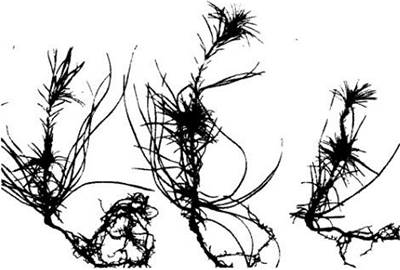
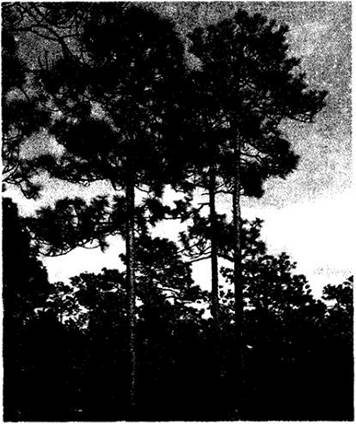
Pines (genus Pinus) are arguably the best-known gymnosperms (Fig. 18-9); they dominate huge areas of North America and Eurasia and are widely cultivated even in the Southern Hemisphere. Their approximately 90 species are characterized by a leaf arrangement unique among modern gymnosperms. Pine leaves are needle-like. In seedlings, they are arranged in a spiral and appear individually on the stems (Fig. 18-10). After a year or two, pines begin to produce clusters of long needles (foliage leaves), each containing a strictly defined number of needles (ranging from one to eight depending on the species). These clusters, enveloped at the base by rows of short scale-like leaves, represent shortened shoots in which The activity of the apical meristem is suppressed (Fig. 18-11). Thus, a cluster of pine needles is morphologically a determinate (growth-limited) branch. Under unusual conditions, its apical meristem may resume activity and produce a new SHOOT with unlimited (indeterminate) growth, occasionally capable of producing roots and growing into a whole tree (Fig. 18-12).
Class="center">Fig. 18-10. A. Seedlings of longleaf pine (Georgia) with juvenile leaves (long single needles) and the first adult leaves, which in this species are clustered in groups of three. B. Seedling of pinyon pine (Pinus edulis) with juvenile leaves and young taproot. The adult leaves of this species are clustered in pairs
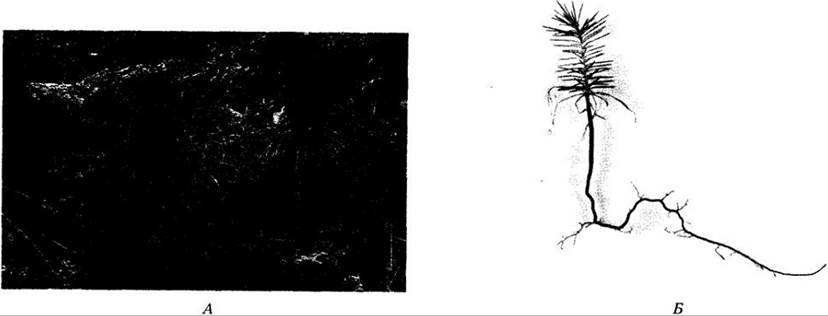
Fig. 18-11. A. Great Basin bristlecone pine (Pinus longaeva) in Bryce Canyon, Utah. Clusters of five needles and a mature seed cone are visible on the branch. Individual needles can function for up to 45 years; this pine is the longest-lived tree (see also Fig. 23-27, A). B. Branch of red pine (Pinus resinosa) with young seed cones and clusters of needle-like leaves characteristic of the mature plant
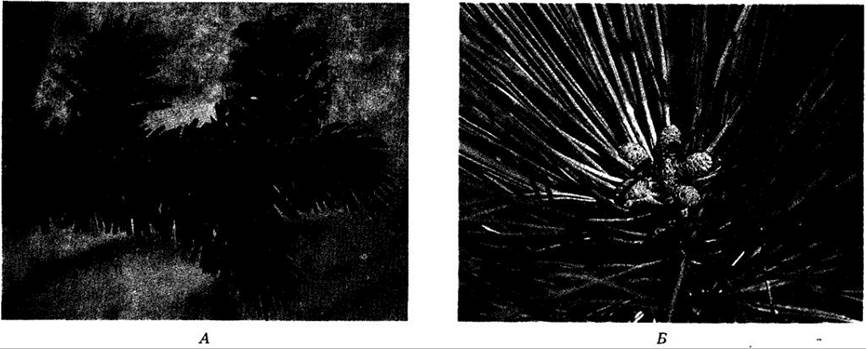
Fig. 18-12. One-year-old specimens of Monterey pine (Pinus radiata) grown from rooted needle clusters, which are consequently shortened shoots with suppressed apical meristem activity that can be restored
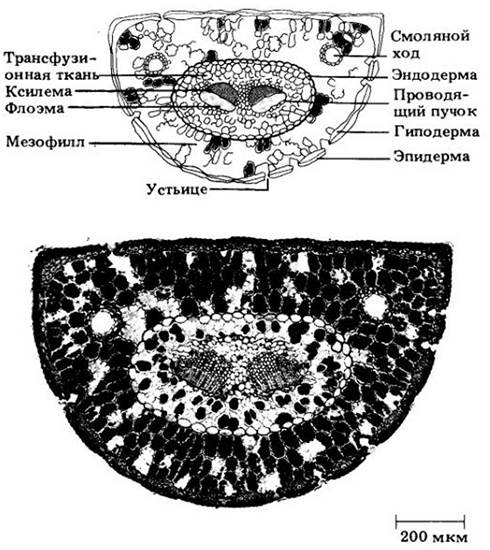
Pine leaves, like those of many other conifers, are exceptionally well adapted for growth in arid environments (Fig. 18-13). Their epidermis is covered with a thick cuticle, beneath which one or more layers of thick-walled Cells—the hypodermis—are compactly arranged. The Stomata are sunken in depressions on the leaf surface. The mesophyll, or fundamental tissue of the leaf, consists of parenchyma cells with convoluted walls, where protrusions on The surface of one Cell fit into the depressions of another. The mesophyll is typically traversed by two or more resin canals. In the center of the leaf, one or two adjacent vascular bundles are surrounded by transfusion tissue consisting of living parenchyma cells and short, dead tracheids. This tissue is believed to facilitate metabolite exchange between the mesophyll and the bundles. It is surrounded by an endodermis, so it is not in direct contact with the mesophyll.
Fig. 18-13. Cytology/practical/72.html">Cross section of a pine needle illustrating mature Tissues
Most pines retain their needles for 2 to 4 years, and the overall photosynthetic balance of the plant depends on the condition of all needles produced over several years. In the bristlecone pine (Pinus longaeva), the longest-lived tree (see Figs. 18-11, A and 23-27, A), needles persist for up to 45 years while remaining photosynthetically active. Because leaves in pines and other evergreens function for more than one growing season, they experience the effects of drought, cold, or air pollution much longer than those of deciduous plants and are more frequently damaged.
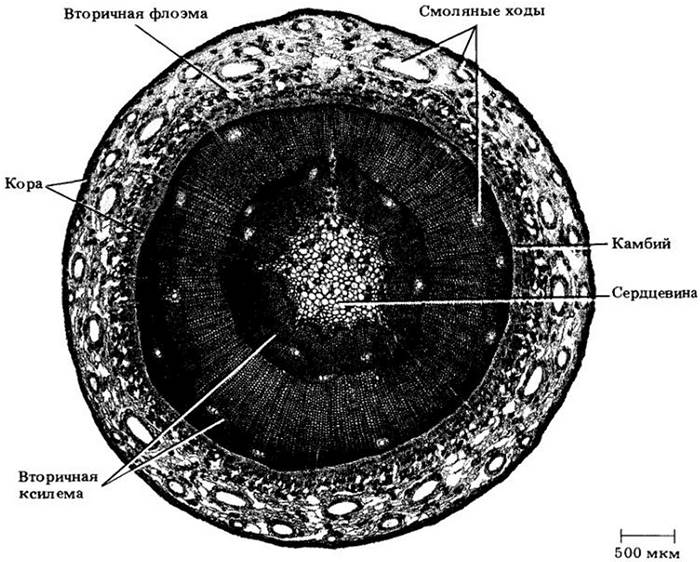
Secondary Growth begins early in the stems of pines and other conifers, leading to The formation of a significant amount of secondary xylem (Fig. 18-14). It is deposited inward from the cambium, and secondary phloem outward from it. The conifer xylem consists primarily of tracheids, while the phloem consists of sieve cells, which are the typical nutrient-conducting elements of gymnosperms and seedless vascular plants (see Chapter 20). Both types of tissues are radially intersected by narrow rays. Early in secondary growth, the epidermis is replaced by the periderm, which originates in the outer layer of the bark. As this growth continues, successive layers of the periderm are formed through the active division of cells located deeper within the cortex.
Fig. 18-14. Cross section of a pine stem showing secondary xylem and secondary phloem separated by the cambium. All tissues external to the cambium, including the phloem, constitute the bark
Pine reproduction. Microsporangia and megasporangia in pines and most other conifers develop in separate cones on the same tree. Typically, microsporangiate (male) cones form on the lower branches, while megasporangiate (female) cones form on the upper ones; in some species, they appear on the same branch, but with female cones positioned closer to the branch tips. Because windborne pollen generally does not travel straight upward, ovules are usually pollinated by pollen from a different tree, thereby achieving cross-pollination.
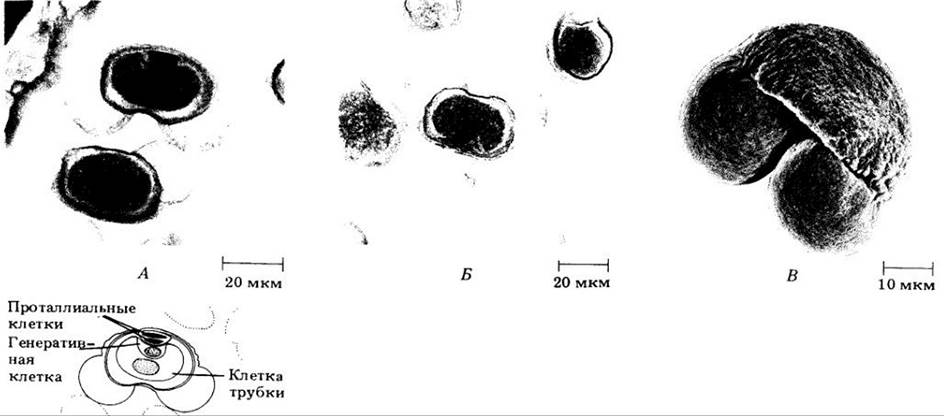
Male pine cones are relatively small, typically 1 to 2 cm in length (Fig. 18-15). Their more or less membranous microsporophylls (Fig. 18-16) are arranged spirally, with each microsporophyll bearing two microsporangia. A young microsporangium contains numerous microsporocytes, or microspore mother cells; in early spring, these undergo meiotic division, each producing four haploid microspores. Each microspore develops into a pollen grain equipped with air sacs, consisting of two prothallial cells, a generative cell, and a tube cell (Fig. 18-17). This four-celled Structure represents the immature male gametophyte. It is at this stage that vast quantities of pollen grains are released, some of which are carried by the wind to female cones.
Fig. 18-15. Coulter pine (Pinus coulteri). Microsporangiate (male) cones releasing pollen, which is carried away by the wind. Some of the pollen lands near the ovules in female cones and germinates, forming pollen tubes. This process leads to fertilization
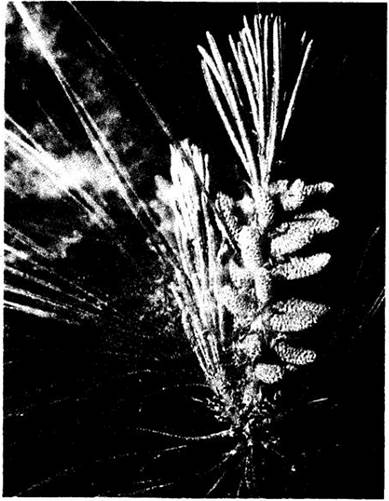
Fig. 18-16. Longitudinal section of a male pine cone, showing microsporophylls and microsporangia containing mature pollen grains
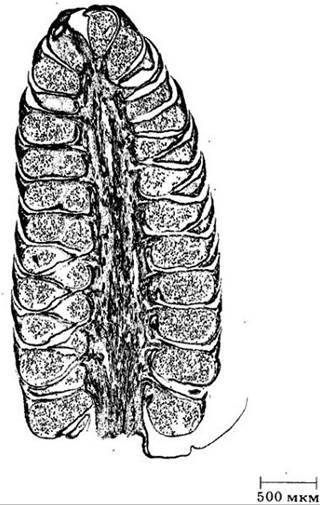
Fig. 18-17. Pine. A. Pollen grains containing immature male gametophytes. Each gametophyte consists of two prothallial cells, a relatively small generative cell, and a relatively large tube cell. B. A pollen grain at a slightly later stage; the prothallial cells, having no apparent function, have already degenerated. C. A pollen grain with two air sacs as viewed under a Scanning Electron microscope. Upon germination, the pollen tube emerges from the bottom between the air sacs
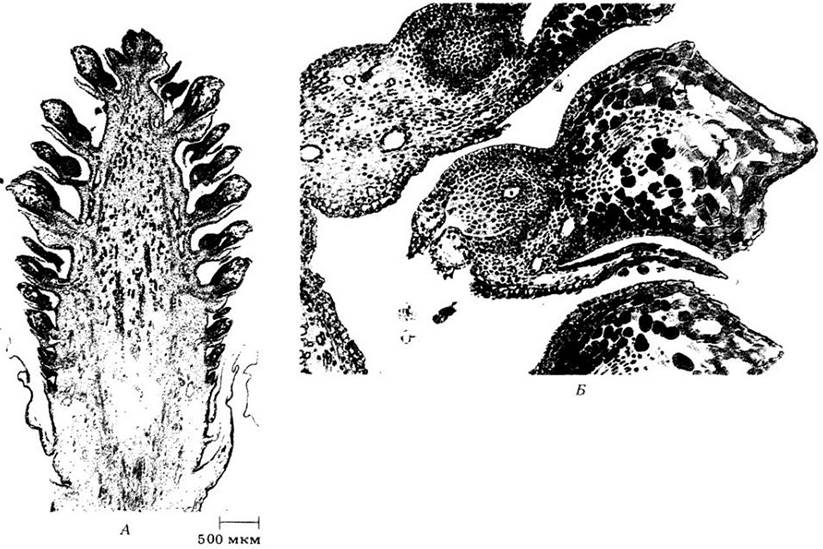
Female pine cones are much larger and more complexly structured than male cones (Fig. 18-18). Their scales are not megasporophylls, but rather modified, shortened shoots consisting of a seed-scale complex with two ovules on its upper surface, along with an abaxial sterile bract scale (Fig. 18-19). These structures are arranged spirally around the cone axis. Thus, the female cone is a complex structure, whereas the male cone is simple, since its microsporangia are attached directly to the microsporophylls. Each ovule contains a multicellular nucellus (megasporangium) surrounded by a massive integument with an opening (the micropyle) oriented toward the cone axis (Fig. 18-19). Within the megasporangium lies a single megasporocyte, or megaspore mother cell, which undergoes Meiosis to produce a linear tetrad of four megasporoids. Only one of these megaspores remains functional, while the other three, located closest to the micropyle, soon degenerate.
Fig. 18-18. Relative sizes of various mature pine cones. A. Sabine pine (Pinus sabiniana). B. Pinyon pine (Pinus edulis), top and side views; the edible seeds of this and certain other pines are known as "pine nuts" and are wingless, being dispersed primarily by nutcrackers, birds of the corvid family. C. Sugar pine (Pinus lambertiana). D. Ponderosa pine (Pinus ponderosa). E. Eastern white pine (Pinus strobus). F. Red pine (Pinus resinosa)
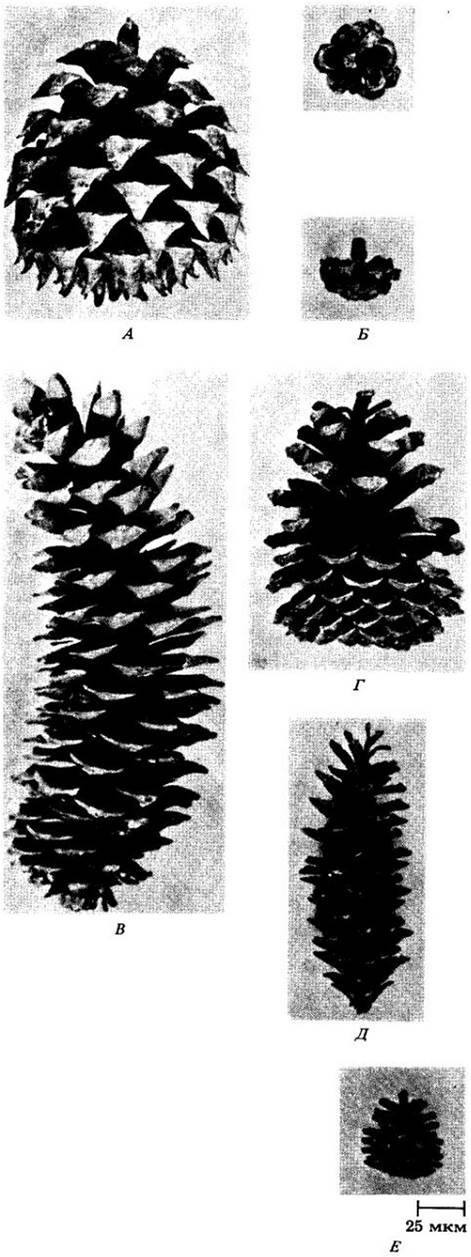
Fig. 18-9. Longleaf pine (Pinus palustris) in North Carolina
Pollination in pines occurs in the spring; pollen grains adhere to a drop of sticky fluid secreted at the micropyle. At this stage, the scales of the female cone are spread widely apart. As the micropylar fluid evaporates, the pollen grain is drawn down through the micropyle and onto the nucellus. Following pollination, the cone scales close together, which helps protect the developing ovules. Soon after contacting the nucellus, the pollen grain germinates to form a pollen tube. At this point, meiosis in the megasporangium has not yet taken place. Approximately a month after pollination, four megaspores are produced, one of which gives rise to the megagametophyte. Its development is slow, often beginning only six months after pollination and requiring another half-year to reach completion. During the Early stages of megagametophyte formation, mitosis is not immediately followed by Cell wall formation; this process begins approximately 13 months after pollination, by which time there are already about 2,000 free nuclei. Subsequently (roughly 15 months post-pollination), two to three archegonia differentiate at the micropylar end of the megagametophyte, establishing the conditions necessary for fertilization.
Fig. 18-19. Pine. A. Longitudinal section of a young female cone, illustrating its complex structure. B. Enlarged detail of the section showing the megasporocyte (megaspore mother cell) surrounded by the nucellus
Approximately 12 months prior to this, the pollen grain had germinated into a pollen tube, which slowly paves its way through the nucellar tissues toward the developing megagametophyte. One year after pollination, the generative cell of the four-celled male gametophyte divides into two daughter cells: a sterile cell (stalk cell) and a spermatogenous cell (body cell). Later, before the pollen tube reaches the female gametophyte, the spermatogenous cell divides to form two sperm cells. The male gametophyte, or germinating pollen grain, has now reached maturity. Seed plants lack antheridia.
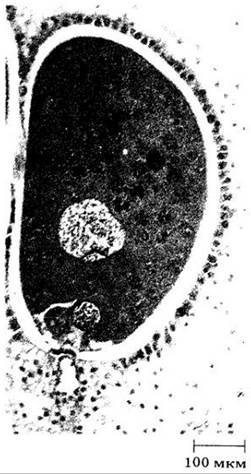
Roughly 15 months after pollination, the pollen tube reaches the egg cell of the archegonium and discharges a large volume of its Cytoplasm along with both sperm cells into the egg (Fig. 18-20). The Nucleus of one sperm fuses with the egg nucleus, while the second sperm nucleus degenerates. Typically, the egg cells in all archegonia are fertilized and begin to develop into embryos (polyembryony); however, as a rule, only a single embryo develops fully.
Fig. 18-20. Fertilization in pine: fusion of the sperm and egg nuclei. The second sperm nucleus (at the bottom) is non-functional and eventually degenerates
During early Embryogenesis, four tiers of cells form near the lower end of the archegonium. Each of the four cells in the uppermost tier (i.e., the one farthest from the micropylar end of the ovule) begins to develop into an embryo. Simultaneously, the four Cells of the adjacent tier, the suspensor cells, elongate dramatically, pushing the four developing embryos deep into the female gametophyte. Thus, a second type of polyembryony occurs in the pine life cycle, though once again, only one embryo matures completely. Over the course of embryogenesis, the integument transforms into the seed coat.
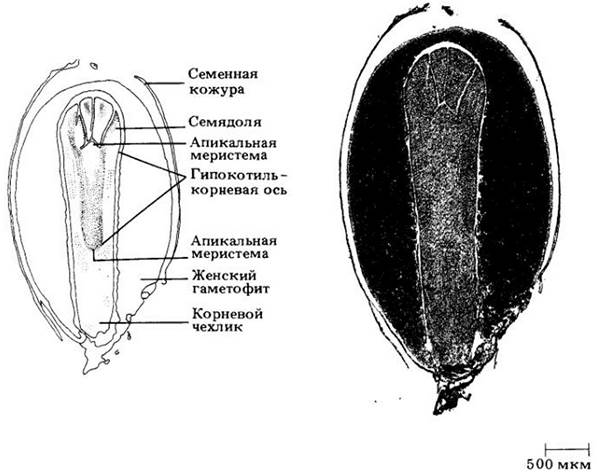
As can be seen, the conifer seed consists of a combination of two sporophytic generations—the seed coat (along with remnants of the nucellus) and the embryo—and one gametophytic generation, which serves as a nutrient reserve (Fig. 18-21). The seed coat and embryo are diploid, whereas the female gametophyte is haploid. The embryo comprises a hypocotyl-ROOT axis bearing a root cap and apical meristem at one end, and an apical meristem accompanied by several (typically eight) cotyledons at the other. The integument is composed of three layers, of which the middle layer hardens to function as the seed coat.
Fig. 18-21. Longitudinal section of a pine seed
Pine seeds are typically shed in the autumn of the second year following cone emergence and pollination. The scales of mature cones spread apart, allowing the winged seeds of most species to glide through the air and sometimes travel significant distances on the wind. In some cases, such as the jack pine (Pinus banksiana), the scales remain closed until the cones are heavily heated. When a forest fire sweeps rapidly through a pine stand, consuming the parent trees, most of the fire-resistant cones are only slightly scorched; subsequently, they open and release the seed crop accumulated over many years. This mechanism enables the forest to regenerate on recently burned soil. In other species, including the limber pine (Pinus flexilis), whitebark pine (Pinus albicaulis), as well as pinyon pines of the western North America and similar Eurasian counterparts, the large wingless seeds are gathered, transported, and cached as food by nutcrackers, large birds belonging to the corvid family.
The pine life cycle is shown in Figs. 18-25.
Other Conifers
Although other conifers (see Figs. 18-22 through 18-29) lack the characteristic pine needle clusters and exhibit a few relatively minor differences in The structure of their reproductive systems, modern representatives of this division form a fairly uniform group. Their most important genera include fir (Abies; Fig. 18-22), spruce (Picea), hemlock (Tsuga), Douglas fir (Pseudotsuga), cypress (Cupressus; Fig. 18-23), and juniper (Juniperus; Fig. 18-24). In yews (family Taxaceae), ovules are formed singly rather than in cones and are surrounded by a fleshy, cup-shaped structure called an aril (Fig. 18-26A). Several other interesting conifer genera are found primarily in the Southern Hemisphere. Some of these, such as the Norfolk Island pine (Araucaria heterophylla) and the monkey puzzle tree (A. araucana), are frequently cultivated in regions with relatively mild climates, while other species cross the equator naturally.
Fig. 18-22. Two genera of the pine family (Pinaceae). A. Seed cones of balsam fir (Abies balsamea): these are erect, 5 — 10 cm long, and do not fall to the ground intact like pine cones; instead, they shatter apart to disperse winged seeds. B. European larch (Larix decidua). Its needle-like leaves, similar to those of pines, emerge singly and are arranged spirally on short shoots. Unlike most conifers, larches shed all their foliage at the end of each growing season.
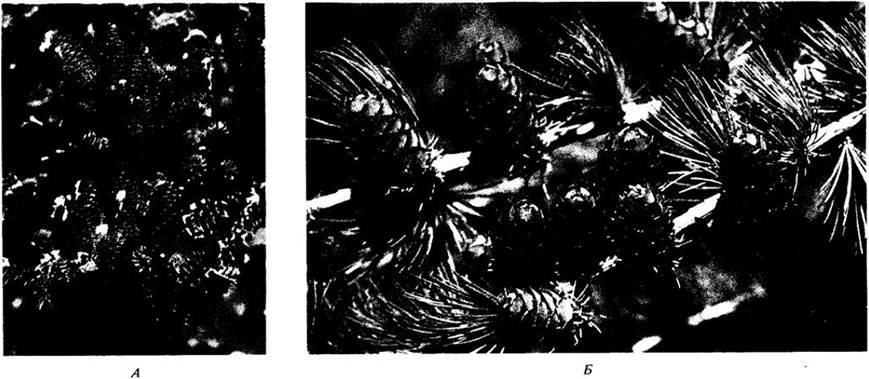
Fig. 18-23. Gowen cypress (Cupressus goveniana). These short trees (mature specimens are only about 6 m tall) are found exclusively near Monterey, California.
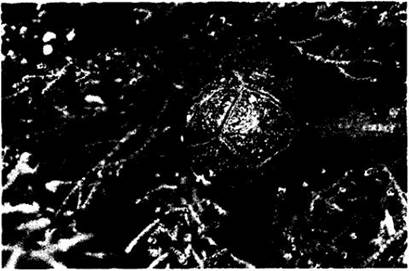
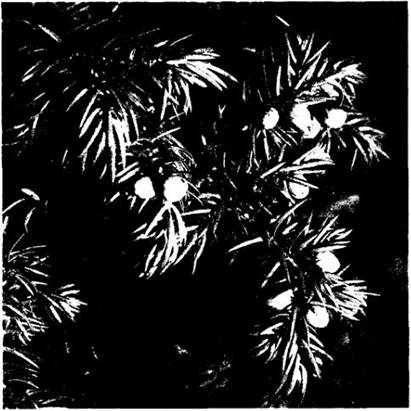
Fig. 18-24. In common juniper (Juniperus communis), the seed cones are spherical like those of cypresses, but their fleshy scales fuse together to form "berries" used to impart a specific flavor and aroma to gin.
One of the most interesting conifer families is the Taxodiaceae, which originated about 150 million years ago and is currently represented by geographically isolated species—remnants of populations that were much more widespread during the Tertiary period. One of the most remarkable among them is the redwood (Sequoia sempervirens), the tallest living plant (see Fig. 31-1). Belonging to the same family are the famous giant sequoia (Sequoiadendron giganteum), which forms striking, isolated groves along the western slope of the Sierra Nevada in California, as well as the bald cypress (Taxodium) of the southeastern United States and Mexico (Fig. 18-27). All these genera were much more widely distributed in the Tertiary than they are today (Fig. 18-29).
Dawn redwood (Metasequoia) (Fig. 18-28) also grew abundantly in Eurasia and North America during the Tertiary, serving as the most common conifer in western and arctic North America from the Late Cretaceous to the Miocene (roughly 90 — 15 million years ago). In Japan and eastern Siberia, it persisted until only a few million years ago. This genus was described from fossil material by the Japanese paleobotanist Shigeru Miki in 1941 (Fig. 18-29). Three years later, Chinese forester Tsang Wang of China's Central Bureau of Forest Research visited the village of Motaoqi in southwestern Sichuan province, where he encountered a massive tree previously unknown to him. Local residents had built an entire temple around its base. Examination of the foliage and cone specimens collected by Tsang Wang revealed this to be the "fossil" Metasequoia. In 1948, paleobotanist R. Chaney of the University of California led an expedition up the Yangtze River and across three mountain ranges to the valleys where numerous such trees grew—the last remnants of once-vast dawn redwood forests. Thousands of its seeds were subsequently collected, and this "living fossil" can now be seen in parks and gardens worldwide.
Other Modern Gymnosperms
Cycads
Other groups of modern gymnosperms bear little resemblance to one another. Among them are the cycads (division Cycadophyta), palm-like plants found primarily in tropical and subtropical regions. These bizarre forms, which emerged no later than 285 million years ago at the beginning of the Permian period, were so abundant in the Mesozoic that this era is frequently referred to as the "Age of Cycads and Dinosaurs." Cycads are related to seed ferns (see Appendix to Chapter 17), and the fossil record appears to contain transitional forms between them. Today, 10 genera of this division survive, comprising about 100 species. The coontie (Zamia pumila), common in the sandy open woodlands of Florida, is the only native cycad representative in the United States (Fig. 18-30).
Most cycads are fairly large plants; some exceed 18 m in height. Many possess a distinct trunk densely covered with the persistent bases of fallen leaves. Functioning leaves form a crown at the apex of the stem, giving cycads a palm-like appearance (hence why some are commonly called "sago palms"); however, unlike palms, they exhibit true, albeit slow, secondary growth resulting from cambial activity. The central region of their trunks contains an abundance of pith. The reproductive Organs of cycads consist of more or less reduced leaves bearing sporangia, loosely or tightly clustered into cone-like structures at the top of the plant. Male and female "cones" are borne on separate individuals (Fig. 18-31).
Ginkgo
The ginkgo or maidenhair tree (Ginkgo biloba) is easily recognized by its fan-shaped leaves with dichotomously branching venation (Fig. 18-32). It is a handsome, large, yet slow-growing tree that sometimes reaches over 30 m in height. Leaves on numerous short shoots are more or less entire, whereas those on long shoots and seedlings are deeply lobed. Unlike most other gymnosperms, ginkgo is deciduous, its leaves turning a brilliant golden hue in autumn before being shed.
This is the only surviving species of a genus that has changed very little over 80-plus million years, and the sole living representative of the division Ginkgophyta. It shares features with other gymnosperm genera that lived at the beginning of the Permian period, about 280 million years ago. Wild ginkgos may no longer exist anywhere in the world, and the specimens that have come down to us have been preserved around temples in China and Japan. Introduced from there, they have been widely cultivated in the gardens of temperate regions worldwide for over 150 years. These trees are exceptionally resistant to air pollution and are therefore frequently planted in urban parks.
As in cycads, ovules and microsporangia in ginkgo are produced on separate trees. Ovules appear in pairs at the tips of short stalks and, upon maturing in autumn, develop into seeds with a fleshy outer covering. Fertilization likely does not occur until after they drop from the parent trees. Embryos develop during the later stages of maturation while the seeds lie on the ground. Because their fleshy seed coats contain butyric acid, the seeds emit an unpleasant odor; consequently, only male trees—propagated vegetatively—are typically planted in parks and gardens. Microsporophylls are gathered into catkin-like structures, each bearing two microsporangia.
Gnetophytes
This division comprises about 70 species across three extant genera of highly unusual gymnosperms: Gnetum, Ephedra, and Welwitschia. Although undoubtedly related and rightly grouped together, their characteristics diverge widely. Of particular interest are features that bridge them with angiosperms, such as the similarity of their strobili to certain angiosperm inflorescences, the presence of vessel elements in the xylem nearly identical to those of flowering plants, and the absence of archegonia in Gnetum and Welwitschia. For decades, scientists debated whether gnetophytes were related to flowering plants. Evidence supporting this relationship has since emerged, although certainly none of the living gnetophytes can be considered an ancestor of any angiosperm; each of the three modern genera within the division is uniquely specialized.
The roughly 30 species of Gnetum are trees and lianas with large, leathery leaves strongly resembling those of dicots (Fig. 18-33). They are found throughout all humid tropical regions.
Most of the approximately 35 species of Ephedra are heavily branched shrubs with inconspicuous, small, scale-like leaves (Fig. 18-34). With its outwardly jointed stems, the plant bears a superficial resemblance to horsetails. The majority of species inhabit arid or desert regions.
Welwitschia is arguably the most bizarre vascular plant (Fig. 18-35). Most of the plant is buried in sandy soil, with only a massive, woody, concave disc protruding above ground; from the rim of this disc, meristematic tissue gives rise to just two strap-shaped leaves and branches bearing strobili. Welwitschia grows in the deserts of southwestern Africa—in Angola, Namibia, and South Africa.
Last update: 07/08/2026
Editorial and Educational Adaptation: This material has been compiled based on the primary/original source text. The project team performed an editorial review, corrected technical inaccuracies, structured sections, and adapted the content for an educational format.
What was processed:
- elimination of formatting defects (OCR errors, structural breaks, corrupted characters);
- editorial organization of content;
- standardization of terminology in accordance with academic sources;
- verification of factual statements against the original source text.
All mentions of the author, publication year, and origin of the primary text have been preserved in accordance with the source.