PLANT ADAPTATION TO ANTHROPOGENIC FACTORS - 2017
2. GENERALIZED SCHEME OF PLANT RESPONSES TO EXTERNAL STIMULI
A defining feature of the interaction among various Structural and functional elements in plants is their high plasticity. The absence of such an integrating organ as a Central Nervous system allows us to view plants as organisms with a specific decentralized control system. Under this type of control, the coordination of Functions is carried out not through a Brain-like "central dispatch office," but via direct interactions between resource-producing and resource-consuming structures. These interactions are constantly being reconfigured: new source-sink units are formed, and the type of adaptive strategy shifts throughout ontogeny. The elements of decentralized control clearly manifest in The formation of hormonal, energetic (Photosynthesis, Respiration), and other physiological responses of plants to changing environmental conditions.
During adaptation, plants adjust to shifting environmental conditions and change along with them. Consequently, adaptation can be conceptualized as the adjustment of the entire plant as a unified system.
System - a set of interconnected and ordered elements (parts) comprising a whole entity. The elements that make up a system can be either identical or diverse; their number can range from two to infinity, and they can combine in arbitrary ways. Such a universal definition applies to virtually any object, from an atom to an ecosystem or any biological Structure.
As demonstrated by Yu. A. Urmantsev, any system can undergo changes in one of seven ways, specifically by altering:
1) the number of elements forming the system;
2) the quality of the elements forming the system, for instance, replacing a less productive element with a more productive one while keeping the number of elements constant;
3) the relationships among the elements ("laws of composition");
4) both the number and quality of the elements;
5) the number of elements and their relationships;
6) the quality of the elements and their relationships;
7) the number, quality, and relationships of the elements.
It is easy to see that any changes in Plant GROWTH AND DEVELOPMENT can be defined as one of these transformations: vegetative SHOOT growth over a certain time interval can be viewed as an increase in the number of leaves—the elements of the shoot; the transition to flowering—as The Emergence of a qualitatively new element, and so forth. Let us examine the core elements of the "perception → information Processing → adequate response" chain and their connections with one another, with other elements, and with plant physiological systems during the formation of a response to environmental changes.
Molecular-biological level. In the simplest systems, the perception of an external signal is often coupled directly with the response system (Fig. 1). This applies to molecular enzyme complexes, photosynthetic pigment complexes, or membrane transport systems. Thus, due to its specialization, an enzyme perceives the appearance exclusively of its own substrate and does not react to compounds that are often chemically very similar to it. The binding of the substrate(s) leads to Conformational Changes in the enzyme, As a result of which it catalyzes the reaction and returns to its initial state. A photosynthetic pigment absorbs a quantum of light, becomes excited, and transfers its energy to photochemical reactions. Cell/30.html">The Plasma Membrane H+-ATPase "recognizes" a proton, captures it, and transports it across the membrane. Other substances have their own transport channels, which either do not react or react very weakly to foreign substances. When there is mechanical and chemical contact between the perceptive and working parts of responsive systems, intermediate structures only complicate the entire system and are therefore simply unnecessary.
Class="center">
Fig. 1 - Generalized scheme of response at the molecular-biological level
Cellular level. In a cell, where spatial and functional Separation of perceptive and responsive systems exists, an additional subsystem (new elements and connections between them) becomes necessary to transmit information from the perceptive to the working elements. For example, a signal is perceived by a receptor on the outer membrane, while the responsive system is located in The Endoplasmic reticulum or Nucleus. In recent years, intensive research has been underway to decipher the Mechanisms of signal Transduction from The Cell surface to intracellular structures. The schemes of perception and information processing in PLANT AND ANIMAL Cells are generally very similar. Both plants and animals possess surface receptors that perceive signals, as well as several independent systems for external signal transduction (Ca2+ and calmodulin, the cAMP system, Lectins, etc.) (Fig. 2).
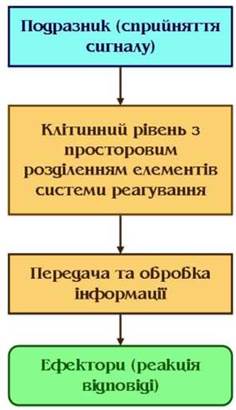
Fig. 2 - Response reaction with a signal transduction link
Whole plant. The sequence of such processes in plants generally aligns with METABOLISM/2.html">THE CONCEPT OF "matching movement with sensation": plants possess a "sensation" system and respond to environmental signals. However, the aforementioned Organizational features of plants inevitably determine the Specificity of their response to external signals, which manifests primarily in alterations of PHYSIOLOGICAL AND BIOCHEMICAL processes (Fig. 3).
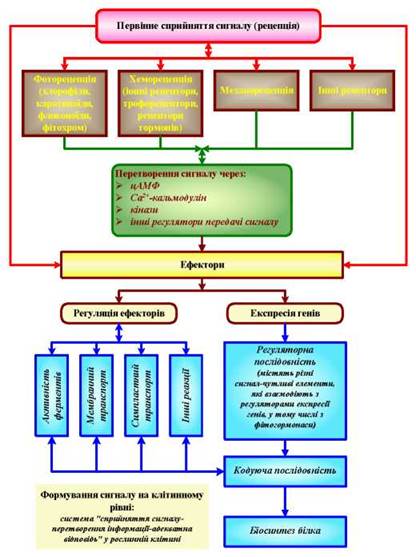
Fig. 3 - Signal formation at THE CELLULAR LEVEL
Questions for independent study and self-assessment
1. Adaptation. Characteristics of adaptations. Types of adaptations.
2. Basic Concepts of adaptive responses.
3. Generalized scheme of response to external stimuli. Complexification of response mechanisms.
Last update: 07/08/2026
Editorial and Educational Adaptation: This material has been compiled based on the primary/original source text. The project team performed an editorial review, corrected technical inaccuracies, structured sections, and adapted the content for an educational format.
What was processed:
- elimination of formatting defects (OCR errors, structural breaks, corrupted characters);
- editorial organization of content;
- standardization of terminology in accordance with academic sources;
- verification of factual statements against the original source text.
All mentions of the author, publication year, and origin of the primary text have been preserved in accordance with the source.