Principles of Biochemistry Volume 1 - A. Lehninger 1985
Biomolecules
Vitamins and Trace Elements: Their Role in Enzyme Function
Chapter Summary
Vitamins are Organic compounds present in trace amounts in most living organisms, which are essential for their normal metabolic Functions. However, some organisms are unable to synthesize these compounds and must obtain them from external sources. The majority of Water-Soluble Vitamins serve as components of various Coenzymes or prosthetic groups that play a vital role in cellular METABOLISM. Thiamine (vitamin B1) is an active component of thiamine pyrophosphate, a coenzyme that acts as an intermediate carrier of acetaldehyde during the enzymatic decarboxylation of Pyruvate, the primary breakdown product of glucose in Cells. Riboflavin (vitamin B2) is a constituent of the coenzymes flavin mononucleotide (FMN) and flavin adenine dinucleotide (FAD), which function as hydrogen-carrying prosthetic groups in specific Enzymes that catalyze oxidation reactions. Nicotinic acid is a component of nicotinamide adenine dinucleotide (NAD and NADP), which serve as hydride-ion carriers in the functioning of A number of dehydrogenases. Pantothenic acid
is an essential component of coenzyme A, which acts as An acyl group carrier in the enzymatic Oxidation of Pyruvate and Fatty acids. Vitamin B6 (pyridoxine) serves as a precursor to Pyridoxal phosphate, the prosthetic group of transaminases and Other Enzymes involved in Amino acid metabolism. Biotin functions as the prosthetic group for certain carboxylases, acting as a carrier of carboxyl groups. Folic acid serves as a precursor to tetrahydrofolic acid, a coenzyme involved in the enzymatic transfer of single-carbon units. Vitamin B12, in the form of its 5'-deoxyadenosyl derivative, participates in the enzymatic rearrangement between a carbon-bound hydrogen atom and a group attached to an adjacent carbon atom.
Fat-soluble vitamins perform other essential functions. Vitamin A serves as a precursor to the light-sensitive pigment that undergoes a cycle of chemical transformations in the retinal rods of vertebrates. Vitamin D3, or cholecalciferol, formed from 7-dehydrocholesterol under The Influence of sunlight, is the principal precursor of 1,25-dihydroxycholecalciferol, which, much like a hormone, regulates Ca2+ ion Homeostasis in the Small Intestine and bones. Vitamin K is a cofactor in the enzymatic formation of y-Carboxyglutamic acid residues in prothrombin, a Ca2+-binding plasma protein that plays a crucial role in Blood clotting. Iron, copper, zinc, manganese, cobalt, molybdenum, selenium, and nickel are all elements required for The activity of numerous enzymes. In addition, the diets of animals must contain certain other elements, including vanadium, tin, chromium, and silicon; however, their exact functions have not yet been fully established.
The Role of vitamins and inorganic constituents in Nutrition is discussed in Ch. 26.
Books
Boyer, P. D., Lardy, H., Myrback, K. (eds.). The Enzymes, 3rd ed., 14 vols., Academic Press, New York, 1970–1981. Comprehensive reviews on the functional roles of coenzymes.
Florkin, M., Stotz, E. H. (eds.). Comprehensive Biochemistry, vol. 21, Metabolism of Vitamins and Trace Elements, American Elsevier, New York, 1971. Provides a detailed examination of the chemical, metabolic, and biochemical aspects of vitamins and trace elements.
Hutchinson, D. W. NUCLEOTIDES and Coenzymes, Wiley, New York, 1973.
Articles
Harris, L. J. The Discovery of Vitamins. In Joseph Needham (ed.), The Chemistry of Life, Cambridge University Press, New York, 1970, pp. 156–170.
Hubbard, R. 100 Years of Rhodopsin, Trends Biochem. Sci., 1, 154–158 (1976).
Simkiss, K. Metal Ions in Cells, Endeavour, 3, 2–6 (1979).
Staudinger, H. A. Ascorbic Acid, Trends Biochem. Sci., 3, 211–212 (1978).
1. Requirement for nicotinic acid. A dietary deficiency of nicotinic acid leads to the disease pellagra.
a) The daily requirement of an adult for nicotinic acid, which is 7.5 mg, decreases if the diet contains a high amount of The amino acid Tryptophan. What can be deduced about the relationship between nicotinic acid and tryptophan based on this observation?
b) At the end of the 19th and the beginning of the 20th century, pellagra was a fairly common disease, especially in rural areas of the southern United States, where people consumed little meat and relied primarily on corn for sustenance. Explain why such a diet led to nicotinic acid deficiency.
2. Polyneuritis in pigeons. In what have become classic experiments, pigeons maintained on an experimental diet lost their coordination and ability to maintain bodily balance. The levels of pyruvate in the blood and Brain of these birds were significantly higher than normal. This condition was alleviated when the pigeons were fed meat. Explain these observations.
3. Bacterial assay for riboflavin. Lactobacillus casei—members of a group of Bacteria used to produce fermented foods such as yogurt, sauerkraut, and pickles—are unable to synthesize riboflavin. A characteristic feature of these bacteria is that they derive energy by breaking down glucose into lactic acid (pK' 3.5). Based on this information, what method would you propose for the Quantitative determination of riboflavin?
4. Pyridoxine and Bacterial Amino Acid requirements. The bacterium Lactobacillus casei grows on a simple culture medium containing the vitamins riboflavin and pyridoxine, along with four Amino Acids. If a complete set of Amino Acids and riboflavin is added to the culture medium, The amount of pyridoxine required for optimal bacterial growth is reduced by 90%. Explain why this occurs.
5. Egg whites protect yolks from spoilage. Whole eggs can be kept in a refrigerator for four to six weeks without fear of spoilage. However, if the egg yolks are separated from the whites, they spoil rapidly even at low temperatures.
a) Why do the yolks spoil?
b) How do you explain the fact that the presence of egg whites prevents the spoilage of the yolks?
c) From a biological standpoint, what advantage does this method of egg protection provide to birds?
6. Folic acid requirement of Streptococcus faecalis. The bacterium Streptococcus faecalis, which inhabits the Large Intestine, requires the vitamin folic acid for growth. However, if the growth medium contains adenine and thymidine, the bacteria can thrive even in the complete absence of folic acid. Analysis of bacteria grown under these conditions showed that they contain no folic acid. Why do these bacteria normally require folic acid? Why does this requirement disappear when adenine and thymidine are added to the culture medium?
7. Cobalt requirement in ruminants. A significant portion of the dry weight of terrestrial plants consists of insoluble Polysaccharides, chiefly Cellulose. Although most animals lack the enzymes necessary to digest cellulose, ruminants (such as cows, horses, sheep, and goats) rely on microorganisms to pre-digest grasses and tree leaves. Unlike many other animals, ruminants require large amounts of cobalt. In regions where soil cobalt levels are low (such as in Australia), cobalt deficiency in cattle and sheep poses a serious problem. Explain why ruminants require cobalt.
8. Frequency of vitamin intake. Vitamins A and D can be administered in a single large dose sufficient to maintain normal tissue levels for several weeks, whereas B-complex vitamins must be ingested much more frequently. Why?
9. Vitamin A deficiency. Vitamin A deficiency causes xerophthalmia, a blinding disease characterized in its early stages by dryness and clouding of the cornea. Children are significantly more susceptible to this condition than adults. In tropical regions, tens of thousands of children aged 18 to 36 months are blinded by xerophthalmia annually. In contrast, adults who voluntarily maintained a vitamin A-free diet for two years exhibited only impaired Vision under low-light conditions, a defect that was rapidly reversed upon administration of vitamin A. Explain the differences in the clinical manifestation of vitamin A deficiency between adults and children.
10. Renal osteodystrophy. In patients, administration into the body blocks the action of vitamin K.
Class="center">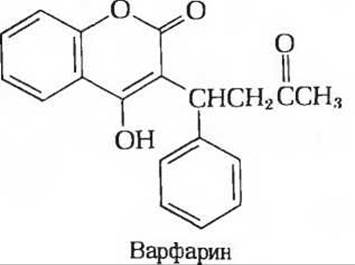
a) Propose a molecular mechanism for the action of warfarin as a vitamin K antagonist.
b) Why is ingestion of warfarin lethal to rodents?
c) When cows or horses are fed improperly cured clover, they develop a hemorrhagic disease characterized by severe internal bleeding. It has been established that the causative agent is dicumarol, a substance formed through the action of microorganisms on coumarin, a normal component of clover. In clinical practice, dicumarol is used to treat patients with acute thrombophlebitis (formation of blood clots that occlude Blood Vessels). Explain the rationale behind this therapy.

with damaged Kidneys, despite a normally balanced diet, frequently develop renal osteodystrophy, a Rickets-like disorder accompanied by intense bone demineralization. Which vitamin is involved in bone mineralization? Why does renal impairment lead to bone demineralization?
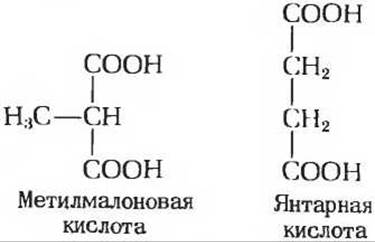
11. Action of warfarin and dicumarol. Warfarin, a commercially available rodenticide, is a potent vitamin K antagonist; its 12. Methylmalonic acid in the urine. A patient showing clinical signs of acidosis (decreased blood and urine pH) was found to have significant quantities of methylmalonic acid in their urine. It is known that when healthy animals are fed methylmalonic acid, it is converted into succinic acid. How would you account for these observations?
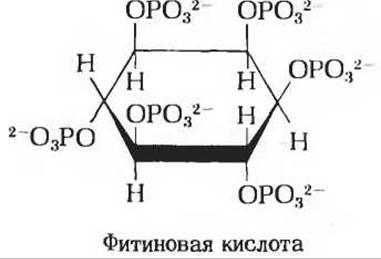
13. Zinc deficiency in humans. In certain Middle Eastern countries, notably Iran and Egypt, cases of zinc deficiency are widespread. This is because the populations in these regions consume large amounts of cereal grains, which are high in phytic acid (myo-Inositol hexakisphosphate), a compound that tightly binds divalent metal cations, particularly Zn2+ ions.
a) Why does the consumption of cereal grains lead to zinc deficiency?
b) Zinc deficiency is particularly prevalent in remote villages where people bake bread from unleavened dough. In cities, where leavened Yeast bread is consumed, zinc deficiency is much less common.
Explain these observations.
Last update: 06/08/2026
Editorial and Educational Adaptation: This material has been compiled based on the primary/original source text. The project team performed an editorial review, corrected technical inaccuracies, structured sections, and adapted the content for an educational format.
What was processed:
- elimination of formatting defects (OCR errors, structural breaks, corrupted characters);
- editorial organization of content;
- standardization of terminology in accordance with academic sources;
- verification of factual statements against the original source text.
All mentions of the author, publication year, and origin of the primary text have been preserved in accordance with the source.