Fundamentals of Biochemistry - Filippovich, Y. B. 1999
Coenzymes, vitamins, and certain other bioactive compounds
Other bioactive compounds
Besides Coenzymes and Vitamins, many other biologically active compounds significantly influence vital processes. Among them, a major role belongs to Hormones (see Ch. XIII), Antivitamins, Antibiotics, telergones, herbicides, defoliants, growth regulators, and others. Studying these compounds not only deepens our understanding of the Biochemical Mechanisms of living nature but also enables The Development of novel approaches to regulating organismal GROWTH AND DEVELOPMENT, treating diseases, controlling pest insects, and more.
Antivitamins are compounds that compete with vitamins in corresponding biochemical processes or exclude them from metabolic pathways through degradation or binding.
Examples of the first type—competitive antivitamins—include structural analogues of Vitamin PP:
Class="center">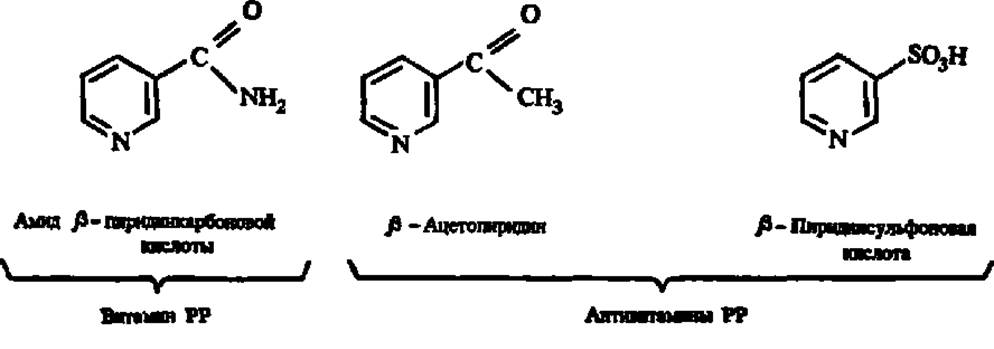
Upon binding to adenylic acid, they are capable of forming pseudocoenzymes that mimic NAD+ and block The activity of NAD+-dependent oxidoreductases.
An example of the second type—excluding antivitamins—is Avidin, an egg white protein that forms an insoluble, biologically inactive complex with vitamin H, thereby preventing the utilization of this vitamin in METABOLISM.
Natural or synthetic antivitamins exist for many vitamins. Because infectious disease agents (Bacteria and Viruses) as well as tumor Cells exhibit heightened sensitivity to the Deficiency of certain vitamins, antivitamins are employed as therapeutic agents.
Antibiotics are substances produced by microorganisms or obtained from other natural sources that exhibit antibacterial, antiviral, and antitumor activities. They interfere with protein and NUCLEIC ACID METABOLISM and energy processes in affected organisms and cells, acting selectively on specific molecular mechanisms. For instance, in Protein Biosynthesis (regarding the Stages of Protein biosynthesis mentioned below, see Ch. VII), puromycin releases unfinished Polypeptides, Tetracyclines inhibit the attachment of aminoacyl-tRNA to the ribosome, chloramphenicol (levomycetin) blocks the peptidyl transferase reaction within it, erythromycin halts ribosomal translocation along Messenger RNA, and streptomycin disrupts the reading of the Protein Synthesis code. In nucleic acid biosynthesis (for terminology, see Ch. VI), anticancer and antibacterial antibiotics (actinomycins, mitomycin, novobiocin, rifampicin, etc.) suppress Replication and Transcription processes. Cellular energy processes are affected by antimycin (which inhibits electron transport in the cytochrome system), oligomycin (which inhibits Oxidative Phosphorylation coupling), and Other Antibiotics. The biosynthesis of Introduction/37.html">Bacterial Cell wall Glycoproteins is halted by Penicillins and D-cycloserine; cell membrane permeability is disrupted by gramicidins, nystatin, and many other antibiotics.
The Chemical Nature of antibiotics is diverse and complex; they include Peptides, polyene compounds, polycyclic substances, and others. A detailed examination of this falls outside The Scope of this textbook. However, The Mechanism of antibiotic action can be illustrated by one of the simpler examples: the inhibition of bacterial cell wall glycoprotein biosynthesis by D-cycloserine. D-Alanine is a component of the peptide required for the biosynthesis of the bacterial cell wall peptidoglycan. Its formation from L-alanine, accelerated by alanine racemase, as well as the synthesis of D-alanyl-D-alanine catalyzed by D-alanyl-D-alanine synthetase, is blocked by D-cycloserine—a competitive inhibitor of these two Enzymes that is structurally similar to D-alanine:

As a result, cycloserine completely halts the reproduction of certain bacteria by shutting down the assembly of their cell wall glycoproteins. Overall, antibiotics remain the most potent chemotherapeutic agents against bacterial and viral infections, as well as for arresting tumor growth.
Telergones are substances produced by the exocrine glands of animals that exert a specific effect on other organisms (from the Greek tele meaning afar and ergon meaning action). These include compounds that attract individuals of the opposite sex, stimulate reproductive processes, and dictate Sexual Behavior (sex pheromones), alarm and fright substances, trail markers, appeasement substances (pseudopheromones), and others. Often present in quantities of only a few molecules, they interact with receptor cells, eliciting physiological reactions that are entirely unambiguous despite their molecular mechanisms remaining far from fully understood.
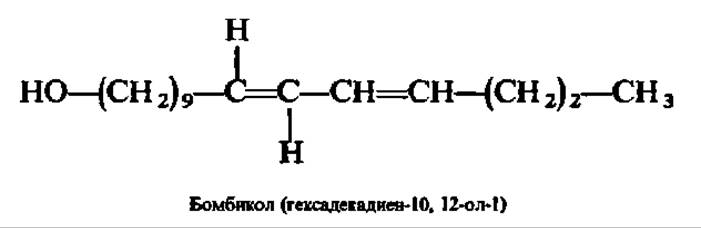
For instance, from the scent glands of 500,000 female silkmoths, 12 mg of a crystalline substance was isolated. Upon saponification, this yielded bombykol (from Bombyx mori, the silkmoth), which at an infinitesimal concentration (just 1000 molecules/cm3 of air) attracts males of this insect and induces appropriate sexual behavior (uniform and prolonged wing fluttering):
One of the products secreted by queen bee glands is trans-9-oxodec-2-enoic acid:
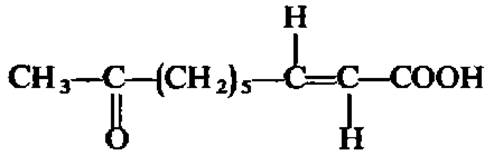
which, at a negligible concentration, inhibits Ovary development in worker bees, thereby maintaining the structural integrity of the bee colony.
The alarm reaction in leaf-cutter ant soldiers is triggered by citral, a substance secreted by their glands:
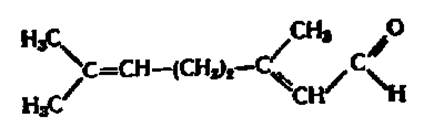
In response to the scent of this alarm pheromone, they tear apart any living thing that falls into their powerful mandibles.
As the examples above demonstrate, telergones can act on an Organism in two ways: via chemoreceptor cells or by penetrating into corresponding Tissues and Organs. Interest in these substances is steadily growing, giving rise to a new science—telergonology—which studies biologically active compounds alongside vitaminology, enzymology, and endocrinology. Highly impressive practical aspects of telergone research are gradually emerging: sex attractants are already widely used to control pest insects without harming beneficial entomofauna, owing to the species Specificity of the attractants, while the application of telergones from domesticated mammals holds promise for increasing their fertility and regulating population numbers.
Unfortunately, in many cases, information regarding the biological Action of Certain compounds is either limited or entirely lacking. Substances that impact the GENETIC APPARATUS OF an organism—mutagens and supermutagens—pose a particular hazard. Their detection and the development of protective Methods represent one of the most pressing tasks of modern environmental biochemistry.
The information discussed above by no means exhausts our knowledge of BIOLOGICALLY ACTIVE SUBSTANCES. The Structure and effects of some of these compounds on metabolism, as well as The regulation of growth and development (biogenic amines, releasing factors, opioid peptides, etc.), will be covered in subsequent chapters, whereas information concerning herbicides, defoliants, growth regulators, Neurotransmitters, and the like is provided in courses on plant physiology and Human and Animal physiology.
Last update: 06/08/2026
Editorial and Educational Adaptation: This material has been compiled based on the primary/original source text. The project team performed an editorial review, corrected technical inaccuracies, structured sections, and adapted the content for an educational format.
What was processed:
- elimination of formatting defects (OCR errors, structural breaks, corrupted characters);
- editorial organization of content;
- standardization of terminology in accordance with academic sources;
- verification of factual statements against the original source text.
All mentions of the author, publication year, and origin of the primary text have been preserved in accordance with the source.