Biochemical Foundations of Human Vital Activity - Volkov N.I., Nesen E.N. 2000
Biochemical Foundations of Human Vital Activity
Integration and Regulation of Metabolism: The Biochemical Basis of Adaptation Processes
Interconversion of Carbohydrates, Fats, and Proteins
Animals and humans are characterized by the interconversion of various classes of substances due to the presence of common metabolic products and a single transformation pathway—The Citric Acid Cycle. The Main Pathways of carbohydrate, fat, and protein interconversion are illustrated in Fig. 101.
Interrelationship of carbohydrate and Lipid METABOLISM. CARBOHYDRATES can be significantly converted into fats under conditions of excessive dietary intake, whereas fats can be used for de novo glucose synthesis and Glycogen replenishment only when carbohydrates are deficient. Their Metabolic pathways are linked by such common intermediate metabolites as glycerol, pyruvic acid, and acetyl-CoA.
Class="center">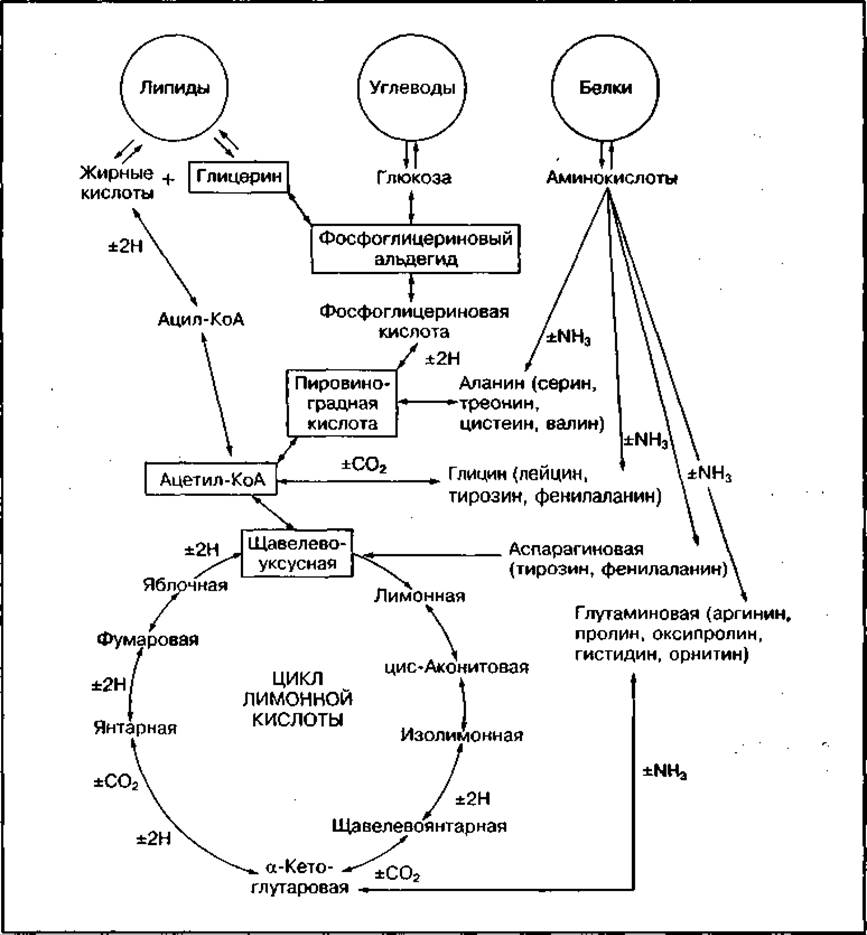
Fig. 101 Scheme of interconversion of the main pathways of fats, carbohydrates, and Proteins

Fig. 102 Interconversion of carbohydrates and fats
Glycerol is formed during Carbohydrate Metabolism in the glycolytic phase of glucose oxidation as phosphoglyceraldehyde and can be utilized as a starting component for fat synthesis (Fig. 102). It is also produced during The breakdown of Neutral Fats and Phospholipids and, upon conversion into phosphoglyceraldehyde, can enter the glucose synthesis pathway. The second intermediate metabolite utilized for The Biosynthesis of both carbohydrates and fats is pyruvic acid. However, the primary starting compound used in Tissues during the interconversion of carbohydrates and fats is acetyl-CoA.
Acetyl-CoA molecules are formed from pyruvic acid during the aerobic oxidation of carbohydrates and the breakdown of Fatty acids. Both fats and carbohydrates can be synthesized from them (see Fig. 102). During de novo glucose synthesis, acetyl-CoA activates the enzymatic conversion of pyruvic acid into phosphoenolpyruvic acid involving oxaloacetic acid.
The de novo Synthesis of glucose from fat breakdown products occurs when its Blood levels drop, for example, during prolonged physical exertion or starvation. The Brain reacts most acutely to a sharp decrease in blood glucose, as Glucose serves as its primary energy substrate. To prevent The Development of hypoglycemic coma, adaptive regulatory mechanisms are engaged to restore glucose levels from non-carbohydrate components while suppressing its conversion into Fatty Acids and Amino Acids. An important role in these processes is played by the Liver, which regulates blood glucose levels as discussed below.
The conversion of carbohydrates into fats can be viewed as energy storage that will be released upon fat oxidation. It is well established that under conditions of relative rest, prolonged physical labor, or starvation, free fatty acids and Ketone Bodies serve as crucial energy substrates in the liver, skeletal Muscles, and Heart. In this process, the breakdown products of fatty acids—ketone bodies—are utilized; they are produced in The Liver and catabolized in muscles and other tissues, including the brain during prolonged fasting. Thus, the Organism regulates the required amount of energy reserves and utilizes diverse Energy Sources depending on environmental conditions, while also redistributing energy sources among individual Organs.
Interrelationship of carbohydrate and Protein metabolism. Carbohydrates can be converted into proteins because carbohydrate breakdown yields keto acids and oxaloacetic acid, which can undergo reductive amination (addition of NH3) and be transformed into amino acids—Alanine, aspartic acid, and glutamic acid—used in Protein Synthesis. However, such a process is limited in The Human Body. Protein synthesis requires significant Energy Expenditure, which necessitates enhanced carbohydrate oxidation.
In the cellular Energy Metabolism, the conversion of amino acids into glucose plays a vital role. Many so-called glycogenic amino acids of the cellular metabolic pool are converted into various acids of The Citric Acid cycle or pyruvic acid, and subsequently into oxaloacetic acid and further into glucose.
Since proteins form The basis of all cellular structures, their conversion into carbohydrates occurs only during a significant deficiency of carbohydrates, which may be associated with inadequate dietary carbohydrate intake or adaptive de novo glucose synthesis during muscular activity.
The process of protein-to-carbohydrate conversion is regulated by glucocorticoids and serves as a compensatory mechanism for supplying the body with energy during carbohydrate deficiency under conditions of muscular activity. It also proceeds intensively in patients with Diabetes Mellitus. As animal experiments have demonstrated, in this condition about 50–80 g of Glucose is formed from 100 g of protein.
Interrelationship of protein and lipid metabolism. The body predominantly exhibits the conversion of proteins into fats, as the transformation of fats into proteins is limited. A predominance of proteins in the animal diet induces active Lipid Biosynthesis. Certain amino acids (leucine, phenylalanine, Tyrosine), upon converting into acetyl-CoA, can immediately enter the FATTY ACID BIOSYNTHESIS pathways. However, the primary conversion of proteins into fats occurs via The formation of pyruvic acid—a carbohydrate metabolite—which can be converted into acetyl-CoA, the Starting Material for fatty acid biosynthesis.
Integration of metabolism. The Metabolic pathways of carbohydrates, fats, and proteins are closely interrelated due to the presence of their common metabolic product—acetyl-CoA. Acetyl-CoA (CH3-CO-CoA) is formed during the breakdown of glucose, fatty acids, and amino acids, integrating these processes, and then enters the main metabolic pathway, the citric acid cycle, where it is oxidized to CO2 and H2O with the release of energy. Possessing a high-energy chemical bond, acetyl-CoA is not only readily engaged in oxidation within the aforementioned cycle but is also utilized as a building block in the biosynthesis of various substances (see Fig. 98). In tissues, acetyl-CoA is used for fatty acid biosynthesis, ketone body formation in the liver, steroid synthesis, and the interconversion of various classes of substances.
Thus, acetyl-CoA plays a principal role in the Integration of carbohydrate, lipid, and protein metabolism. Formed in the Cell Cytoplasm, it penetrates into the Mitochondria, uniting cytoplasmic and intramitochondrial metabolic processes as well as various Catabolic pathways of carbohydrates, fats, and proteins, and generates substrates for de novo glucose and Amino acid synthesis and fatty acid biosynthesis. Consequently, the interconversion of carbohydrates, fats, and proteins and the integration of their metabolic pathways enable the organism, regardless of nutrient intake, to create an energy reserve within Cells, ensure timely self-renewal, and adapt to external and internal environmental conditions.
Last update: 06/08/2026
Editorial and Educational Adaptation: This material has been compiled based on the primary/original source text. The project team performed an editorial review, corrected technical inaccuracies, structured sections, and adapted the content for an educational format.
What was processed:
- elimination of formatting defects (OCR errors, structural breaks, corrupted characters);
- editorial organization of content;
- standardization of terminology in accordance with academic sources;
- verification of factual statements against the original source text.
All mentions of the author, publication year, and origin of the primary text have been preserved in accordance with the source.