Genetics - A. V. Sivolob 2008
The Nature of Genetic Material
Homologous DNA Recombination
An essential aspect of DNA existence in living systems is not only the processes of repair and preservation of the information contained in The nucleotide sequence, but also various actions aimed at shuffling this information to create new combinations of genes. The most important among such operations is Homologous Recombination—the exchange of segments between sufficiently long DNA molecules with homologous base pair sequences. This process occurs in all sexually reproducing organisms between homologous Chromosomes during Meiosis (in The process of gametogenesis). Homologous recombination is also possible between pairs of homologous daughter DNA molecules during Replication in somatic Cells (mitotic recombination) and in prokaryotes, for instance, following the conjugation of two Bacterial cells and The transfer of DNA from one to the other (see Chapter 5).
A prerequisite for homologous recombination is Structure/154.html">Sequence Homology between two DNA molecules along their entire length. The general model of the initial stage of homologous recombination is shown in Fig. 1.26. The initiating event is a double-stranded break in one of the homologous molecules (carried out by specialized Enzymes). Driven by The activity of the recBCD protein complex (here and hereafter, the names of Proteins ensuring homologous recombination in E. coli are indicated; homologous proteins also exist in eukaryotes), this break is "extended" via 5'-exonuclease degradation of DNA, resulting in two single-stranded 3' tails remaining at the break site. One of these tails (in a complex with the recA protein) undergoes invasion, forming a double helix with an antiparallel strand of the intact homologous DNA molecule. The other strand of the latter is displaced from the duplex as a single-stranded D-loop (from displacement). Together with the 3' tail, the D-loop is capable of migrating in search of homology—maximum complementarity within The Double Helix formed between the strands of the two homologous DNA molecules. The next step involves DNA Repair synthesis: the two 3' ends of the broken DNA molecule are extended by DNA polymerases using the two strands of the intact molecule as templates. Up to this point, the scheme in Fig. 1.26 simultaneously serves as a model for the precise repair of a double-stranded break in one of two sister DNA molecules during replication.
Class="center">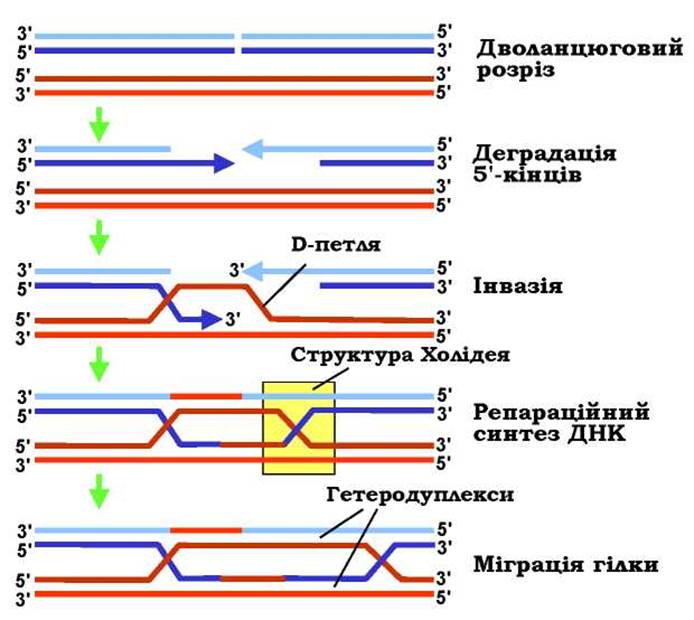
Fig. 1.26. Initial Stages of homologous recombination
During recombination, the restoration of DNA integrity is merely the completion of the initial stage. As a result of invasion and repair synthesis, the two DNA molecules join, forming two strand crossovers—two Holliday structures (Robin Holliday). Each such structure can migrate (so-called branch migration), resulting in the elongation of the heteroduplex—the double helix between the two nearly complementary strands of the two homologous DNA molecules.
Let us consider a single Holliday structure. As can be seen from Fig. 1.27, it can be subjected to isomerization by rotating the two double-stranded ends by 180°. It is in the conformation without strand crossovers (on the right in the figure) that the Holliday structure is stabilized through its interaction with the ruvA protein: the protein binds to the center of the cross, holding the four single-stranded regions in an approximately planar square configuration. Interacting with ruvA and the two duplexes emerging from the cross in opposite directions are two hexameric ruvB Protein Complexes, which, in an ATP-dependent process, drive the translocation of the strands through the ruvA / ruvB complex—mediating branch migration with simultaneous elongation of the heteroduplex.
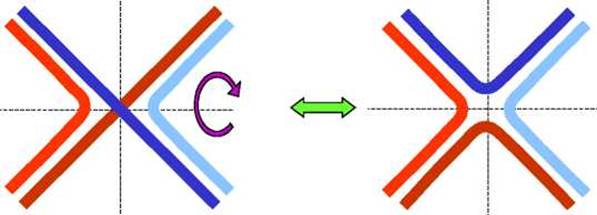
Fig. 1.27. Isomerization of the Holliday structure
The final event of recombination is the resolution of the Holliday structure by resolvases—the ruvC protein. Resolvase is an endonuclease, two molecules of which interact with the ruvA / ruvB complex and two strands of the cross positioned opposite each other (There are two equally probable variants of such binding). Thus, the resolvase makes a double-stranded cut across the cross via two possible pathways (Fig. 1.28). Following subsequent ligation of the breaks, two double-stranded DNA molecules remain.
Figure 1.28 depicts the isomerized four-stranded structure from Fig. 1.26—two Holliday structures with crossovers converted into planar ones (regions synthesized via repair are not labeled)—and the result of its resolution. Out of the four possible combinations of resolving the two Holliday structures, two are shown. One of them leads to recombination (similarly, the pair of cuts 2 + 4 is also recombinant): the two homologous DNA molecules have exchanged segments, and the conventional "alphabet" denoting the DNA fragments changes case—uppercase letters are replaced by lowercase ones and vice versa. On the scale of entire chromosomes, the result of recombination is the two molecules shown in the central part of Fig. 1.29. The pairs of cuts 1 + 4 and 2 + 3 do not lead to recombination. Therefore, recombination upon resolution of Holliday structures occurs with a 50% probability.
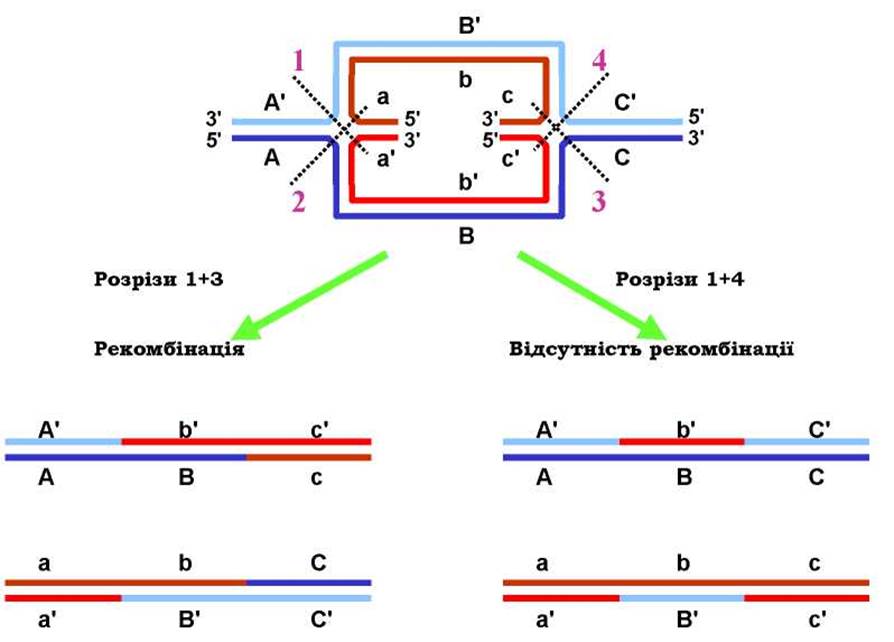
Fig. 1.28. Scheme of resolution of two Holliday structures. The configuration of the four strands at the top is equivalent to the configuration on the bottom panel of Fig. 1.26. Letters denote strand regions (uppercase and lowercase letters correspond to homologous Regions of the two molecules, primed and unprimed letters to non-complementary regions of the initial duplexes). Numbers 1–4 indicate possible cuts made by the resolvase. Bottom: two pairs of double-stranded molecules after resolution of the Holliday structures, obtained as a result of the respective cuts
Regardless of whether recombination has taken place, all products contain heteroduplexes (the middle part of all final molecules in Fig. 1.28). Since heteroduplexes consist of nearly complementary strands, they contain mismatches. Accordingly, the final operation completing the homologous recombination process is the repair of these mismatches by the mutHLSU system described above. Unlike the action of this system following replication, after recombination the strand where nucleotide replacement occurs is chosen randomly; for instance, the central fragment of the first molecule in Fig. 1.28 is converted into either B/B' or b/b'. If a Gene is located in this region, one of its alleles—B or b—is selected via repair. Consequently, The Effect of recombination can be The phenomenon of Gene Conversion—the replacement of one allele by another.
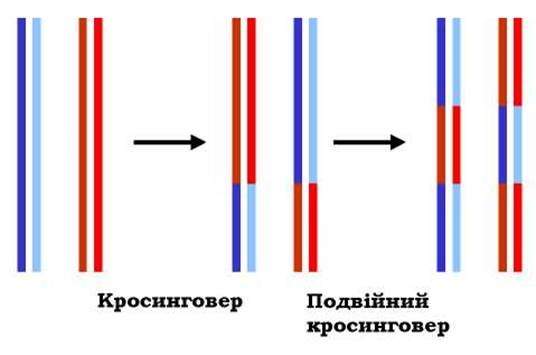
Fig. 1.29. Crossing Over as a result of recombination of two double-stranded DNA molecules
Another consequence of recombination is the exchange of segments between two homologous chromosomes—crossing over (Fig. 1.29). During recombination, crossing over between two chromosomes can occur (and frequently does) at multiple points (Fig. 1.29). Naturally, the greater the distance between two chromosomal loci, the higher the probability that a segment exchange will occur somewhere between these loci, and the greater the number of such exchanges will be. Two loci separated by a large distance along a chromosome begin to behave as independent (unlinked) hereditary elements. This is precisely the Biological Significance of homologous recombination (the effects of crossing over are described in detail in Chapter 3).
Among other DNA recombination processes, distinctions are made between Site-Specific Recombination (insertion/excising of one DNA molecule into/from another through the recognition of short DNA sequence elements by specific proteins, see Chapter 5), Illegitimate Recombination (joining of two DNA molecules that share neither homology nor specific sequence elements—the main mechanism being the non-homologous end joining discussed above), and the movement of mobile DNA sequence elements within The Genome (Chapter 6).
Last update: 11/08/2026
Editorial and Educational Adaptation: This material has been compiled based on the primary/original source text. The project team performed an editorial review, corrected technical inaccuracies, structured sections, and adapted the content for an educational format.
What was processed:
- elimination of formatting defects (OCR errors, structural breaks, corrupted characters);
- editorial organization of content;
- standardization of terminology in accordance with academic sources;
- verification of factual statements against the original source text.
All mentions of the author, publication year, and origin of the primary text have been preserved in accordance with the source.