MODERN BOTANY - P. RAVEN - 1990
Appendix A. Classification of Organisms
Several mutually exclusive systems of Organism Classification exist. Presented here is one of them, which corresponds to the general scheme given at the end of Chapter 10, where all organisms are divided into five major groups, or kingdoms: Monera, Protista, Animalia, Fungi, and Plantae. The principal taxonomic categories are kingdom, division1, Class, order2, family, genus, and species.
1 In animals, phylum. — Ed. note.
2 In animals, subfamily/order contextually. — Ed. note.
The classification given below includes the Divisions of the kingdoms Protista (excluding those assigned to Protozoa), Fungi, and Plantae, as well as some classes discussed in this book, although the list is far from complete. The number of species given for each group is approximate and refers only to currently living, described, and named taxa. Only groups with contemporary representatives are considered. Viruses are not included in this Appendix, although Chapter 12 is devoted to them.
Bacteria; Prokaryotic Cells lacking a nuclear envelope, Plastids, Cell/35.html">Mitochondria, and other membrane-bound Organelles, as well as (9+2)-type flagella. Unicellular organisms, sometimes joined into filaments or other seemingly multicellular bodies. Nutrition is predominantly absorptive, but some groups are photosynthetic or chemosynthetic. They reproduce mainly by asexual fission or budding, but under certain circumstances, cells may exchange segments of DNA molecules. They are nonmotile or move by means of simple flagella or gliding.
Currently, about 2,500 species of bacteria and bacteria-like organisms are recognized, but this is likely only a small fraction of their actual number. Species criteria here differ from those of eukaryotes and are based primarily on metabolic features. One group (class Rickettsiae), which includes very small bacteria-like organisms that are, notably, widespread parasites of Arthropods, may contain tens of thousands of species depending on the classification criteria used; they are not included in the number given above.
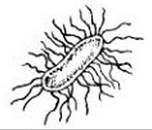
A satisfactory classification of Monera has not yet been proposed, although the groups archaebacteria and cyanobacteria are distinguished within this kingdom. Methane-producing bacteria, or archaebacteria, are strictly anaerobic, produce methane from carbon dioxide and hydrogen, and are also capable of converting sulfur into hydrogen sulfide. Despite their morphological (nonmotile or flagellated rods, cocci, or spirilla) and biochemical diversity, they share similar rRNA base sequences. Cyanobacteria, formerly mistakenly called "blue-green Algae," photosynthesize with the participation of chlorophyll a. They also possess accessory pigments—phycobilins, which are also found in red algae, whose METABOLISM/14.html">Chloroplasts likely originated from symbiotic cyanobacteria. Many of these prokaryotes can fix atmospheric nitrogen, often housed in specialized cells called heterocysts. Some cyanobacteria form complex filaments or colonies of other shapes. Although about 7,500 species of them have been described, more plausible estimates of the total number of these specialized organisms suggest approximately 200 well-differentiated nonsymbiotic forms.
Kingdom Fungi
Eukaryotic multicellular or rarely unicellular organisms with nuclei typically located within an undivided mycelium. In some groups, during certain stages of The life cycle, the mycelium becomes septate (divided by cross-walls). Fungi are heterotrophs that obtain nutrients through absorption. Species that enter into vital symbiotic relationships with plant roots (mycorrhiza) are known in all three of their divisions. Reproductive cycles typically include sexual and asexual phases. There are about 100,000 named species of fungi, but undoubtedly many more remain to be discovered. Some have been described two or more times, especially forms assigned to both ascomycetes and Fungi imperfecti.
Divisions
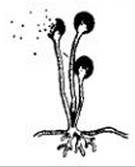
Zygomycota. Terrestrial fungi with hyphae septate only during The formation of reproductive bodies; Chitin predominates in The Cell walls. About 600 species have been described, 100 of which form endomycorrhizae with approximately 80% of all vascular plants.
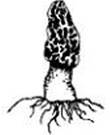
Ascomycota. Terrestrial and aquatic fungi with hyphae divided by perforated septa; complete septa separate the reproductive structures—spores or gametangia. Chitin predominates in the cell walls. During the sexual process, a characteristic cell called an ascus is formed, in which Meiosis occurs and ascospores are produced. The hyphae of many ascomycetes intertwine to form complex "fruiting bodies"—ascocarps. Yeasts are unicellular ascomycetes that reproduce asexually by budding. About 30,000 species (plus roughly 25,000 species of imperfect fungi in which sexual stages are absent or undiscovered).
Lichens. Symbiotic complexes of ascomycetes and certain genera of green algae or cyanobacteria that reproduce within closely intertwined hyphae (more than a dozen species of Basidiomycetes forming such complexes are also known, but they are closely related to free-living basidiomycetes and do not resemble other lichen-forming fungi). About 20,000 species have been described.
Basidiomycota. Terrestrial fungi with hyphae divided by perforated septa; complete septa separate reproductive structures, such as spores. Chitin predominates in the cell walls. Sexual reproduction involves the formation of basidia, upon which basidiospores are produced following meiosis. Basidiomycetes are dikaryotic for the greater part of their life cycle; complex tissue differentiation is often observed in their basidiocarps. These fungi constitute the majority of ectomycorrhizae. About 25,000 species have been described.
Class Hymenomycetes. Basidiomycetes that form basidiospores in the hymenium On the surface of the basidiocarp. This group includes agarics, coral fungi, and polypores. Basidia are aseptate or septate.
Class Gasteromycetes. Basidiomycetes that form basidiospores enclosed within basidiocarps for at least a portion of their development. This group includes puffballs, earthstars, stinkhorns, and related fungi.
Class Teliomycetes. Basidiomycetes lacking basidiocarps and possessing septate basidia; representatives include rusts and smuts.

Eukaryotic unicellular or Multicellular Organisms. Modes of nutrition include ingestion, Photosynthesis, and absorption. Sexual reproduction is known in most phyla. They move by means of (9+2)-type flagella or are non-motile. Fungi, plants, and animals represent specialized multicellular groups that evolved from Protista. Our book discusses heterotrophic (Water Molds, chytrids, plasmodial and cellular slime molds) and autotrophic (algae) protists. The CHARACTERISTICS OF THE phyla in this kingdom are presented in Table 14-1.
Phyla
Oomycota: water molds and related forms. Aquatic or terrestrial organisms with motile cells characteristic of certain stages in their life cycle. There are two flagella: one tinsel and one whiplash. Cell walls consist of Cellulose or cellulose-like polymers; the reserve nutrient is Glycogen. About 475 species.
Chytridiomycota: chytrids. Aquatic organisms with motile cells characteristic of specific stages in their life cycle. Motile cells bear a single posterior whiplash flagellum. Cell walls consist of chitin, though other polymers may also be included; the reserve nutrient is glycogen. About 750 species.
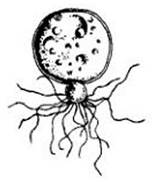
Acrasiomycota: cellular slime molds. Organisms that exist as individual amoebae (called myxamoebae) that aggregate at a certain stage into a pseudoplasmodium, within which they retain their individuality. The pseudoplasmodium produces fruiting bodies. Macroocysts are formed during the sexual process. Initially, amoebae fuse in pairs to form zygotes, which attract and engulf surrounding amoebae. The primary mode of nutrition is ingestion. Several genera with approximately 65 species are known.

Myxomycota: plasmodial slime molds. Amoeboid organisms that form a multinucleate plasmodium, moving as a single mass and ultimately forming sporangia, each of which is multinucleate and gives rise to numerous spores. Sexual reproduction is observed occasionally. The predominant mode of nutrition is ingestion. About 450 species.
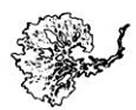
Chrysophyta: chrysophytes. Autotrophic organisms with chlorophylls a and c and carotenoids, including fucoxanthin. The reserve substance is the carbohydrate chrysolaminarin. Cell walls are either absent or composed of cellulose with siliceous scales in some groups, and pure silica in diatoms. About 6,650 living species.
Class Chrysophyceae: golden algae. A diverse group of mostly unicellular organisms, in most cases flagellated; some lack flagella, and amoeboid forms are also known. Many possess siliceous scales or skeletal structures instead of a well-defined Cell wall. About 500 species.
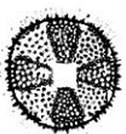
Class Xanthophyceae: yellow-green algae. Primarily unicellular organisms with chlorophylls a and c, but lacking fucoxanthin. Most are non-motile, although amoeboid and flagellated forms are known. About 550 species.
Class Bacillariophyceae: diatoms. Chrysophytes with a bipartite siliceous frustule, the halves of which fit together like a box and its lid. They contain chlorophylls a and c, as well as fucoxanthin. Sometimes capable of locomotion by secreting mucilage fibrils along a specialized groove called a raphe. About 5,600 extant species and a vast number of extinct ones.
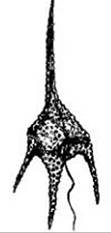
Pyrrophyta: dinoflagellates. Autotrophic organisms with chlorophylls a and c and carotenoids. The reserve substance is starch. Cell walls contain cellulose. This phylum includes about 1,100 species of predominantly biflagellate organisms. All of them bear lateral flagella, one of which moves in a transverse groove encircling the cell. Sexual reproduction is mostly isogamous, but anisogamy also occurs. Mitosis is unusual. Many form symbioses with marine animals as zooxanthellae and contribute significantly to the productivity of reef-building corals.
Euglenophyta: euglenoids. About one-third of the approximately 40 genera of these organisms have chloroplasts with chlorophylls a and b and carotenoids. The rest are heterotrophic and closely resemble members of the group Zoomastigina, in which they probably belong. The reserve substance is paramylon, a distinctive carbohydrate. They typically possess a single apical, unilaterally hairy flagellum1 of the tinsel type and a contractile vacuole. The flexible pellicle is rich in Proteins. The sexual process is unknown. About 800 mostly freshwater species.
1 There is also a second, highly reduced one. — Editor's note.
Rhodophyta: red algae. Primarily marine organisms with chlorophyll a and phycobilins. Nutrients are stored in the form of starch; cell walls consist of cellulose or pectic substances, with calcium carbonate incorporated in many species. Motile cells are completely absent at all Stages of the complex life cycle. The vegetative body is built of tightly interwoven filaments embedded in a gelatinous matrix and is not differentiated into roots, leaves, and stems. Specialized conducting cells are absent. About 4,000 species.
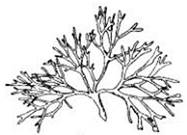
Phaeophyta: brown algae. Multicellular, almost exclusively marine algae with chlorophylls a and c and fucoxanthin. The reserve carbohydrate is laminarin; cell walls feature a cellulosic matrix with alginic acids. Motile cells are biflagellate, with the anterior-directed flagellum being tinsel-type and the posterior-directed one whiplash-type. In some large forms of the order Laminariales, differentiation is strongly expressed, forming specialized cells that transport photosynthesis products to dimly lit PARTS OF THE body; however, differentiation into roots, leaves, and stems, as seen in vascular plants, is not developed. About 1,500 species.
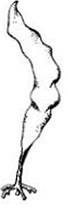
Chlorophyta: green algae. Unicellular or multicellular photosynthetic organisms with chlorophylls a and b and various carotenoids. The reserve substance is starch; only these algae and plants clearly descended from them store nutrients within their plastids. Cell walls are polysaccharide, sometimes cellulosic. Motile cells bear two lateral or apical smooth flagella. Multicellular genera show no complex differentiation. Multicellularity has evolved at least three times, and possibly more. Approximately 7,000 species are known.
Class Charophyceae. Unicellular, few-celled, filamentous, or parenchymatous forms in which Cell Division involves the formation of a phragmoplast—a system of microtubules perpendicular to the plane of division. The nuclear envelope breaks down during mitosis. Motile cells (when present) are asymmetrical and bear two lateral or subapical flagella originating from the cell at right angles. Sexual reproduction always involves the formation of a resting zygote and zygotic meiosis. Some representatives of this class are closer to plants than any other organisms. They occur predominantly in fresh waters.
Class Ulvophyceae. Cell division resembles that of the previous class, but the nuclear envelope persists during mitosis. Motile cells (when present) are symmetrical, with two, four, or many apical, forward-directed flagella. Sexual reproduction frequently involves Morphology/12.html">ALTERNATION OF GENERATIONS and meiosis at the spore stage; resting zygotes are rare. Predominantly marine algae.
Class Chlorophyceae. Green algae with a unique mode of cell division involving the formation of a phycoplast—a system of microtubules parallel to the plane of division. The nuclear envelope persists throughout mitosis, and chromosome division occurs within it. Motile cells (if present) are symmetrical, with two, four, or many apical flagella directed forward. Sexual reproduction always involves the formation of a resting zygote and zygotic meiosis. Found predominantly in fresh waters.
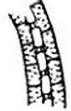
Kingdom Plantae
Autotrophic (occasionally secondarily heterotrophic) multicellular organisms with well-developed tissue differentiation. All are characterized by an alternation of generations featuring a diploid phase (sporophyte) that includes an embryo, and a haploid phase (gametophyte) that mitotically produces Gametes. Photosynthetic Pigments and reserve nutrients are similar to those present in green algae. Primarily terrestrial forms.
Phyla
Bryophyta: bryophytes. Possess multicellular gametangia with a sterile protective layer and biflagellate sperm. Both gametophytes and sporophytes are complex multicellular structures; conducting Tissues are not as specialized as the xylem and phloem of vascular plants, occurring only in mosses. Photosynthesis in these primarily terrestrial plants is carried out mainly by the gametophyte, while the sporophyte, at least initially, remains dependent upon it. About 16,000 species.

Class Hepaticae: liverworts. Gametophytes are thalloid or leafy, rhizoids are unicellular, and sporophytes lack Stomata and are relatively simple in Structure. About 6,000 species.
Class Anthocerotae: hornworts. Gametophytes are thalloid. The sporophyte grows from a basal intercalary meristem as long as conditions permit. Sporophytes possess stomata. About 100 species.
Class Musci: mosses. Gametophytes are leafy. Sporophytes are characterized by complex mechanisms of capsule dehiscence. Rhizoids are multicellular. Sporophytes possess stomata. About 9,500 species.
Psilotophyta: psilophytes. Two genera of homosporous vascular plants, one of which bears leafless appendages on the stem; both genera are characterized by extremely simple sporophytes not differentiated into ROOT and SHOOT. Sperm are motile. A few species.
Lycophyta: lycophytes. Homo- and heterosporous vascular plants with microphylls; extremely diverse in external appearance. All possess motile sperm. Five genera and about 1,000 species.
Sphenophyta: horsetails. A single genus (Equisetum) of homosporous vascular plants with jointed stems featuring distinct nodes and prominent silica-impregnated ridges. Sporangia are borne in a terminal strobilus at the apex of the stem. Leaves are scale-like. Sperm are motile. 15 living species are known.
Pterophyta: ferns. Mostly homosporous, occasionally heterosporous plants with megaphylls. Gametophytes are more or less free-living and typically photosynthetic. Characterized by multicellular gametangia and motile sperm. About 12,000 species.
Coniferophyta: conifers. Gymnosperms with active cambial growth and simple leaves; ovules and seeds are exposed; sperm lack flagella. The best-known group of gymnosperms. About 50 genera and roughly 550 species.
Cycadophyta: cycads. Gymnosperms with weak cambial growth and compound pinnate leaves resembling those of palms or ferns; ovules and seeds are exposed. Sperm are flagellated and motile, yet are delivered to the ovule by a pollen tube. Ten genera, about 100 species.
Ginkgophyta: ginkgo. A single species of gymnosperm with pronounced cambial growth and fan-shaped leaves with open dichotomous venation; ovules and seeds are exposed; seed coats are fleshy. Sperm are transported to the ovule via a pollen tube, but retain flagella and are capable of locomotion.
Gnetophyta: gnetophytes. Gymnosperms sharing many features (such as vessels) that ally them with angiosperms (among gymnosperms, vessels occur exclusively in this phylum). Motile sperm are absent. Three sharply differing genera with approximately 70 species.
Anthophyta: flowering plants. Seed plants with ovules enclosed in a carpel and seeds contained within a fruit. They exhibit an exceptionally diverse vegetative body, but all are characterized by a flower that is primitively insect-pollinated. Other pollination mechanisms, such as wind pollination, have arisen secondarily in several distinct evolutionary lineages. Gametophytes are highly reduced; the mature female gametophyte often consists of only seven cells. Double Fertilization involving both sperm from the mature male gametophyte gives rise to a zygote (sperm + egg cell) and a primary endosperm nucleus (sperm + polar nuclei); the former develops into the embryo, while the latter forms a specialized nutritive tissue, the endosperm. About 235,000 species.
Class Monocotyledones: monocots. Flowers are typically trimerous; leaf venation is generally parallel; primary vascular bundles are scattered throughout the stem; true Secondary Growth is absent; a single cotyledon is present. About 65,000 species.
Class Dicotyledones: dicots. Flowers are typically tetramerous or pentamerous; leaf venation is generally reticulate; primary vascular bundles in the stem are arranged in a ring; many possess a cambium and true secondary growth; two cotyledons are present. About 170,000 species.

Also worthy of mention are several other terms used to describe Major Groups of organisms. In some classification systems, algae and fungi are united into the subkingdom Thallophyta (thallophytes) of the plant kingdom. Thallophytes are organisms lacking clearly defined tissue differentiation into root, stem, and leaf, as well as conducting tissues (xylem and phloem). In this case, bryophytes and vascular plants are segregated into the subkingdom Embryophyta. In its representatives, the zygote develops into a multicellular embryo enclosed within an archegonium or embryo sac. All higher plants are characterized by an alternation of heteromorphic generations.
Although terms such as "algae", "thallophytes", "vascular plants", and "gymnosperms" are no longer used in systematics, they remain useful in an informal sense. In even earlier systems, all plants were divided into "phanerogams" (flowering plants) and "cryptogams" (non-flowering plants); these terms can still occasionally be encountered today1.
1 These terms are more frequently understood to mean seed plants and spore plants, respectively. — Editor's note.

Last update: 07/08/2026
Editorial and Educational Adaptation: This material has been compiled based on the primary/original source text. The project team performed an editorial review, corrected technical inaccuracies, structured sections, and adapted the content for an educational format.
What was processed:
- elimination of formatting defects (OCR errors, structural breaks, corrupted characters);
- editorial organization of content;
- standardization of terminology in accordance with academic sources;
- verification of factual statements against the original source text.
All mentions of the author, publication year, and origin of the primary text have been preserved in accordance with the source.