PLANT ADAPTATION TO ANTHROPOGENIC FACTORS - 2017
4. EFFECT OF IONIZING RADIATION ON PLANT ORGANISMS
4.3. General regularities of radiobiological reactions in the plant organism
Among the diverse radiobiological responses of plants to irradiation, there are common effect features that indicate a multicomponent radiation syndrome (Fig. 13) and manifest in the following ways:
1. Plant responses consisting of the enhancement of growth and morphogenesis processes, which are typically observed under low doses of radiation. This reaction, termed radiostimulation, appears either as a transient, short-term effect or as a prolonged one spanning a significant part of the growing season. Radiostimulation is distinguished by a harmonious intensification of all physiological and associated biochemical processes.
2. At higher irradiation doses, plants develop morphogenesis disorders caused by the inactivation of Meristems. These disturbances take the form of morphological anomalies and radiomorphoses, as well as deviations from normal pattern formation, death of roots and shoots, a prolonged growing season, and the absence of the reproductive phase. The death of a plant Organism in response to irradiation occurs at very high radiation doses and is observed not immediately after exposure, but after a certain period during which meristematic Tissues perish.
3. Biochemical and physiological responses to irradiation manifest as altered intensity in many processes and uncoupling between them, resulting in the abnormal accumulation of various intermediate METABOLISM products. The disruption of biochemical processes is influenced by both the inactivation of individual enzyme systems and damage to the overall regulation of processes in the irradiated plant.
4. A characteristic feature of the radiation syndrome in plants is The formation of genetic damage manifested as somatic Mutations, Gene Mutations, Chromosomal aberrations, and genomic mutations, which are subsequently realized in succeeding generations. Chromosome aberrations serve as the cause of intensive cellular Selection in meristems.
Class="center">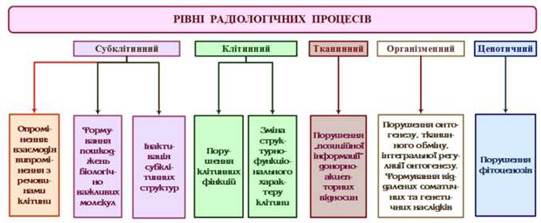
Fig. 13 - Levels of radiation action according to D. M. Hrodzynskyi
The radiation syndrome in plants shares certain commonalities with the syndrome in animal organisms: the presence of critical tissues and Organs, identical types of cytogenetic damage, loss of control over integral organism Functions, the formation of somatic mutations, Cell transformation, and radiation carcinogenesis.
Apparently, the common Features of the radiobiological syndrome reflect the identity of the Primary processes of interaction between ionizing radiation and living cell substances, the similarity of basic cellular radiobiological reactions, and the proliferative death of stem Cells. Differences emerge where the similarities between PLANT AND ANIMAL processes cease.
Typically, the biological response to irradiation is observed at later Stages of the radiobiological effect's development, once these processes have reached the level of cellular and tissue phenomena. The onset of such a response is observed at varying intervals following radiation exposure, distinguishing between immediate and delayed radiobiological effects (Fig. 14). Immediate effects appear directly in the irradiated cells, whereas delayed effects may manifest across several cell generations derived from the irradiated cells. Obviously, delayed effects occur when radiation doses do not exceed the threshold beyond which all meristematic cells completely lose their dividing capacity. The Essence of immediate and delayed effects can also be defined differently. Based solely on the time CHARACTERISTICS OF THE processes, immediate reactions are those occurring immediately after acute irradiation and thus caused by radiation-chemical processes, while delayed reactions are those requiring a certain lag period to manifest. For instance, an immediate effect is The change in plant cell membrane permeability observed right after irradiation, whereas a delayed effect is the formation of micronuclei in cells or The Development of morphological anomalies.
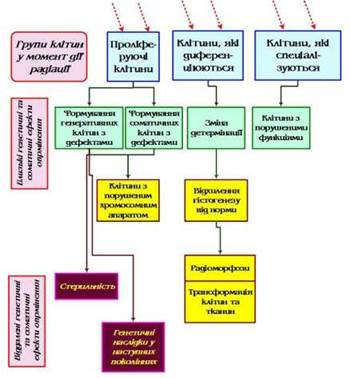
Fig. 14 - Radiation effects according to D. M. Hrodzynskyi
Genetic effects—gene and somatic mutations caused by radiation damage to cells—result in generations that develop either generative cells (micro- and macrospores) in the former case, or a tissue area in the latter. For this to happen in higher plants, the irradiated cells must undergo several divisions. Consequently, such cells must carry a "hidden" injury for some time, which is subsequently realized in the form of a delayed effect, such as pollen or egg sterility, the appearance of a gene mutation, etc. Therefore, delayed effects are associated with the somewhat formalized concept of "hidden" damage. However, there is nothing mysterious about this concept: with an appropriate choice of method, one can always detect the impairment of molecular structures responsible for maintaining the "hidden" damage.
In complex meristems of higher plants, the formation of most chromosomal aberrations is accompanied by the exclusion of these cells from the proliferating pool. This mechanism represents one of the ways the plant recovers from radiation injury.
Disruption in The process of cell determination and the selection of differentiation pathways into specialized tissues may not occur immediately after irradiation, but rather after several cell divisions, culminating in delayed somatic consequences of irradiation—such as The Emergence of radiomorphoses, growth arrest, and impaired pattern formation. In the case of altered positional information during irradiation, the "hidden" damage consists of changes in hormonal status and impaired cell competence, meaning it is physiological in nature. Returning to THE CONCEPT OF a lag period in plant radiobiological responses, it can be said that for delayed reactions, the lag period corresponds to the time interval during which the "hidden" damage persists. Another example of a delayed consequence is cell transformation, which may occur after many cell divisions of an outwardly normal cell carrying "hidden" damage, eventually prompting The Cell to undergo transformation at some point. Uncovering The Nature of "hidden" damages remains a crucial problem in modern radiobiology.
Delayed somatic effects—such as morphoses and the absence of the reproductive phase—are close in nature to genetic effects, as they determine cellular cytogenetic damage and impairments in regulatory systems acting at the level of intercellular interactions. The difference between genetic and somatic radiobiological effects lies in the fact that the former pertain to cell lines leading to gamete formation, whereas the latter involve progenitor cells whose progeny make up the Tissues of the plant itself.
The occurrence of gene mutations belongs to rather delayed effects of irradiation. Upon seed irradiation, altered forms appear in the first generation. Apparently, the radiation mutation arises in the initial cell of the seed embryo. The "hidden" damage traverses a complex, multi-stage path through the dormant meristem to the sporogenous tissue, then to the gamete, Fertilization, and finally realizes itself in the new embryo. In its manifestation, radiation as a mutagenic factor resembles Chemical Mutagens; consequently, many studies consider radiation and chemical mutagenesis as phenomena of the same order.
Immediate and delayed plant effects induced by ionizing radiation are more or less understood in the case of acute organism irradiation. Under chronic irradiation, the picture becomes significantly more complex, and identifying immediate and delayed effects requires drawing upon acute irradiation experiments that show which effects, common to both acute and chronic exposure, fall into the immediate or delayed categories. However, chronic irradiation is also known to produce effects unique to itself. In this case, delayed effects are those radiation responses that occur after a specific lag period. The formation of delayed genetic and somatic effects clearly involves The Influence of recovery processes. Post-irradiation recovery consists of eliminating the consequences of irradiation at certain stages of the complex chain of events leading to the manifestation of the radiobiological effect. During recovery, these chains can be interrupted. Post-irradiation recovery can extend to "hidden" damages, resulting in a reduced degree of delayed injury manifestation. In the case of immediate responses to irradiation, post-irradiation recovery also diminishes their realization.
Bergonie-Tribondeau law. When comparing the radiosensitivity levels of various cells, it is easy to find that for a given species of organism, the highest radiosensitivity is exhibited by cells in a state of active proliferation accompanied by a high intensity of metabolic processes. Indeed, cells of resting buds are incomparably more radiosensitive than cells of active apices. Embryos of dry seeds are more radiosensitive than swollen ones that have begun germination. Of course, this regularity is revealed only when comparing Cells of the same plant species. For example, resting embryo cells in bean seeds are generally less radiosensitive than actively proliferating moss protonema cells. However, the rule holds invariably for any given organism: as the level of cellular activity increases, cell radiosensitivity rises. This regularity was established at the dawn of radiobiology. Formulated by the French scientists Bergonie and Tribondeau, it entered radiobiology as the Bergonie-Tribondeau law. Nowadays, this law has acquired new content: the increased radiosensitivity of cells in an active state is caused by a more vulnerable Chromatin Structure.
Cell Nucleus and plant radiosensitivity. The wide range of variations in the radiosensitivity of living organisms provided the impetus to search for correlations between the level of radiosensitivity and various quantitative characteristics of the cell. Among such characteristics, primary attention was paid to the parameters of the cell nucleus—its volume, chromosome dimensions, DNA content in The Nucleus and Chromosomes, chromosome number, and The ratio of different NUCLEOTIDES in nuclear DNA. The search for such correlations originates from the target theory, which is based on the premise that cells contain targets that are damaged, with cell nuclei and their molecular structures primarily claiming this role. Even initial simple qualitative comparisons of cell radiosensitivity and nuclear size indicated that cells with larger nuclei and chromosomes generally exhibit increased radiosensitivity. Indeed, it is possible to register a clear link between certain quantitative parameters of the cell nucleus and the level of plant radiosensitivity, a trend that also applies to organisms from other biological kingdoms.
Various species of organisms were grouped into 4 distinct categories, each characterized by a straight regression line establishing an inversely proportional relationship between the level of radiosensitivity and the nucleotide content of the nuclear DNA (in The Genome). These groups include the following organisms. Group 1: RNA Viruses and single-stranded DNA viruses; Group 2: double-stranded DNA viruses; Group 3: organisms with haploid cells; and Group 4: organisms with diploid cells. The more complex the genome STRUCTURE OF THE cell, the higher its radiosensitivity.
Last update: 07/08/2026
Editorial and Educational Adaptation: This material has been compiled based on the primary/original source text. The project team performed an editorial review, corrected technical inaccuracies, structured sections, and adapted the content for an educational format.
What was processed:
- elimination of formatting defects (OCR errors, structural breaks, corrupted characters);
- editorial organization of content;
- standardization of terminology in accordance with academic sources;
- verification of factual statements against the original source text.
All mentions of the author, publication year, and origin of the primary text have been preserved in accordance with the source.