Human Biochemistry Volume 1 - Murray R. 1993
Protein and amino acid metabolism
Biosynthesis of amino acids
Biosynthesis of nonessential amino acids
Of the 12 non-Essential Amino Acids (Table 29.1), 9 are synthesized from amphibolic metabolites, while three (Cys, Tyr, and Hyl) are derived from essential amino acids.
Glutamate dehydrogenase, Glutamine Synthetase, and transaminases play a central role in Amino acid Biosynthesis. Through the concerted action of these Enzymes, the incorporation of inorganic ammonium ions into the α-amino group of amino acids is catalyzed.
Glutamate
The reductive amination of α-ketoglutarate is catalyzed by glutamate dehydrogenase (Fig. 29.1). In addition to yielding L-glutamate from the amphibolic metabolite α-ketoglutarate, this reaction serves as a key regulatory step in The biosynthesis of many Other Amino Acids.
Glutamine
The biosynthesis of glutamine from glutamate is catalyzed by glutamine synthetase (Fig. 29.2). This reaction shares similarities with, yet differs from, the one catalyzed by glutamate dehydrogenase. In both instances, inorganic nitrogen is "fixed"—incorporated into either an amino group or an amide group, respectively. Both reactions are coupled with strongly exergonic processes: oxidation of NAD(P)H in the case of glutamate dehydrogenase, and ATP Hydrolysis in the case of glutamine synthetase.
Class="center">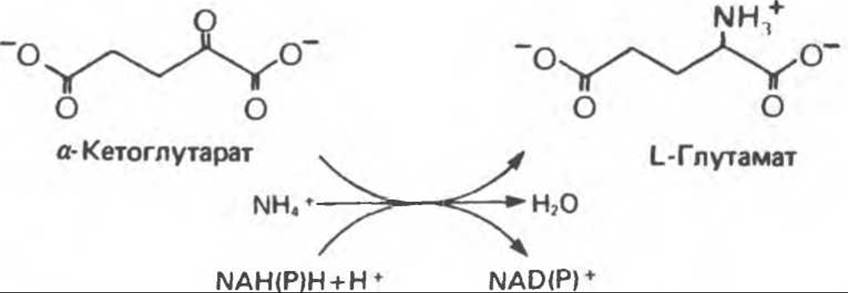
Fig. 29.1. The reaction catalyzed by glutamate dehydrogenase. Reductive amination of α-ketoglutarate by NH+3 ions proceeds at the expense of NAD(P)H.
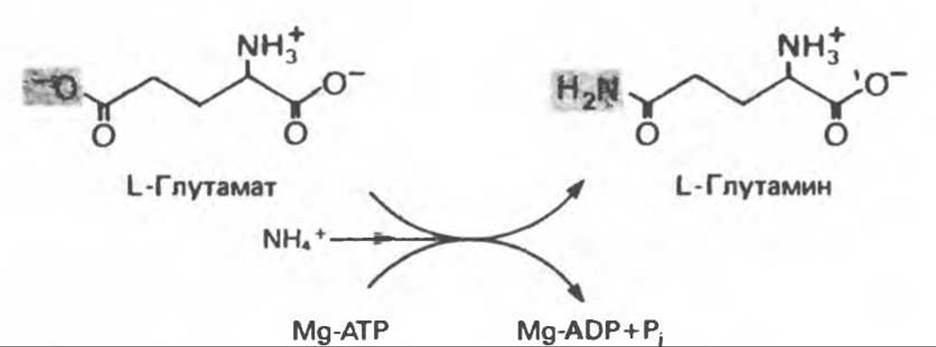
Fig. 29.2. The reaction catalyzed by glutamine synthetase.
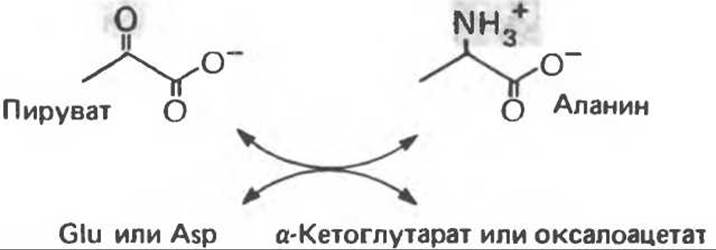
Fig. 29.3. Formation of Alanine via Transamination of Pyruvate. Glutamate or aspartate can serve as the amino group donor, while α-ketoglutarate or oxaloacetate acts as the other product.
Alanine and Aspartate
L-alanine is formed from pyruvate via transamination with glutamate, and L-aspartate is produced in the same manner from oxaloacetate (Fig. 29.3). The transfer of the α-amino group of glutamate to amphibolic metabolites illustrates The Role of transaminases in incorporating ammonium ions into the α-amino groups of amino acids.
Asparagine
The formation of asparagine from aspartate, catalyzed by asparagine synthetase (Fig. 29.4), closely parallels the Synthesis of Glutamine (Fig. 29.2). Mammalian asparagine synthetase utilizes glutamine rather than an ammonium ion as the nitrogen source and, consequently, does not directly "fix" inorganic nitrogen. Conversely, bacterial asparagine synthetases utilize ammonium ions and therefore do "fix" inorganic nitrogen. As with other reactions accompanied by the formation of PPi, the subsequent hydrolysis of PPi to Pi, mediated by pyrophosphatase, drives the reaction forward under energetically favorable conditions.
Serine is synthesized from the glycolytic intermediate D-3-phosphoglycerate (Fig. 29.5). The α-hydroxyl group is oxidized to an oxo group with the participation of NAD+; subsequent transamination yields phosphoserine, which is then dephosphorylated to yield serine.
The synthesis of glycine in mammalian Tissues proceeds via multiple pathways. Liver Cytosol contains glycine transaminase, which catalyzes glycine synthesis from glyoxylate and glutamate (or alanine). Unlike most transamination reactions, the equilibrium of this reaction lies far in the direction of glycine synthesis. Two other important pathways operating in mammals utilize Choline (Fig. 29.6) and serine to generate glycine; in the latter pathway, catalysis is mediated by serine hydroxymethyltransferase (Fig. 29.7).
In mammals and certain other organisms, proline is synthesized from glutamate by the reversal of proline Catabolic pathways (Fig. 29.8).
Hydroxyproline
Since proline serves as the precursor for hydroxyproline, both Amino acids are grouped within the glutamate family of amino acids. Although both 3- and 4-hydroxyproline occur in mammalian tissues, the Structure/133.html">Discussion below will focus exclusively on trans-4-hydroxyproline.
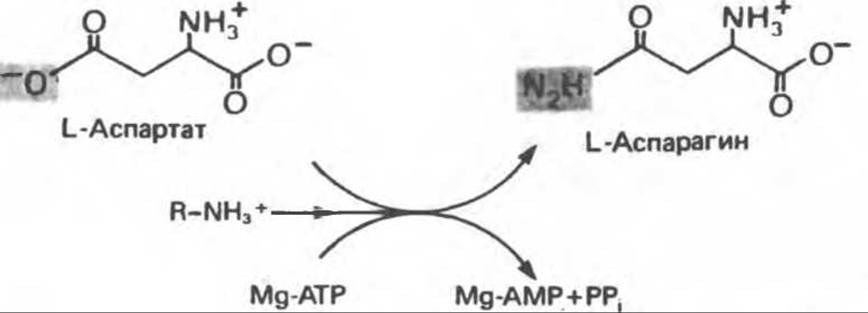
Fig. 29.4. Reaction catalyzed by asparagine synthetase. Note the Similarities and differences compared to the reaction catalyzed by glutamine synthetase (Fig. 29.2). The Nature of the amino group donor (R—NH+3) may vary among different organisms.
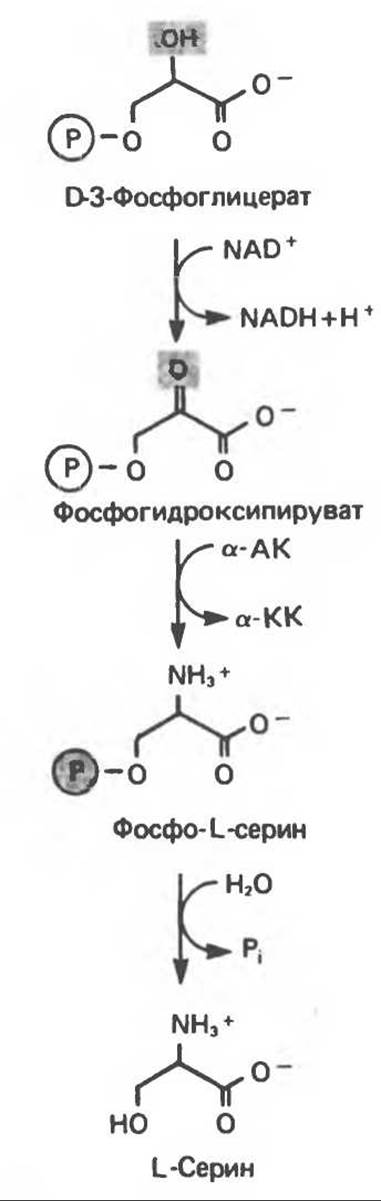
Fig. 29.5. Biosynthesis of serine. a-AA — a-amino acid, aKA — a-keto acid.
Hydroxyproline, like hydroxylysine, is found in tissues almost exclusively as a component of Collagen, which accounts for the bulk of protein in the mammalian body. In collagen, one-third of The amino acid residues are glycine, and another third are proline and hydroxyproline. Hydroxyproline, represented by a remarkably large number of residues in collagen, stabilizes the collagen triple helix against the action of proteases. Unlike hydroxylysine, whose hydroxyl group serves as an attachment site for galactose and glucose residues, the hydroxyl groups of hydroxyproline in collagen remain unsubstituted.
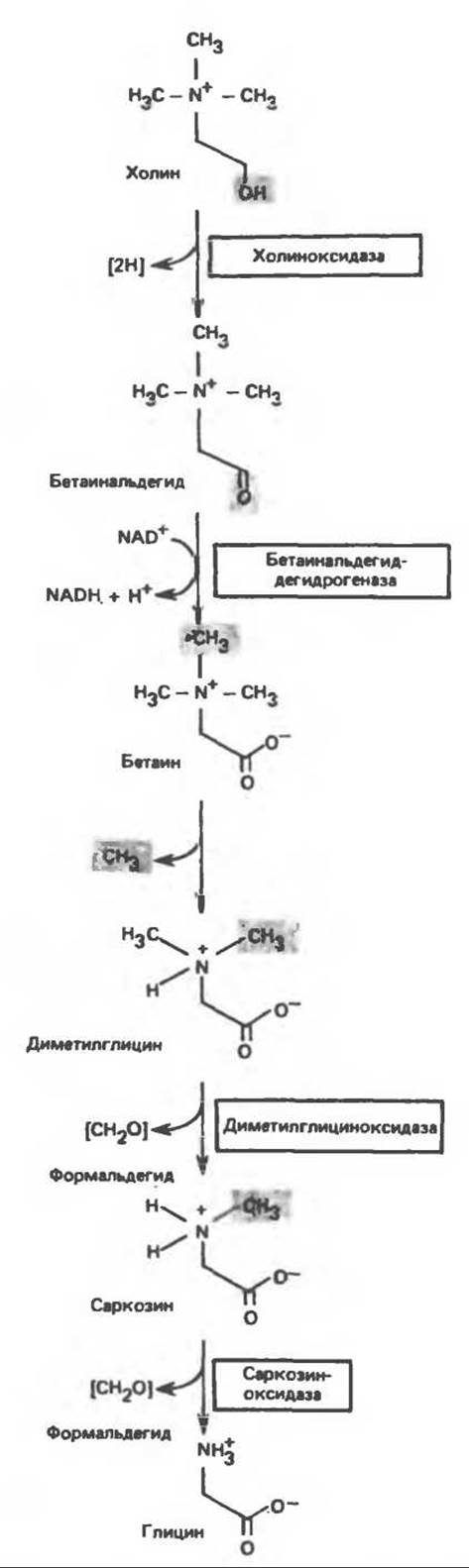
Fig. 29.6. Formation of glycine from choline.
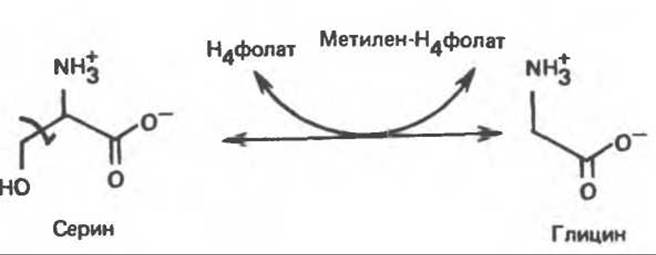
Fig. 29.7. Reaction catalyzed by serine hydroxymethyltransferase. The reaction is readily reversible. H4 folate — tetrahydrofolate.
A unique feature of hydroxyproline and hydroxylysine METABOLISM is that these amino acids, when present in dietary Proteins, are not incorporated into collagen. There is no tRNA capable of accepting hydroxyproline or hydroxylysine and subsequently incorporating them into a growing polypeptide chain. At the same time, dietary proline serves as a precursor for hydroxyproline, and dietary Lysine as a precursor for hydroxylysine within collagen. The hydroxylation of proline (or lysine) is catalyzed by prolyl hydroxylase (or lysyl hydroxylase), enzymes located in the microsomal fraction of many tissues (Skin, liver, Lungs, Heart, Skeletal Muscle, and granulation tissue of wounds). These enzymes are peptidyl hydroxylases, since hydroxylation occurs only after proline or lysine has been incorporated into the polypeptide chain (see Chapter 55).
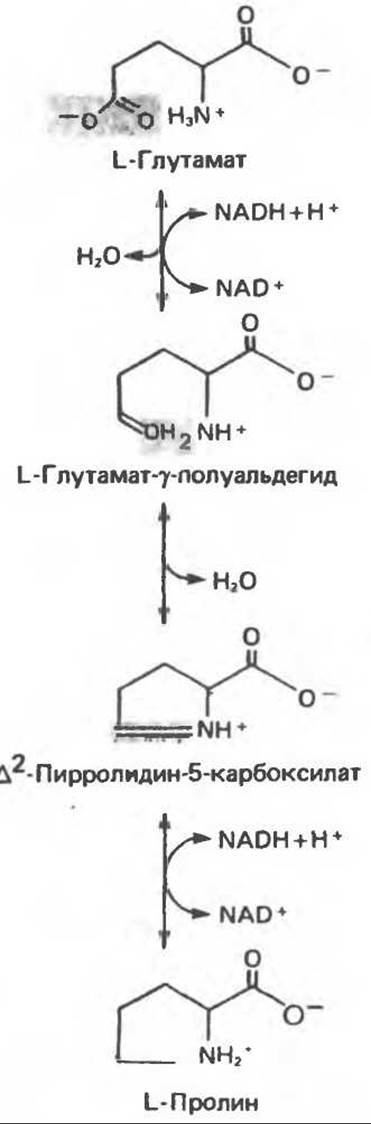
Fig. 29.8. Biosynthesis of proline from glutamate via the reversal of proline catabolic pathways.
Both hydroxylases are mixed-function oxygenases that operate with the participation of molecular oxygen, ascorbate, Fe+2 ions, and a-ketoglutarate. Prolyl hydroxylase has been studied in greater detail; there is good reason to believe that lysyl hydroxylase acts in a similar manner. For each mole of hydroxylated proline, 1 mole of a-ketoglutarate is decarboxylated to form succinate. During this process, one oxygen atom from the O2 molecule is incorporated into proline, and the other into succinate (Fig. 29.9).
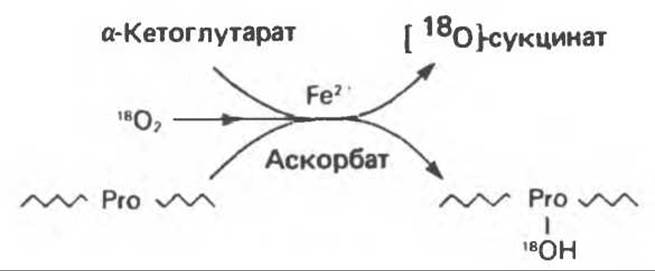
Fig. 29.9. Reaction catalyzed by prolyl hydroxylase. A proline-rich peptide serves as the substrate. As a result of the reaction, one atom of molecular oxygen is transferred to succinate and the other to proline (determined using 18O2).
Cysteine, a non-essential amino acid, is synthesized from essential Methionine and non-essential serine. The process begins with The conversion of methionine to homocysteine, with S-adenosylmethionine and S-adenosylhomocysteine forming as intermediates (see Chapter 31). The conversion of homocysteine and serine into cysteine and homoserine is illustrated in Fig. 29.10.
Tyrosine is synthesized from phenylalanine in a reaction catalyzed by phenylalanine hydroxylase (Fig. 29.11); therefore, phenylalanine is an essential amino acid, whereas tyrosine is not (provided the diet contains sufficient phenylalanine). The reaction is irreversible, and thus tyrosine cannot replace dietary phenylalanine. The phenylalanine hydroxylase complex is a mixed-function oxygenase found in mammalian liver and absent in other tissues. As a result of the reaction, one atom of molecular oxygen is incorporated into the para-position of phenylalanine, while the other is reduced to form Water (Fig. 29.11). The reducing equivalents, initially supplied by NADPH, are then transferred directly to tetrahydrobiopterin—a pteridin structurally similar to a fragment of Folic acid—which participates directly in the reaction.
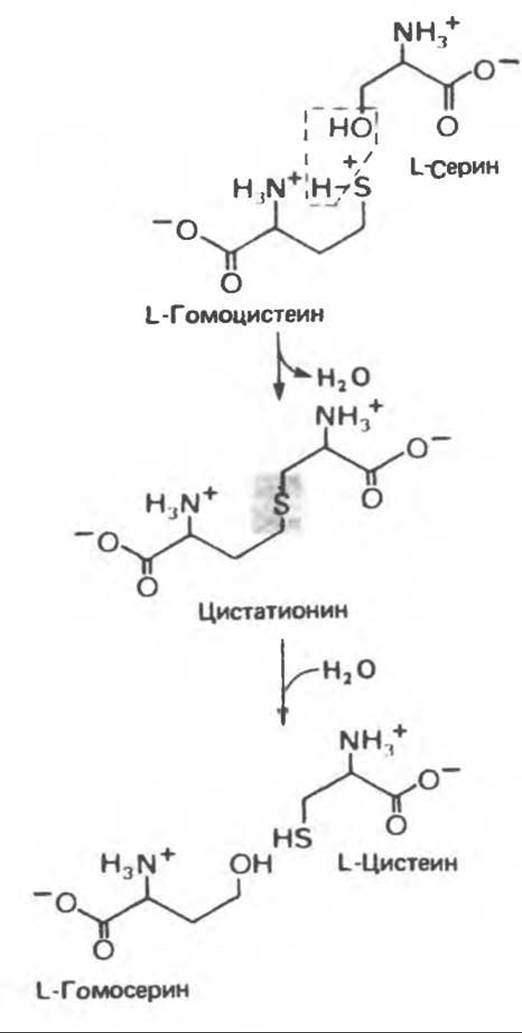
Fig. 29.10. Conversion of homocysteine and serine into homoserine and cysteine. The sulfur atom is derived from methionine, and the carbon Skeleton from serine.
Hydroxylysine
5-Hydroxylysine (a, ε-diamino-δ-hydroxycaproate) is a constituent of collagen and is absent in most other mammalian proteins. Hydroxylysine in collagen originates from dietary lysine rather than dietary hydroxylysine. Prior to hydroxylation, lysine must be incorporated into a peptide chain. The hydroxylation of a lysine residue within a peptide is catalyzed by lysyl hydroxylase, a mixed-function oxygenase analogous to prolyl hydroxylase (Fig. 29.9).
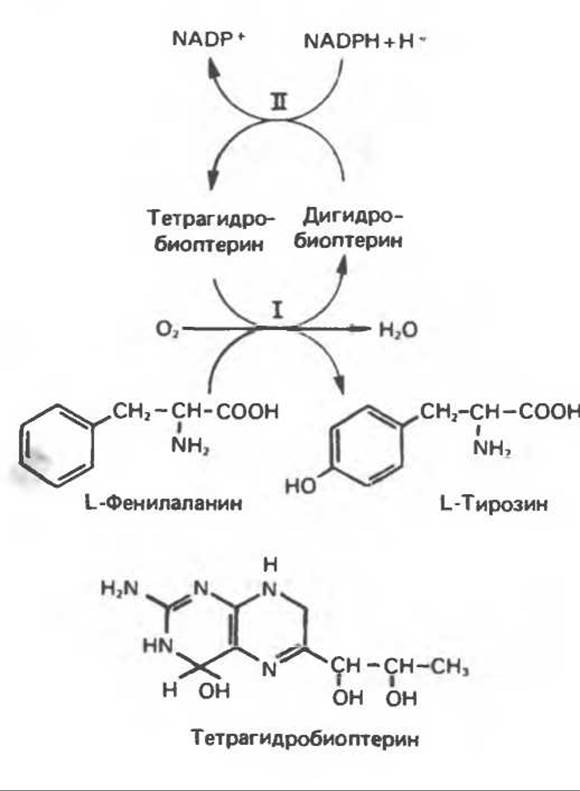
Fig. 29.11. Reaction catalyzed by phenylalanine hydroxylase. It proceeds via Two Types of activity. Activity II catalyzes the reduction of dihydrobiopterin at the expense of NADPH, and Activity I catalyzes the reduction of O2 to H2O and the conversion of phenylalanine to tyrosine. Impairments in this reaction pathway underlie the disorders of phenylalanine metabolism discussed in Chapter 31.
Last update: 06/08/2026
Editorial and Educational Adaptation: This material has been compiled based on the primary/original source text. The project team performed an editorial review, corrected technical inaccuracies, structured sections, and adapted the content for an educational format.
What was processed:
- elimination of formatting defects (OCR errors, structural breaks, corrupted characters);
- editorial organization of content;
- standardization of terminology in accordance with academic sources;
- verification of factual statements against the original source text.
All mentions of the author, publication year, and origin of the primary text have been preserved in accordance with the source.