BIOCHEMISTRY - V. V. Emelyanov - 2016
SECTION 7. FINAL CONTROL TESTING. EXAMINATION QUESTIONS FOR THE BIOCHEMISTRY COURSE
Sample Final Test Paper
Instructions: Unless otherwise specified in the test question, select the single correct answer.
1. From the given structural formulas, select the formula of an L-amino acid:
Class="center">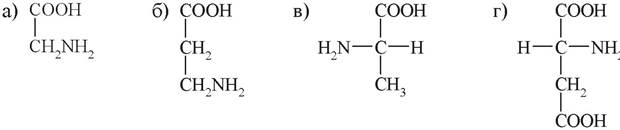
2. Indicate the systematic IUPAC name for acetoacetic acid:
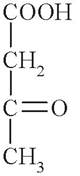
a) 2-oxobutanoic;
b) 3-oxobutanoic;
c) 2-butadienoic;
d) 3-butanedioic.
3. What term is used for the spatial folding of a polypeptide chain stabilized by Hydrogen Bonds:
c) tertiary structure;
d) quaternary structure.
4. Choose the property of Enzymes that distinguishes them from non-biological catalysts:
a) enzymes accelerate both forward and reverse reactions equally;
b) the Enzyme Concentration is many times lower than the concentration of the reaction substrate;
c) enzyme activity is regulated by activators and inhibitors;
d) the enzyme is not consumed during the reaction.
5. WHAT IS A coenzyme:
a) the protein part of an enzyme molecule composed of Amino Acids;
b) the non-protein part of an enzyme molecule, often a vitamin derivative;
c) an inhibitor that binds to the Active Site of the enzyme;
d) an activator that binds to the allosteric site of the enzyme.
6. Name the class of enzymes that catalyze group transfer reactions from one compound to another:
a) oxidoreductases;
b) transferases;
c) isomerases;
d) ligases.
7. Indicate the cellular Organelles where the Hydrolysis of Proteins, Polysaccharides, and Lipids takes place:
a) Ribosomes;
b) Lysosomes;
c) Cell/35.html">Mitochondria;
8. Which processes belong to the first (preparatory) stage of Biological Oxidation:
a) hydrolysis of nutrients into monomers;
b) Glycolysis, β-Oxidation of Fatty acids, Deamination of Amino acids;
c) the Krebs cycle and Substrate-Level Phosphorylation Reactions;
d) tissue Respiration and Oxidative Phosphorylation.
9. How do processes in the mitochondria change during the uncoupling of tissue respiration and oxidative phosphorylation:
a) ATP synthesis increases, oxygen consumption decreases;
b) ATP synthesis decreases, oxygen consumption increases;
c) both ATP synthesis and oxygen consumption decrease;
d) both ATP synthesis and oxygen consumption increase.
10. Indicate the Biological Role of oxygen utilization for plastic purposes (microsomal oxidation):
a) energy storage in the form of high-energy ATP bonds;
b) detoxification of poisons and synthesis of certain substances;
c) oxidation of macromolecules by free oxygen radicals;
d) neutralization of free oxygen radicals by antioxidant enzymes.
11. From the list below, select the reserve polysaccharide of animal Cells:
a) starch;
b) Glycogen;
c) Cellulose;
d) pectin.
12. Indicate the Products of Anaerobic oxidation of 1 mole of glucose:
a) 2 moles of lactic acid, 2 moles of ATP;
b) 2 moles of pyruvic acid, 2 moles of ATP;
c) 38 moles of lactic acid, 38 moles of ATP;
d) 38 moles of pyruvic acid, 38 moles of ATP.
13. How does a prolonged absence of CARBOHYDRATES in the diet affect The activity of glycolysis and Gluconeogenesis enzymes:
a) glycolysis enzymes are activated, gluconeogenesis enzymes are inhibited;
b) glycolysis enzymes are inhibited, gluconeogenesis enzymes are activated;
c) both glycolysis and gluconeogenesis enzymes are inhibited;
d) both glycolysis and gluconeogenesis enzymes are activated.
14. From the list below, select the classes of lipids that make up Introduction/36.html">Biological Membranes:
a) Fatty acids and triglycerides;
b) triglycerides and Phospholipids;
c) phospholipids and free Cholesterol;
d) cholesterol and its esters.
15. Does the melting point of triglycerides change with an increase in the length of the hydrocarbon radical of their constituent fatty acids:
a) yes, it increases;
b) yes, it decreases;
c) no, it does not change;
d) the pattern has not been studied.
16. How many cycles of β-oxidation are required for the complete Catabolism of oleic acid C17H33COOH:
a) 8;
b) 9;
c) 17;
d) 18.
17. Indicate the products of the AMINO ACID DECARBOXYLATION reaction:
a) Amino Acid and Water;
b) amine and CO2;
c) amino acid and keto acid;
d) keto acid and ammonia.
18. Which Amino acids are called ketogenic:
a) those containing a keto group;
b) those synthesized from Ketone Bodies;
c) those converted into acetyl-coenzyme A and ketone bodies;
d) those converted into Krebs cycle acids.
19. Indicate the mRNA nucleotide sequence obtained by METABOLISM/31.html">Transcription of the DNA molecule segment AAGCT:
a) UUCGA;
b) GGUAC;
c) TTCGA;
d) CCAGU.
20. Choose the substance that circulates in the Blood and is excreted from the body in the urine as a breakdown product of purine NUCLEOTIDES:
a) ammonia;
b) urea;
c) uric acid;
d) creatinine.
21. What is the Chemical Nature of the Hormones cortisol, estradiol, and testosterone:
a) proteins;
b) Glycoproteins;
d) Steroids.
22. How do the hormones Insulin and adrenaline affect blood glucose concentration:
a) insulin increases it, adrenaline decreases it;
b) insulin decreases it, adrenaline increases it;
c) both insulin and adrenaline increase it;
d) both insulin and adrenaline decrease it.
Last update: 06/08/2026
Editorial and Educational Adaptation: This material has been compiled based on the primary/original source text. The project team performed an editorial review, corrected technical inaccuracies, structured sections, and adapted the content for an educational format.
What was processed:
- elimination of formatting defects (OCR errors, structural breaks, corrupted characters);
- editorial organization of content;
- standardization of terminology in accordance with academic sources;
- verification of factual statements against the original source text.
All mentions of the author, publication year, and origin of the primary text have been preserved in accordance with the source.