INVERTEBRATE ZOOLOGY IN THREE VOLUMES - BOOK 2 - H.Y. Shcherbak - 1996
PHYLUM ARTHROPODA
SUBPHYLUM BRANCHIATA, OR CRUSTACEA
CLASS MALACOSTRACA
The Class Malacostraca encompasses approximately 23,000 extant and several thousand extinct species. It includes crustaceans that vary greatly in size (from 1 mm to a 3 m leg span in certain crabs), body Structure, and ecological adaptations.
Malacostracans inhabit all types of aquatic environments at various depths, and terrestrial forms are also known. Among them are predators, omnivores, herbivores, detritivores, scavengers, filter feeders, and a small number of parasites. Nevertheless, they form a compact monophyletic group based on certain organizational features.
The defining characteristics of malacostracans include a constant number of body segments—eight thoracic and six or seven abdominal; the male gonopore is always located on the VII or VIII thoracic segment, and the female on the VI. The Stomach is divided into gastric mill and filtering regions, and the digestive gland ("Liver") is well-developed; a Heart and Blood Vessels are always present. The excretory Organs are the antennal glands. They are predominantly gonochoric (dioecious), with indirect development through metamorphosis, though direct development occurs occasionally (e.g., in the crayfish).
The name "Malacostraca" (meaning soft-shelled) is not entirely precise. Alongside features of higher Organization (such as a constant number of segments within tagmata), many of them possess abdominal appendages, which is undoubtedly a more primitive trait compared to other crustaceans that lack these appendages.
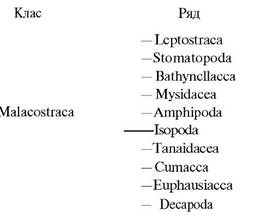
The Taxonomy of Malacostraca is quite complex; they are divided into three subclasses and 14 extant, along with several extinct, orders. We will examine only some of them.
Order Leptostraca. Only 14 marine species are known, typically inhabiting the coastal zone of seas and leading a benthic lifestyle, with the exception of a single species, Nebaliopsistypica, which is a deep-Water planktonic Organism.
Leptostracans exhibit numerous archaic structural features (Fig. 83). The Thorax and the anterior part of the abdomen are covered by a thin, translucent bivalve carapace. The Valves are connected by a ventral adductor Muscle. The HEAD bears a long, forward-directed extension—the rostrum. Both pairs of antennae are elongated, uniramous, and bear numerous sensory setae. The eyes are faceted and mounted on long stalks. Mandibles and two pairs of maxillae are present. The thoracic limbs are leaf-like (phyllopodia); the epipodite and exopodite are modified into gills, while the narrow endopodite bears setae and Functions in swimming and generating water currents within the carapace. The protopodites bear setae, some of which (short ones) filter food particles, while others (elongated ones) transport food to the Mouth.

Fig. 83. Diagram of the anatomy of a leptostracan:
1 - faceted eyes; 2 - rostrum; 3 - eyestalk; 4 - mandibles; 5 - adductor muscle; 6 - carapace; 7 - 1st abdominal segment; 8 - caudal furca; 9 - uniramous abdominal appendages; 10 - biramous abdominal appendages; 11 - thoracic limbs; 12 - antennae; 13 - antennules; 14, 15 - maxillae; 16 - labrum
The abdomen consists of seven segments (rather than six, as in other Malacostraca); the first four bear pairs of biramous swimming appendages, while the posterior ones are short and uniramous. The telson is elongated and equipped with a biramous furca. The Heart is elongated and tubular in shape.
Leptostracans are dioecious. Males possess larger eyes and a greater number of sensory setae on the antennules compared to females. Following Fertilization, the female carries the eggs in a brood pouch formed by the protopodites of the last pair of thoracic limbs. The Leptostraca are characterized by a significant degree of embryonization in their development. The eggs hatch into juveniles possessing a full Complement of segments (epimorphosis), which differ from adults only in their smaller size and underdeveloped fourth pair of abdominal appendages (the manca stage); they attain the adult state after three molts.
Order Stomatopoda (Mantis shrimp). The majority of stomatopods inhabit the shallow waters of tropical and subtropical seas; a few species occur in the Mediterranean Sea, of which Squilla oratoria is the most widespread. All of them are highly specialized ambush predators. Approximately 300 species have been described.
Stomatopods are relatively large, reaching up to 60 cm in length. Body segmentation is complex (Fig. 84). There is a protocephalon and a gnathothorax, formed by the fusion of three maxillipedal and five thoracic segments, covered dorsally by a carapace. The remaining body consists of three freely movable posterior thoracic segments and the abdomen. The carapace features an elongated, movable anterior extension—the rostrum. There is a pair of highly mobile stalked faceted eyes and a naupliar eye. The antennules are elongated, bearing three filamentous appendages with chemoreceptors at the tip, which function alongside Vision in locating prey; the antennae are shortened. There are five pairs of maxillipeds; the first pair is short, covered with sensory setae, and serves as a tactile organ; the second pair is the longest, with its terminal segment resembling a sharp, serrated blade that can fold into a specialized longitudinal groove on the penultimate expanded segment. Utilizing this subchelate mechanism, the shrimp captures and kills its prey. The last three pairs of maxillipeds are also subchelate, but they are short and adapted for transferring food to the mouth and excavating burrows.
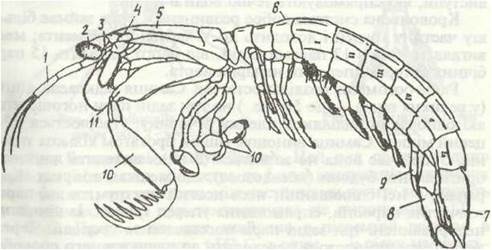
Fig. 84. Diagram of the anatomy of a stomatopod:
1 - antennules; 2 - stalked faceted eyes; 3 - antennae; 4 - rostrum; 5 - carapace; 6 - free thoracic segments; 7 - telson; 8 - uropods; 9 - abdominal appendages; 10 - subchela; 11 - second pair of maxillipeds
The abdominal region is longer than the head and thorax combined; all six of its segments are well-developed. The first five pairs of abdominal appendages are biramous, with each ramus bearing numerous marginal setae. Each pair of limbs can couple together, functioning as a single unit. The shrimp use these abdominal appendages for swimming; additionally, the appendages bear branching gill filaments. When the animal is inside its burrow, the rhythmic beating of these limbs (up to 60 times per minute) maintains a continuous flow of fresh water to the gills. The expanded sixth pair of abdominal appendages (uropods) and the flattened telson serve to kick out sediment during burrow excavation. The surfaces of the abdominal segments feature specialized ridges that direct water currents within the burrow.
The Circulatory system is well-developed. The heart occupies the greater part of the thorax and extends to the V abdominal segment; it is tubular with 12 pairs of ostia, giving rise to 15 pairs of lateral Arteries and a single anterior aorta.
Mantis shrimp are dioecious. The female deposits her eggs (up to 50,000 in larger species) onto the last three pairs of maxillipeds, which simultaneously secrete an adhesive substance, forming an egg mass. The female broods this mass for several weeks, during which time she does not feed. The egg hatches into a uniquely structured larva (pseudozoea) that inhabits the burrows. Its carapace is flattened and bears a long rostrum and two pairs of needle-like processes directed anteriorly and posteriorly. Of the appendages, the last three pairs of maxillipeds and the uropods are underdeveloped. After some time, the pseudozoea transitions to a planktonic lifestyle, transforming into a sinkozoea phase resembling the adult. This phase also swims, molts several times, and eventually settles to the bottom, developing into the sexually mature form.
As already mentioned, most stomatopods live in burrows, with only the anterior part of their body protruding outward. When prey appears (shrimp, small fish, or other small swimming animals), the crustacean instantly darts out of its burrow and seizes the victim with its second pair of maxillipeds, much like praying mantises do (hence the name of the order).
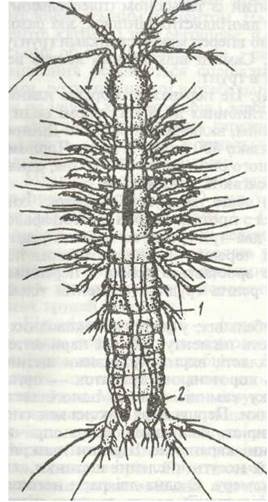
Fig. 85. Bathynella natans:
1 - abdominal appendages, 2 — pleotelson
Order Bathynellacea. This order comprises very small (ranging from fractions of a millimeter to 6 mm) inhabitants of subterranean freshwaters that crawl between soil particles or live in cave water bodies at temperatures not exceeding +12 ... +14° C. However, one species has been found in an underground water body in Africa at a Temperature of +55° C, and another in marine sand in Australia. About 80 species have been described. In Ukraine (Odesa and Zaporizhzhia regions), a single species, Bathynella natans (Fig. 85), has been found in wells.
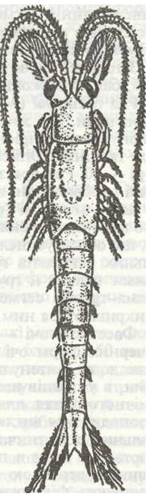
Fig. 86. Mysids: Mysis relicta
In bathynellaceans, all head segments are fused; eyes are absent. Both pairs of antennae are of medium length, bearing numerous sensory setae. Each of the thoracic segments bears a pair of biramous walking-type appendages with well-developed epipodites. The abdominal appendages have undergone significant reduction, with tiny limbs present on only one or two anterior segments, and only the final segment, fused with the telson (pleotelson), possessing a strongly developed pair of biramous appendages that, together with the furca, propel the body forward between soil particles.
Fertilization is internal. Females deposit relatively large, yolk-rich eggs into the soil.
Order Mysidacea. These are predominantly marine planktonic species inhabiting depths of up to 8 km; species from brackish and fresh waters, including the Dnieper, Bug, and Donets river basins, are also known. About 800 species have been described, 30 of which occur in the Black Sea. Sizes mostly range from 10–20 mm, though some deep-water species reach lengths of up to 40 cm.
Externally, mysids (Fig. 86) somewhat resemble shrimp; their body is elongated and consists of the protocephalon, the gnathocephalon (which incorporates the jaw segments and two to three thoracic segments), and the remaining free thoracic and abdominal segments. The carapace completely covers the head and thorax, but is fused only with the anterior two or three thoracic segments, while the remaining thoracic segments are merely covered by it.
Compound eyes are stalked; in A number of deep-water and cave-dwelling forms, the eyes lack pigment. Both pairs of antennae are very long; the antennules are biramous, covered with sensory setae, and in males additionally bear a short appendage—a chemosensory organ used to locate females. The antennae are uniramous; the exopodite is scale-like. The first pair of maxillae features a special lamellar outgrowth, the beating of which induces water currents within the carapace cavity. The mouthparts are covered by a large labrum and bear numerous setae that form a filtration chamber. There are one or two pairs of maxillipeds involved in filtration; the remaining thoracic legs are biramous, with swimming exopodites and endopods, by means of which mysids can also crawl or even burrow into the substrate.
Gills on the thoracic legs are not present in all species (they are absent in most); gas exchange occurs through the thin integument of the carapace. In females, the last thoracic legs bear specialized plates called oostegites, which form a brood pouch.
Each abdominal segment bears a pair of biramous appendages, which on the last and longest segment are greatly elongated and, together with the telson, form a tail fan ("uropods and telson"). At the Base of the abdominal appendage endopodite, there is often a statocyst, an Organ of Equilibrium. In a significant number of mysids, the first five pairs of abdominal legs are more or less reduced, particularly in females.
Shallow-water species are capable of changing color due to the presence of specialized star-shaped Cells (chromatophores) filled with dark pigment located within the Connective Tissue beneath the translucent body integument. In bright light, the pigment gathers in the center of the cells, and the body lightens; at dusk, it disperses throughout the entire volume of the chromatophores, and the crustacean darkens. Color change is regulated by special Endocrine glands located in the eye stalks. Deep-water forms lack chromatophores and are mostly red in color.
A primitive feature characteristic of some mysids is the simultaneous presence of both antennal and maxillary glands; most species possess only maxillary glands.
Mysids are dioecious; fertilization is internal. The female carries from 10 to 160 eggs in the brood pouch. Black Sea species can produce 2–4 generations per year. The eggs hatch into young crustaceans that remain in the brood pouch for some time before being released into the water, where they molt and grow. Development is direct or involves a slight metamorphosis (the marsupial larva differs from adults by the absence of some thoracic and abdominal appendages).
Most mysids are filter feeders inhabiting the water Column, predominantly in shallow waters; only about 50 species have been found at great depths. Some are benthic forms that have adapted to the intertidal zone and coastal waters. Mysids frequently migrate vertically and horizontally in search of food, which consists of microplankton. During these movements, they can form large aggregations: in Neomysis integer, these can reach 1 km in length and several meters in width. When plankton is scarce, mysids can feed on detritus from the bottom, and using their mandibles, even chew on the remains of small dead animals.
Mysids are of great practical importance as a vital food component for many commercial fish species (such as juvenile pike-perch and herrings) as well as baleen whales. In artificial water bodies, ponds, and reservoirs, they significantly enrich the food web. In Southeast Asia, mysids are used to produce food sauces.
Order Amphipoda. Representatives of this order constitute a fairly large group of marine and freshwater Malacostraca. About 4.5 thousand species have been described. Of these, only 30 have been found in the freshwaters of Ukraine, and 107 in the Black and Azov seas. Body sizes range from a few millimeters to 10–20 cm.
The body of amphipods is typically laterally compressed, although dorsoventrally flattened forms do exist. The syncephalon consists of the head and one or two thoracic segments; the remaining thoracic segments are free, and the carapace is absent (Fig. 87). Eyes are compound, sometimes fused into a single median eye. Deep-water and subterranean species generally lack visual organs. In place of eyes, they often exhibit merely an accumulation of dark pigment. Antennules and antennae are elongated, serving as organs of Touch and chemoreception; many species possess a pair of statocysts beneath the head integument on the dorsal side. Mandibles and both pairs of maxillae are of the chewing type. There is a single pair of maxillipeds.
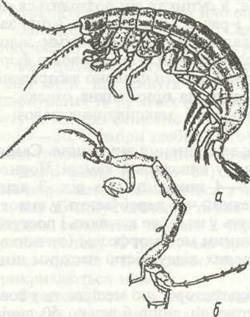
Fig. 87. Amphipods:
a - Gammarus; b - Caprella anatifera
All seven pairs of appendages on the free thoracic segments have different structures (hence the name "amphipods"). The first one or two pairs develop grasping prehensile devices—subchelae or true claws—designed for holding food, known as gnathopods. The subsequent legs bear sharp dactyls (claws); in various species, these are adapted for crawling, attachment to the substrate, and other functions. The epipodites of all thoracic legs located posterior to the gnathopods are thin-walled and leaf-like, functioning as gills. In females, plates are present at the base of two to five pairs of thoracic legs, forming a brood pouch.
The first three segments of the abdomen bear typical biramous, setose swimming legs. The biramous appendages of the last three segments point backward and enable leaping locomotion. In some amphipods (such as Skeleton shrimps and whale lice), the abdomen is shortened, and the abdominal legs are reduced or completely absent. Amphipods swim ventral side down, but their jumping movements in shallow water are performed while lying on their side (hence the name amphipods, meaning 'both-side swimmers').
Body coloration is quite diverse: most species are greenish, brownish, or yellowish; deep-water and subterranean forms are colorless, whereas bright red, green, or blue coloration occurs exclusively among certain Baikal species.
The heart appears as a thickened vessel located in the dorsal region of the II–VI thoracic segments, featuring three pairs of ostia. There are anterior and posterior aortas through which blood flows into the abdominal sinus, bathes the gills, and proceeds to the pericardial sinus, and from there through the ostia into the heart.
Amphipods are dioecious. Sexual Dimorphism is manifested in the Structural Features of the appendages; males are generally larger than females, although dwarf males are known in some Baikal gammarids. Copulation lasts for several days. Using its appendages, the male introduces sperm into the female's brood pouch, where fertilization takes place. The clutch size varies from 4 to 200 eggs in different species, occasionally reaching 1,000. Development is direct, without metamorphosis. Fully formed juvenile crustaceans leave the brood pouch after 10–40 days; the higher the temperature, the faster the development proceeds. Sexual maturity is attained after numerous molts (up to 15) over varying periods of time (from 2 months to 3 years) after hatching. Adult crustaceans live from 1 to 6 years, while the species Niphargus orchus can live up to 30 years.
Amphipods inhabit A wide variety of water bodies, though most are marine, descending to depths of 6–7 km; however, their populations reach the highest densities at shallow depths (up to 40–50 thousand individuals per 1 m2 of the bottom). They are particularly abundant in the littoral zone of many seas. During low tide, they hide among Algae or under stones, whereas during high tide, they swim actively. Many of them are also found along the coasts of the Black and Azov Seas—these are the so-called "sand fleas" (or beach hoppers). They even penetrate damp areas of marine beaches, where they leap using their well-developed uropods.
Some species tolerate significant freshening and venture far into river mouths. A considerable number of species also inhabit freshwater bodies. For instance, species of the genus Gammarus (G. lacustris, G. pulex, etc.) live in large quantities in the sandy shallows of the Dnieper cascade reservoirs and among clusters of sessile Dreissena Mollusks.
Quite numerous species of amphipods inhabit subterranean waters (caves, wells, etc.). In the Carpathians, subterranean eyeless and colorless species of the genus Niphargus are widespread.
Most amphipods are omnivorous. They feed on living and dead plants, small animals, carrion, and detritus (e.g., species of the genus Gammarus). Filter feeders include Pontogammarus maeoticus, a mass species along the Azov Sea coast, which filters out particles brought in by waves. Many species inhabiting tube-like structures on the bottom (such as the family Corophiidae) are also filter feeders. Subterranean species pass soil through their intestines and feed on the remains of various organisms.
Planktonic amphipods are predominantly predatory. Living on their hosts, they feed on jellyfish and ctenophores. Among benthic forms, predators include skeleton shrimps (Caprella), which prey on hydroid polyps, Annelids, and small crustaceans (Fig. 87, b).
True parasites include whale lice (Cyamidae), which spend all developmental phases on the Skin of whales, chewing through it. A species that parasitized the now-extinct Steller's sea cow (order Sirenia) is also known.
Amphipods are a paramount food source for Fishes, both marine and freshwater (cyprinids, sturgeons, flounders, salmonids, etc.). Experiments are being conducted on the mass breeding of Gammarus pulex, a favorite food of trout and grayling.
Order Isopoda (Isopods). This order unites a numerous group of crustaceans adapted to the most diverse habitats. Most species live in marine environments at various depths, from the interstitial zone to deep-sea trenches. Isopods are also widespread in freshwater bodies, including subterranean waters. Among them are parasites of other crustaceans and fishes, as well as terrestrial species.
About 4.5 thousand species have been described; of these, only 32 species are found in the Black and Azov Seas, and additionally, 3 freshwater and 2 interstitial species have been discovered in the fauna of Ukraine. The body size of isopods ranges from a few millimeters to 40 cm.
The body is dorsoventrally flattened, rarely cylindrical or laterally compressed (Fig. 88). The carapace is absent; there is a syncephalon consisting of the head segments and one (rarely two) thoracic segments. The eyes are sessile, with a variable number of facets: from 4 (Asellus) to 3,000 in Bathynomus giganteus. In subterranean and deep-sea species, the eyes are reduced. Antennules and antennae are uniramous; their length varies among different representatives. The mandibles are typically of the chewing type, although in some predatory and parasitic species they are modified into a piercing-sucking proboscis, while in Representatives of the suborder Gnathidea they are rudimentary altogether (adults do not feed). There is one pair (rarely two) of maxillipeds, corresponding to the number of thoracic segments fused with the head.
Seven pairs of thoracic walking legs are similar in structure, which gives the order its name (Isopoda meaning 'equal feet'). They are uniramous; the exopodite and epipodite are absent. As a rule, they do not participate in feeding. Sometimes (for example, in the water louse), the anterior pair of legs becomes grasping, developing a subchela. Subchelae may also appear on one or two of the subsequent thoracic legs. In some marine species, the last three pairs of thoracic legs are paddle-shaped and adapted for swimming. On several—predominantly four to five—anterior pairs of legs, females have plates that form the brood pouch.
The abdomen is shortened; its last segment (sometimes several) is fused with the telson in most species, forming a pleotelson. The abdominal appendages are biramous, with both branches being leaf-like and often thin-walled. They overlap one another and point backward beneath the pleotelson. Their main function is respiratory; the exopodite of one of the pairs of abdominal legs is elongated, heavily sclerotized, and covers the remaining legs from below.
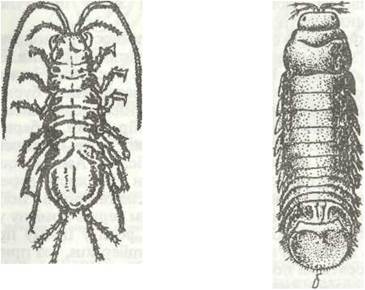
Fig. 88. Isopods:
a — Asellus aquaticus; b — Limnoria tuberculata
Because the abdominal legs are well protected against desiccation, some isopods (woodlice) have transitioned to a terrestrial lifestyle. Their gills are typically covered with a thin film of water, and respiration occurs practically in the same way as in aquatic forms, utilizing dissolved oxygen in the water. Some species have transitioned to breathing atmospheric air: their abdominal leg exopodites contain a cavity connected by a narrow aperture to a respiratory chamber, forming peculiar tracheal Lungs (see Fig. 56). Parasitic isopods, like other parasitic crustaceans, have a simplified structure, especially females, which partially or completely lose appendages, Sensory Organs, segmentation, and certain Internal Organs.
Most isopods are dioecious. Hermaphrodites are known among parasitic forms; some woodlouse species reproduce parthenogenetically. Mancas (manca larvae) hatch inside the brood pouch, emerge into the external environment, and develop into adults. In parasitic species, mancas possess hook-like thoracic legs with which they attach to the host's body. Interestingly, the first two or three molts of the manca occur inside the mother's brood pouch. Desert woodlice of the genus Hemilepistus, which build burrows up to 100 cm deep, exhibit original parental care. They live in pairs alongside their offspring, protecting them from enemies by blocking the entrance to the burrow with their thoracic segments. The parents bring plant remains into the nest to feed the young. The offspring overwinter with the parents and leave the burrow in spring. The parental pair remains together and initiates reproduction once again.
The high degree of ecological plasticity in isopods is manifested, in particular, in The Diversity of their feeding types. Many aquatic and terrestrial species consume plants. The Black Sea crustacean Idotea viridis feeds on red, brown, and green algae. Pigments from the ingested plants color its hemolymph accordingly; thus, the coloration of this species depends on The Nature of its food. The water louse Asellus aquaticus, highly widespread in our freshwaters, feeds on detritus from aquatic plants and tree leaves falling into water bodies. Woodlice of the genera Oniscus and Porcellio consume both live plants and litter, thereby playing a noticeable role in soil formation. A particularly large role in this process is played by desert woodlice of the genus Hemilepistus, which bring a significant amount of soil to the surface while digging burrows, fertilizing it with their feces. Their population density in deserts is very high, reaching up to 1 million individuals per hectare.
Certain marine species of the genera Limnoria (Fig. 88, b) and Sphaeroma (one species of the first genus and two of the second have been found in the Black Sea) bore passages into underwater wooden structures, feeding on the wood. Many isopods, especially deep-sea forms, swallow soil or detritus, digesting the organic remains contained within these substrates.
Filter feeders among Isopoda are few; these are predominantly marine forms from the family Arcturidae. Among marine isopods, there are quite a few predators. For example, Astacilla pusilla has elongated antennae and grasping anterior thoracic legs. With its posterior thoracic legs, it clings to algae, while the anterior, elongated part of its body is raised above the substrate. When prey (various invertebrates, fish fry) brushes against the antennae, the predator seizes it with its anterior legs and consumes it. Other predatory isopods unearth their prey (small crustaceans, etc.) from mud or sand. Representatives of the genus Aega use their piercing-sucking mandibles to
suck the blood of fishes, although they attack them solely for feeding. Other isopods (genera Anilocra, Livoneca, etc.) are permanent ectoparasites of freshwater and marine fishes. In crustaceans of the suborder Gnathiidea, the manca larvae, specifically known as "prniziae," tear the skin of a fish with their hooked thoracic legs, reach a blood vessel, and feed on blood. Adult gnathiids do not feed; they lead a free-living existence at the expense of nutrients accumulated by the prnizia in its fat body.
Species of the suborder Epicaridea are parasites of various crustaceans. Some of them are permanently attached to the host as ectoparasites, while others, such as *Cancricepon*, inhabit the branchial cavity of decapod crustaceans. Some species completely lose their limbs and segmentation. Males are typically dwarfed and live on the females (Fig. 89).
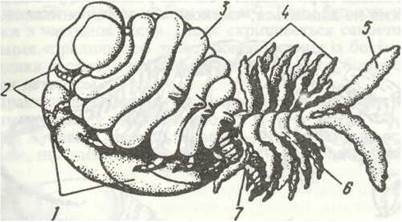
Fig. 89. Female of the parasitic isopod Cancricepon elegans:
1 - marsupium ( brood pouch); 2 - thoracic legs; 3 - thorax; 4 - pleopods; 5 - uropods; 6 - abdomen; 7 - dwarf males
The economic and ecological significance of isopods is limited. As already mentioned, terrestrial species play a certain role in pedogenesis and soil fertility enhancement, and some of them serve as high-calorie food (along with other organisms) for benthic fish. At the same time, they cause some damage to humans by destroying marine wooden structures.
Order Tanaidacea. This order comprises predominantly marine benthic animals living mostly among thickets of hydroid polyps and algae. Tanaidaceans are also found in freshwaters, particularly in coastal rivers, lakes, etc. Nearly 800 species have been described. Six species inhabit the Black Sea; two of them, *Apseudopsis ostroumovi* and *Pontotanais borceai*, are endemics. The average body length is 1—2 mm, though some species reach up to 20—30 mm, and occasionally up to 8 cm.
The body of tanaidaceans is elongated (Fig. 90), with the head fused to the first two thoracic segments; the syncephalon is completely covered by a carapace, which bears a paired respiratory cavity on the sides and is often extended into a rostrum anteriorly. Faceted eyes, situated on immovable lobes, are typically present in shallow-water dwellers. Antennules and antennas are covered with sensory hairs and function as organs of touch. Mandibles and both pairs of maxillae are well-developed in females, whereas in males, which mostly do not feed, they are partially or completely reduced.

Fig. 90. Tanaidaceans: *Apseudes spinosus*
The first pair of thoracic legs bears a large epipodite, which generates a water current through the respiratory cavity; gas exchange occurs through the walls of the epipodite, PARTS OF THE carapace, and the body wall adjacent to this cavity. The second pair bears a true chela (hence the name of the order). The subsequent six thoracic segments are free, each bearing a pair of uniramous (endopodite) walking limbs. Occasionally, the third pair of legs is broadened and adapted for burrowing in the substrate.
The terminal abdominal segment is most often fused with the telson; in some species (genus *Curtipleon*), up to five segments fuse with the telson. As a rule, there are five pairs of biramous, leaf-like pleopods covered with setae and serving for swimming; in a number of species, they are partially or completely reduced, especially in females. The appendages of the last abdominal segment vary in structure across different species.
Most tanaidaceans are gonochoric (dioecious), while some species are hermaphroditic, where the same individual may function first as a male and later as a female (protandric Hermaphroditism), or vice versa in other species (protogynous hermaphroditism). Complex pre-copulatory mating behavior is characteristic of many species, such as the burrow-dwelling *Heterotanais oerstedi*.
The female broods eggs in a marsupium formed by oostegites (plates) of the first through fourth or fifth pairs of thoracic legs. Fecundity ranges from 3 to 60 eggs. The manca larva spends its first two stages inside the maternal brood pouch, while later stages emerge into the external environment, where they reach sexual maturity after several molts. In *Tanais dulongii*, the female lives together with the juveniles in a tube beneath the sediment surface until the young reach sexual maturity.
Tanaidaceans inhabit the sea bottom across various depths from the tropics to polar waters, frequently achieving high population densities (about 50,000—60,000 individuals per 1 m2). They construct tubes in the sediment using sand particles bound together by the secretion of specialized "spinning" glands located on the sides of the thorax. A small fraction of tanaidaceans are filter feeders, but the majority feed on detritus.
The Practical significance of tanaidaceans is minor: they play a certain role in the diet of fish.
Order Cumacea. Cumaceans are predominantly marine organisms inhabiting both shallow and deep waters.
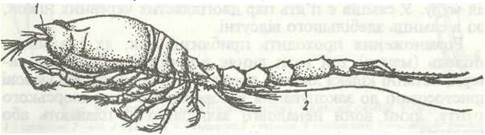
Fig. 91. Cumaceans: male of *Diastylus rugosa*:
1 - pseudorostrum; 2 - antennae
Significantly fewer species inhabit brackish and fresh bodies of water. About 800 species have been described, of which only 12 have been found in the Black Sea (five of them endemic), along with another 11 species in the estuaries of the Black and Azov seas. The average length of cumaceans is 2—3 mm, but many species are even smaller (1.0—1.5 mm), although deep-sea species reaching up to 75 mm have been recently described.
The body of cumaceans (Fig. 91) is clearly divided into a broader anterior section, comprising the head and thorax, and a slender posterior abdominal section terminating in a telson. Similar to mysids, the head and major part of the thorax in cumaceans are covered by a carapace, which forms a paired anterior outgrowth known as the pseudorostrum. The head is fused with the first three thoracic segments. There are two compound eyes, usually coalesced into a single unpaired eye. The antennules are short and biramous; the antennae are shortened in females, whereas in males they are very long, covered with sensory setae, and adapted for detecting females. Both pairs of maxillae bear setae that form a filtration apparatus. There are three pairs of maxillipeds. The first pair has a complex structure: both maxillipeds are joined by inner outgrowths and directed forward; each epipodite consists of two parts: the anterior part forms a tube (siphon) through which water enters the carapace cavity, while the posterior part bears up to 30—40 branchial leaflets and serves for respiration; additionally, it performs rhythmic ventilatory movements at a frequency of up to 40 times per minute to irrigate the gills.
The four pairs of thoracic legs situated behind the maxillipeds have a structure similar to that of mysids and serve for both swimming and burrowing in the sediment; the anterior pair can also capture food particles and transfer them to the maxillipeds, which in turn transport the food to the mouth. The posterior pair of thoracic appendages is adapted for burrowing into the substrate. In females, a brood pouch is present on the third pair of maxillipeds and the first three pairs of thoracic legs.
The abdomen is long and terminates in a telson. The uropods are biramous and setose; they are used for cleaning silt from the body. Males possess five pairs of biramous abdominal appendages (pleopods), which are mostly absent in females.
Reproduction proceeds in a manner roughly similar to that of mysids. The juveniles (mancas) molt three times within the brood pouch; the final few molts take place freely in the water column. All cumaceans are adapted to burrowing into the Superficial layer of marine sediment, which they leave briefly to swim or crawl.
Cumaceans serve as a good food source for the juveniles of sturgeons, flounders, gobies, and cyprinid fishes. For this purpose, the Black Sea species *Pseudocuma cercoides* has been successfully acclimatized in the Dniester Reservoir.
Order Euphausiacea. Euphausiids are a small group of higher crustaceans comprising about 90 species. These are exclusively marine planktonic animals inhabiting all oceans of the world, except for brackish areas. The sizes of these small crustaceans range from 7 mm to 10 cm.
They are characterized by the presence of a protocephalon and a gnathocephalon, which includes the jaw segments and all eight thoracic appendages. The carapace covers the head and thorax, but it is shortened laterally, exposing the gills. The eyes are stalked and faceted. All eight pairs of thoracic appendages are biramous, with well-developed respiratory epipodites. The abdomen bears five pairs of biramous swimming legs and a pair of uropods (Fig. 92).

Fig. 92. Thysanopoda (Euphausiacea), LATERAL VIEW OF a male:
1 - antennules; 2 - eyes; 3 - rostrum; 4 - carapace; 5 - telson; 6 - endopodite; 7 - exopodite of uropods; 8 - pleopods; 9 - gills; 10 - thoracic legs; 11 - antennae
Euphausiids closely resemble shrimp, but differ in having free, uncovered gills attached to the thoracic legs, rather than hidden beneath a carapace.
Euphausiids are characterized by the presence of luminous organs (photophores), typically numbering 10 pairs. The yellow or yellowish-green light is emitted in characteristic flashing bursts. This Bioluminescence helps individuals of opposite sexes find each other and enables the crustaceans to form dense swarms.
Euphausiids are gonochoric, with spermatophoric fertilization. Some species release fertilized eggs directly into the water; the fecundity
of such forms is directly proportional to their size, ranging from 200 to 11,000 eggs. Other species brood a small number (10–60) of eggs on their pleopods. Their development is the least embryonized among all Malacostraca. It includes four larval stages, starting with the nauplius, with each stage undergoing multiple molts. In most cases, development from egg to sexual maturity takes nearly a year. Adult crustaceans reproduce once and live for 2–3 years.
Euphausiids predominantly inhabit the surface layers of the seas, though some species live at depths down to 3,000 m; in particular, deep-sea forms of the genus Bentheuphausia lack eyes and are found at depths of 3–4 km. In terms of feeding habits, these crustaceans are mostly filter feeders. Using long setae on their thoracic legs, they filter out and consume algae and small zooplankton. Predatory forms, primarily deep-sea species (such as members of the genus Thysanopoda and others), hunt small crustaceans and larger animals (chaetognaths, jellyfish); shallow-water predators also exist. In Antarctic waters, the Antarctic krill (*Euphausia superba*) multiplies in colossal quantities (several hundred million tons), while *E. pacifica* thrives in the Arctic and the Pacific Ocean. These crustaceans are consumed by humans and form the dietary foundation for baleen whales, many species of penguins, gulls, herring, rockfish, salmon, mackerel, and others. Trawl fisheries target krill to produce nutritious pastes.
Order Decapoda. Decapods are the largest of all crustaceans, with body lengths reaching up to 80 cm and leg spans up to 3 m. About 9,000 species have been described; of these, about 50 species are found in the Black Sea and Sea of Azov basins, five of which inhabit freshwaters. Decapods include marine, freshwater, and terrestrial forms, exhibiting a wide diversity of ecological and morphological adaptations (Figs. 93, 94).
The body of a decapod consists of a protocephalon bearing two pairs of antennae and stalked eyes; a gnathocephalon formed by the fusion of the head's jaw segments with all thoracic segments; and six free abdominal segments with a telson. The gnathocephalon is covered by a well-developed carapace (typically bearing a rostrum) that completely shields the head and thoracic segments and is fused with them. The first three pairs of thoracic appendages are modified into maxillipeds, while the remaining five pairs serve for swimming or walking (hence the order's name); among these, the first one to three pairs often bear grasping organs or chelae (which are absent in spiny lobsters and certain other groups). Frequently, one chela is very massive and adapted for crushing the shells of prey (mollusks, sea urchins, etc.), while the second, paired chela is smaller with sharp cutting edges used for dismembering prey tissue. In males of tropical fiddler crabs, the large claw performs distinct signaling movements to attract females. In snapping shrimp (family Alpheidae), the large claw can snap shut to produce loud acoustic signals. In hermit crabs, the posterior pair of thoracic legs is shortened and adapted for holding the gastropod shell in which the animal lives. In crabs, the abdomen is shortened and tucked beneath the thorax, the abdominal appendages are rudimentary, and the final pair is entirely absent.
The gills are located beneath the carapace. There are always eight pairs, corresponding to the number of thoracic appendages. They attach to the bases of the thoracic legs and partially to the body wall. The branchial cavity is ventilated by the Movements of the wide exopodite of the second Maxilla. In terrestrial decapods, the Respiratory system undergoes significant modifications. For instance, in the coconut crab (*Birgus latro*), the branchial chambers transform into specialized lung-like cavities for aerial respiration, while the gills undergo reduction.
The structure of the abdominal tagma varies considerably. In swimming shrimp, the abdomen is elongated, often laterally compressed, and bears five pairs of swimming legs; the sixth pair is expanded at the tip and forms a tail fan together with the telson. In bottom-dwelling freshwater crayfish, lobsters, and spiny lobsters, the abdomen is dorsoventrally flattened, and the pleopods lack a swimming function. In hermit crabs, the abdomen is shortened and spirally twisted to fit the gastropod shell they inhabit, with their appendages partially reduced. In crabs, the abdomen is shortened and folded under the thorax, the pleopods are vestigial, and the last pair is completely missing. In male decapods, the first one or two pairs of pleopods form tubular copulatory organs, whereas in females of benthic species, they serve for carrying eggs.
Decapod bodies display diverse coloration. For example, the freshwater crayfish contains the red pigment astaxanthin bound to Proteins, forming brownish complexes. Cooking denatures the protein and dissociates it from the pigment, turning the crayfish bright red. Some shrimp, fiddler crabs, and other species can alter their coloration using chromatophores. Deep-water shrimp are capable of bioluminescence in the dark.
In addition to eyes, sensory organs include tactile and chemical receptors located on the antennules, antennae, mouthparts, and maxillipeds; the equilibrium organ, the statocyst, is housed in the basal segment of the antennules.
The Digestive System exhibits a typical crustacean structure: well-developed cardiac and pyloric stomach chambers and a large digestive gland (hepatopancreas). The excretory organs are antennal glands. The ventral nerve cord in decapods shows a trend toward oligomerization (shortening and fusion of ganglia), particularly in "short-tailed" forms with a reduced abdomen (such as crabs). The Endocrine System is the most advanced among all crustaceans (see General characteristics of the subphylum).
Most decapods are gonochoric. Sexual dimorphism is expressed in body size (females are larger in shrimp, but smaller than males in crawling decapods and crabs), coloration, and the shape of pleopods (with the anterior pairs modified into copulatory organs in males). Fertilization is spermatophoric. As a rule, females brood eggs on their pleopods, attaching them with a special secretion from cement glands. Only shrimp of the family Penaeidae release their eggs directly into the water column. Most crabs and marine lobsters produce anywhere from several tens of thousands to 2–3 million eggs, whereas the fecundity of freshwater decapods is considerably lower (20–600 eggs). Their eggs are large and yolk-rich.
In most Decapoda, development proceeds through metamorphosis. The nauplius and metanauplius stages (see Fig. 84) are known only in certain shrimp (family Penaeidae). In the majority of decapods, the egg hatches into a zoea larva (see Fig. 84, c), which leads a planktonic lifestyle and serves for dispersal. The zoea of crabs features a long, spine-like carapace process. Subsequently, through successive molts, the zoea transforms into a mysis-like larva. In crabs, this stage is called the megalopa, in hermit crabs the glaucothoë, and in lobsters and spiny lobsters the phyllosoma (see Fig. 84, d, e). In freshwater crayfish and deep-water forms, development is direct due to embryonization.
The taxonomy of decapods is complex and unstable. Therefore, we will consider only the most prominent representatives.
Shrimp (Fig. 93) are widely known, characterized by a laterally compressed body, a long abdomen, swimming legs, and a large tail fan. Most shrimp are planktonic marine forms, though There are also swimming species with dorsoventrally flattened bodies, as well as burrowing species. Some shrimp inhabit freshwater bodies (such as Lake Baikal), and others live in subterranean cave waters. Most shrimp feed on small animals, while benthic species of the family Atyidae feed on detritus and mud. Interestingly, many shrimp live commensally inside other animals for protection—within Sponges, beneath the bells of jellyfish, or among sea anemone tentacles. Shrimp form a vital food base for many commercial fish species and baleen whales; certain species hold great economic importance for human consumption and are harvested in large quantities, such as *Pandalus borealis*, which inhabits the northern Regions of the Atlantic and Pacific Oceans. In the Black Sea, modest quantities of the edible sand shrimp *Crangon crangon* and other species are fished.
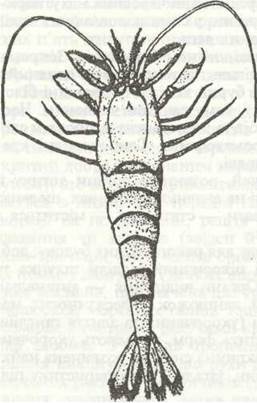
Fig. 93. The common shrimp Crangon crangon
Unlike shrimp, a large group of decapods leads a crawling benthic lifestyle, in which their pleopods are non-swimming or partially reduced. For instance (Fig. 94, a), marine spiny lobsters (genera *Palinurus*, *Polycheles*, and others) are bottom-dwellers that often burrow into mud while lying in wait for prey; they occur at depths down to 4 km. Freshwater crayfish—such as the noble or broad-fingered crayfish (*Astacus astacus*) and the slender-clawed crayfish (*Pontastacus leptodactylus*), which also inhabit Ukrainian river basins—live in underwater burrows they excavate with their claws in steep clay banks; they feed on carrion, small animals, and plants, living up to 20 years. They are highly sensitive to water pollution. Lobsters (Fig. 94, b), such as large marine crustaceans of the genus *Homarus* reaching 60–70 cm in length, are also burrow-dwellers that feed primarily on mollusks, crushing their shells with a massive crusher claw. Spiny lobsters, freshwater crayfish, and true lobsters are consumed by humans and represent important commercial fisheries.

Fig. 94. Decapoda:
a — spiny lobster Palinurus elephas; b — common lobster Homarus gammarus; c — hermit crab Pagurus bernhardus, removed from its shell, and d — in a shell with sea anemones
Hermit crabs, such as those of the genus Pagurus (Fig. 94, c), conceal their long, soft abdomens inside the empty shells of gastropod mollusks. They are predominantly carnivorous forms. Some hermit crabs inhabit burrows, such as members of the family Thalassinidae; alongside predators, filter feeders are also known among them. Certain hermit crabs (species of the genus Coenobita) lead a terrestrial lifestyle, utilizing the shells of land gastropods. The coconut crab Birgus latro, an inhabitant of sandy beaches on tropical islands, feeds on the fruit of palms and other decaying trees, and can attack and consume various invertebrates. Reports that it is capable of climbing palms and severing coconuts with its claws have proven to be false. The coconut crab reproduces in the sea, and its larva spends some time living within gastropod shells; as an adult, it lives on land and does not use shells.
Symbiosis with other animals is frequently observed among hermit crabs. Many hermit crabs host a sea anemone on their shell (Fig. 94, d). The anemone protects them from predators, while the crab consumes the polyp's leftover food particles; in return, the anemone gains mobility and is transported to food-rich locations. Most hermit crabs can live either with or without sea anemones; however, upon acquiring an anemone, a crab shifting to a new shell will transfer the polyp to its new "dwelling". The hermit crab Pagurus prideauxi and the sea anemone Adamsia palliata live exclusively in an obligate association, with only young individuals of both species capable of living independently. Nereid polychaetes often inhabit hermit crab shells, feeding on the crab's leftover food while cleansing the shell cavity of debris and the crab's abdomen of parasites. The crab recognizes "its" worm and takes the polychaete along when changing shells. Additionally, hermit crab shells are frequently overgrown by sponges, the action of which eventually dissolves the original shell, leaving the crab to carry only the sponge.
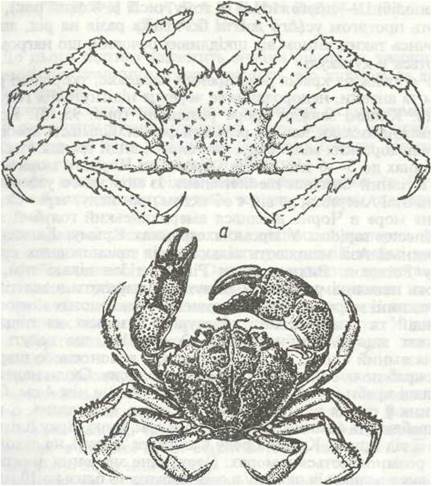
Fig. 95. Decapoda:
a — king crab Paralithodes camtschaticus; b — crab Eriphia verrucosa
Crustaceans closely related to hermit crabs (family Lithodidae) externally resemble true crabs in that their abdomen is tucked beneath the carapace and its appendages are often absent. Unlike true crabs, the last pair of thoracic legs in lithodids is small, functions in gill cleaning, is not used for locomotion, and is externally almost imperceptible. This group includes the red king crab Paralithodes camtschaticus (Fig. 95, a), a widely known commercial species inhabiting the northern Pacific Ocean. It is a benthic predator that winters at depths of around 200 m and migrates to shallow waters for spawning. In summer, the crabs migrate near the coast to feed, returning to deep waters in the autumn to overwinter. Females carry their eggs for about a year; the zoea develops into a megalopa within 20 days, and the lifespan reaches up to 30 years. Interestingly, adult crustaceans are long-lived (including freshwater crayfish) and molt several times a year throughout their lives, thereby ridding themselves of harmful substances accumulating in the cuticle.
True crabs feature an expanded carapace, shortened rostrum and antennae, and a rudimentary abdomen folded beneath the cephalothorax. The chelae are invariably well-developed (Fig. 95, b). Crabs are predominantly carnivorous, although omnivorous forms also occur. The majority of crabs are inhabitants of marine shallows, though certain species are found at depths of up to 5,000–6,000 m. The edible crab Carcinus mediterraneus inhabits the shallow waters of the Black Sea. The blue crab Callinectes sapidus has migrated from the North American coast—where it is of commercial importance—through the Mediterranean Sea into the Black Sea. Several species of freshwater crabs of the genus Potamon inhabit mountain streams in the Crimea, the Caucasus, and Central Asia. Species of the family Pinnotheridae are notable for their small size and parasitic lifestyle within the mantle cavity of marine bivalves and gastropods, ascidians, and the hindgut of holothurians. Crabs of the family Ocypodidae inhabit burrows on sandy beaches and lead a semi-terrestrial lifestyle: the burrow reaches the water table, and the crab hunts for prey by running across the sand. This group includes fiddler crabs (genus Uca), which grow no larger than 4 cm in length. In males, one claw is significantly larger than the other and brightly colored, its movements serving to attract females; each male maintains and defends its own burrow. Crabs of the genus Cardisoma live on land, although they reproduce in the sea. The economic importance of decapod crustaceans is immense: global annual harvests reach approximately 10 million metric tons, and shrimp serve as a vital food source for numerous fish and cetacean species.
Crustaceans play a major role in global aquatic ecosystems as consumers of various trophic levels. Due to their diverse modes of feeding (filter feeders, herbivores, predators, parasites, etc.), locomotion, and reproduction, they represent a highly ecologically plastic and varied group that has occupied a dominant position in aquatic ecosystems since their origin (early Paleozoic era). The practical significance of crustaceans as food for fish and whales, a source of nutrients for humans, fouling components on underwater structures and ship hulls, and intermediate hosts for helmiths is also substantial.
Recently, the population numbers of a number of crustacean species have been declining sharply, necessitating The Development of conservation measures. This applies particularly to freshwater inhabitants, where anthropogenic pressure is exceptionally high, and to heavily exploited species, such as freshwater crayfish and the red king crab.
Last update: 13/08/2026
Editorial and Educational Adaptation: This material has been compiled based on the primary/original source text. The project team performed an editorial review, corrected technical inaccuracies, structured sections, and adapted the content for an educational format.
What was processed:
- elimination of formatting defects (OCR errors, structural breaks, corrupted characters);
- editorial organization of content;
- standardization of terminology in accordance with academic sources;
- verification of factual statements against the original source text.
All mentions of the author, publication year, and origin of the primary text have been preserved in accordance with the source.